
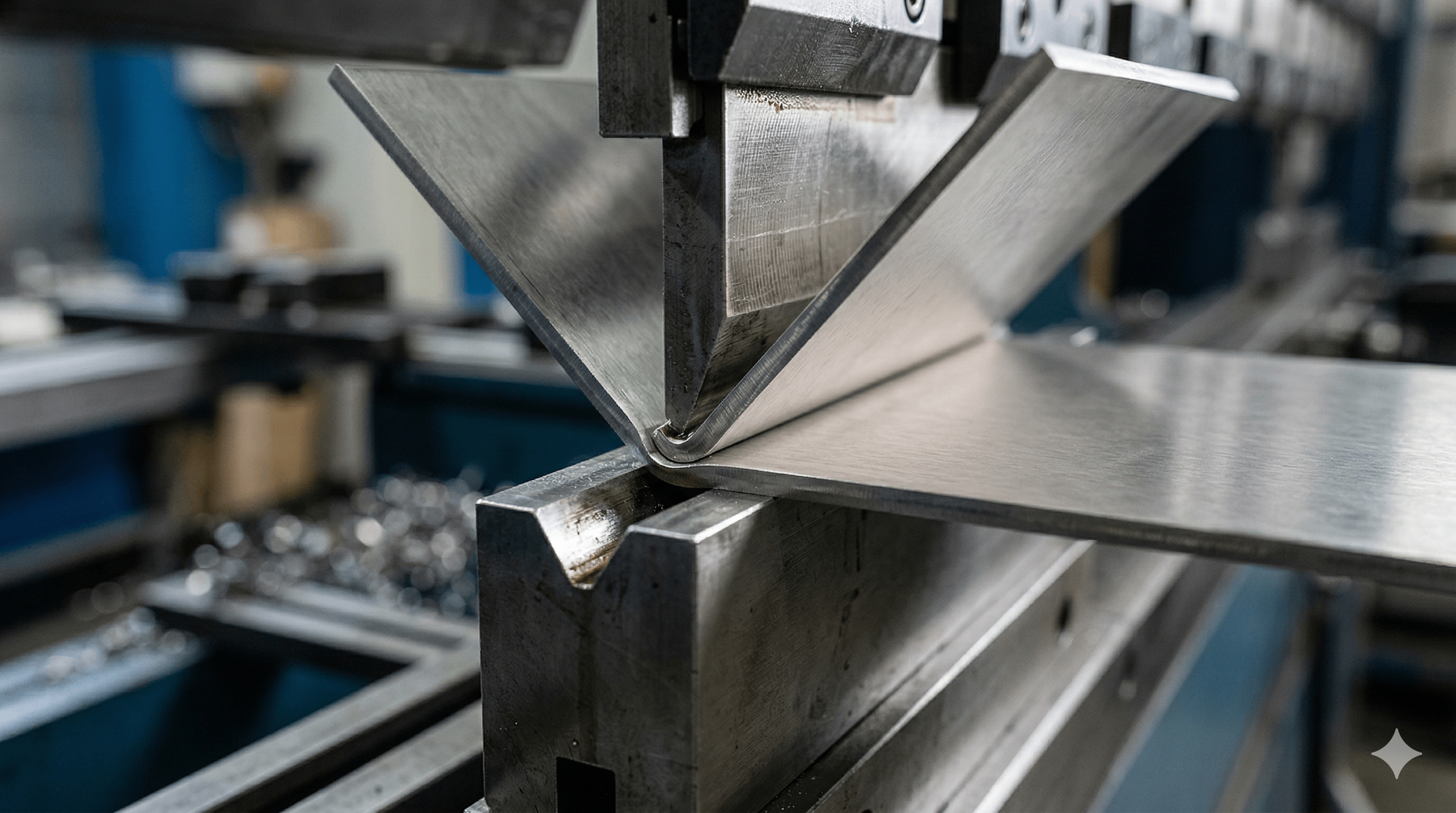
In high-stakes industrial manufacturing, sheet metal bending is never just about a simple fold. Instead, it is where material science meets your project’s bottom line. For anyone managing international procurement, you know that a single degree of deviation isn’t just a minor technicality. Rather, it is often the start of a potential nightmare in assembly. At YISHANG, we’ve spent years seeing how these small margins impact products shipped to over 50 countries. Consequently, we’ve learned that navigating tight regulations and keeping every batch consistent is the true anchor of a stable supply chain.
Getting this right takes more than just owning a press brake. Specifically, it requires a deep respect for the physics of deformation and a strategic eye for design. This guide skips the textbook definitions to focus on the technical pillars that actually matter when you’re scaling from a single prototype to a massive wholesale order. Whether your current project involves a mount electrical enclosure or a high-spec junction box NEMA, these insights are designed to help you move to market with fewer headaches and better cost efficiency.
The Shop Floor Reality: Picking a Process that Protects Your ROI
The cost of your project is largely decided long before the machines start running. In fact, the metal bending process is where your budget meets reality. This stage uses a punch and die to pull a flat sheet into a three-dimensional shape. As a procurement manager, your goal is to find that sweet spot where dimensional accuracy meets production speed. Ultimately, that choice dictates your wholesale pricing and determines if the tenth part looks exactly like the ten-thousandth.
Air Bending: The Standard for Versatility
In modern shops, air bending has become the go-to for its sheer versatility. By pressing the sheet into a V-die without bottoming out, we can handle multiple angles using one universal set of tools. Furthermore, this is a massive win for multi-angle ODM projects because it slashes setup times significantly. For your team, that means a lower entry cost and faster turnaround for items like a custom push button enclosure or a solar battery enclosure. However, it demands top-tier CNC hardware to manage springback. Therefore, the quality of your fabricator’s equipment becomes your primary insurance policy.
Bottoming and Coining: The Pursuit of Absolute Precision
When the design leaves no room for error, we lean toward coining or bottoming. Bottoming literally forces the sheet metal material to take the exact shape of the die. As a result, it is the method of choice for high-volume, standardized work—think an electrical meter box or control station enclosures. In these cases, even a fraction of a millimeter of variation is too much. While the investment in specific bending tools and equipment is higher upfront, the total lack of springback ensures every stainless steel enclosure is a perfect replica. Ultimately, this approach buys peace of mind for your brand’s reputation.
The Engineering Edge: Designing for Material Realities
Twenty-six years in this industry has taught us at YISHANG that your choice of raw material is the loudest predictor of performance. Every alloy has its own personality under a press brake. For instance, a stainless steel enclosure might be the gold standard for medical corrosion resistance. However, it fights back with much more springback than a standard carbon steel enclosure. Consequently, we calibrate our tooling to those specific “tempers” to ensure the final metal part hits your specs on the first try.
Managing Material Behavior: Aluminum and Alloys
Aluminum is another favorite for its lightness and clean look, but it can be unforgiving. If the bend radius is too tight on a high-grade aluminum enclosure, you risk micro-cracks. These hidden flaws often only show up after the product is already in the field. To stop this before it starts, we obsess over the K-factor and the neutral axis. These aren’t just engineering terms. Rather, they are the math that ensures the outer stretch of the sheet metal is compensated for correctly. Moreover, this precision protects the structural soul of everything from a junction box to a complex enclosure push button.
DFM: The Strategic Blueprint for Manufacturing
The smartest move you can make is integrating a DFM (Design for Manufacturing) protocol early on. One of the most common issues we see in procurement is the “short flange” problem. If a flange doesn’t have enough surface area to grip the die, the metal slides and the angle fails. In addition, the finish often gets marred. Therefore, the golden rule we suggest is a minimum flange of at least 4x the material thickness (4T). Similarly, crowding a bend line with holes or slots leads to “egging.” This is where the stress of the metal bending process pulls your precision holes into ovals.
To keep your supply chain moving, we run a full DFM review on every inquiry. We look at the grain direction of the sheet metal and determine where you might need bend reliefs. In a galvanized steel enclosure, for instance, bending against the grain is more than a preference. It is what keeps load-bearing brackets from snapping. Solving these puzzles before the first sheet is cut allows you to get that desired shape without the hidden costs of defects.
Quality Standards: Setting a Global Benchmark
If you’re a wholesale buyer, your ultimate goal is a “set it and forget it” procurement process. You need a manufacturer who treats quality as a built-in feature of the bending tools and equipment. This is why we rely on CNC-synchro systems and real-time laser measurement when fabricating a solar battery enclosure. Furthermore, it gives us a feedback loop that ensures even the most difficult control station enclosures stay within a linear tolerance of ISO 2768-m.
| Dimension Range (mm) | Fine (± mm) | Medium (± mm) | Coarse (± mm) |
|---|---|---|---|
| 0.5 to 3 | 0.05 | 0.1 | 0.2 |
| 3 to 6 | 0.05 | 0.1 | 0.3 |
| 6 to 30 | 0.1 | 0.2 | 0.5 |
| 30 to 120 | 0.15 | 0.3 | 0.8 |
Beyond the dimensions, there’s the question of aesthetics. No one wants an “orange peel” texture or tool marks on a premium stainless steel enclosure. Consequently, we tackle this by using non-marking urethane die covers. It’s a small detail that saves you the massive expense of secondary polishing or refinishing. For our B2B partners, this means a Class A finish straight off the machine. As a result, it lowers the total cost of ownership for every sheet metal fabrication project.
Navigating Sourcing and Compliance
When you’re sourcing by material—whether it’s a steel enclosure aluminum or a heavy-duty carbon steel enclosure—compliance isn’t optional. Therefore, you need to know that your supplier’s raw material knowledge center is current on RoHS and REACH mandates. At YISHANG, we handle raw material traceability from day one. This ensures you know the electrical enclosure raw material in your product meets global safety standards before it ever touches the press brake.
A solid sourcing strategy also accounts for the environment the product will live in. For example, a steel enclosure galvanized for a coastal project needs a specific bending approach. This keeps that protective zinc layer from micro-fracturing. By bridging the gap between design and delivery, we make sure your inquiry leads to a product that lasts a decade. Moreover, our ISO 9001 commitment is our promise that your procurement path is documented, tested, and reliable.
The bottom line is that precision bending is a strategic advantage, not a commodity. It defines the life of your product and the trust your customers place in your brand. From the first K-Factor calculation to the final CNC stroke, every choice matters. By blending DFM principles with deep material expertise, you can ensure your products stand out in a competitive global market. YISHANG is here to provide the engineering weight and wholesale capacity to keep your growth on track.
If you’re looking to sharpen the performance of your next project, send over your STEP or DWG files. Our team is ready to provide a full DFM audit and a quote built around your specific precision needs.