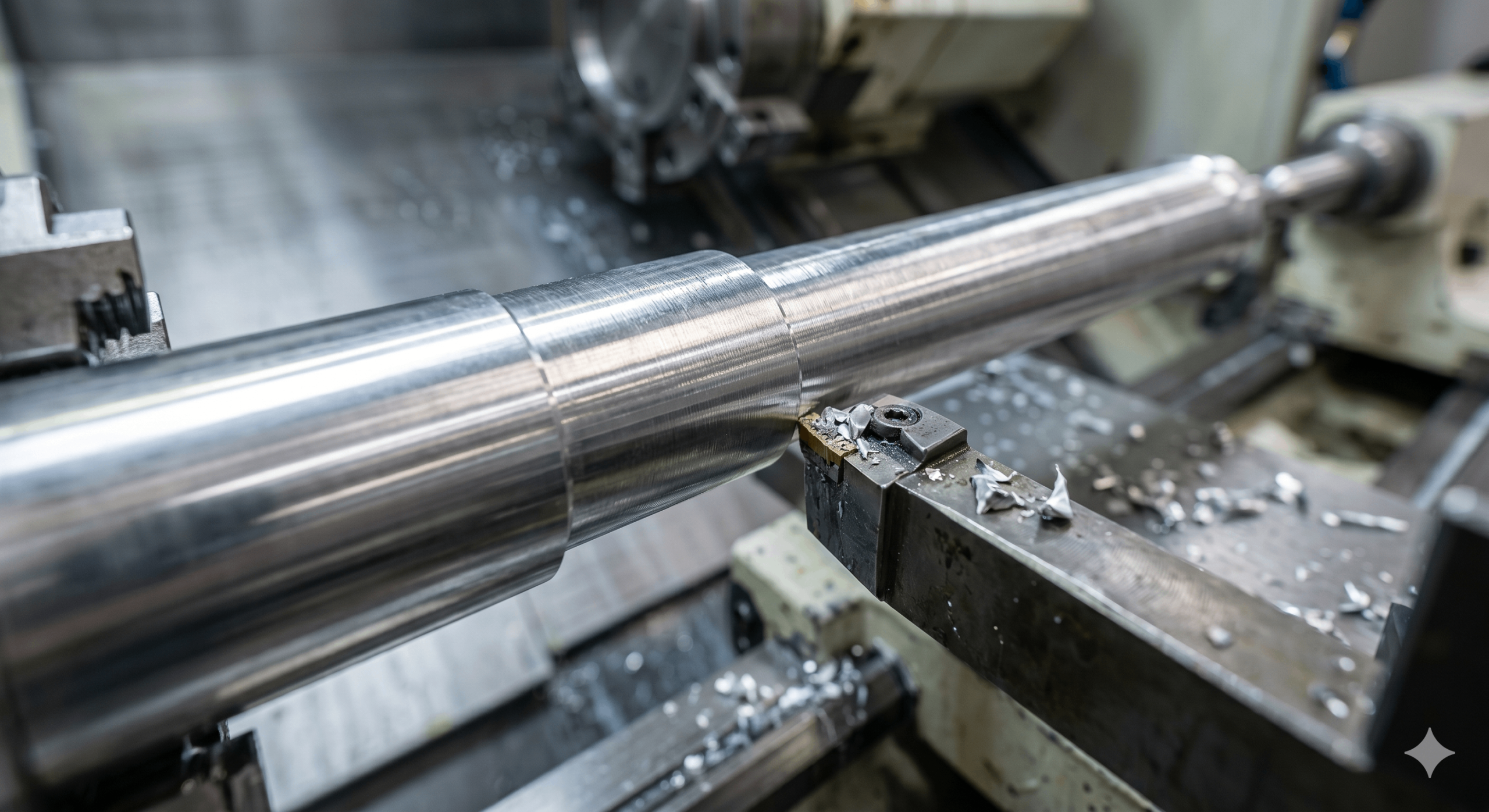
Efficiency isn’t just a buzzword in a machine shop; it’s the very rhythm that keeps a business profitable. When you walk onto a production floor, the sound of a spindle running at peak RPM without a hitch is the sound of money being made. For procurement managers and wholesalers, picking the right material is the first and most critical move in that game. Among the vast array of metals available, 2011 Aluminum stands out not as a general-purpose choice, but as a specialized high-speed specialist.
At YISHANG, we’ve spent over 26 years getting our hands dirty with these materials. We’ve seen how the right alloy can scale a project from a struggling prototype to a high-volume success story. This isn’t a recycled data sheet; it’s a look into the strategic logic of 2011 Aluminum, why it matters for your next batch of industrial enclosures, and how the global shift toward 2026 regulations is changing the way we source it.
I. The Real Cost of a Second: Why Machinability Rules the Bottom Line
Think about the clock on your CNC floor. Every second a part spends inside the machine is a second you’re paying for labor, electricity, and tool wear. In the procurement world, we often talk about machinability as a percentage, and 2011-T3 is the undisputed 100% benchmark. To put that in context, the 6061-T6 you see everywhere usually struggles to hit 60% or 70% of that speed. If you’re looking at a wholesale order for 10,000 units, that gap in speed isn’t just a technical detail—it’s a massive financial lever.
When people ask is 2011 aluminum really worth the shift, I tell them to look at the cycle times. In our experience, shifting to this alloy can shave 30% or more off the time a part spends under the cutter. This is why 2011 aluminum is the default for the tiny, complex connector pins and spacers you find inside a mount electrical enclosure or an electrical meter box. When the design is dense and the volume is high, you need a metal that doesn’t fight the tool.
The throughput advantage of aluminum quick inquiry projects also comes from machine uptime. Because 2011 is so crisp to cut, it doesn’t punish your carbide inserts. You aren’t stopping the line every hour to swap out a dull bit or clear a “bird’s nest” of tangled metal. This reliability is the secret to successful “lights-out” manufacturing. It ensures that we can confidently commit to a deadline because we know the material won’t cause unexpected downtime. It turns a volatile production schedule into a predictable, profitable one.
The choice of of 2011 aluminum is essentially a move toward risk mitigation. In a market where margins are razor-thin, being able to produce parts faster and with nearly zero rejects is a powerful competitive edge. Whether it’s a junction box nema or a specialized control station enclosures project, the math almost always favors the alloy that stays out of its own way during production.
II. Technical Data: Validating the Material Integrity
To help engineers and procurement specialists analyze professionals’ strengths and weaknesses in material selection, we must look at the hard data. 2011 Aluminum is a high-copper alloy, which is the foundation of its strength and its unique machining characteristics.
Chemical Composition (ASTM B211)
| Element |
Content (%) |
Procurement Impact |
| Aluminum (Al) |
91.1 – 93.7 |
Base lightweight structure |
| Copper (Cu) |
5.0 – 6.0 |
Strength and hardening source |
| Lead (Pb) |
0.2 – 0.4 |
The secret to “Broken Chips” |
| Bismuth (Bi) |
0.2 – 0.6 |
Natural lubricant and surface finish |
| Iron (Fe) |
0.7 Max |
Controlled impurity |
Mechanical Properties (T3 Temper)
- Tensile Strength: 45,000 psi (310 MPa)
- Yield Strength: 43,000 psi (295 MPa)
- Brinell Hardness: 95 HB
- Machinability Rating: 100% (Benchmark)
For a wholesale buyer, these numbers mean 2011 aluminum was designed specifically to behave like free-cutting brass while retaining the weight advantage of aluminum. This high copper content allows for a much higher feed rate than 6061, often reaching 600-900 surface feet per minute (SFM) with high-speed steel tools, or even higher with carbide.
III. Shop Floor Wisdom: The Science of the “Broken Chip”
If you’ve ever watched a CNC machine struggle with a “gummy” alloy, you know the nightmare of long, stringy ribbons of metal wrapping around the spindle. It’s messy, it’s dangerous, and it ruins surface finishes. The reason 2011 Aluminum is a machinist’s best friend comes down to those micro-inclusions of Bismuth and Lead.
These elements act like a built-in lubricant. As the tool bites into the metal, the friction snaps the metal into tiny, brittle chips. This is the difference between a smooth 24-hour run and a machine that needs constant babysitting. These small chips are flushed away by the coolant instantly, leaving the cutting zone clear and the tool cool.
This metallurgical behavior is also why the Surface Roughness (Ra) on 2011 parts is so exceptional. You can often get a mirror-like finish straight off the tool. For anyone buying hardware for a push button enclosure or a visible enclosure push button interface, this is a huge win. It often removes the need for secondary polishing or vibratory finishing, which is another cost-saving box checked.
That said, every pro knows the trade-off for all that speed is low corrosion resistance. Because of the copper, 2011 can be sensitive to moisture. It isn’t the first thing I’d recommend for raw use in outdoor environments. At YISHANG, we usually tell our clients that if the part is heading outside—perhaps as a solar battery enclosure or enclosures solar battery mounting component—we need to talk about hard-coat anodizing or a solid plating strategy to ensure the longevity of the enclosure aluminum enclosure assembly.
IV. Strategic Comparison: How 2011 Measures Up
When we analyze professionals’ strengths in sourcing, we see that the best buyers compare multiple alloys before committing. How can 2011 aluminum be compared to other options like material stainless steel or galvanized steel enclosure materials?
| Feature |
2011-T3 Aluminum |
6061-T6 Aluminum |
304 Stainless Steel |
| Machinability |
100% |
50% |
20% |
| Corrosion Resistance |
Fair (Needs Coating) |
Excellent |
Superior |
| Strength |
High |
High |
Very High |
| Weight |
Low |
Low |
High |
| Best For |
High-Volume CNC |
Structural Parts |
Harsh Outdoor |
While by material stainless steel is unbeatable for salt-spray resistance, it will eat your machining budget alive. If the part can be machined from 2011 and properly sealed, the savings in labor often fund the entire coating process and still leave you with a 20% cost reduction. Even compared to carbon steel enclosure or enclosure carbon steel builds, the weight savings in international shipping for steel enclosure aluminum hybrid designs are significant.
V. The 2026 Shift: Compliance and the Future of Your Supply Chain
Supply chain managers today are dealing with more than just prices; they’re dealing with a changing legal landscape. With RoHS and REACH standards getting stricter every year, the conversation around 2011 has shifted toward 2011-LF (Lead-Free). There’s a 0.4% lead limit looming for many global markets.
At YISHANG, we’ve spent a lot of time testing these new lead-free variants. They use more Bismuth to keep that A-grade machinability. While the tool wear is a tiny bit higher than the old-school leaded version, it’s a small price to pay for a compliant, future-proof supply chain. When you look at how 2011 aluminum be compared to alternatives, its ability to adapt to these regulations while keeping its speed is why it stays on the top of the list for enclosure electrical meter and control station enclosures manufacturers.
VI. Beyond the Parts: Reliability in Every Shipment
There’s a part of the procurement process that doesn’t usually make it into the technical guides: the journey the parts take after they leave the factory. Because of that copper content, 2011 is more prone to sea-air oxidation than the 6000 series. If you’re a wholesaler, the last thing you want is a container of parts arriving with surface spots.
At YISHANG, our ISO 9001 process isn’t just about the dimensions; it’s about the delivery. We use specialized vacuum packaging and anti-oxidation treatments for all aluminum quick inquiry orders involving long-haul sea freight. Whether we’re talking about a steel enclosure galvanized part or a high-precision enclosure galvanized steel component, we aim for a plus/minus 0.01mm tolerance and a factory-fresh finish upon arrival.
At the end of the day, 2011 Aluminum is a strategic tool. When you pair it with a team that knows how to handle the heat, manage the chips, and navigate the compliance hurdles, you get a supply chain that just works. We’re here to help you solve those material puzzles, not just take an order.
If you’re ready to see how a high-machinability strategy can change your next production run, send your inquiry today. Let’s look at the specs together and find the most efficient path forward. Quick inquiry now and let’s get to work on making your supply chain faster and more reliable. Your inquiry today starts the journey toward manufacturing excellence.