
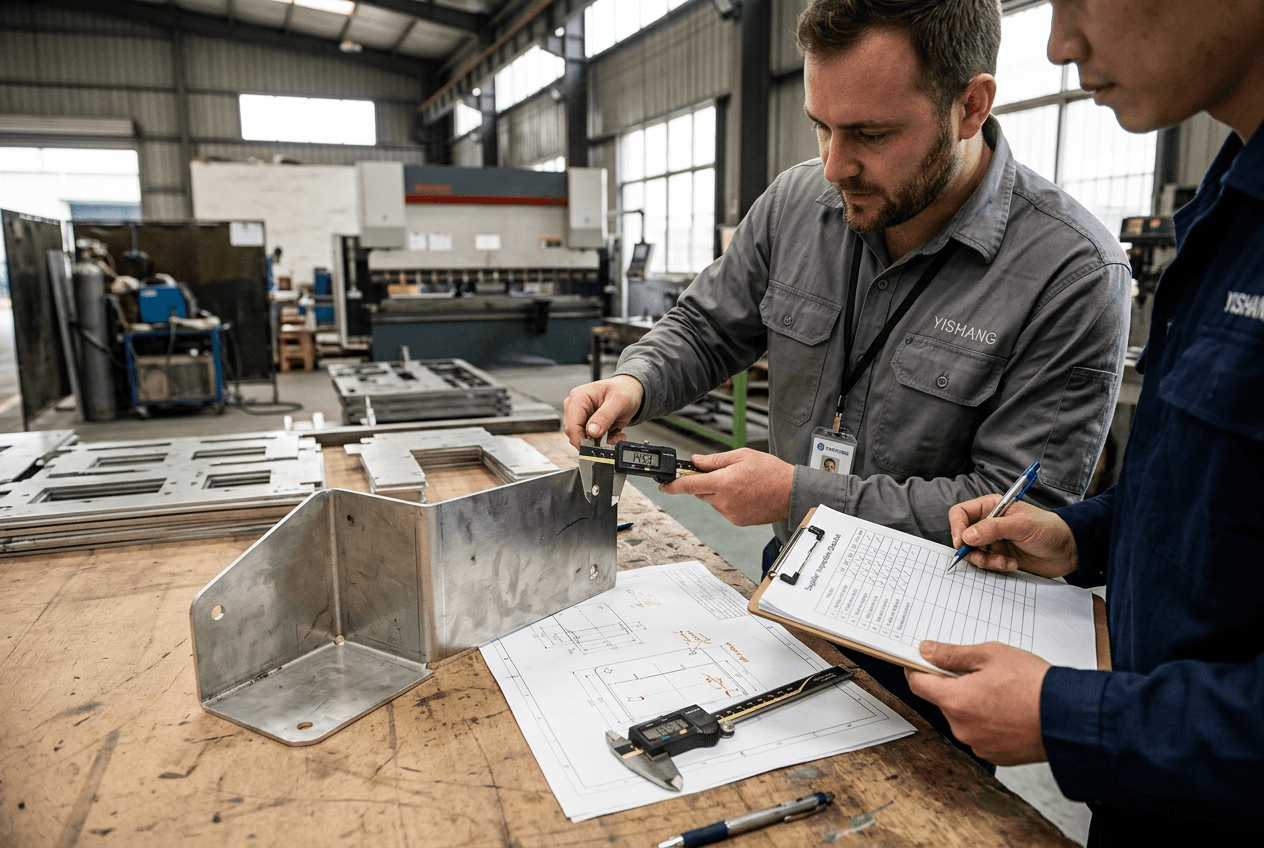
An OEM buyer sends the same aluminium enclosure drawing to five suppliers. One quote returns fast and low. Another supplier asks about bend radius, powder coating thickness, visible faces, hinge clearance, PEM fasteners, grounding points, and the mounting frame. The first quote looks easier to approve. The second quote may describe the real part.
This article focuses on one procurement risk: unclear RFQ assumptions make aluminium fabricators quote different scopes. The buyer may think the comparison covers one enclosure, bracket, cabinet, frame, or welded assembly. In practice, each supplier may price a different process route, inspection level, finish standard, and packing method.
The risk starts before production. It grows when procurement compares unit prices without checking what each quote includes. A low quote can remove the controls that protect assembly fit, cosmetic appearance, and batch repeatability. A higher quote can also hide weak assumptions if the supplier does not explain them. Buyers need to expose these assumptions before price approval, not after a failed first batch.
Where RFQ Assumptions Start to Distort Aluminium Fabrication Quotes
A supplier listing can say aluminium fabrication, but that phrase covers many different capabilities. Some suppliers focus on flat panels. Others handle bent enclosures, welded frames, display racks, brackets, cabinets, or assembled sheet metal products. The RFQ must tell suppliers which problem they are solving.
Quote distortion usually begins when the drawing shows shape but not production intent. A 3D model may define geometry. It may not define critical holes, visible surfaces, coating limits, weld grinding, packing requirements, or the inspection points that decide whether the part works.
When details remain open, each supplier fills the gaps differently. One aluminium fabricator may include fixture design, insert installation, masking, cosmetic handling, and final fit checks. Another may price laser cutting, bending, basic powder coating, and export cartons. Both quotes may use the same part number. They do not cover the same risk.
The quotation may look complete while the scope stays incomplete
Consider a wall-mounted aluminium control enclosure. The cover has ventilation slots, two visible faces, PEM fasteners, and holes that must align with an internal rail. A low quote may treat it as a simple cut-and-bend job. That quote may ignore bend accumulation, coating build-up around holes, and the clearance needed after the cover slides over the body.
The consequence chain is predictable. The buyer approves the cheapest price. Production follows standard bend and coating assumptions. Assembly then finds cover interference or fastener misalignment. The supplier argues that the part meets general tolerances. The buyer needs the enclosure to fit the rail and close correctly.
Clarification should happen before supplier selection. The RFQ should identify mating parts, critical mounting holes, visible surfaces, coating thickness expectations, and whether the supplier must install inserts or perform fit checks. Yishang can review drawings and RFQ notes when buyers need a fabrication quote that includes manufacturability, finishing, and assembly assumptions rather than only unit price.
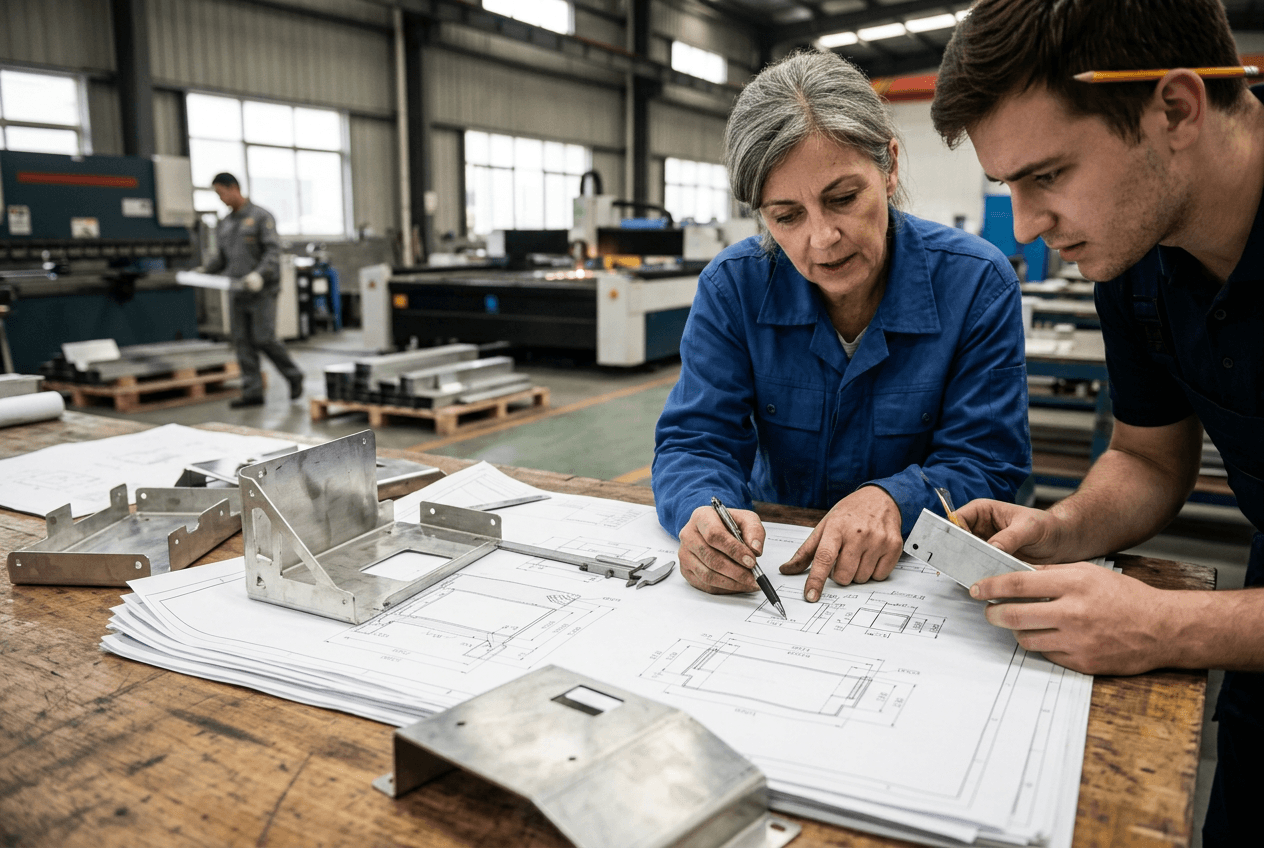
Material, Tolerance, and Finish Gaps That Change the Real Scope
RFQ ambiguity does not only affect technical quality. It changes cost drivers and lead time. Material grade, sheet thickness, tolerance class, finish requirements, and inspection depth can move a project from a standard job into a controlled production build.
Buyers often specify aluminium as a broad material callout. That may not be enough. Different grades, tempers, and sheet thicknesses affect bending behavior, surface marks, availability, and cost. If the RFQ leaves the choice open, one supplier may quote an available sheet with easier sourcing. Another may choose a grade that better fits bending, welding, or cosmetic finishing. The unit price difference may reflect material risk, not supplier margin.
Tolerance notes create the same problem. A general tolerance block can work for non-critical covers. It may fail for brackets that mount to existing equipment. Hole-to-bend dimensions, flange height, flatness, and datum references need extra attention when the part controls assembly.
A finish note can change handling, masking, and inspection
A drawing that says powder coat black leaves too much open for many projects. Suppliers still need color reference, gloss level, texture, coating thickness range, masking areas, and cosmetic acceptance limits. They also need to know which faces the end user sees.
For an aluminium equipment panel, the front face may need protective film handling, controlled deburring, and careful packing. The rear face may allow minor marks. If the RFQ does not separate those surfaces, a supplier may quote a lower handling standard. The part can then pass basic coating checks yet fail customer inspection.
Finish also affects assembly. Powder coating can reduce hole clearance, fill slots, cover grounding points, and interfere with hinges. A cabinet door may look acceptable but fail because the hinge area received too much coating. A buyer who wants functional performance must state where coating matters and where masking must protect fit.
Lead time can shift as well. Special material sourcing, controlled coating, fixture fabrication, and first-article inspection add days. When the RFQ hides these needs, the cheapest quote may also carry the least realistic schedule. The problem then appears as an urgent engineering change, rework, or delayed shipment.
Assembly Fit Risks Appear After Bending, Welding, and Coating
Many sheet metal problems do not appear in the flat drawing. They appear after several process steps combine. Bending changes hole relationships. Welding moves frames. Powder coating adds thickness. Insert installation can distort thin sheet if the supplier chooses the wrong process settings.
A buyer may approve a quote because the supplier confirms laser cutting accuracy. That answer does not prove final assembly accuracy. The important question is where the part must fit after bending, welding, finishing, and packing.
Bending risk hides in flange relationships
For aluminium brackets, hole positions may look accurate in the flat pattern. After bending, the functional relationship between a hole and a mounting face can shift. This matters when the bracket bolts to rails, sensors, hinges, or machine frames.
A simple L bracket shows the problem. The drawing calls out two mounting holes and a bent flange. The RFQ does not identify which hole controls installation. A supplier inspects the hole locations before bending and ships the batch. During assembly, the buyer finds that the flange angle and hole-to-bend position prevent the bracket from sitting square. The supplier met its chosen inspection method, but the buyer needed post-bend functional control.
Welding risk hides in frame straightness
Welded aluminium assemblies add another layer. Aluminium conducts heat quickly, and frames can move during welding. A quote that excludes fixtures, weld sequence planning, straightening, and post-weld measurement can look attractive. It can also produce a frame that meets loose general tolerances but fails installation.
Picture a powder-coated display rack with welded side frames and removable shelves. A supplier strong in thin sheet cutting may price the panels correctly but underestimate frame distortion. The first batch arrives with shelves that rock because the side frames are not parallel. The cosmetic coating looks fine. The assembly still fails.
Buyers should ask suppliers to state how they will control final fit. That may include bend sequence review, functional hole inspection after forming, weld fixtures, diagonal checks, hinge trial assembly, insert pull checks, or coating-thickness measurement on mating areas. These details belong in the quote because they affect both cost and schedule.
Why Prototype Approval Can Lock In the Wrong Production Method
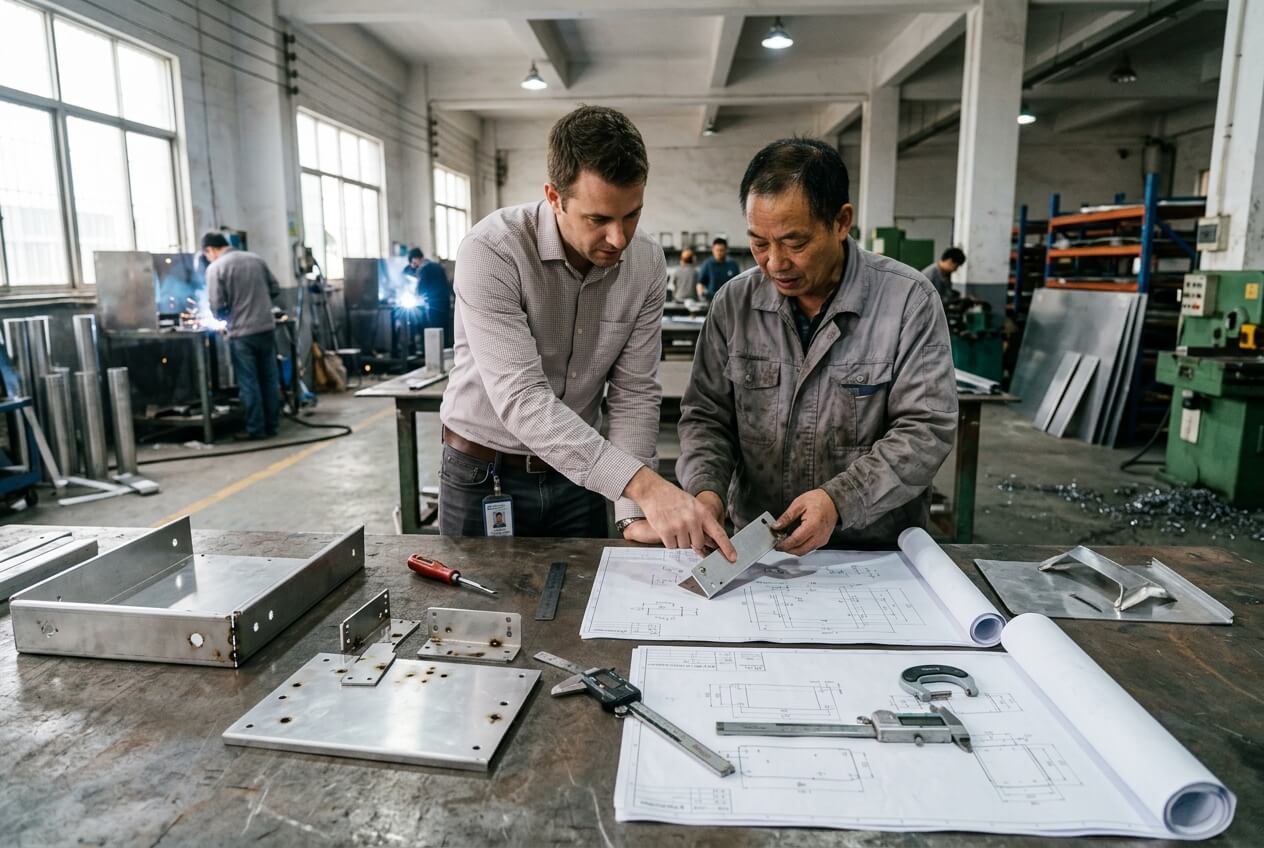
A good prototype does not always prove batch production control. A skilled technician can make one sample fit by hand. Batch production needs repeatable tooling, stable settings, clear inspection rules, and documented finishing methods.
The risk increases when the buyer approves a sample without asking how the supplier achieved it. The sample may include hand filing, slot enlargement, extra polishing, undocumented weld grinding, or one-off bend correction. Those actions may disappear when the order moves to 300 cabinets or 2,000 brackets.
Prototype review should capture every change that made the part work. If a slot grew by 0.5 mm, record it. If the bend radius changed because the supplier used available tooling, update the drawing or approval notes. If the powder coat needed masking near a hinge, make that masking part of the production plan.
Sample success can hide batch variation
An enclosure sample may fit because the technician adjusted corners after coating. In batch production, that same cover may interfere because bend allowance and coating thickness were not controlled. A welded frame prototype may stay square because the shop gave it extra attention. The batch may drift when no fixture or diagonal inspection exists.
The buyer should also separate prototype cost from production cost. A prototype may include manual work that makes sense for one part. The same method may create high labor cost, inconsistent quality, or long lead time in production. A supplier should explain whether the batch will rely on hand adjustment or on repeatable tooling and inspection.
Before release, update the control plan around the features that proved sensitive during sampling. For a cabinet, that may include door gap, hinge alignment, grounding contact areas, insert locations, and packing marks. For a bracket, it may include hole-to-bend dimensions and burr direction. For a welded frame, it may include fixture datum points, squareness, and visible weld treatment.
Yishang can support this stage when buyers share drawings, sample feedback, photos of fit problems, finish expectations, and assembly notes. The value comes from turning prototype lessons into production instructions before the batch begins.
What to Clarify Before Comparing Aluminium Fabricators
Buyers do not need to make every aluminium part expensive. They need to make quotes comparable. Some panels only require standard commercial control. Other parts need tighter review because one hole, bend, weld seam, coating area, or packed surface controls the final product.
A broad question such as can you make this invites a broad yes. A better question asks which areas of the drawing may affect fit, finish, cost, lead time, or batch consistency. The answer shows whether the supplier reviewed the part as a manufactured product.
Before final comparison, ask each supplier to state its assumptions. The list should cover material grade and thickness, critical dimensions, functional datums, visible faces, coating specification, masking, insert installation, welding fixtures, assembly checks, inspection timing, packing, and prototype-to-batch changes.
Procurement should also share context that drawings often hide. Photos of the old part, mating component drawings, assembly videos, reject reports, and customer-facing surface notes can prevent wrong assumptions. These details help aluminium fabricators price the real scope instead of guessing.
When quotes differ by 15% or 25%, do not start with a discount request. First, compare the assumptions. One quote may exclude special inspection. Another may include fixture control. A third may assume standard coating on all surfaces, while the part needs masked holes and cosmetic packing. Once buyers compare scope, price discussion becomes more useful.
The final supplier decision should protect the launch, not only the purchase order. A low unit price loses value if the first batch needs sorting, rework, repainting, or emergency air freight. A clear RFQ reduces that risk because it forces the real manufacturing decisions into the quote stage.
Comparing aluminium fabricators for an enclosure, cabinet, bracket set, panel, welded frame, or assembled sheet metal product? Send Yishang your drawings, material requirements, quantities, tolerance notes, finish expectations, photos, samples, and assembly context. The review can focus on RFQ assumptions that may hide bending, welding, powder coating, inspection, packing, or batch-repeatability risk before you approve the supplier plan. Start with your RFQ details at Yishang.
Frequently Asked Questions
Why do aluminium fabricators quote the same drawing at very different prices?
They may not quote the same scope. One supplier may include controlled bending, insert installation, masking, cosmetic inspection, fit checks, and protective packing. Another may include only cutting, bending, basic finishing, and cartons. Ask every supplier to list assumptions before comparing unit prices.
What RFQ details reduce the risk of non-comparable aluminium fabrication quotes?
Define material grade, sheet thickness, critical dimensions, datums, visible faces, coating specification, masking, insert requirements, assembly checks, inspection points, quantities, and packing method. Also provide mating-part drawings or photos when the part must fit existing equipment.
Why should buyers identify functional holes on aluminium brackets?
Some holes control installation while others only provide clearance or ventilation. If the RFQ does not identify functional holes, the supplier may inspect them in the flat pattern only. For formed brackets, buyers should request post-bend inspection of the hole-to-bend relationship.
How can powder coating create assembly problems?
Powder coating adds thickness and can build up around holes, slots, hinges, inserts, and grounding points. A part may look correct but fail assembly. Buyers should define coating thickness, masking areas, contact surfaces, and inspection after finishing.
Why does a good prototype not guarantee batch consistency?
A prototype may rely on hand fitting, filing, extra polishing, weld correction, or one-off bending adjustments. Batch production needs documented tooling, process settings, inspection rules, and finish controls. Buyers should record all sample changes before releasing production quantities.
When should an OEM ask for drawing review before selecting a fabricator?
Ask for review before final quote approval when the project includes bent enclosures, welded assemblies, cosmetic surfaces, tight mounting features, coating-sensitive clearances, prototype changes, or repeatability concerns. Early review exposes hidden assumptions while price, lead time, and process choices can still change.