
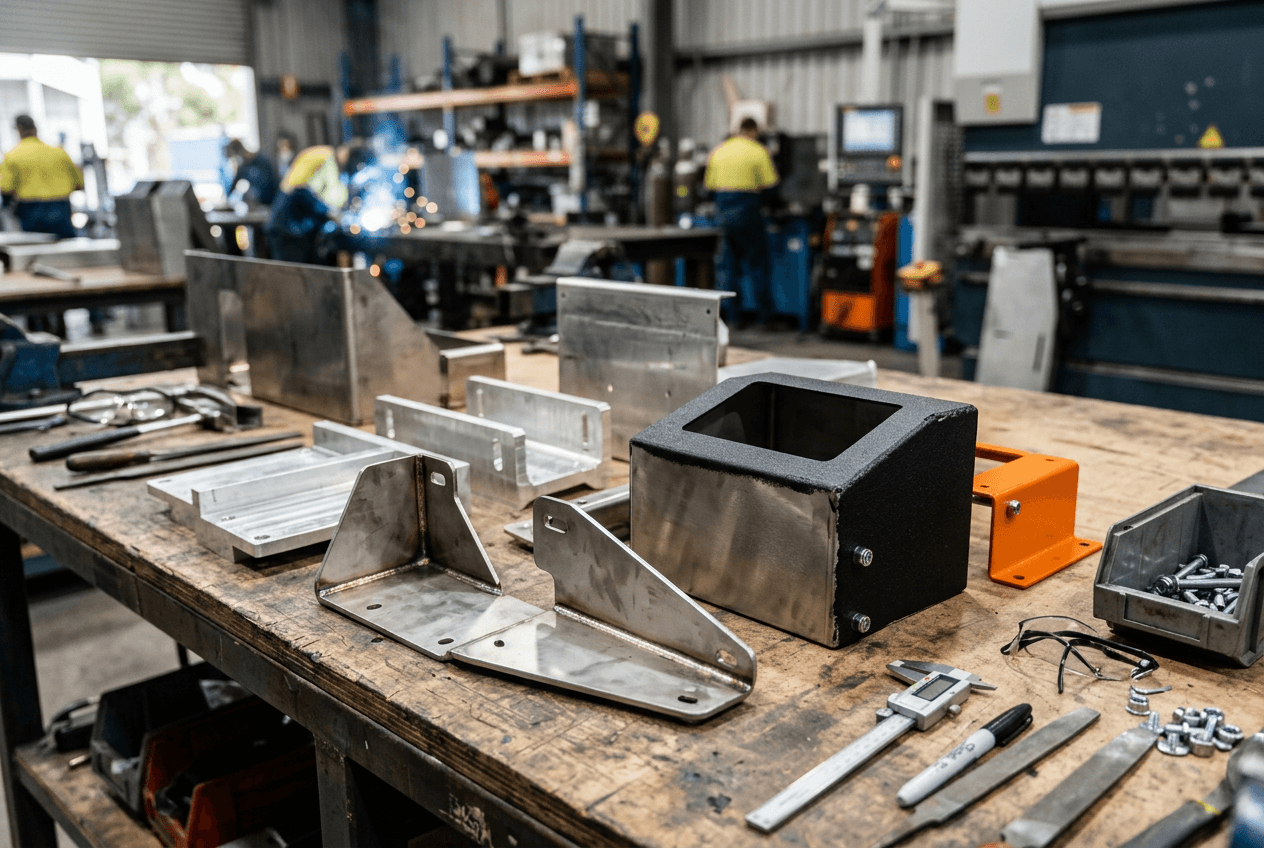
An OEM buyer sends drawings for an outdoor stainless steel control cabinet. The package includes laser-cut panels, bent returns, welded corners, PEM hardware, a grounding stud, and a black textured finish. Three suppliers quote powder coating for stainless steel. One quote looks much cheaper.
The price gap does not always come from better efficiency. It often comes from different assumptions. One supplier may include weld heat-tint removal, abrasive preparation, masking, test panels, and protective packaging. Another may assume simple cleaning and a standard coating run. Both quote the same CAD files, but they do not quote the same manufacturing route.
This is the main procurement risk: the RFQ treats stainless fabrication and powder coating as separate items. Production treats them as one system. Material grade, surface condition, weld cleanup, coating thickness, masking, curing, tolerances, and packaging all interact. If buyers leave those decisions open, the lowest quote may only look competitive because it excludes the controls needed for fit, adhesion, and approval.
The problem often appears late. Doors rub after coating. Threaded holes need chasing. The coating chips near welded corners. A grounding pad no longer conducts. A customer rejects texture differences between the prototype and the first batch. By then, the buyer has less leverage and more schedule pressure.
This article focuses on how hidden RFQ assumptions distort stainless powder coating quotes. It also shows what buyers should clarify before they compare prices, release prototypes, or approve batch production.
Where Vague Finish Notes Make Stainless Quotes Incomparable
A drawing note such as “stainless steel, powder coated black” creates too much room for interpretation. It defines a visible result, but it does not define the route needed to reach that result. For a shelf bracket, this may create only minor cost variation. For an outdoor enclosure, display frame, welded rack, or customer-facing cabinet, it can change both price and failure risk.
Start with stainless grade. A supplier quoting 304 stainless for an indoor display frame may price a different risk profile than a supplier quoting 316 stainless for a coastal outdoor cabinet. The grade does not decide the coating process by itself, but it changes corrosion expectations and customer approval criteria.
Surface condition adds another layer. Stainless sheet may arrive with mill finish, brushed grain, polishing marks, protective film, oil, or handling scratches. Fabrication then adds laser-cut edges, burrs, weld discoloration, grinding marks, fingerprints, and possible oxide on cut areas. Powder coating can cover color variation, but it cannot erase poor preparation or uncontrolled cosmetic zones.
Cosmetic faces need drawing control
Buyers often care more about one surface than another. A front cabinet door may need a smooth semi-gloss finish. An inner flange may only need functional coverage. If the RFQ does not identify visible faces, one supplier may quote industrial acceptance while another prices extra handling and inspection. The cheaper quote may later become the most expensive option after rejection and rework.
Consider a stainless retail display frame with welded corners and a matte black finish. The customer sees the top rail and front corners every day. The rear mounting tabs stay hidden. If the drawing does not separate these areas, suppliers must guess where to spend labor. One may dress every weld and protect every face. Another may clean and coat the whole frame to a general standard.
Before comparing prices, buyers should align the stainless grade, starting surface, visible zones, weld cleanup level, powder type, color reference, gloss or texture range, coating thickness, and inspection method. Without that alignment, the purchasing team compares assumptions instead of quotes.
How Missing Surface-Prep Assumptions Turn Into Adhesion Claims
Adhesion failures usually start before the powder booth. Stainless steel resists corrosion partly because of its passive surface. That same surface can make coating adhesion more sensitive when oil, polishing compound, fingerprints, laser residue, or weld oxide remains on the part.
For low-touch indoor covers, careful degreasing may meet the real requirement. Outdoor cabinets, transit equipment, medical housings, commercial fixtures, and high-handling welded assemblies often need tighter control. The supplier may need mechanical roughening, blasting, weld cleanup, edge deburring, conversion treatment, or a documented cleaning sequence.
This difference changes the quote. A supplier that includes blasting, masking, test panels, and adhesion testing will not look cheap beside a supplier that assumes basic cleaning. The risk appears when the buyer treats both numbers as equivalent. If the part must survive handling, rain, cleaning chemicals, or salt exposure, the cheaper route may not protect the warranty.
Welds and laser-cut edges create local risk
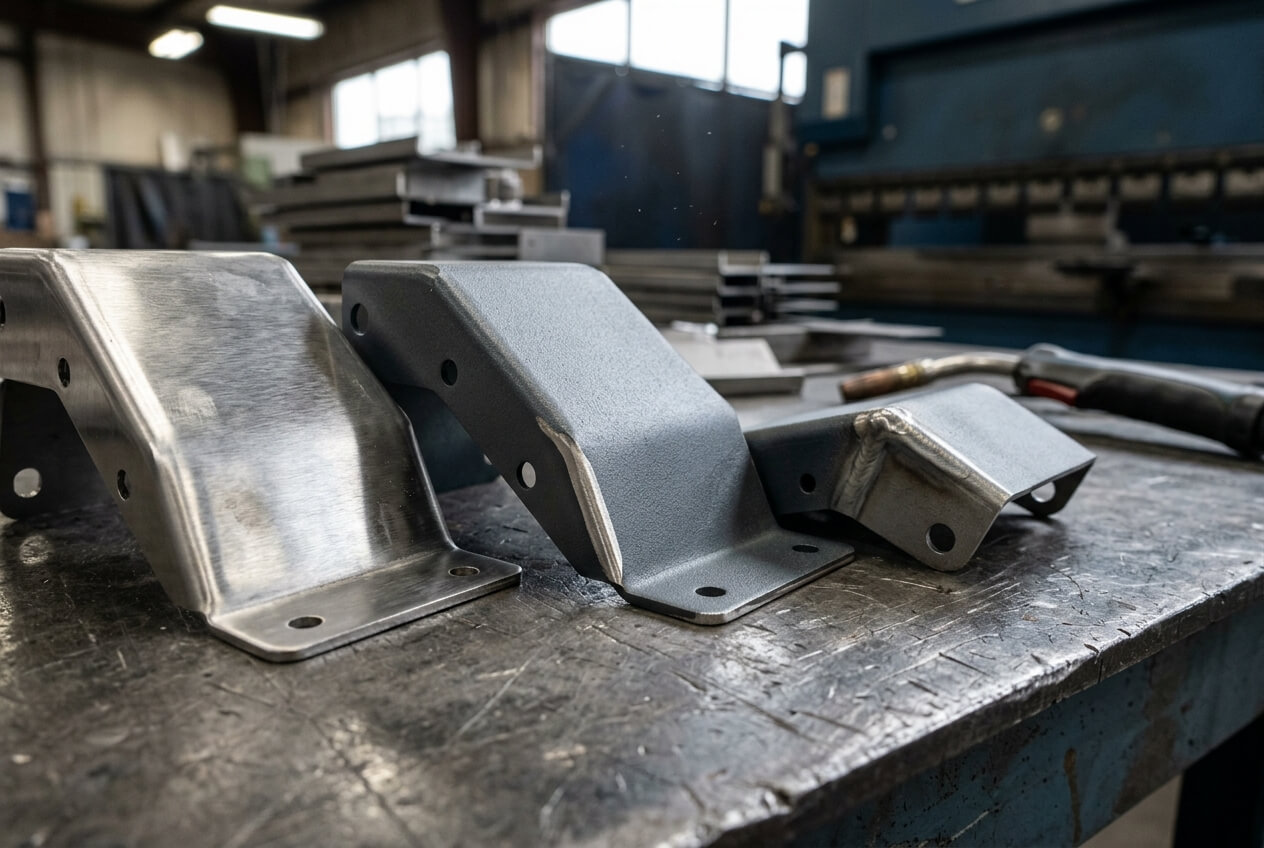
Welded stainless corners deserve special attention. Heat tint and oxide can sit under the coating if the RFQ does not call for removal. Powder may look acceptable at first, then chip or lift near the weld during assembly or field use. The buyer sees a coating problem. Production may trace the cause to fabrication cleanup.
Laser-cut edges create another weak point. Sharp edges reduce film build, and residue can interfere with adhesion. Stainless brackets with slotted holes, formed tabs, or exposed edges may need deburring and radius control before coating. If the RFQ only requests a color, suppliers may not include that preparation.
A practical example is a set of stainless wall-mount brackets for outdoor equipment. The flat faces pass inspection, but coating chips from the slot edges during installation. The root cause starts with sharp laser-cut edges and no defined edge preparation. The quote looked low because it did not include the labor needed to protect the finished bracket during real assembly.
Buyers should connect the finish specification to the operating environment. If the part needs cross-hatch adhesion testing, impact resistance, salt spray testing, abrasion resistance, or outdoor exposure approval, state it before pricing. That allows suppliers to quote the preparation needed, not just the final color.
When Coating Thickness Turns a Good Fabrication Drawing Into a Bad Assembly
A stainless part can pass bare-metal inspection and still fail after powder coating. Powder adds measurable thickness, often around 60 to 100 microns per coated surface. That sounds small until it appears on both sides of a hinge clearance, inside a slot, around a latch opening, or on a threaded feature.
The RFQ should state whether critical dimensions apply before or after coating. Many drawings show fabrication tolerances but do not mention finish build. That gap creates disputes. The fabricator may produce accurate bare metal parts. The buyer may inspect the assembly after coating and find tight doors, blocked holes, or poor gasket compression.
Stainless enclosures show this risk clearly. A door return may fit during prototype fabrication. After coating, the hinge side gains film thickness, the latch tongue meets more resistance, and the gasket compresses unevenly. If the supplier did not review the part as a coated assembly, the issue may reach final assembly before anyone notices.
Masking decisions affect both cost and compliance
Masking is not only a finishing detail. It affects quote accuracy, labor, inspection, and sometimes safety. Threads, PEM nuts, grounding studs, bearing faces, slide rails, and tight mating surfaces may need protection. Small holes may need larger pre-coating allowances or controlled post-coating reaming.
Grounding needs clear instructions. Powder coating insulates stainless steel. A cabinet with a bonding pad or ground stud must keep the contact face bare, or use a defined conductive path. A broad note such as “powder coat all surfaces” can create an electrical problem, even if the finish looks perfect.
Assembly hardware also needs early review. PEM fasteners installed before coating can trap powder around edges or threads. Hardware installed after coating can damage the finish if the process needs pressure or access. Buyers should decide the installation sequence with the supplier before quoting, not after the prototype fails.
At Yishang, drawing review for custom sheet metal parts often looks at these finish-build risks before prototype release. The useful questions are direct: Which faces mate? Which holes locate the assembly? Which threads must stay clean? Which pads need conductivity? Which tolerances apply after coating?
Why One Approved Prototype Can Still Hide Batch Release Risk
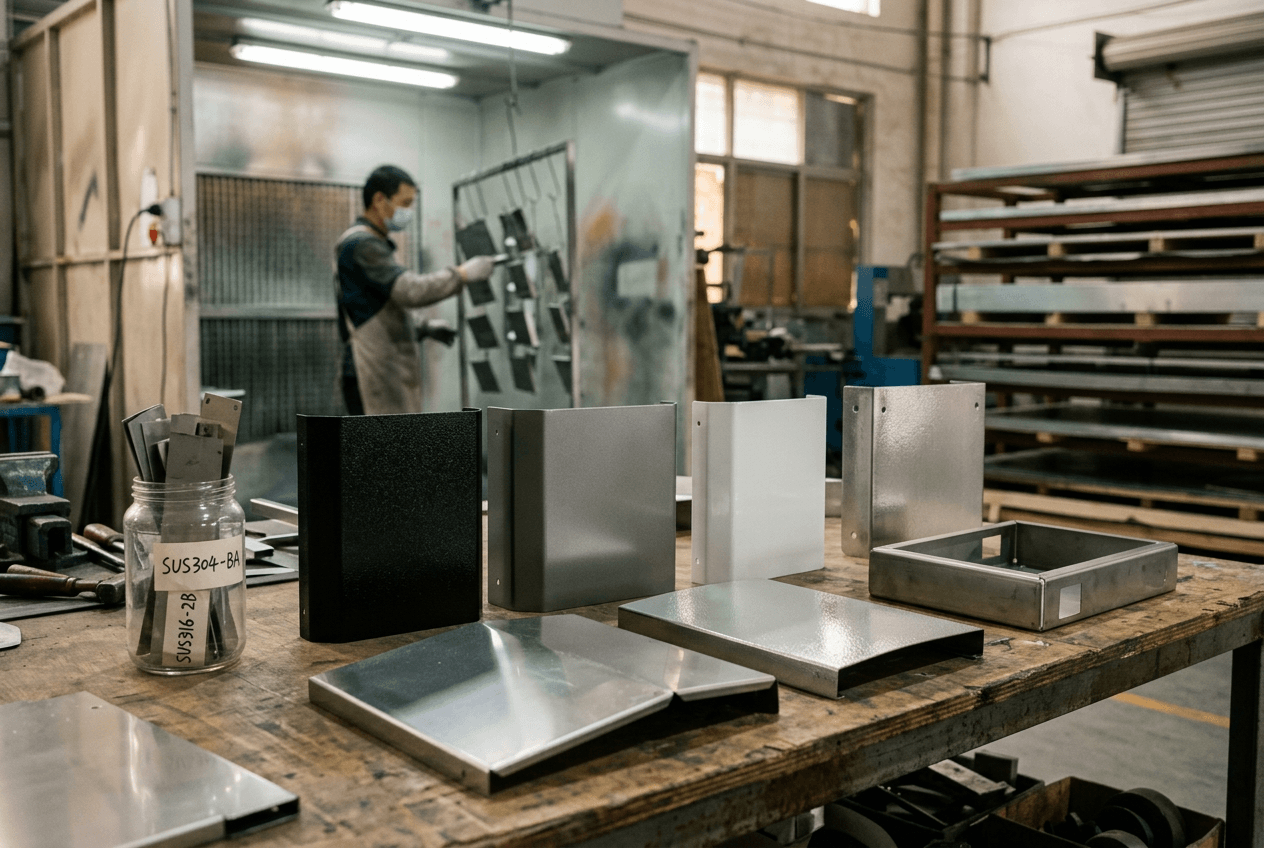
A good prototype does not automatically control a production batch. Prototype parts often receive extra handling, careful weld dressing, fresh powder, and more spray attention. Batch production depends on hanging density, hook position, oven loading, line speed, powder recovery, operator settings, and part geometry.
If the approval record only says “sample approved,” production has too little guidance. The sample may control color, but not gloss range, texture, orange peel, rack marks, edge coverage, inside-corner coverage, or acceptable variation. The first batch then becomes the real test, which creates schedule and payment risk.
Large welded assemblies increase the gap between prototype and batch. A prototype frame may hang from one point and cure evenly. A batch of 200 frames may need different hanging points to fit the oven or coating line. That change can move rack marks to visible areas, reduce coverage in inside corners, or shift texture on broad faces.
Approval samples need production meaning
A production-ready approval should define what the sample represents. It may approve color and gloss only. It may also approve texture, visible weld cleanup, edge coverage, rack mark locations, and packaging condition. A signed sample panel helps, but a physical part often gives better guidance for complex enclosures and frames.
Take a stainless instrument cabinet with a textured black finish. The prototype door looks acceptable under office lighting. During batch production, the door panels show slight texture variation because the spray angle changes on a larger hanging rack. If the RFQ never defined gloss range, viewing distance, or acceptable texture variation, the buyer and supplier may both defend their position.
Packaging can also break batch approval. Dark powder-coated stainless panels show rub marks quickly. Large flat doors can imprint against each other during ocean freight. A part may pass final inspection at the factory and arrive with visible scratches because the quote excluded protective film, foam separation, corner protection, or carton drop assumptions.
Lead time connects to this risk. Custom colors may require powder procurement, line cleaning, sample panels, and reapproval if the first trial misses the reference. Large cabinets may depend on oven size and hanging method. Buyers should treat finish approval and packaging approval as part of batch release, not as separate afterthoughts.
How to Normalize the RFQ Before Awarding Powder-Coated Stainless Work
The safest procurement move is to normalize the RFQ before choosing the lowest price. Buyers do not need to write a finishing textbook. They need to remove the assumptions that change cost, fit, adhesion, and approval.
Start with the drawing package. Mark stainless grade, sheet thickness, visible faces, critical mating surfaces, and after-coating dimensions. Add notes for weld cleanup, heat-tint removal, edge deburring, and sharp-edge limits where they matter. Define coating type, color code or sample reference, gloss range, texture, and target film thickness.
Next, define areas that must not receive powder. Include threads, grounding pads, bearing surfaces, sliding interfaces, press-fit zones, and holes that control assembly. If the supplier should chase threads, ream holes, or inspect fit after coating, state that requirement before price comparison.
Inspection requirements should match the application. An indoor decorative panel may need color and cosmetic inspection only. An outdoor enclosure may need adhesion testing, salt spray criteria, edge coverage review, and packaging checks. A welded frame may need visual rules for dressed welds under powder.
Supplier communication should focus on decisions that change the quote. Ask each supplier to list assumptions for surface preparation, masking, test panels, prototype approval, batch packaging, and lead time drivers. This makes cost drivers visible. It also prevents a low quote from winning because it excludes work the project later requires.
Yishang can review drawings, quantities, tolerances, finish expectations, masking areas, and assembly constraints for custom sheet metal enclosures, brackets, frames, cabinets, and welded assemblies. That review works best before prototype release, while the buyer can still adjust hole sizes, bend clearances, grounding pads, and finish notes without delaying the batch.
Planning a project that requires powder coating for stainless steel? Send Yishang your 2D drawings, 3D files, stainless material requirements, quantities, tolerances, visible surface notes, color or texture reference, coating thickness target, masking areas, grounding requirements, assembly constraints, prototype expectations, and packaging requirements. If a previous part failed, include rejection photos and inspection comments so the next quote reflects the real production risk.
Frequently Asked Questions
What should buyers include in an RFQ for powder coating for stainless steel?
Include stainless grade, starting surface, visible faces, weld cleanup requirements, powder type, color reference, gloss or texture range, coating thickness target, masking zones, and inspection tests. These details help suppliers quote the same process route.
Why can two suppliers quote very different prices for the same powder-coated stainless part?
The drawings may look identical, but the assumptions may differ. One supplier may include blasting, heat-tint removal, masking, adhesion testing, and protective packaging. Another may price basic cleaning and standard coating only.
Should dimensions apply before or after powder coating?
Buyers should define this on critical features. Coating thickness can affect hinges, latches, slots, threaded holes, grounding pads, and mating faces. For assemblies, after-coating dimensions often matter more than bare-metal dimensions.
How should grounding areas be handled on powder-coated stainless enclosures?
Mark grounding pads, bonding faces, and conductive contact areas clearly on the drawing. Powder coating insulates the surface, so these areas usually need masking or another controlled conductive path.
Why does a prototype approval fail to prevent batch color or texture problems?
A prototype may use different hanging points, spray angles, powder condition, or handling controls than batch production. Approval should define color, gloss, texture, rack marks, edge coverage, and acceptable visual variation.
When should salt spray or adhesion testing be specified?
Specify testing when corrosion resistance, warranty, outdoor exposure, or customer approval depends on it. Define the test method, duration, acceptance criteria, and sample type before suppliers quote the job.