
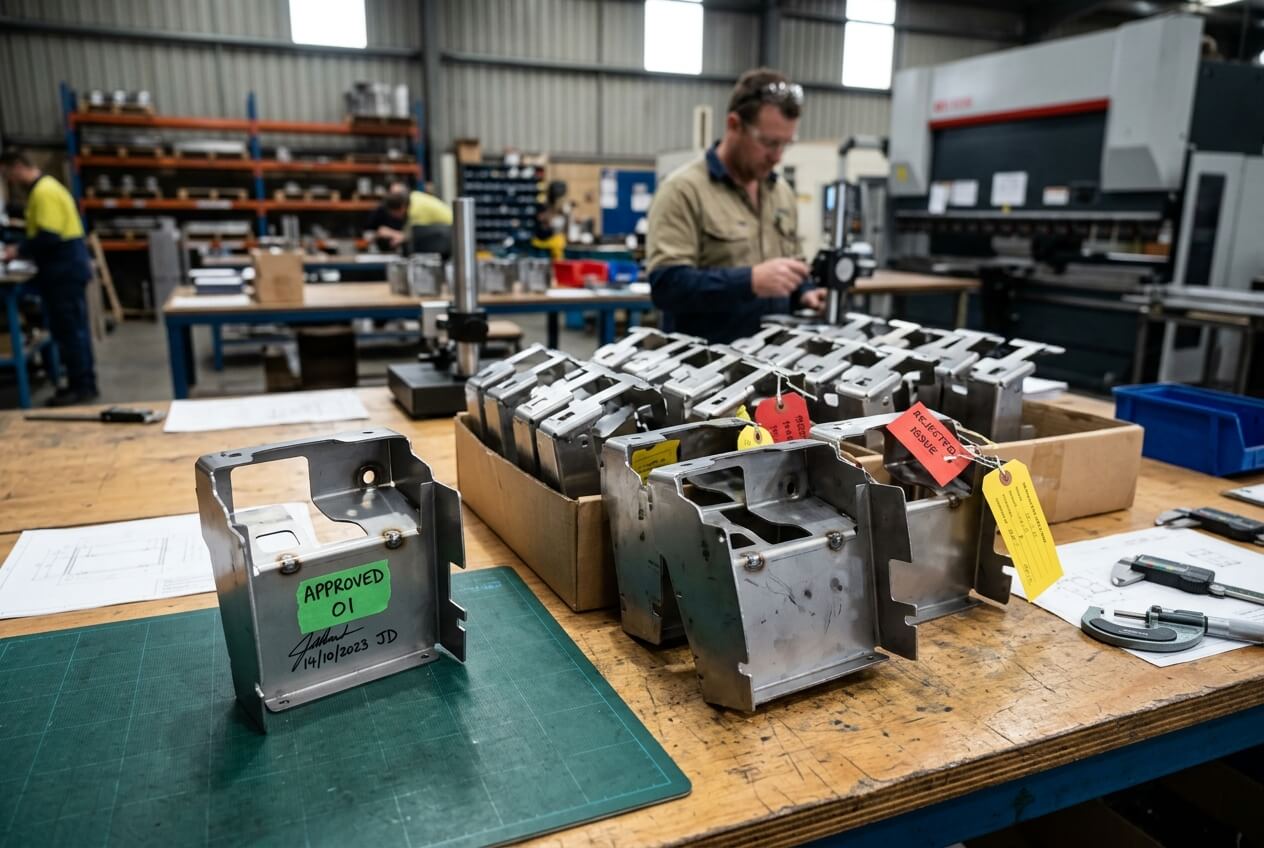
An OEM approves a prototype sheet metal enclosure. The display opening looks clean, the door closes, the mounting holes line up, and the powder coated front face matches the sample board. Procurement then releases 300 sets because the prototype appears to prove the design.
The first batch tells a different story. Some doors rub after coating. Several welded frames need correction before assembly. A few brackets accept screws only after operators loosen the mating parts. The supplier may not have fabricated the batch carelessly. More often, the buyer and supplier never defined which prototype conditions had to repeat in production.
This article focuses on one procurement risk: treating prototype approval as a production-ready specification. That risk distorts RFQs, makes quotes hard to compare, and pushes hidden work into the first batch. Buyers searching for high-end cnc lathe machines for metal often think in terms of machine accuracy. Sheet metal scale-up needs a wider question. Can the supplier repeat the approved cutting, bending, welding, coating, and assembly conditions at the quoted quantity?
Prototype approval fails when it does not define repeatable production conditions
A prototype often receives special handling. One fabricator may adjust a bend, open a slot slightly, grind a weld longer, or protect a visible face with extra care. The sample passes inspection, yet the production method remains unclear. Batch production then follows the drawing, the quote, and the shop traveler. It rarely follows every informal comment made during sample approval.
This gap creates the most expensive kind of quality problem. The buyer believes the sample represents the production standard. The supplier may believe it only proves that the part can be made. Both sides feel reasonable until the first batch exposes the difference.
One good part can hide several manual decisions
Sheet metal parts move through several processes before they become usable assemblies. Laser cutting or CNC punching controls the flat blank. Bending changes hole relationships and flange positions. Welding adds heat and distortion. Powder coating adds thickness around slots, hinges, edges, and threaded areas. Packing and handling affect cosmetic faces.
A prototype can pass even when operators make small corrections between those steps. If the RFQ does not record those corrections, the quote may exclude the fixtures, inspection time, masking, or assembly checks needed to repeat them. The batch price looks attractive, but the missing control appears later as rework, sorting, schedule pressure, or field installation trouble.
For a wall-mounted control cabinet, the prototype door may close because the hinge side received manual adjustment during fitting. In batch production, the hinge bracket shifts after welding. The door gap varies across units, and operators start filing holes during assembly. The risk started before production. The RFQ did not state that the hinge line, door gap, and bracket location had to match the approved prototype without manual correction.
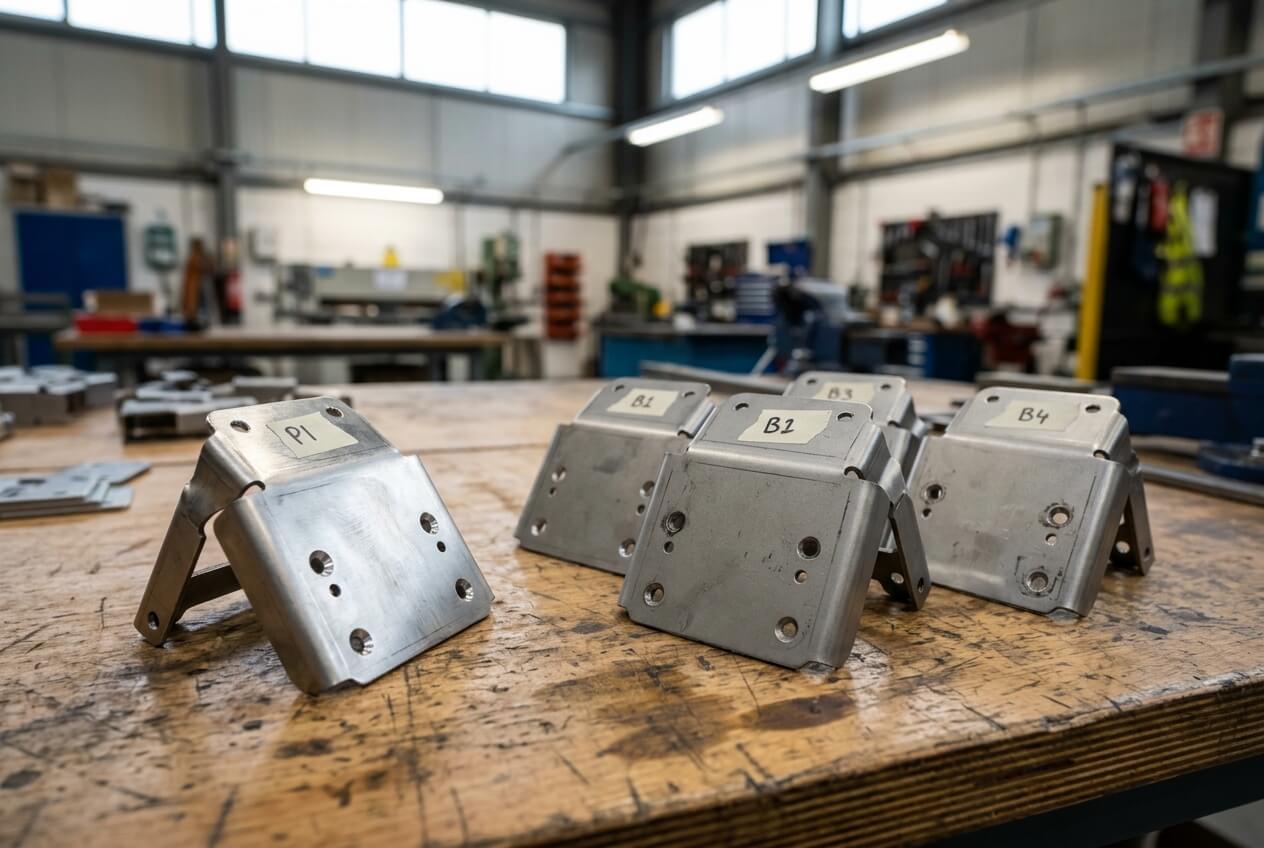
Quote comparisons become unreliable when suppliers assume different prototype standards
Procurement teams often send the same drawing and prototype photos to several suppliers. The quote table then compares unit price, tooling charge, lead time, and shipping terms. That table may look objective, but it can hide very different assumptions about production control.
One supplier may include a welding fixture, first article inspection, coating masks, and assembly checks. Another may quote standard fabrication and assume shop-floor adjustment remains acceptable. A third may price the part as a one-time prototype method. The cheapest quote may only be cheaper because it carries more batch risk.
The drawing shows geometry, not approval intent
Most sheet metal drawings show shape, hole sizes, bend lines, and general tolerances. They do not always show which features drove prototype approval. A panel may include twenty holes, but only four locate a PCB. A cabinet may include many coated surfaces, while only the front door remains visible after installation. A welded frame may have several crossmembers, yet only two mounting faces control final assembly.
When the RFQ treats every feature the same, suppliers choose their own control level. Some tighten everything and raise the price. Others hold general tolerance and hope assembly absorbs variation. Neither approach gives procurement a clean comparison.
A better RFQ separates prototype-critical features from ordinary features. Mark the holes that locate mating parts. Identify bend dimensions that control clearance. Note visible surfaces and protected edges. State whether the supplier must match the physical sample visually, dimensionally, or through assembly fit. These small notes change the quote because they change the production route.
Batch quantity changes the process, not only the price
Prototype fabrication may use laser cutting, manual bending, and careful bench fitting. A batch may justify CNC punching, bend gauges, simple fixtures, or dedicated inspection points. The change can reduce unit cost, but it also introduces new variation if nobody reviews the route.
Consider a 2 mm steel electronics bracket with PEM nuts and two locating tabs. The prototype fits after an operator adjusts the tab angle by hand. At 500 pieces, that adjustment becomes a production problem. If the RFQ freezes the tab angle, mating hole position, and PEM nut height, the supplier can quote the right bend control and inspection. If it does not, the buyer may receive a lower price and a slower assembly line.
Yishang often sees this issue during drawing review for custom sheet metal fabrication. The useful discussion does not stop at whether the sample can be made. It asks which prototype conditions must survive when the quantity increases.
CNC equipment questions miss the real batch-consistency risk in sheet metal work
Machine capability matters, but it can mislead buyers when it becomes the main qualification question. High-end cnc lathe machines for metal help produce accurate turned components. Custom sheet metal parts rely on a chain of processes that can shift dimensions after the blank leaves the machine.
A laser cut panel may measure correctly before forming. After bending, the flange position changes. After welding, the frame pulls out of square. After powder coating, holes and slots lose clearance. After assembly, a door or cover reveals the accumulated error. The strongest supplier question is not, “What machines do you own?” It is, “Which process step controls the feature that failed in previous batches?”
Critical features need process-specific controls
For flat panels, ask which holes require post-cut inspection and which edges need burr control. For formed parts, ask which dimensions the supplier measures after bending instead of only on the flat pattern. For welded assemblies, ask what the fixture holds and which diagonals or mounting faces get checked after welding. For coated enclosures, ask which threads, grounding points, hinge pockets, and sliding slots need masking.
These questions keep the conversation tied to the approved prototype. They also reveal cost drivers before procurement chooses a supplier. A quote that includes a fixture, coating mask, or first article report may look higher. It may also prevent a batch that needs sorting, rework, or air shipment after the installation date slips.
A display rack frame gives a clear example. The prototype stands level because a technician straightened it after welding. The batch quote excludes a frame fixture to keep the unit price low. When 100 units arrive, several rock on the floor and visible weld grinding varies across the front corners. The missing specification was not “better welding.” It was the need to control base flatness, front-face appearance, and grinding standard against the approved sample.
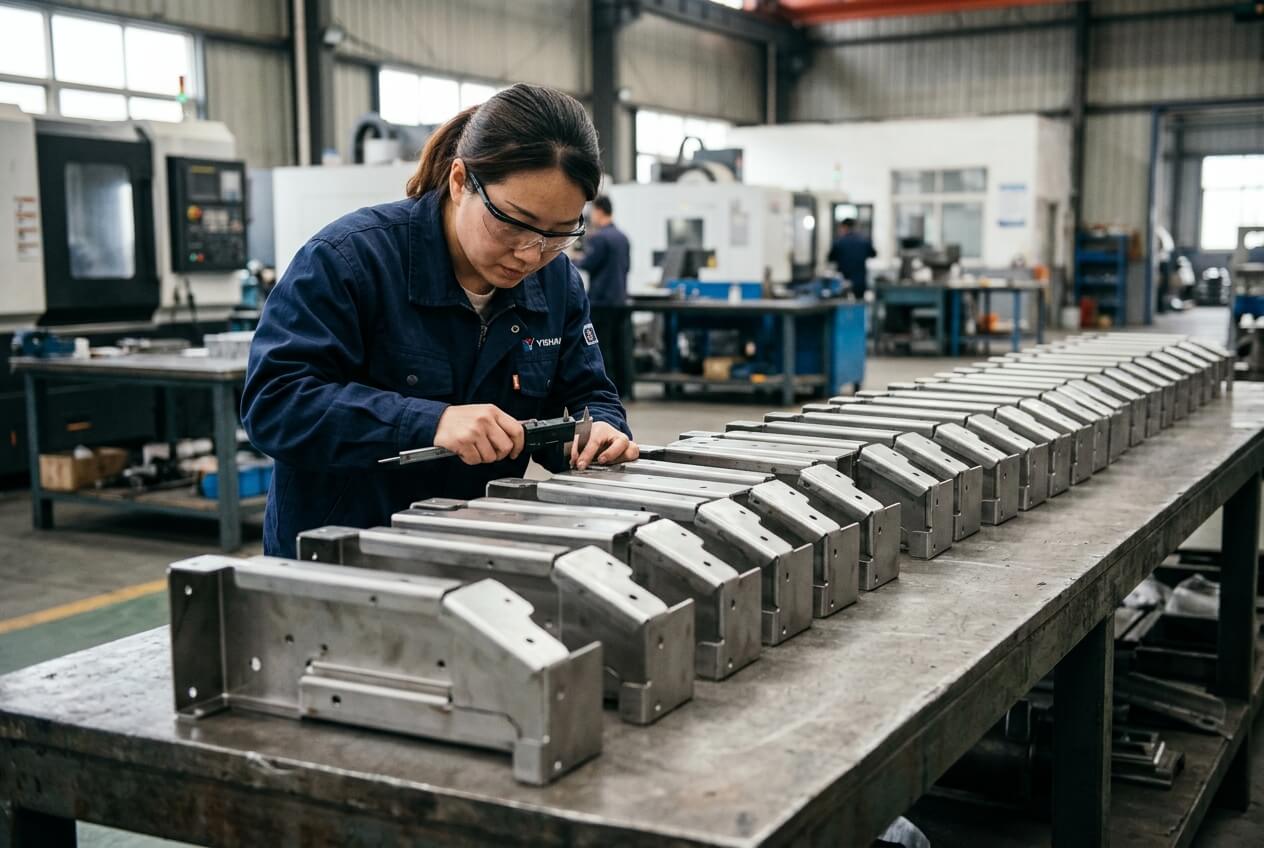
Finish, tolerance, and assembly notes must freeze the prototype before release
Buyers do not need to over-specify every dimension. In fact, excessive tolerance can raise cost without reducing the real risk. The goal is to freeze the few prototype conditions that affect fit, appearance, or installation. That decision should happen before the first batch PO, not after parts arrive.
Tolerance notes deserve careful use. A drawing that calls out tight tolerance everywhere can force unnecessary inspection and slow production. A drawing that leaves all tolerances broad may fail at the only interface that matters. Good procurement language separates functional dimensions from non-critical geometry.
Coating can turn an approved fit into an interference
Powder coating changes more than color. It adds thickness around edges, holes, slots, hinge pockets, and threads. A prototype may fit because someone cleaned a slot or chased a thread after finishing. Unless the RFQ records that need, batch parts may arrive within the drawing tolerance but fail during assembly.
For a metal enclosure with a sliding cover, coating build-up inside the guide slot can create drag. For a cabinet door, coating near the hinge pocket can change swing clearance. For a grounding point, coating can block electrical contact unless the supplier masks it. These details affect quotation because masking, post-coating checks, and cleaning take time.
Cosmetic approval needs boundaries
Cosmetic standards also need limits. If the approved prototype showed a brushed stainless front face, define grain direction and protected surfaces. If only the external front panel remains visible, do not require the same finish level inside the enclosure unless the application needs it. Clear boundaries reduce both cost and dispute risk.
Assembly notes should carry the same discipline. State which hardware must install after coating. Mark PEM hardware that locates mating parts. Identify any holes that must not be enlarged during production assembly. If operators modified the prototype, decide whether the drawing changes or the production method changes. Do not let that knowledge remain only in emails.
During manufacturability review, Yishang can help buyers turn prototype feedback into practical RFQ notes for enclosures, brackets, frames, and welded assemblies. The point is not to add premium controls everywhere. It is to make the quote reflect the control level needed for the features that decide acceptance.
Release the first batch only after the RFQ states what the prototype proves
A strong batch release answers one question clearly: what did the prototype approval prove? It may prove appearance, basic geometry, assembly fit, coating color, hardware position, or all of those items. If procurement does not define the answer, production teams fill the gap with assumptions.
Before comparing final quotes, buyers should update the drawing package and RFQ with the approval conditions. Include the latest revision, material requirement, target quantity, and any sample number or approval date. Add photos only as support; do not let photos replace written feature notes.
Clarifications that protect the first batch
Mark assembly-critical holes, slots, tabs, hinge lines, bracket positions, and mounting faces. Identify surfaces that require cosmetic protection during bending, welding, coating, and packing. Define masking for threads, grounding points, sliding areas, hinge pockets, and close-clearance holes. State whether first article inspection must compare parts to the drawing, the approved sample, or both.
Also discuss lead time honestly. Fixtures, coating masks, first article reports, and approval samples may add days before full production starts. That delay can protect the delivery date by preventing batch-wide rework. A short quoted lead time has little value if the first shipment needs sorting before assembly.
Supplier communication should stay focused on consequence chains. If this hole shifts, what assembly fails? If this coating area builds up, what clearance disappears? If this welded frame pulls, which mounting face loses contact? Those questions help both sides price the real work instead of arguing after rejection.
Before you scale from prototype to batch, send Yishang your drawings, material requirements, target quantities, functional tolerances, finish expectations, prototype photos, assembly notes, and approved sample details. If your metal enclosure, bracket, cabinet, frame, or welded assembly must match a prototype, Yishang can review which conditions need to be frozen before quotation and first batch release.
Frequently Asked Questions
Why can an approved sheet metal prototype still fail in batch production?
A prototype may include manual bend correction, extra deburring, hole adjustment, careful fitting, or special cosmetic handling. If the RFQ does not define which of those conditions must repeat, batch production may follow a different control level while still following the drawing.
Do high-end cnc lathe machines for metal prove a supplier can make consistent sheet metal parts?
No. CNC lathe capability matters for turned parts, but sheet metal consistency depends on cutting, bending, welding, coating, hardware insertion, and assembly control. Buyers should ask how the supplier controls the features that affect final fit and appearance.
What should buyers mark as prototype-critical on a drawing?
Mark features that decide acceptance, such as PCB locating holes, hinge lines, mating slots, PEM hardware positions, door gaps, visible faces, grounding areas, and mounting surfaces. Non-critical holes and hidden surfaces can often follow standard fabrication tolerance.
How does powder coating create batch rejection risk?
Powder coating adds thickness around holes, slots, hinges, threads, and edges. A prototype may fit after manual cleaning, but a batch can bind or lose clearance. Buyers should define masking, post-coating checks, and close-clearance areas before quotation.
When should first article inspection compare parts to the approved sample?
Use the sample when approval depended on appearance, assembly feel, door gap, coating match, or fit with mating parts. The first article plan should state whether the sample controls visual quality, dimensions, assembly fit, finish, or a combination.
How can buyers avoid overpaying while still protecting batch consistency?
Do not tighten every tolerance or upgrade every cosmetic surface. Instead, identify the few features that affect installation, appearance, or function. This lets suppliers quote focused controls, fixtures, masking, and inspection where they actually reduce rejection risk.