

An OEM buyer may ask for one price on a powder-coated metal enclosure with welded brackets, hinge pins, threaded inserts, and several spacers made on a lathe for metal. The drawings show the main dimensions. The prototype looks acceptable. The quote also looks competitive, so purchasing releases the first batch.
The dispute appears later. Powder coating enters threads. Brushed stainless panels show handling marks. A turned spacer no longer seats because coating buildup reduced the clearance around a mounting hole. The supplier says the parts meet the drawing. The buyer says the assembly does not meet the product expectation.
This failure rarely starts in the coating line. It starts in the RFQ. The buyer asks suppliers to quote from a finish note that does not separate visible surfaces from hidden surfaces, coated zones from masked zones, or prototype appearance from batch acceptance rules. One supplier prices basic industrial powder coating. Another includes masking, thread cleaning, protected packaging, and final assembly checks. The lowest quote may not be more efficient. It may carry less finish risk.
For custom sheet metal fabrication, this risk grows when sheet metal parts work with turned hardware, bushings, studs, hinge pins, standoffs, or spacers. The finish no longer affects appearance only. It changes fit, thread engagement, grounding, sliding movement, and inspection results. Buyers can reduce disputes when they define the finish boundary before they compare supplier prices.
The Quote Breaks When Cosmetic and Functional Surfaces Share One Finish Note
A short note such as “black powder coat” or “brushed stainless” can support an early budget quote. It cannot support a stable production quote for a cabinet, enclosure, display rack, bracket, or welded frame. That note defines a general finish. It does not define which surfaces must look perfect, which surfaces can show rack marks, or which interfaces must remain free of coating.
When the RFQ leaves those details open, each supplier builds a different quotation. One may assume standard handling for all faces. Another may protect the front panel, use film on brushed surfaces, and pack each cosmetic part separately. A third may add masking for holes and threads because the part looks like an electrical enclosure. All three may quote the same drawing, but they do not quote the same risk.
Visible faces carry different rejection risk
A front door on a control cabinet carries a different acceptance burden than an internal mounting plate. The customer sees the door every day. The mounting plate may disappear after installation. If the drawing gives both parts the same finish note, production may handle them the same way. That can create scratches, hook marks, gloss variation, or orange peel on the visible face.
Procurement teams often discover the difference after inspection. The supplier may pass the shipment because the coating covers the metal and the dimensions match the drawing. The buyer may reject the same shipment because the visible face does not match the product standard. Both sides then argue from assumptions instead of requirements.
A better RFQ marks cosmetic surfaces on drawings, photos, or a 3D screenshot. It also states whether hidden edges may show rack marks, whether small inner-face scratches are acceptable, and whether weld grinding must disappear under coating. These notes affect unit price, but they prevent a larger rejection cost.
Project example: powder-coated cabinet door
Consider a powder-coated cabinet with a removable front door and internal welded brackets. The buyer expects the outside of the door to have a clean retail-level appearance. The inside face only appears during maintenance. If the RFQ simply says “RAL 9005 powder coat,” a supplier may hang the door from a visible hole and allow minor marks on both faces.
The problem starts with an incomplete finish boundary. It affects the quote because the supplier does not price protected hanging points, separate handling, or cosmetic inspection. It affects production because operators choose the fastest practical method. The buyer should clarify the Class A surface before quotation, not after the first batch reaches final inspection.
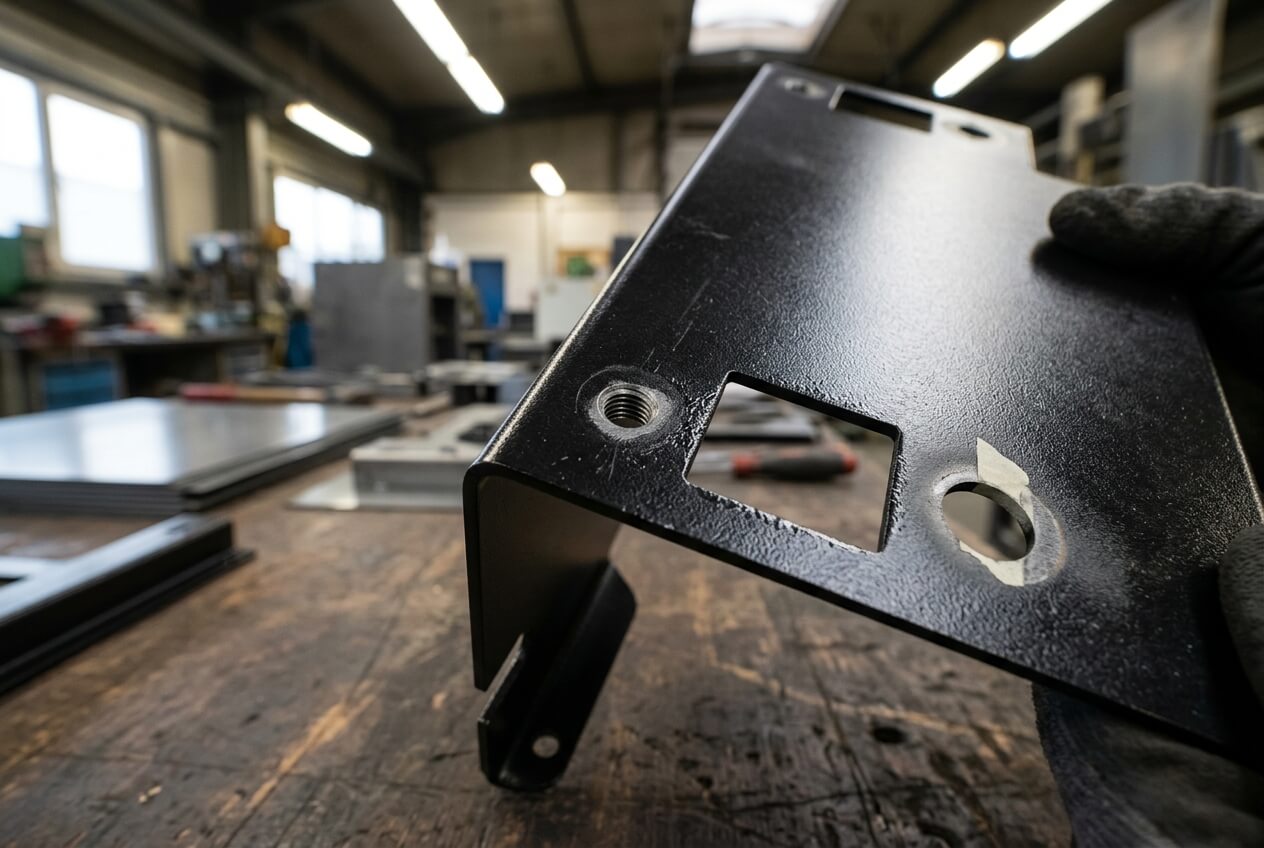
Lathe for Metal Components Turn Coating Notes Into Assembly Fit Risks
Turned parts often look like small purchasing details. A spacer, bushing, threaded pin, hinge shaft, or standoff may appear as a separate line item. Yet these parts often decide whether a finished sheet metal assembly works after coating. A lathe for metal can hold accurate diameters and shoulders, but finishing can change the real assembly condition.
A turned steel spacer may fit a laser-cut hole before coating. After powder coating, the same hole may lose clearance. A threaded insert may accept screws before finishing, then bind because powder entered the first threads. A hinge pin may rotate smoothly in a prototype because one technician cleaned the hinge bore by hand. In batch production, that cleaning step may not exist unless the RFQ required it.
Close-fit zones need their own finish rules
Buyers should not hide close-fit interfaces inside a general finish note. Threads, bearing surfaces, hinge bores, grounding pads, sliding slots, plug-in faces, and press-fit areas need clear instructions. The RFQ should state whether these zones need masking, post-coating cleaning, thread chasing, go/no-go checks, or assembly testing after finish.
The consequence chain is direct. An unclear drawing leads to quote assumptions. Quote assumptions lead to missing process steps. Missing process steps lead to clogged threads, stiff hinges, chipped coating, or parts that need rework before assembly. The issue may look like a production mistake, but purchasing often created the risk by comparing quotes that included different levels of interface protection.
Project example: welded frame with hinge pins
A welded equipment frame uses laser-cut hinge plates and turned hinge pins. The prototype moves smoothly because the assembler removes coating from several hinge holes. The sample passes. Purchasing then orders 300 frames without documenting that manual cleaning step.
During batch production, powder buildup remains in the hinge holes. Workers force the pins through the coated bores. Some hinges feel stiff, and coating flakes around the moving joint. The supplier did not quote hinge-bore masking or post-coating reaming. The buyer did not identify hinge movement as an acceptance requirement. A short RFQ note could have avoided the rework: “Mask hinge bores; verify pin rotation after coating.”
Masking and Coating Thickness Must Be Priced, Not Assumed
Masking looks like a small detail until quantity increases. One prototype with eight protected holes may require only a few minutes of extra care. A batch of 1,000 panels with eight masked holes each creates 8,000 masking decisions, plug placements, removals, and inspection points. That labor affects price and lead time.
Coating thickness creates a similar issue. Many buyers specify color but not thickness limits. For simple protective coating, that may work. For sheet metal parts that assemble with turned spacers, screws, hinges, or sliding panels, thickness can change the fit. It can reduce clearance, block slots, shift door closing behavior, or prevent metal-to-metal grounding.
When the low quote excludes the work you need
A supplier that does not include masking may look cheaper. That quote may still be reasonable if the holes are oversized and no threads need protection. It becomes risky when those same holes locate a bracket, accept a shoulder spacer, or support a grounding connection. The buyer cannot judge the quote without knowing which process steps each supplier included.
The RFQ should show coating-free areas clearly. Buyers can use drawing callouts, color-coded PDFs, annotated photos, or section views. The format matters less than the clarity. Mark threaded inserts, PEM hardware, grounding pads, bearing surfaces, label recesses, hinge holes, and close-fit mounting points. If coating thickness affects tolerance stack-up, state the allowable finished condition rather than only the pre-finish dimension.
This also improves supplier communication. Instead of asking for a vague “better finish,” the buyer can ask a specific question: “Does your quote include masking for these sixteen holes and post-coating thread inspection?” That question makes quotes easier to compare. It also exposes cost drivers before production starts.
Project example: display rack with turned connectors
A retail display rack uses bent sheet metal shelves and round turned connectors. The prototype looks clean because a senior worker selects good parts and adjusts each connector during assembly. For the batch, powder buildup around connector holes creates alignment stress. When workers tighten the connectors, coating chips around several holes.
The issue begins with missing masking and finished-fit requirements. It affects cost because the quote excludes controlled coating thickness around connector holes. It affects lead time because rework starts after parts return from coating. The RFQ should have defined the connector holes as functional zones and required a trial assembly after finishing.
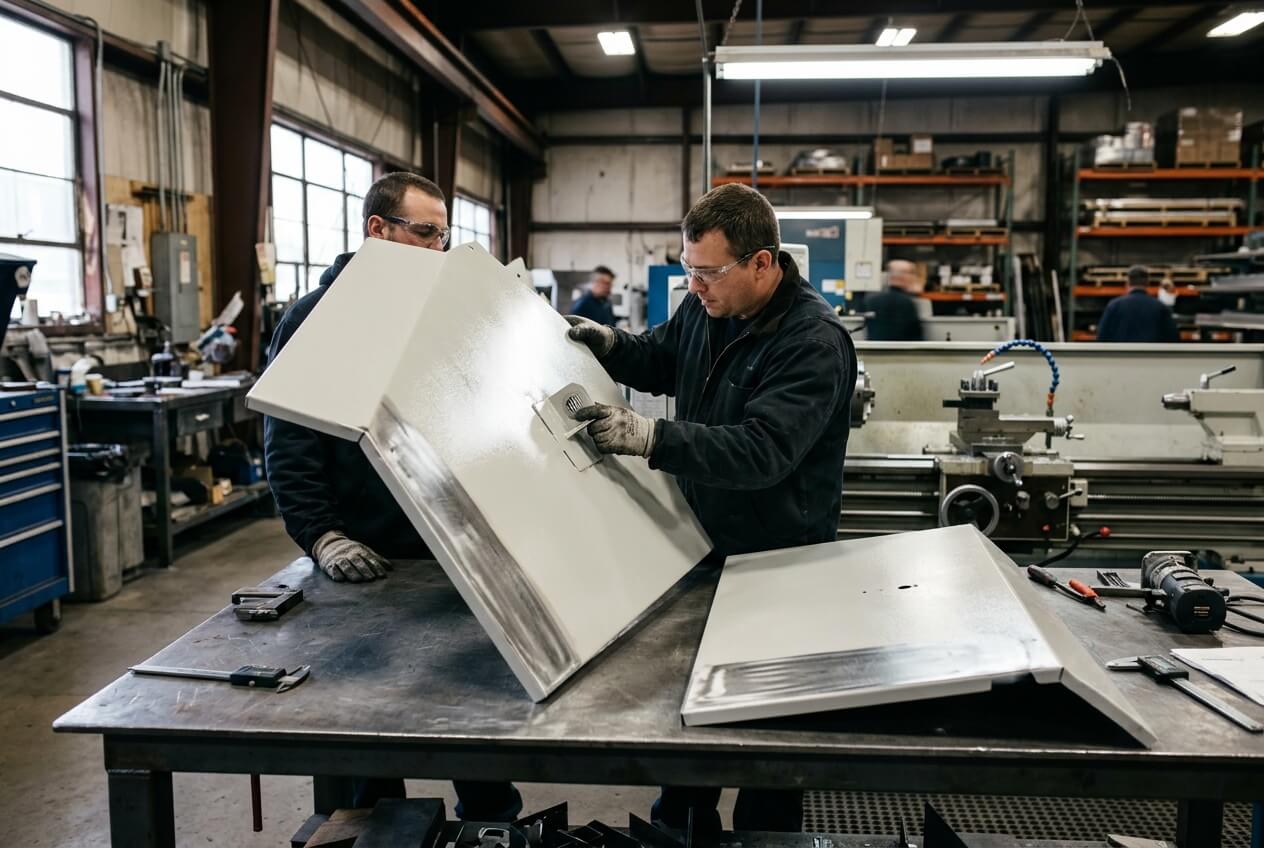
Prototype Approval Can Hide Manual Finish Work That Batch Production Cannot Repeat
Prototype approval can create false confidence. A sample may look excellent because the supplier used extra manual polishing, selective part matching, careful thread cleaning, or special wrapping. That does not mean the batch will follow the same steps. Production follows documented requirements, not informal memory from a sample review.
A buyer should approve both the sample and the process boundary behind it. If the sample sets the cosmetic target, take photos under consistent lighting. Mark the visible surfaces. Record acceptable and unacceptable defects. Confirm whether the same masking, cleaning, and packaging methods apply to the production batch.
Finished assembly checks matter more than loose-part checks
Many finish disputes appear only after assembly. Loose panels may pass coating inspection. Screws may fail to enter after assembly. A door may close correctly before powder coating, then rub along a coated edge. A turned spacer may meet its lathe tolerance, yet fail to seat because the mating sheet metal hole gained coating.
For enclosures, cabinets, frames, and welded assemblies, buyers should define post-finish functional checks. These may include screw installation, hinge rotation, door closing, bracket seating, connector fit, and grounding-pad verification. The inspection plan should match installed use, not only loose-part appearance.
Packaging also belongs in the approval record. Brushed stainless covers can scratch during shipment. Powder-coated panels can rub through separators. Heavy welded assemblies can damage nearby cosmetic parts if the packaging treats every surface as industrial-grade. If the buyer expects protective film, paper separators, individual wrapping, or separated crates, the RFQ should say so before pricing.
Yishang reviews projects that combine laser cutting, bending, welding, polishing, powder coating, assembly, and batch production. In many cases, the most useful discussion happens before quotation. Clear photos, marked surfaces, tolerance-sensitive interfaces, and prototype comments help the manufacturing team identify where finish controls must enter the route.
Compare Supplier Quotes Only After You Lock the Finish Acceptance Boundary
Procurement teams often compare sheet metal quotes by unit price, tooling cost, and lead time. Those numbers matter, but they can mislead buyers when finish assumptions differ. A quote that excludes masking, thread cleaning, cosmetic packaging, or post-finish assembly checks may look attractive until the first shipment fails acceptance.
Before comparing prices, buyers should lock the finish acceptance boundary. That does not require a long specification for every surface. It requires practical clarity on the zones that create rejection risk. The RFQ should identify cosmetic faces, hidden faces, coating-free areas, finished-fit interfaces, acceptable marks, inspection method, and packaging expectations.
Tolerances also need the correct reference point. If a dimension matters after powder coating, say so. If a turned bushing must fit a coated hole, define the finished clearance. If a bracket must sit flat after welding and coating, state the functional surface and inspection condition. Material requirements should also connect to finish expectations, especially for stainless panels, aluminum covers, plated parts, and powder-coated steel assemblies.
Suppliers can then quote the same job. They can price masking labor, fixture choices, polishing direction, weld dressing, coating thickness control, prototype checks, packaging materials, and batch inspection. They can also flag manufacturability tradeoffs early. A tighter cosmetic standard may increase handling time. A coating-free grounding pad may require masking. A close-fit lathe for metal spacer may need a larger pre-coat clearance or a post-coat inspection gauge.
If your project includes custom sheet metal parts, metal enclosures, brackets, frames, cabinets, or welded assemblies with turned components, send more than the basic drawing pack. Include material requirements, order quantities, critical tolerances, finish expectations, cosmetic-surface markings, masking requirements, assembly notes, and any prototype comments that must carry into production.
Yishang can review drawings and RFQ details against the planned fabrication route, including cutting, bending, welding, finishing, and assembly. To reduce finish disputes before shipment, contact Yishang with your drawings, material requirements, quantities, tolerances, and finish expectations. A clear RFQ helps separate a genuinely competitive quote from one that leaves finish risk undefined.
Frequently Asked Questions
Why does a powder-coated sheet metal RFQ need more than a color code?
A color code defines appearance direction, not acceptance risk. It does not tell the supplier which faces are cosmetic, which holes need masking, which threads must stay clean, or how parts should be packed. Those missing details change price, lead time, inspection, and rejection risk.
How can a lathe for metal spacer or bushing fail after powder coating?
The turned part may meet its own tolerance, but the mating sheet metal feature can change after coating. Powder buildup can reduce hole clearance, block a shoulder from seating, or clog threads. Buyers should define finished-fit requirements and coating-free zones around these interfaces.
What surfaces should buyers mark as Class A cosmetic surfaces?
Mark any face that customers, operators, or installers will see after assembly. Common examples include enclosure doors, front panels, exposed cabinet sides, display rack faces, and visible covers. Hidden brackets and internal plates may follow a different acceptance level if function allows it.
Why can an approved prototype still lead to batch finish disputes?
A prototype may include manual cleaning, selective part fitting, extra polishing, or careful packaging that the batch quote did not include. Buyers should record the sample’s masking method, acceptable defects, assembly checks, and packaging rules before approving batch production.
Which finish details affect quote comparison most often?
Masking scope, coating thickness, cosmetic inspection level, polishing direction, thread protection, post-finish assembly checks, and packaging method often change the quote. If suppliers assume different controls, their prices are not directly comparable.
What should buyers send for RFQ review on sheet metal assemblies with turned parts?
Send drawings, material requirements, quantities, critical tolerances, finish expectations, cosmetic surface markings, masking notes, assembly requirements, and prototype feedback. These details help the supplier price the real manufacturing route instead of guessing the finish risk.