
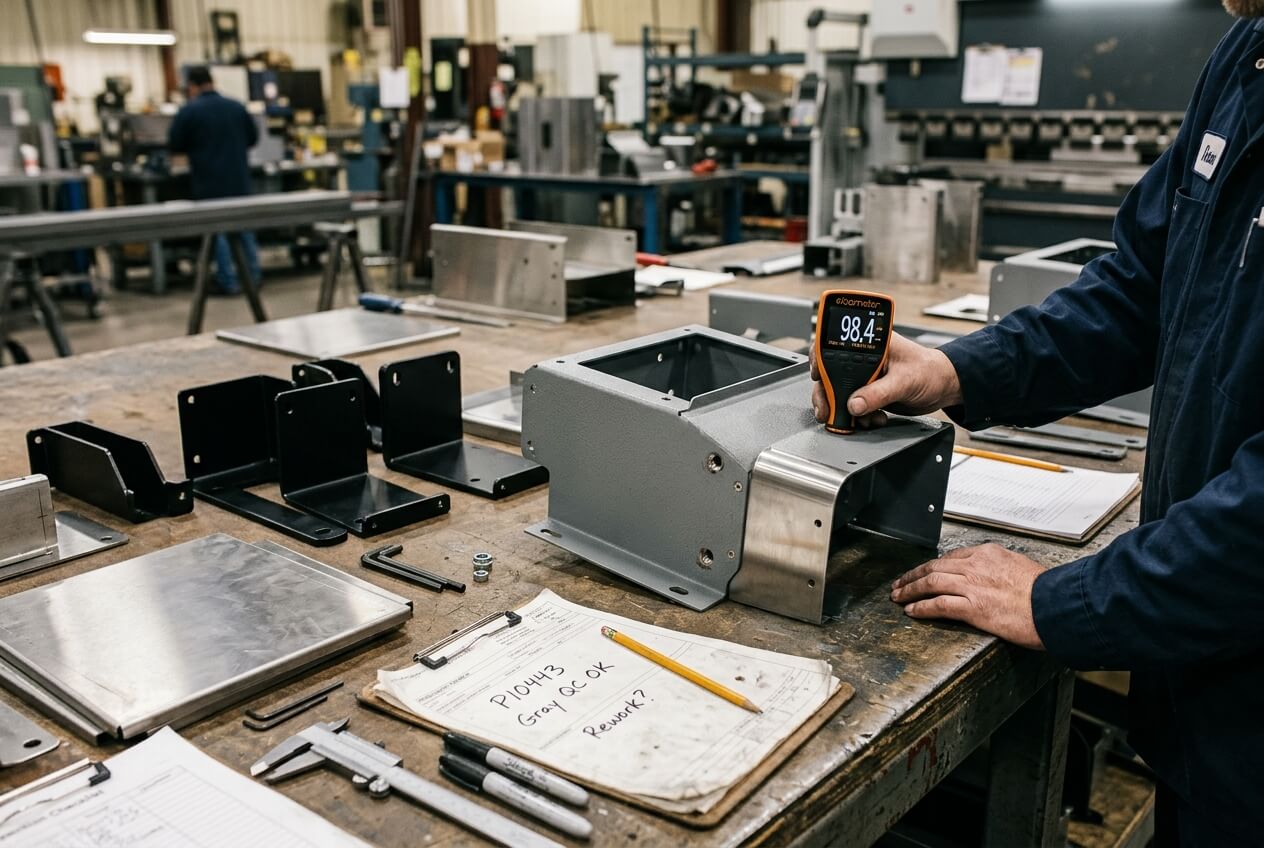
An OEM buyer sends one RFQ for a wall-mounted control enclosure, a set of display rack panels, and a welded equipment frame. The drawing note says only: powder coated black. Three suppliers quote the same part numbers, but they do not quote the same finish expectation.
One supplier assumes standard black texture. Another prices smooth satin black with closer visual control. A third includes masking for threaded inserts, hinge areas, grounding pads, and customer-facing panels. The cheapest quote looks attractive until the first batch arrives. The panels show different gloss levels. Powder builds around holes. Handling marks sit near the logo area. The parts may function, but the buyer cannot ship them to the customer.
This is where many disputes around powder metal coatings begin. The coating process may not be the root cause. The RFQ often leaves finish acceptance open to supplier interpretation. That ambiguity changes price, lead time, inspection, assembly fit, and rework responsibility.
For procurement teams, the main risk is not choosing powder coating instead of another finish. The risk is comparing quotes built on different assumptions. A short finish note can hide cosmetic standards, material preparation, coating thickness, masking rules, and packing requirements. Buyers need enough detail to make every supplier quote the same requirement before production starts.
A Two-Word Finish Note Can Turn One RFQ Into Three Different Quotes
A drawing note such as powder coat black looks simple, but it creates a wide quoting range. A fabricator must decide the powder type, color reference, gloss, texture, pretreatment, film thickness, masking, inspection level, and packaging method. If the RFQ does not define those items, each supplier fills the gaps differently.
This problem affects cost before it affects quality. A supplier who includes surface cleaning, sample matching, thickness checks, masking plugs, and separated packing will quote higher than a supplier who assumes visual inspection only. The price gap may not reflect better efficiency. It may reflect different finish standards.
How assumptions enter the quote
Sheet metal parts rarely arrive at powder coating as perfect flat coupons. They include laser-cut edges, bends, welds, threaded hardware, PEM studs, louvers, slots, and ground seams. Each feature changes coating risk. A welded frame needs different cleanup from a simple bracket. A cabinet door with a large flat face needs more careful handling than an internal mounting rail.
Material condition also matters. Mild steel, galvanized steel, stainless steel, and aluminum may need different pretreatment or handling before powder coating. If the RFQ only names the base material and color, the supplier may not know whether the product will sit in a dry office, a humid workshop, or a semi-outdoor equipment area. That missing use context changes pretreatment decisions and inspection expectations.
A buyer may think the drawing controls the part. In reality, the drawing may only control the bare metal. Once powder coating enters the scope, the RFQ must also control the finished condition. Otherwise, purchasing compares incomplete numbers and discovers the difference during incoming inspection.
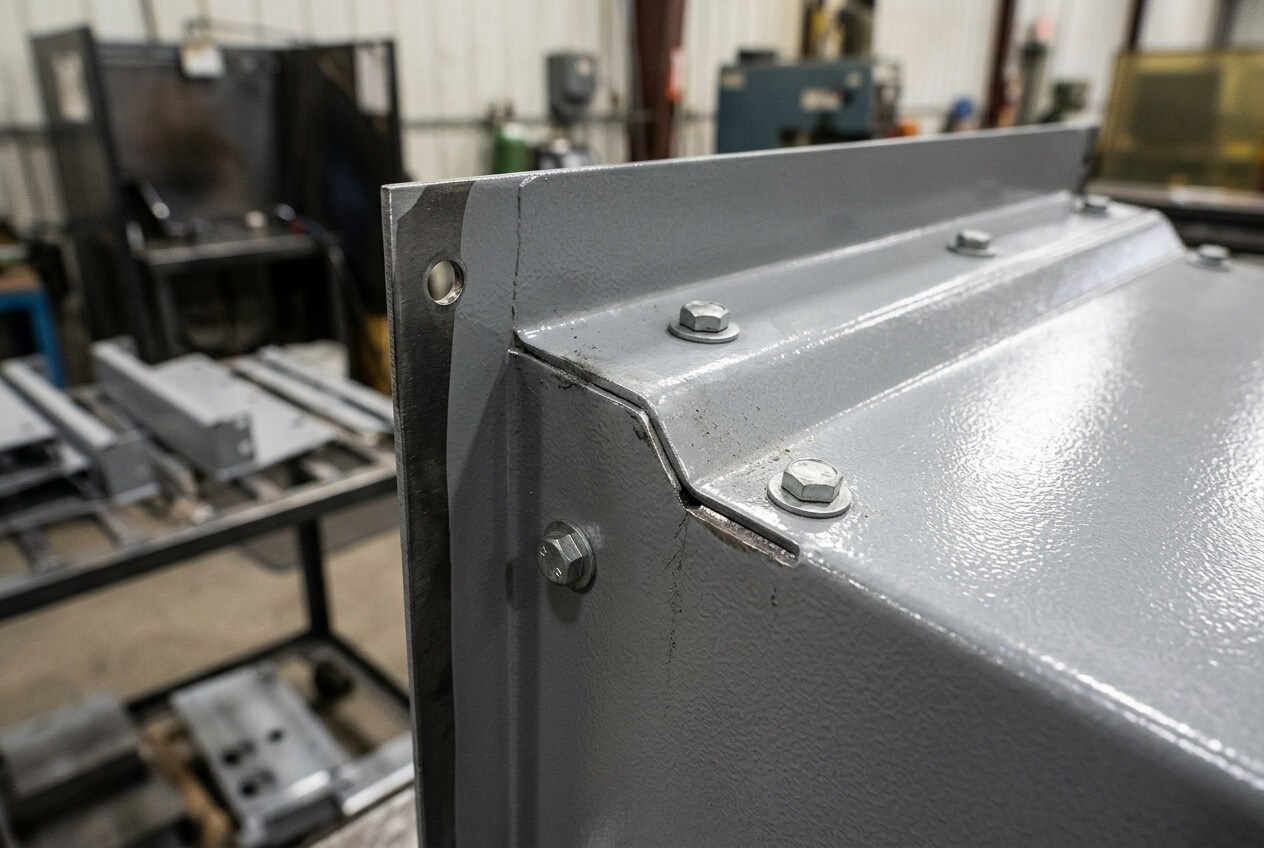
Unmarked Cosmetic Faces Push Normal Production Marks Into Reject Territory
Many cosmetic disputes start because the buyer and supplier do not agree which surfaces matter. A cabinet side panel may have one visible face and one hidden return flange. A display rack panel may have a front face, back face, and non-visible hanging edge. A welded frame may show only the front tubes after installation.
If the drawing does not mark those surfaces, production must choose a hanging point, racking method, inspection priority, and packing orientation. A rack mark on a hidden edge may be harmless. The same mark near a logo, screen print, or customer touch point can stop shipment.
Project example: display rack panels
A retailer orders powder coated display rack panels in matte black. The RFQ includes a RAL number but no A-surface callout. The coating shop hangs parts from a hole near the upper corner. The hole remains visible after assembly, and a small rack mark sits beside the brand label area.
The supplier sees a normal industrial coating mark. The buyer sees a cosmetic defect on the front face. The dispute did not start with the rack. It started when the RFQ failed to identify customer-facing surfaces and acceptable rack mark locations.
Procurement can reduce this risk with annotated drawings or simple marked photos. Label external doors, front covers, top panels, logo areas, and customer-facing edges as A-surfaces. Label internal faces, back returns, and installation-only edges separately. This allows the fabricator to apply stricter handling where it matters without overpricing hidden surfaces.
Cosmetic language must match the product use
A factory electrical enclosure does not need the same finish standard as a retail display fixture. A hidden bracket inside a cabinet does not need the same scratch rule as a front panel. If the RFQ treats every surface as equally critical, suppliers may add unnecessary labor, reject more parts, and extend lead time. If the RFQ treats every surface as standard industrial finish, visible parts may fail customer inspection.
Useful finish notes can define viewing distance, lighting, allowable rack marks on non-visible edges, acceptable orange peel, gloss range, and sample reference. These details do not turn procurement into a coating laboratory. They align price with the real appearance risk.
Coating Build-Up Becomes a Fit Problem When Drawings Only Control Bare Metal
Powder coating adds a physical layer. That sounds obvious, but many drawings still control only the bare metal dimensions. The finished part then creates a second problem: it looks acceptable, but it no longer assembles cleanly.
Film thickness often falls within a typical range, but build-up does not occur evenly. Powder collects around edges, inside corners, holes, weld toes, tabs, and bends. Tight features suffer first. Hinge gaps, latch slots, threaded holes, sliding rails, PEM hardware, grounding pads, and mating brackets all need review before the buyer freezes the RFQ.
Project example: powder coated enclosure door
An OEM approves a bare prototype for a small sheet metal enclosure. The door swings correctly, the latch engages, and the hinge alignment looks good. During batch production, the parts receive powder coating after bending and spot welding. The door rubs against the frame, and the latch slot feels tight.
The supplier followed the bare drawing. The buyer expected the finished assembly to work the same as the prototype. The missing detail was post-coating clearance. A small change to the gap, a masking note, or a post-finish fit check could have prevented rework.
Threads create another common failure chain. Powder can partially fill tapped holes or coat grounding areas. Operators may chase threads after coating, but that extra work can scratch nearby surfaces. Masking before coating usually costs less than thread repair and touch-up after coating.
Where tolerances and finish must meet
Procurement should flag coating-sensitive dimensions before requesting final pricing. Ask whether the tolerance applies before or after finishing. Confirm whether holes must accept a fastener after coating. Mark surfaces that must remain conductive, such as grounding pads or bonding points.
For slots, rails, hinges, and mating tabs, the drawing should state the functional requirement in finished condition. A note such as mask M4 threaded holes and grounding pad gives the fabricator a clear target. A note such as post-coating slot must accept 6 mm tab provides even better production control.
Yishang can review drawings for coating-related fit risks when buyers source enclosures, brackets, frames, and welded assemblies. This review should happen before quote comparison, not after batch rejection, because masking, clearance changes, and post-finish checks affect both cost and schedule.

Prototype Approval Fails When the Batch Standard Stays Unwritten
A coated prototype helps only when both sides record what the prototype proves. Too often, the buyer approves a sample part by photo or visual memory. Batch production then follows a different loading pattern, curing volume, handling method, and packing plan. The finished parts look close, but not close enough for the customer.
The approved prototype should lock key details: powder code, color reference, gloss, texture, thickness range, pretreatment, masking method, visible face definition, and packing requirement. Without those notes, the prototype becomes a loose reference. It cannot settle a dispute over texture variation, edge coverage, or handling marks.
Project example: welded equipment frame
A buyer orders welded steel frames with black powder coating for a machine base. The first sample looks smooth after extra weld grinding and careful coating. The production batch shows minor grinding lines under the finish and heavier powder in inside corners. The frames still meet the strength requirement, but the customer complains about appearance on exposed front tubes.
The RFQ never stated which welds needed blending before coating. It also did not define whether the finish standard applied to all faces or only exposed faces. The supplier priced normal weld cleanup. The buyer expected showroom-facing finish on selected tubes. Both parties treated the sample as approval, but neither documented the production standard.
Powder coating can hide small color variation, but it will not erase deep grinding marks, weld spatter, oil contamination, or poor edge preparation. If welded seams remain visible after coating, the RFQ should state whether they need grinding flush, blending, or normal industrial cleanup.
Packing can destroy an acceptable coating
The move from prototype to batch also changes damage risk. A single sample may ship with extra hand wrapping. A batch of 500 panels can rub during transit if the packing plan remains vague. Dark smooth finishes show scuffs quickly. Large flat panels reveal dents and handling marks. Textured finishes hide more surface variation, but they may not match an existing product line.
For visible panels, define protective film, foam separators, individual bags, corner guards, carton orientation, or pallet limits. Packing is not a shipping afterthought. It protects the finish standard that the buyer already paid to achieve.
Clarify Acceptance Before Comparing Powder Coated Sheet Metal Quotes
The safest time to control powder coating risk is before quotation. At that stage, the buyer can still align suppliers around one requirement. After cutting, bending, welding, coating, and packing, every unclear note becomes a negotiation over rework, delay, scrap, or concession approval.
Start by tying the finish to the product context. State where the part will be used, which faces remain visible, and whether the appearance must match an existing product or brand sample. Then connect finish expectations to drawing features. Mark holes, threads, grounding zones, hinge areas, sliding interfaces, bearing surfaces, and label zones that need special control.
Next, define coating requirements that affect production. Include color reference, gloss or texture target, thickness range where fit matters, pretreatment or corrosion expectation, and inspection method. If the project needs salt spray testing, adhesion checks, or a physical sample approval, state that before comparing lead time and unit price.
Cost drivers should become visible in the quote. Masking, stronger pretreatment, tighter cosmetic inspection, weld blending, sample panels, special powder colors, and individual packaging all add real work. They may also add lead time. A low quote that excludes those steps can create a later cost increase or quality dispute.
Supplier communication should focus on assumptions, not slogans. Ask each supplier what the quote includes and excludes for the coating. Request clarification on masking, pretreatment, inspection, packaging, and whether dimensions apply before or after powder coating. When answers differ, purchasing has found a risk before it becomes inventory.
Yishang supports custom sheet metal fabrication projects where powder coating affects appearance, assembly fit, or batch consistency. Send drawings early enough for manufacturability and finish review, especially for metal enclosures, brackets, frames, display parts, and welded assemblies.
RFQ action: send Yishang your drawings, material requirements, quantities, tolerances, powder color or sample reference, gloss or texture target, marked cosmetic faces, masking needs, mating-part details, prototype notes, and packing expectations. Clear information helps the quote reflect the finished part you need, not a supplier assumption.
Frequently Asked Questions
Which powder metal coatings details should an RFQ define first?
Define the color reference, gloss or texture, visible surfaces, masking areas, and coating thickness where fit matters. These items create many quote differences. If they remain unclear, suppliers may price different finish standards against the same drawing.
How should buyers mark cosmetic surfaces on powder coated sheet metal parts?
Use drawing callouts or annotated photos. Mark front panels, doors, top covers, logo areas, and customer-facing edges as A-surfaces. Mark hidden backs, internal rails, and installation-only edges separately so inspection and handling match the product use.
When does powder coating thickness affect assembly fit?
It becomes risky around tight holes, hinge gaps, latch slots, sliding rails, tabs, threaded inserts, and grounding points. Buyers should state whether dimensions apply after coating and identify features that need masking or post-coating fit checks.
Why can a powder coated prototype pass but the batch fail cosmetic inspection?
A prototype may receive extra handling, separate coating, and special packing. Batch production uses normal racking, curing, inspection, and shipment methods. Record the powder code, gloss, texture, thickness range, masking, sample status, and packing plan before release.
Do welded assemblies need special notes before powder coating?
Yes. Powder coating will not hide heavy weld spatter, deep grinding marks, or uneven weld cleanup. State which welds remain visible and whether they need grinding flush, blending, or normal industrial finish before coating.
What should buyers send for a clearer powder coated sheet metal quote?
Send drawings, material requirements, quantities, tolerances, finish expectations, color references, cosmetic surface markings, masking notes, mating-part information, prototype records, and packing requirements. This helps suppliers quote the same finished condition.