
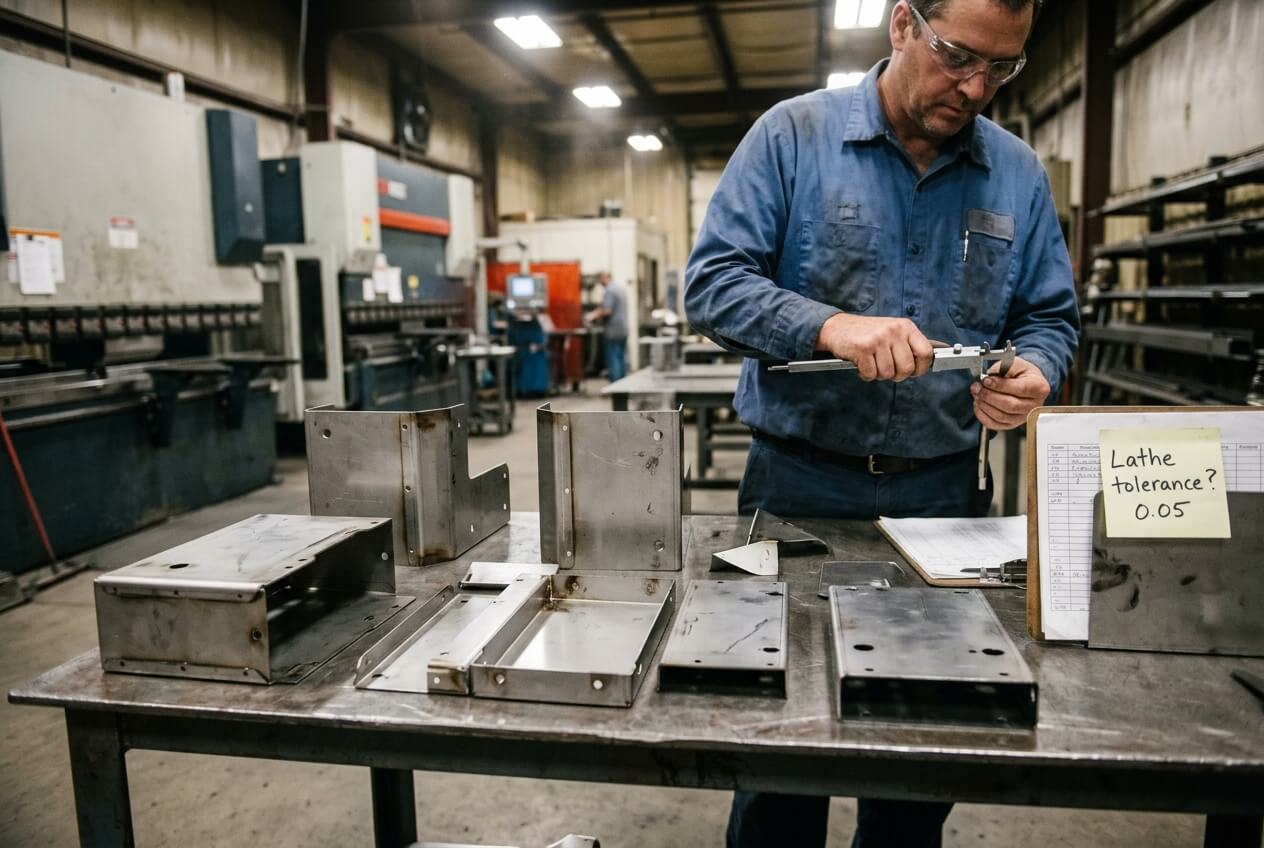
An OEM buyer sends an RFQ for a powder-coated metal enclosure. The drawing shows bent panels, welded brackets, mounting holes, internal standoffs, and one short note: “lathe pin, supplier to confirm.” Three suppliers return prices. One includes custom turned pins from bar stock. One assumes standard hinge hardware. One excludes the pin and lists it as a later discussion item.
The lowest quote may look efficient. It may also hide the most expensive assumption in the package. When production starts, the enclosure door drags after powder coating. The hinge line shifts. Assembly workers ask who approved the pin diameter, coating clearance, and retention method. At that point, the issue has moved beyond purchasing. It now affects rework, delivery, and supplier responsibility.
This article is not about whether every round part needs a lathe. Many pins, sleeves, bushings, spacers, and threaded features can come from standard hardware, tube sections, pressed inserts, welded components, or machined parts. The real procurement risk is RFQ ambiguity. A small round feature can move cost between fabrication, machining, welding, finishing, and final assembly.
For custom sheet metal fabrication buyers, that boundary matters. If the drawing does not define the function and manufacturing scope of round interface features, suppliers quote different projects while appearing to quote the same part.
Where a Small Round Feature Splits One RFQ into Three Different Scopes
A buyer may intend to source a simple sheet metal cabinet, bracket, rack, frame, or welded assembly. Then one round feature changes the manufacturing route. A hinge pin may need turning, plating, and post-coating insertion. A spacer may need welding and thread protection. A bushing may need alignment after welding. A sleeve may need a pressed fit rather than a loose fit.
When the RFQ only says “pin,” “spacer,” “machined boss,” or “lathe part,” each supplier fills the missing information differently. One quote may include custom machining. Another may use purchased hardware. A third may price only the sheet metal body and leave the round component outside scope. The unit prices no longer compare like-for-like.
Cabinet hinge example: the cheap quote excludes the hard decision
Consider a powder-coated cabinet with a folded sheet metal door. The drawing shows hinge knuckles and a Ø6 pin. It does not state whether the pin installs before coating, after coating, or after final inspection. It also omits pin material, end retention, and running clearance.
Supplier A quotes a plated steel pin installed after powder coating. Supplier B quotes a turned pin assembled before coating. Supplier C assumes the buyer will provide hinge pins. The lowest price may not include the decision that controls whether the door opens smoothly. If the buyer awards on price alone, the first production batch may reveal the missing scope.
Enclosure standoff example: one note changes fabrication, finishing, and assembly
An electronics enclosure may show four internal standoffs for a PCB. A short note says “M4 spacer, supplier confirm.” One supplier may quote welded custom turned spacers. Another may quote pressed-in threaded standoffs. A third may ship loose spacers for the customer to install.
These options affect weld marks, grounding, thread condition, pull-out strength, coating coverage, and installation time. They also affect lead time. Custom turned spacers may add machining and plating steps. Pressed inserts may reduce handling but require enough sheet thickness and installation access. Loose hardware may cut fabrication cost but shift labor to the buyer.
Yishang often reviews these boundary points during RFQ evaluation for sheet metal parts, enclosures, brackets, frames, and welded assemblies. The goal is not to force machining. The goal is to make every supplier quote the same manufacturing responsibility.
The Quote Gap Starts When the Drawing Describes Shape but Not Function
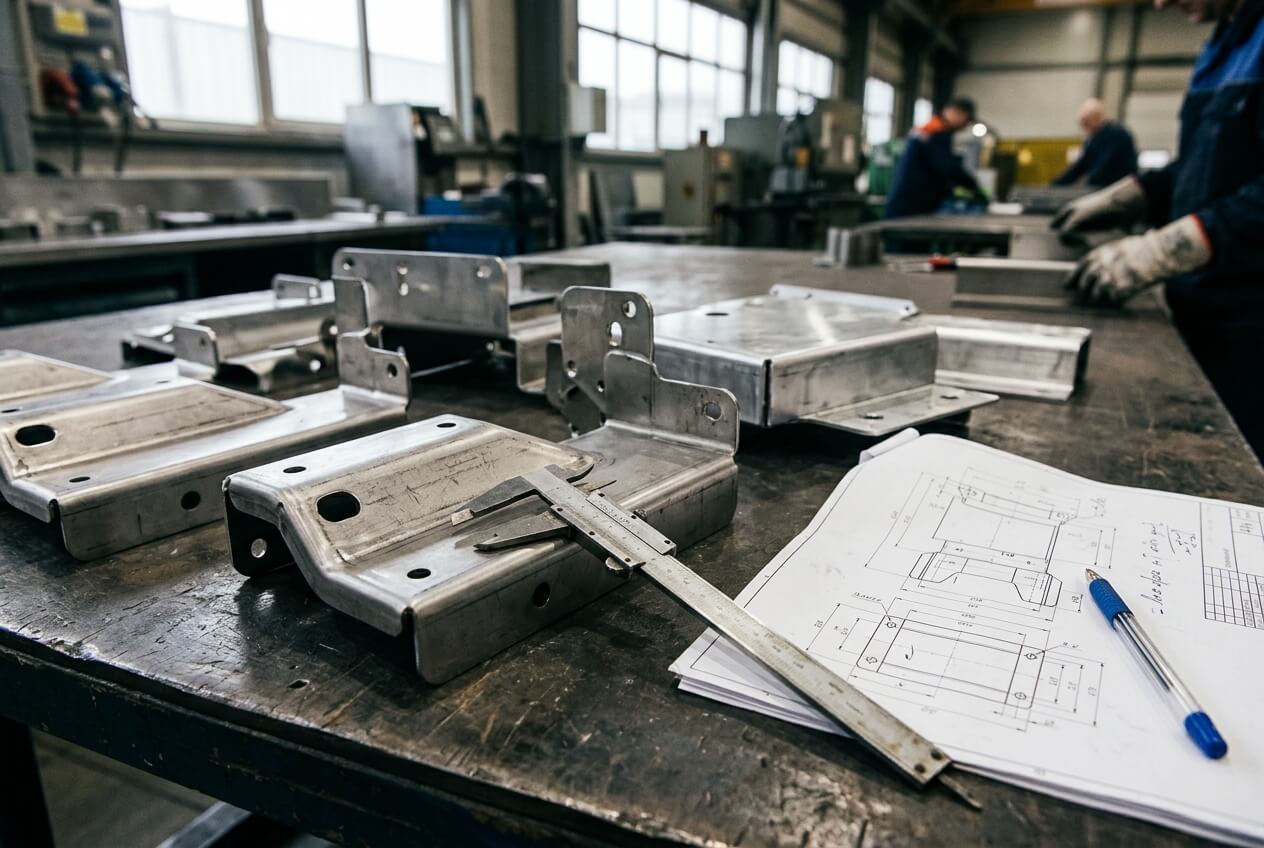
Many RFQ problems begin with a drawing that shows what a feature looks like but not what it must do. A round pin may locate a mating part, carry load, provide rotation, space a PCB, support grounding, or serve only as a rough assembly aid. Those functions require different tolerances, inspection methods, and production routes.
A supplier cannot price the right process from shape alone. If the pin only provides rough location, a welded commercial pin may work. If it supports sliding movement, coating clearance and surface finish matter. If it controls precision alignment, the supplier may need machining, fixture welding, or post-weld inspection. The same diameter on the drawing can represent very different risk.
Tolerance notes decide whether machining matters
A lathe can control diameter, concentricity, chamfers, and thread quality more tightly than many fabricated alternatives. That accuracy only helps when the assembly needs it. If the turned pin welds to a bracket without a controlled location, the accurate diameter may not prevent assembly failure.
Buyers should identify which dimensions drive fit. For example, a Ø8 pin on a laser-cut and bent bracket may need a tight diameter but a normal location tolerance. Another application may need looser diameter but tighter center-to-center distance. Without that distinction, suppliers may spend money controlling the wrong feature.
Finish notes can change the working size
Powder coating, zinc plating, anodizing, passivation, and wet paint can all change a mating interface. A pin that fits before coating may bind after coating. A threaded standoff may pass a gauge before finishing and fail after powder enters the threads. A hinge knuckle may look acceptable but lose free movement.
RFQs should state whether round features receive the same finish as the sheet metal body. They should also define masking, thread chasing, post-coating assembly, or clearance changes where movement or mating fit matters. This detail protects both price and function. It also prevents a supplier from assuming a cosmetic finish where the buyer needs a working interface.
Material details matter for the same reason. A stainless pin, zinc-plated carbon steel pin, aluminum spacer, or brass insert can change cost, galvanic behavior, weldability, and appearance. Buyers do not need to over-specify every item. They do need to separate mandatory requirements from areas where the supplier may propose a lower-risk alternative.
A practical RFQ should tell the supplier whether each round feature is custom turned, standard hardware, tube, pressed insert, welded boss, or open to recommendation. It should also state the function, material requirement, critical tolerance, finish expectation, and assembly timing. Those five points reduce quote assumptions more than a long general quality paragraph.
Assembly Fit Fails When Turned Accuracy Meets Fabrication Variation
Procurement teams often discover RFQ ambiguity during assembly, not during quotation. A bracket may look correct as a single component. A welded frame may pass visual inspection. A metal enclosure may meet its outside dimensions. Then the mating component does not fit because the drawing never explained how sheet metal variation and turned-part accuracy must work together.
Sheet metal moves during bending, welding, grinding, and coating. Holes can shift after forming. Welded pins can pull out of square. Bushings can move during heat input. Powder coating adds thickness in corners, holes, slots, and hinge areas. A machined component may hold its own dimension, yet fail after the fabrication process places it in the wrong position.
Welded frame example: accurate bushings still bind the shaft
A buyer sources a welded frame with two bushings for a rotating shaft. The drawing specifies the bushing inner diameter and material. It does not define coaxial alignment after welding. The supplier machines both bushings accurately, welds them to marked locations, and ships the batch.
During assembly, the shaft binds. The bushings meet their individual dimensions, but the frame distorted during welding. The buyer expected a working rotating assembly. The supplier quoted separate part dimensions. The missing requirement was not the bushing diameter. It was the relationship between the two bushings after welding.
Clarification should happen before award. The RFQ can request fixture welding, a shaft check, a go/no-go gauge, or a defined alignment tolerance. Those controls add cost, but they also price the risk correctly. Without them, a low quote may simply omit the inspection method that makes the assembly usable.
Bracket example: a precise pin cannot correct a vague datum scheme
A motor bracket may include a welded locating pin that enters a casting. The pin diameter might be turned to a close tolerance. However, the bracket bends from sheet metal, and the drawing does not define datums from the mating face. One supplier measures from the flat blank. Another measures after bending. A third checks only the pin diameter.
The assembly team then finds that some brackets fit while others need filing. The cost appears as rework, not as a missing RFQ detail. Buyers can reduce this risk by providing the mating-part drawing, a sample casting, or a clear datum scheme. They should also identify which dimensions require inspection after welding and finishing.
This is where supplier communication should focus. Long email threads about general capability do less than one marked-up drawing. Highlight the round features that control fit. Ask the supplier to confirm process, inspection timing, coating condition, and assembly side. That approach keeps tolerance discussion tied to the real procurement risk: quote assumptions that become production disputes.
Prototype Approval Can Preserve the Same Hidden Assumption
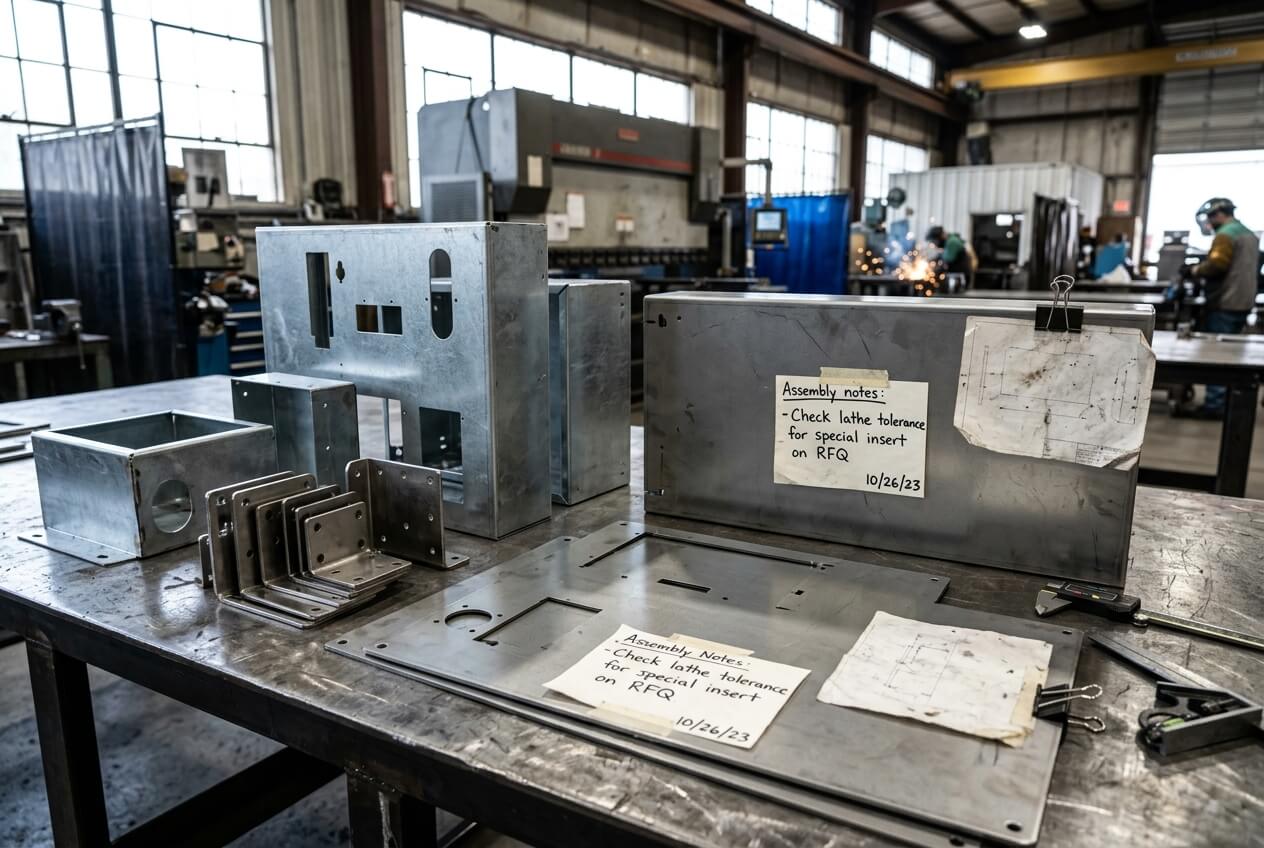
A successful prototype does not always prove batch consistency. It may only prove that one sample worked after manual adjustment. Prototype teams often polish pins, chase threads, open coating-filled holes, bend brackets by hand, or substitute hardware to meet an urgent review date. If no one records those actions, the production batch repeats the original ambiguity.
This risk grows when the prototype supplier uses a flexible method that will not scale. Ten units can tolerate hand fitting. Five hundred units cannot depend on a technician adjusting every hinge, spacer, or bushing. Buyers should ask what the prototype actually proved. Did it prove geometry, finish, movement, thread condition, assembly fit, packaging, or only appearance?
Prototype notes should become production controls
If a prototype enclosure uses hinge pins installed after coating, the production work instruction should say that. If workers chase M4 threads after powder coating, the quotation should include that labor. If a welded bushing requires a shaft test, the inspection plan should show the gauge or sample part. These details convert a one-off success into repeatable production control.
Quantity can also change the best process. For a small pilot order, custom turned pins may offer speed and flexibility. For a larger batch, standard shoulder screws, pressed inserts, or a redesigned formed feature may reduce machining time and inspection load. The buyer should not lock the word “lathe” into the drawing unless the function requires that process.
Lead time depends on these choices. A sheet metal enclosure with purchased standoffs may move quickly through cutting, bending, welding, powder coating, and assembly. The same enclosure with custom turned spacers may need bar stock, machining, deburring, plating, incoming inspection, and controlled installation. If the RFQ hides that scope, the schedule risk appears after the purchase order.
During prototype review, Yishang can check whether round features should remain machined, shift to standard hardware, or change to a fabrication-friendly detail. That review helps buyers keep the approved sample, production drawing, inspection plan, and quotation aligned.
What Buyers Should Clarify Before Comparing Prices
Price comparison should start with scope comparison. A low number may reflect efficient fabrication. It may also exclude custom turned parts, thread protection, masking, assembly checks, or post-coating installation. Buyers need to expose those assumptions before they choose a supplier.
Ask each supplier to list how they will make pins, spacers, sleeves, bushings, hinge parts, and threaded standoffs. The answer should name the process and the responsibility. For example: custom turned and welded before coating, pressed insert installed after coating, standard plated pin supplied loose, or buyer-supplied component installed during final assembly.
Then connect each feature to its function. Does it locate a mating part? Does it rotate? Does it carry load? Does it provide thread engagement? Does it need electrical grounding? Does it appear on a cosmetic face? The supplier can only choose the right fabrication route when the function is clear.
Inspection scope also needs attention. One quote may check only overall dimensions. Another may include thread gauges, coating thickness checks, pin fit tests, hinge movement, or shaft alignment. These quotes do not represent the same control plan. If the buyer needs assembly fit, the RFQ should request inspection after welding and finishing, not only before coating.
A short assumption table can prevent many disputes. It should cover material, quantity, critical tolerances, finish, coating mask areas, supplied hardware, assembly labor, prototype comments, and batch inspection. Keep the table focused on risky features. Do not bury the important items inside generic purchasing terms.
If your sheet metal assembly includes round pins, spacers, bushings, sleeves, hinge parts, threaded standoffs, or unclear notes about a lathe, send the full RFQ package before award. Include drawings, material requirements, quantities, tolerances, finish expectations, mating-part photos, samples when available, and prototype feedback. Yishang can review the manufacturing boundary and quote assumptions so the price reflects the parts you actually need after fabrication, finishing, and assembly. Start the review at https://zsyishang.com/.
Frequently Asked Questions
What a lathe details should buyers define before requesting a quote?
Buyers should define the functional requirement, drawing notes, critical dimensions, material or process expectations, and any inspection points related to a lathe. This helps suppliers quote the same manufacturing scope instead of making different assumptions.
How can RFQ details affect cost, fit, or lead time?
RFQ details can change tooling, forming, welding, finishing, inspection, or rework requirements. If buyers do not clarify it early, two supplier quotes may look comparable while covering different production risks.
Why should drawing requirements be reviewed before prototype approval?
drawing requirements may look acceptable on a single sample but become harder to control during batch production. Buyers should confirm whether the prototype reflects the same process, finish, and inspection conditions expected for production.
What inspection points matter most for a lathe projects?
Important inspection points usually include fit-critical dimensions, holes or mating areas, cosmetic surfaces, finish build-up, welded or formed features, and any dimensions that affect downstream assembly. These points should appear in the RFQ or drawing notes.
How can buyers reduce prototype approval risk before batch production?
Buyers can reduce risk by clarifying drawings, locking key material and finish assumptions, defining inspection timing, approving a representative sample, and confirming which dimensions or surfaces require tighter process control.
How can Yishang help review a lathe requirements?
Yishang can review drawings, RFQ notes, material requirements, tolerance expectations, finish details, samples, and assembly needs to identify unclear assumptions before quoting or batch production.