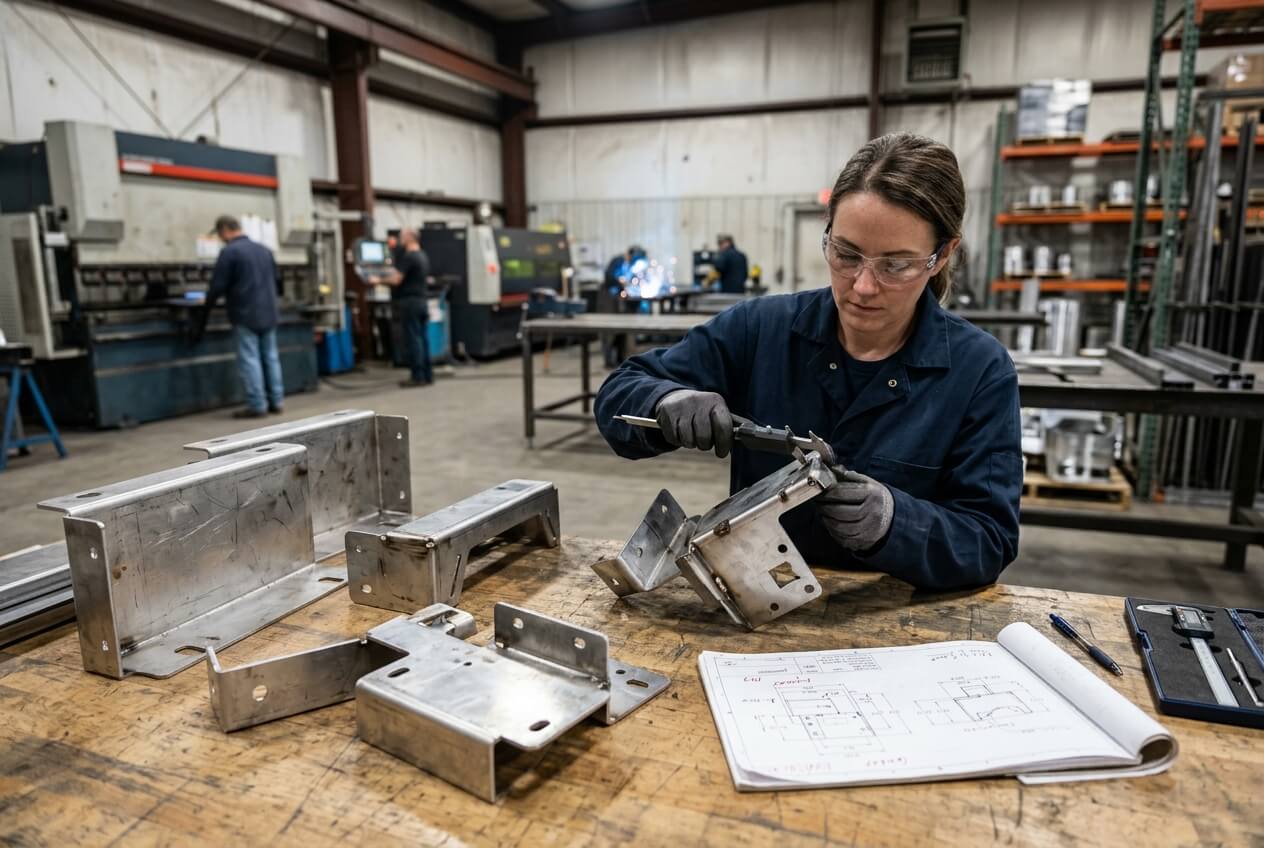
An OEM buyer sends one enclosure drawing to three metal powder coaters. The drawing shows the same laser-cut panels, bends, welded seams, hinge holes, PEM nuts, gasket channel, and RAL black finish. One quote comes back much lower. The buyer approves the sample, releases the first batch, and expects the same result at production scale.
The risk appears later. Powder fills threaded inserts. Door holes feel tight after coating. A front panel looks slightly different from the approved sample. Cabinet corners arrive with rub marks after export shipment. None of these issues started only in the coating booth. They started when the RFQ allowed each supplier to price a different version of the same drawing.
This article focuses on one procurement risk: unclear RFQ assumptions for powder coated sheet metal parts. For enclosures, brackets, metal cabinets, frames, display racks, and welded assemblies, powder coating affects assembly fit, inspection scope, packaging cost, batch consistency, and lead time. A low quote may reflect efficiency. It may also hide missing masking, weak finish control, or packing assumptions that become expensive after production starts.
Unclear finish notes make metal powder coaters quote different jobs
A short drawing note such as powder coat black can look clear during sourcing. It is rarely clear enough for a functional enclosure or visible welded assembly. That note leaves the supplier to choose powder type, pretreatment level, film thickness range, masking scope, inspection method, hook location, and packing protection.
One supplier may quote a basic polyester powder with standard visual inspection. Another may include masking for threads, thickness checks, retained samples, protected cosmetic faces, and export packaging. Both suppliers can claim they followed the drawing. The price gap comes from different assumptions, not only different margins.
The quote gap often starts before coating
Powder coating changes fabrication planning. If the buyer expects smooth cosmetic welds, the supplier must include grinding or dressing before coating. If the enclosure has deep corners, the coater must consider powder access and Faraday cage effects. If a grounding area must stay conductive, the supplier needs a masking or post-coat cleaning plan.
Material and thickness also influence the risk. A thin sheet metal door can show waviness under a glossy finish. A heavy welded frame needs stronger hanging points and more handling time. Aluminum and mild steel may need different pretreatment expectations. If the RFQ only says powder coat, each supplier decides how much of this work belongs in the price.
Project example: wall-mounted electrical enclosure
A buyer sourced a wall-mounted electrical enclosure with a hinged door, gasket groove, lock cutout, and internal grounding stud. The drawing called for black powder coat but did not mark the gasket land or grounding point. The lowest quote coated every surface. During assembly, the gasket compressed unevenly, and technicians had to remove coating from the grounding area.
The supplier did not necessarily make a random mistake. The RFQ failed to separate cosmetic surfaces from functional surfaces. Earlier notes could have defined the masked grounding point, controlled gasket area, and post-coat inspection. That would have changed the quote, but it would also have priced the real product.
Coating buildup turns drawing tolerances into assembly risk
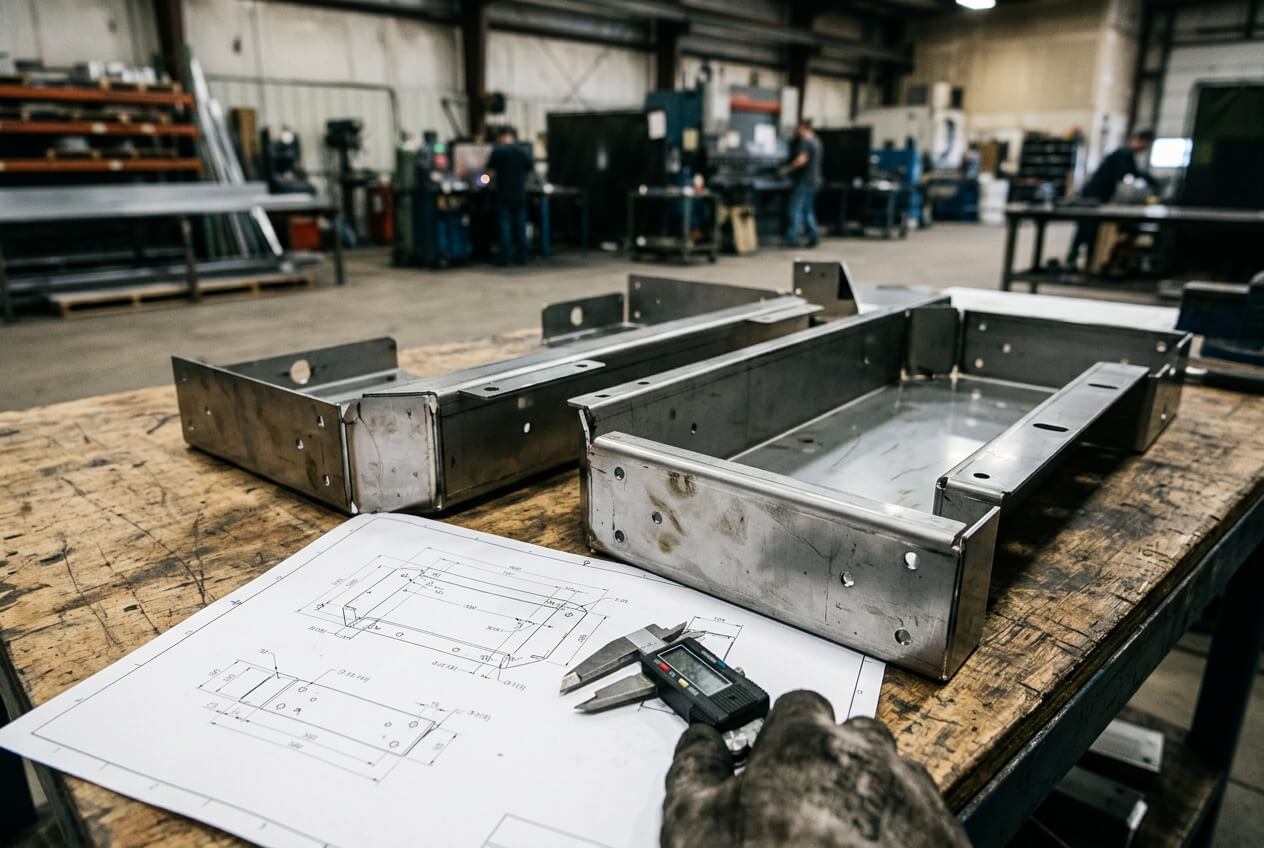
Buyers often approve bare-metal dimensions and assume the finished part will assemble the same way. Powder coating can break that assumption. Coating thickness around holes, slots, hinge knuckles, sliding faces, and mating flanges can change clearances enough to slow assembly or damage the finish.
The problem usually starts when a drawing does not state whether critical dimensions apply before coating, after coating, or both. A laser-cut slot may pass inspection before finishing. After coating, the slot may become tight for a screw or locating tab. A cabinet door may swing freely during bare-metal trial assembly, then rub after both mating surfaces receive powder.
Masking decisions belong in the RFQ, not on the shop floor
Masking adds labor, handling, and inspection. It can also prevent expensive rework. Threaded holes, PEM nuts, studs, grounding points, hinge pins, rack-mount holes, and sliding rails need clear instructions. Without them, one supplier may mask aggressively and quote higher. Another may coat everything and assume the buyer will accept thread chasing or minor cleanup.
That difference affects cost and lead time. Masking parts before coating takes time. Removing plugs, checking threads, and protecting cosmetic surfaces also take time. If the buyer discovers the need after the first batch, production may stop while the supplier updates tooling, masking, inspection, and work instructions.
Project example: removable cabinet side panels
A control cabinet used removable side panels with narrow clearance around the frame. The prototype passed because the supplier assembled it carefully and cleaned several holes by hand. The batch exposed the weakness. Operators struggled to start screws, and some panels rubbed the coated frame edge. The buyer saw a fabrication problem, but the deeper cause was an RFQ gap.
The drawing should have identified post-coat fit checks for the side panels, controlled coating thickness at the mating flange, and thread protection for the screw holes. Those notes would not require extreme tolerances. They would show metal powder coaters where coating thickness interacts with assembly fit.
Before sending an RFQ, buyers should review every coated interface. Look at hinges, gasket lands, door returns, rails, mounting holes, slots, and any area that meets another part. If another vendor supplies the mating part, share that interface early. A supplier cannot price fit risk accurately when it only sees one half of the assembly.
Prototype approval can hide batch color, gloss, and texture assumptions
A good prototype does not automatically freeze batch finish. The sample may use a powder lot available that week. It may run in a small batch with more careful handling. Inspectors may view it under different lighting from the final customer. If the RFQ does not define finish control, production can drift while still meeting a vague color callout.
Color codes help, but they do not remove all risk. Different powder suppliers can show slight variation under the same color reference. Gloss changes how a surface reflects light. Texture can hide or reveal weld dressing, grinding marks, panel waviness, and orange peel. A smooth finish can make a cabinet door look less flat than the same door in a textured finish.
Sample approval must say what the sample controls
Buyers should decide whether the approved prototype controls only shape, or shape plus finish. If it controls finish, the RFQ should define the color code, gloss range, texture, powder source if required, coating thickness target, visual inspection distance, and retained master sample. Otherwise, the supplier may treat the sample as a one-time confirmation, not a production standard.
This matters for repeat programs. A display rack, kiosk enclosure, or branded front panel may ship in several batches over months. Small color or gloss differences can look unacceptable when new parts sit beside older parts. The commercial consequence can exceed the coating cost because the customer sees inconsistency at installation.
Project example: retail display frame
A retailer approved a black semi-gloss welded display frame. The first batch looked acceptable in the factory. In the store, the second batch looked slightly gray beside the original units. The drawing only referenced a color code, and the RFQ did not require a retained master sample or agreed lighting condition.
The issue forced urgent sorting, delayed installation, and created a dispute over acceptance. Earlier clarification would have cost little. The buyer could have approved a master sample, defined the gloss expectation, identified visible faces, and required production photos before shipment.
Yishang often reviews prototype comments, finish samples, and batch expectations together for custom sheet metal fabrication projects. That review helps connect the visual requirement to welding, grinding, coating, assembly, and packaging decisions before the quote becomes a production commitment.
Geometry and packaging assumptions decide whether the quoted finish survives production
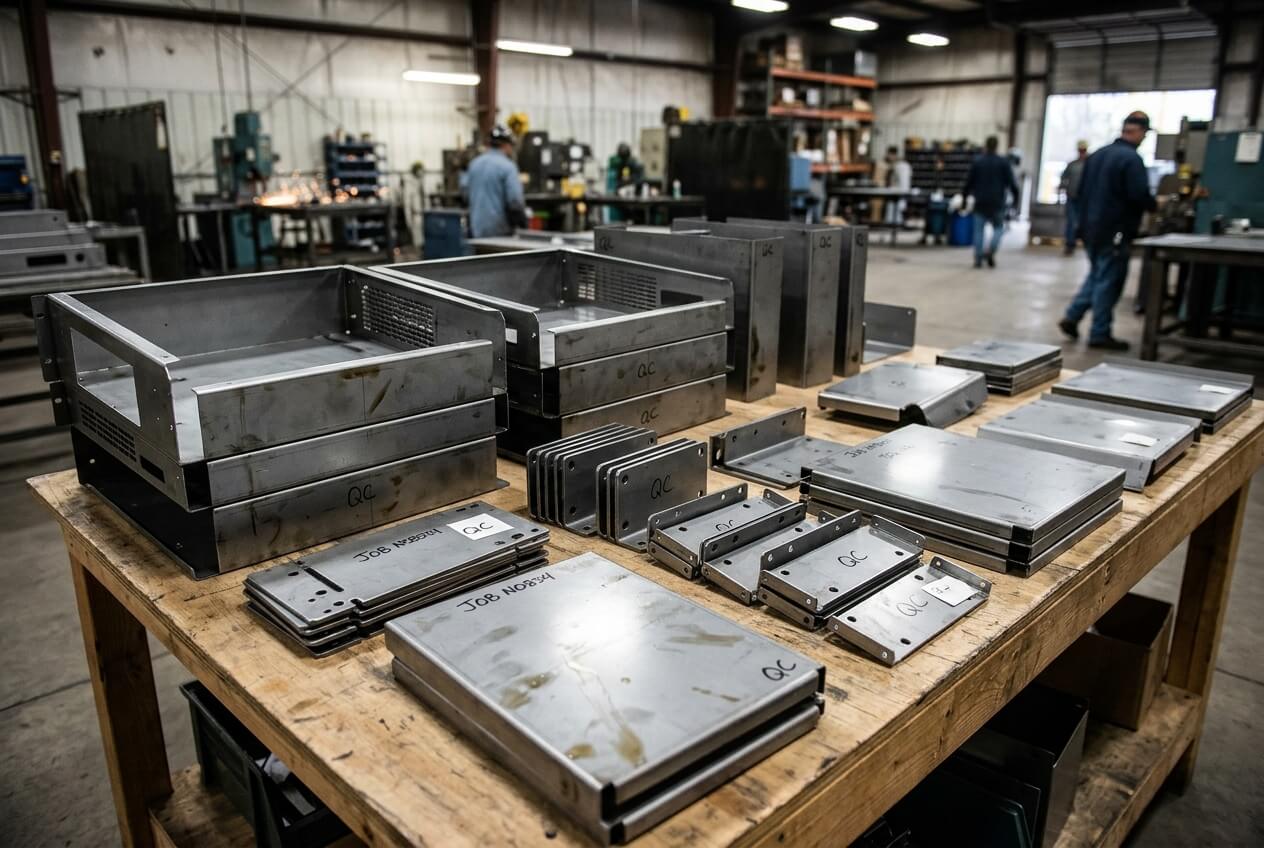
Powder coating is not only a spray operation. The part must hang, receive powder, cure, cool, move through inspection, assemble when required, and survive packing. Geometry decides how hard that becomes. Deep channels, boxed forms, long frames, narrow gaps, and large flat panels create risks that a simple finish note does not capture.
Deep internal corners may receive less powder because the electrostatic charge resists access. Outside edges can show lower coverage if the design or preparation does not support good edge protection. Welded assemblies may need special hanging to avoid distortion or visible hook marks. Large flat cabinet doors may show handling damage more easily than small brackets.
Hook marks need an agreed location
Every coated part needs a contact point during hanging or fixturing. If the drawing does not define acceptable hook locations, the supplier chooses them. That may work for a hidden mounting bracket. It can fail for a display panel, front cover, or visible frame where the customer inspects edges at close range.
Hook locations also affect throughput and price. A part with limited hidden hanging points may need custom fixtures or slower handling. If the buyer wants no visible hook marks on any exposed surface, the supplier must know before quoting. Otherwise, the lowest price may assume a handling method the customer will later reject.
Export packing changes the real cost of a coated part
Packaging often separates a usable batch from a damaged batch. Powder coated corners, long frames, and broad panels can rub during ocean or air shipment. Bulk packing may look cheaper in the quote, but it can create scratches, scuffs, and corner chips during transit. Individual wrapping, separators, corner guards, and carton strength add cost because they reduce finish damage risk.
A welded equipment frame shows this clearly. If cross members touch during shipping, vibration can polish or chip the coating at contact points. The factory may have shipped acceptable parts, but the buyer receives damaged surfaces. The dispute then shifts to whether the quote included export-level finish protection.
Lead time also changes when the packing method changes. Protective wrapping, foam separation, carton labeling, pallet design, and final inspection add labor. If buyers clarify these requirements late, shipment can slip even when fabrication and coating finish on time. A complete RFQ should therefore connect coating quality with handling and packing, not treat them as separate topics.
Clarify coating assumptions before you compare the lowest unit price
The safest quote comparison does not start with the unit price. It starts with the assumptions behind that price. When metal powder coaters receive incomplete finish notes, they must fill the gaps themselves. Those assumptions decide masking labor, inspection time, rework risk, packaging cost, and schedule reliability.
Buyers do not need to over-specify every hidden bracket. A simple internal part may need only a standard finish, normal thickness, and bulk packing. The risk rises when the part has visible surfaces, tight fit, threaded features, moving interfaces, customer-specific color expectations, repeat batches, or export shipment.
What to freeze before supplier comparison
A practical RFQ package should include the drawing version, 3D file when available, material and thickness, order quantity, tolerance notes, finish code, gloss or texture target, coating thickness range, cosmetic surface map, masking requirements, assembly relationship, inspection method, prototype feedback, and packaging expectation. If a previous batch failed, include photos and rejection notes.
Ask suppliers to state exclusions directly. Are threads masked or cleaned after coating? Are gasket lands protected? Are grounding points conductive after finishing? Does the quote include color sample retention? Does it include post-coat assembly checks? Does packaging cover export shipment or only local delivery? These questions expose hidden differences before the purchase order locks the price.
For complex enclosures, cabinets, brackets, frames, and welded assemblies, Yishang can review drawings for manufacturability, coated-fit risk, finishing assumptions, and assembly impact before quoting. The goal is not to make every part more expensive. The goal is to price the requirement the buyer actually needs.
Preparing an RFQ for powder coated sheet metal parts? Send Yishang your 2D drawings, 3D files if available, material requirements, quantities, tolerance notes, finish expectations, coating thickness needs, masking areas, prototype comments, assembly requirements, and packing method. A clearer RFQ helps compare metal powder coaters on the same scope before price becomes production risk.
Frequently Asked Questions
Why do metal powder coaters quote different prices for the same drawing?
They may not quote the same scope. One supplier may include masking, film thickness checks, cosmetic inspection, retained samples, and export packing. Another may assume standard coating only. Ask each supplier to list inclusions and exclusions before comparing unit price.
Should dimensions apply before coating or after coating?
That depends on the function. Critical holes, slots, hinges, gasket lands, and mating flanges often need post-coat control. State whether dimensions apply before coating, after coating, or both. This prevents coating buildup from creating assembly problems.
When should threaded holes and PEM nuts be masked?
Mask them when screws must assemble cleanly or when thread chasing could damage the finish. If post-coat cleaning is acceptable, define the method and inspection standard. Do not leave the choice to individual operators during batch production.
Can an approved prototype control future batch color?
Only if the RFQ says it does. Define the color code, gloss, texture, inspection lighting, retained master sample, and powder source if required. Without those controls, later batches may vary while still matching a vague finish note.
Why do hook marks and packing need to be discussed before quoting?
Hook locations and packing methods affect both appearance and cost. Visible parts may need hidden hanging points, special fixtures, individual wrapping, separators, or corner protection. If the RFQ omits these details, quotes may hide different handling assumptions.
What information should buyers send with a powder coated sheet metal RFQ?
Send drawings, material requirements, quantities, tolerances, finish expectations, coating thickness targets, masking notes, cosmetic surface maps, mating part details, prototype feedback, inspection needs, and packing requirements. This helps suppliers price the same product scope.