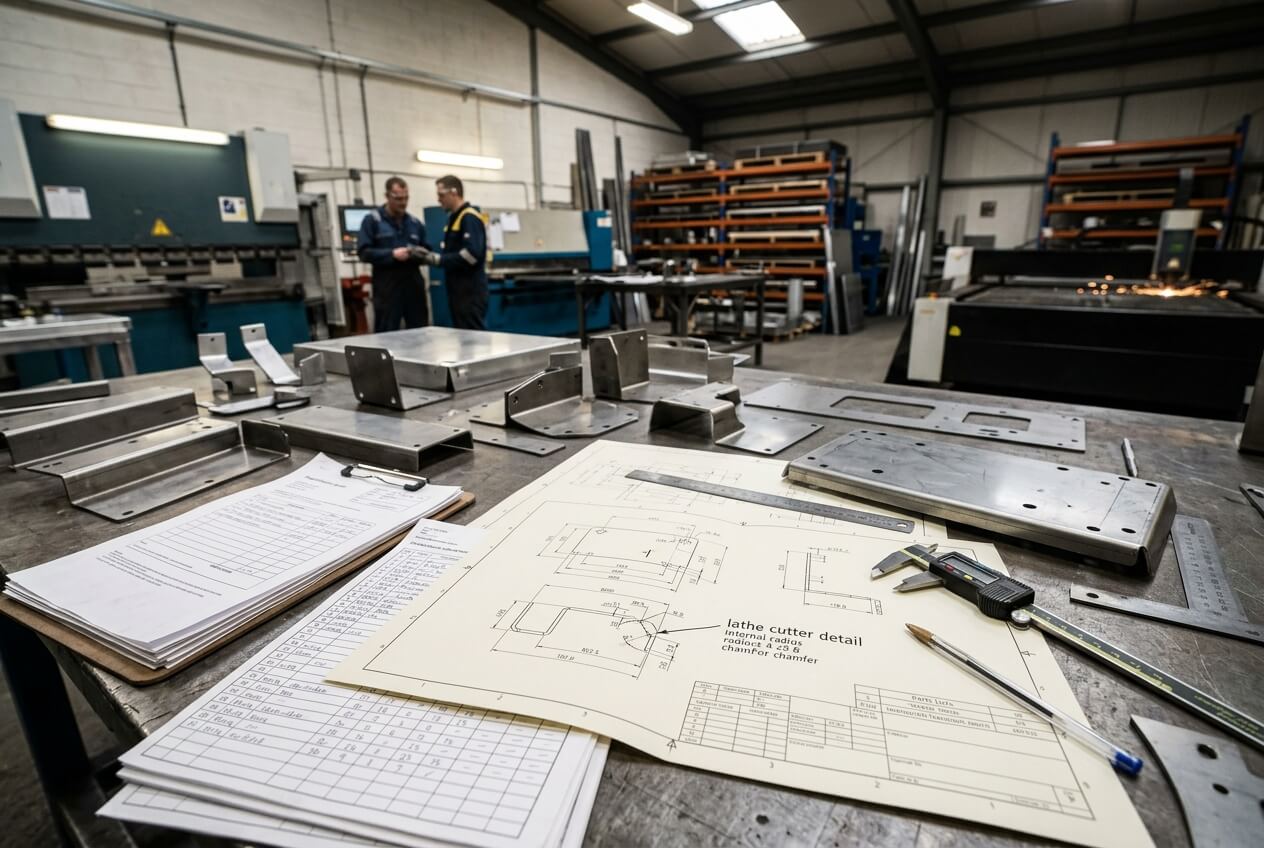
An OEM sends an RFQ for a powder-coated control enclosure. The package includes laser-cut panels, bent returns, a welded door frame, internal brackets, PEM inserts, mounting holes, and several small turned spacers. One supplier quotes 18 days. Another quotes 30 days. The faster quote looks better because the pilot build already has a fixed trial date.
The risk sits in the comparison itself. The two suppliers may not quote the same work. One may assume stocked sheet, standard powder coat, open tolerances, no finish sample, and basic dimensional checks. The other may include material procurement, fixture review, prototype approval, masking, hardware sourcing, post-coating assembly checks, and packing photos.
This article uses the term lathe cutter because many enclosure RFQs include one or two machined details, such as spacers, pins, or threaded bushings. Yet the main procurement risk rarely comes from the cutter geometry alone. It comes from RFQ assumptions that hide the real production route. When those assumptions stay hidden, buyers compare partial quotes, approve unrealistic delivery dates, and discover missing work after production starts.
Unclear RFQ Scope Turns a Delivery Date Into a Guess
Buyers often treat the RFQ date as the start of production. Fabricators cannot do that when drawings, materials, finishes, tolerances, and assembly responsibilities still need confirmation. The first delay usually starts before laser cutting, not during bending or welding.
A drawing may show outside dimensions, hole positions, and powder coat color. It may not define cosmetic faces, flush-ground welds, masking zones, or whether brackets must be installed before coating. A supplier can quote quickly by assuming the simplest path. The schedule changes when the buyer later asks for tighter door gaps, smoother welds, or protected threads.
Small missing details can control the whole assembly
A turned spacer looks minor beside a cabinet body. It can still stop shipment. If that spacer sets the gap between a door panel and an internal bracket, the enclosure cannot pass final fit checks without it. The buyer may ask about a lathe cutter detail, while the real critical path runs through spacer sourcing, thread inspection, coating clearance, and assembly verification.
Consider a wall-mounted electronics cabinet. The RFQ includes a laser-cut back panel, bent side panels, spot-welded brackets, a hinged door, and black textured powder coating. The drawing calls out M4 studs but does not show masking. One supplier coats everything and plans to retap threads later if needed. Another masks the studs and schedules a post-coating hardware check. The second quote looks slower, but it protects the buyer from late rework and damaged coating.
Before comparing dates, ask what the quoted clock includes. Does it start after drawing release or after purchase order receipt? Does it include material buying, finish sample approval, prototype comments, buyer-supplied hardware, and inspection reports? If not, the delivery date describes only a production assumption. It does not describe a controlled supply plan.
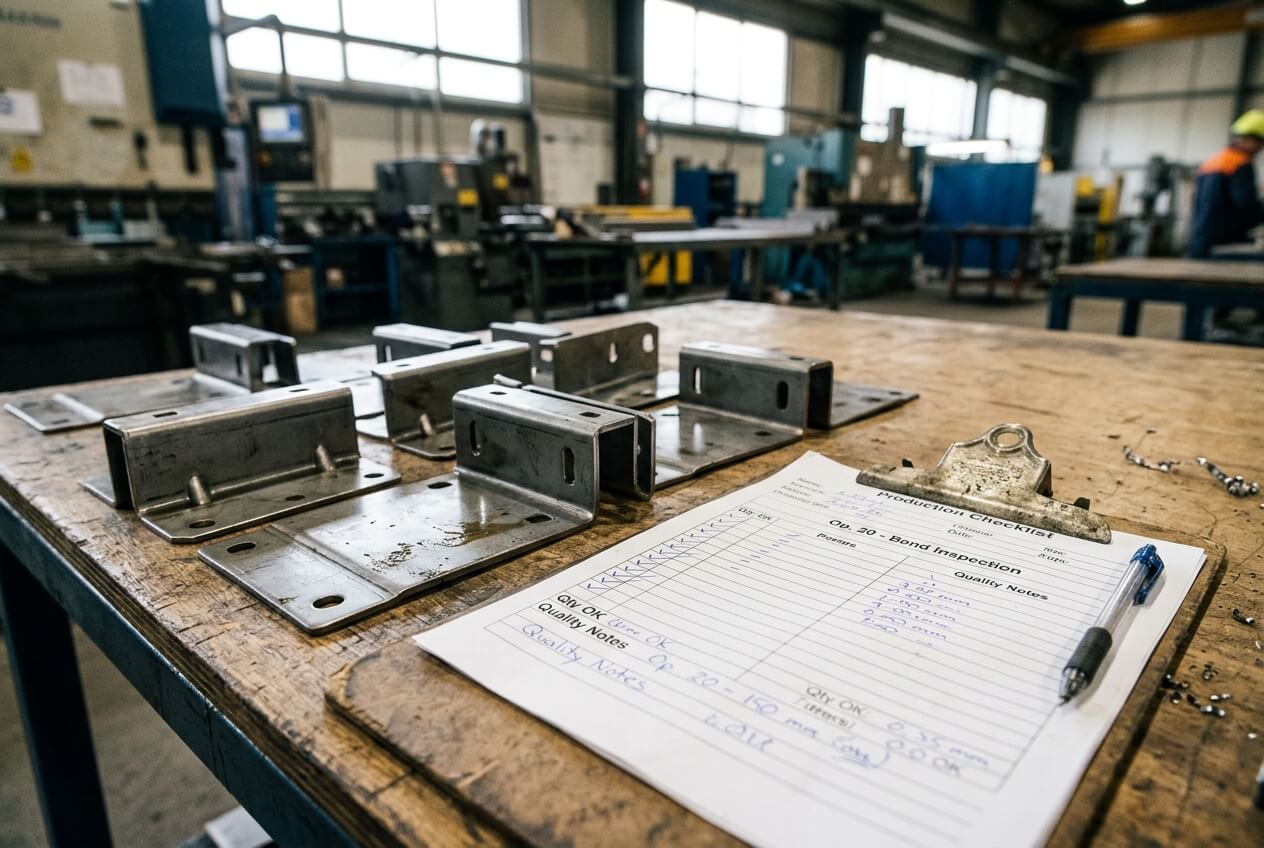
Quote Assumptions Distort Price, Lead Time, and Accountability
Two quotes for the same part number can carry different responsibilities. This creates a procurement trap. A lower price may exclude work that the buyer will still need before the part can enter assembly. A shorter lead time may ignore approval steps that no supplier can skip safely.
Sheet metal assemblies create this problem because one purchase order often covers many processes. Cutting, bending, welding, grinding, powder coating, hardware installation, and packing all depend on earlier decisions. When the RFQ does not define those decisions, each supplier fills the gaps differently.
Finish wording changes more than appearance
An RFQ that says “powder coated RAL 9005” does not define enough for an enclosure, frame, or visible bracket. The supplier still needs gloss, texture, pretreatment, coating thickness range, masking areas, cosmetic faces, and acceptance limits for orange peel or edge buildup. If the buyer expects a low-gloss textured finish but the quote assumes a standard black run, both price and timing will change later.
Masking causes especially expensive surprises. Threads, grounding areas, sliding faces, hinge barrels, and mating surfaces may need protection. If the drawing stays silent, the fabricator may coat them. Retapping coated threads adds labor. Grinding a coated grounding pad exposes raw metal. Recoating adds queue time and can affect color consistency.
Tolerance assumptions decide the inspection burden
Tolerances also change the route. A row of holes near a bend may pass as laser-cut features on a general enclosure. The same holes may need tighter control if they locate a PCB, DIN rail, latch, or mating bracket. That decision affects tooling, bend allowance, inspection time, and sometimes the prototype plan.
A welded frame shows the same consequence chain. The drawing may list outside width and height, but the installation depends on the distance between slotted mounting tabs. If the supplier controls the outside size and the buyer checks tab spacing, the frame can pass one inspection and fail the other. The quote dispute starts because the RFQ never identified the functional datum.
Procurement teams should compare quotes only after the assumed scope matches. Ask each supplier to state what they included for material grade, thickness, drawing status, coating route, hardware, assembly, inspection evidence, and approval gates. This does not slow sourcing. It prevents buyers from selecting a quote that leaves critical work outside the quoted schedule.
Yishang can review enclosure and bracket RFQs at this stage when buyers need a practical check on drawing gaps, finish assumptions, and assembly responsibilities. The useful output is not a longer document. It is a quote basis that both buyer and supplier can defend later.
Prototype Approval Can Hide Batch Production Risk
A prototype helps only when it records what the batch must repeat. Many buyers approve a sample with a short email: “sample OK.” That approval may hide hand adjustments, special grinding, enlarged holes, or temporary fixture choices. The batch then inherits a design that has not proven stable.
Prototype work often uses extra attention. A technician may adjust a bent flange so a door closes smoothly. A welder may grind one corner longer to improve appearance. A machinist may modify a spacer after checking the enclosure by hand. These fixes can make one sample work, but they do not guarantee repeatable production.
Sample fit does not always equal process capability
Imagine a powder-coated access panel with four shoulder spacers and a latch bracket. During the prototype build, the team finds slight interference after coating. They polish one spacer face and open two holes by 0.3 mm. The buyer receives a working panel and approves it. In batch production, those undocumented changes become a risk. Units may bind, coating may chip near the holes, and final assembly may slow down.
The lathe cutter discussion matters here because the turned spacer may control the fit. However, the procurement question should not stop at the cutter radius or insert geometry. The buyer needs to know the spacer tolerance, coating clearance, hole tolerance, assembly sequence, and inspection method. If one of these details remains open, the sample result gives false confidence.
Prototype notes should protect the batch order
Good prototype approval notes do not need to be complex. They should record critical dimensions, accepted deviations, visible surface standards, manual corrections, hardware fit, coating observations, and required drawing updates. If the sample needed hand correction, the batch quote should include fixture changes or design changes before production starts.
Batch consistency also affects cost. A supplier may quote a low unit price after a successful sample because the sample looked simple. If production later needs repeated hand fitting, the real cost rises. The supplier may request a price change, extend delivery, or ship parts with wider variation. None of these outcomes helps a buyer under launch pressure.
Use the prototype to close assumptions, not to postpone them. Confirm which features control fit, which tolerances can relax, which cosmetic faces need extra work, and which inspection photos or reports must accompany the batch. That step turns a sample from a visual approval into a production reference.
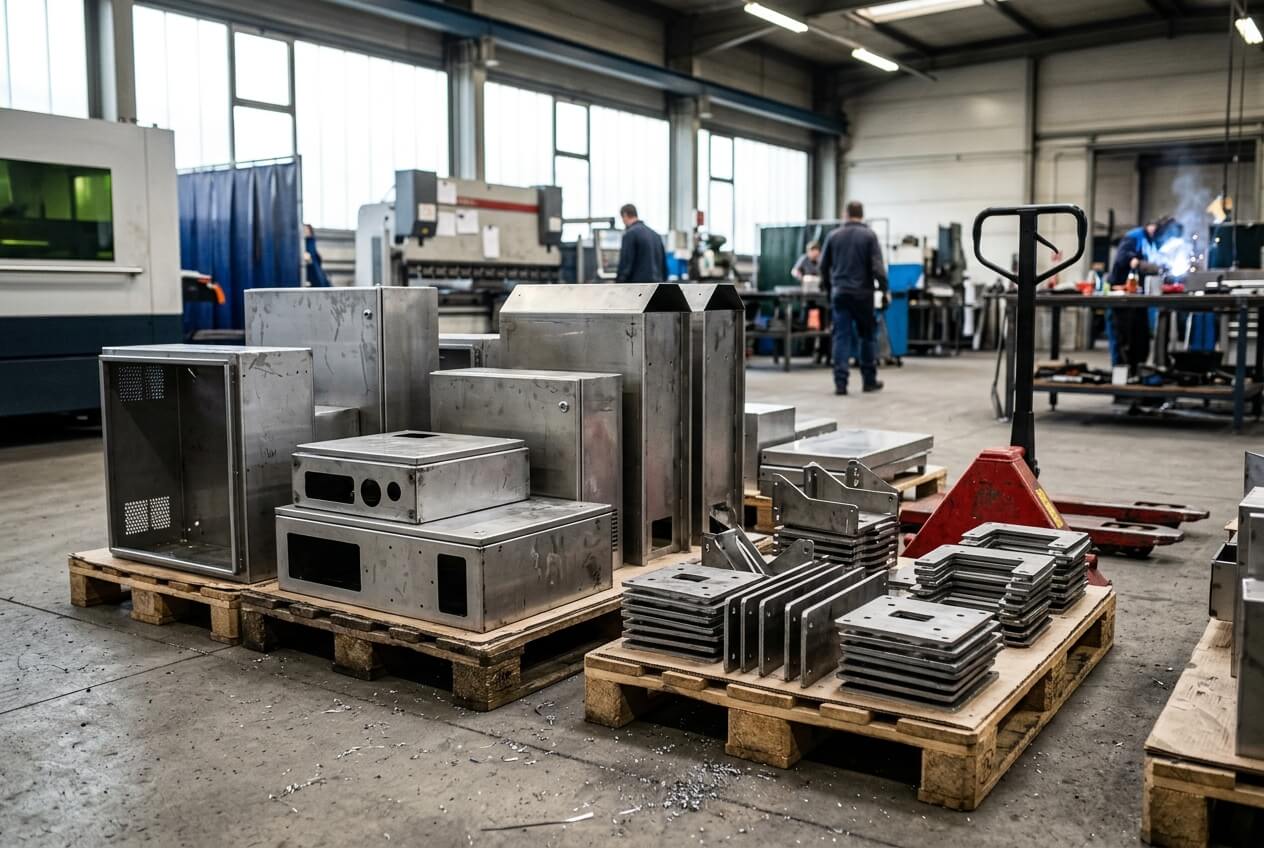
Assembly Fit Problems Start When Functional Features Are Not Named
Fabricators need to know which features make the part function. A sheet metal drawing may contain many dimensions, but not all dimensions carry equal risk. If the RFQ does not identify functional features, suppliers may optimize the wrong points for price and speed.
For an enclosure, functional features may include hinge alignment, latch engagement, PCB standoff locations, door gap, grounding points, vent clearance, and cable entry positions. For a welded bracket, the key features may be slot spacing, flatness at a mounting face, and perpendicularity between two tabs. For a display frame, visible straightness and corner finish may matter more than an overall diagonal tolerance.
A bracket example where the wrong datum caused rework
A buyer once requests a batch of U-shaped mounting brackets for equipment cabinets. The drawing controls the outside width tightly, but the installation depends on the distance between two internal holes. The supplier bends the parts to hold outside width. Springback shifts the internal hole spacing enough to cause assembly force.
The parts look correct on a basic dimension report. They fail during cabinet installation. Rework requires slotting coated holes, touching up paint, and sorting parts by fit. The cost does not come from one fabrication mistake. It comes from an RFQ that did not name the internal hole spacing as the functional requirement.
Buyers can reduce this risk before the quote. Mark critical-to-fit dimensions. Identify mating parts. Share photos of the installed assembly. State whether the supplier should check fit before coating, after coating, or both. If a machined spacer, pin, or bushing affects the fit, state who supplies it and how it should be inspected with the sheet metal part.
Cost drivers become clearer when the functional features stand out. A tight tolerance on every bend may inflate the quote without improving installation. A tight tolerance on one hole pattern may prevent field rework. The buyer’s goal should not be maximum precision everywhere. The goal should be enough control at the points that affect assembly, inspection, and service.
Buyers Should Force Assumptions Into the Quote Before Award
A supplier quote should not read like a single price and date for a multi-process assembly. It should expose the assumptions that can change price, lead time, and acceptance. Buyers do not need a long contract for every bracket. They do need enough clarity to compare suppliers fairly.
Ask suppliers to confirm the material grade, thickness, surface condition, and whether the quote uses stocked material or new procurement. Confirm whether drawings are released or still under prototype review. Define finish expectations before metalwork reaches coating. State whether the price includes hardware, inserts, welding fixtures, assembly checks, and export packing.
The strongest RFQs separate production time from approval time
Buyer approval time often hides inside lead time. Finish samples, prototype comments, deviation approvals, and revised drawings may sit with the buyer for days. If the quote includes those days without naming them, both sides later blame each other for delay. Separate supplier production days from buyer review days. That makes the schedule easier to manage.
Inspection evidence also belongs in the quote. A simple flat panel may need only key dimensions and surface checks. A welded cabinet may need diagonal measurements, door gap photos, coating thickness readings, hardware verification, and packing photos. If the buyer requires those records after production, the supplier may need extra time to measure, document, and correct issues.
For overseas orders, this timing matters. A cabinet can be physically complete and still miss a vessel cutoff because inspection evidence, coating acceptance, or packing confirmation remains open. The delay looks like a logistics issue. The root cause often sits in the RFQ.
Yishang supports custom sheet metal fabrication projects such as enclosures, brackets, frames, and welded assemblies where buyers need drawing review, prototype feedback, finishing coordination, and assembly checks. Use that support before award, not after the first problem appears. The best moment to remove risk is when assumptions still cost little to change.
Preparing an RFQ for custom sheet metal parts, metal enclosures, brackets, frames, or welded assemblies? Send Yishang your drawings, material requirements, quantities, tolerance notes, finish expectations, hardware list, prototype comments, and assembly photos. The team can review the RFQ basis and identify where unclear assumptions may affect price, lead time, fit, coating, or inspection before you compare supplier quotes. Visit Yishang to request a quotation review.
Frequently Asked Questions
How can a lathe cutter detail affect a sheet metal enclosure quote?
A turned spacer, pin, or bushing can control door clearance, bracket spacing, or hardware fit. If the RFQ does not define its tolerance, supplier responsibility, coating clearance, and inspection method, the enclosure may wait at final assembly even after cutting, bending, welding, and coating finish.
Why do two suppliers quote different lead times for the same enclosure drawing?
They may include different work. One quote may cover only fabrication and standard coating. Another may include material procurement, prototype approval, masking, hardware sourcing, post-coating fit checks, inspection reports, and packing photos. Buyers should align the quote basis before comparing dates.
What RFQ details reduce assembly fit risk for brackets and cabinets?
Mark critical-to-fit dimensions, define datum faces, share mating-part information, and state when fit should be checked. Include hole patterns, hinge positions, latch areas, grounding zones, spacer locations, and any dimensions that affect installation rather than appearance alone.
Why is prototype approval not enough for batch production?
A prototype may include hand adjustments, extra grinding, enlarged holes, or one-off fixture corrections. If those changes are not recorded, the batch may not repeat the sample result. Approval notes should identify deviations, manual fixes, drawing updates, and critical dimensions for production control.
What finish information should buyers provide before comparing quotes?
Provide color, gloss, texture, pretreatment, coating thickness expectations, masking areas, cosmetic faces, and sample approval needs. These details affect coating queue time, rework risk, inspection, and cost. A simple color code rarely defines the full finishing scope.
How should buyers separate supplier lead time from buyer approval time?
Ask the supplier to list production days separately from drawing release, prototype review, finish sample approval, and deviation decisions. This prevents hidden waiting time from distorting the schedule and helps both sides protect launch dates.