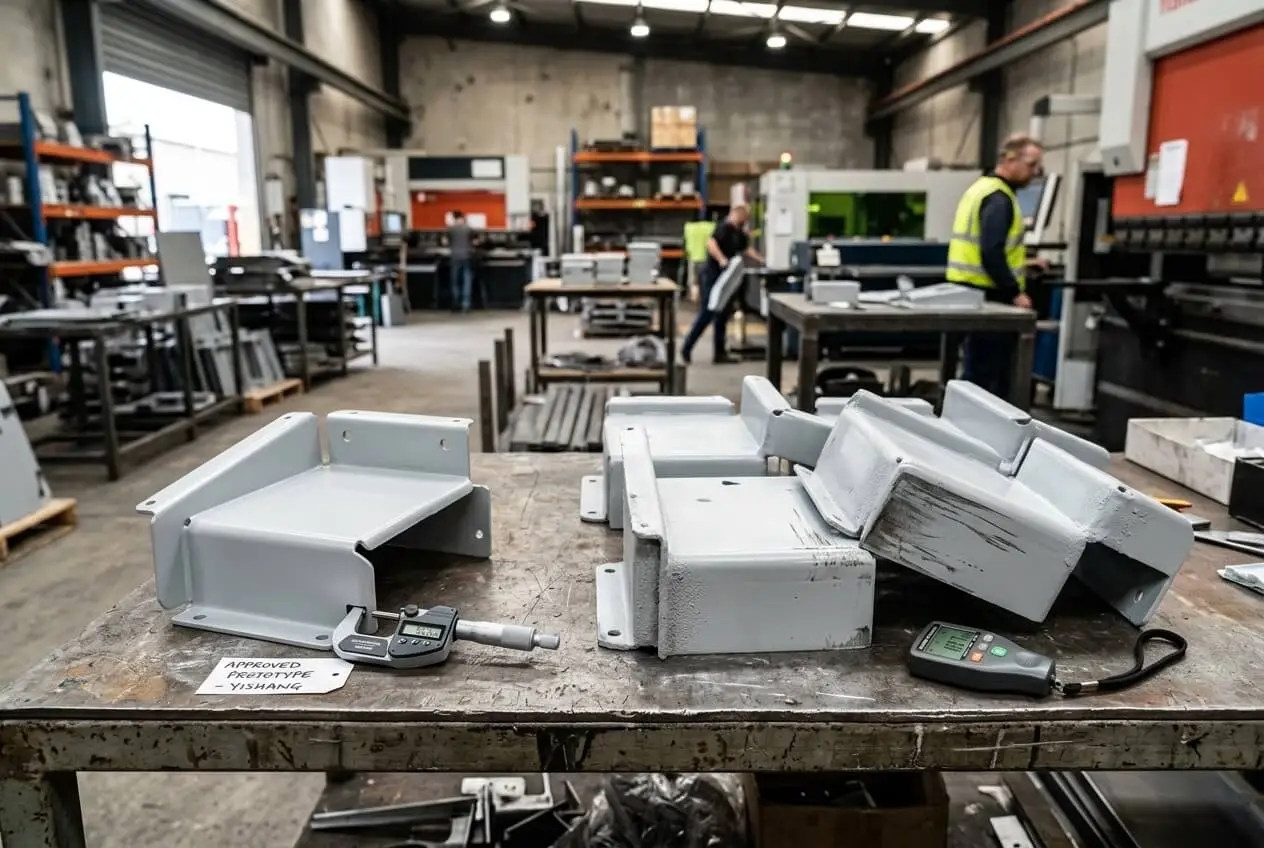
A sourcing engineer approves a black powder coated enclosure after checking color, gloss, hinge movement, and lock operation. The sample looks acceptable. The buyer releases the batch order.
Six weeks later, the first shipment creates a different problem. Some doors rub against the frame. Several M5 tapped holes need cleaning before assembly. A few panels show slightly different texture under the same light. The prototype did not fail. The purchasing process failed to define how powder coat thickness would remain controlled during batch production.
This is a common procurement risk in custom sheet metal fabrication. An RFQ note such as ‘black powder coat’ or ‘finish as approved sample’ may look clear to a buyer. To a fabricator, it can leave major assumptions open. The quote may or may not include masking, thread chasing, dry film thickness readings, post-coating assembly checks, packaging protection, or rework responsibility.
For enclosures, cabinets, brackets, frames, and welded assemblies, coating thickness affects more than appearance. It can reduce clearance, block threads, weaken corrosion protection at edges, change surface texture, and trigger arrival disputes. The risk starts early, when the prototype becomes a visual approval instead of a controlled production reference.
Prototype approval can hide unpriced coating control
Prototype approval gives buyers confidence, but one coated sample rarely proves batch repeatability. A supplier may hang the prototype in an ideal position, spray it carefully, and inspect it more closely than normal production. That attention can create a good sample without proving the process.
The buyer often signs off on color, gloss, and general fit. Yet nobody records dry film thickness at hinge areas, return flanges, lock cutouts, weld corners, or threaded features. During production, different hanging positions and spray angles can create thin coating inside corners and heavy build on exposed edges.
The approved sample needs a role
A sample can serve two different purposes. It can act as a visual reference for color and texture. Or it can become a production control sample with defined measurement points and functional checks. Those are not the same decision.
If the approval file only shows photos, the factory may match the look while missing functional details. A flat door face may measure 80 microns, while the inner return near a gasket sits far lower. A hinge pocket may build up enough coating to shift door movement. Both problems can appear even when the front face looks correct.
Consider a wall-mounted electrical enclosure made from cold rolled steel. The prototype opens smoothly because the fabricator deburred and fitted the door by hand. In batch production, normal bending variation combines with heavier coating on the door edge and frame return. The result is rubbing on 40 percent of units. The root cause is not only fabrication tolerance. The RFQ never defined coated clearance or coating thickness at the door interface.
That missing definition also distorts the quote. One supplier may price a basic cosmetic powder coat. Another may include masking for threads, first-article DFT records, and a post-coating hinge test. Both quotes may say powder coated enclosure. They do not cover the same production responsibility.
Before releasing a batch, buyers should decide what the prototype proves. If it proves only appearance, say so. If it proves production acceptance, record the target thickness range, inspection zones, masked areas, color reference, gloss range, and assembly checks. This turns a sample from a memory into a control point.
Coating build turns small clearances into batch rework
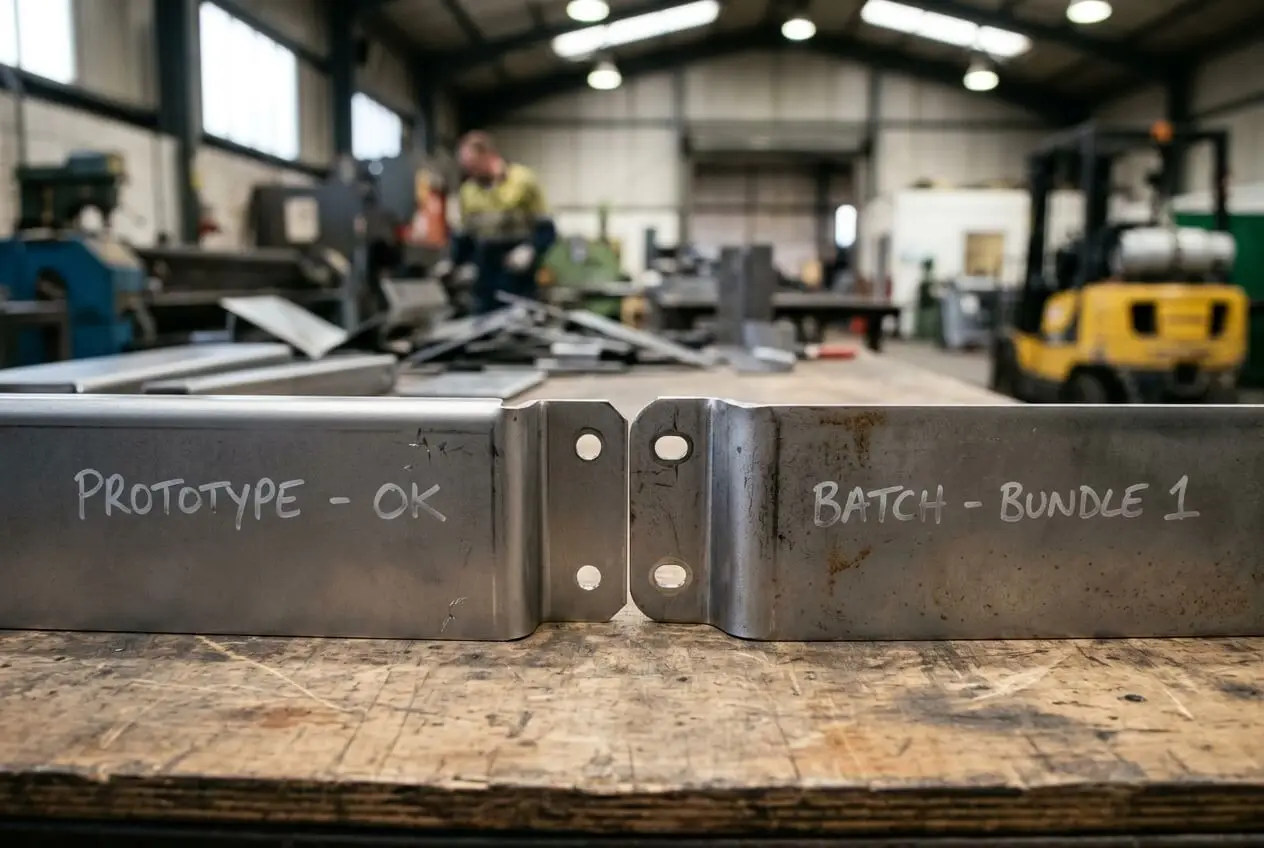
Powder coating thickness problems usually appear during assembly, not at the coating line. Operators may see a clean black surface and pass the part. Later, workers struggle to install hinges, locks, slides, inserts, removable panels, or mating brackets.
Many drawings use bare metal dimensions. After coating, every exposed surface gains material. A 60 to 100 micron coating build sounds minor. In a slot-and-tab design, coating on both the tab and slot wall can remove enough clearance to create interference. Door gaps, hinge seats, and sliding covers show the same risk.
Threads and contact faces need separate instructions
Threaded holes create a fast consequence chain. The RFQ says powder coat black. The coating shop sprays the entire part. M4, M5, or M6 tapped holes collect powder. Assembly workers then force screws, chase threads, or reject parts. Each option costs time. If the buyer and supplier did not assign responsibility earlier, the dispute starts after production.
Grounding points create another risk. A powder coated surface may look finished, but it can block electrical contact. If the drawing does not mark bare grounding faces, the supplier may coat them. The buyer then discovers the problem during final equipment testing, not during visual inspection.
A small bracket example shows how this happens. A buyer orders laser cut steel brackets with slotted holes for field adjustment. The prototype fits the mating studs. During the batch, thicker coating builds inside the slots. Installers must file coated edges on site. The bracket is not dimensionally wrong in bare metal terms. The procurement note failed to state whether slot size applied before or after coating.
Welded assemblies magnify local variation
Welded frames and display racks add more geometry. Weld beads, ground corners, and heat-affected zones do not coat like large flat panels. Sharp external edges may receive thin coverage. Recessed weld areas may collect powder and show heavier texture.
On a retail display frame, heavy coating around front tube joints can look uneven under store lighting. On an equipment cabinet, thin coating at welded base corners can become the first corrosion point. These failures come from different thickness problems, but both start with unclear finish control.
Buyers should review the features that drive assembly and acceptance. For enclosures, check hinge leaves, lock cams, gasket channels, panel returns, PEM hardware areas, and grounding faces. For frames, check bolt holes, welded joints, leveling feet, and surfaces that contact glass, acrylic, wood, or other components. A drawing note should tell the supplier where coating can vary and where it must not.
RFQ gaps make powder coat thickness quotes impossible to compare
Many procurement teams compare coated part prices without seeing the assumptions behind them. A low unit price may exclude masking, DFT reports, post-coating cleaning, or functional tests. A higher quote may include those controls. If the RFQ does not define the work, price comparison becomes risky.
A finish note such as powder coat black leaves too much open. It does not explain whether the part is an indoor display component, an outdoor cabinet, a control housing, or a cosmetic front panel. It also does not state whether the target thickness applies to visible flat faces only or to bends, holes, edges, and mating features.
For many general sheet metal parts, buyers discuss powder coat thickness around 50 to 125 microns, or about 2 to 5 mils. That range is only a starting discussion. A thin indoor cosmetic cover, a textured retail display rack, an aluminum housing, and an outdoor steel cabinet may need different systems and acceptance limits.
The drawing should separate appearance from function
The clearest RFQs separate cosmetic surfaces from functional surfaces. A cabinet door face may need consistent texture and gloss. A hinge seat may need controlled build. A threaded insert area may need masking. A hidden rear bracket may need basic coverage but not cosmetic grading.
This distinction helps the supplier quote the right work. Masking threaded holes adds labor. Chasing threads after coating adds labor and can damage appearance if handled poorly. Measuring multiple locations adds inspection time. Tighter thickness control may require different hanging, slower spraying, or rework allowance. These costs belong in the quotation, not in a dispute after shipment.
Overseas purchasing makes the language even more important. A purchase order may name a coating standard but still omit sampling level, measurement points, and rejection handling. The supplier can show acceptable readings on large flat panels. The buyer may reject the shipment because doors rub, holes clog, or edges corrode first. Both sides then argue from incomplete requirements.
A practical RFQ should state the target thickness range in microns or mils. It should name where readings apply. It should mark holes, hinge areas, slots, grounding faces, gasket channels, and sliding surfaces that need masking or reduced build. It should ask for first-article DFT readings before full batch coating starts. If the parts require assembly, it should require a fit check after coating.
When Yishang reviews drawings for powder coated sheet metal parts, these details help align fabrication tolerances, finishing expectations, inspection points, and packaging before quoting. The goal is not to add paperwork. The goal is to make each supplier quote the same production reality.
Batch controls must measure the features that can fail
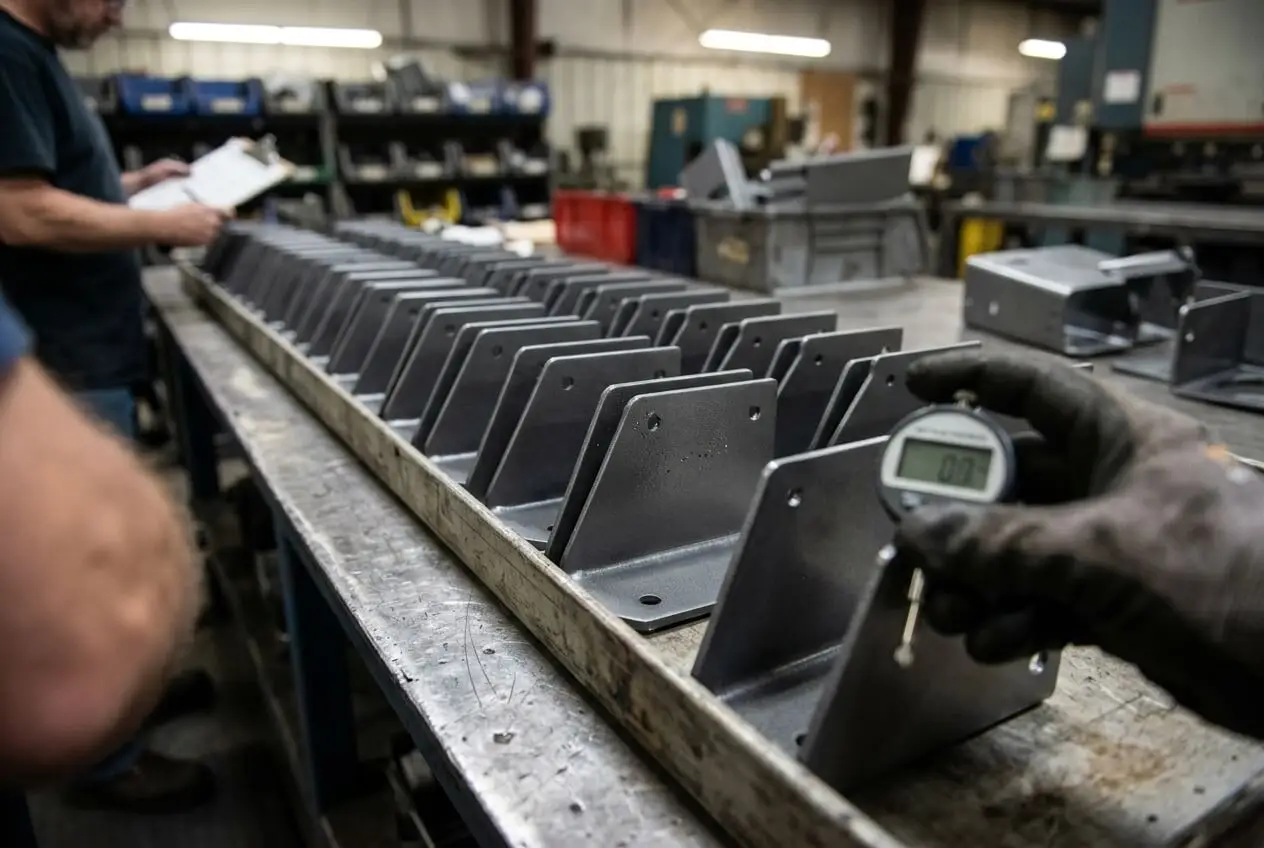
Batch risk falls when sample approval connects to a simple control plan. Without that plan, a new operator, hanging layout, powder batch, oven load, or inspection habit can change the finished result. Photos alone do not prove thickness, masking, or assembly clearance.
Flat panels are easy to measure, but they may not reveal the real risk. Corners, bends, punched holes, laser-cut edges, weld transitions, inner returns, and contact faces often decide whether the batch works. If inspection focuses only on large visible faces, functional problems can pass unnoticed.
Measure where the buyer will reject the part
An enclosure buyer may care most about door movement, lock operation, gasket compression, and corrosion resistance at welded corners. A bracket buyer may care about slots, threads, grounding faces, and mating surfaces. A display rack buyer may care about texture consistency on front tubes and coating around welded joints.
Inspection should follow those risks. First-article approval can include DFT readings at agreed points, visual review under agreed lighting, masking confirmation, and one post-coating assembly test. Larger or higher-risk orders may need batch DFT records, adhesion checks, salt spray references, or packaging trials.
Packaging also belongs in this control plan. Powder coated parts can pass inspection and arrive scratched if coated faces touch during export shipment. Glossy cabinet doors, front panels, and display surfaces show handling marks quickly. Separators, protective film, foam, or individual wrapping may need to appear in the quote.
A welded equipment frame shows the cost chain. The bare frame passes dimensional inspection. The coating line adds heavy build around bolt holes and thin coverage at lower welds. Assembly workers open holes with tools, which chips nearby coating. The customer then rejects several frames for both fit and appearance. Earlier clarification could have required hole masking, DFT readings near welds, and a trial assembly after coating.
For prototype-to-batch projects, Yishang can review drawing notes, coated clearance, finish expectations, and assembly checks before buyers freeze the RFQ. This step matters most when the part includes doors, covers, locks, threads, inserts, welded corners, or customer-facing surfaces.
What to settle before releasing a coated production order
The best time to control powder coat thickness is before the batch purchase order. At that point, price, drawings, samples, and inspection responsibility can still change. After coating, every correction becomes slower and more expensive.
Buyers should start with the approved prototype and ask what it actually proves. Did anyone measure DFT? Were readings taken only on flat faces? Did the sample include the same material, weld preparation, hardware, and coating system planned for batch production? Did anyone test locks, hinges, covers, or mating parts after coating?
Next, connect thickness control to tolerance decisions. If a drawing shows a tight door gap, slot width, hole diameter, or sliding clearance, the team should decide whether the dimension applies before or after coating. Bare metal tolerance and coating build can stack together. A normal fabrication variation can become a rejection once powder sits on both mating surfaces.
Cost and lead time also need direct discussion. Masking, special hanging, extra inspection, thread chasing, adhesion testing, and protective packaging all add work. They may still cost less than reworking finished parts or sorting a shipment after arrival. A clear RFQ lets suppliers price these tasks upfront.
Supplier communication should focus on acceptance evidence, not vague reassurance. Ask what thickness range the quote assumes. Ask which areas will be masked. Ask whether DFT readings are included. Ask who handles blocked threads. Ask how coated fit will be checked. Ask how cosmetic surfaces will be protected during packing.
Before you release a powder coated batch, send Yishang the drawings, material requirements, quantities, tolerances, target powder coat thickness, finish expectations, approved sample photos, and any hinge, lock, thread, gasket, grounding, or mating-part requirements. The team can review where coating build may affect fit, inspection, packaging, and batch acceptance before production starts.
Frequently Asked Questions
What coating thickness details should buyers define before requesting a quote?
Buyers should define the functional requirement, drawing notes, critical dimensions, material or process expectations, and any inspection points related to coating thickness. This helps suppliers quote the same manufacturing scope instead of making different assumptions.
How can masking areas affect cost, fit, or lead time?
masking areas can change tooling, forming, welding, finishing, inspection, or rework requirements. If buyers do not clarify it early, two supplier quotes may look comparable while covering different production risks.
Why should powder coating be reviewed before prototype approval?
powder coating may look acceptable on a single sample but become harder to control during batch production. Buyers should confirm whether the prototype reflects the same process, finish, and inspection conditions expected for production.
What inspection points matter most for powder coat thickness projects?
Important inspection points usually include fit-critical dimensions, holes or mating areas, cosmetic surfaces, finish build-up, welded or formed features, and any dimensions that affect downstream assembly. These points should appear in the RFQ or drawing notes.
How can buyers reduce assembly clearance risk before batch production?
Buyers can reduce risk by clarifying drawings, locking key material and finish assumptions, defining inspection timing, approving a representative sample, and confirming which dimensions or surfaces require tighter process control.
How can Yishang help review powder coat thickness requirements?
Yishang can review drawings, RFQ notes, material requirements, tolerance expectations, finish details, samples, and assembly needs to identify unclear assumptions before quoting or batch production.