
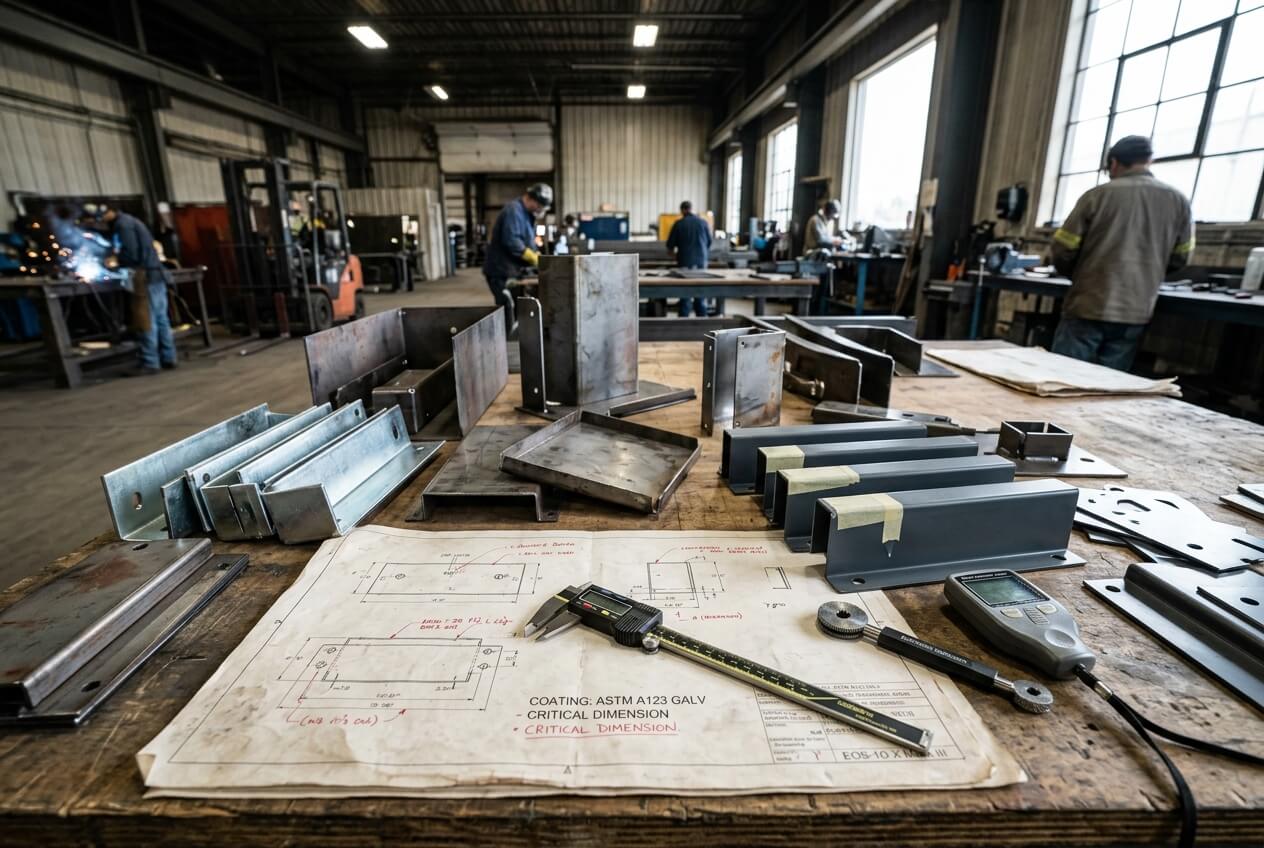
An OEM buyer can send one enclosure drawing to three steel coaters and receive three prices that look comparable. The drawing may show laser-cut panels, bent flanges, welded brackets, hinge holes, vents, and a note that says “powder coat black.” Purchasing sees a finished steel part. Each supplier may see a different production route.
One quote may include basic cleaning and a single polyester powder. Another may include blasting, epoxy primer, masked grounding pads, and cosmetic inspection. A third may exclude masking, thread protection, edge cleanup, and coating-related rework. The price table looks simple, but the scope underneath does not match.
This article focuses on one procurement risk: RFQ ambiguity that lets suppliers price different coating and fabrication assumptions. That risk starts in drawing notes. It later appears as quote gaps, tight holes, rejected cosmetic faces, rust at cut edges, delayed assembly, and disputes over who owns the problem.
How a Short Finish Note Makes Steel Coaters Price Different Work
The phrase “powder coat black” rarely gives enough information for coated sheet metal parts. It does not define the service environment, pretreatment route, primer requirement, film thickness, masking scope, rack marks, or inspection criteria. Steel coaters must fill those blanks before they can price the job.
That guessing process changes the quote. A dry indoor control box may only need a standard polyester powder over clean steel. An outdoor kiosk panel may need stronger pretreatment, better edge preparation, and a primer under the topcoat. A welded frame used in a humid workshop may need extra weld cleanup and thicker coverage around corners.
The same drawing can carry different hidden assumptions
Consider a 1.5 mm wall-mounted steel enclosure. The lower quote includes laser cutting, bending, welding, basic degreasing, and one black powder coat. The higher quote includes deburred ventilation slots, masked hinge areas, controlled film thickness, and extra handling for the front panel. Both suppliers may follow the drawing. They are not quoting the same finished risk.
The problem grows when purchasing compares only unit price. A low quote can look efficient because it leaves out work the buyer assumed. Those omissions may not appear until assembly or field use. A door rubs because coating buildup narrowed the hinge gap. A grounding point fails because nobody masked bare metal. Rust starts at a cut edge because the RFQ never described outdoor exposure.
Buyers do not need to over-specify every decorative part. They do need to state what the part must survive. The RFQ should tell suppliers whether the part works indoors, outdoors, near moisture, near salt air, or inside another cabinet. It should also identify any visible faces and any functions that coating can block.
Where Ambiguous Coating Scope Turns Into Fit and Assembly Risk
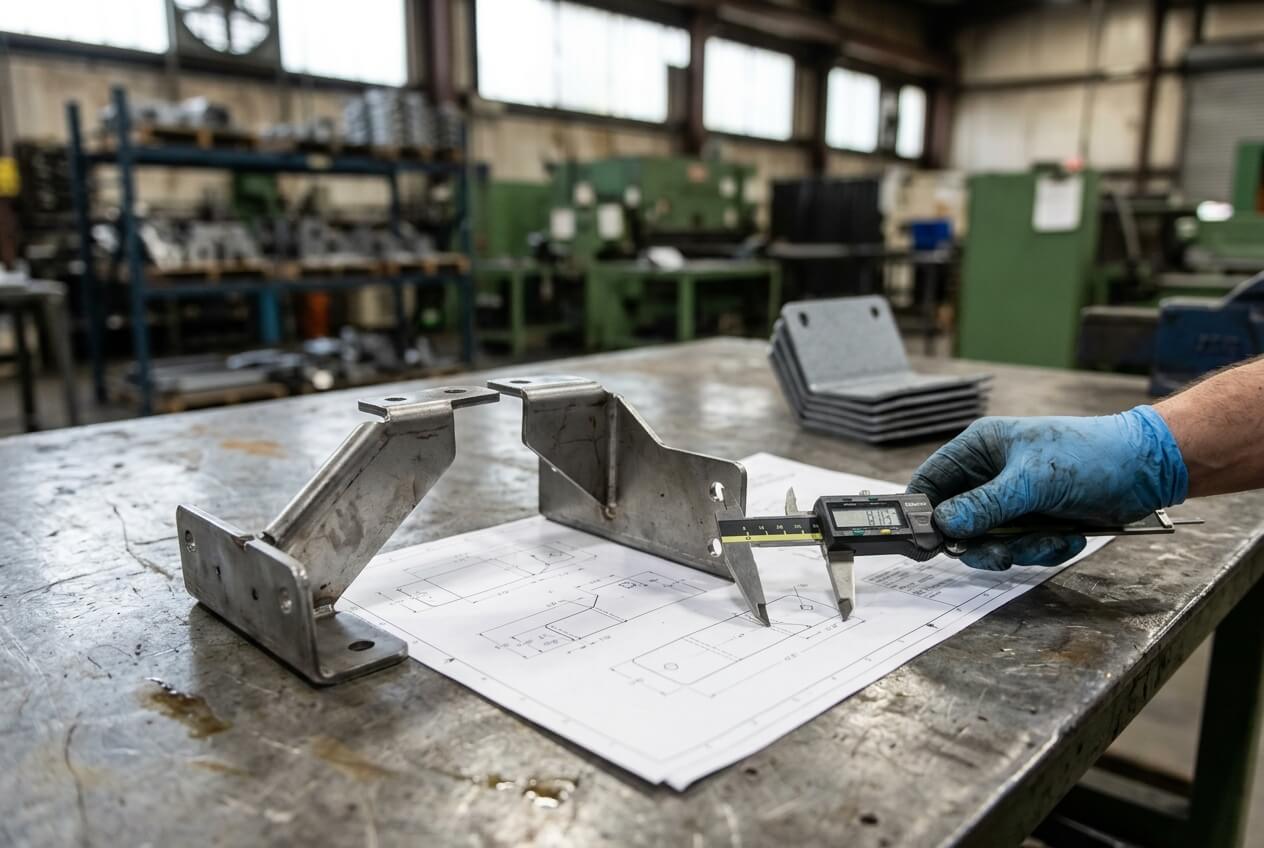
Coating thickness looks small on a data sheet. In assembly, it can decide whether a product fits. Powder on both sides of a hole, slot, flange, or hinge area reduces clearance. If the drawing only controls bare metal dimensions, the supplier may deliver correct fabricated parts that still fail after finishing.
This creates a common dispute. The fabricator says the laser-cut hole matches the CAD file. The buyer says the finished fastener will not pass through. Both statements can be true. The RFQ failed to say whether the critical feature needed to meet size before coating or after coating.
Functional areas need more than a general tolerance block
Close features deserve direct notes. Mark hinge holes, keyhole slots, slide rails, gasket seats, PEM fastener zones, grounding pads, threaded inserts, bearing surfaces, and interlocking tabs. If the coating must stay off a surface, call for masking. If threads need to function after coating, state whether the supplier should plug them, chase them, or inspect them with a gauge.
A small bracket example shows the cost chain. A buyer orders powder-coated mounting brackets with slotted holes for field adjustment. The drawing shows the slot size, but it does not define finished clearance. The supplier cuts to nominal size and applies coating. During installation, bolts drag in the slots, so technicians ream parts by hand. The quote saved money by omitting masking or slot allowance, but the project lost time in the field.
Enclosures create a second trap. Door gaps, latch plates, gasket channels, and hinge leaves all interact after coating. If the RFQ does not identify these as finished-fit features, steel coaters may focus on appearance and corrosion coverage. They may not protect the interfaces that determine assembly speed.
Procurement teams should ask suppliers to confirm which dimensions they inspect after coating. This matters more than a broad tolerance statement. A general ±0.2 mm tolerance may not protect a sliding joint once 60–100 microns of film builds on each side. Critical features need a finished condition, a masking plan, or an agreed allowance.
Why Corrosion Failures Often Begin in Unpriced Edge and Weld Preparation
Corrosion rarely starts on a large flat panel. It often begins at sharp laser-cut edges, weld toes, threaded holes, scratches, drain pockets, and tight recesses. These areas challenge coating coverage. They also expose the difference between a low finish note and a real performance requirement.
If the RFQ says only “powder coat,” one supplier may assume normal burr removal. Another may price edge rounding, weld grinding, blasting, or a primer. A third may leave preparation to the coater’s standard process. These choices affect cost, lead time, and warranty risk.
Outdoor use changes the meaning of a black powder coat
A black coated cabinet for indoor electronics does not carry the same risk as a black coated access panel on outdoor equipment. The outdoor panel faces rain, UV exposure, temperature swings, and damaged edges during installation. If the buyer does not state that environment, suppliers may quote an indoor decorative finish because the drawing allows it.
A welded base frame example makes the issue clear. The prototype looks acceptable after the supplier grinds visible weld seams and touches up sharp corners. The batch RFQ, however, only says “weld and powder coat.” During production, normal weld cleanup leaves small spatter and uneven toes. Powder bridges some areas and thins at others. Rust appears near the welds after outdoor storage. The failure started when the prototype effort never became a written batch requirement.
Material details also influence coating risk. Cold-rolled steel, hot-rolled steel, galvanized steel, and previously oiled stock do not require identical preparation. The RFQ should name the material grade or approved equivalent. It should also flag any rust, scale, oil, or surface condition limits. Otherwise, suppliers may price pretreatment based on their own material assumption.
Buyers can ask for a supplier-recommended coating system when they lack internal specifications. That request still needs context. “Recommend coating for outdoor exposed equipment frame, 500 units per batch, visible top surfaces, welded corners, expected storage outdoors before installation” gives steel coaters a real basis for pricing. “Powder coat black” does not.
Yishang reviews fabrication drawings with finish expectations when buyers need help finding these gaps. That review can flag cut edges, weld seams, drain areas, and masking zones before the RFQ turns into competing assumptions.
Why Prototype Approval Does Not Remove Batch Coating Assumptions
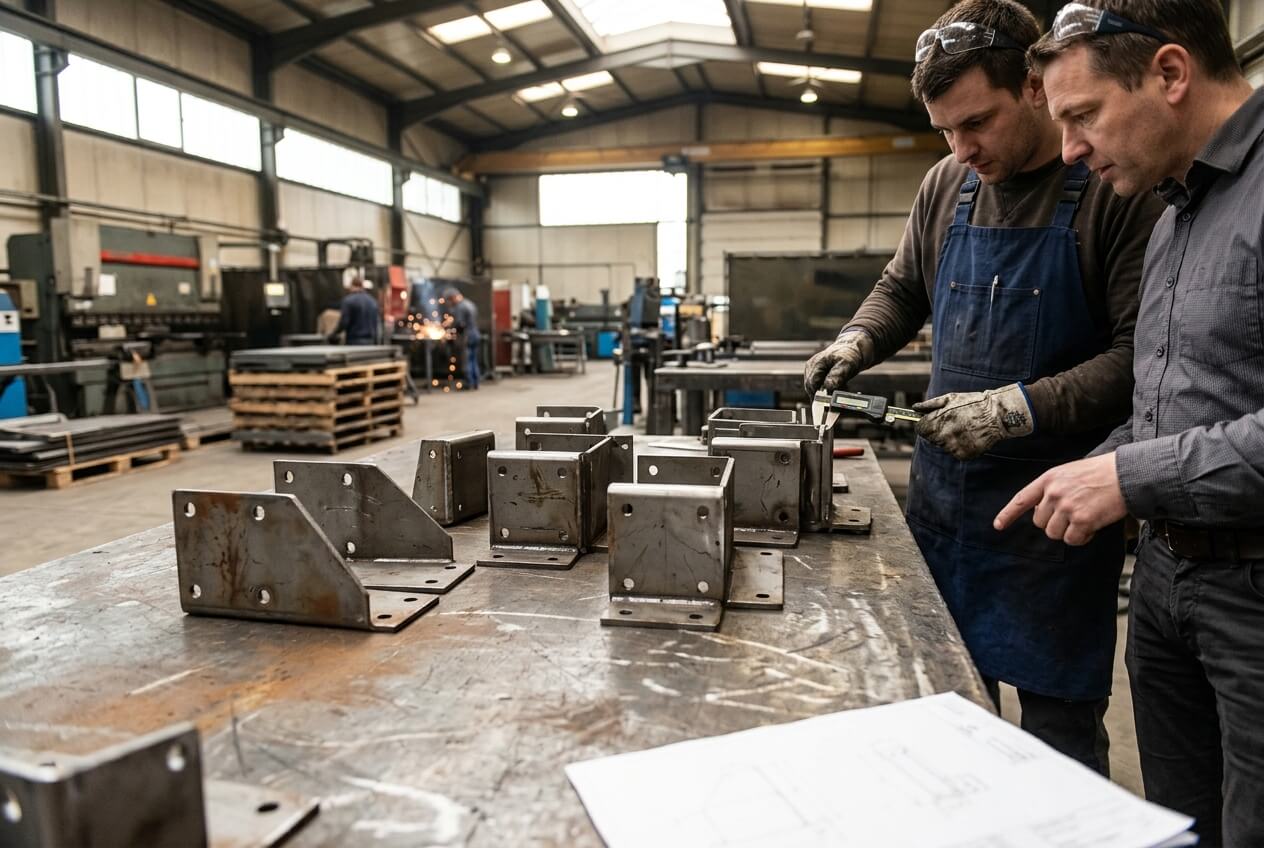
A coated prototype reduces uncertainty, but it can also hide production risk. Small samples often receive extra attention. A technician may hand-deburr slots, adjust hanging positions, add touch-up, or inspect cosmetic faces more carefully than a batch process allows.
If the buyer approves only the look of the sample, the batch still lacks process controls. The supplier may know the powder color, but not the agreed weld cleanup level, masking method, rack mark location, film thickness points, or cosmetic acceptance range. Normal production variation can then become a quality dispute.
The approved sample must become a controlled reference
For coated sheet metal parts, a prototype should answer more than color. Record the powder code or color reference, gloss or texture expectation, pretreatment route, masking points, accepted rack mark areas, and visible-face class. If an assembly interface passed on the prototype, record how it passed. Did the supplier mask it, open the hole size, chase the thread, or simply adjust the sample by hand?
A batch of display racks shows the risk. The buyer approves one powder-coated rack with smooth uprights and clean hook slots. In a 500-unit run, the coater changes the hanging method to improve throughput. Rack marks move to a more visible area, and powder buildup makes hook slots tight. The production team did not ignore the sample. The RFQ never converted sample details into batch rules.
Lead time can also change when these controls appear late. If the buyer discovers missing masking after first articles, the supplier may need new plugs, revised hangers, extra inspection, or rework. A two-day coating step can turn into a scheduling problem because the original quote did not include the required finish control.
For repeat orders, keep prototype records with the drawing package. Do not rely on memory or an old sample stored in a carton. Powder batches, hanging points, and inspection expectations need written references. Yishang can support prototype-to-batch review when buyers want the approved sample translated into repeatable fabrication, coating, and assembly notes.
What Buyers Should Clarify Before Comparing Coated Steel Quotes
The goal is not to make every RFQ longer. The goal is to prevent hidden assumptions from deciding price and quality. Before comparing suppliers, buyers should align the few details that carry the most downstream risk.
Start with the finished part, not only the bare metal. State the material grade or acceptable alternative. Include drawings with tolerances for critical fabrication features. Then add finish expectations that match the application. Identify the service environment, coating system if known, performance target if not known, cosmetic faces, masking zones, and inspection points.
Ask suppliers to expose their quotation basis
A useful supplier quote should state what it includes. Does the price cover fabrication, weld cleanup, edge deburring, pretreatment, primer, powder coating, masking, thread protection, cosmetic inspection, packaging protection, and coating-related rework? If a subcontract coater handles finishing, ask how the fabricator controls responsibility between fabrication and coating.
Cost drivers become clearer after this conversation. Extra masking, edge rounding, primer, blasting, tighter film control, Class A handling, and special packaging all add cost. They may also reduce field failures and assembly delays. Buyers can then decide which controls are necessary and which create unnecessary expense.
Supplier communication should focus on consequences. Ask what happens if coating builds in this hole. Ask where rack marks will appear. Ask whether welds will show through the finish. Ask which dimensions the team checks after coating. These questions expose risk better than asking for a “good powder coat.”
Photos help suppliers price accurately. Send images of previous failures, visible surfaces, mating parts, grounding locations, and assembly interfaces. If the part replaces an existing cabinet, bracket, frame, or enclosure, include assembly photos. They show what a flat drawing may not communicate.
The final purchase decision should compare aligned scopes. Once steel coaters quote the same material assumption, fabrication cleanup, coating system, masking plan, cosmetic standard, inspection method, quantity, and prototype requirement, purchasing can compare price with less hidden risk.
Preparing an RFQ for coated steel enclosures, brackets, frames, cabinets, or welded assemblies? Send Yishang your drawings, material requirements, quantities, tolerances, finish expectations, masking notes, prototype comments, and assembly photos. The team can review where fabrication and coating assumptions may change price, fit, corrosion resistance, or batch consistency. Start with your drawing package through Yishang sheet metal fabrication.
Frequently Asked Questions
Why do steel coaters quote different prices from the same powder-coated drawing?
The drawing may not define the service environment, pretreatment, primer, film thickness, masking, weld cleanup, or cosmetic inspection. Each supplier then prices its own assumptions. The quotes look comparable, but they may cover different levels of corrosion protection, fit control, and finish handling.
Should coated sheet metal dimensions apply before or after powder coating?
Buyers should define this for critical holes, slots, hinge areas, sliding joints, gasket seats, and interlocking features. General tolerances often describe bare metal fabrication. If finished assembly fit matters, the RFQ should state masking, allowance, thread chasing, or post-coating inspection requirements.
What coating details should appear in an RFQ for outdoor steel parts?
State the outdoor exposure level, material grade, corrosion expectation, visible surfaces, edge and weld preparation needs, and any required coating system. If the buyer does not know the system, ask suppliers to recommend one based on the environment instead of using only a color note.
Why can an approved prototype still fail to represent batch coating quality?
A prototype may receive hand deburring, special hanging, extra grinding, or touch-up that the batch quote did not include. Buyers should record the approved powder code, masking method, rack mark locations, weld cleanup level, film thickness points, and cosmetic acceptance standard.
Which masking areas most often cause assembly or functional problems?
Grounding pads, threaded holes, PEM fastener zones, hinge holes, bearing surfaces, gasket seats, latch interfaces, and tight slots cause frequent problems. If the RFQ does not mark these areas, coating buildup can block fit, reduce conductivity, affect sealing, or force rework.
How can buyers compare coated steel quotes more safely?
Ask each supplier to state its assumptions for material, fabrication cleanup, pretreatment, coating system, masking, inspection, packaging, prototype control, and rework. Once the scope matches, price comparison becomes more meaningful and less likely to hide later assembly or corrosion costs.