
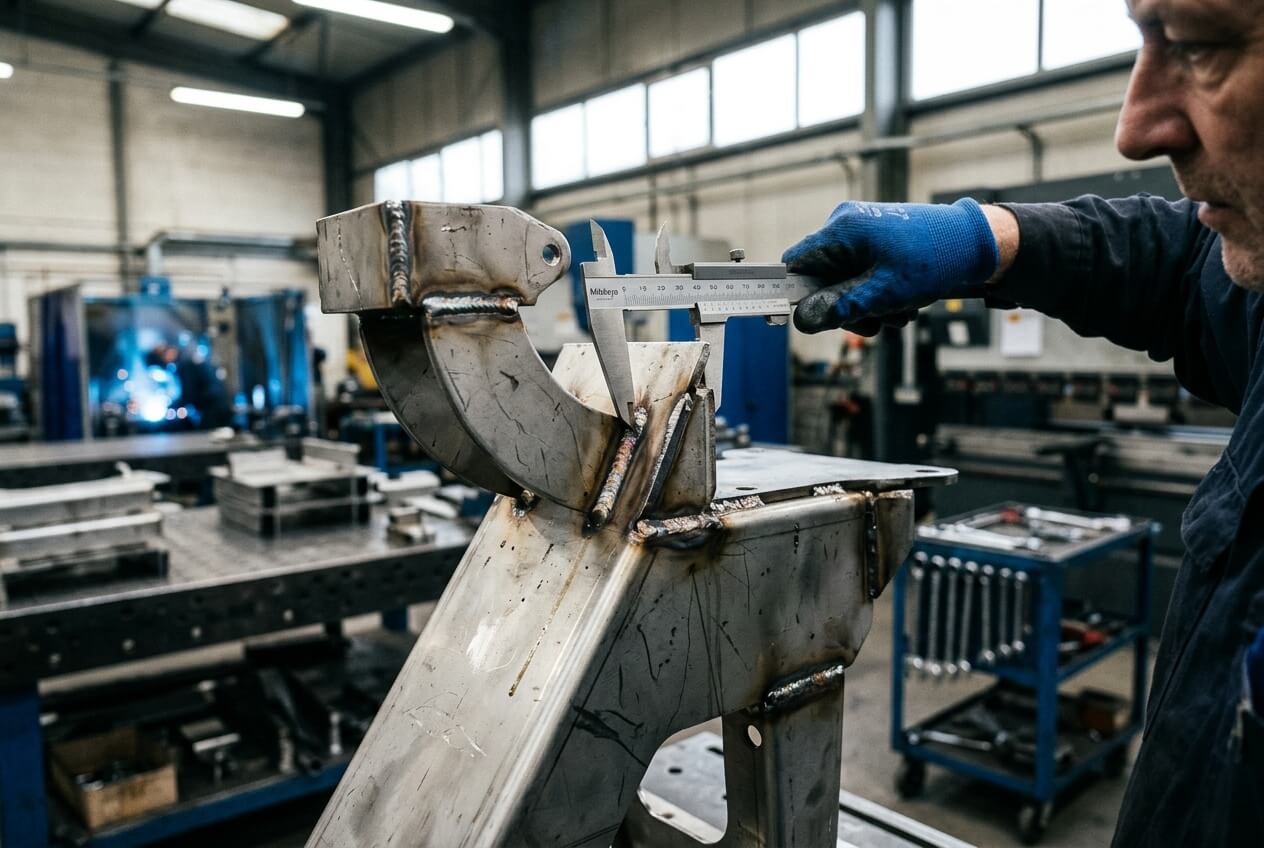
A buyer sends one welded enclosure drawing to three sheet metal suppliers. The drawing shows seams, holes, bends, a door, and powder coating. One quote assumes MIG welding on the inner frame. Another prices TIG welding on visible corners. A third proposes laser welding for thin panels and adds a fixture charge.
The unit prices look close, but the quotes do not cover the same manufacturing risk. Each supplier made a different assumption about heat input, grinding, weld appearance, fixturing, and final inspection. The buyer only wrote, “check dimensions and appearance,” so no quote explains which dimensions matter after welding.
This article focuses on one procurement risk: RFQs for welded sheet metal parts often compare different welding assumptions, then discover the real problem during assembly. Different types of welding do not only change the weld bead. They change distortion risk, inspection timing, finish preparation, batch repeatability, cost, and lead time.
The Real Risk Starts When the Drawing Shows Welds but Not Their Function
Many drawings mark weld locations without explaining what each weld must protect. A seam may need strength, a clean visible edge, gasket sealing, bracket location, or only basic positioning. Those functions require different inspection points. If the RFQ does not separate them, suppliers fill the gap with their own shop standards.
That gap turns procurement into a price comparison between assumptions. One supplier may include full grinding on front seams. Another may leave internal weld beads untouched. A third may include a dedicated welding fixture because it sees hole alignment risk. All three may claim they followed the drawing.
Where quote assumptions hide
The missing detail often sits around datums, mating holes, cosmetic faces, and post-weld dimensions. A drawing may define a hole position on a flat blank, but the buyer actually needs that hole to align after bending, welding, and powder coating. If the supplier checks it before welding only, the inspection report can look acceptable while the assembly fails.
Yishang often sees this issue in custom sheet metal enclosures, brackets, frames, and welded assemblies. The useful RFQ question is not only “which welding process will you use?” A stronger question asks which welds affect assembly fit, which surfaces need cosmetic control, and which dimensions need inspection after the full route.
Different Types of Welding Create Different Post-Weld Inspection Traps
Buyers do not need to become welding engineers. They do need to understand how different types of welding shift the inspection risk. MIG, TIG, laser, spot, stud, and plug welding can all work well. Problems start when the RFQ treats them as interchangeable cost items.
MIG and TIG change the cost of visible control
MIG welding often suits frames, cabinets, display racks, and heavier brackets. It can improve productivity, but it may create more heat input, spatter, and grinding work. If the part has large flat panels near MIG seams, the buyer should define flatness, squareness, and visible cleanup zones.
TIG welding can give cleaner control on stainless housings and visible seams. It also depends heavily on operator skill. A prototype can look excellent because one welder worked slowly. Batch parts may vary if the buyer never defined bead profile, discoloration limits, grinding direction, or acceptable marks after brushing or coating.
Laser, spot, and stud welding shift risk to fit-up and location
Laser welding can reduce heat distortion on thin sheet metal, but it needs tight joint fit-up. Small bending variation or gaps can create inconsistent welds or rework. Spot welding can join panels quickly, yet glossy powder coating may reveal backside marks. Stud welding needs location, perpendicularity, thread protection, and pull-out checks.
Each process changes what procurement should ask before comparing price. A low quote may exclude grinding, fixturing, pull testing, masking, or post-weld measurement. That quote may still look attractive until assembly labor increases or a shipment fails incoming inspection.
Assembly Fit Usually Fails After Welding, Not at the Easy Dimension
Welded sheet metal problems rarely appear as a simple overall length failure. They show up as tight doors, shifted holes, uneven gaps, rocking frames, poor gasket compression, or brackets that no longer match a mating part. These issues start when inspection follows convenient dimensions instead of functional relationships.
Example: powder-coated equipment enclosure
Consider a wall-mounted steel enclosure with a welded inner frame, hinge studs, a lock cutout, and a powder-coated door. The laser-cut panels meet the drawing. The bends also meet normal tolerance. During welding, the hinge-side frame pulls slightly inward. Powder coating then adds thickness around holes and hinge contact points.
The supplier checks outer height, width, and coating appearance. The report passes. At final assembly, the door rubs at the top, the latch feels tight, and the gasket compression varies. The root cause was not one bad dimension. The RFQ failed to call out door gap, hinge alignment, stud protection, and post-coating fit as controlled features.
Example: welded bracket with mounting tabs
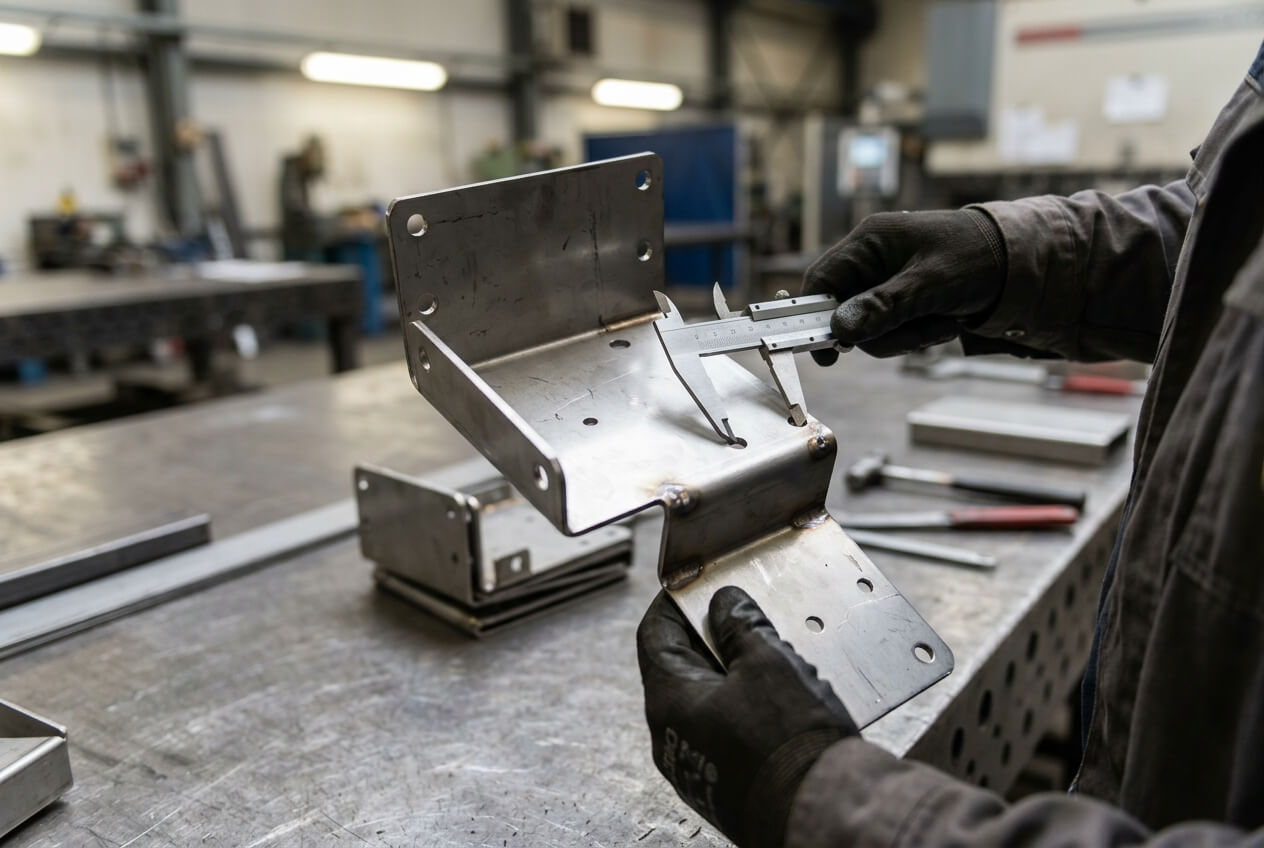
A smaller bracket can create the same cost risk. A U-shaped bracket has two welded tabs and four mounting holes. The supplier punches the holes before bending, then welds the tabs. Heat movement shifts the tab relationship slightly. The bracket still meets its outside size, but it no longer bolts cleanly to the customer’s machined base.
Procurement sees the issue as a supplier quality failure. Production sees it as rework. The supplier may argue that the drawing did not define hole-to-tab position after welding. A clearer RFQ would name the mating datum, post-weld tolerance, inspection stage, and any go/no-go fixture needed for batch checks.
Prototype Approval Can Hide the Batch Welding Variation You Actually Buy
A prototype proves that the design can be made once. It does not prove that the supplier can repeat it across 100, 500, or 2,000 units. Welded prototypes often receive special handling. An experienced welder may tack, measure, correct, weld, straighten, grind, and inspect one sample with extra care.
Batch production uses different pressure. The supplier may add fixtures, split work across operators, change weld sequence, or reduce manual correction to protect lead time. Those choices can improve output, but they can also change final geometry and appearance. If prototype approval only records “sample accepted,” procurement loses the reference needed for production control.
Turn the sample into a production reference
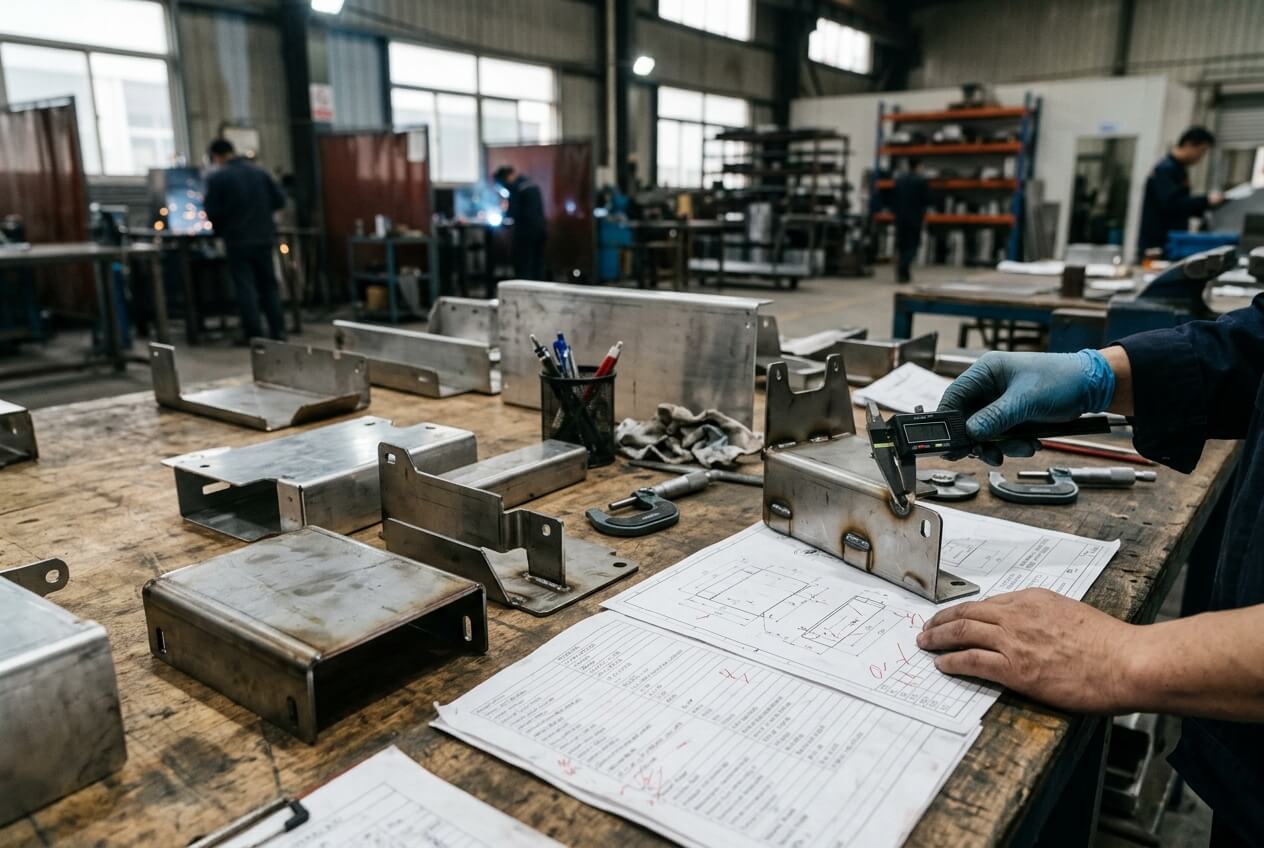
Buyers should record what they accepted during prototype review. Useful records include photos of visible seams, measured door gaps, hole alignment data, flatness results, grinding level, coating coverage, and functional assembly trial notes. Photos help appearance control, but they do not replace measured features.
For welded assemblies, ask the supplier which prototype corrections will remain in batch production. If the sample needed manual straightening, the quote should explain whether batch parts will use a stronger fixture, a changed weld sequence, or added inspection. Otherwise, the buyer may approve a beautiful sample and receive inconsistent production parts.
When Yishang supports drawing review before batch release, the discussion often focuses on inspection timing. Some features need checking after bending. Others matter only after welding, grinding, finishing, or final assembly. That timing decision protects both cost and lead time because it reduces late sorting and emergency rework.
Clarify Weld Assumptions Before You Compare Supplier Quotes
A stronger RFQ does not need to over-specify every weld method. In many projects, the supplier can choose the best process if the buyer defines the required outcome. The RFQ should explain what the welded part must do after fabrication, finishing, and assembly.
Start with the drawing. Mark cosmetic surfaces, structural welds, sealing concerns, mating datums, and dimensions that need inspection after welding. Add finish expectations by surface zone. A front cabinet seam may need smooth grinding before powder coating. A hidden internal frame weld may only need strength and spatter removal.
Next, connect tolerance expectations to the assembly. Tight tolerance on every feature increases cost and may not reduce risk. A better approach identifies the few features that control fit: hinge line, latch position, hole patterns, bracket datums, frame squareness, gasket surfaces, or stud location. Ask suppliers to confirm how they will hold those features after welding.
Cost and lead time also become clearer. MIG may reduce welding time but add grinding or straightening. TIG may improve visible seams but slow output. Laser welding may control distortion but require tighter fit-up and fixture work. Spot or stud welding may save time but need location and strength checks. These tradeoffs belong in the quote, not in a dispute after delivery.
Supplier communication should create evidence. Request notes on weld process, fixture plan, inspection stage, finish masking, prototype controls, and batch sampling. The goal is simple: every supplier should quote the same risk coverage, not just the same drawing number.
Planning a welded enclosure, cabinet, bracket, frame, or custom sheet metal assembly? Send Yishang your drawings, material requirements, order quantities, tolerances, finish expectations, prototype notes, and assembly concerns. The team can review weld assumptions, post-weld inspection points, and fabrication tradeoffs before you compare quotes or release a batch.
Frequently Asked Questions
Which different types of welding create the most RFQ ambiguity?
MIG, TIG, laser, spot, stud, and plug welding can all create ambiguity if the RFQ does not define weld function. MIG may add distortion and cleanup. TIG may add appearance labor. Laser needs close fit-up. Spot and stud welding need location and strength checks.
Should buyers specify the welding process or the inspection result?
Buyers should specify the required result first. Define strength, appearance, flatness, hole alignment, sealing needs, and post-finish assembly fit. Then ask the supplier to confirm the welding process and controls needed to meet those results.
What dimensions should be checked after welding?
Check dimensions that control assembly after heat movement occurs. Common examples include hinge alignment, hole-to-hole distance across a frame, bracket-to-datum position, door gap, frame squareness, stud location, and gasket surface flatness.
Why can a welded prototype pass but batch parts fail?
A prototype may receive extra manual correction and inspection. Batch production may use fixtures, different operators, and faster weld sequences. Without recorded sample criteria and batch inspection points, the approved prototype may not control repeated production.
How does powder coating affect welded assembly risk?
Powder coating can add thickness around holes, hinge areas, studs, slots, and mating faces. It can also reveal grinding marks or panel waves near welds. Buyers should define masking and final fit checks after coating when assembly matters.
What should buyers include in a welded sheet metal RFQ?
Include drawings, material grade, quantity, critical tolerances, cosmetic zones, finish requirements, assembly interfaces, prototype expectations, and inspection stages. Ask suppliers to state weld method, fixture plan, grinding scope, masking needs, and batch sampling approach.