

An OEM buyer sends one drawing package for 500 stainless control cabinet panels. The parts need laser cutting, bending, welded corners, threaded hardware, and electropolish before final assembly. Three suppliers return similar unit prices, so the purchasing team expects a simple comparison.
The quotes are not equal. One supplier prices electropolish as a basic outsourced finish. Another includes mechanical polishing before finishing. A third assumes rack marks can sit on hidden flanges and does not mention hole measurement after finishing. Each quote looks complete, yet each supplier has priced a different production route.
This is the dominant procurement risk: incomplete RFQ details let suppliers fill in electropolish assumptions differently. The buyer may then choose the lowest price without seeing the hidden tradeoffs. Those tradeoffs often appear later as enlarged holes, visible weld shadows, rack marks, cleaning residue, delayed approvals, or batch-to-batch appearance variation.
Electropolish does not sit outside fabrication. It interacts with cut edges, bend stress, weld cleanup, surface preparation, racking, cleaning, and final inspection. A short finish note can work for a simple internal bracket. It rarely works for stainless enclosures, cabinets, frames, trays, and welded assemblies with both cosmetic and functional requirements.
Strong procurement control starts before price comparison. Buyers need to define which dimensions matter after electropolish, which surfaces customers will see, which welds need blending, and which areas can accept contact marks. Without those details, the quote becomes a list of assumptions instead of a reliable cost.
Where RFQ Ambiguity Starts to Distort Electropolish Quotes
Most electropolish quote problems start with a drawing note that looks clear but leaves critical decisions open. A note such as “stainless steel, electropolish finish” tells the supplier the desired process. It does not explain the buyer’s risk tolerance.
The supplier still has to decide how much pre-deburring to include, whether weld blending belongs in the price, where rack contact can occur, and how much inspection happens after finishing. If the RFQ does not define those points, each supplier makes its own commercial choice. Some protect the project with extra preparation. Others keep the price low and leave risk outside the quote.
That difference matters because electropolish can reveal poor preparation rather than hide it. Laser-cut edges, bend marks, sanding direction, weld heat tint, and handling scratches can become more obvious after finishing. A supplier that prices only the chemical process may not include the manual work needed to make the part acceptable.
A Low Price Can Exclude the Work That Prevents Rejection
Consider a stainless display frame with visible welded corners. The drawing calls for electropolish, but it does not define weld smoothness or acceptable discoloration. Supplier A includes weld blending before finishing. Supplier B assumes the as-welded corners can go directly to electropolish. Supplier B wins on unit price, but the first samples show dark shadows around the joints.
The issue did not start in the electropolish tank. It started when the RFQ failed to connect finish expectations to weld preparation. The buyer now faces rework, sample delay, and a price revision. A short clarification before quoting could have separated cosmetic weld areas from hidden structural welds.
Buyers should ask suppliers to state their electropolish route in writing. The answer should cover pre-polishing, deburring, weld cleanup, racking, outsourcing, cleaning, and inspection. A useful quote explains what the supplier included. A risky quote only repeats the finish note.
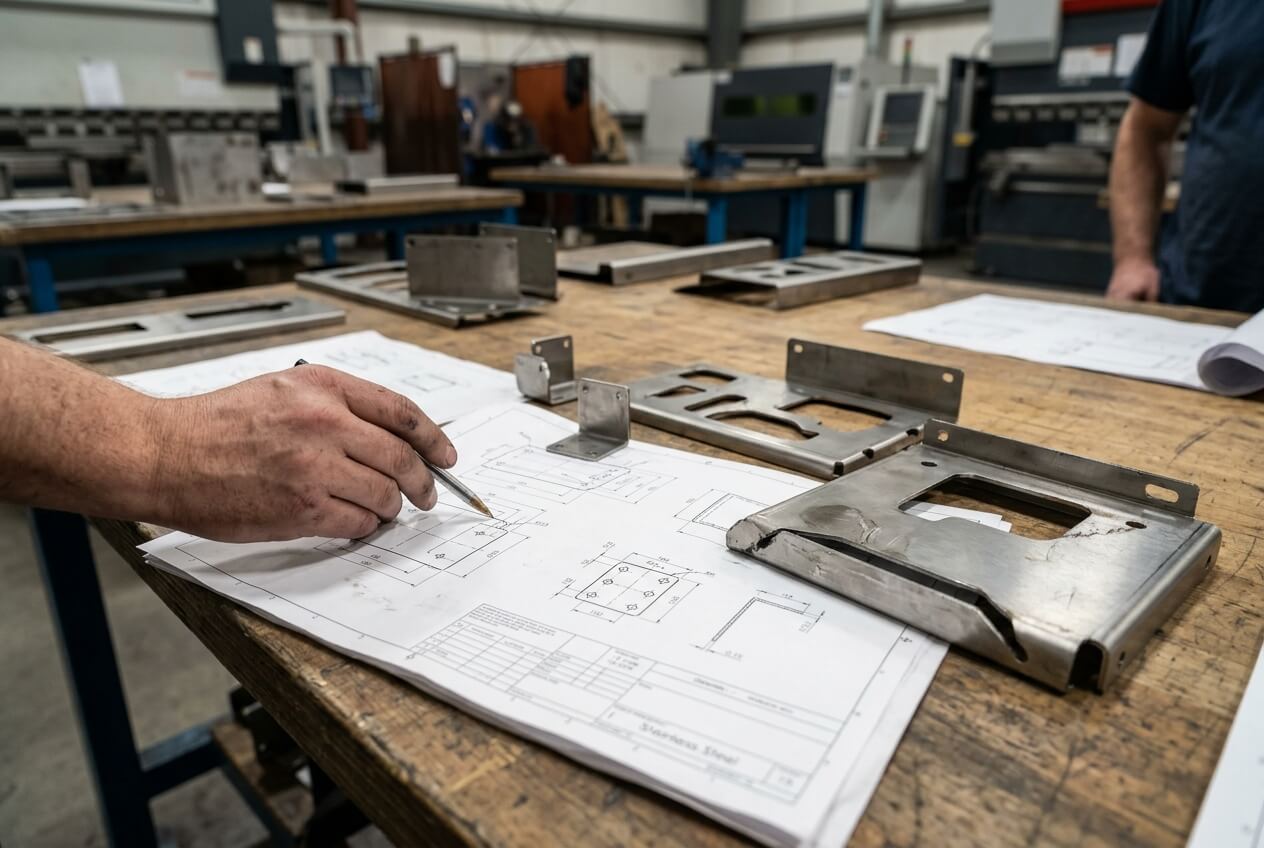
Unclear After-Finish Dimensions Turn Finish Decisions Into Assembly Risk
Electropolish removes a small surface layer. On many sheet metal parts, that removal may not affect function. On holes, slots, tabs, countersinks, mating edges, and tight assemblies, it can change fit enough to create production problems.
The risk grows when drawings define dimensions but do not state whether they apply before or after electropolish. Fabricators may cut and form parts to nominal dimensions, send them to finishing, and inspect only the pre-finish condition. The buyer then discovers the issue during assembly, not during fabrication.
A stainless enclosure door provides a common example. The visible front face needs a clean, uniform electropolished surface. The hinge holes and latch opening need reliable alignment after finishing. If the RFQ treats the door as one general finish requirement, the supplier may focus on appearance and miss the functional features that must still fit.
Functional Features Need Their Own Finish Rules
Buyers should mark the features that control assembly. These may include hinge holes, PEM hardware locations, screw slots, formed tabs, grounding points, bracket interfaces, and gasket-contact edges. The supplier can then decide whether tooling, cutting allowance, masking, or after-finish inspection must change.
A mounting tray for a small equipment module shows the consequence chain. The buyer approves a low quote for laser cutting, bending, and electropolish. The RFQ does not mention that two slotted holes align with a molded plastic cover. After finishing, the slots still look correct, but the cover binds during assembly. The supplier argues that the part matches the drawing process note. The buyer expected after-finish fit.
That dispute costs more than the original clarification. Engineering may need to revise hole sizes. Purchasing may need to approve rework or a new batch. Production may lose time while teams debate whether the issue belongs to design, fabrication, or finishing.
A stronger RFQ states which dimensions must pass after electropolish. It also tells suppliers how the finished part will assemble. Assembly drawings, mating-part details, and inspection priorities help suppliers price the risk correctly. Yishang can review these drawing details when buyers need custom sheet metal fabrication support before locking a quotation.
Cosmetic Surface Assumptions Create Finish Disputes After Parts Exist
Many electropolish disputes come from vague cosmetic language. Words such as bright, smooth, clean, or uniform do not define where the standard applies. They also do not explain which marks matter to the customer.
Sheet metal parts often mix several surface priorities on one part. A cabinet panel may include an exposed front face, internal flanges, rear mounting holes, welded studs, and hidden stiffeners. A single strict cosmetic standard for every surface can raise cost. No standard creates arguments after production.
Suppliers need to know which faces cannot carry rack marks, water stains, weld shadows, sanding lines, or handling scratches. They also need to know where contact marks can sit without affecting the product. That information changes racking method, polishing time, batch loading, inspection effort, and lead time.
Racking Decisions Are Commercial Decisions
Racking does not only support the part during electropolish. It also controls current distribution, contact marks, drainage, and handling risk. A large enclosure panel may need careful contact placement to protect the visible face. A hidden bracket may allow simple hanging and lower cost.
If the drawing does not mark cosmetic zones, the supplier may choose the cheapest workable rack location. The part may pass the supplier’s process check but fail the buyer’s visual inspection. Once the parts exist, moving rack marks from a front face to a hidden flange may require a new fixture, a revised process, or a replacement batch.
Buyers can reduce this risk with a simple surface priority map. Mark Class A visible surfaces, acceptable rack-contact zones, hidden surfaces, and any areas that need extra weld or scratch control. Photos from previous acceptable parts also help. They do not replace written criteria, but they reduce interpretation gaps.
Inspection conditions should match real use. A decorative display panel needs visual consistency at normal viewing distance. An internal stainless bracket may only need burr reduction and corrosion support. A welded housing for clean equipment may need extra attention to seams because residue can create contamination concerns.
The RFQ should also identify any special surface documentation. Some projects need roughness targets, cleanliness checks, passivation-related documentation, or corrosion testing. Many do not. Adding these requirements after production changes price, paperwork, and sometimes the production route.
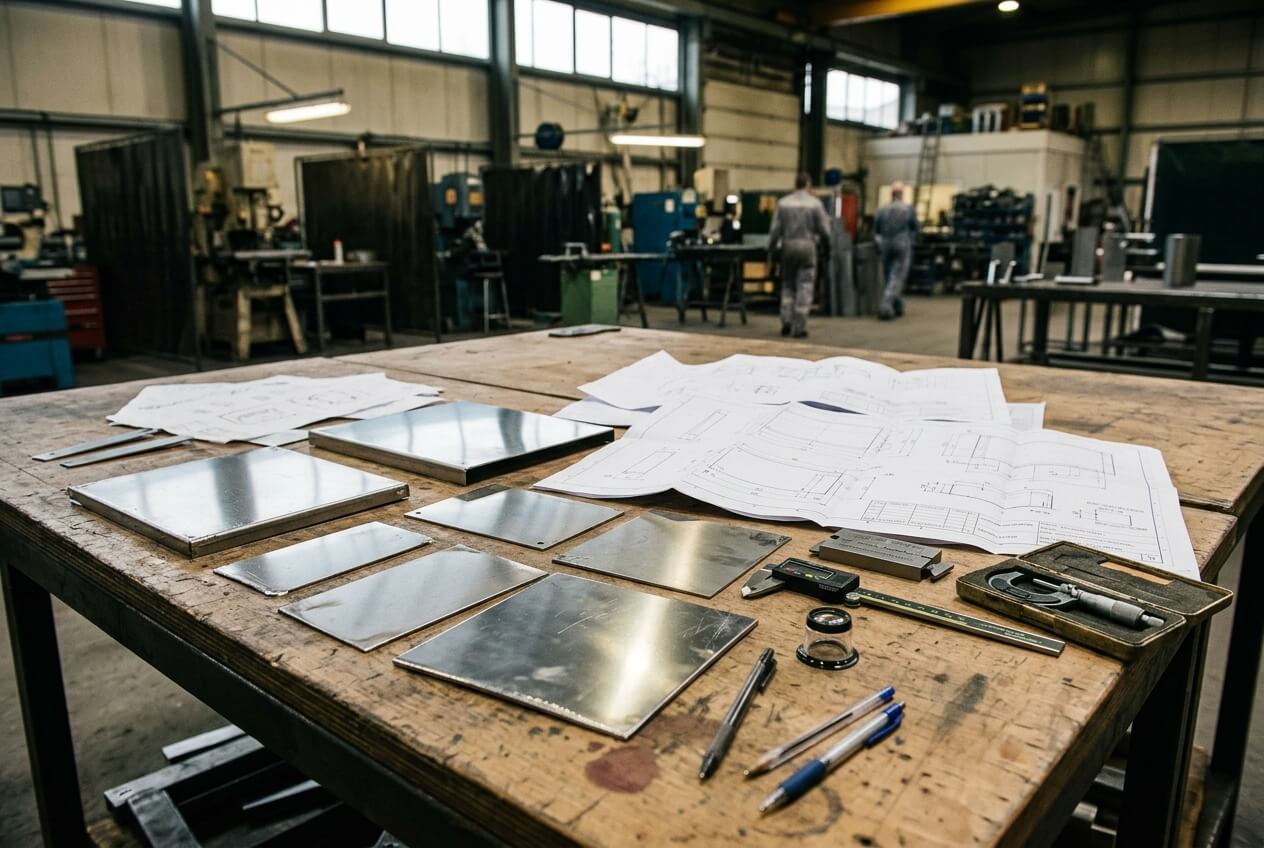
Prototype Approval Can Hide a Production Route That Will Not Scale
A good prototype can give buyers false confidence when the RFQ does not lock the process behind the sample. One sample may receive extra hand polishing, special rack placement, or careful handling that the production quote does not include. The finished part looks right, but the batch process remains undefined.
This risk often appears when teams approve a prototype by email with a short note such as “finish approved.” That phrase does not identify which conditions must repeat. It does not state whether the same pre-polishing steps, rack locations, inspection points, or cleaning method will apply to 500 pieces.
Batch electropolish consistency depends on part spacing, rack design, bath condition, current distribution, drainage, cleaning, drying, and inspection discipline. Long frames can finish differently near corners than along open runs. Welded cabinet parts can trap solution in seams. Bent panels can vary if loading orientation changes across batches.
Sample Notes Should Become Production Controls
Buyers should approve the sample with specific notes. For example: front face brightness approved, rack contact allowed only on internal flanges, hinge holes measured after electropolish, weld discoloration not visible from the customer side, and threaded inserts fully cleaned and dried.
Those notes give purchasing, engineering, quality, and the supplier one shared standard. They also protect the buyer from a common price trap. If the prototype required extra manual work, the supplier must either include that work in the production price or explain why the batch route can achieve the same result without it.
A welded stainless equipment housing offers a practical case. The prototype passes visual review because a technician spends extra time blending corner welds. During production, the quoted route skips that extra blending to meet the target price. The first batch shows uneven brightness at the corners, and the buyer rejects visible units. The real problem was not only workmanship. The prototype approval failed to define the repeatable route.
Ask the supplier what changes between sample and production. Will the same subcontracted electropolish source handle the batch? Can the tank size accept the part without awkward racking? Will inspection records include after-finish dimensions? Can the supplier keep a reference sample or approved photos near production?
These questions connect prototype approval to batch control. They also reveal cost drivers before the buyer treats the sample price as a production guarantee.
What Buyers Should Clarify Before Comparing Electropolish Suppliers
Buyers do not need to over-specify every stainless sheet metal part. They do need to remove the assumptions that change price, fit, appearance, and delivery. The goal is not a longer RFQ for its own sake. The goal is comparable supplier responses.
Start with the reason for electropolish. State whether the finish supports appearance, burr reduction, corrosion resistance, cleanliness, or a mix of these goals. That purpose tells the supplier where to spend effort. A visible retail display frame needs different controls than an internal machine bracket.
Next, identify the features that cannot drift. List after-finish dimensions for holes, slots, tabs, mating edges, countersinks, welded nuts, and hardware locations. Share assembly drawings when fit depends on another part. If the supplier understands the assembly, they can question risky geometry before cutting metal.
Then define surface priorities. Mark visible faces, allowed rack-contact areas, hidden areas, welds that need blending, and surfaces where scratches or shadows are unacceptable. If you have approved samples or photos, include them with written limits.
Finally, ask each supplier to disclose the route behind the quote. The response should explain pre-deburring, polishing, weld cleanup, racking, outsourcing, cleaning, drying, inspection timing, and any assumptions that affect lead time. A supplier that cannot explain these points may still make the part, but the buyer carries more hidden risk.
Yishang supports buyers by reviewing drawings, tolerances, finish notes, welded areas, and assembly requirements for custom sheet metal parts before quote approval. That review helps expose electropolish assumptions that could otherwise become fit, finish, cleaning, or batch consistency problems.
If your stainless enclosure, cabinet panel, bracket, tray, frame, or welded assembly needs electropolish, send the full RFQ package before choosing by unit price. Include drawings, material requirements, quantities, critical tolerances, finish expectations, cosmetic surface marks, prototype notes, assembly drawings, and inspection requirements. Share those details through Yishang so the quote can reflect the real fabrication and finishing risk.
Frequently Asked Questions
Why can two electropolish quotes for the same drawing differ so much?
Suppliers may include different assumptions for deburring, weld cleanup, mechanical polishing, racking, cleaning, outsourcing, and inspection. A short finish note does not force every supplier to price the same production route.
Which dimensions should buyers define after electropolish?
Define after-finish requirements for holes, slots, tabs, countersinks, hinge points, mating edges, hardware locations, and any feature that controls assembly. Ask the supplier to confirm how those points will be measured.
How should an RFQ identify cosmetic surfaces for electropolished parts?
Mark visible faces, allowed rack-contact zones, hidden surfaces, welds needing blending, and areas where scratches, stains, shadows, or contact marks are unacceptable. This helps suppliers price the correct preparation and fixturing.
Can prototype approval guarantee batch electropolish consistency?
No. Prototype approval only helps if the buyer records the preparation, rack contact limits, inspection points, cleaning expectations, and approved appearance. The supplier must then confirm that production will follow the same controls.
When do cleaning details matter for electropolished sheet metal parts?
Cleaning details matter when parts include blind holes, threaded inserts, welded seams, enclosed corners, drain-sensitive geometry, or contamination-sensitive use. These features can trap residue if the RFQ does not define cleaning and drying expectations.
What should buyers send before requesting an electropolish quote?
Send drawings, material grade, quantities, critical tolerances, finish expectations, cosmetic surface priorities, assembly information, prototype notes, and inspection requirements. These details help suppliers quote the same risk instead of different assumptions.