
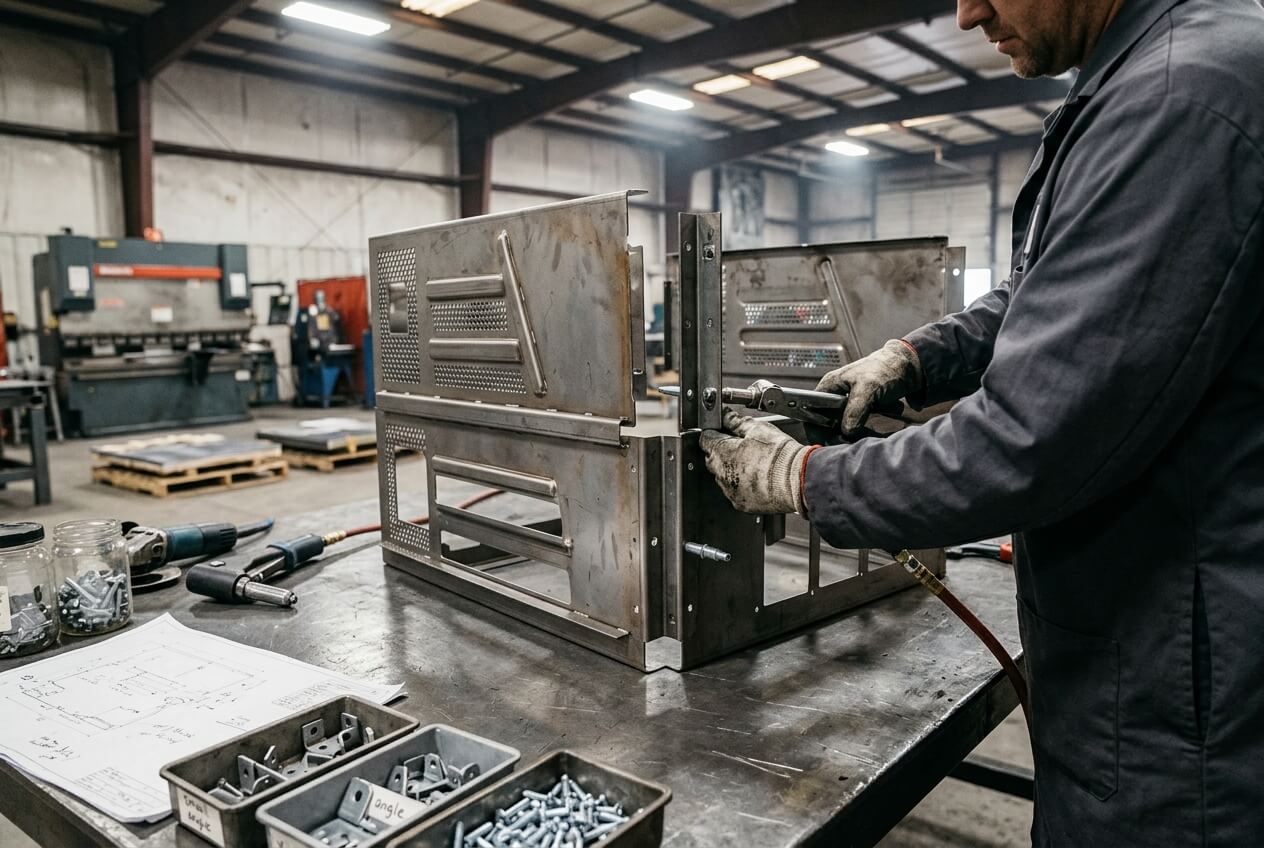
An OEM buyer sends an RFQ for a powder-coated control cabinet. The drawing package includes hinge plates, internal brackets, a removable panel, and several laser-cut mounting parts. One material note says temper metal. The prototype looks acceptable, and the unit price seems competitive.
The first batch tells a different story. Hinges bind after coating. Bracket holes miss the mating frame. A retaining tab bends once, then loses recovery during repeated use. Each part may still pass its own inspection report, yet the cabinet fails during assembly.
This problem rarely starts on the shop floor. It usually starts inside the RFQ, where one short material note carries too many assumptions. Buyers compare quotes as if suppliers priced the same job. In reality, each supplier may assume a different temper condition, bend radius, inspection datum, finish allowance, welding sequence, or level of assembly checking.
For custom sheet metal fabrication, the main risk is not simply choosing the wrong metal. The larger procurement risk is quote ambiguity. If the RFQ does not define how the temper metal part must fit, flex, fasten, or survive finishing, the lowest quote may only be the quote with the fewest assumptions included.
Where RFQ Ambiguity Turns Temper Metal Into an Assembly Risk
A drawing note that says temper metal can mean several things. It may refer to a pre-tempered sheet or strip. It may mean a formed part that needs heat treatment after fabrication. It may also mean the buyer wants higher strength, better springback, or more resistance to wear.
Those meanings lead to different production routes. A pre-tempered sheet may need a larger bend radius and stricter grain-direction control. A part that receives heat treatment after forming may change flatness or hole position. A stronger alloy substitute may solve stiffness while avoiding unnecessary heat treatment.
If the RFQ does not explain the function, suppliers fill the gap themselves. One fabricator may price slower forming and extra scrap allowance. Another may quote mild steel and skip property verification. A third may include hardness checks, fixture control, and post-finish fit checks. The quote table may still show the same drawing number and quantity.
The missing function creates the first cost gap
Procurement teams often ask for stronger material because the part bent during use. That request sounds simple, but it changes fabrication behavior. Harder material can crack at tight bends. Higher springback can shift flange angles. Holes near bend lines can move after forming. Weld heat can also release stress and pull features away from the assembly datum.
A cabinet latch plate offers a common example. The buyer wants the tab to spring back after repeated closing. If the RFQ only says temper metal, one supplier may quote a spring-temper strip. Another may quote thicker mild steel. The first route controls recovery but raises forming risk. The second route may look cheaper but may not solve fatigue or return force.
The buyer should state the real job of the part. Does it need elastic recovery, load support, wear resistance, or simple stiffness? Does the part flex every time the product operates, or does it only hold shape during installation? Clear answers help suppliers quote the same risk instead of guessing from a material note.
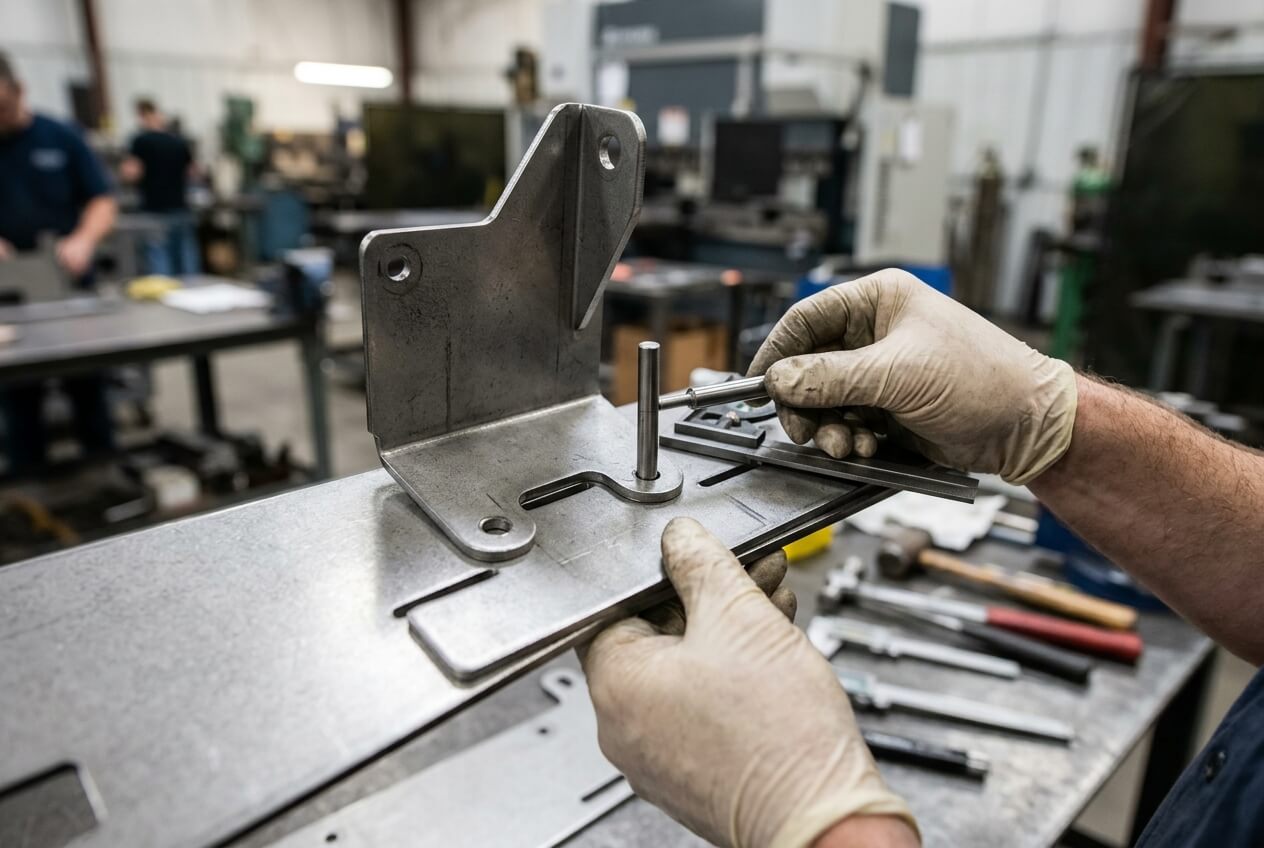
Why Comparable Prices Hide Different Manufacturing Assumptions
Unit price can look precise while the manufacturing plan remains vague. Temper metal makes that gap more dangerous because the material condition affects cutting, bending, welding, finishing, and inspection. A supplier who includes all of those controls will not price the job like one who only prices blanking and bending.
The difference shows up later as rework, sorting, delayed assembly, or rejected batches. Procurement may believe it saved cost at the quotation stage. Production then pays for the missing assumptions with overtime, line stoppages, or customer complaints.
Material route changes more than material cost
Pre-tempered material may cost more and cut more slowly. It may also require larger bend radii, special tooling, or controlled bend direction. Post-forming heat treatment adds another supplier step, more lead time, and possible distortion. A stronger non-tempered grade may reduce cost, but only if it meets the functional requirement.
These choices affect tolerances. A hole pattern cut before bending may not land in the same place after springback. A flange angle that works in mild steel may drift in a harder condition. A welded bracket may leave the laser cell within tolerance, then shift after tack welds and final welding.
Buyers should ask suppliers to state the assumed material condition, forming route, bend radius, and property checks. If a supplier proposes an alternative grade, the quote should explain which requirement it protects. That makes the alternative useful instead of vague.
Finish assumptions can move the assembly point
Powder coating, plating, brushing, and polishing also change fit. Coating can tighten slots, reduce hole clearance, and increase hinge friction. Polishing can soften edges or slightly change visible flushness. If a drawing does not say whether dimensions apply before or after finishing, suppliers may inspect at different stages.
Consider a powder-coated enclosure with internal mounting rails. The rails meet tolerance before coating. After coating, screws bind in several holes, and the rear panel no longer sits flush. The problem started when the RFQ treated coating as cosmetic only. It should have defined coating thickness limits, masked features, thread protection, and final fit inspection.
Lead time also changes with these assumptions. Masking, post-coating checks, hardness tests, and fixture inspections add time. They can prevent expensive failures, but procurement must see them during quote comparison. Otherwise, one quote looks faster only because it excludes the controls that protect assembly.
Assembly Datums Matter More Than Standalone Part Dimensions
Many rejected assemblies contain parts that passed incoming inspection. The issue is not always the nominal dimension. It is often the reference used to measure it. A hole can be the right size and still sit in the wrong place relative to a hinge, weld nut, gasket, rail, or machine frame.
This risk grows when temper metal parts interact with formed or welded structures. Springback changes bend angles. Weld heat pulls frames. Finish thickness tightens clearances. A part measured from a blank edge may pass, while the same part fails against the assembly datum.
Inspection should follow the way the product installs
A removable cabinet panel gives a simple example. The panel is laser cut, bent, powder coated, and fastened into welded nuts. If the supplier inspects hole position from the flat blank edge, the report may look clean. The assembly depends on the screw pattern after bending and coating, relative to the cabinet body.
The same issue appears in welded assemblies. A tempered bracket may have accurate CNC-punched holes before welding. After welding, the fixture pulls slightly, and the mounting pattern no longer matches the customer equipment. The bracket did not fail alone. It failed as part of the frame.
Buyers should mark functional datums on drawings. Use the hinge line when door movement matters. Use the base mounting face when the assembly bolts to equipment. Use gasket faces when compression affects sealing. Use the fixed frame edge when a cover must sit flush.
Tight tolerances do not fix the wrong datum
Some buyers respond by tightening every tolerance. That approach raises cost and still misses the main failure point. A hidden flange edge may not need tight control. A hinge axis, latch point, or mounting slot may need stronger control than the general profile.
Good tolerance strategy separates fit-critical features from non-critical features. On enclosures, hinge alignment, latch engagement, gasket compression, and mounting-hole position often deserve priority. On display frames, squareness and shelf height may matter more than a concealed bracket profile. On clips, hardness range and elastic recovery may matter more than cosmetic flatness.
Yishang can review drawings more effectively when buyers share mating-part photos, assembly notes, and 3D files with the RFQ. That context helps separate cosmetic tolerances from features that control installation, fastener alignment, and final product function.
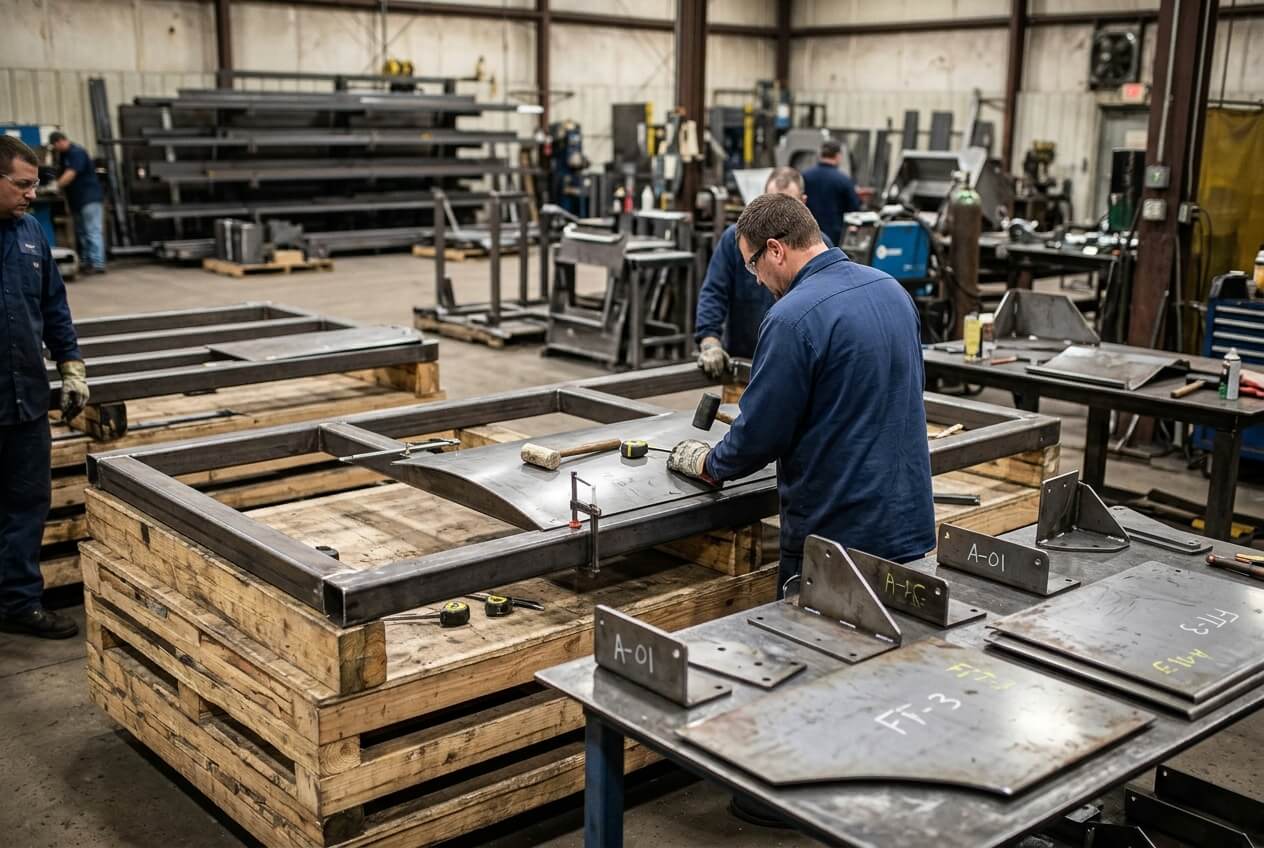
Prototype Approval Can Hide Batch Failure in Temper Metal Parts
A prototype often receives more attention than a production batch. Technicians may build it slowly, select a favorable material lot, adjust bends by hand, or chase holes after coating. The prototype then passes review, but the method cannot repeat at batch speed.
Temper metal increases this risk because small process changes can shift forming behavior. A different heat lot may spring back more. A new bend setup may move hole locations. A coating supplier may apply a thicker layer. A welding operator may change tack order. Each change looks minor until the assembly line sees hundreds of parts.
Sample approval should freeze the method, not only the part
Buyers should ask what will stay unchanged after prototype approval. Will production use the same material grade and temper condition? Will the same bend tooling and bend radius remain in use? Are holes cut before or after forming? Does welding happen in a fixture? Will the supplier measure critical features after finishing?
A bracket project shows the consequence chain. The prototype bracket fits a machine frame after a technician tweaks the flange angle. The first batch uses the same drawing, but no one documents the adjustment. Operators must force brackets into place, paint chips around the screws, and installation time doubles. The RFQ never stated the acceptable installation force or final hole position relative to the machine frame.
Another example involves a retaining plate inside a metal enclosure. The prototype works because a technician removes coating from the slot and bends the tab slightly by hand. During batch production, the manual correction disappears. The plate scratches the powder-coated surface and loses smooth movement. The drawing showed the part shape, but it did not define post-coating clearance or the allowed secondary adjustment.
Batch consistency needs clear control points
Before releasing production, buyers should freeze the approved sample, material route, bend radius, inspection datum, coating thickness range, and any permitted hand fitting. If the prototype required manual correction, decide whether that step belongs in the controlled process or should be removed through design changes.
Supplier communication should focus on repeatability. Ask which dimensions will be checked after bending, after welding, and after finishing. Ask whether the supplier will use fixtures for welded frames or enclosure bodies. Ask what changes require buyer approval before production continues.
These questions do not slow procurement when buyers ask them early. They reduce late clarification, emergency samples, and avoidable batch delays. They also help separate a low-risk quote from a quote that postpones risk until production.
What Buyers Should Clarify Before Comparing Temper Metal Quotes
The safest RFQ does not treat every detail equally. It identifies the assumptions that could change assembly fit, cost, and lead time. Buyers still need drawings, tolerances, material notes, finish requirements, quantities, and delivery targets. The difference lies in how clearly those details connect to the finished assembly.
Start with the reason for temper metal. If the part needs springback, define the deflection, recovery, cycle expectation, or hardness range. If the part needs stiffness, allow the supplier to suggest a more fabrication-friendly grade, added ribs, thickness changes, or geometry changes. If the part needs wear resistance, identify the contact surface and expected movement.
Next, mark the features that decide whether the product installs correctly. Identify hinge lines, weld nuts, slots, latch points, gasket faces, customer mounting holes, and flush surfaces. State whether dimensions apply before or after bending, welding, and finishing. For coated parts, define coating thickness expectations and features that need masking or post-coating checks.
Then ask suppliers to disclose quote assumptions. The quote should state whether it includes pre-tempered material, post-forming treatment, hardness checks, welding fixtures, coating protection, final fit checks, and sample approval steps. These items influence unit price and lead time, so they belong in the comparison.
Procurement teams should also share context that drawings may not show. Assembly photos, mating samples, 3D models, installation notes, and prototype comments help fabricators understand the real risk. For custom sheet metal parts, metal enclosures, brackets, frames, and welded assemblies, that context often prevents the gap between a passed inspection and a failed installation.
If your temper metal part must align with hinges, weld nuts, mounting rails, cabinet frames, gaskets, or customer equipment, send Yishang the drawings, material requirements, quantities, tolerances, finish expectations, prototype notes, and assembly photos. The team can review manufacturability, RFQ assumptions, finishing details, and fit-critical features before you compare quotes or release batch production through https://zsyishang.com/.
Frequently Asked Questions
What should an RFQ define when a drawing calls for temper metal?
The RFQ should define the material grade, acceptable alternatives, temper condition, functional reason, hardness or recovery requirement, bend radius limits, finish stage for inspection, and mating features. These details help suppliers quote the same production risk.
Why can temper metal parts pass inspection but fail assembly?
The inspection may use a blank edge or standalone dimension instead of the assembly datum. Bending springback, welding distortion, and coating buildup can move holes, tabs, or flanges away from the feature that controls final fit.
How does powder coating affect tempered brackets or enclosure parts?
Powder coating adds thickness to holes, slots, hinge areas, tabs, and mating edges. If the RFQ does not define masking or post-coating inspection, parts can bind, scratch, lose flushness, or require rework during assembly.
Should buyers tighten all tolerances to prevent fit problems?
No. Tight tolerances everywhere can increase cost without controlling the real risk. Buyers should prioritize functional datums, hinge lines, mounting holes, gasket faces, latch points, and features that drive installation or movement.
Why does prototype approval not guarantee batch consistency?
Prototype parts may receive manual adjustment, slower setup, selected material, or extra finishing corrections. Batch production needs documented controls for material temper, bend tooling, fixtures, coating thickness, inspection datum, and allowed adjustments.
What information helps Yishang review a temper metal fabrication RFQ?
Useful inputs include drawings, material requirements, quantities, tolerance priorities, finish expectations, mating-part photos, samples, prototype comments, and assembly notes. This information helps identify quote assumptions before production starts.