
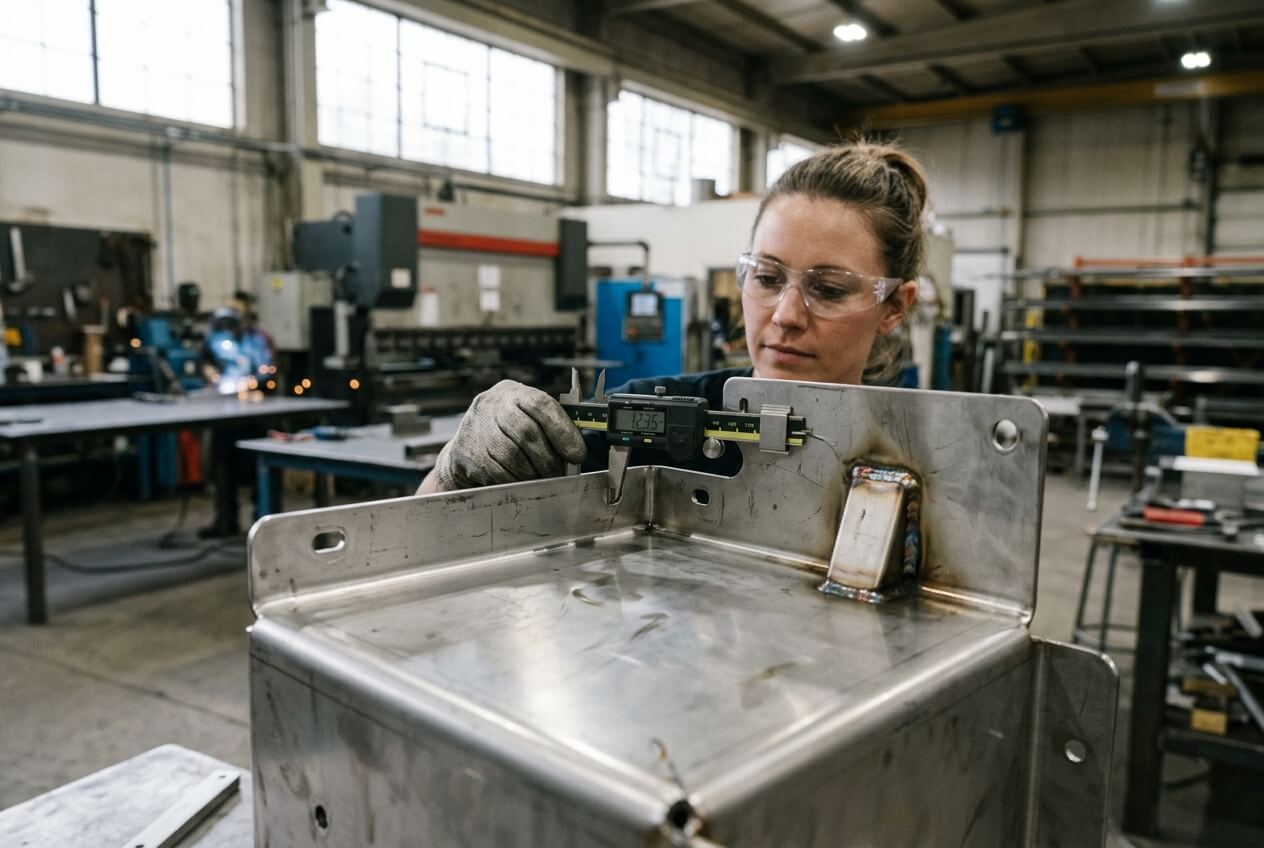
An OEM buyer sends one enclosure drawing to three sheet metal fabrication suppliers. The drawing shows corner seams, hinge plates, mounting holes, a powder coated front panel, and an internal bracket. One supplier prices MIG welding and light cleanup. Another quotes TIG welding for all visible seams. A third writes “welding as required” and offers the lowest unit price.
The buyer asks the common question: what’s the difference between mig and tig welding? MIG welding uses a continuously fed wire and often fits longer welds, frames, brackets, internal supports, and higher-volume structural work. TIG welding uses a non-consumable tungsten electrode and gives the welder more control on thin sheet, stainless surfaces, and visible seams. That difference matters. Yet it does not solve the main procurement risk.
The bigger risk starts when the RFQ names a welding process but fails to define the finished result. Suppliers then fill the gaps with their own assumptions. Those assumptions affect welding time, fixtures, grinding, coating preparation, inspection points, and batch repeatability. A quote may look cheaper because it excludes the controls your inspection team expects later.
For sheet metal parts, the welding method rarely stands alone. Laser cutting, bending, welding, grinding, powder coating, polishing, and assembly all interact. A cabinet can pass a strength check but fail because the door gap changes after welding. A bracket can look acceptable but miss hole position after heat pulls the flange. A retail display frame can pass before coating, then show grinding waves after powder coating.
This article treats MIG versus TIG as an RFQ assumption problem. The goal is not to choose one process for every part. The goal is to stop welding assumptions from becoming quote gaps, inspection disputes, rework, and production delays.
When a MIG or TIG Note Hides the Real Acceptance Standard
A drawing note that says “MIG weld” or “TIG weld” can feel specific. In many RFQs, it still leaves the supplier guessing. The note tells the supplier how to join metal, but it may not explain what the welded area must achieve after finishing and assembly.
For procurement, that gap creates the first consequence chain. The buyer requests a process. The supplier prices the process using normal shop assumptions. Production follows those assumptions. Inspection later applies a different standard. At that point, both sides can argue that they followed the RFQ.
Process Choice Is Not the Same as Inspection Scope
MIG can suit a welded cabinet frame because it works well on longer seams and internal structural joints. TIG can suit a visible enclosure corner because it allows cleaner control on thin sheet. However, either process can fail if the RFQ ignores distortion, surface cleanup, coating appearance, or fit-up.
Consider a powder coated control enclosure. The buyer specifies TIG on the front corner seams because the surface faces the end user. The supplier produces a clean bead and grinds the corner lightly. After coating, the surface shows a shallow wave. The buyer rejects the part for appearance. The supplier points out that the drawing required TIG, not flush grinding or cosmetic surface blending.
The welding process did not cause the dispute by itself. The missing acceptance standard caused it. The RFQ should have marked visible weld zones, required surface preparation before powder coating, and defined what inspection would reject.
Hidden Welds Need Different Controls
Hidden welds create another kind of assumption. An internal reinforcement bracket may not need TIG. MIG may deliver enough strength at a better cost. Yet the bracket may sit near PEM inserts, hinge holes, or mating tabs. Heat distortion can move those features even when the weld remains strong.
A supplier who prices only weld strength may skip post-weld hole checks. The buyer may expect those checks because the bracket must align with another assembly. That mismatch changes the real cost of the job. It also changes the risk of late-stage rework.
A useful RFQ separates welds by function. Some welds carry load. Some create a visible surface. Some control assembly fit. Some affect coating quality. Once the drawing states those roles, suppliers can recommend MIG, TIG, or a mixed approach with fewer hidden assumptions.
Where Quote Gaps Start: Fixtures, Grinding, Coating Prep, and Post-Weld Checks
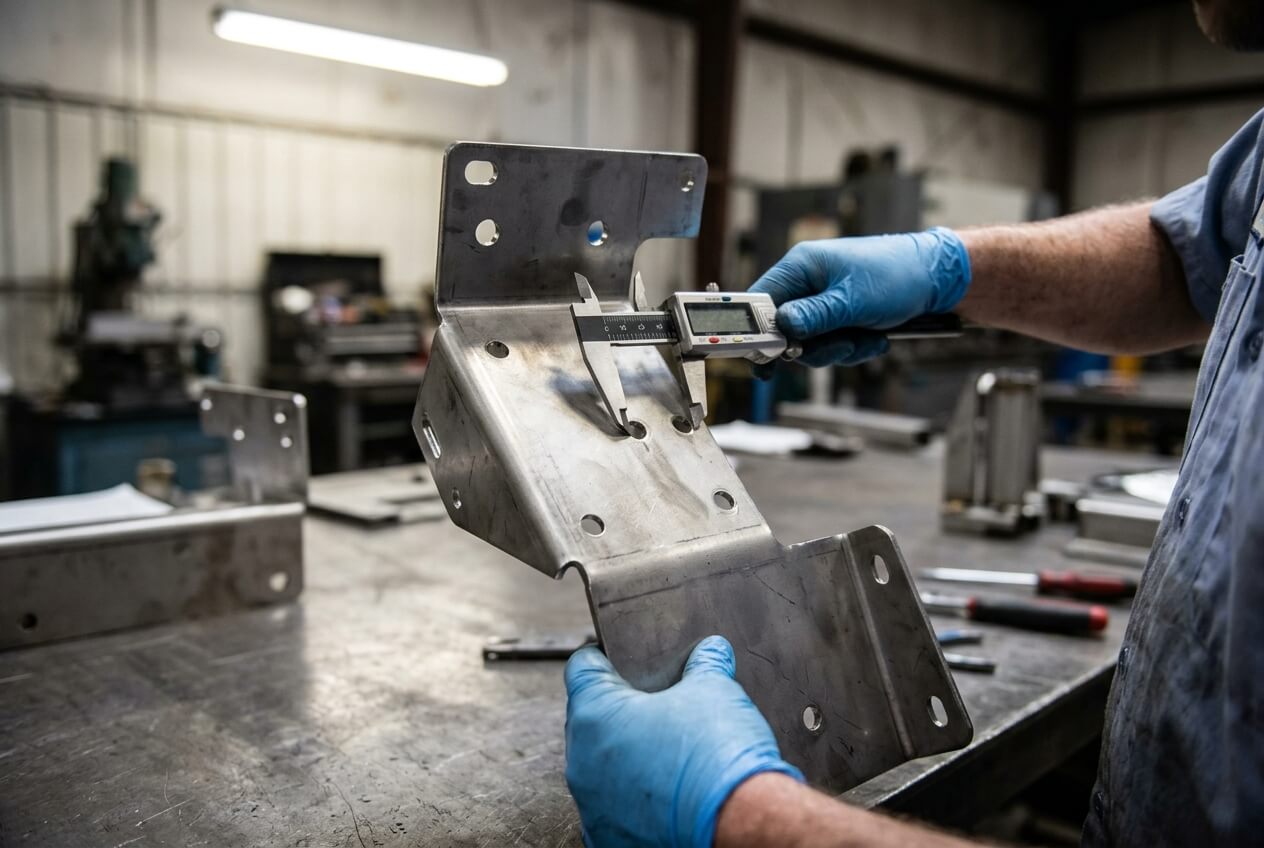
Many MIG versus TIG price gaps do not come from the arc alone. They come from everything around the weld. The supplier may include a fixture, or they may rely on manual fit-up. They may include flush grinding, or only remove sharp spatter. They may check critical dimensions after welding, or only verify the final outside size.
These details change labor, lead time, and inspection risk. They also explain why two quotes for the same drawing can differ sharply without either supplier being dishonest.
Fixtures Are Often the Hidden Cost Driver
Weld fixtures help hold panels, brackets, frames, and hinge plates in position while heat enters the assembly. Without fixtures, parts can move during welding. Skilled welders can correct some movement by sequence and hand fitting, but repeat batches need a more stable method.
Imagine a welded frame for industrial equipment. The buyer cares about diagonal dimensions, mounting-hole position, and twist. One supplier quotes MIG welding with a dedicated fixture. Another quotes manual welding with basic checks. The second quote looks cheaper. During production, several frames need correction because corner pull changes the diagonal measurement.
The RFQ should have stated which dimensions require post-weld inspection and whether repeatable fixturing matters for the batch. It could also ask suppliers to list fixture assumptions in the quotation. That gives procurement a fairer comparison than process name alone.
Grinding and Finish Prep Change the Weld Price
Visible welds bring a different quote gap. MIG may need more cleanup in cosmetic zones because spatter and bead profile can affect appearance. TIG may reduce some cleanup but add welding time. Powder coating, polishing, and brushing can make surface preparation even more important.
A retail display rack shows the risk clearly. Internal joints can use MIG with normal cleanup. Front-facing corners need smooth blending because customers see them under store lighting. If the RFQ says only “weld and powder coat,” one supplier may price basic cleanup. Another may include flush grinding and extra surface inspection. The cheaper quote may fail the buyer’s real appearance standard.
Buyers can reduce this risk by marking cosmetic weld zones on the drawing. They should state whether the weld remains as-welded, ground smooth, polished, or prepared for powder coating. Photos from approved samples can help, but written requirements still matter.
How Welding Assumptions Turn Into Assembly Fit Problems
Welding introduces heat. Heat moves sheet metal. That movement can affect doors, covers, brackets, tabs, hinge plates, slots, and mounting holes. Procurement teams often miss this because laser cutting and bending dimensions look clear on the drawing. The problem appears only after the assembly locks together.
This is where MIG versus TIG becomes a fit-risk question. MIG may add heat faster, which can matter on thin sheet or long seams. TIG gives more control, but it still creates distortion. A TIG welded part can fail assembly if the weld sequence, fixture, or inspection plan does not protect the critical features.
Door Gaps and Hinge Plates Need Post-Weld Control
Take a custom sheet metal cabinet with a welded hinge reinforcement plate. The buyer needs the door to open smoothly after powder coating. The drawing shows hole sizes and hinge locations. It does not state that hinge holes need inspection after welding and coating.
The supplier welds the reinforcement plate before coating. Heat pulls the side panel slightly. The door still mounts, but the gap becomes uneven after coating thickness adds buildup near the hinge. Inspection rejects the cabinet for poor fit. The original issue started in the RFQ, not at final assembly.
The buyer should have identified the hinge area as assembly-critical. The RFQ should ask the supplier to control weld sequence, check hinge holes after welding, and confirm the door gap after finishing. Those requirements may change the quote, but they protect the feature that matters.
Brackets Can Pass Strength and Fail Position
Welded brackets create a smaller but common version of the same risk. A bracket may hold load correctly while its mounting holes drift outside the assembly tolerance. If the drawing only specifies weld size, the supplier may focus on strength. The buyer may later reject the part because it does not align with a mating frame.
For brackets, buyers should mark datum surfaces, mating holes, and post-weld inspection dimensions. They should also state whether the supplier may ream, machine, or correct holes after welding. That decision affects cost and lead time, so it belongs in the RFQ rather than a late quality dispute.
Yishang can review drawings for custom sheet metal fabrication projects where welds sit near doors, covers, PEM hardware, hinges, or mating parts. That review helps buyers identify where MIG, TIG, fixtures, or post-weld checks affect assembly fit before suppliers lock the quote.
Why a Good Prototype Does Not Freeze Batch Welding Assumptions
A prototype can reduce risk, but it can also hide weak RFQ language. One sample may receive extra hand fitting, slower grinding, and closer attention from a senior welder. The prototype then passes. Batch production later follows the written quote assumptions, not the extra effort used on the sample.
This creates a dangerous procurement pattern. The buyer approves the prototype visually. The supplier starts the batch. Production teams reduce manual correction to meet the quoted cost and lead time. The batch then shows inconsistent seams, door gaps, hole alignment, or coating appearance.
Prototype Approval Should Define What Must Repeat
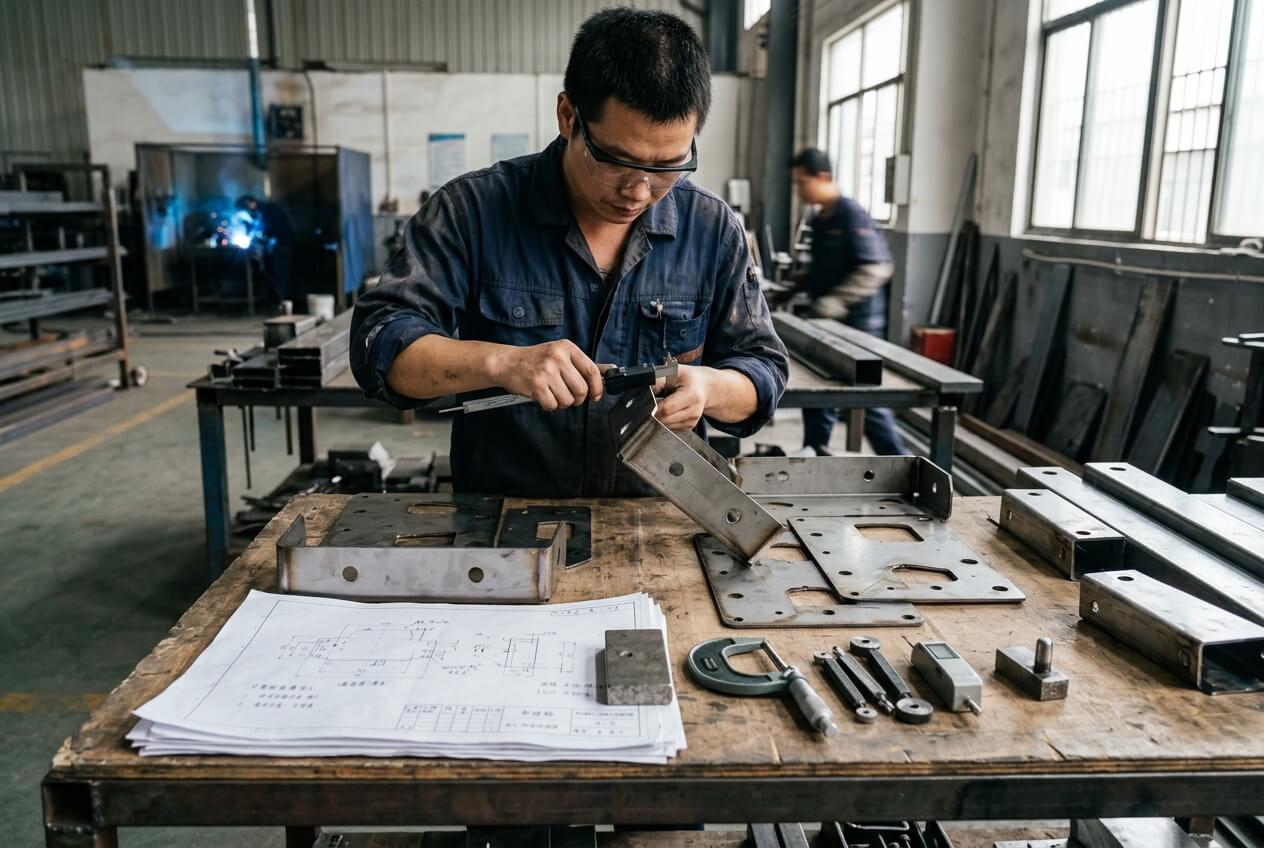
Prototype approval should not mean “the sample looked good.” It should define which results must repeat in production. For welded assemblies, that includes weld locations, visible seam appearance, ground areas, hole positions after welding, squareness, coating results, and assembly fit.
Suppose a prototype enclosure uses TIG on visible corners and MIG on internal seams. The sample looks clean because the supplier spent extra time blending the front corners. If the production file does not define that blending level, batch parts may receive less finishing. Powder coating then highlights uneven sanding marks.
The buyer can prevent this by freezing cosmetic zones and inspection points after prototype approval. The drawing package should show what changed after the prototype review. It should also state which process assumptions carry into batch production.
Batch Consistency Needs More Than a Process Name
Batch consistency depends on repeatable controls. The supplier needs a weld sequence, fixture strategy, operator instructions, inspection checkpoints, and finish criteria. MIG or TIG selection supports those controls, but it does not replace them.
A welded equipment frame may pass the prototype stage because the welder corrected twist by hand. For a batch of 200 frames, that method can create inconsistent results and longer lead time. A fixture may cost more at the start, but it can reduce correction time and rework. Procurement should compare those tradeoffs before approving the lowest quote.
Yishang’s RFQ support can include manufacturability review, prototype feedback, finishing concerns, and batch repeatability questions for sheet metal parts, metal enclosures, brackets, frames, and welded assemblies. The value lies in clarifying production assumptions before they become inspection surprises.
What Buyers Should Clarify Before Comparing MIG and TIG Quotes
Buyers do not need to write a welding manual. They need to make the supplier’s assumptions visible. A strong RFQ lets suppliers recommend MIG, TIG, spot welding, plug welding, or a mixed method, but it also defines the finished result that procurement will accept.
Start with the features that create rejection risk. Mark visible seams, load-bearing welds, mating surfaces, hinge areas, door openings, bracket holes, and coated cosmetic zones. Then explain how those features will be inspected after welding and finishing.
RFQ Language That Reduces Assumption Risk
Instead of writing only “TIG weld all seams,” use result-based language. For example: “Supplier to propose MIG, TIG, or mixed welding method. Exterior corner seams must be suitable for powder coating, with no sharp spatter, open gaps, or obvious grinding waves. Hinge holes and door opening to be inspected after welding and coating.”
For a frame, the RFQ might say: “Supplier to define weld process and fixture assumptions. Frame squareness, diagonal dimensions, mounting-hole positions, and twist to be checked after welding. Visible welds to be cleaned before powder coating.” This language gives suppliers room to choose the best process while keeping the inspection standard clear.
When comparing quotes, ask suppliers to identify what they included. Did they include fixtures? Which welds use MIG or TIG? Which areas receive grinding or polishing? Are critical holes checked after welding? Does the quoted price include coating preparation and assembly verification? These questions turn a process comparison into a risk comparison.
Cost and lead time also become clearer. TIG on every weld may raise cost without improving hidden structural features. MIG without fixture control may reduce unit price but increase correction time. Extra grinding may look expensive until it prevents coating rejection. The right choice depends on the rejected feature you want to avoid.
If you need support with a welding RFQ, send Yishang your drawings, material requirements, quantities, tolerances, finish expectations, assembly notes, and prototype feedback. A practical review can identify weld method assumptions, fixture needs, finish preparation, and post-weld inspection points before quotation becomes the production standard.
Frequently Asked Questions
What’s the difference between MIG and TIG welding for sheet metal parts?
MIG welding uses a continuously fed wire and often suits longer welds, frames, brackets, and hidden structural seams. TIG welding uses a tungsten electrode and gives more control on thin sheet, stainless surfaces, and visible seams. For procurement, the key difference is how each process affects finishing, distortion, inspection, and cost assumptions.
Should an RFQ specify MIG or TIG welding?
An RFQ can specify a process when engineering has a clear reason. In many custom sheet metal projects, buyers get better quotes by defining the required result and asking the supplier to propose MIG, TIG, or a mixed method. The RFQ should still define visible welds, critical dimensions, finish expectations, and post-weld inspection points.
Why can the lowest welding quote create inspection problems?
The lowest quote may exclude fixtures, flush grinding, cosmetic cleanup, coating preparation, or post-weld dimensional checks. If the RFQ does not define those requirements, the supplier may price a lighter scope. The part can then fail inspection even though the supplier followed the quoted welding note.
Can TIG welding prevent distortion in metal enclosures?
TIG welding can give better heat control, especially on thin sheet and visible seams, but it does not eliminate distortion. Weld sequence, fixture design, material thickness, seam length, and post-weld inspection still matter. Buyers should mark doors, hinge holes, covers, and mating features that need control after welding.
How should buyers handle prototype approval for welded assemblies?
Buyers should record what the prototype proves. That includes weld appearance, grinding level, hole positions, squareness, coating results, door fit, and assembly behavior. Photos help, but the production file should also include written inspection criteria so batch parts repeat the approved result.
What information should buyers send for a MIG or TIG welding quote?
Send drawings, material requirements, sheet thickness, quantities, tolerances, finish expectations, visible surface notes, assembly requirements, mating parts, and prototype comments. Also identify critical weld zones and dimensions that need inspection after welding. This helps the supplier quote the correct welding method and control plan.