
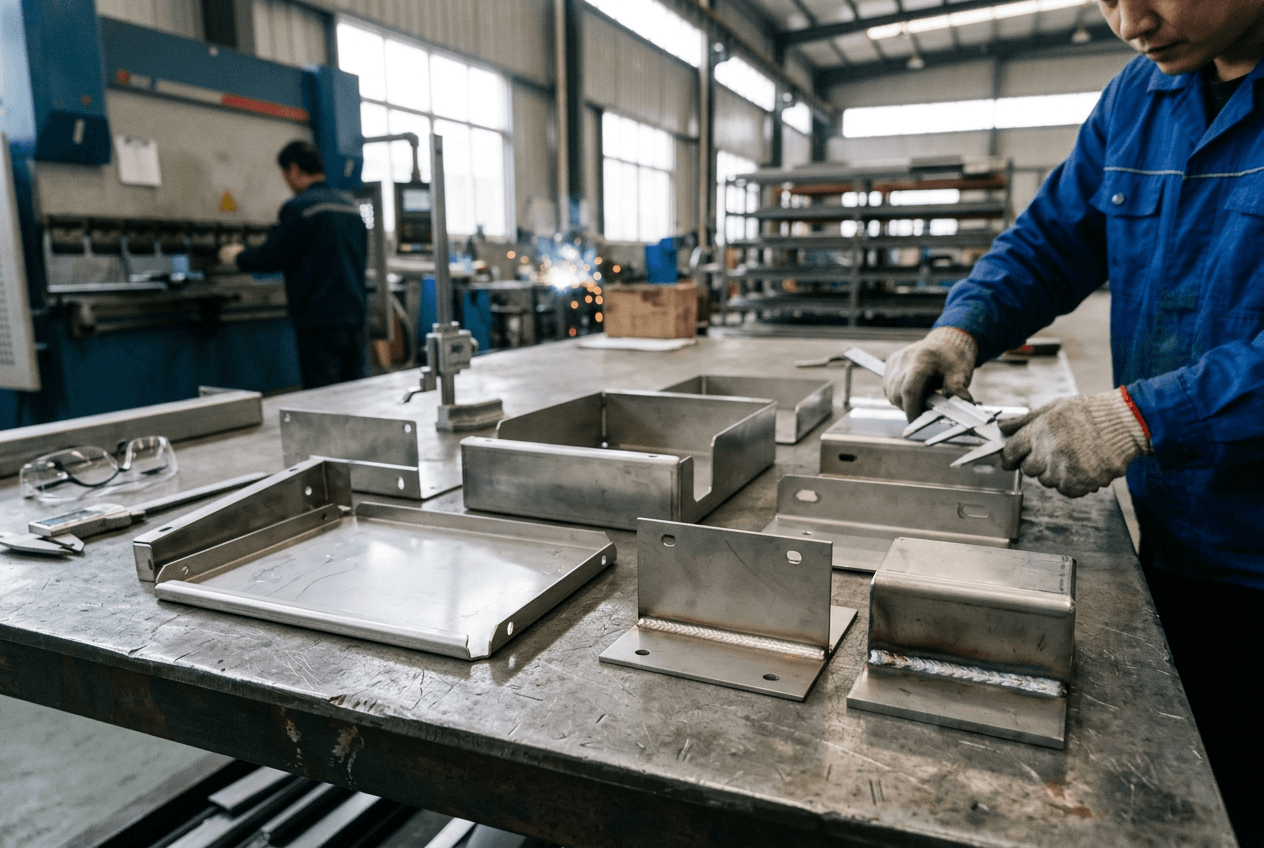
An OEM buyer sends one welded enclosure drawing to three sheet metal fabrication suppliers. One supplier quotes MIG welding with local grinding. Another assumes TIG welding on all visible seams. A third leaves the process unstated and returns the lowest unit price.
Those quotes do not describe the same part. They describe three different manufacturing assumptions. The gap may only appear later, when powder coating shows weld shadows, hinge plates shift, brackets fail to align, or a production batch looks different from the approved sample.
A search for tig welder vs mig often starts as a process comparison. In procurement, it becomes a quote-risk problem. Buyers need to know when the welding method affects cost, cosmetic results, tolerance control, and repeatability.
The biggest risk is not choosing MIG instead of TIG, or TIG instead of MIG. The bigger risk is comparing supplier prices before the RFQ defines what each weld must achieve. If the drawing leaves weld appearance, heat control, finish preparation, and post-weld dimensions open, each supplier prices a different route.
This article focuses on that risk. It shows where unclear weld assumptions enter the quote, how they move into production, and what buyers should clarify before approving price, sample, or batch release.
Unclear Weld Assumptions Make TIG and MIG Quotes Non-Comparable
A sheet metal drawing may show welded corners, brackets, tabs, and frame joints without explaining how the welds should perform. The drawing may not define weld size, weld length, intermittent spacing, cosmetic class, grinding level, or inspection stage. Under quoting pressure, suppliers fill those gaps themselves.
One supplier may assume continuous TIG seams on every exposed corner. Another may use MIG on hidden structural joints and TIG only where the customer will see the bead. A lower quote may rely on short stitch welds, basic cleanup, and manual alignment. The numbers look comparable, but the manufacturing routes are different.
The Cheapest Quote May Carry the Most Assumptions
MIG often suits thicker carbon steel frames, cabinet bases, machine guards, and support brackets. It can offer faster deposition and practical strength for many welded assemblies. TIG gives better control on thin sheet, stainless housings, aluminum parts, and cosmetic seams. It can also reduce spatter and improve bead consistency.
Neither process solves an unclear RFQ. A supplier can quote TIG and still exclude flush grinding. Another can quote MIG and include careful spatter removal, fixturing, and post-weld inspection. The buyer only sees the difference when the quote lists the assumptions behind the price.
For example, a wall-mounted electronics enclosure may include hidden internal brackets and a visible front corner seam. If the drawing says only “weld all around,” one supplier may TIG every seam and price high. Another may MIG the full assembly and price low. After powder coating, the front corner may show a raised bead or grinding wave. The low price did not include the cosmetic requirement.
Buyers should separate weld zones before quote comparison. Hidden load-bearing welds need strength and fit control. Visible welds need appearance and finish control. Some welds need sealing. Others need only location stability. Once the RFQ defines these zones, suppliers can recommend TIG, MIG, or a mixed route against the same acceptance target.
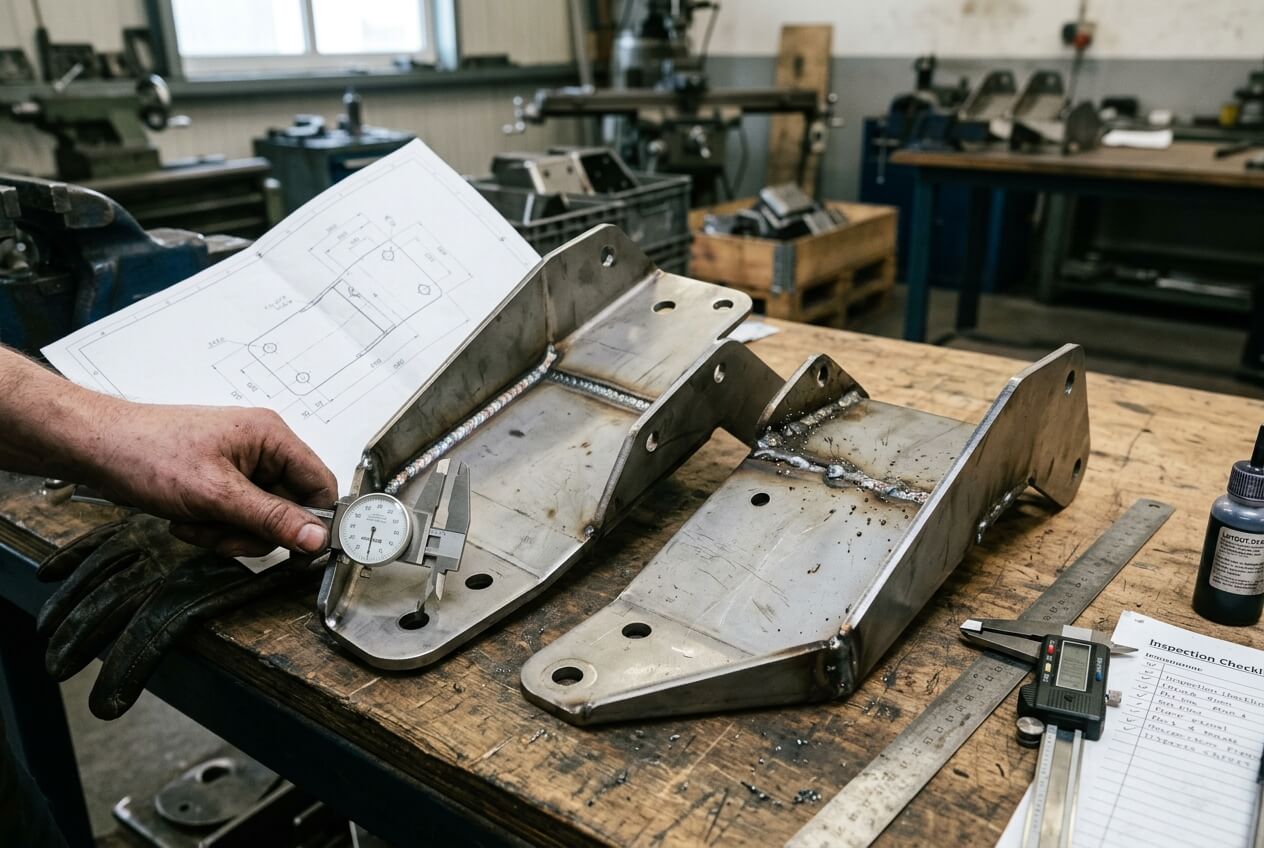
Finish Problems Often Start as Welding Assumptions in the RFQ
Powder coating, painting, polishing, and brushing often expose welding decisions that buyers missed earlier. A raw weld can look acceptable on the sample table. After coating, spatter marks, pinholes, bead height, heat discoloration, and grinding scratches may become obvious on doors, front panels, display racks, and customer-facing enclosures.
The problem usually starts when the RFQ treats welding and finishing as separate items. The drawing asks for a welded part and a powder-coated surface, but it does not say which welds must disappear after coating. The supplier then prices normal weld cleanup, not cosmetic preparation.
Visible Surfaces Need Their Own Weld Rules
A retail display frame shows the tradeoff clearly. The rear support joints may allow visible beads if they face the wall. Front-facing joints may need smoother transitions because shoppers see them at close range. MIG may work well on the structural frame if the supplier controls spatter and distortion. TIG may make sense on selected visible joints, or the supplier may use MIG with planned grinding.
If the RFQ only says “black powder coating,” the supplier may not include extra sanding or rework for front joints. The buyer may approve a raw metal prototype because the welds look acceptable before coating. Later, the first coated batch shows shadows around the joints. Rework now means stripping, sanding, recoating, and delaying shipment.
Clear surface notes reduce that risk. Buyers can mark A-surfaces on drawings and state what remains acceptable after finishing. A note such as “front corners: no visible weld bead after powder coating” changes the process plan. It may affect the welding process, grinding time, coating preparation, and inspection timing.
Hidden internal welds should not carry the same cosmetic requirement unless function demands it. Over-specifying every seam as cosmetic adds cost and may extend lead time. The procurement goal is not to demand TIG everywhere. It is to define where appearance creates acceptance risk.
Yishang can review drawings and finish expectations before quoting welded sheet metal parts. That review helps buyers identify which seams need cosmetic control and which seams can follow a practical structural standard.
Heat Movement Turns a Welding Choice Into an Assembly Fit Risk
Welding affects more than bead appearance. Heat can pull panels out of square, shift holes, move hinge plates, and change bracket angles. These changes matter when sheet metal parts must fit motors, rails, locks, PCBs, gaskets, purchased hardware, or neighboring assemblies.
The risk starts when the drawing controls the pre-weld features but not the finished assembly. A laser-cut panel may meet tolerance before bending. A bent bracket may meet tolerance before welding. After welding, heat and shrinkage can move the final geometry. If the RFQ does not identify critical post-weld dimensions, the supplier may quote without fixtures or final checks.
Critical Dimensions Must Survive the Weld
Consider a battery cabinet side panel with welded reinforcement ribs near mounting-hole rows. The holes may be correct after laser cutting. Once the ribs are welded, the panel can pull slightly. That movement may cause rail misalignment during final assembly. The buyer then faces slotting, shimming, rejected panels, or delayed cabinet build.
A smaller welded bracket can create the same chain. A U-shaped bracket with two welded tabs may pass prototype approval when a skilled welder adjusts one part by hand. In a batch of 500, small heat movement at each tab can accumulate. The final bracket may rock, bind, or miss the mating holes.
MIG can introduce more heat input on some sheet metal assemblies, especially with long continuous welds. TIG provides more control, but thin sheet can still warp if weld length, sequence, and clamping remain undefined. Process choice helps, but it does not replace a fit strategy.
Buyers should identify dimensions that matter after welding, not only before welding. These may include hole patterns, hinge locations, flatness zones, squareness, tab height, and frame width. If a welded assembly mates with another part, the RFQ should include the mating drawing, sample, or assembly photo.
Supplier communication should also address fixturing. A low quote may assume manual alignment. A higher quote may include a welding fixture and post-weld inspection. Without that context, procurement may select the price that removes the control needed for batch fit.
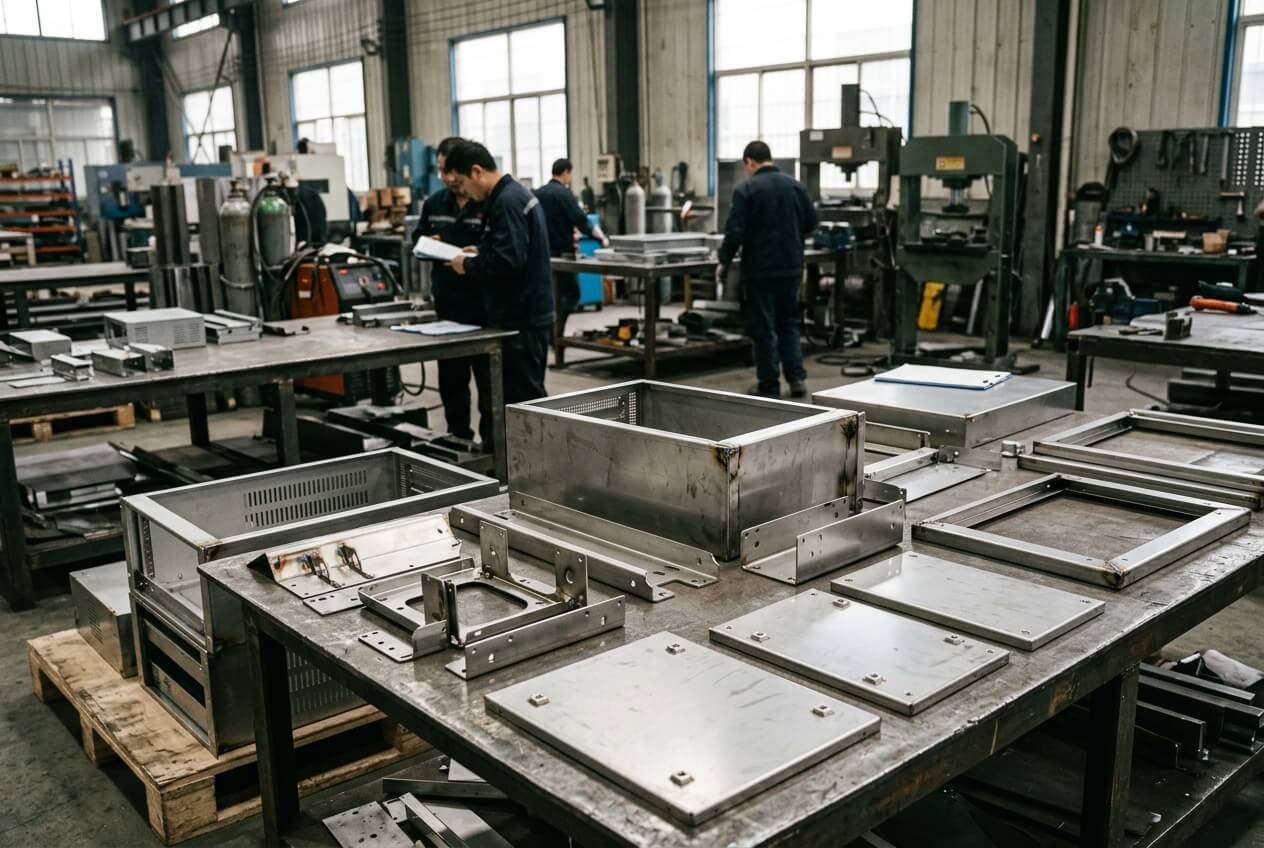
Prototype Approval Can Hide Weld Assumptions That Fail in Batch Production
A good prototype does not automatically protect production. The prototype may come from a senior welder. It may receive more hand adjustment than normal production allows. It may also receive extra polishing or grinding because the quantity is low.
If the purchase order only says “same as approved sample,” the batch still depends on interpretation. The sample shows a result, but it may not document the process. Production needs repeatable weld zones, fixture rules, inspection points, and finish expectations.
Samples Should Become Production Instructions
A powder-coated machine cabinet with welded hinge plates gives a common example. The prototype door opens smoothly after manual adjustment. The buyer approves the sample. In batch production, hinge plates shift slightly during welding. If the supplier checks the issue only after coating, rework damages the finish and slows assembly.
A polished stainless enclosure shows another risk. The prototype may use TIG welding with careful corner finishing. If production changes weld sequence or polishing time to meet the quoted batch cost, corner lines may vary from part to part. The buyer sees inconsistency, while the supplier points to an undefined cosmetic standard.
Buyers should use prototype approval to capture what matters. Photos can show acceptable bead appearance, ground areas, corner smoothness, coating results, and allowable marks. The drawing can note which welds need the approved appearance and which welds only need strength.
Batch consistency also affects cost drivers and lead time. Extra grinding on every seam can become expensive at volume. A fixture may raise upfront cost but reduce rework and inspection disputes. TIG on selected seams may protect visible areas, while MIG on hidden structural joints may keep the project economical.
The key is to freeze the assumptions before batch release. Confirm whether the batch will use the same welding process as the prototype. Ask whether fixtures, operators, weld sequence, and inspection stages will change. If anything changes, procurement should understand the effect on fit, finish, quantity output, and acceptance risk.
What Buyers Should Lock Before Comparing TIG and MIG Prices
Buyers do not need to turn every drawing into a welding textbook. They need to define the details that decide whether quotes describe the same finished part. The RFQ should make visible appearance, structural function, critical dimensions, finish preparation, and batch repeatability clear enough for suppliers to price the same risk.
Start by marking weld zones. Separate visible seams, hidden structural welds, sealed joints, and location-critical tabs. Then define what each zone must achieve. Some areas may need TIG. Some may allow MIG. Many sheet metal projects work best with a mixed route.
Clarify Acceptance Before Price Becomes the Anchor
Procurement teams should also state material grade, thickness, quantity, finish expectations, tolerance priorities, and assembly context. These details affect the welding route. Thin stainless parts may need more heat control. Powder-coated carbon steel frames may need spatter cleanup and controlled grinding. Assemblies with hinges or rails may need post-weld inspection before finishing.
Useful RFQ notes include weld length, intermittent weld spacing, flush-grind requirements, visible-surface standards, fixture expectations, and dimensions checked after welding. If cosmetic judgment matters, attach photos or reference samples. If assembly fit matters, provide mating parts or drawings.
Quote review should challenge vague language. “Weld and grind as needed” does not define who decides what “needed” means. “Powder coat after welding” does not define whether weld shadows are acceptable. “Same as sample” does not protect batch production unless the approved sample becomes a written standard.
When buyers send drawings to Yishang for custom sheet metal fabrication, they can include material requirements, order quantities, tolerances, finish expectations, assembly photos, and prototype notes. The review can identify where TIG, MIG, grinding, fixturing, or post-weld inspection changes the real cost and production result.
Before accepting the lowest welding quote, ask whether each supplier priced the same weld zones, cosmetic requirements, post-weld dimensions, and batch controls. If they did not, the lowest price may only reflect the lowest assumption. Send your drawings, material requirements, quantities, tolerances, and finish expectations to Yishang when you need help reviewing welded enclosures, brackets, frames, cabinets, or sheet metal assemblies before production.
Frequently Asked Questions
Should buyers specify TIG welder vs MIG on every sheet metal drawing?
No. Buyers should specify the process only where it affects appearance, heat distortion, corrosion concerns, sealing, or assembly fit. For other welds, define the required strength, weld size, finish level, and post-weld inspection point. Then allow the supplier to recommend TIG, MIG, or a mixed welding route.
Why can two suppliers quote very different prices for the same welded enclosure?
The drawing may leave weld length, cosmetic class, grinding level, fixture use, and inspection stage undefined. One supplier may include TIG seams, flush grinding, and post-weld checks. Another may quote MIG with basic cleanup. The prices look different because the assumptions differ.
When does MIG welding create risk for powder-coated sheet metal parts?
MIG welding can work well on many powder-coated frames and cabinets. Risk appears when visible surfaces need smooth corners but the RFQ does not include spatter removal, pinhole repair, grinding, or coating acceptance rules. Buyers should mark A-surfaces before comparing quotes.
Can TIG welding prevent all distortion on thin sheet metal assemblies?
No. TIG gives the welder more control, but heat can still move thin panels, tabs, and holes. Buyers should define critical dimensions after welding, confirm fixture needs, and review weld sequence when flatness or assembly fit matters.
How should prototype approval protect batch welding consistency?
Prototype approval should create production rules. Buyers should record the weld process, visible seam standard, ground areas, fixture plan, weld sequence, and inspection points. A sample alone may not capture the labor and controls needed for a repeatable batch.
What should buyers send for a clearer welded sheet metal RFQ?
Send drawings, material grade and thickness, quantities, critical tolerances, finish expectations, visible-surface notes, assembly photos, mating parts, and prototype comments. These details help the supplier price TIG, MIG, grinding, fixturing, and inspection against the same finished-part requirement.