
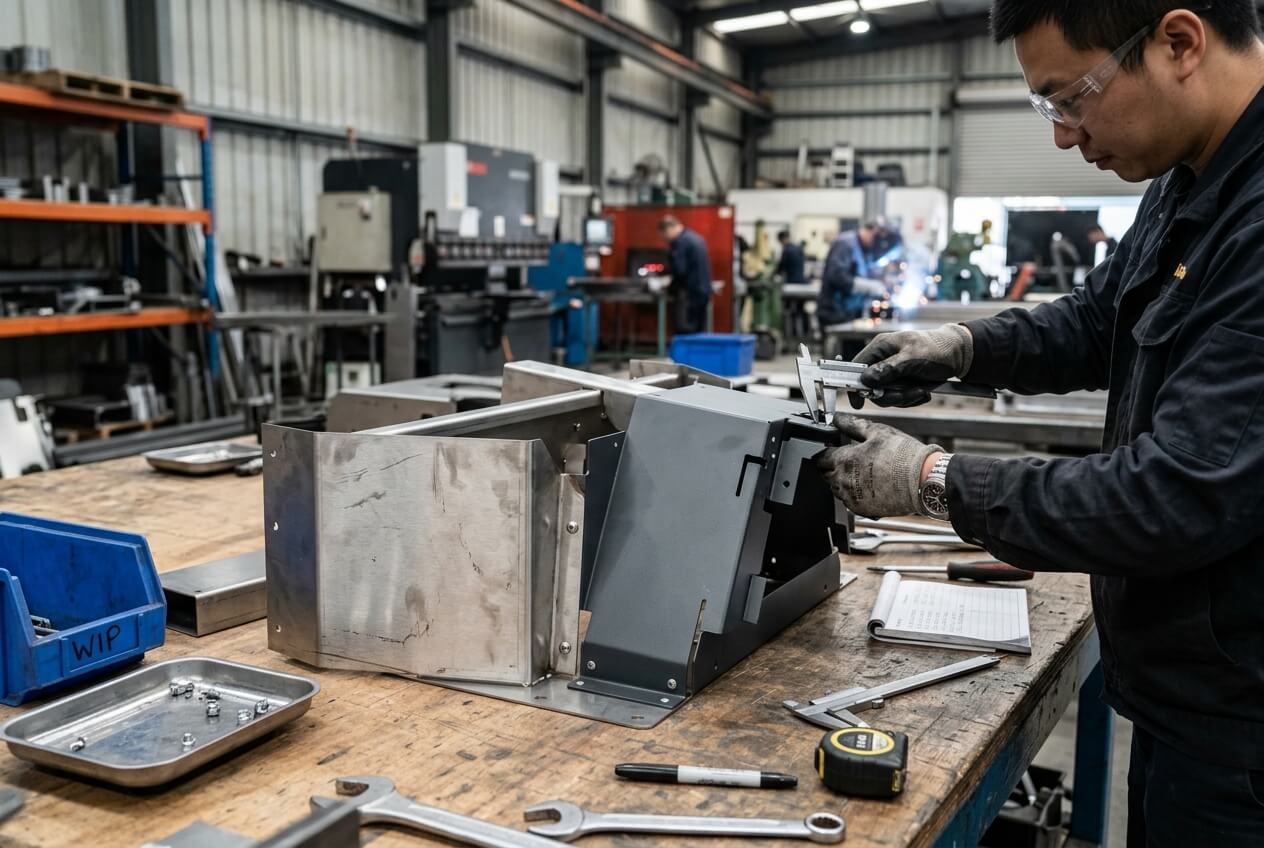
When buyers source a ferrous material enclosure, bracket, frame, or welded assembly, the biggest risk is not the coating itself. It is the assumption gap between the RFQ and the factory route. Two quotes can look close on price and still describe different work. One supplier may price a standard industrial finish. Another may include masking, weld cleanup, cosmetic face control, packaging protection, and tighter inspection. If the RFQ leaves those points open, the lowest quote often wins the wrong job. That is how a project starts with a clean approval sheet and ends with rework, change orders, or a batch that meets the drawing but fails the buyer’s real acceptance standard.
The problem shows up often on custom sheet metal parts. Buyers may think the part is defined because the drawing names the dimensions and the finish color. The shop still needs to know which faces matter, which holes need masking, how visible welds can be, and whether the inside and outside carry the same appearance requirement. On ferrous material, those decisions change labor, line time, inspection effort, and even the quotation model. More important, they change the chance that the finished part will assemble, ship, and pass first release without debate.
Where RFQ Assumptions Start to Distort Ferrous Material Quotes
The quote gap usually starts before the supplier touches the part. A buyer may write ferrous material, black powder coat, and assembly per drawing, then assume the scope is clear. It is not. The supplier still has to decide whether the base metal is raw steel, galvanized, zinc plated, or pretreated. Each route changes cleaning, adhesion, and cost. It also changes the risk profile, because different substrates react differently during degreasing, blasting, phosphating, or powder cure.
The same ambiguity appears in the part geometry. A sheet metal cabinet with a door, hinge line, and mounting rail may need full cosmetic treatment on the outside and only functional protection inside. If the RFQ does not say that, one supplier may quote both sides as cosmetic. Another may quote only the visible side. Their numbers will not match, but neither quote is wrong from the supplier’s perspective. The buyer only finds out later that the project was never priced on the same assumptions.
The quote gap starts before coating
Before a finish is applied, the shop must decide how much edge cleanup, weld spatter removal, burr control, and hole protection the job requires. Those steps are not minor extras. They affect takt time, rack loading, and touch-up work. If the drawing shows a bracket with slots and close-fit holes, the supplier may need additional prep just to keep coating from interfering with assembly. A quote that ignores that work can look attractive and still be incomplete.
That is why the RFQ should not stop at a finish name. It should state the substrate, cosmetic priority, hidden surfaces, and any part areas that must stay free of coating. If the project includes a welded assembly, the buyer should also note whether welds stay visible, get blended, or must disappear under the finish. Without those notes, the supplier will fill the gaps with its own standard process.
A low number can hide exclusions
One supplier may include plug masking for threads, grounding points, hinge seats, and mating faces. Another may treat those items as changeable after order placement. A third may exclude repair work if the part arrives with scratches from fabrication handling. All three can support ferrous material coating, but the customer will get very different outcomes.
This is where procurement risk grows. The quote that looks cheap may leave out the exact tasks that control appearance and fit. If the buyer compares only unit price, the commercial decision is distorted. The real comparison should ask which assumptions each supplier made, what they excluded, and what they would charge if the visual standard becomes stricter after sample approval.
Why Finish Notes Change More Than Appearance on Sheet Metal Parts
Finish wording affects more than color. It changes the process route, the inspection standard, and the chance of assembly trouble. A powder-coated ferrous material part may need different rack spacing, different cure control, and different post-coat handling depending on whether the buyer wants industrial protection or showroom-level appearance. A matte black cabinet and a high-gloss enclosure can use the same drawing and still require different shop behavior.
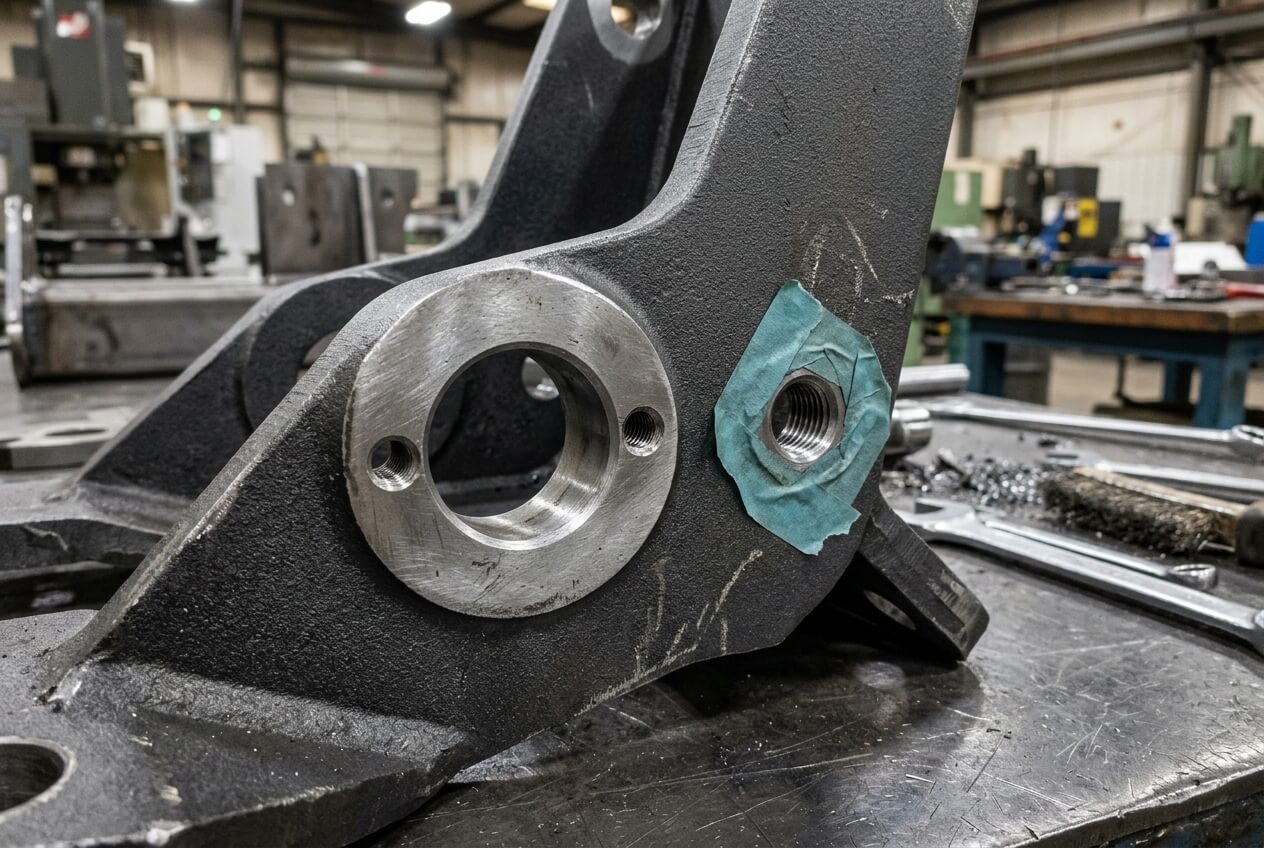
Masking is one of the biggest cost drivers. A threaded hole, a grounding point, a hinge seat, or a latch pocket may need plugs or tape. Those details matter because coating buildup in the wrong place can close holes, reduce clearance, or leave edges that chip during assembly. The buyer may not see that risk at quote time. The factory sees it immediately because the route changes as soon as the masking map changes.
Cosmetic rules need a viewing condition
Finish disputes often start because the buyer and supplier inspect the part under different assumptions. A buyer may judge a cabinet door at a distance of one meter under bright light. The shop may judge it at arm’s length on the line. Those are not the same standards. If the RFQ does not define the viewing distance, lighting condition, and visible side, the acceptance target stays vague.
A realistic project example is a metal enclosure for an electrical panel. The outside face must look uniform because customers will see it. The inside can often tolerate a more functional finish if it does not affect safety or assembly. When the RFQ states that distinction clearly, the supplier can price the work correctly. When it does not, the shop may overprocess the entire enclosure or underprocess the cosmetic side.
Hidden faces still need a written standard
Hidden does not mean irrelevant. A concealed panel can still affect fit, rack contact, and post-assembly appearance. If the buyer plans to fasten a bracket to a frame, the rear face may never show to an end user, but it may still need a controlled finish to avoid flaking, corrosion, or assembly drag. The RFQ should say whether hidden faces can accept a functional finish or whether they must match the exposed face.
That detail helps the buyer compare quotes honestly. It also helps the supplier choose the right line speed and inspection points. On ferrous material parts, the finish note is part of the production route. It is not just a cosmetic label.
How Assembly Fit Turns a Cosmetic Assumption into a Production Delay
Assembly risk often appears only after coating, which is why it is easy to miss in the RFQ stage. The part may look perfect, but the latch will not close, the hinge drags, or the mating panel binds. Coating thickness, weld cleanup, and hole masking all affect fit. On custom sheet metal parts, cosmetic intent and dimensional intent overlap more than buyers expect.
This is especially true on brackets and welded frames. A bracket that fits before coating may fail after coating if the film builds up on a locating tab or inside a slot. A frame may stay within drawing dimensions and still become hard to assemble because grind marks, bead lines, or coating ridges sit exactly where the mating part lands. The result is not just a visual complaint. It becomes a line stoppage, a rework loop, or a delayed shipment.
Call out fit-critical zones on the drawing
Buyers should mark every zone that affects mating, not just the overall part size. That includes hinge lines, latch pockets, threaded holes, grounding points, slot widths, and any surface that touches another part during assembly. If coating is allowed there, the supplier can plan for the added thickness. If it is not allowed, the shop can mask it before the first sample.
A welded assembly makes this even more important. Weld sequence can shift geometry slightly, and coating can amplify that shift at the mating points. A tolerance that looks safe on paper may become too tight after finish build. That is why the buyer should review finish and fit together, not as separate sections of the RFQ.
A coating note can become a dimensional note
One industrial cabinet project can show the full chain. The prototype door closes easily. The batch door arrives with heavier coating near the hinge cup and a small buildup around the latch receiver. The dimensions still look acceptable at the part level, but the system no longer works cleanly. The real failure started in the RFQ because no one froze the coating build at the fit-critical points.
In that situation, a supplier like Yishang can review the drawing and flag the joint between finish and assembly before the quotation is finalized. That is more useful than a generic approval later, because it gives the buyer a chance to prevent the fit problem instead of paying to solve it after production.
Why Prototype Approval Can Still Miss Batch Variation
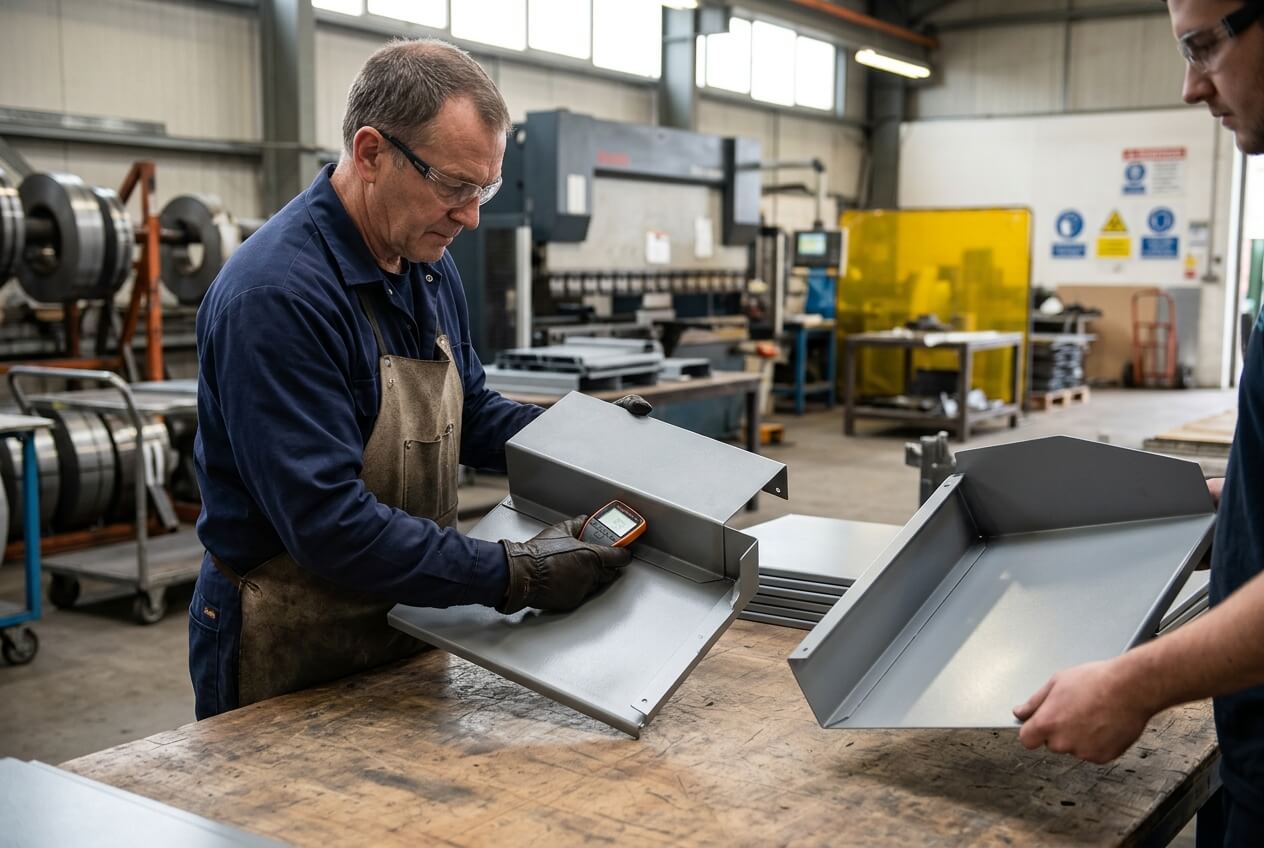
A prototype is useful, but it is not proof that batch production will look the same. Small runs get more hand attention. Operators clean them more carefully, hang them with more space, and touch up issues that a normal batch would carry through the line. Once the order scales up, rack density, cure uniformity, handling marks, and loading patterns all change the visual result. On ferrous material parts, that shift can be large enough to trigger rejection even when the same coating specification is used.
Project examples make this risk easy to see. A display rack sample may pass because it was inspected under ideal conditions and handled gently. The production lot then arrives with rack marks on the back rail, more gloss variation across the uprights, or small scratches from packaging contact. A welded frame can show the same issue. The first article looks clean, but the batch reveals more weld witness lines because the factory changed fixture density to improve throughput.
Prototype approval proves one route, not every route
The buyer should treat first article approval as a control point, not a blanket guarantee. The sample only proves that one process path can work. It does not prove that the same visual result will survive normal production loading, shipment packaging, and batch inspection pressure. If the part will move from a sample line into a production line, the RFQ should say so.
The strongest protection is to approve the sample against the same viewing condition, packing method, and acceptance rule that will apply to the batch. If the finish standard is loose during prototype work and strict during production, the project will drift. Buyers can avoid that by asking for a retained sample, written acceptance photos, or a first article sign-off that ties back to the actual production route.
Yishang can help here when buyers share drawings early. A drawing review plus a sample plan can expose where prototype methods differ from batch methods. That matters because the quote should reflect the real route, not the easiest sample path.
What Buyers Should Lock into the RFQ Before Comparing Prices
The easiest way to avoid a finish and fit dispute is to lock the critical assumptions into the RFQ before any price comparison starts. Buyers should state the substrate, the cosmetic surfaces, the hidden surfaces, the finish type, the finish appearance target, and the assembly condition. They should also identify holes, threads, hinge seats, grounding points, and mating faces that must stay clean. If the project involves a ferrous material enclosure, bracket, frame, or welded assembly, those details belong in the first RFQ package, not in a later email thread.
Lead time also belongs in the same conversation. A supplier cannot commit to a short schedule if the job still needs extra masking, a first article, photo approval, or a second sample round. If the buyer wants both a prototype and a batch price, ask for both. If the buyer wants visible surfaces packed separately from hidden ones, say so. If the project depends on a strict tolerance at a coated interface, specify the interface itself, not only the overall part size. Those details help the supplier quote accurately and prevent avoidable revision cycles.
If you are preparing an RFQ for custom sheet metal fabrication, send the drawings, material requirements, quantities, tolerances, finish expectations, and any assembly photos to Yishang before you compare suppliers. The point is not to ask for a brochure response. The point is to force the quote to match the real production route, so the project does not turn into a finish dispute after the order is released.
Frequently Asked Questions
Why do ferrous material quotes vary so much for the same drawing?
They vary because suppliers often assume different finish scopes, masking needs, and inspection rules. One shop may quote only visible surfaces, while another prices hidden faces, weld cleanup, and packaging protection. The drawing can look the same, but the production route is not.
Which finish details matter most on enclosures and cabinets?
The most important details are the cosmetic faces, coating type, color, gloss, texture, film build range, and any areas that must stay uncoated. Buyers should also define the viewing condition for appearance checks. That keeps the quote tied to a real acceptance target.
How does coating affect assembly fit on brackets and welded frames?
Coating adds thickness, especially on edges, slots, holes, hinge seats, and latch points. That extra build can reduce clearance or create drag during assembly. If the RFQ marks fit-critical zones clearly, the supplier can mask or control those areas before coating starts.
Why can a prototype pass and the batch still fail?
Prototype parts usually get more manual attention and looser production loading. Batch production changes rack density, handling, and cure consistency, which can change gloss, color, and touch marks. A retained sample or first article helps keep the batch tied to the approved standard.
What should buyers send with drawings before asking for a quote?
Send the drawings, material requirements, quantities, tolerances, finish expectations, assembly notes, and any photos of the intended fit or appearance. If the project has hidden faces, masking points, or packaging limits, include those too. That gives the supplier enough information to price the real job, not a guess.