
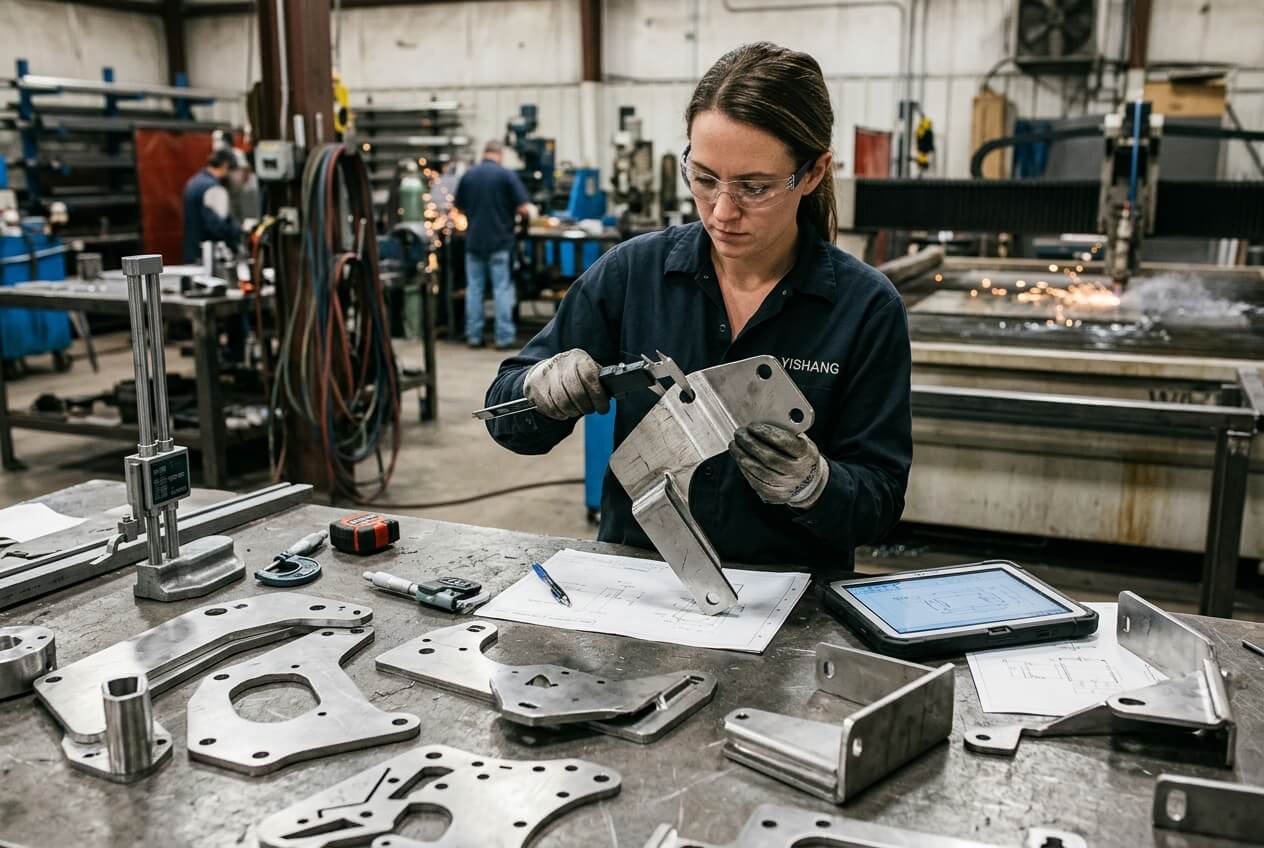
A buyer may upload the same CAD file to three suppliers and still get three different waterjet cutting quotes. The part looks simple on screen, but the RFQ leaves too much open. One shop assumes rough cut edges. Another includes deburring, hole cleanup, and extra handling. A third prices the job as if the parts only need to exist, not fit into a bracket, frame, or enclosure later.
That is the real procurement risk. Waterjet cutting rarely fails because the machine cannot cut the shape. It fails when the buyer leaves fit, finish, and downstream use undefined. Then the quote drifts, the first article surprises the team, and the batch starts carrying hidden rework.
For custom sheet metal fabrication, that gap can spread into assembly, coating, inspection, and schedule. Yishang often sees the same pattern on brackets, metal enclosures, frames, and welded assemblies: the drawing says what to cut, but not what must still work after bending, coating, or welding.
Where RFQ Gaps Start to Distort Waterjet Cutting Quotes
Waterjet cutting pricing changes fast when the RFQ does not say what the cut part must do next. A quote for a loose cover plate can look low. The same geometry becomes more expensive once the buyer adds mating holes, hidden edges, insert locations, or a cosmetic face that cannot get marked during handling. The shop has to guess how much risk to carry, and every supplier makes a different guess.
That is why a clean PDF is not enough. The shop needs to know whether each feature is fit-critical, cosmetic, or only a rough cut stage. If the holes will guide hardware into a powder-coated enclosure, the quotation should reflect that reality. If the edge will be hidden inside a welded assembly, the buyer can often relax edge cleanup. Without that distinction, a low quote often hides later charges.
Project example: an OEM requested six 4 mm stainless brackets for a control cabinet. The file showed the profile and hole locations, but not the assembly role of each hole. One supplier quoted simple cutting. After review, another supplier added hole cleanup and tighter handling because the holes located threaded inserts after coating. The price difference did not come from the machine. It came from the missing use case.
What the shop must not have to infer
Buyers should not expect the supplier to infer hidden intent from the drawing alone. If the part will be bent later, say which dimensions matter after bending. If the hole only serves as a clearance feature, label it that way. If the cut edge stays visible, the RFQ should say so. This matters more on waterjet cutting than many buyers expect because the process can create a good shape and still miss the real procurement target.
Once those assumptions are fixed, quote comparisons become meaningful. Before that, the lowest number may simply reflect the shallowest interpretation.
Why Hole Condition, Edge Quality, and Taper Turn Into Assembly Risk
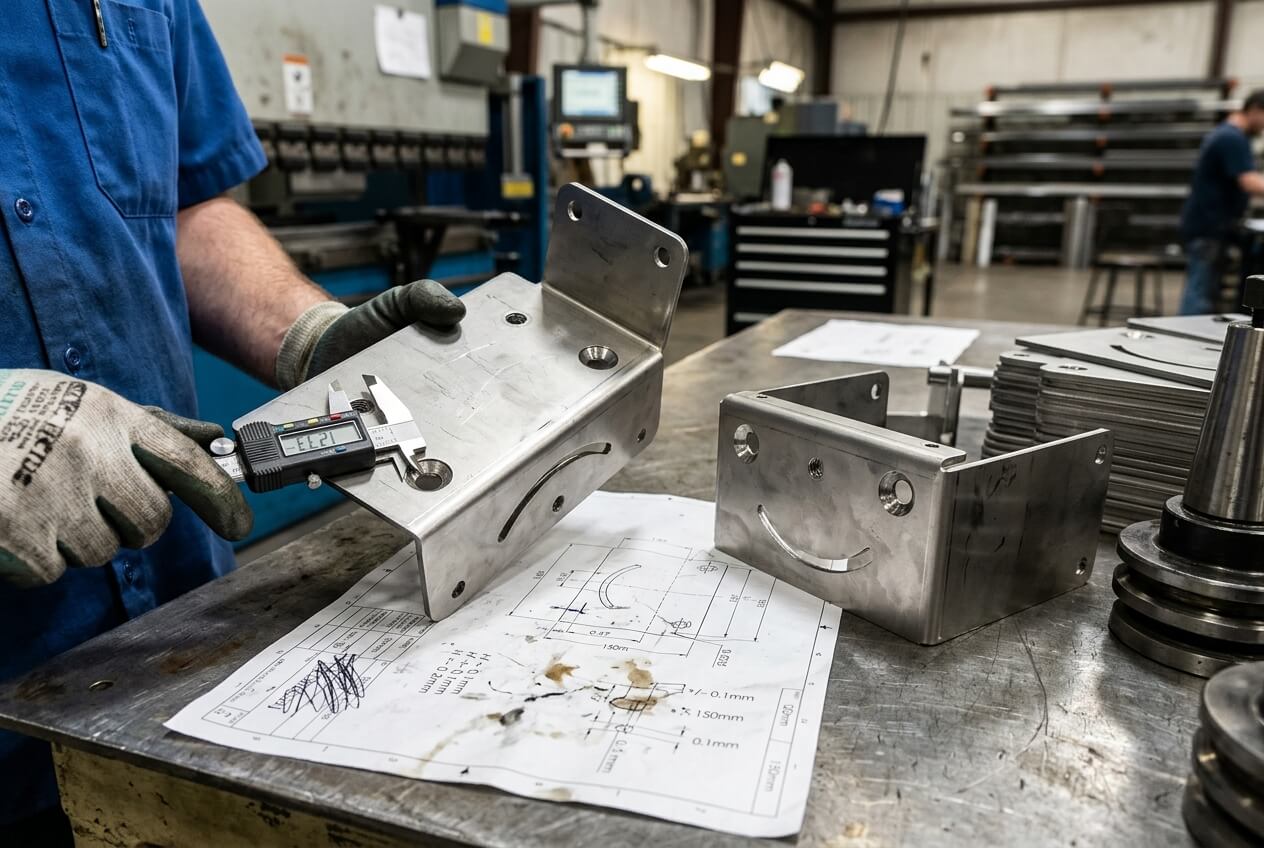
Waterjet cutting gives a cold cut, but cold does not mean consequence-free. Kerf width, taper, and edge condition still affect fit. For a bracket or enclosure panel, a small shift in hole geometry can slow assembly, create forcing at hardware locations, or leave coating damage around contact points. The drawing may still match the nominal CAD model, yet the part may not behave well on the line.
This problem often starts at the hole. A hole that looks acceptable on the cut table can tighten after powder coating. A slot that works for a prototype may refuse a mating tab in the batch. A visible edge with abrasive residue may force the assembler to wipe, file, or rework parts before installation. Those are not cosmetic issues. They are labor, delay, and sometimes scrap.
Project example: a cabinet side panel used a row of mounting holes for hinges and cable brackets. The prototype fit because one operator hand-checked it. The batch used the same CAD file, but the tighter nesting and different sheet position changed the lead-in pattern. The holes still looked correct, but the hardware needed extra force after coating. The team lost time at final assembly because the RFQ never said which holes were final-fit features.
Fit-critical versus cut-critical
Buyers get better quotes when they separate cut-critical dimensions from fit-critical dimensions. A cut-critical dimension must come off the machine within a stated range. A fit-critical dimension must still work after bending, coating, welding, or assembly. Those are not the same thing. If the RFQ treats them as one bucket, the supplier may quote the part as if all features carry the same risk.
That difference matters on waterjet cutting jobs with many holes or tight internal cutouts. It also matters on welded assemblies, where one slightly rough feature can spread trouble into fixture setup and final inspection.
Why Prototype Approval Still Leaves Batch Consistency at Risk
A good prototype can hide a weak production plan. Waterjet cutting often passes first article approval because the sample gets more attention, more manual checking, and a more forgiving sheet layout. Then batch production starts. The nesting changes. The operator changes. Consumable wear changes. The part still resembles the prototype, but the repeatability does not stay fixed.
That is where many procurement teams get surprised. They assume the approved sample locked the result. In reality, the sample only proves one setup worked once. The batch can drift if the supplier uses a different sheet size, a tighter nesting layout, or a changed sequence before bending and coating. For metal enclosures and frames, that drift shows up as fit tension, rework, or uneven finish at the interface points.
When buyers send parts to Yishang for prototype review, the goal is not only to cut the sample. The goal is to identify which drawing notes must stay stable for the batch to repeat. That may include hole size, tab clearance, visible edge condition, or which faces need protection during downstream handling. The earlier those points get locked, the less chance the first approved sample becomes a batch exception.
Prototype-to-batch traps
One common trap is assuming the prototype assembly proves the design is robust. Often it only proves the prototype was built with extra care. Another trap is using a loose first article and a tight batch expectation. If the sample was hand-finished, the batch will not follow unless the RFQ says where manual adjustment is allowed. Buyers should compare the sample to the real production flow, not just the drawing revision.
That same discipline helps with welded assemblies. A cut part that fits before welding can shift after heat and fixture loads. If the buyer wants the supplier to inspect earlier, that request should appear in the RFQ, not as a late email.
When Waterjet Cutting Is the Wrong Answer for the Part
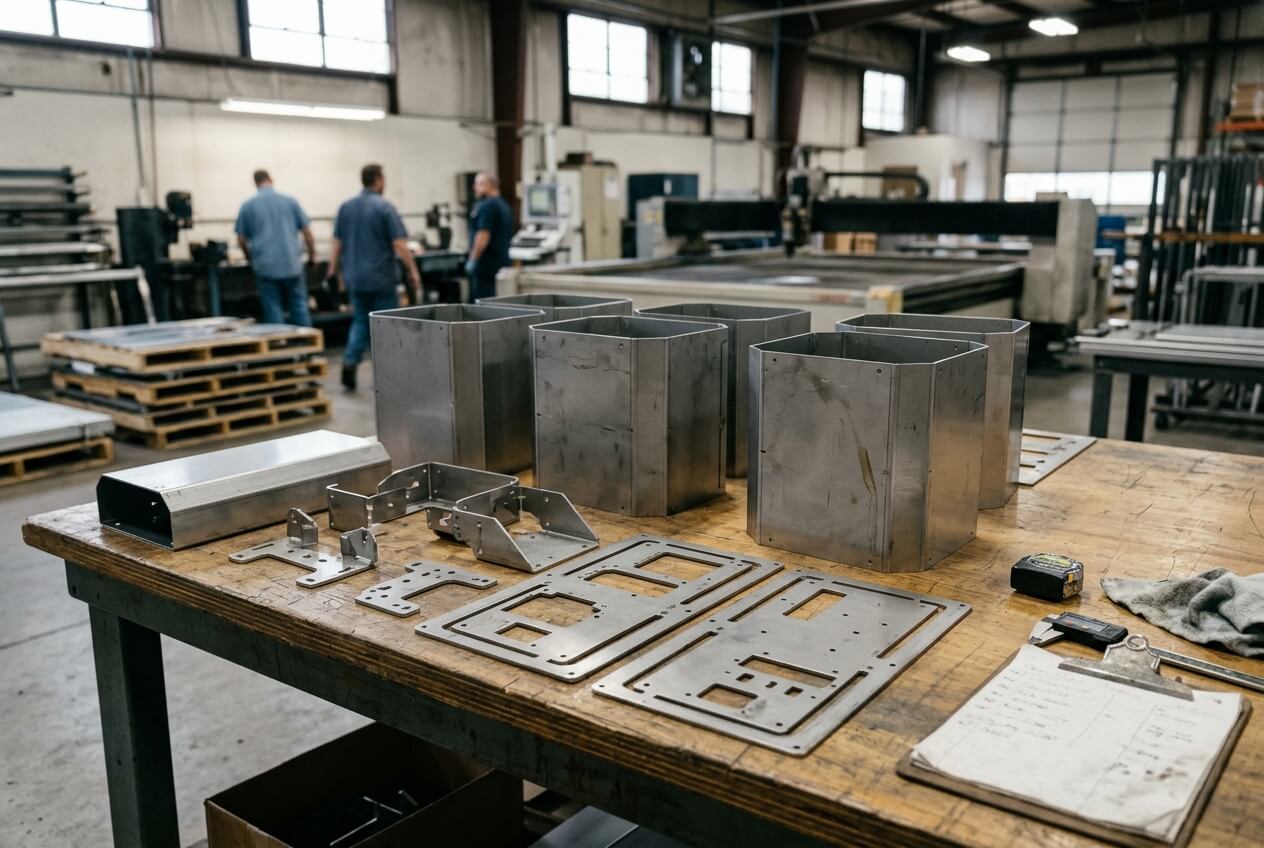
Waterjet cutting is useful when heat input must stay low, when the material is thick, or when thermal distortion would create more risk than the slower cut speed. It is not always the best answer for thin sheet metal with many repeated holes. In those cases, laser cutting or CNC punching may cost less and produce more predictable throughput. If the buyer does not explain why waterjet cutting is required, suppliers may quote different processes or bake in different assumptions.
This is not just a process-selection issue. It is a procurement risk because the wrong method can change unit price, nesting efficiency, and downstream fit. A simple 1.5 mm steel cover with many identical openings may not need waterjet cutting at all. A 16 mm aluminum spacer plate or a mixed-material plate that cannot tolerate heat may justify it. The buyer should force that decision early instead of comparing quotes from different manufacturing philosophies.
Another example: a machine guard panel needed clean edges, but the real need was low distortion and accurate post-bend fit. The buyer asked for waterjet cutting by habit. After drawing review, the team realized the part would benefit from another process on the flat features, while one thick insert plate still needed waterjet cutting. A mixed-process plan reduced cost and improved consistency because the RFQ described the function instead of naming the process first.
How process choice changes the quote
Waterjet cutting carries consumable cost, machine time, handling time, and often more inspection effort on complex parts. If a quote looks high, it may reflect those realities. If it looks too low, it may mean the supplier treated the part as a basic cut shape. Buyers should ask whether the shop has priced post-cut cleanup, washing, or part protection when those steps matter to assembly.
That conversation is easiest before the quote is released, not after the sample misses the target.
What Buyers Should Freeze Before Comparing Waterjet Cutting Quotes
The cleanest RFQ is the one that leaves almost no room for interpretation. Start with the latest drawing revision, then add the material grade, thickness, quantity split, and finish expectation. Next, mark the holes, slots, and edges that affect assembly. Finally, state whether the part will be bent, welded, coated, or installed into a larger frame. Those notes tell the supplier where the real risk sits.
When the project includes brackets, enclosures, frames, or welded assemblies, the RFQ should also tell the shop which features are cosmetic and which are structural. If a dimension can move after bending, say so. If a feature must stay open after coating, say that too. Buyers often leave those details to email, but that creates quote drift and slows the handoff from prototype to batch.
Yishang can review drawings for manufacturability, fit risk, and production assumptions before quoting. If you are sourcing custom sheet metal fabrication, send the drawing files, material requirements, quantities, tolerances, finish expectations, and any prototype feedback. That lets the supplier price the real work instead of guessing at the missing parts of the job.
For buyers, the practical lesson is simple: waterjet cutting should not be quoted as a shape-only service. It should be quoted as part of a build sequence. Once the RFQ tells the shop how the part will be used, the quote becomes more stable, the sample becomes more reliable, and the batch is less likely to create hidden assembly cost.
Frequently Asked Questions
Why do waterjet cutting quotes vary so much for the same drawing?
They vary because suppliers often price different assumptions. One shop may include simple cutting only, while another adds edge cleanup, part handling, or extra inspection for fit-critical holes. If the RFQ does not state what the part must do after cutting, each supplier fills in the blanks differently.
What drawing details matter most for waterjet cutting of brackets and enclosures?
Hole condition, visible edge notes, fit-critical dimensions, and downstream processes matter most. If the part will be bent, welded, or coated, those steps should appear in the drawing or RFQ. That helps the supplier price the real manufacturing sequence instead of just the flat shape.
How can a prototype pass but the batch still fail during assembly?
A prototype often gets extra attention and looser nesting. The batch may use different sheet layouts, different operator judgment, or more wear on cutting consumables. If the sample fit depended on manual help, the production lot may repeat the shape but not the assembly result.
When should buyers avoid waterjet cutting for thin sheet metal parts?
Buyers should consider another process when the part is thin, repetitive, and full of repeated holes or simple profiles. Laser cutting or CNC punching can be faster and more consistent in those cases. Waterjet cutting makes more sense when heat distortion, thick material, or mixed-material cutting drives the risk.
What should buyers send with the RFQ to reduce quote drift?
Send the latest drawing revision, material grade, thickness, quantities, tolerance notes, finish expectations, and any prototype observations. Add photos or notes for mating parts if fit matters. That combination helps the supplier see the assembly context before quoting.
Can Yishang review drawings before quotation for waterjet cutting projects?
Yes. Yishang can review drawings for manufacturability, fit risk, and production assumptions on custom sheet metal parts, metal enclosures, brackets, frames, and welded assemblies. The most useful package includes the drawing, material, quantity, tolerances, finish requirements, and any issues found on the prototype.