
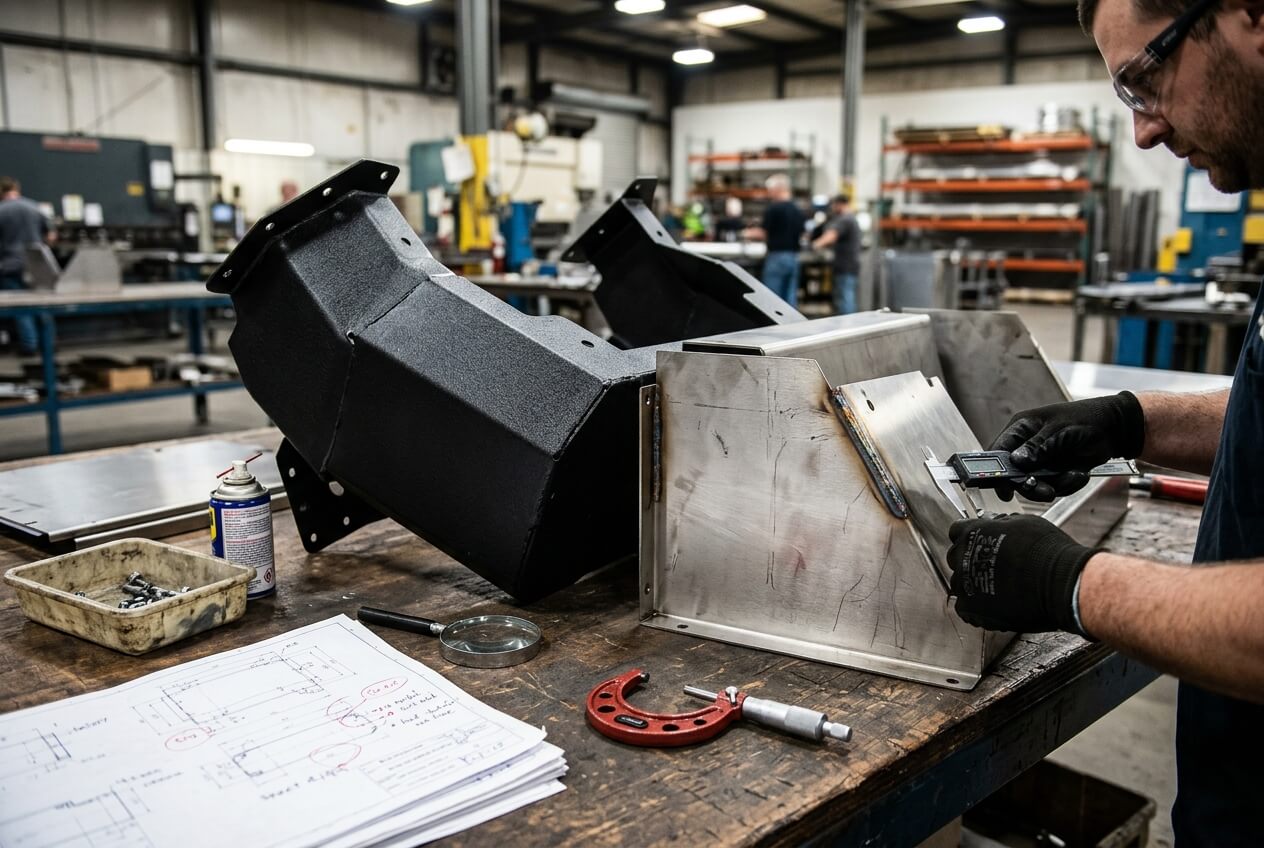
A buyer sends a stainless control panel, a welded cabinet door, or a formed bracket for quotation. The drawing lists material, thickness, hole sizes, and powder coating. One supplier quotes the part with light stress relief before coating. Another includes post-weld annealing, oxide cleanup, cosmetic-face protection, and extra inspection. The part number matches, but the quotations do not describe the same risk.
This is where the annealing metal process creates procurement trouble. The heat cycle can change color, flatness, springback, coating preparation, and handling requirements. If the RFQ only says “anneal as needed,” each supplier fills the gap with its own shop practice. Buyers then compare prices that do not include the same process sequence or finish obligation.
For OEMs sourcing sheet metal enclosures, brackets, cabinets, frames, panels, or welded assemblies, the dominant risk is not the metallurgy term itself. The real risk is RFQ ambiguity that turns annealing into an undefined finish and acceptance condition. That ambiguity can make a low quote look attractive, then cause rejection after prototype approval or first batch delivery.
This article focuses on that risk chain. It explains where the uncertainty starts, how it changes quoting and production, and what buyers should freeze before they compare suppliers.
How vague annealing notes create two different quotations for the same part
Many drawings treat annealing as a small process note. The buyer may write “anneal if required,” “stress relieve after welding,” or “heat treat before finish.” Those phrases sound helpful, but they leave too much open. The supplier still needs to decide the sequence, furnace method, cleaning route, surface protection, inspection points, and rework allowance.
That decision affects cost before production starts. A simple formed bracket may only need annealed stock or a softer temper before bending. A welded enclosure frame may need stress relief after welding to reduce distortion. A stainless front panel may require controlled handling, heat-tint removal, and surface blending before the visible face can pass inspection.
If the RFQ does not separate those cases, the quote becomes a guess. One supplier may include only the minimum process needed to form the part. Another may price the work needed to protect the cosmetic finish. The buyer sees a price spread and may assume the higher supplier added margin. In reality, the suppliers may have quoted different finish responsibilities.
The hidden difference between process permission and process requirement
“Anneal as needed” gives the manufacturer permission to use annealing. It does not define when the manufacturer must use it or what condition the part must meet afterward. That distinction matters. A supplier may choose annealing to reduce bend cracking, improve formability, or relieve weld stress. However, the buyer may judge the part by color, flatness, coating quality, and assembly fit.
Procurement teams should avoid notes that delegate the full decision to the shop without defining the acceptance result. A better RFQ explains why annealing may be needed and what the part must look like after it. For example, a note may state that stress relief can be used after welding, but the exterior cosmetic face must show no visible heat tint after powder coating preparation.
That detail changes both the production plan and the quotation. The supplier can include fixtures, cleaning, masking, and inspection in the price. Without it, the low quote may only cover a technically possible process, not an acceptable finished part.
Where annealing assumptions turn into finish rejection after fabrication
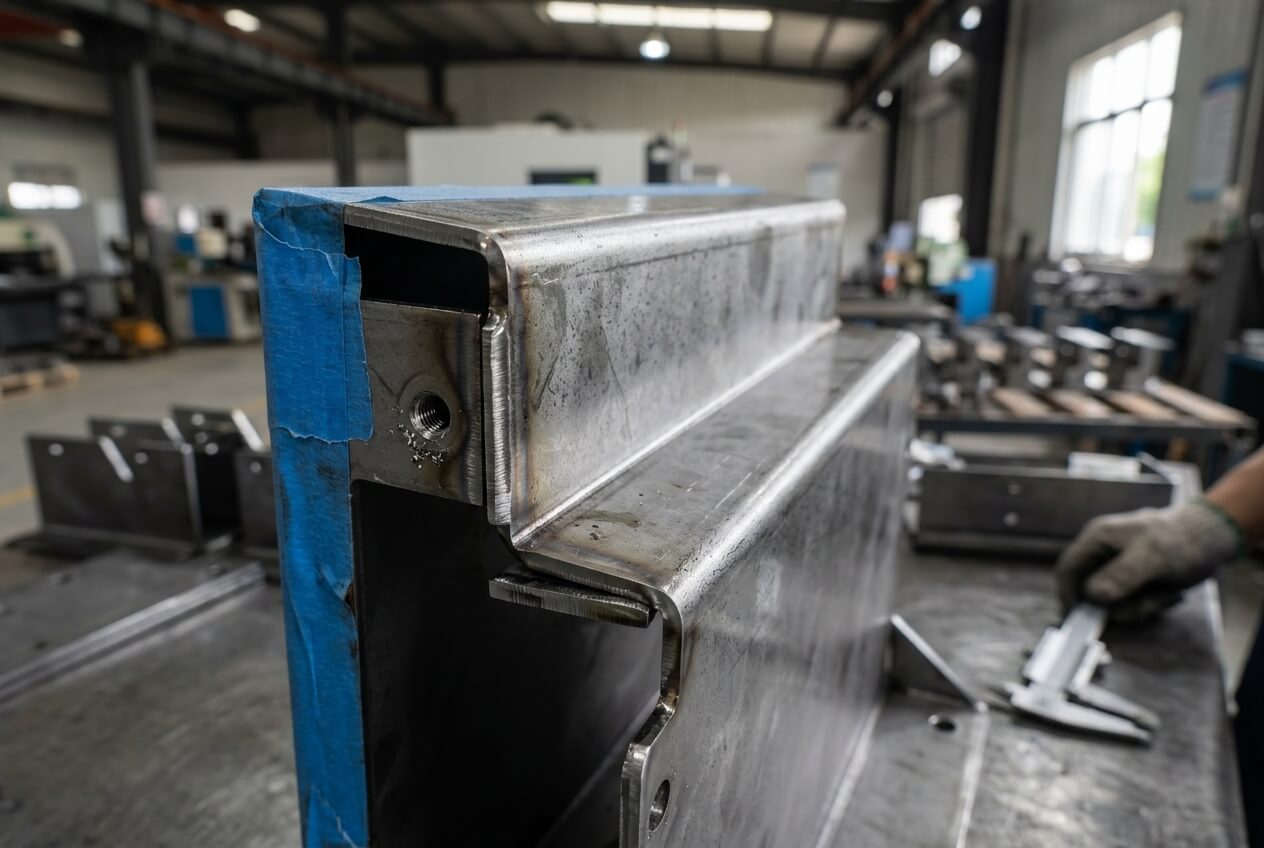
Annealing can solve one manufacturing problem while creating another. Heat can reduce residual stress, restore ductility, and lower cracking risk. It can also leave oxide scale, heat tint, softened edges, or surface marks. These effects may not matter on hidden structural faces. They matter a lot on cabinet doors, display panels, enclosures, and customer-facing covers.
The dispute usually begins with a missing surface hierarchy. A buyer knows which face will be visible after assembly. The supplier may not. If the drawing does not mark cosmetic and hidden faces, the manufacturer may treat all surfaces as normal production surfaces. That choice can leave light discoloration or cleanup marks in an area the buyer expected to remain clean.
Consider a stainless control panel with cutouts for switches and labels. The buyer approves the dimensions and expects a clean brushed surface. The supplier anneals after forming to control stress, then removes heat tint around cutouts. The cleanup slightly changes the grain direction near the openings. The part fits, but the front face fails finish acceptance. The problem did not start in polishing. It started when the RFQ did not define how annealed visible surfaces should be judged.
A second example appears on powder-coated cabinet doors. A door may pass flatness inspection after stress relief, yet still cause coating issues if scale or residue remains near bend lines. Powder coating can hide some variation, but it cannot compensate for poor pre-coat condition. If the quote did not include scale removal or extra surface prep, the supplier may view the coating failure as a downstream issue. The buyer may view it as a fabrication defect.
Finish acceptance must include what happens before coating
Buyers often specify the final coating color and gloss, but they leave the pre-coat condition open. Annealing makes that gap expensive. Surface scale, oxide, or cleaning residue can affect coating adhesion and appearance. Local polishing can also create visible texture differences under paint or powder.
The RFQ should state whether heat tint, oxide scale, discoloration, and local blending are acceptable before coating. It should also define whether pickling, polishing, blasting, sanding, or chemical cleaning can be used. These choices influence cost, lead time, and appearance. They also prevent a supplier from assuming a cheaper cleanup method that leaves marks in the wrong location.
Yishang can review drawings, photos, and finish expectations during RFQ preparation when buyers need custom sheet metal parts with annealing, welding, polishing, or powder coating in the same route. That review helps connect the heat step to the surface the customer will actually inspect.
Why prototype approval does not remove batch risk when annealing remains undefined
A prototype can pass while the batch still fails. This happens often when annealing requirements stay vague. A single sample may receive careful handling, light furnace loading, and manual cleanup. The production batch may use denser loading, different fixtures, faster transfer, or a more repeatable but less cosmetic cleanup method.
That change does not always mean the supplier behaved badly. It often means the buyer approved a sample without freezing the production assumptions behind it. If the RFQ and drawing do not state the annealing sequence, cleaning method, cosmetic-face protection, and batch inspection rule, the sample becomes a visual reference without process control.
Imagine a welded sheet metal frame for an equipment enclosure. The prototype sits flat after stress relief, and the mounting holes align with the mating structure. During batch production, the supplier loads more frames per furnace cycle. Heat flow changes, and the fixtures allow slight twist. The coating looks acceptable, but assembly workers need extra force to install the frames. The batch problem looks like an assembly issue. The root cause sits earlier in the undefined heat-treatment and fixturing plan.
Another case involves formed mounting brackets made from stainless sheet. The prototype bends cleanly after annealing and shows no cracks. In the batch, the supplier uses the same process but stacks parts during transfer. The softened surface picks up rub marks on exposed faces. Function remains acceptable, but the buyer rejects parts used in a visible mounting location. The missing RFQ detail was not material grade. It was handling protection after annealing.
Sample approval should lock the route, not only the part
Buyers should ask what production variables must match the approved sample. Important points include material condition, annealing sequence, furnace loading approach, fixture use, cooling method, cleaning process, masking, and cosmetic-face handling. These details do not need to turn the drawing into a process manual. They do need to define the conditions that affect acceptance.
When buyers ignore those details, they create a weak bridge between prototype and batch. The supplier may meet the drawing dimensions and still deliver a finish or assembly result that differs from the approved sample. That gap causes sorting, rework, delayed assembly, and arguments over whether the sample represented a controlled process or a one-off effort.
For parts with visible faces or tight fit-up, buyers should request a first article or pilot run that uses the intended batch route. This reduces the risk of approving a hand-finished prototype that production cannot repeat at the quoted price.

What the RFQ should freeze before buyers compare annealed sheet metal quotes
The strongest RFQ does not tell the supplier how to run every furnace cycle. It defines the conditions that affect quotation, production risk, and acceptance. That matters because the annealing metal process sits between fabrication steps. It can influence bending, welding, flattening, coating, inspection, and assembly.
Buyers should first define the purpose of annealing. The part may need it to reduce cracking during a tight bend, relieve stress after welding, improve flatness, or stabilize the assembly before coating. Each purpose leads to a different quote. A bracket formed from softer material may not need post-form heat treatment. A welded frame may need fixturing and stress relief after welding. A front panel may need a different bend radius or material condition to avoid a heat step that would damage the visible finish.
Next, the RFQ should mark surface priority. A simple face map can prevent expensive disputes. Label exterior cosmetic faces, hidden faces, sealing surfaces, grounding points, threaded zones, weld areas, and areas that must not show tape marks or plug marks. If color, grain, sheen, or texture matters, include a control photo or sample. Words alone often fail to describe the difference between acceptable heat tint and a cosmetic defect.
Dimensional requirements also need context. Annealing can change flatness, springback, and hole alignment. This matters on doors, frames, covers, and brackets that mate with another assembly. Instead of applying tight tolerances everywhere, buyers should identify the dimensions that control fit. Critical hole patterns, hinge locations, mounting surfaces, gasket lands, and mating edges deserve clear tolerances and inspection methods.
Clarify cost drivers before the low quote becomes the baseline
Annealing-related cost drivers often hide outside the heat-treatment line item. Fixtures, straightening, protected handling, oxide removal, masking, inspection, and coating preparation can cost more than the heat cycle itself. A quote that excludes those activities may look competitive during sourcing, then create rework charges or delivery delays later.
Lead time also changes when finish acceptance depends on annealing. Extra cleaning, cooling, inspection, or rework can add days. If the buyer discovers these needs after sample rejection, the project loses more time than it would have spent on RFQ clarification. Procurement should ask suppliers to state which assumptions they used for annealing sequence, surface cleanup, and batch consistency.
A useful RFQ package includes drawings, material requirements, thickness, quantity, tolerances, finish expectations, photos, assembly notes, and any sample part or control surface. If the design includes welding, bending, powder coating, or visible brushed metal, buyers should ask suppliers to flag contradictions before quoting. For example, a drawing may require a uniform visible finish while also banning any post-anneal polishing. That conflict should surface before price comparison.
Yishang’s drawing review for custom sheet metal fabrication can support this step when buyers need enclosures, brackets, frames, welded assemblies, or sheet metal parts that combine forming, welding, annealing, and finishing. The goal is not to add unnecessary process steps. The goal is to make sure every quote covers the same acceptance risk.
How to prevent annealing from becoming a late-stage commercial dispute
Late-stage disputes rarely come from the word “annealing” alone. They come from different assumptions about who owns the consequences. The supplier may believe annealing marks, minor color variation, or local cleanup marks are normal process output. The buyer may believe the finished part must match the approved cosmetic standard with no visible trace of heat treatment.
Procurement can reduce that conflict by tying annealing decisions to acceptance language. The drawing should not only say whether annealing may occur. It should state what surfaces must meet cosmetic requirements, what marks are unacceptable, what cleaning methods are permitted, and which dimensions control assembly fit after heat exposure. This creates a shared reference when the first article arrives.
Supplier communication should also move from open-ended questions to assumption checks. Instead of asking, “Can you anneal this part?” ask, “Does your quote include post-anneal oxide removal on the exterior face, flatness inspection after stress relief, and the same handling method for batch production?” That question forces the quote to reveal what it includes.
Before approving a prototype, buyers should ask whether the sample route matches the planned production route. If it does not, the approval should stay conditional. A prototype that receives hand cleanup, special wrapping, or lighter furnace loading may still help the design team. It should not become the acceptance standard for a batch unless the supplier can repeat those steps at production quantity.
The safest commercial position comes from an RFQ that limits interpretation. Define the function of annealing, the sequence relative to bending and welding, the visible surfaces, the pre-coat condition, the assembly-critical dimensions, and the sample-to-batch controls. This lets suppliers quote the real work. It also helps buyers avoid choosing a low price that only works because the most expensive finish risk stayed undefined.
If your enclosure, bracket, cabinet, frame, panel, or welded assembly may need an annealing metal process before bending, welding, polishing, assembly, or powder coating, send drawings, material requirements, quantities, tolerances, finish expectations, photos, and assembly notes to Yishang at https://zsyishang.com/. A review before quote comparison can expose annealing, masking, cosmetic-face, fit-up, and batch-consistency assumptions while there is still time to price them correctly.
Frequently Asked Questions
Why does the annealing metal process create quotation differences between suppliers?
Annealing affects more than the heat-treatment step. It can require fixtures, oxide removal, protected handling, straightening, coating preparation, and extra inspection. If the RFQ does not define the sequence and finish condition, each supplier may quote a different level of work.
Should an RFQ say “anneal as needed” for sheet metal parts?
That phrase is risky by itself. It gives the supplier permission to anneal, but it does not define the required result. Buyers should state why annealing may be needed, when it should occur, and what finish, flatness, and assembly conditions the part must meet afterward.
How can annealing affect powder-coated enclosures or cabinet doors?
Annealing can leave scale, heat tint, residue, or surface variation before coating. Those conditions can affect adhesion and appearance. Buyers should define acceptable pre-coat condition, cleaning methods, cosmetic faces, and inspection requirements before comparing quotations.
Why can an annealed prototype pass but the production batch fail?
A prototype may receive lighter furnace loading, special handling, or manual cleanup. Batch production may use different fixtures, load density, transfer methods, or cleaning routines. Buyers should confirm that the approved sample uses the same route planned for production.
What drawing notes help prevent finish disputes after annealing?
Mark cosmetic and hidden faces, critical mating dimensions, threaded areas, masking zones, and surfaces that cannot show tape or handling marks. Add photos or samples when color, grain, sheen, or texture matters. These details make acceptance less subjective.
When should buyers ask for manufacturability review on annealed sheet metal parts?
Ask before quote comparison when the part combines visible finish, welding, tight fit-up, bending, or powder coating. Early review can identify whether annealing is necessary, whether another forming choice reduces risk, and which assumptions suppliers must include in the quote.