
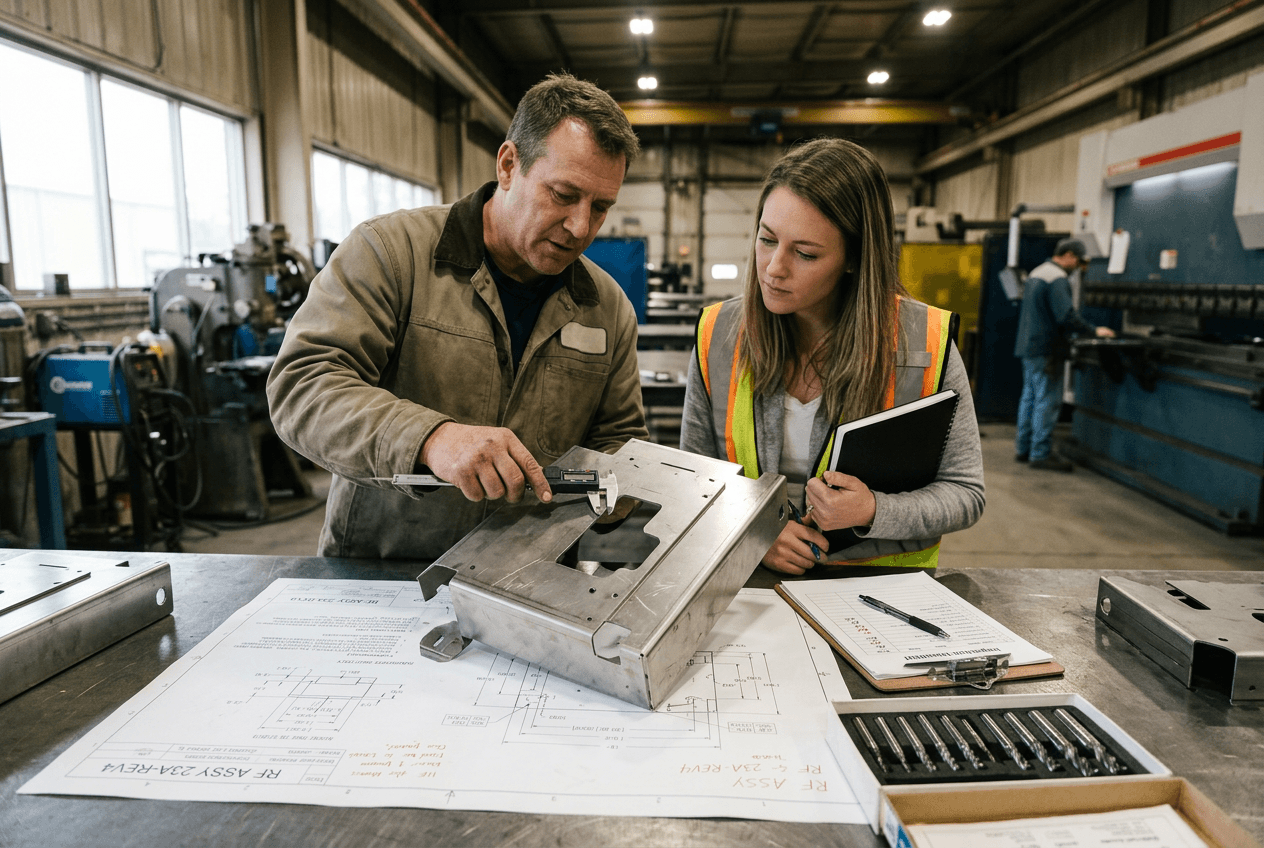
A sheet metal quote can look precise while hiding major assumptions. The drawing may show every hole, flange, slot, and weld. The supplier may still guess how the part should fit, which surfaces need protection, and which dimensions matter after coating. That gap creates the real procurement risk.
This risk does not start on the production floor. It starts when buyers compare prices before suppliers quote the same scope. One supplier may include fixture welding, masking, post-bend inspection, and secondary machining with mill cutters. Another may quote only cutting, bending, welding, and standard coating. The cheaper quote then looks attractive, but it may not include the work needed to produce usable sheet metal parts.
For custom sheet metal fabrication, the key question is not only whether a supplier can make the part. The better question is whether the supplier can identify the hidden assumptions before quotation. If those assumptions stay unclear, they move into prototype rework, batch variation, delayed assembly, and unexpected cost.
Where RFQ Assumptions Start to Distort Fabrication Quotes
Many RFQs contain product drawings, not manufacturing-ready instructions. They define shape, hole locations, and general dimensions. They often leave out process intent. That difference matters because sheet metal parts change during cutting, bending, welding, finishing, and inspection.
A buyer may send an enclosure drawing that includes bent panels, welded hinge brackets, PEM fasteners, ventilation slots, and powder coating. The drawing looks complete. Yet it may not state which face remains cosmetic, whether threaded holes need masking, or which dimensions control the internal module fit. Suppliers must fill those gaps with assumptions.
Quote distortion begins when each supplier fills the gaps differently. A careful supplier may include fixture time, coating allowance, and inspection from assembly datums. A faster supplier may quote from the drawing only and assume standard tolerances. Both suppliers can claim they followed the RFQ. Only one may have priced the real production scope.
The low quote may exclude risk control
A low price does not always mean poor capability. It may reflect efficiency, local cost, or a smart process plan. However, it can also reflect missing work. Buyers should not ask only why one price is high. They should ask what each supplier included to control fit, finish, and repeatability.
Consider a wall-mounted control cabinet. The door must close evenly, the hinge line must stay straight, and the internal bracket must align with a purchased controller. One supplier quotes a welded box. Another includes fixture welding, hinge-side inspection, coating masking, and door-gap verification. The second quote may look higher, but it may prevent a batch of cabinets that pass dimensions and fail during assembly.
This is the core procurement risk: price comparison becomes unreliable when the RFQ does not force assumption alignment. The buyer thinks they compare suppliers. In reality, they compare different versions of the job.
Why One Missing Feature Can Change the Whole Cost Model
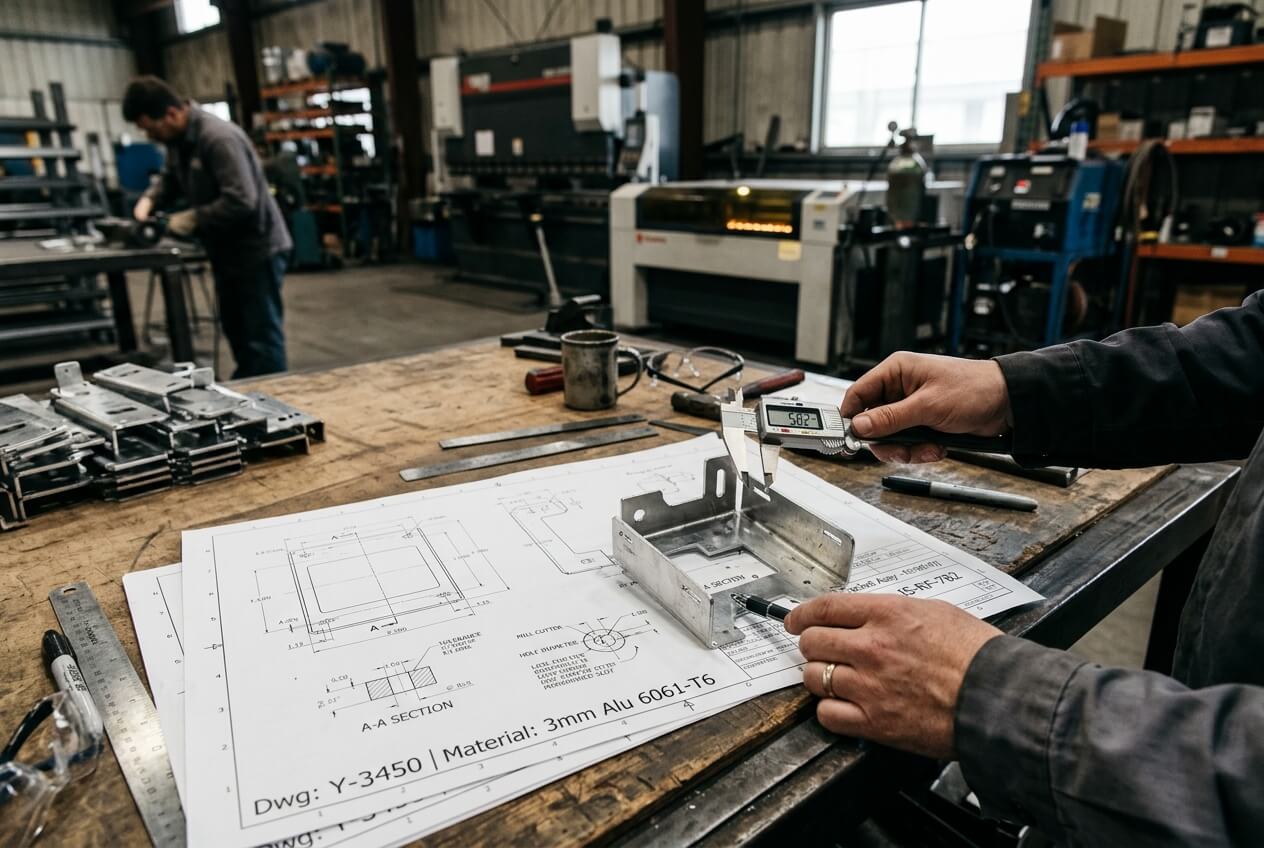
Small features often expose the largest quotation gaps. A slot, counterbore, weld face, or coated opening can decide whether the supplier uses laser cutting alone or adds secondary machining. When the RFQ does not identify that feature as critical, suppliers may choose different process routes.
The keyword mill cutters often belongs to machining discussions, but it also matters in fabricated sheet metal projects. Some brackets and enclosures need milled slots, precise edges, flat mounting pads, or post-weld cleanup. A laser-cut opening may work for a loose cable pass-through. It may not work for a sliding adjustment slot that controls alignment with a machined component.
If one supplier includes milling and another does not, the unit price gap can be large. The gap does not prove one supplier is expensive. It proves the RFQ failed to define the required process or functional tolerance. That failure can surface later as rejected parts, manual filing, delayed assembly, or urgent engineering concessions.
Project example: adjustable mounting bracket
An OEM sources a powder-coated bracket with two slotted holes. The slots let technicians adjust a sensor during final equipment assembly. The drawing shows slot size and position, but it does not state whether the slot edges control sliding fit. One supplier assumes laser cutting and standard deburring. Another proposes milling the slots after bending because the mating screws need smooth travel.
The lower quote wins. During assembly, screws bind in several brackets because coating buildup and edge roughness reduce clearance. The buyer then pays for sorting, hand rework, and replacement parts. The issue started with one unclear feature. It affected the quote, hid the real cost driver, and created production risk.
Buyers can prevent this by marking fit-critical slots, holes, and faces. They should state whether laser-cut edges are acceptable or whether secondary machining must hold the feature. They should also confirm whether dimensions apply before coating, after coating, or after welding.
How Ambiguous Tolerances Create Assembly Risk After a Clean Quote
Tolerances do not only affect inspection. They affect process choice, fixture design, welding sequence, coating control, and lead time. When buyers apply tight tolerances without priority, suppliers may overprice low-risk features or under-control high-risk ones. Both outcomes hurt procurement decisions.
A flat cover plate may tolerate standard laser cutting and bending. A welded frame with four mounting faces may not. If the frame connects to other equipment, squareness and hole alignment may matter more than several nonfunctional dimensions. The RFQ should tell suppliers which features drive assembly performance.
Without that priority, suppliers inspect from convenient references. One may use a raw laser-cut edge as the datum. Another may use the bent base plane. A third may inspect after welding but before coating. Each method can produce different results. The part may pass one inspection plan and fail in the buyer’s assembly.
Project example: welded equipment frame
A buyer orders a welded frame for a display rack. The frame includes upright tubes, sheet metal brackets, slotted shelf supports, and a powder-coated finish. The drawing calls out overall dimensions, but it does not define the assembly datum. It also does not state which bracket positions control shelf level.
The prototype looks acceptable after manual adjustment. In the batch, several frames stand slightly twisted. Shelves fit tightly on one side and loosely on the other. The supplier argues that individual dimensions remain within tolerance. The buyer cares that the rack does not assemble cleanly.
This conflict began before quotation. The RFQ did not state the functional fit points, inspection datums, or acceptable weld distortion. The quote therefore did not include enough fixture control. Once production started, every correction became more expensive.
Buyers should separate critical tolerances from general fabrication tolerances. They should identify mating holes, hinge lines, mounting planes, and contact faces. They should also ask suppliers how they will control those features through bending, welding, coating, and inspection. This discussion keeps tolerance decisions tied to assembly risk, not abstract drawing precision.
Why Prototype Approval Can Hide Batch Consistency Problems
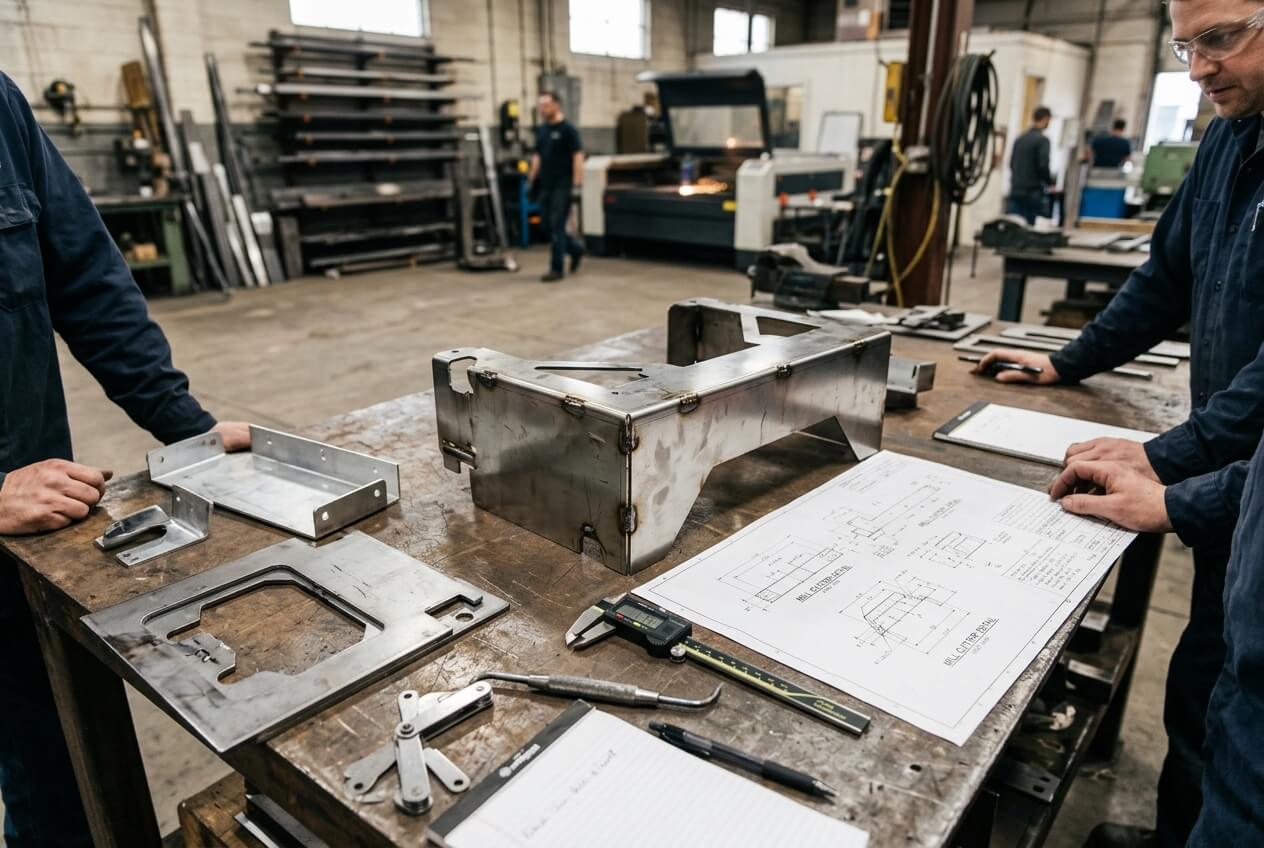
A good prototype proves that one part can meet expectations. It does not prove that the supplier can repeat the result at batch quantity. This distinction matters when the prototype required manual correction, slower welding, extra grinding, or special handling.
Procurement teams often treat sample approval as a finish line. For risky fabricated assemblies, it should trigger a production control review. The buyer should ask what changed during sample making and whether those changes entered the drawing, inspection plan, or work instructions.
A prototype enclosure may fit because a technician enlarged two holes after coating. A cabinet door may close well because hinges received hand adjustment. A welded assembly may look clean because one experienced welder spent extra time controlling heat. None of those fixes will repeat automatically in a batch unless the supplier documents them.
The sample can approve the wrong process
The danger grows when the buyer approves only the final physical sample. The sample may hide the correction path. If the batch uses the original flat pattern, original hole size, or original weld sequence, the same problem returns at scale. The buyer then faces sorting, rework, shipment delays, and difficult responsibility discussions.
Before batch release, buyers should request a clear summary of prototype changes. Did the supplier adjust bend allowance? Did they change the bend sequence? Did coating buildup require masking or hole enlargement? Did any feature need secondary machining with mill cutters after forming? Did the cosmetic surface require special packing or handling?
These questions do not add bureaucracy. They protect the purchasing decision. A supplier who can explain prototype learning gives the buyer a path to stable production. A supplier who treats the sample as a one-off success leaves the batch exposed.
Yishang can support this stage when buyers share drawings, sample feedback, photos, assembly notes, and target quantities. The value comes from connecting prototype observations to manufacturability, finishing, and batch inspection before the purchase order locks the wrong assumptions.
What Buyers Should Clarify Before Comparing Sheet Metal Quotes
Buyers do not need to turn every RFQ into a long engineering audit. They need to make the assumptions that affect cost and risk visible. The RFQ should guide suppliers toward the same production interpretation before procurement compares unit prices.
Start with the part’s function. Identify which features control assembly fit, safety, appearance, or service access. Then connect those features to process decisions. A hinge line may require fixture welding. A threaded hole may need coating masking. A slot may need milling rather than laser cutting alone. A visible panel may require tighter handling and packaging than an internal bracket.
Next, clarify the drawing status. Tell suppliers whether the drawing is final, prototype-level, or open to manufacturability feedback. If you can accept a larger radius, wider slot, different weld position, or revised bend sequence, state that early. Suppliers can then quote practical improvements instead of guessing where they may deviate.
Questions that expose hidden scope
Ask each supplier to describe the main fabrication risks in their own words. Strong answers will mention specific issues such as weld distortion near openings, coating thickness in slots, datum selection for inspection, hole movement after bending, or cosmetic face protection. Weak answers often repeat only basic capabilities such as laser cutting, bending, welding, and powder coating.
Buyers should also ask what the quote excludes. This question matters as much as the price. Does the quote include inspection fixtures, first-article reporting, masking, trial assembly, packing protection, or secondary machining? Does it include prototype learning before batch production? Does lead time assume immediate drawing approval, or does it include engineering review and sample correction?
Supplier communication should stay practical. The goal is not endless discussion. The goal is a quote that states the process route, critical assumptions, and buyer decisions still needed. When suppliers quote the same scope, procurement can compare price with far less risk.
For overseas projects, this discipline becomes more important. Distance makes rework slower and more expensive. A missing masking note or unclear datum can trigger photo reviews, replacement shipments, or assembly-site repair. Early clarification costs less than late correction.
Practical next step: If your project includes custom sheet metal parts, metal enclosures, brackets, frames, or welded assemblies, send drawings, material requirements, quantities, tolerance priorities, and finish expectations before you compare quotes. Include assembly notes, prototype feedback, photos, target lead time, and any features that may need mill cutters or other secondary machining. Yishang can review the RFQ for hidden fabrication assumptions and help align the scope before pricing drives the sourcing decision. Visit https://zsyishang.com/ to share your project details.
Frequently Asked Questions
Why do mill cutters matter in a sheet metal fabrication RFQ?
Most sheet metal parts use laser cutting, punching, bending, and welding. Some features still need secondary machining. Precision slots, counterbores, flat mounting faces, and post-weld cleanup may require mill cutters. If the RFQ does not identify those features, suppliers may quote different process routes and create misleading price gaps.
What RFQ details most often change a sheet metal quote?
Fit-critical dimensions, coating masking, cosmetic surface requirements, weld grinding level, inspection datums, and secondary machining needs often change the quote. These details affect labor, fixtures, process sequence, inspection time, and scrap risk. When buyers leave them open, suppliers make assumptions that may not match the real application.
How should buyers prevent prototype approval from misleading batch production?
Buyers should ask suppliers to document every change made during prototype production. That includes bend allowance changes, hole adjustments, weld sequence changes, coating decisions, manual rework, and inspection updates. The approved condition should move into drawings, work instructions, or inspection notes before batch release.
Why can a sheet metal part pass inspection but fail assembly?
The supplier may inspect from a datum that does not match the real assembly condition. Coating buildup, weld distortion, bend variation, or rough slot edges can also affect fit. Buyers should define functional datums, mating features, and critical clearances so inspection reflects how the part will be used.
Should buyers always specify tight tolerances to reduce risk?
No. Tight tolerances increase cost and may not reduce the right risk. Buyers should identify the few features that control fit, alignment, or appearance. General features can often use standard fabrication tolerances. This approach helps suppliers focus control where it matters most.
How can Yishang support RFQ review for fabricated sheet metal parts?
Yishang can review drawings, quantities, materials, tolerance priorities, finish expectations, prototype notes, and assembly requirements. The review helps identify unclear assumptions around cutting, bending, welding, finishing, inspection, and secondary machining before buyers compare quotes by unit price alone.