
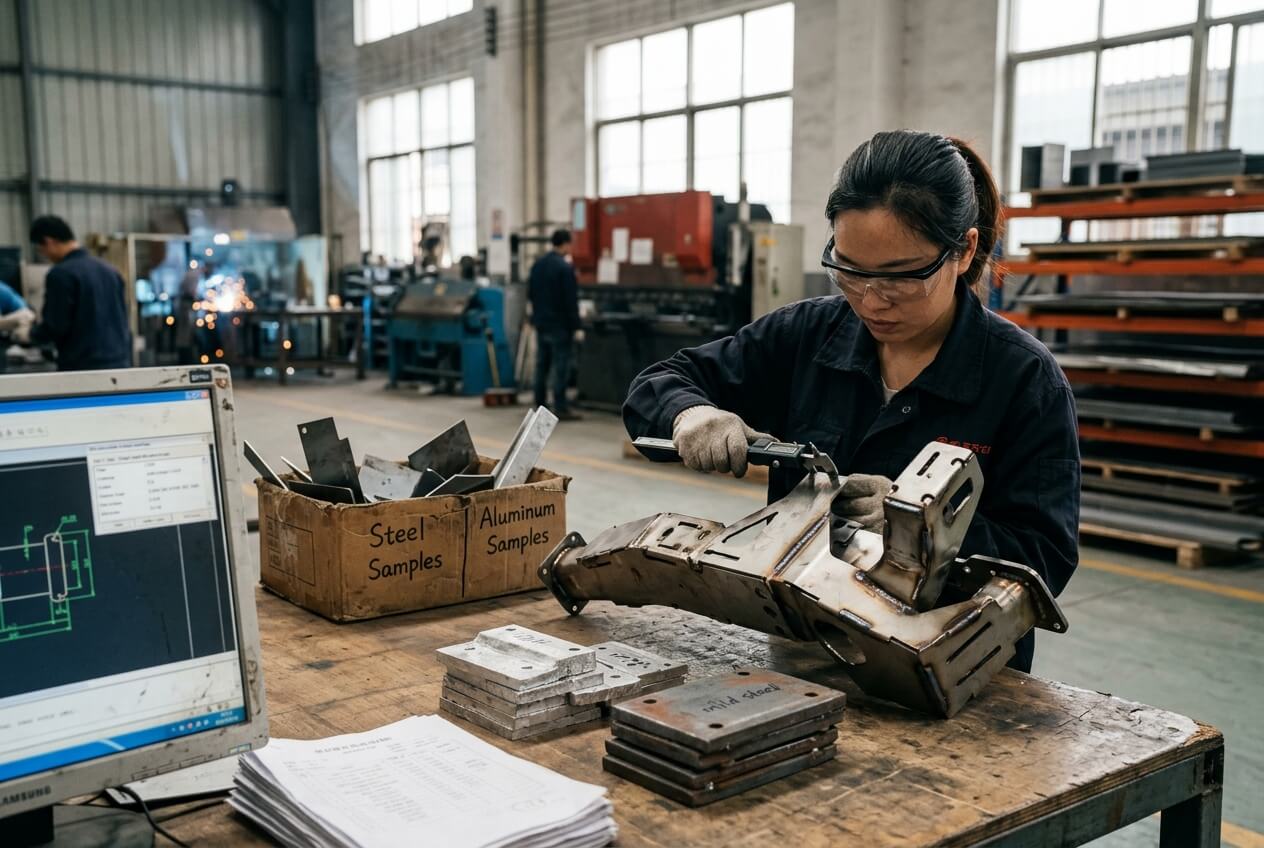
A buyer sends one RFQ for a powder-coated control cabinet, two welded support frames, and several laser-cut mounting panels. The drawing note says “metal sheet, black finish.” It does not name carbon steel, galvanized steel, stainless steel, or aluminum. It also skips the coating system, visible surfaces, and service environment.
Three suppliers respond with three very different prices. One assumes cold-rolled steel with a basic powder coat. Another prices stainless steel because the cabinet may face moisture. A third asks questions before quoting. At that moment, the ferrous and non ferrous metals definition stops being a classroom term. It becomes a procurement risk.
Ferrous metals contain iron. Common examples include carbon steel, galvanized steel, and stainless steel. Non-ferrous metals generally do not contain iron. Aluminum, copper, brass, and zinc alloys fall into that group. In custom sheet metal fabrication, this definition only starts the buying decision. The real risk appears when the RFQ lets suppliers choose different materials, finishes, tolerances, and process routes from the same drawing.
This article focuses on one dominant risk: RFQ ambiguity that creates non-comparable quotes. The lowest price may not represent a better supplier. It may represent a different product.
Where RFQ Ambiguity Starts to Distort Fabrication Quotes
Most quote problems begin before production. They start when a drawing describes the shape but not the assumptions behind the part. A 3D model may show every bend and hole. A 2D drawing may list dimensions clearly. Yet the RFQ can still leave the supplier guessing about material grade, finish durability, assembly fit, and inspection priorities.
That gap matters because sheet metal suppliers do not price a word like “metal.” They price a route through cutting, bending, welding, grinding, surface preparation, finishing, packing, and inspection. When the RFQ leaves the route open, each supplier fills the gap differently.
The same drawing can become three products
Consider an outdoor electrical enclosure. The buyer writes “black anti-rust metal cabinet.” One supplier quotes powder-coated carbon steel. Another selects galvanized steel with extra pretreatment. A third prices stainless steel 304 because coating damage may expose the base metal. All three choices can sound reasonable. They do not carry the same raw material cost, welding behavior, coating risk, or service life.
The buyer may compare the three unit prices and push the highest supplier to reduce cost. That negotiation misses the real problem. The suppliers did not quote the same cabinet. The RFQ allowed material assumptions to drive the price spread.
A second example appears in welded equipment frames. A buyer wants a lighter frame and asks for “non-ferrous metal if possible.” One supplier quotes aluminum tube and sheet parts. Another keeps carbon steel because the assembly carries vibration load. Aluminum may reduce weight, but it may need thicker sections, revised weld design, larger bend radii, or extra fixtures. The material category alone does not prove lower finished cost.
Buyers reduce this risk when they treat the ferrous or non-ferrous choice as a controlled RFQ variable. The RFQ should state the target grade, use environment, finish expectation, and any open points that need supplier review. That keeps suppliers from solving different problems under one drawing number.
Why Ferrous and Non-Ferrous Assumptions Change More Than Unit Price
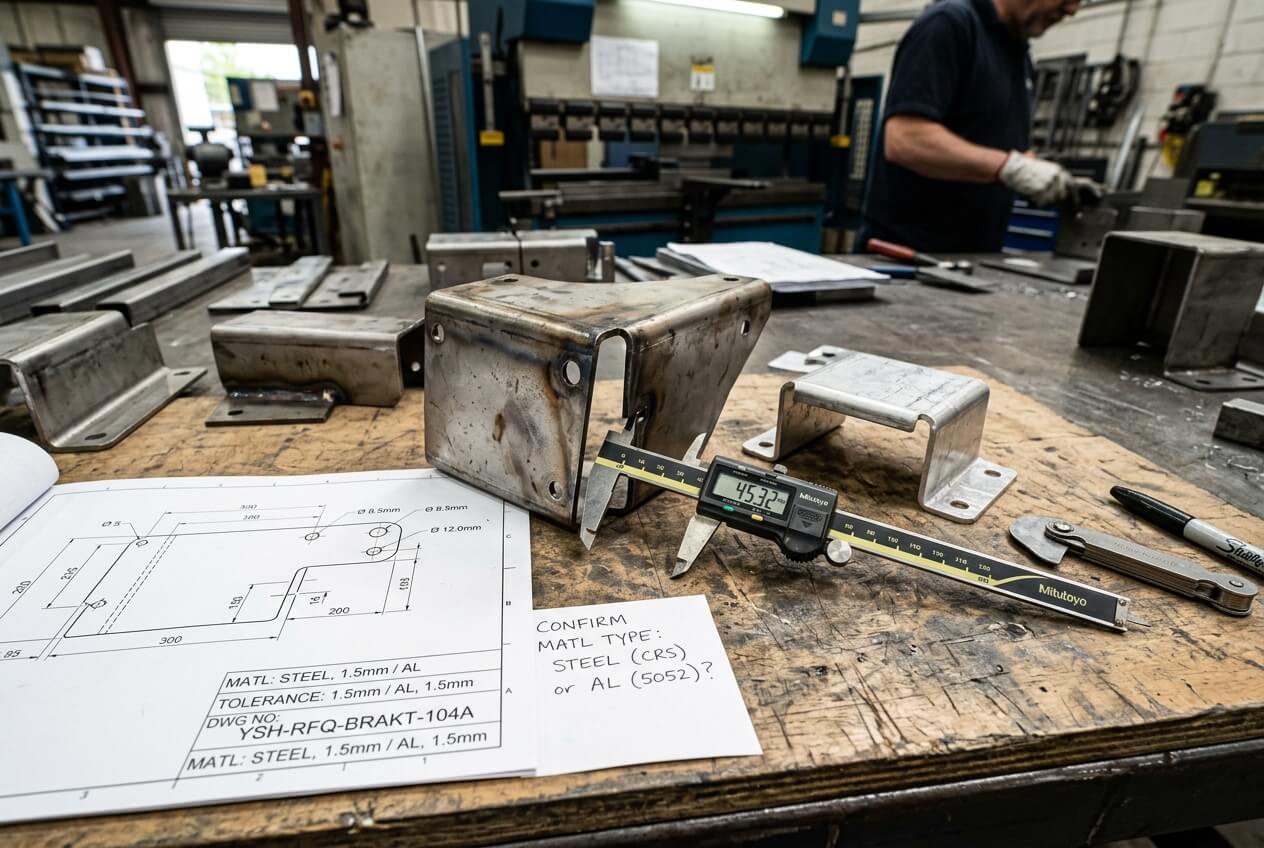
A material note affects much more than the metal invoice. It changes how the factory makes the part. It can also change lead time, fixture planning, coating preparation, inspection methods, and packing protection. This is why vague material language creates false savings.
Carbon steel often works well for cabinets, brackets, frames, and general sheet metal parts. It cuts cleanly, bends predictably, welds efficiently, and accepts powder coating after proper pretreatment. Its main risk sits in corrosion control. If the RFQ does not define indoor or outdoor use, coating thickness, edge coverage, or salt-spray expectations, the supplier may quote a basic finish that cannot survive the actual environment.
Galvanized steel can lower corrosion risk while keeping many steel fabrication advantages. It also adds process questions. Welding can damage the zinc layer near joints. Fumes require control. Powder coating over galvanized surfaces needs suitable pretreatment. If the RFQ only says “galvanized and painted,” suppliers may choose different sequences and price different risk levels.
Stainless steel is not a shortcut word
Stainless steel belongs to the ferrous group because it contains iron. Buyers sometimes treat “ferrous” as “rusts easily” and “stainless” as a complete specification. Both shortcuts create risk. Stainless steel resists corrosion through chromium content and surface condition, but grade still matters. A stainless steel 304 cover and a stainless steel 316 enclosure can differ in cost, availability, corrosion resistance, polishing, and welding control.
Finish expectations also change the quote. A hidden stainless bracket may need only basic deburring. A visible brushed stainless panel may need consistent grain direction, film protection, careful handling, and post-weld cleanup. If the drawing only says “SS,” the supplier must guess which standard applies.
Aluminum can lower weight and raise fabrication questions
Aluminum is non-ferrous and useful for lightweight housings, instrument panels, display structures, and transport equipment. It does not rust like carbon steel, but it can corrode in some environments. It also reacts differently during bending and welding.
A tight bend radius that works on mild steel may crack, distort, or mark aluminum. Holes near bends may shift after springback. Cosmetic panels may need protective film, larger radii, or revised bend direction. Welded aluminum assemblies may require more attention to distortion, surface cleaning, and fixture control.
The consequence chain is direct. The RFQ starts with a vague material note. The supplier chooses a process route. That route changes cost, lead time, finish risk, and inspection effort. The buyer then compares prices that do not represent the same finished part.
How Drawing Gaps Turn Finish and Fit Into Quote Assumptions
RFQ ambiguity often hides inside finish and assembly notes, not only inside material names. A drawing may show a cabinet door, hinge holes, gasket surfaces, and mounting slots. It may still fail to tell the supplier which surfaces customers will see, which surfaces must seal, and which holes control the next assembly.
When that information stays hidden, suppliers must decide where to spend effort. One supplier may grind every visible weld and quote more labor. Another may leave internal welds as-welded and price lower. A third may assume coating covers minor marks. These differences affect appearance, fit, corrosion protection, and rework risk.
Finish words need operating meaning
“Black finish” does not define a finish system. It does not tell the supplier whether the part needs powder coating, wet painting, anodizing, black oxide, passivation, or brushed stainless steel. It also says nothing about coating thickness, texture, gloss, pretreatment, edge coverage, masking, or test requirements.
For a powder-coated carbon steel enclosure, those details matter. Outdoor exposure may require stronger pretreatment, better edge coverage, and tighter packing control. An indoor electronics cabinet may focus more on appearance, grounding points, and gasket surfaces. Both parts may look black. They should not receive the same quote assumptions.
Yishang often reviews RFQs where the drawing shows the enclosure shape well, but the finish note does not explain visible faces or use conditions. In that situation, the useful question is not “which finish is cheapest?” It is “which finish matches the risk the part will face?”
Fit risk comes from unclear critical features
Tolerances create another quote trap. Some buyers apply tight tolerances across the whole drawing because the assembly must look precise. That can raise inspection cost without controlling the real fit risk. Other buyers leave all tolerances general, then discover that one hole pattern, flange, or gasket surface needed tighter control.
A bracket that bolts into a rail needs controlled hole position. A decorative outer flange may allow wider variation. A cabinet door gap may matter more than an internal return flange. If the drawing does not separate functional features from general features, suppliers can quote different inspection levels.
The problem grows when material changes. Switching from carbon steel to stainless steel or aluminum can change springback, hole alignment near bends, and weld distortion. The buyer may think the quote changed only because raw material changed. In reality, the supplier may have added fixture time, inspection checks, or rework allowance to protect assembly fit.
Why Prototype Approval Can Still Fail to Protect Batch Production
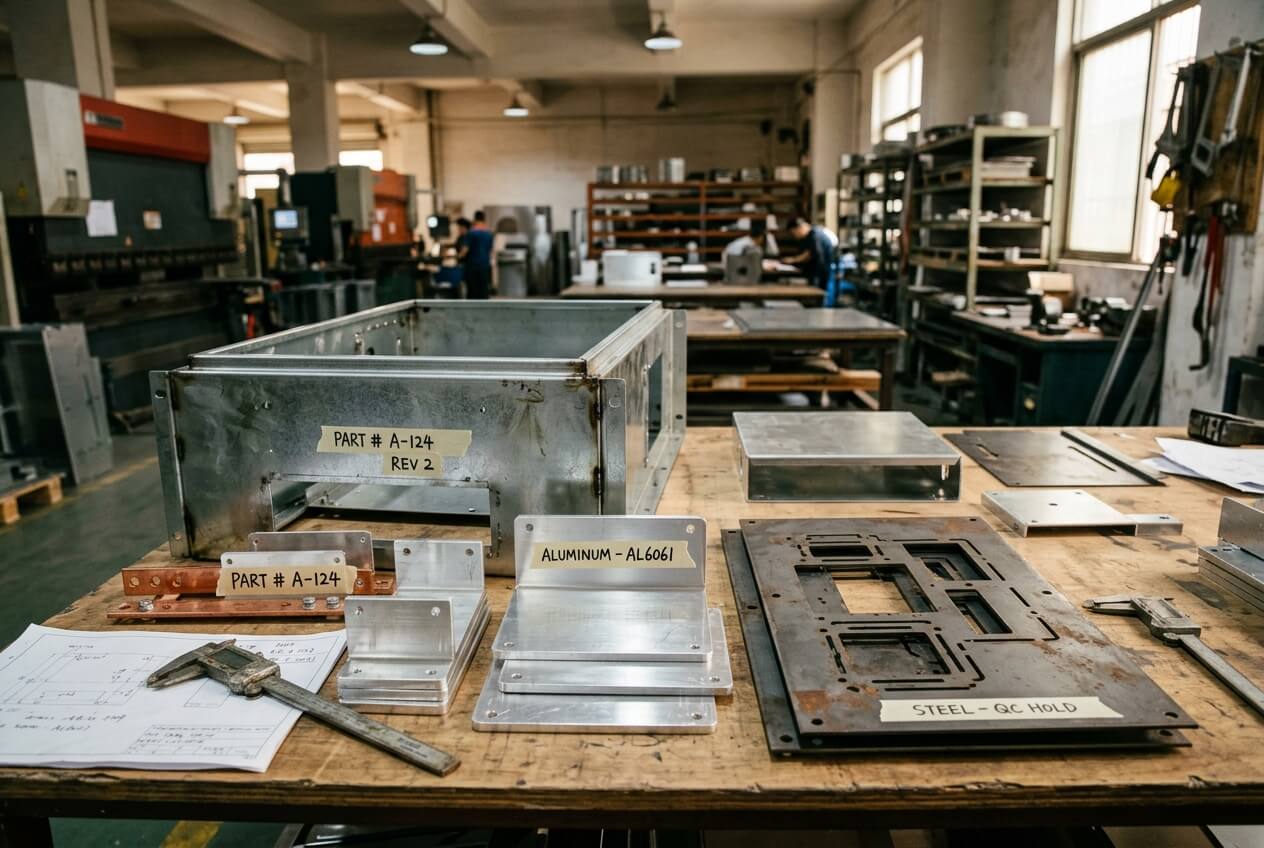
A prototype can pass visual review and still leave batch risk unresolved. Skilled workers can adjust a sample by hand. They can polish a weld longer, open a hole slightly, or correct a door gap during assembly. Those fixes may not appear in the drawing, inspection plan, or quote assumptions.
Batch production exposes every missing rule. If the prototype approval does not record the material grade, bend method, welding sequence, coating system, packing method, and critical dimensions, the batch team may repeat the shape without repeating the controlled result.
Prototype samples can hide manual correction
Imagine a small control box with a front cover, side flanges, mounting holes, and powder coating. The prototype uses carbon steel and fits the mating assembly after minor manual adjustment. Later, the buyer requests stainless steel for better corrosion resistance. The new material changes springback during bending. Hole positions near bends move slightly. Weld discoloration requires extra cleanup. Door gaps no longer match the approved sample.
The buyer sees a material upgrade. The supplier sees a changed manufacturing route. If the RFQ did not define the critical fit points, the quote may not include the added control needed for repeat production.
An aluminum display rack shows another common pattern. The prototype looks clean and feels light. During the pilot batch, small weld distortion makes several support arms sit unevenly. Powder coating highlights surface waviness. Packing leaves marks on visible corners. The root cause does not sit in one operation. It starts with an RFQ that did not define flatness, fixture control, visible surfaces, load checks, or packing expectations.
Pilot batches should test repeatability, not only appearance
Buyers should use prototypes to confirm shape and function. They should use pilot batches to confirm repeatability. That difference matters for sheet metal parts, metal enclosures, brackets, frames, and welded assemblies.
A strong pilot review checks whether the supplier can hold the same material, bend sequence, weld quality, finish appearance, and assembly fit across multiple parts. It also reveals whether inspection focuses on the right features. If every dimension receives equal attention, the process may waste time. If critical features receive too little attention, the batch may fail during final assembly.
Lead time also changes when the prototype hides assumptions. A late material change can delay purchasing. A finish correction can require recoating. A tolerance change can require new fixtures or programming updates. Clear RFQ inputs protect schedule because they reduce late technical negotiation.
What Buyers Should Clarify Before Comparing Supplier Quotes
Buyers do not need to turn every RFQ into a long engineering manual. They need to remove the assumptions that change price, production risk, and assembly outcome. The best time to do that is before comparing quotes, not after choosing the lowest number.
Start with the material line. Name the base metal clearly, such as cold-rolled steel, galvanized steel, stainless steel 304, stainless steel 316, aluminum 5052, or another required alloy. If the material remains open, say so directly and ask suppliers to quote the recommended option with reasons. That prevents hidden substitutions.
Next, connect the material to the job. Tell the supplier whether the part works indoors, outdoors, near moisture, under vibration, or in a visible customer-facing area. A cabinet that protects electronics, a bracket that holds load, and a display frame that must look clean all need different decisions.
Finish notes should describe the system, not only the color. State powder coating, anodizing, brushing, polishing, passivation, plating, or no finish. Add coating thickness, color reference, gloss, texture, masking, visible faces, and corrosion expectations when they matter. Photos or approved samples can help define appearance better than adjectives.
Mark the features that control assembly fit. Identify critical hole patterns, gasket contact areas, hinge locations, mounting slots, flatness zones, and mating surfaces. Keep general tolerances reasonable for non-critical areas. This helps suppliers price the real risk instead of padding the entire drawing.
Quantity stages also belong in the RFQ. A prototype confirms concept and fit. A pilot batch confirms repeatability. Production confirms cost and quality stability at volume. If the buyer skips those distinctions, the quote may cover a sample-level effort rather than a repeatable manufacturing plan.
Supplier communication should focus on assumptions. Ask each supplier to list what they assumed about material, finish, tolerances, weld treatment, packing, and inspection. This simple step turns a price table into a technical comparison. It also shows whether a low quote removed controls that the project actually needs.
For custom sheet metal fabrication, Yishang can review drawings for metal enclosures, brackets, frames, cabinets, panels, and welded assemblies before quotation. The goal is not to over-specify every detail. The goal is to identify the assumptions that could change material selection, process route, batch consistency, and assembly fit.
If your RFQ includes unclear ferrous or non-ferrous material wording, send drawings, material requirements, quantities, tolerances, finish expectations, use environment, photos, samples, and assembly notes. Yishang can help check whether quote differences come from supplier efficiency or from different assumptions about the part you need.
Frequently Asked Questions
How should buyers use the ferrous and non ferrous metals definition in an RFQ?
Use it as a starting filter, not as the final specification. State the exact grade, sheet thickness, finish system, use environment, and critical fit areas. “Powder-coated carbon steel for an indoor control cabinet” gives suppliers a clearer quote basis than “ferrous metal enclosure.”
Why can the same sheet metal drawing receive very different quotes?
The drawing may leave material, finish, tolerance, welding, or inspection assumptions open. One supplier may quote carbon steel with basic powder coating. Another may quote stainless steel or aluminum. The prices differ because suppliers priced different versions of the product, not only different margins.
Is stainless steel a ferrous metal, and does that affect procurement?
Stainless steel is ferrous because it contains iron. That does not mean it behaves like carbon steel. Buyers should specify the grade, such as 304 or 316, and define brushing, polishing, passivation, weld cleanup, and visible surface protection when those details affect the final part.
What RFQ details reduce risk when switching from steel to aluminum?
Clarify alloy, thickness, bend radius, cosmetic faces, critical holes, load direction, welding expectations, and finish requirements. Aluminum can change springback, weld distortion, and surface handling needs. These details help the supplier review manufacturability before pricing or prototyping.
Why does a prototype approval not always protect batch quality?
A prototype may include manual correction that does not scale. Workers may adjust holes, polish welds, or correct gaps by hand. Buyers should record the approved material, bend method, welding sequence, finish system, inspection points, and packing method before batch production.
What should buyers send for a more reliable sheet metal fabrication quote?
Send 2D drawings, 3D files when available, material requirements, quantities, tolerances, finish expectations, visible surface notes, assembly requirements, photos, samples, and use conditions. These inputs help suppliers quote the same product and expose assumptions before production starts.