
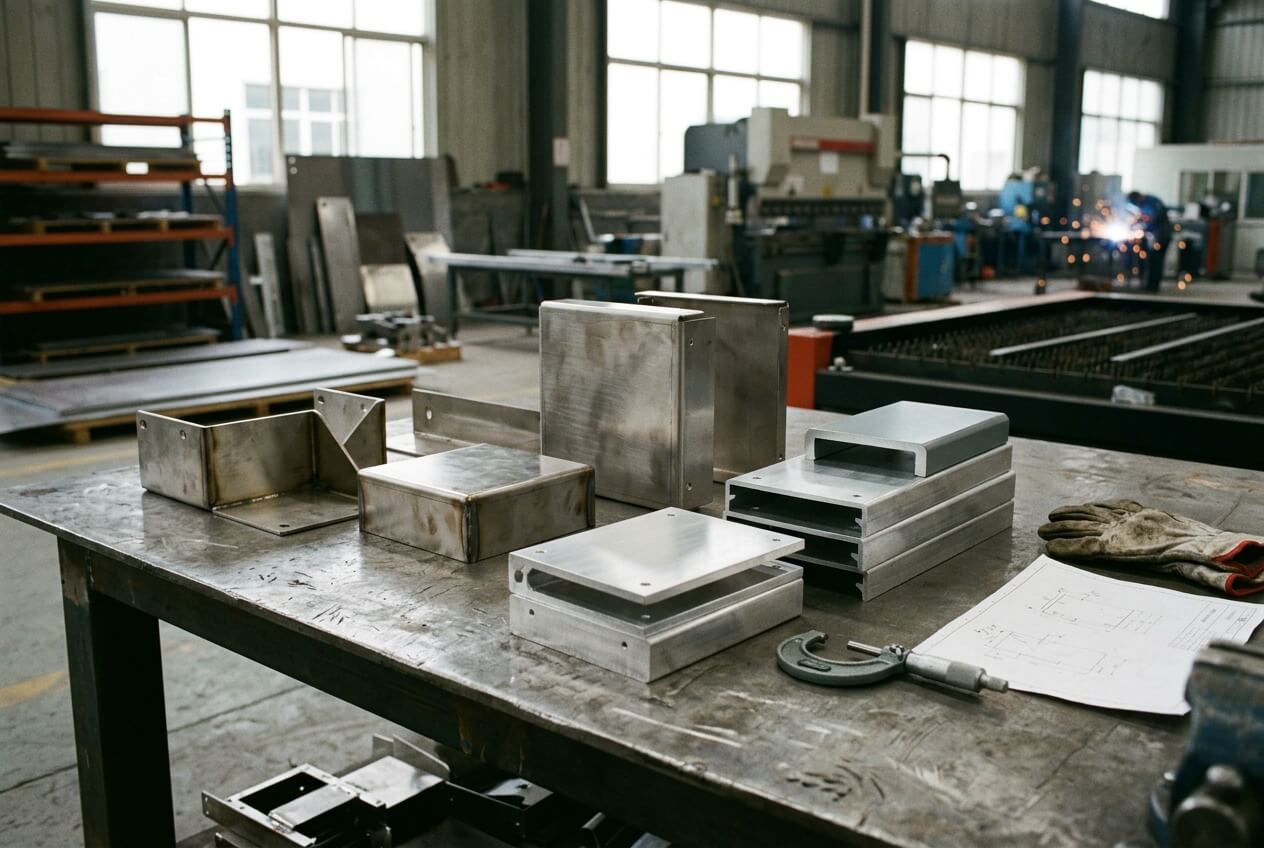
An OEM buyer sends one enclosure drawing to three sheet metal fabrication suppliers. The drawing says “aluminum, black powder coated” and shows bends, louvers, mounting holes, and a front panel. One supplier prices 5052-H32. Another assumes 6061-T6. A third leaves the aluminium material grades open until purchasing checks stock.
The three quotes may look close, but they do not describe the same job. Each supplier has made different assumptions about bend radius, springback, welding behavior, coating preparation, inspection, and batch repeatability. The buyer sees unit prices. Production later exposes the hidden risk.
The main procurement risk is RFQ ambiguity. When the RFQ does not connect aluminium material grades to forming, finish, tolerance, and assembly fit, buyers compare assumptions instead of comparable manufacturing plans. A low quote can hide cracking risk, extra finishing work, slower assembly, or a material substitution that only appears after prototype approval.
This article focuses on that risk. The goal is not to memorize every aluminum alloy. Buyers need to make the grade decision visible before comparing quotes, approving prototypes, or releasing batch production.
Where RFQ Ambiguity Turns Aluminium Material Grades into Unequal Quotes
Many RFQs name aluminum but do not define the grade, temper, or manufacturing priority. That gap forces the supplier to guess. The supplier may choose a grade because it bends well, costs less, finishes better, or sits in local inventory. Another supplier may choose a stronger grade because the drawing shows load-bearing holes. Both suppliers can act reasonably and still quote different risks.
A drawing that says “Aluminum 2.0 mm” does not tell the factory enough. A bent enclosure panel may need stable forming more than high strength. A bracket may need strength around holes and fasteners. A welded frame may need distortion control. A front cover may need a cosmetic surface that survives punching, bending, grinding, and powder coating.
When the RFQ leaves those priorities open, the quote becomes partly technical judgment and partly commercial guesswork. Procurement then compares prices without seeing the assumptions that created them. This can lead to re-quotes, drawing changes, sample delays, or disputes about what the supplier “should have known.”
Example: The Same Enclosure, Two Different Manufacturing Routes
Consider a 2.0 mm electronics enclosure with side vents, short return flanges, PEM hardware, and a visible front face. One supplier quotes 5052-H32 because it supports multiple bends and reduces cracking risk. Another quotes 6061-T6 because the buyer mentioned strength and outdoor use in an email.
The buyer may think the 6061-T6 quote offers higher value. Yet tight bends in 6061-T6 can create cracking or require a larger inside radius. That change can move hole positions after bending and affect how the cover fits the base. The issue starts with an unclear material note, then moves into forming, then reaches assembly.
The RFQ should have asked suppliers to confirm the grade and temper, minimum inside bend radius, visible faces, hardware locations, coating expectations, and expected batch quantity. Those details turn a vague aluminum request into a controlled quote comparison.
Why “Stronger Aluminum” Can Create Cost, Fit, and Rework Risk
Buyers often request a stronger aluminium material grade because the part feels important. That instinct can help in load-bearing applications, but it can also create avoidable fabrication risk. In sheet metal parts, stronger does not always mean safer. The fabrication route matters just as much as the nominal material strength.
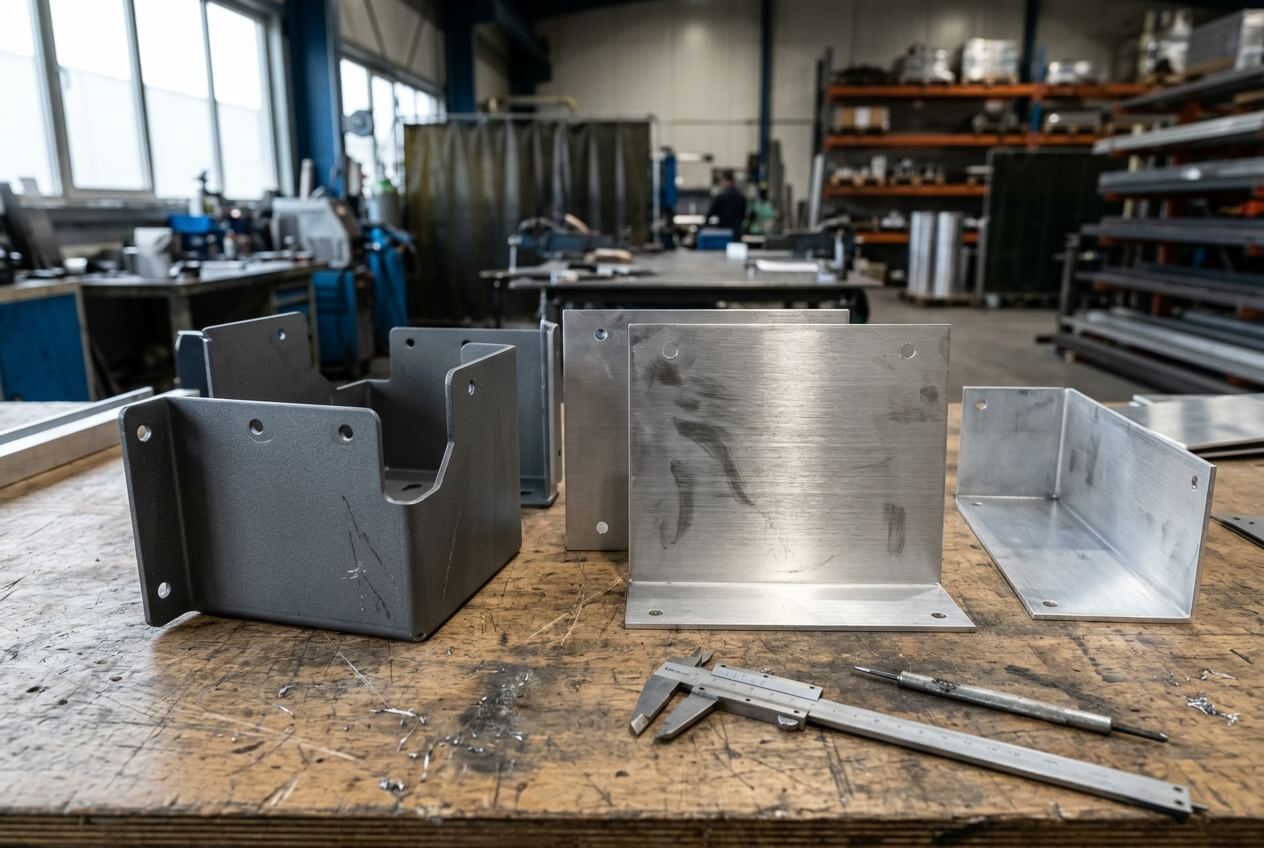
6061-T6 offers useful strength, so buyers often specify it for brackets, frames, housings, and mounting plates. However, it can behave less predictably in tight bending than 5052-H32. It may need larger bend radii, more design clearance, or a different temper. If the drawing uses steel-style bend assumptions, the supplier must either quote with risk, change the radius, or warn the buyer.
5052-H32 often suits formed enclosures, covers, panels, and cabinets. It usually gives better bend reliability for many sheet metal applications. That does not make it the default answer for every project. Threaded holes, repeated torque, load direction, and welded joints can change the best choice.
Example: A Bracket That Looks Simple but Fails the Quote Review
A buyer sends a mounting bracket for a machine guard. The drawing shows two 90-degree bends and four slotted holes near the bend lines. The note says “6061 aluminum, as strong as possible.” The part also needs black powder coating and must align with a purchased hinge.
The supplier sees several risks. The holes sit close to the bend. The inside radius is not specified. The slot position after bending controls hinge alignment. Powder coating adds thickness around slots and edges. If the quote ignores those details, the first batch may need hand filing, slot widening, or rework during assembly.
The better RFQ would define load direction, acceptable radius, hole tolerance after forming, coating thickness expectations, and whether inserts or a thicker local feature can replace the current design. The buyer still may choose 6061-T6, but the decision becomes a controlled tradeoff instead of a risky assumption.
Finish Expectations Expose Material Assumptions After the Price Is Set
Finish problems often look like cosmetic disputes, but they usually start earlier. The aluminium material grade, sheet surface, welding method, grinding level, and coating route all affect the final appearance. If the RFQ treats finish as a simple color note, the quote may exclude important preparation work.
Powder-coated aluminum enclosures need more than a color code. Buyers should mark visible faces, edge expectations, acceptable orange peel, gloss level, texture, masking areas, and surfaces that contact gaskets or mating parts. A supplier may quote standard industrial powder coating when the buyer expects a retail-facing finish.
Anodizing adds another risk. Mixed aluminum grades can anodize with different tones. Welded areas, machined blocks, extrusions, and sheet panels may not match perfectly. A fabricated assembly that combines 6063 extrusion, 5052 sheet, and 6061 machined parts can meet the drawing and still disappoint the buyer visually.
Finish Risk Changes the Real Cost Driver
A low quote may rely on powder coating over normal handling marks. A higher quote may include extra deburring, sanding, masking, pretreatment, or cosmetic inspection. If the RFQ does not define finish expectations, procurement may reject the more complete quote and choose the quote that hides finish labor.
For a cabinet door, the outside panel, top edge, and handle area may need tighter cosmetic control than the inner brackets. For a welded display frame, the front corners may need smooth grinding while the rear welds can remain functional. These choices affect material handling, welding sequence, grinding time, coating yield, and inspection criteria.
Buyers should connect finish expectations to the grade discussion before pricing. Ask suppliers whether the selected grade, surface condition, and fabrication route suit powder coating, brushing, or anodizing. If Yishang reviews a drawing before quote, this is where cosmetic zones and finish limits should appear, not after the sample arrives.
Prototype Approval Does Not Remove Grade and Temper Risk
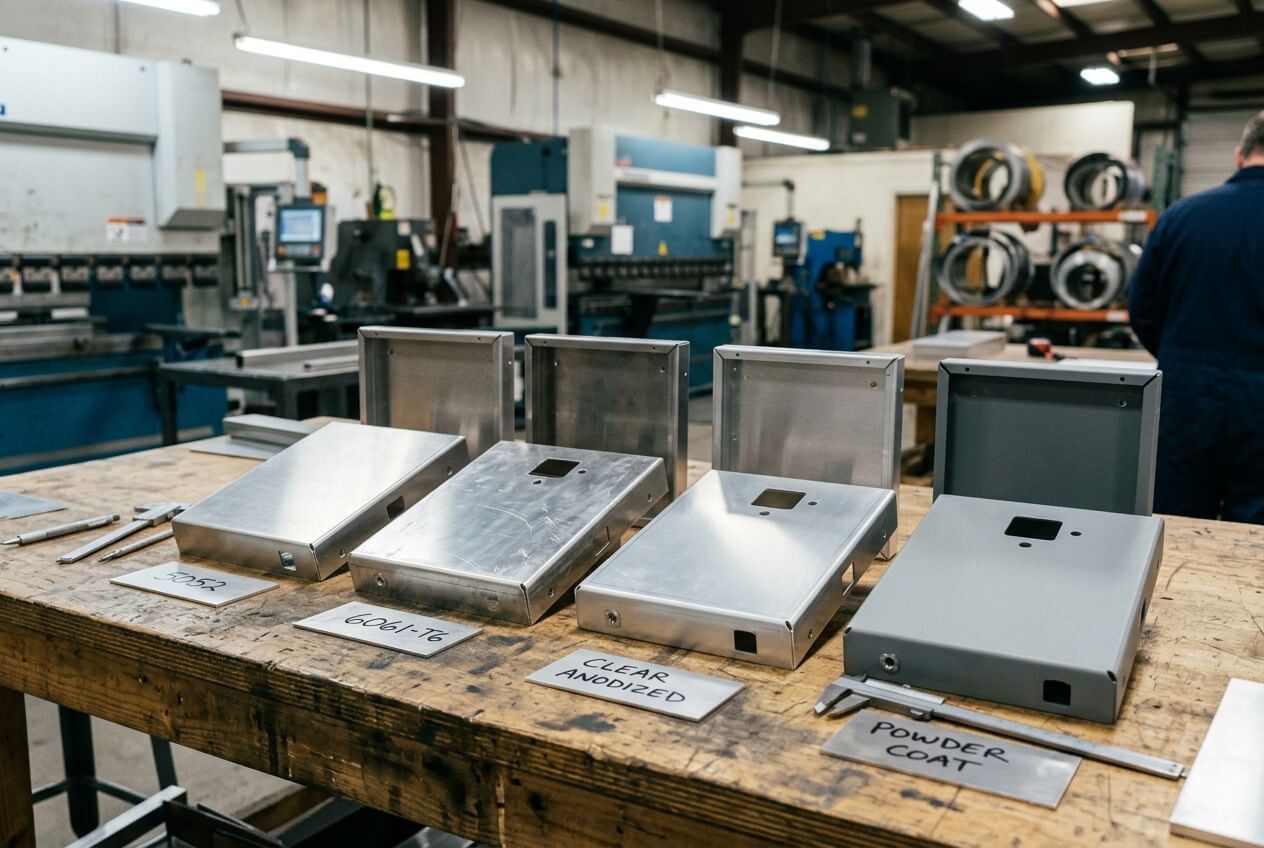
A prototype can prove that one part can be made. It does not automatically prove that the same result will repeat across a batch. This gap matters when the prototype uses available stock, manual correction, extra sanding, or special handling that production cannot repeat at the quoted price.
RFQ ambiguity often survives into the prototype stage. The buyer approves the sample because it looks correct and fits the mating part. However, the approval record may not list the exact grade, temper, bend radius, material source, coating route, inspection points, or manual corrections. Batch production then starts with too much freedom.
Small changes can create large consequences. A different temper can change springback. A new sheet lot can change surface response after coating. A bend radius change can move holes enough to slow assembly. A weld sequence change can distort a frame. These problems may not appear in one carefully adjusted prototype.
What the Prototype Approval Should Freeze
For aluminium material grades, prototype approval should record the chosen alloy and temper. It should also capture bend radii, visible face requirements, coating standard, flatness limits, key assembly dimensions, hardware positions, and any approved deviations. If manual correction helped the prototype fit, the supplier and buyer should decide whether fixtures, tolerance changes, or drawing updates will control batch production.
Imagine a control cabinet with removable side panels. The prototype fits because the technician adjusted flange angles after bending. In batch production, springback variation moves the holes just enough to slow screw assembly. The drawing still looks correct, but the production method no longer matches the prototype result.
A welded aluminum frame can fail in a similar way. One prototype may meet the diagonal dimension after careful weld sequencing and hand correction. During batch production, the same frame may twist if the fixture, weld order, or material condition changes. The buyer needs a production control record, not just a signed sample.
When buyers send Yishang prototype feedback, photos, mating part details, and quantity targets, manufacturability review can focus on repeatability. That helps keep the approved sample connected to the batch route.
How Buyers Should Control Aluminium Grade Assumptions Before Comparing Quotes
Buyers do not need to become metallurgists. They need to prevent hidden assumptions from controlling price, lead time, quality, and assembly. The strongest RFQs connect aluminium material grades to the part’s function, fabrication route, finish, tolerances, and batch quantity.
Start by stating the preferred grade and temper if engineering already selected one. If the grade remains open, ask suppliers to recommend an option and explain the reason. The answer should mention forming safety, strength, welding, finish appearance, cost, availability, or lead time. A recommendation without a reason gives procurement little protection.
Next, identify the features that can change the quote. Mark tight bends, short flanges, holes near bends, visible faces, welded seams, threaded points, inserts, gasket surfaces, and mating dimensions. Define which dimensions matter after forming and coating, not only in the flat pattern. This step helps suppliers price inspection and process control accurately.
Cost also needs context. A cheaper sheet may raise scrap, rework, finishing, or assembly labor. A stronger grade may require larger bend radii, special stock, or slower forming. A finish requirement may add masking, sanding, or coating trials. Lead time can shift when a specific thickness, temper, or surface condition is not readily available.
Supplier communication should stay practical. Ask whether the drawing can hold the specified tolerance with the chosen grade and finish. Ask whether coating thickness affects assembly. Ask whether prototype approval will lock material source, bend radius, fixture method, and finish route. Ask what substitutions require approval before production.
Yishang can review drawings, material requirements, quantities, tolerances, and finish expectations before quoting custom sheet metal parts such as enclosures, brackets, frames, cabinets, panels, and welded assemblies. That review works best when buyers provide the real assembly context, not only a part drawing.
Planning an RFQ for aluminum sheet metal parts? Send Yishang your drawings, aluminium material grades or preferred alternatives, quantities, tolerances, finish expectations, assembly notes, prototype references, and any critical mating parts. The review can check whether the selected grade matches the required cutting, bending, welding, finishing, inspection, and batch repeatability before the quote becomes a production risk.
Frequently Asked Questions
Why do aluminium material grades make supplier quotes hard to compare?
They affect forming, springback, welding, finish preparation, inspection, scrap risk, and lead time. If suppliers assume different grades or tempers, they quote different manufacturing routes. Ask each supplier to list the alloy, temper, bend radius assumptions, finish route, and key production risks.
Is 5052-H32 always better than 6061-T6 for sheet metal enclosures?
No. 5052-H32 often suits formed enclosures because it handles bending well. 6061-T6 may suit parts that need higher strength, machined features, or specific structural behavior. The RFQ should link the choice to bend radius, load, finish, and assembly fit.
What should an RFQ clarify when holes sit near aluminum bends?
Clarify the grade and temper, inside bend radius, hole distance from the bend, tolerance after forming, load direction, and coating thickness. Holes near bends can move due to springback or design changes, so assembly fit should guide the quote.
Can mixed aluminum grades create finish problems?
Yes. Mixed grades, extrusions, machined parts, sheet panels, welds, and ground areas can respond differently to anodizing or surface preparation. Mark visible faces, define acceptable color variation, and confirm the finish route before approving a mixed-grade assembly.
Why can a good prototype still fail during batch production?
A prototype may rely on available stock, manual correction, extra finishing, or special handling. Batch production needs controlled grade, temper, bend radius, fixtures, weld sequence, coating route, and inspection points. Record those details during sample approval.
What information helps a supplier recommend the right aluminum grade?
Share drawings, quantities, load direction, mating parts, critical tolerances, finish expectations, cosmetic zones, hardware locations, prototype feedback, and batch inspection needs. This context lets the supplier connect the material choice to manufacturability and procurement risk.