
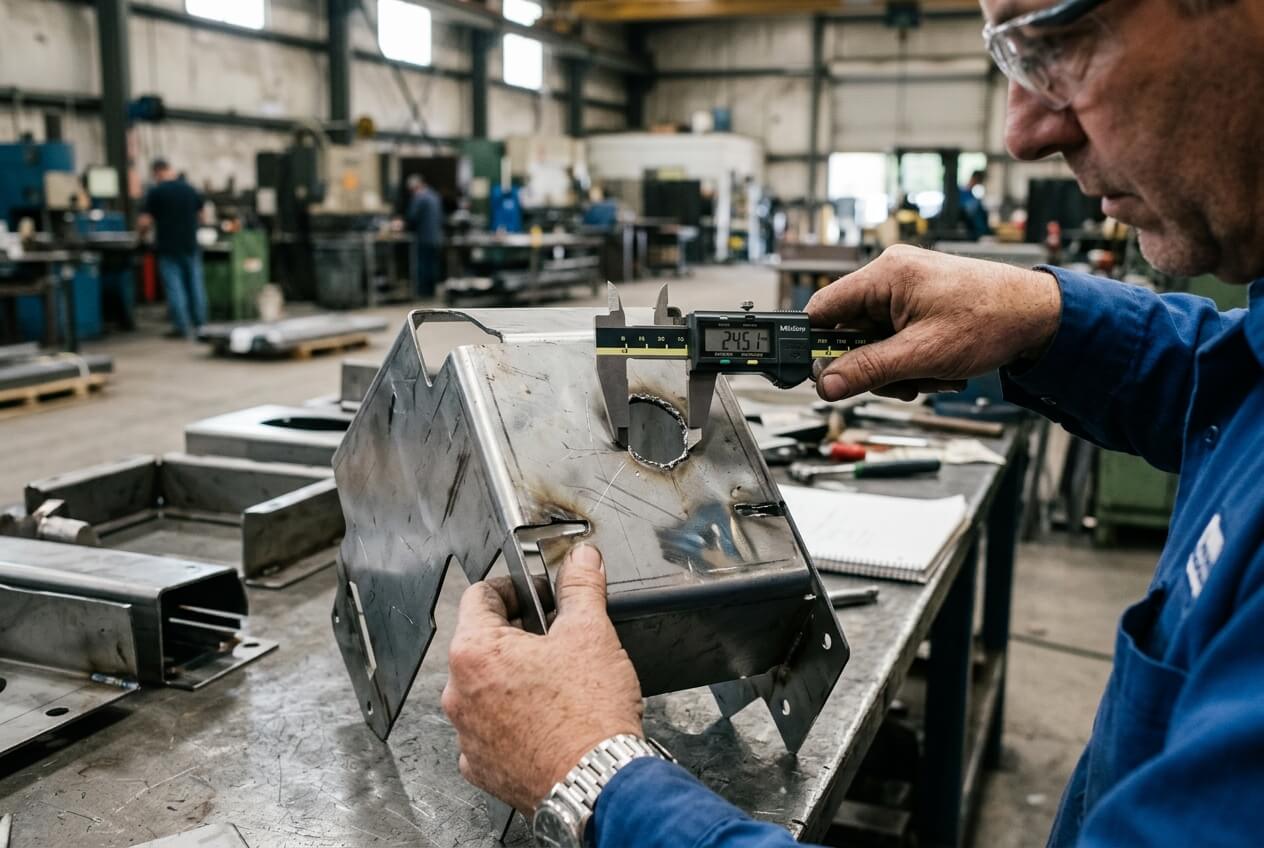
An OEM buyer sends one drawing package for a wall-mounted metal enclosure. The RFQ asks suppliers to quote carbon steel, stainless steel, and aluminum. The drawing shows size, hole locations, and a powder coated finish. It does not identify hinge datum points, gasket contact areas, coated thread limits, door gap, or customer-facing surfaces.
The quotes arrive with a wide price spread. One supplier assumes standard commercial tolerances. Another includes fixture inspection after welding. A third reduces weight with thinner aluminum and changes the bend radius. On paper, the buyer compares three types of metal. In reality, the buyer compares three different assumptions about final acceptance.
This is the procurement risk that causes many sheet metal projects to miss cost, fit, or delivery targets. The RFQ does not only choose material. It tells the supplier where to spend control effort. When the drawing leaves that effort undefined, each supplier prices a different version of the job.
Different metals change cutting speed, bend springback, weld distortion, finish build, handling damage, and assembly behavior. Those changes matter most when the RFQ fails to define which features must pass after fabrication, finishing, and assembly. A low quote may simply exclude the checks that protect the buyer from field problems.
Where RFQ Ambiguity Turns Types of Metal Into Unequal Quotes
Buyers often ask, “Which material gives the best price?” That question comes too early. A stronger question asks, “Which material can meet the required final condition, and what must the supplier inspect to prove it?” Without that second question, quote comparison becomes unreliable.
Carbon steel, stainless steel, and aluminum can all work for enclosures, brackets, frames, cabinets, and welded assemblies. Each option carries different fabrication risks. Carbon steel may need powder coating and masking control. Stainless steel may need visible grain control and weld cleanup. Aluminum may need bend compensation and scratch protection. None of these costs appear clearly if the RFQ only lists size, thickness, and finish.
The quote may hide the inspection plan
A supplier builds assumptions into every quotation. Those assumptions cover tolerances, fixture needs, finishing limits, packing methods, and inspection time. If the RFQ does not rank critical features, the supplier may inspect what is easiest to measure, not what controls assembly.
Consider a bent electrical enclosure with a hinged door. The outside dimensions matter, but the door gap, hinge alignment, latch position, gasket compression, and rear mounting holes carry higher risk. If the drawing treats all dimensions equally, one supplier may quote basic dimensional inspection. Another may quote door fit checks after coating. Those quotes do not represent the same deliverable.
The same problem appears in a welded display frame. One supplier may quote visual weld checks and overall height. Another may include diagonal measurements, upright parallelism, fixture datums, and coating protection for shelf slots. The second quote may look higher, but it may also reflect the risk that the first quote ignored.
Material Choice Changes the Feature That Fails First
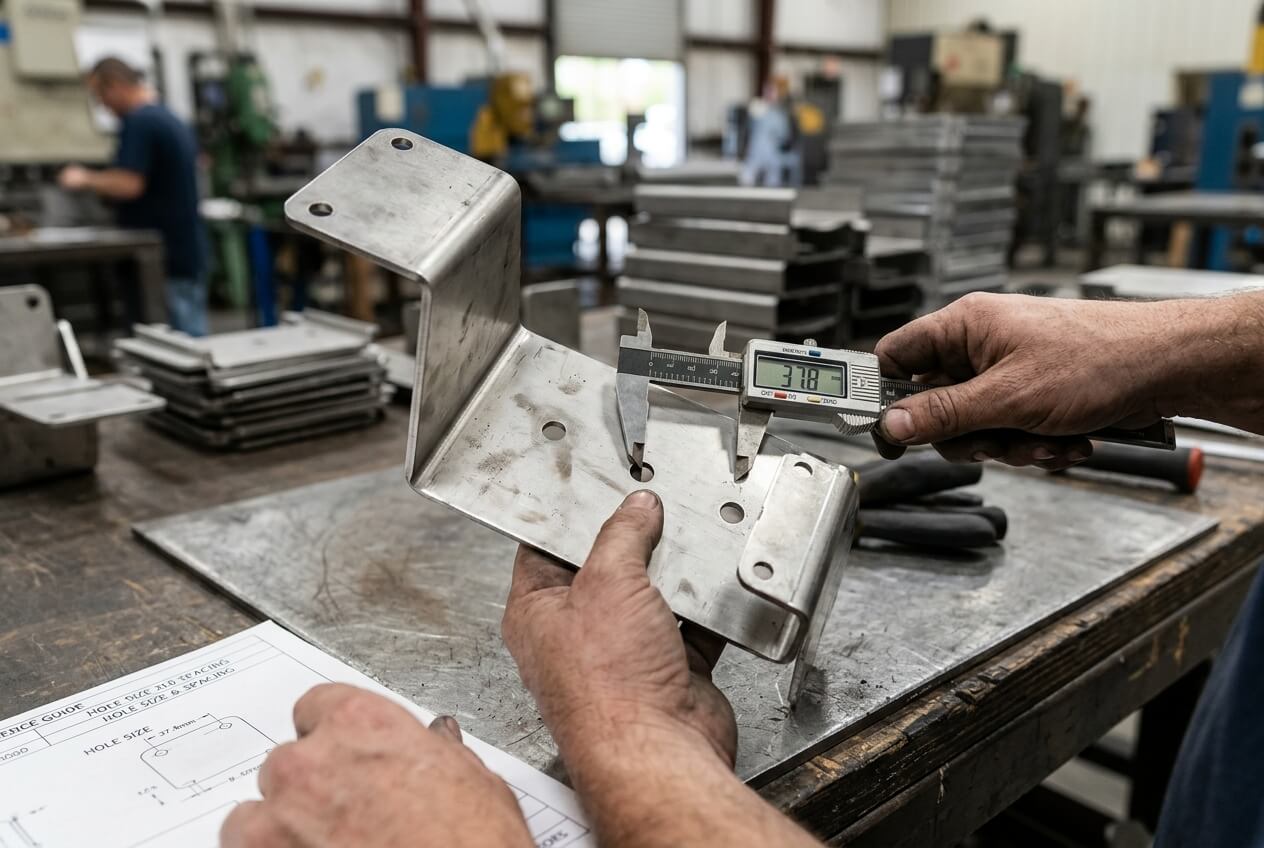
The primary keyword, types of metal, often leads buyers toward a material comparison. Strength, weight, corrosion resistance, and price all matter. Yet procurement teams should also ask which feature will fail first when that metal moves through cutting, bending, welding, finishing, packing, and assembly.
A material does not fail in isolation. It fails through a consequence chain. The RFQ leaves a feature unclear. The supplier chooses a process assumption. Production follows that assumption. Final assembly exposes the gap. By then, the buyer faces sorting, rework, line delays, or disputed responsibility.
Carbon steel often fails after coating, not before
Carbon steel suits many cabinets, brackets, equipment housings, machine guards, and welded frames. It offers strength and cost efficiency. The risk often appears after welding and powder coating. Weld heat can pull corners inward. Coating can build around holes, slots, folded edges, grounding points, and threaded studs.
A carbon steel control box may pass inspection before finishing. After powder coating, screws may bind in threaded inserts. Hinge holes may lose clearance. A grounding point may stop conducting if no one masks it. The RFQ should state which holes, threads, studs, and contact points must pass in the coated condition.
Stainless steel often fails on visible expectations
Stainless steel helps when corrosion resistance or exposed appearance matters. Buyers use it for food equipment panels, outdoor covers, washdown housings, guards, and customer-facing trims. The phrase “brushed stainless steel” does not define acceptance.
Grain direction, weld discoloration, polishing marks, heat tint, handling scratches, and film protection can all affect rejection. A part may meet dimensional requirements and still fail because the visible face looks inconsistent. The RFQ should mark cosmetic faces, acceptable hidden-side variation, weld blending areas, and grain direction.
Aluminum often fails through movement and handling
Aluminum helps reduce weight in portable enclosures, lightweight covers, display structures, and instrument panels. It may spring back more than carbon steel. Thin aluminum also dents and scratches easily during forming, finishing, and packing.
An aluminum access cover may match the CAD model as a flat blank but drift after bending. Holes near bend lines can shift enough to affect installation. If the RFQ does not identify final bent dimensions and surface protection needs, suppliers may quote a lower handling standard than the application requires.
Critical Tolerances Must Follow Assembly Risk, Not Drawing Habit
Many drawings contain too many dimensions and too little priority. Procurement teams then ask suppliers to hold a broad tolerance set across the whole part. That approach creates two risks. It may raise cost where precision adds no value. It may also miss the few features that actually decide whether the part fits.
The better approach separates critical fit from normal fabrication variation. Suppliers need to know which dimensions control assembly after the final process. They also need to know which surfaces drive cosmetic rejection and which areas can accept normal manufacturing marks.
Mark the features that control the next assembly
For a metal enclosure, critical features may include hinge holes, latch cutouts, gasket channels, PCB mounting studs, grounding tabs, and rear mounting slots. For a bracket, the critical features may include two mounting holes, one bend angle, and the flatness of a contact face. For a welded frame, diagonal dimension, base flatness, bracket angle, and fixture datum points may matter more than an outer decorative edge.
If the RFQ allows more than one material, this ranking becomes more important. An aluminum version may need a different bend radius than a carbon steel version. Stainless steel may need different weld planning to control distortion. A material substitution can move hole positions, alter inside dimensions, or change finish thickness. The supplier cannot price those risks accurately unless the drawing shows which dimensions protect assembly.
Define the inspection condition
A dimension can mean different things at different stages. A hole pattern may pass after laser cutting but fail after bending. A slot may pass before powder coating but tighten after coating build. A cabinet door may fit before weld cleanup but rub after finishing and gasket installation.
Buyers should state whether key dimensions apply before finishing, after finishing, or after assembly. They should also identify datums for bent panels, welded assemblies, doors, brackets, and base plates. This does not require a complex quality manual. A marked PDF, sample photo, or short drawing note often prevents costly misunderstanding.
For example, a motor mounting bracket uses four holes, but only two holes locate the motor base. The outer profile has generous clearance. If the drawing does not mark the two locating holes as critical after bending, inspection may focus on the flat blank. The batch then arrives with holes that need reaming or forced screws.
Prototype Approval Can Freeze the Wrong Assumptions
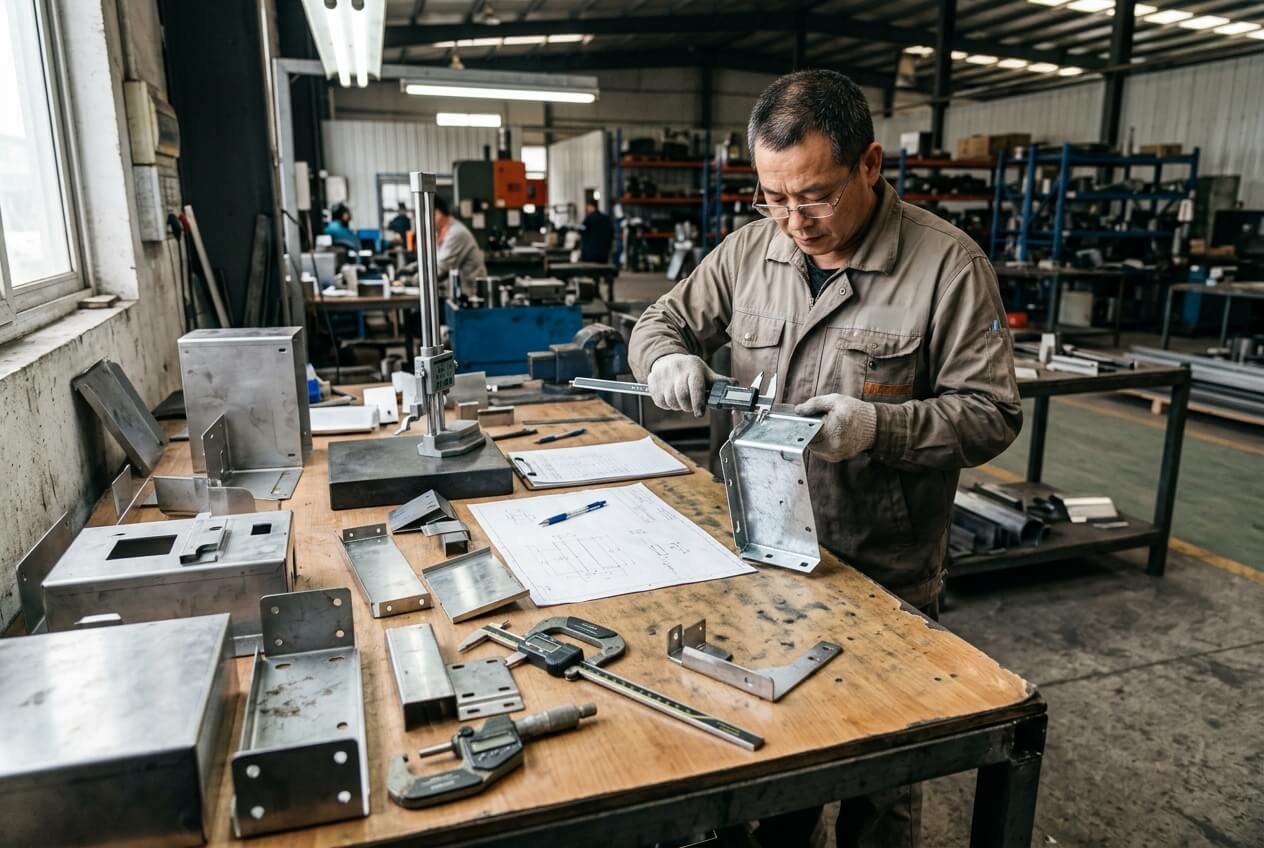
A prototype can reduce risk, but it can also hide it. A technician may adjust bend angles, enlarge holes, polish a face, or correct a welded corner by hand. The sample then passes. Batch production fails because no one converted those adjustments into controlled process steps.
This risk grows when buyers compare several types of metal during prototyping. The carbon steel sample may need masking before coating. The stainless sample may need extra weld blending. The aluminum sample may need bend compensation and protective packing. If the buyer approves only the appearance of the prototype, the batch may repeat the design intent but not the hand corrections.
Ask what changed during the sample build
Before approving a sample, buyers should ask direct questions. Did the supplier adjust bend angles after forming? Were holes opened during fitting? Did a weld sequence change to control pull? Did coating affect slots, hinges, threads, or grounding points? Did the visible face need extra polishing? Did packaging prevent scratches during shipment?
Each answer should lead to a drawing update, tolerance note, fixture requirement, finish instruction, or batch inspection point. Otherwise, the approved sample becomes a weak reference. It shows what one skilled operator achieved once, not what the production route will repeat.
Batch consistency needs measurable controls
A welded cabinet may look square during sample review because the supplier corrected it before coating. In batch production, the same cabinet may show door rub, uneven gasket compression, or mounting-hole drift. A display rack may pass sample approval in a showroom, then fail in quantity because shelf slots vary and powder coated parts scratch during stacking.
Yishang can review prototype feedback with drawings, material options, finishes, and assembly needs before batch release. That review works best when buyers share the reason behind each critical feature, not only the nominal dimension. The goal is not to add inspection everywhere. The goal is to control the few points where variation creates real cost.
What Buyers Should Clarify Before Comparing Supplier Quotes
A clear RFQ does not need to become long. It needs to connect material choice with final acceptance. That connection helps suppliers price the same risk. It also reduces later arguments about whether a defect came from design, fabrication, finishing, packaging, or inspection scope.
Start with the part function. Tell the supplier whether the part mounts equipment, protects electronics, carries load, controls appearance, seals against dust, supports a door, or fits another assembly. Then identify the features that protect that function. A supplier can make better decisions about thickness, bend radius, weld sequence, finish masking, and inspection method when the RFQ explains the consequence of failure.
Make the comparison quote-ready
When requesting carbon steel, stainless steel, and aluminum options, state the required material grade or acceptable alternatives. Include thickness targets, annual or batch quantity, tolerance notes, finish expectations, visible surfaces, and assembly interfaces. If a finish can change fit, state the final condition for inspection. If appearance matters, include sample photos or mark cosmetic faces.
Lead time also depends on these details. A simple bracket with standard tolerances may move quickly. A welded enclosure with cosmetic stainless surfaces, tight door gaps, masked threads, and post-finish assembly checks needs more planning. Without this context, suppliers may quote optimistic lead times that assume fewer controls.
Cost drivers follow the same logic. Tight tolerance near a bend, brushed grain control, weld fixture requirements, coating masks, thread protection, and final assembly checks all add effort. Those costs may be justified when they prevent line stoppage or rework. They become wasteful when the RFQ applies them to non-critical areas.
Use supplier communication to remove assumptions
Good supplier communication should reduce assumptions before production starts. Ask the supplier to confirm the process route: laser cutting or CNC punching, bending, welding, grinding, polishing, powder coating, assembly, inspection, and packing. Ask which features may change after finishing. Ask where the drawing leaves room for interpretation.
This conversation matters more than a generic price negotiation. It reveals whether the quotation includes the same acceptance standard you expect. It also shows where a small drawing revision can prevent a large production problem.
Send Yishang your drawings, material requirements, quantities, tolerances, finish expectations, visible-surface notes, mating part details, and prototype feedback. The team can review the sheet metal fabrication route and help clarify RFQ points before you compare quotes for custom enclosures, brackets, frames, cabinets, or welded assemblies. Visit Yishang to share the project details.
Frequently Asked Questions
Why do quotes for different types of metal vary so much for the same sheet metal drawing?
Quotes vary because suppliers make different assumptions about material behavior, tolerances, finish control, inspection time, and assembly checks. Carbon steel, stainless steel, and aluminum may require different bend allowances, weld planning, surface protection, and final inspection points. If the RFQ does not define critical features, each supplier prices a different risk level.
What drawing details help suppliers quote sheet metal parts more accurately?
Mark critical holes, slots, bend datums, hinge points, latch areas, gasket faces, threaded features, grounding points, visible surfaces, and mating interfaces. State whether dimensions apply before or after finishing. Include material grade, thickness, quantity, tolerance notes, finish requirements, and any prototype feedback that changed fit or appearance.
Should buyers inspect sheet metal parts before or after powder coating?
Buyers should inspect critical fit features in the condition that affects assembly. Holes, slots, threads, hinges, latch areas, and grounding points may pass before coating but fail after coating buildup. If coating can change fit or function, the RFQ should require final-condition inspection and identify any masking areas.
Why can a sheet metal prototype pass while the production batch fails?
A prototype may pass because the supplier adjusted bend angles, enlarged holes, corrected weld pull, or improved visible surfaces by hand. Batch production needs repeatable controls. Buyers should record prototype corrections and convert them into drawing notes, fixture requirements, tolerance updates, or batch inspection points.
How should buyers compare carbon steel, stainless steel, and aluminum options?
Compare the metals by final risk, not only by unit price. Carbon steel may need coating and masking control. Stainless steel may need cosmetic and weld-discoloration limits. Aluminum may need bend compensation and scratch protection. Ask suppliers to quote the same inspection condition for each material option.
What should an RFQ include for custom metal enclosures, brackets, frames, or welded assemblies?
An RFQ should include drawings, CAD files if available, material requirements, thickness, quantities, tolerances, finish expectations, visible surface notes, assembly interfaces, packaging concerns, and prototype approval criteria. These details help suppliers identify manufacturability risks and quote the controls needed for consistent production.