
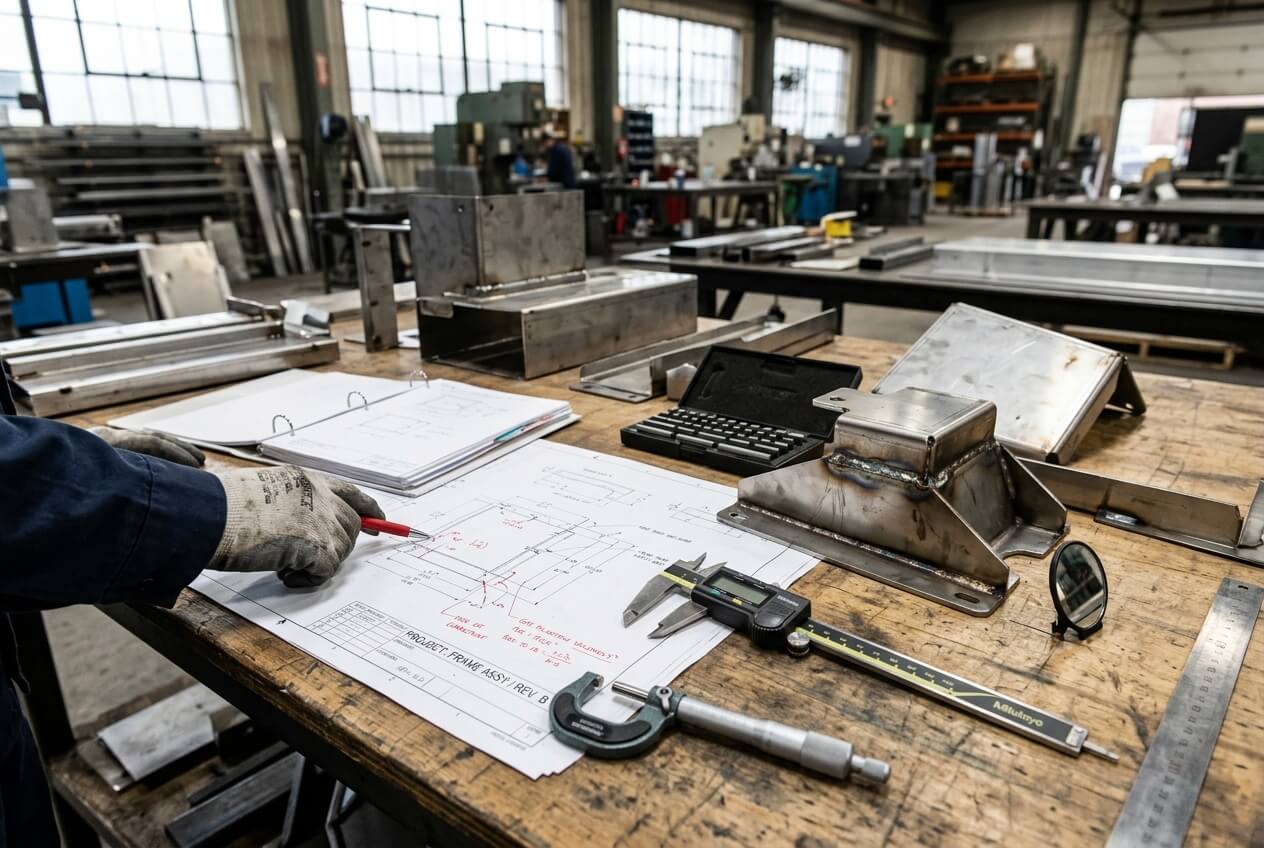
An OEM buyer sends a welded enclosure frame drawing to three sheet metal fabrication suppliers. The drawing shows the same geometry, material callout, and powder coat finish. Yet the quotations come back with very different prices and lead times.
The buyer may assume the difference comes from labor rates or supplier margin. In many welded sheet metal projects, the larger issue sits inside the welding assumptions. One supplier may price flux cored arc welding for thick structural joints. Another may assume MIG welding for visible seams. A third may include grinding, spatter removal, fixture control, and inspection after welding.
This is why the question what is flux cored arc welding matters in procurement. FCAW is not only a welding definition. It can change how suppliers estimate welding speed, cleanup time, coating preparation, distortion control, and final assembly risk.
The dominant buyer risk is RFQ ambiguity. When drawings do not define where FCAW is allowed, what the finished weld should look like, and which dimensions matter after welding, suppliers do not quote the same scope. A low unit price can then hide rework, delayed assembly, coating defects, or inconsistent batches.
Where FCAW Ambiguity Starts to Distort Welded Sheet Metal Quotes
Flux cored arc welding, or FCAW, uses a continuously fed tubular wire filled with flux. The flux helps shield the weld pool and stabilize the arc. Some FCAW wires are self-shielded. Others use external shielding gas. In fabrication, FCAW can provide strong welds and high deposition rates, especially on thicker steel sections.
That makes the process useful for support frames, machinery bases, heavy brackets, outdoor structures, and welded assemblies that need structural strength. It does not mean every joint on a fabricated product should use FCAW. The RFQ must show where the process supports the product and where it creates extra risk.
A vague note such as “weld all around” gives suppliers too much room. One shop may use FCAW on every accessible joint. Another may reserve it for heavy sections and use another process on visible seams. Both suppliers may believe they followed the drawing, but their quotes do not cover the same manufacturing plan.
The Quote Looks Complete Until Production Starts
The problem often starts with a drawing that defines shape better than function. It may show the frame, bracket, or enclosure clearly, but it may not identify cosmetic faces, post-weld inspection points, or assembly-critical holes. The supplier then chooses weld size, weld length, process, cleanup level, and fixture method based on internal habits.
Those choices change cost. FCAW may reduce welding time on thicker joints. It may also increase slag removal, spatter control, grinding, or coating preparation. If one quote includes that work and another excludes it, the buyer compares a finished part against a partially defined part.
For example, a welded equipment cabinet may include a heavier base frame and thinner outer panels. FCAW may suit the base joints. The door opening, latch area, and visible front corners need tighter control. If the RFQ treats all welds as equal, the quote may miss the labor needed to protect the visible and functional zones.
Why Cleanup and Finish Assumptions Turn a Low FCAW Price Into Rework
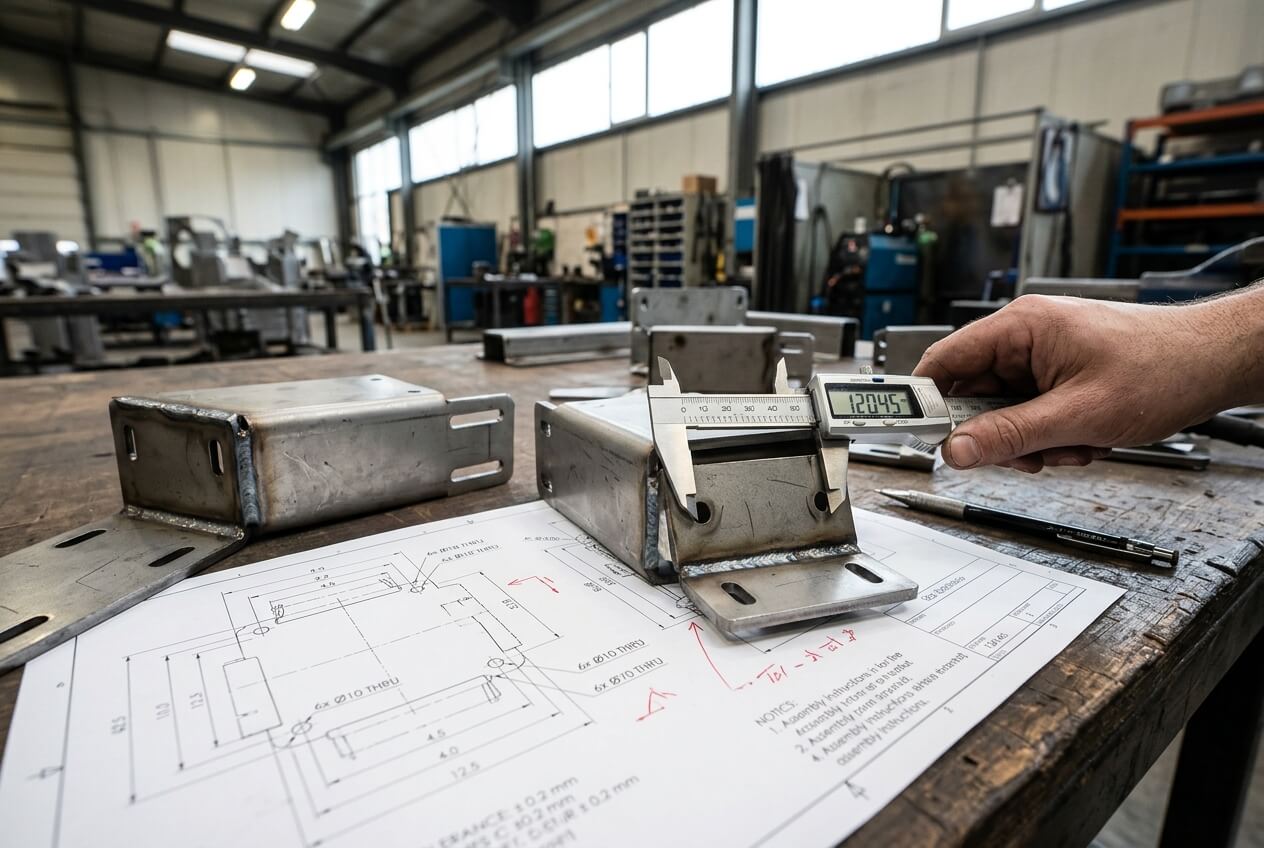
A low FCAW price can look attractive when the buyer compares only welding hours. The risk appears later, after the part needs powder coating, assembly, or customer-facing appearance. Slag, spatter, rough weld profiles, and aggressive grinding can all affect the finished product.
Powder coating makes this risk obvious. Weld spatter near a visible corner can create raised dots under the coating. Slag residue can affect adhesion. Over-grinding can flatten a corner, thin an edge, or change the visual line of a panel. None of these problems begins in the paint shop. They begin when the RFQ fails to define the weld cleanup expectation.
Buyers should not simply ask for “good appearance.” That phrase does not guide a quotation. A supplier needs to know which faces remain visible, which seams require blending, and which welds can keep a standard industrial profile. The drawing should separate structural welds from cosmetic welds before the supplier calculates labor.
A Frame Example With Two Different Quote Realities
Consider an outdoor display frame made from square tube, laser cut mounting plates, and powder coated side covers. FCAW may work well on the hidden tube joints because it offers efficient weld deposition. The same process may create extra cleanup near the exposed side covers.
If the RFQ only says “black powder coat, weld frame,” one supplier may price a robust structural weld with basic spatter removal. Another may include cosmetic grinding near the side covers and masking around threaded inserts. The second quote looks higher, but it may reflect the acceptance standard the buyer actually needs.
The consequence chain is simple. The RFQ leaves the visible zones unclear. The supplier prices a lower cleanup level. Production creates weld marks that powder coating does not hide. The buyer then pays through sorting, sanding, recoating, schedule pressure, or customer complaints.
To reduce that risk, buyers should mark visible surfaces, spatter-free zones, threaded areas, hinge zones, gasket surfaces, and customer-facing seams. They should also state whether slag removal, spatter removal, grinding, and pre-coating inspection are included in the quoted scope.
How Undefined Post-Weld Dimensions Create Assembly Fit Problems
Welded sheet metal parts often pass inspection on individual components before welding. Laser cut holes measure correctly. Bent flanges meet their angles. Tubes arrive within material tolerance. Then welding adds heat, shrinkage, and handling stress. The final assembly may no longer match the CAD model.
FCAW can add more heat input than some alternatives, especially when the joint design or weld sequence does not suit the assembly. That does not make FCAW wrong. It means the RFQ must define which dimensions matter after welding, not only before welding.
A buyer may care about a door gap, hinge alignment, mounting hole position, flatness of a base plate, or perpendicularity of a support arm. If the drawing does not call out these functional requirements after welding and finishing, the supplier may inspect the easier dimensions. The part can look acceptable while still failing on the production line.
A Cabinet Example With Hidden Fit Risk
A control cabinet may include a welded base frame, bent sheet metal panels, internal brackets, hinges, and a powder coated finish. FCAW can suit the thicker base frame. The door opening and latch area still need stable alignment after welding and coating.
If welding pulls the base frame slightly out of square, the door may rub after assembly. The supplier might have shipped parts that met the visual check. The buyer then discovers the problem when technicians spend extra time adjusting hinges, filing slots, or rejecting finished cabinets.
The clarification should happen before quote comparison. Drawings should identify post-weld critical dimensions, datums, flatness requirements, hole-to-hole relationships, and assembly interfaces. If coating thickness affects fit, the RFQ should state whether inspection occurs before or after finishing.
Yishang reviews these relationships on custom sheet metal fabrication projects where welded frames, metal enclosures, brackets, and cabinets must fit other parts. The useful discussion is not only “Can you weld it?” It is “Which welds can move the assembly, and how will the supplier control them?”
Why Prototype Approval Does Not Protect the Batch From FCAW Drift
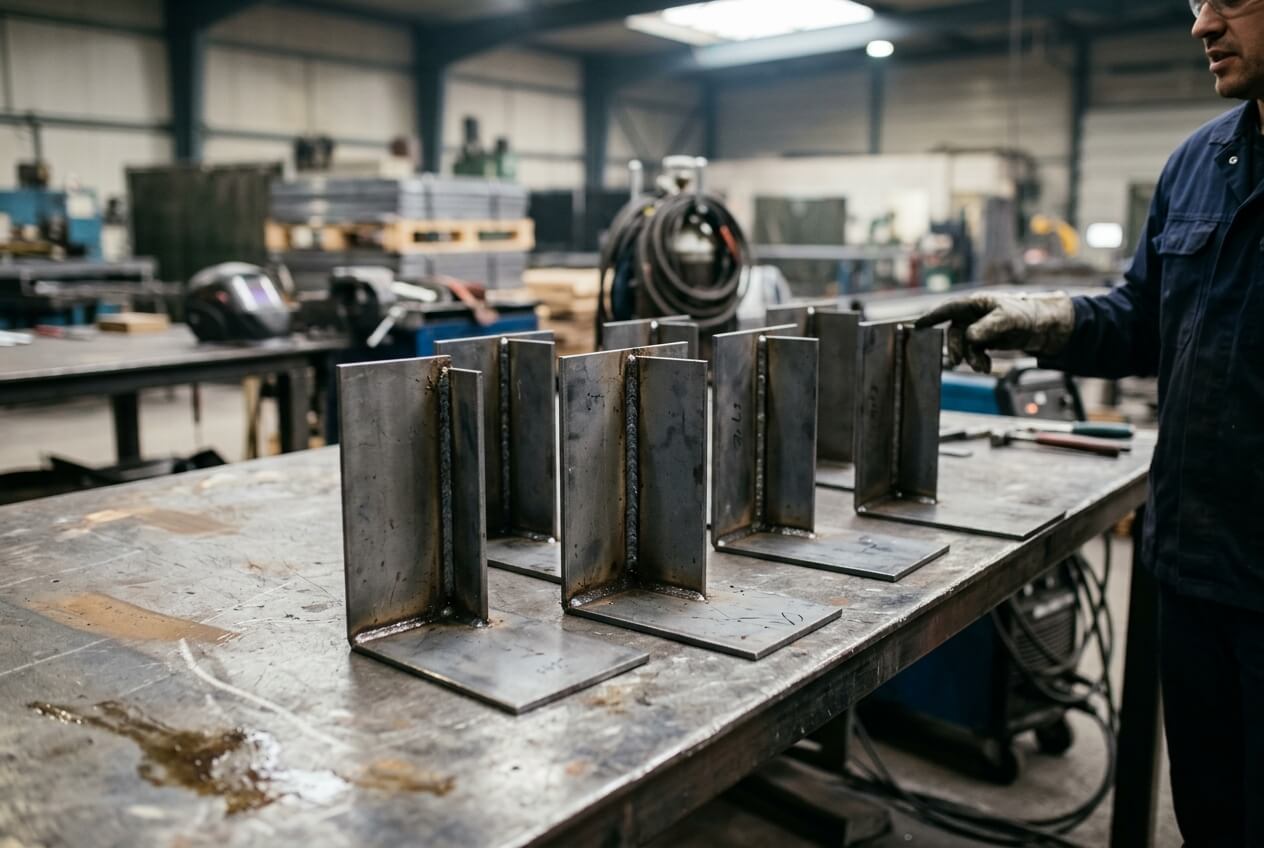
A prototype can create false confidence. One skilled welder may build it slowly, adjust parts by hand, and clean the welds more carefully than a production schedule allows. The sample passes fit, finish, and basic strength checks. The buyer then assumes the batch will match it.
Batch production needs more than an approved sample. It needs repeatable assumptions. FCAW variables such as wire type, wire diameter, voltage, current, polarity, wire feed speed, travel speed, shielding method, weld sequence, and fixture method can influence weld size, spatter, penetration, distortion, and appearance.
Small changes can matter. A production operator may increase heat to improve speed. Another may skip a cleanup step that the prototype technician performed by habit. A fixture may locate the part for welding access but not for the final mounting datum. The result can be a batch that looks similar at first glance but behaves differently during assembly.
The Sample Should Become a Production Reference
Prototype approval should define production standards, not close the welding discussion. Buyers should turn the approved sample into a reference for weld locations, acceptable bead appearance, grinding zones, visible faces, spatter-free areas, and inspection points.
A welded bracket project shows the risk clearly. The prototype bracket fits a machine frame because the welder clamps it carefully and checks the hole position after cooling. During batch production, the supplier welds faster and checks only the cut blanks. The holes shift slightly after welding. Assembly workers can still install some brackets, but they need force and extra adjustment.
The delay does not come from a bad drawing alone. It comes from an incomplete approval process. The buyer approved one part without locking the conditions that made the part acceptable. For repeat orders, buyers should request first-article inspection after welding and before coating. They should also ask how the supplier will control fixtures, weld sequence, and cleanup.
This step also supports lead time control. Rework after coating consumes more time than clarification before production. When buyers define FCAW assumptions early, suppliers can quote more honestly and plan fixtures, operators, and inspection steps with fewer surprises.
What Buyers Should Clarify Before Comparing FCAW Quotations
Buyers do not need to become welding engineers to manage FCAW risk. They need to prevent suppliers from guessing different scopes. A practical RFQ should connect the welding process to the finished part, not only to the joint.
Start with the part function. A welded frame may need stiffness and flat mounting pads. A metal enclosure may need clean visible seams and accurate door alignment. A bracket may need hole position after welding. A welded assembly may need repeatable fit across hundreds of units. These priorities guide the welding and inspection plan.
Next, define where FCAW is acceptable. The RFQ can allow FCAW on structural joints while requiring another approach, lighter welds, intermittent welds, or extra blending on cosmetic zones. It can also ask the supplier to propose changes if the current design creates distortion, excess cleanup, or difficult access.
Material thickness, tolerances, quantities, finish expectations, and assembly notes all affect the quote. A small prototype run may rely on more manual control. A batch order needs fixtures, documented inspection, and consistent cleanup standards. Higher quantities may justify fixture cost, while low quantities may require a different balance between unit price and setup effort.
Supplier communication should focus on assumptions, not promises. Ask what process the quote assumes, whether the FCAW method is gas-shielded or self-shielded, which welds receive grinding, how spatter near holes will be controlled, and which dimensions will be checked after welding. These answers help buyers compare quotes on the same basis.
Yishang can review RFQ drawings, material requirements, tolerances, finish expectations, prototype notes, and assembly constraints for custom sheet metal fabrication projects. The goal is to identify hidden welding assumptions before they become quote gaps, coating defects, or batch assembly problems.
If your project includes welded sheet metal parts, metal enclosures, brackets, frames, cabinets, or welded assemblies, send your drawings, material requirements, quantities, tolerances, finish expectations, photos, samples, and assembly notes to Yishang. Ask the team to review FCAW use, cleanup scope, fixture needs, coating preparation, and post-weld inspection before you compare suppliers by unit price.
Frequently Asked Questions
What is flux cored arc welding in a fabrication RFQ?
Flux cored arc welding is a wire-fed welding process that uses tubular wire filled with flux. In an RFQ, buyers should define where FCAW is allowed, what cleanup level applies, and which dimensions need inspection after welding.
Why can FCAW make two welded sheet metal quotes hard to compare?
Suppliers may assume different weld processes, shielding methods, weld lengths, grinding levels, spatter control, and inspection points. If the RFQ does not define those items, a lower quote may exclude work needed for the finished part.
When is FCAW suitable for frames but risky for enclosures?
FCAW can suit thicker structural frames, bases, and heavy brackets. It can create more cleanup, heat distortion, or visible weld profile risk on thin panels, door openings, cosmetic seams, and powder coated enclosure surfaces.
What should buyers mark on drawings before requesting FCAW pricing?
Buyers should mark structural welds, cosmetic faces, spatter-free zones, critical holes, datums, flatness requirements, hinge areas, gasket areas, threaded inserts, and surfaces that must remain clean before coating or assembly.
Why does prototype approval still leave batch welding risk?
A prototype may receive extra manual care, slower welding, and more cleaning. Batch production needs repeatable fixtures, weld sequence control, process settings, cleanup standards, and inspection points to keep every unit consistent.
What information should buyers send for a clearer welded assembly quote?
Buyers should send drawings, material requirements, quantities, tolerances, finish expectations, photos, samples, mating part details, and prototype comments. This helps the supplier price welding, cleanup, fixtures, coating preparation, and inspection more accurately.