
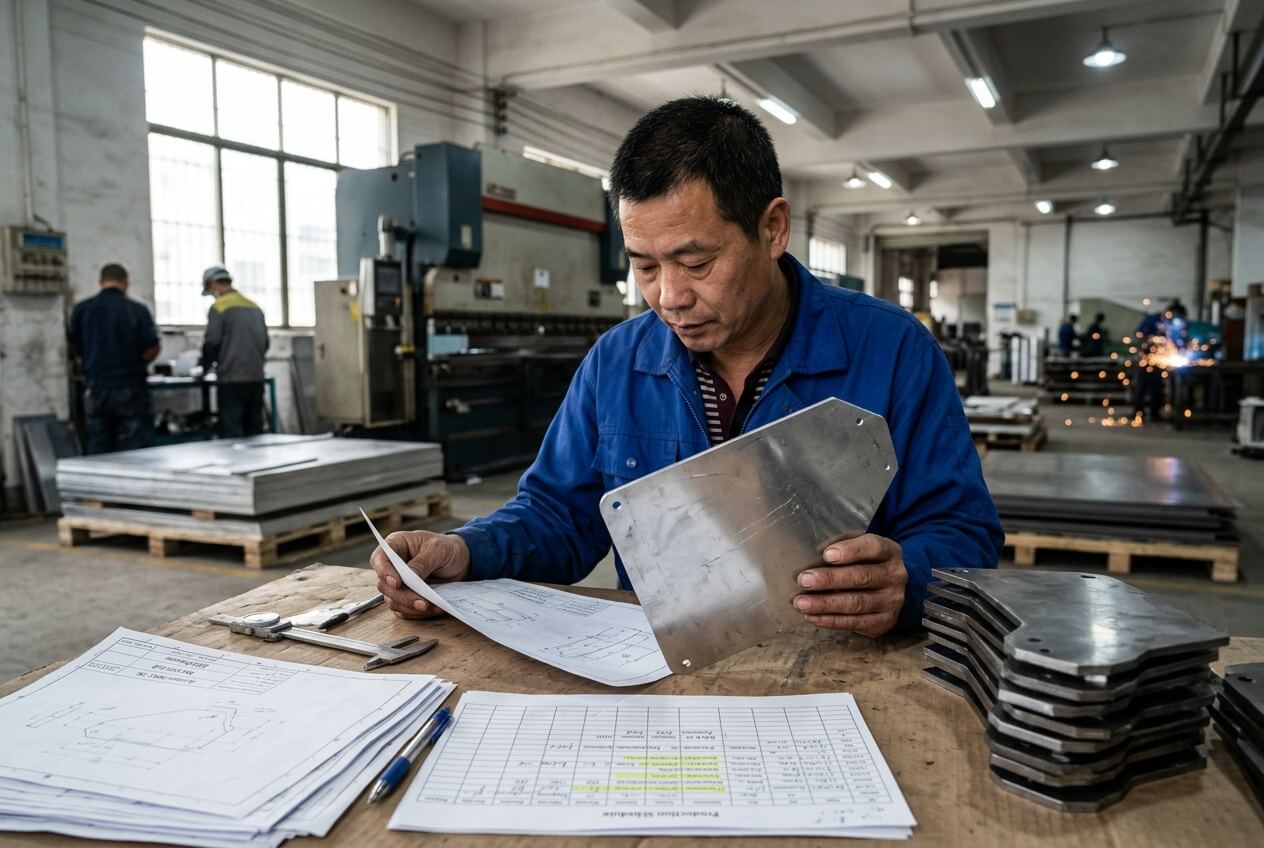
If you send a sheet metal RFQ to a new supplier, the question is aluminum ferrous usually appears when the buyer already senses a risk. Aluminum is non-ferrous. The real problem is that the drawing set does not fully define the job. That gap lets each supplier make different assumptions about stock, bends, welds, finish, inspection, and packing. The quote may look clean, but the route behind it may not match the build you need.
For custom sheet metal fabrication, that mismatch matters more than the metal label. A bracket, enclosure, frame, or welded assembly can move from quotation to production on very different assumptions. One shop prices a simple cut-and-bend part. Another prices a cosmetic part with protected faces. A third blocks time for welding and post-process inspection. When those assumptions stay hidden, the lowest price often comes with the highest change risk.
Why the ferrous question often appears after the RFQ is already vague
Aluminum is not ferrous. Buyers rarely ask that during a chemistry lesson, though. They ask it when a quote feels unstable. In practice, the question points to a bigger issue: the RFQ names a material family, but it does not lock the work content.
A supplier that sees only aluminum sheet metal parts may assume generic stock, standard deburring, and ordinary handling. Another may assume visible faces, tighter cosmetic control, and a longer inspection queue. Both can be reasonable. Neither may match the buyer’s intent. That is how a simple wording gap turns into different prices, different lead times, and different production plans.
How the label masks scope gaps
Alloy, thickness, temper, and stock form affect more than cost. They affect bend response, tool choice, flatness after forming, and the chance that the part will need rework. If the part will be powder coated, welded, or assembled with hardware, the route changes again. A buyer who only asks whether aluminum is ferrous has not yet told the supplier which path to reserve.
At Yishang, drawing review starts by separating what is confirmed from what is still a placeholder. That matters because a placeholder in the RFQ often becomes an assumption in the quote.
The first quote distortion comes from the fabrication route, not the alloy name
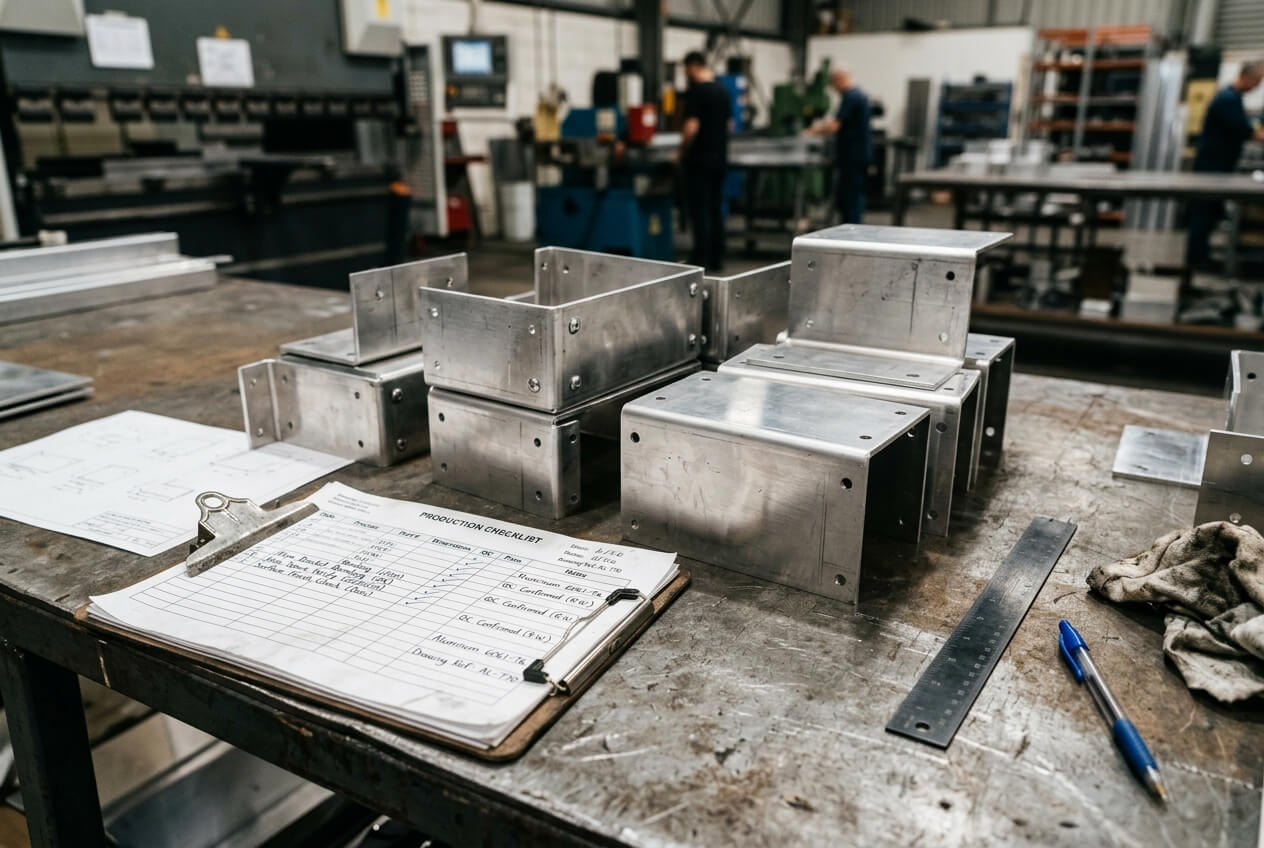
Two quotes can price the same enclosure and still describe different jobs. One may cover laser cutting and bending only. Another may include welding, surface prep, powder coating, assembly hardware, and final pack-out. Buyers compare them as if they are equal, then wonder why the cheaper option expands later.
The route also sets the queue. A cut-and-bend bracket may move quickly if the machine shop has the right sheet on hand. A welded frame can wait for fixture setup, weld sequencing, and post-weld inspection. A cosmetic cabinet can wait again for sanding, cleaning, masking, coating, and cure time. The material label does not control those steps. The route does.
Why the quote looks safe
Suppliers often protect themselves by pricing assumptions that are not visible on the quote face. They may assume a standard bend radius, loose hole location, simple finishing, or no assembly fit check. Those assumptions keep the quote fast. They also make the actual job more likely to grow later if the buyer expected a tighter build.
That is where cost drivers start to hide. Extra handling, more fixturing, a second inspection pass, and cosmetic protection all add labor. If the RFQ does not call them out early, they do not disappear. They simply reappear as variation between suppliers or as a change order after award.
Small drawing omissions turn into big quote gaps on brackets, cabinets, and frames
Small omissions create large differences because sheet metal parts do not fail at one point. They fail across several linked steps. A missing bend note can change tooling. An unclear hole tolerance can change the inspection plan. A vague finish note can change masking and handling. Each one may seem minor. Together they can move both price and schedule.
Consider a powder-coated aluminum control cabinet with a visible door. If the drawing does not mark the cosmetic face, one quote may allow clamp marks on the show surface. Another may add protection, slower handling, and a separate touch-up step. The buyer sees two similar enclosure prices. The shop sees two different levels of surface risk.
A second example is a mounting bracket set for a rail system. The drawing shows the overall size and a few holes, but it does not identify the critical slot width or the mating clearance to the rail. One supplier prices ordinary production. Another expects a fit check and tighter control because the bracket must slide into an existing assembly. The first quote may look attractive. The second may be the only one that avoids field rework.
What drawings need to say earlier
Buyers should mark the faces that matter, the dimensions that drive assembly, and the holes or slots that cannot drift. They should also say whether edge condition matters, whether burrs are acceptable, and whether the finish must survive handling before shipment. That is not over-specifying. It is preventing each supplier from inventing a different job behind the same part number.
When a drawing stays silent, the supplier has to decide whether the job is cosmetic, structural, or both. That decision changes the quote more than many buyers expect.
Prototype approval does not freeze batch behavior
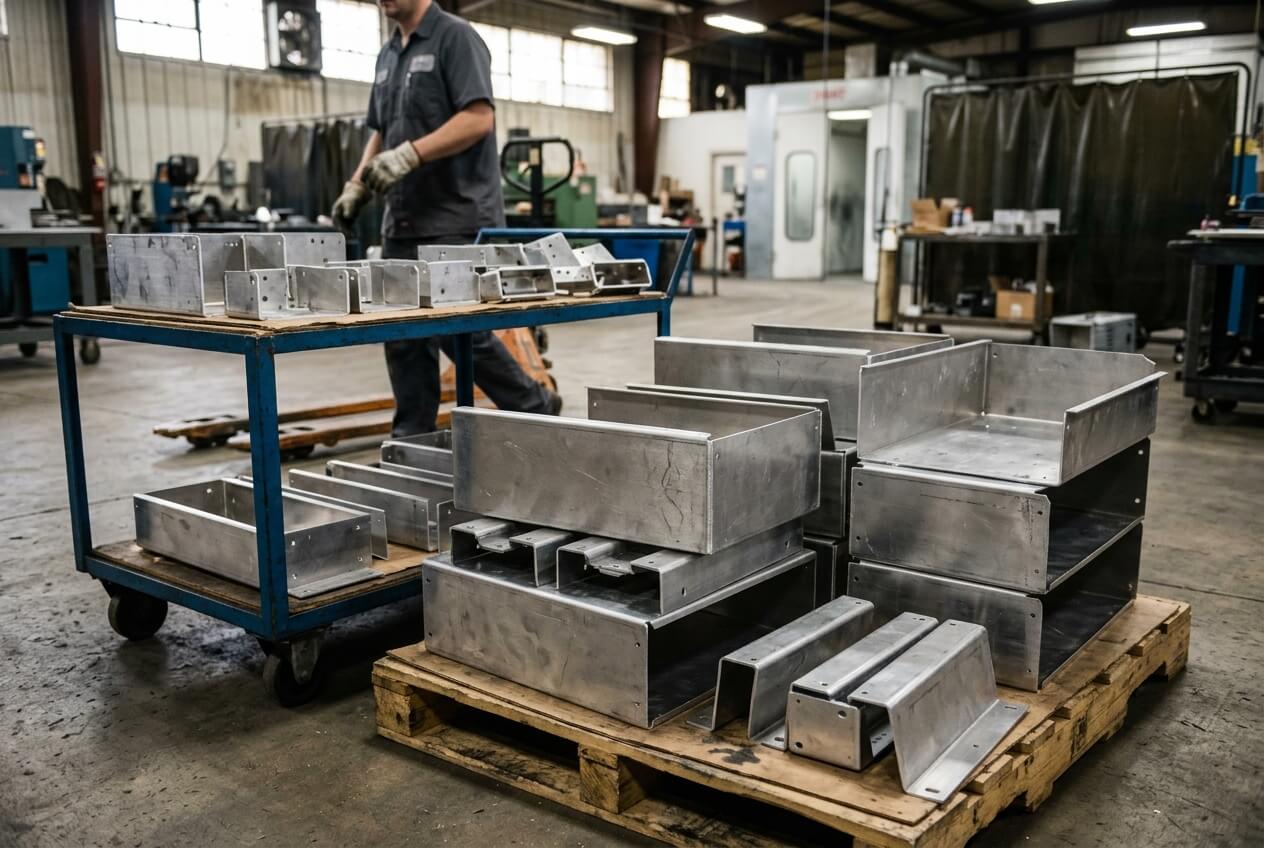
A sample can pass and the batch can still miss. That happens when the prototype benefits from hand correction, looser assembly, or a one-off fixture adjustment. Batch production rarely gets those favors. The process repeats, and any small variation in coating build, weld shrinkage, or nesting layout starts to matter.
This is especially true for welded assemblies. A welded aluminum frame may meet the sample dimensions after an operator tweaks the fixture. The batch may not. If the frame must align with rails, hinges, or doors, the fit can move out of range once the same adjustment is no longer available. The buyer then faces extra sorting, rework, or a second approval loop.
Where batch drift usually starts
Batch drift often starts with the sample itself. If the prototype used a different operator, a different bend sequence, or a different coating build, the approval does not fully protect the production run. Buyers should confirm the exact revision, material condition, finish build, and inspection method before they treat the sample as a release signal.
Another common source is assembly fit. A welded enclosure frame may accept the door hardware in prototype, then close hard in batch because the coating is slightly thicker or the weld pull changed the opening. The drawings may still look acceptable on paper. The assembled product tells a different story.
What buyers should lock before they compare supplier quotes
A useful RFQ packet does not need to be perfect. It does need to remove the biggest assumption points. Send the latest drawing revision, the target material grade or thickness, quantity, tolerance notes, finish expectations, and any mating hardware or assembly photos. Add the launch date only after the scope is clear. Otherwise the date invites a promise that the drawing cannot support.
If the project includes both appearance and fit, say which side wins when they conflict. That matters on enclosures, brackets, and welded frames. A cosmetic face may need better handling. A fit-critical hole may need tighter inspection. A bend near a visible edge may need a different sequence. Buyers do not need every process detail written out. They do need the conditions that change the route.
If the part is still in development, ask for a manufacturability review before you compare numbers. A supplier can often flag a bend that will mark the panel, a hole that sits too close to a flange, or a coating note that will change clearance. That review is where Yishang can help most, because it turns a vague RFQ into a buildable one before the quote hardens into a schedule.
Send Yishang the drawings, material requirements, quantities, tolerances, finish expectations, and any assembly notes. The team can then review the route, call out likely quote assumptions, and tell you where the job may need a sample or a process change before release.
Frequently Asked Questions
Is aluminum ferrous?
No. Aluminum is non-ferrous. The buying risk comes from quote assumptions, not the metal category. A sheet metal supplier still needs the alloy, thickness, finish, and assembly details before it can price the job accurately.
Why do two suppliers quote the same aluminum enclosure differently?
Because they may be pricing different work routes. One may assume cut and bend only, while another includes welding, coating, inspection, or hardware assembly. If the RFQ does not define those steps, the quotes will not be directly comparable.
Which drawing details most often change the final quote?
Hole position, bend radius, critical-to-fit dimensions, cosmetic faces, and finish notes often move the price the most. Those details change tooling, handling, inspection, and the chance of rework. A small omission can create a large quote spread.
Why can a prototype fit and the batch still fail?
A prototype may benefit from hand adjustment, special fixture tuning, or a more forgiving inspection path. The batch repeats the process at volume. If coating build, weld pull, or fixture setup changes, the assembly fit can drift even when the sample passed.
What should buyers send with the RFQ to avoid quote drift?
Send the latest drawing revision, material requirements, quantities, tolerances, finish expectations, and any assembly or mating hardware notes. If Yishang can review that package early, the team can flag manufacturability issues before they become a price or schedule surprise.