
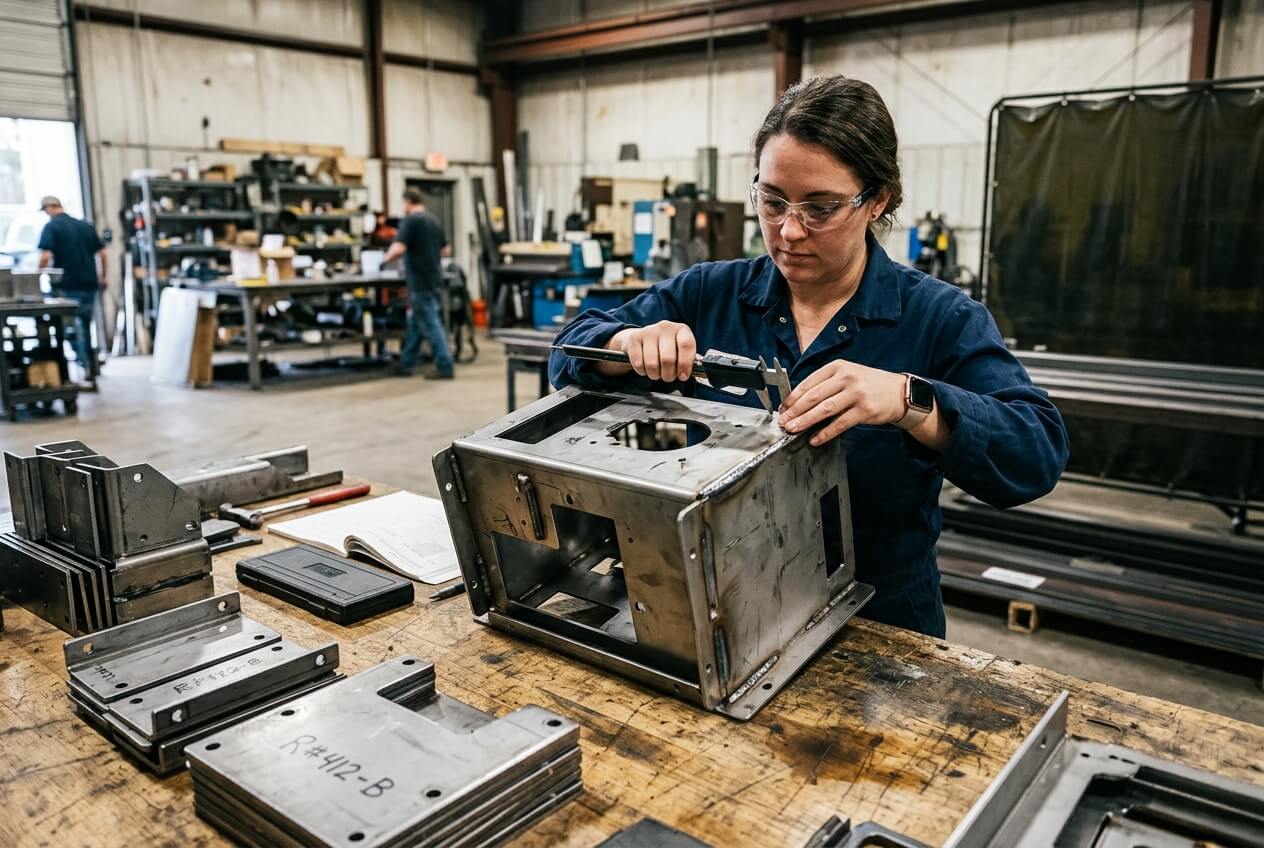
A buyer can send a clean drawing and still get three different quotes if the RFQ only says ferrous metal. The phrase sounds technical, but it leaves too much open. One fabricator may price mild steel. Another may assume galvanized sheet. A third may switch to stainless steel because the application sounds corrosive. Those choices change material cost, welding method, coating work, inspection effort, and even the final fit of the assembly.
That is the real procurement risk behind ferrous metal meaning. The words do not define the build. They only tell the supplier the part contains iron. For custom sheet metal fabrication, that gap can distort the quote at the start and create rework later. A buyer may think they are comparing suppliers. In practice, they may be comparing different material assumptions, different finish scopes, and different tolerance interpretations.
The safest RFQ process starts by turning that vague phrase into a manufacturing decision. The buyer should define the material family, sheet thickness, finish expectation, critical fit points, and the environment the part will face. That matters for metal enclosures, brackets, frames, and welded assemblies. It also matters when a factory such as Yishang reviews drawings for manufacturability before pricing.
How a Ferrous Note Turns Into Hidden Quote Assumptions
Ferrous tells the supplier almost nothing about the real job. It does not say whether the part should use cold rolled steel, galvanized sheet, or stainless steel. It does not say whether the part will sit indoors, near moisture, or outdoors. It does not say whether magnetism matters for mounting or grounding. When the RFQ stops there, each supplier fills the gap in a different way.
That creates a quote comparison problem. A low number may reflect the cheapest plausible interpretation, not the best one. A higher number may include extra deburring, masking, weld cleanup, or coating steps that another supplier ignored. Buyers often blame pricing spread on margin. More often, the spread comes from different assumptions about the same drawing.
For sheet metal parts, the first assumption usually lands on material. That choice then affects forming behavior, weld distortion, corrosion resistance, and post-processing. Mild steel often looks economical, but it usually needs a clear coating plan. Stainless steel can reduce corrosion risk, but the grade and welding method still matter. Galvanized steel can solve one problem and create another at cut edges and weld zones. None of that is visible if the RFQ only says ferrous.
What the quote actually needs to know
Buyers do not need a long specification essay. They need the variables that change process and cost. In most RFQs, the supplier needs the exact sheet family, thickness before coating, the expected service environment, and the cosmetic side. They also need to know whether the part has hidden surfaces, visible faces, or both. A fabricator can price faster and more accurately when those points are clear.
For example, a powder-coated enclosure for an indoor controller cabinet may tolerate mild steel if the coating is stable. A bracket for a damp machine area may need a different base material or a stronger finish plan. If the buyer does not state the environment, the supplier guesses. That guess changes the quote and can change the delivered part.
- Exact material family: mild steel, galvanized steel, or stainless steel.
- Base thickness: the sheet gauge before cutting, forming, or coating.
- Environment: indoor, humid, outdoor, or chemical exposure.
- Functional requirement: magnetic behavior, grounding contact, or plain structural use.
- Finish scope: powder coat, plating, paint, masking, or edge touch-up.
- Cosmetic side: which face must remain clean after welding and coating.
That small list often prevents a large pricing error later.
Why Drawing Gaps Create Fit Risk After Cutting and Welding
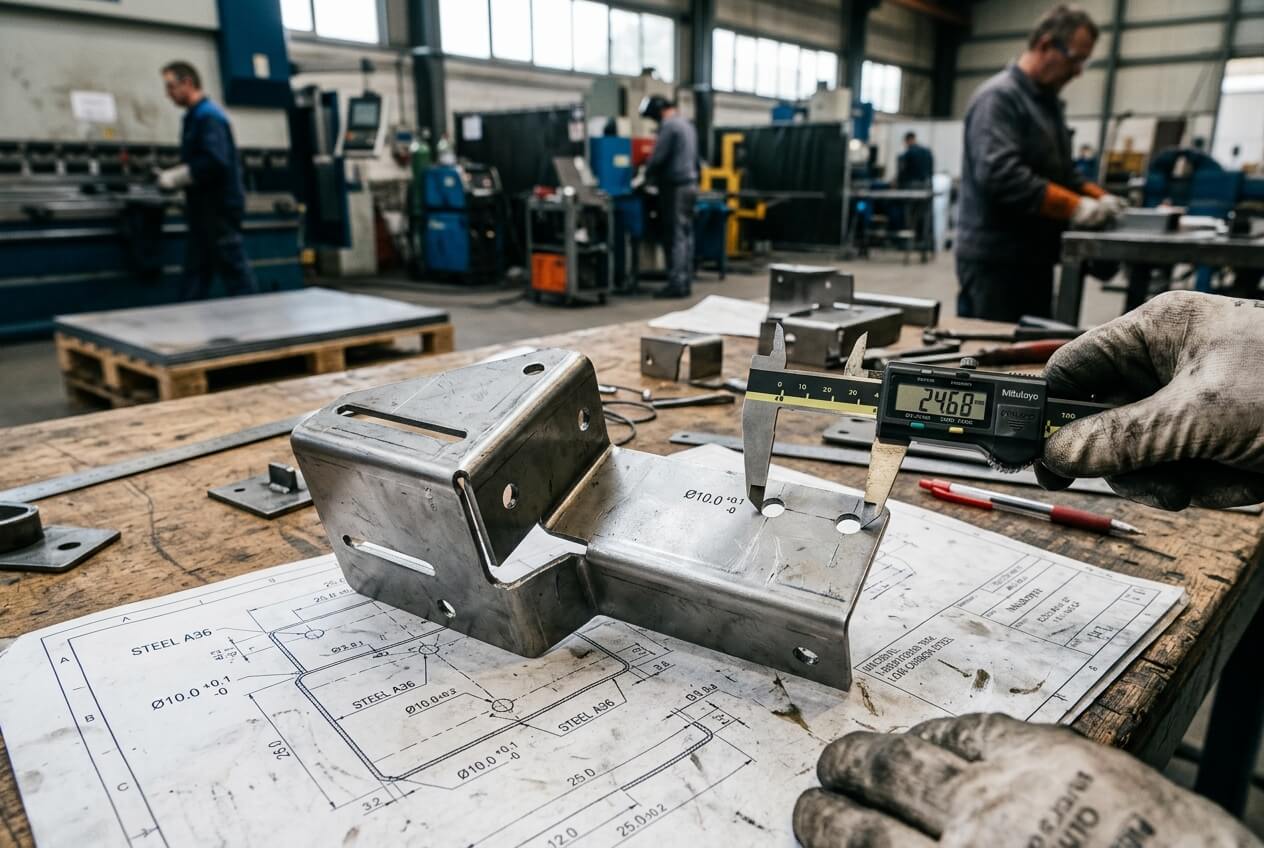
The next risk appears when the drawing shows shape but not fabrication logic. A buyer may assume the supplier will naturally choose the right bend radius, hole distance, and weld sequence. That is not always safe. If the drawing leaves those decisions open, the shop may choose a method that looks acceptable in isolation but fails during assembly.
This happens often in enclosures, panel brackets, and welded frames. A hole too close to a bend can deform during forming. A weld placed on the wrong face can ruin a cosmetic surface. A coating layer can tighten a door gap or shift a mating panel. The part may still match the outline on paper, but it no longer fits the assembly cleanly.
Those problems usually start with a vague RFQ, then grow during quoting, then show up as rework. A supplier may price one bend order, one weld sequence, and one cleanup standard. Another supplier may choose a different path. If the buyer never named the critical features, neither quote is necessarily wrong. They are just built on different process assumptions.
Project example: cabinet door fit after powder coating
A buyer orders a steel electrical cabinet and calls out ferrous metal only. The prototype fits before coating. After powder coating, the door drags at the latch side. The problem did not begin with the coating line. It started earlier, when the drawing did not define the critical clearances, the cosmetic face, or the fit tolerance after finish. The shop made a reasonable prototype. The batch then exposed the missing decision.
If the buyer had marked the hinge side, latch side, and post-coat gap requirement, the supplier could have compensated in the flat pattern and in the bend sequence. That kind of detail matters more than most buyers expect. It protects assembly fit and reduces the chance of late adjustment on the production floor.
Project example: welded bracket set with hidden hole distortion
A buyer sources a bracket set for machine mounting. The drawing does not state the minimum hole-to-bend distance. The supplier forms the parts, but a few mounting holes ovalize slightly after bending. The parts still look fine in isolation, yet the installer finds extra resistance during assembly. The issue grows from hours of fitting, not from one dramatic defect.
That chain is common. The RFQ starts with an incomplete material note. The shop then fills in the process. The first sample looks acceptable. Batch installation reveals the hidden mismatch. A clearer drawing, plus a short note on critical hole positions, would have reduced the risk much earlier.
Why Prototype Approval Can Still Fail in Batch Production
Prototype approval often gives buyers false confidence. A sample can pass because the fabricator spends extra time on fit, edge cleanup, and manual adjustment. Batch production changes the conditions. Cycle time tightens. Fixtures stay fixed. Operators repeat the same sequence under more pressure. A design that worked with one sample may drift when the shop builds ten, fifty, or five hundred units.
That is why prototype-to-batch consistency matters so much in custom sheet metal fabrication. The sample does not only prove the design. It also proves the process path. If the sample used one weld order and the batch uses another, the frame can pull out of square. If the sample received more deburring than the batch, the assembly can bind. If the sample was checked by hand but the batch uses a faster inspection plan, small deviations can escape.
Buyers often discover the risk only after the first production run starts. Then the factory may need to rework parts, slow the line, or add inspection steps. That affects cost and lead time at the same time. The original RFQ looked simple. The actual project now carries schedule pressure because the part definition did not lock the repeatable process.
To reduce that risk, the buyer should align sample approval with the production plan. The same material, same finish method, and same inspection points should carry from prototype to batch. If the part includes hinges, latches, inserts, or mating panels, the shop should verify fit against the real assembly. A drawing review from Yishang or another fabricator helps most when it happens before the first quote is accepted, not after the sample is already approved.
What to Freeze Before Comparing Supplier Quotes
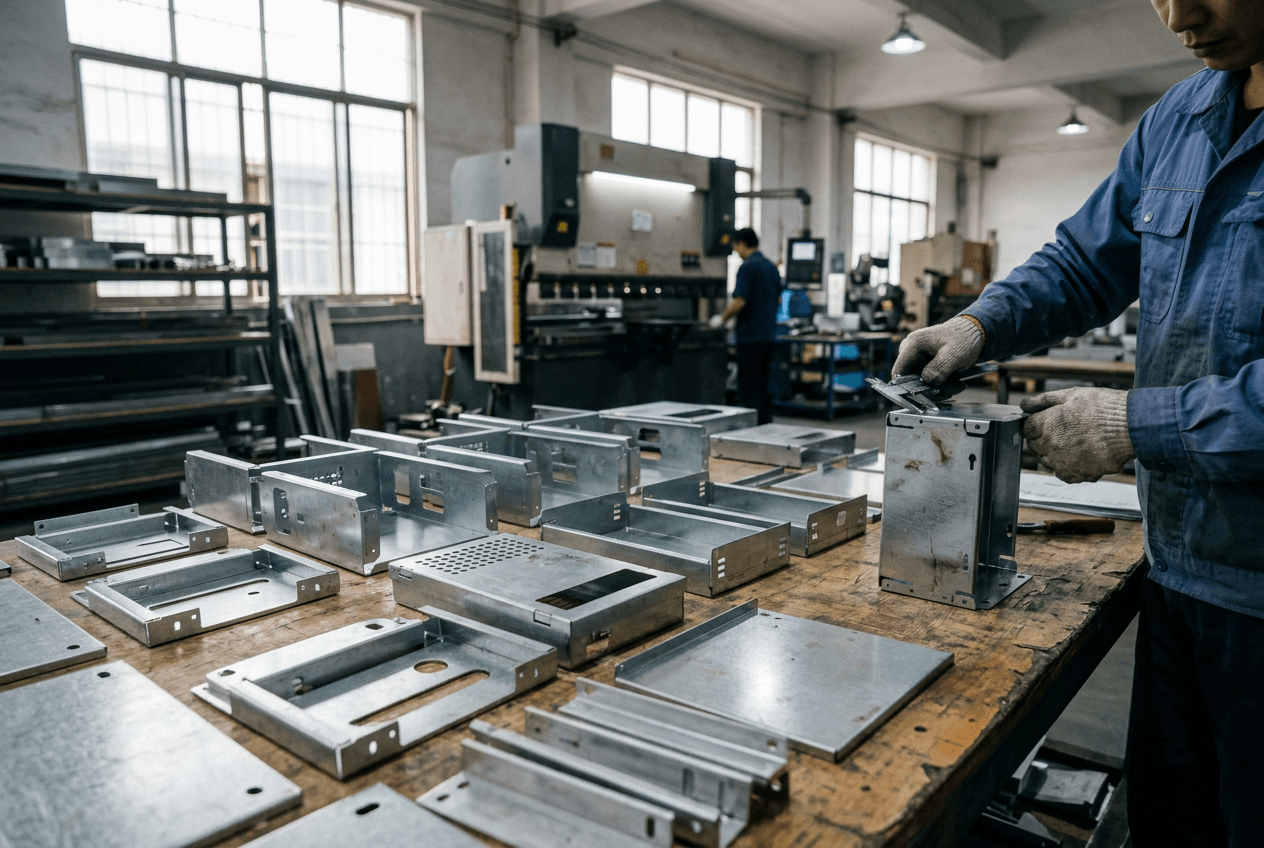
Quote comparison only works when the suppliers are pricing the same part. That sounds obvious, but it fails often. One supplier may include stainless steel and brushing. Another may price mild steel with standard powder coating. A third may add masking, edge cleanup, or a tighter inspection routine. The numbers look comparable until the buyer asks what each supplier assumed.
That is why the RFQ needs a short set of locked decisions. The buyer should define the material family, thickness, finish expectation, critical tolerances, and assembly condition. If the part must fit into a larger machine, include the mating drawing, a photo, or a simple interface sketch. If welding is involved, say whether welds stay visible, get ground flush, or remain hidden. Those details do more than help pricing. They also shape lead time because they tell the shop how much setup and rework risk to carry.
For metal enclosures, brackets, frames, and welded assemblies, the real cost drivers often hide in process choices. Cutting method, bend complexity, weld sequence, coating scope, and handling damage can matter more than raw material price. A buyer who clarifies those items early usually gets faster, more useful quotes and fewer surprises after order placement.
If the drawings still leave room for interpretation, send the RFQ package, quantity, material preference, tolerances, and finish expectations to Yishang for review. That helps the factory check manufacturability before the quote locks in the wrong assumption.
Frequently Asked Questions
What does ferrous metal meaning change in a sheet metal RFQ?
It changes the starting assumption, but not the full specification. Ferrous only tells the supplier the part contains iron. It does not define the grade, thickness, finish, or environment. Without those details, the quote may rely on mild steel, galvanized steel, or stainless steel, and each option creates different cost and fabrication risk.
Why do two suppliers quote very different prices for the same ferrous part?
They may not be quoting the same build. One may include coating, masking, or weld cleanup. Another may assume a simpler process. If the RFQ does not name the finish, cosmetic side, or assembly fit requirement, each supplier fills the gaps differently. The price spread often comes from assumptions, not from markup alone.
Why can a prototype fit but the batch still miss assembly fit?
A sample often receives extra manual attention. Batch production uses fixed fixtures, repeatable weld sequences, and tighter cycle control. If the critical dimensions or post-finish clearances are not locked, the batch can drift. A cabinet door, mounting bracket, or welded frame may then need adjustment even though the sample passed.
What should buyers clarify besides material when they see ferrous metal meaning on a drawing?
They should clarify thickness, corrosion environment, finish expectation, critical holes, bend proximity, weld visibility, and mating-part fit. Those points affect forming, coating, inspection, and assembly. A fabricator can quote more accurately when the RFQ includes the parts that matter in production, not just the metal family.
Can galvanized steel replace mild steel in every enclosure or bracket job?
No. Galvanized steel can help with corrosion resistance, but it introduces extra attention around cut edges, weld zones, and touch-up work. It may suit one enclosure and create extra cost on another. The right choice depends on the environment, the weld scope, and the appearance requirement.
What should I send to Yishang for RFQ review?
Send the drawing, material requirement, quantity, tolerances, finish expectations, and any assembly photos or mating-part details. That gives the factory a basis for reviewing manufacturability, checking quote assumptions, and reducing the risk of rework or fit problems after production starts.