
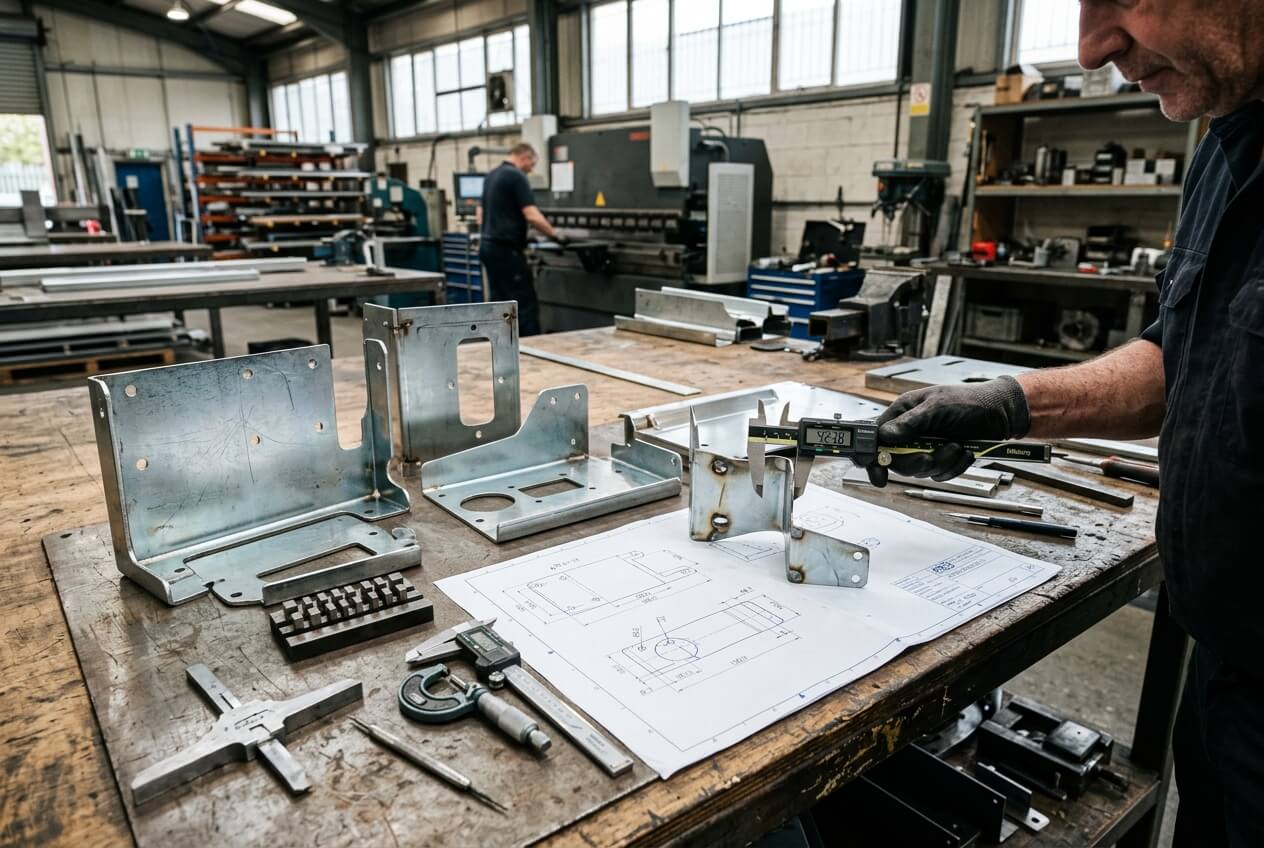
A buyer can ask what temp does brass melt and still get three different quotes for the same brass enclosure. That usually means the real risk is not the melt range. It is RFQ ambiguity. Brass may melt around 900-940 C (1650-1725 F), depending on alloy, but most procurement problems start earlier. Suppliers must guess at the alloy, temper, surface condition, and assembly duty before they can price the job.
That guesswork changes more than unit price. It changes cutting methods, bend control, visible-edge cleanup, and inspection effort. A brass bracket for a warm cabinet, a decorative brass panel, and a welded brass frame may all use similar material names. They do not use the same process route. If the drawing does not remove those assumptions, the quote may look competitive while the production plan is wrong.
For buyers of custom sheet metal fabrication, that is the main trap. The brass melting point question sounds technical, but it often hides a procurement problem. The supplier needs to know how hot the part runs, how it must look, and how it must fit after forming and finishing. Yishang can review drawings at that stage, but the RFQ still has to define the part clearly enough for a fair comparison.
Why the brass melting point question can distort the first quote
When a buyer opens with the melting point, the discussion can drift away from the actual production risk. Most brass parts never approach full melt in service. They fail earlier from softening, discoloration, distortion, or poor fit. That means the supplier must price the path, not just the material. If the RFQ only asks for brass, the supplier fills in the blanks with assumptions about formability, finish, and handling.
Those assumptions create quote spread fast. One supplier may assume easy-forming sheet with minimal cleanup. Another may price extra deburring and surface protection. A third may add inspection time because the part will sit in a visible assembly. The quotes all look reasonable, but they are not based on the same work content.
Project example: a buyer requests a brass cover plate for a heater cabinet. One supplier quotes it like a simple blank. Another prices polished visible faces and protected packing because the plate sits at eye level. The second quote is higher, but it may be the only one that matches the actual use.
This is why the first RFQ read matters so much. The brass melting point question should lead to service temperature, exposure time, and part function. If the part only sees occasional warmth, the supplier should not price it like a heat-exposed component. If the part supports hardware inside a warm enclosure, the quote must reflect that duty.
Which brass details change the process route before any cutting starts
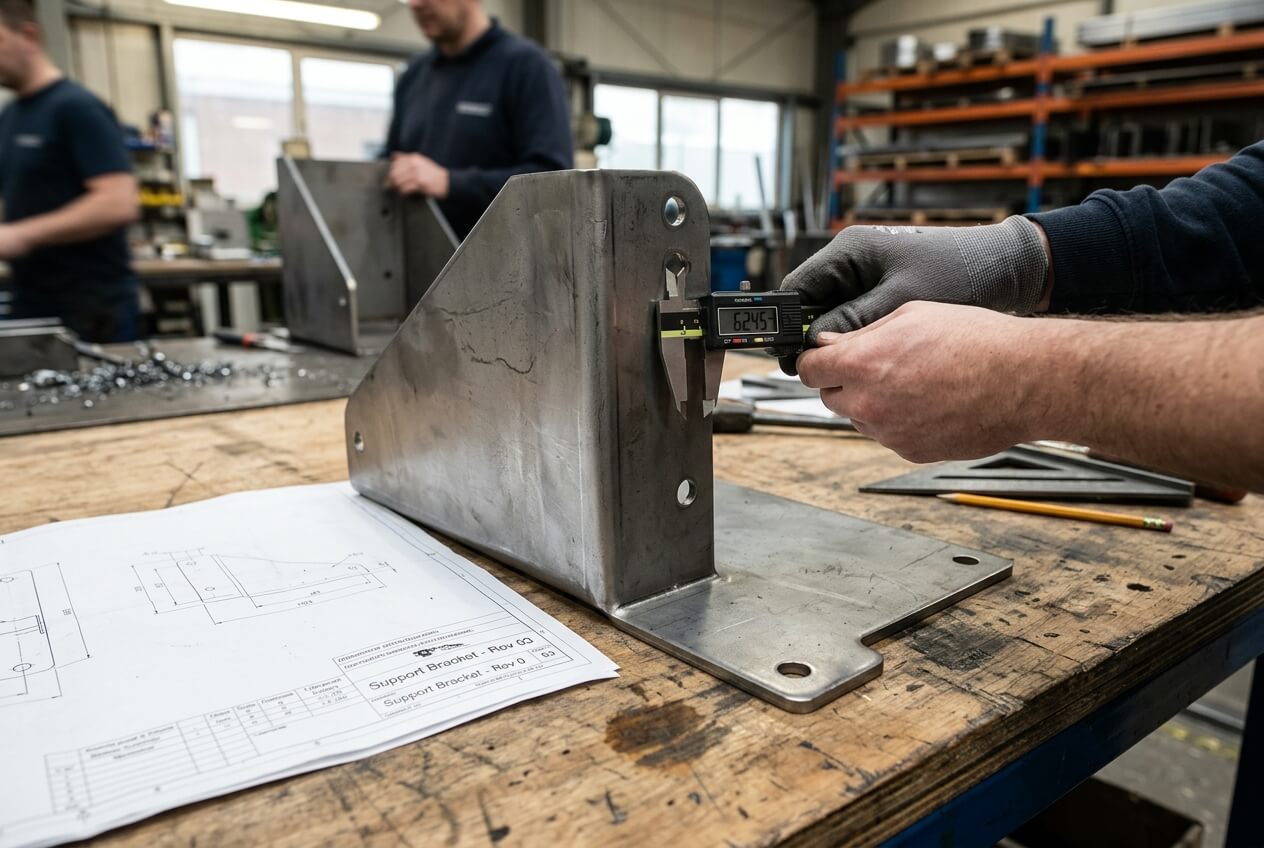
Brass sheet parts often look simple on paper. In production, the alloy family and temper can change the route immediately. Yellow brass, cartridge brass, and leaded brass do not behave the same way. They cut differently, bend differently, and show different springback. If the buyer leaves the alloy open, the supplier may choose the easiest material to price, not the one that best suits the assembly.
Temper matters just as much. A softer temper may reduce cracking risk and ease forming. A harder temper may hold shape better after assembly. That choice affects scrap, bend control, and how much inspection the supplier needs to keep dimensions stable. When the RFQ skips temper, the quote may hide rework risk inside the unit price.
Service heat changes more than the temperature number
A part that sees short heat spikes is not the same as a part that sits near constant heat. The buyer should say whether the exposure is brief, repeated, or continuous. That changes how the supplier thinks about softening, finish change, and long-term fit. A brass mounting bracket inside a warm cabinet may never melt, but it can still lose stiffness if the process route is careless.
That is why a simple melt-point question does not resolve procurement risk. The buyer needs the actual operating condition. If the part will be near motors, heaters, lamps, or welding zones, those details shape the quote. They also shape the inspection plan. A supplier that knows the duty can decide whether to price standard forming or added control steps.
Visible faces change the quote even when the geometry is small
Brass often carries cosmetic expectations. Buyers may want a bright face, uniform color, or no visible tool marks. Once the part has a visible side, cutting, handling, and packaging all matter more. A hidden internal bracket and a front-facing panel can share the same outline and still need very different operations. If the drawing does not mark the visible face, the supplier may miss the cost of protection and cleanup.
That is common in brass sheet metal fabrication for enclosures and control panels. The metal itself is not the only driver. The need to preserve appearance through forming and packing can change the whole quote. It can also affect lead time, because the supplier may need a different sequence for deburring, polishing, and final inspection.
Where fabrication heat changes brass parts before the melt range matters
Most brass production issues happen well below the melt point. Cutting, punching, bending, and joining all introduce local heat or stress. Thin sheet can discolor at the edge. Wider parts can twist if the process route creates uneven stress. Even when the alloy remains intact, the shape can drift enough to affect assembly. That is the consequence buyers often miss when they compare quotes only by material name.
Laser cutting on brass can create a visible edge condition that needs extra cleanup. Punching can leave burrs or marks that matter on a display face. Bending adds springback variation, and that variation depends on thickness, temper, and grain direction. If the buyer wants consistent hole locations after forming, the supplier needs that requirement before quoting. Otherwise the part may meet the drawing in one stage and miss it after finishing.
Joining methods carry hidden distortion risk
Welded assemblies deserve special attention. Heat from welding or brazing can distort a brass frame or pull a bracket out of square. A mounting hole may shift. A flange may bow. A cosmetic face may show heat marks that were never discussed in the RFQ. The supplier can control that risk, but only if the drawing names the join method and the acceptable post-weld condition.
If welding is optional, say so. If only mechanical fastening is allowed, say that too. A buyer who leaves the joining method open may receive quotes that are not directly comparable. One supplier prices simple formed parts. Another prices fixtures, cleanup, and extra checks to hold flatness after heat input.
Project example: a brass frame for a small display cabinet needs welded corners and a flush front face. A prototype fits after hand filing. The batch does not. Without a defined post-weld flatness requirement, the supplier may not budget the time needed to keep the frame square.
Why prototype approval still leaves batch-fit risk
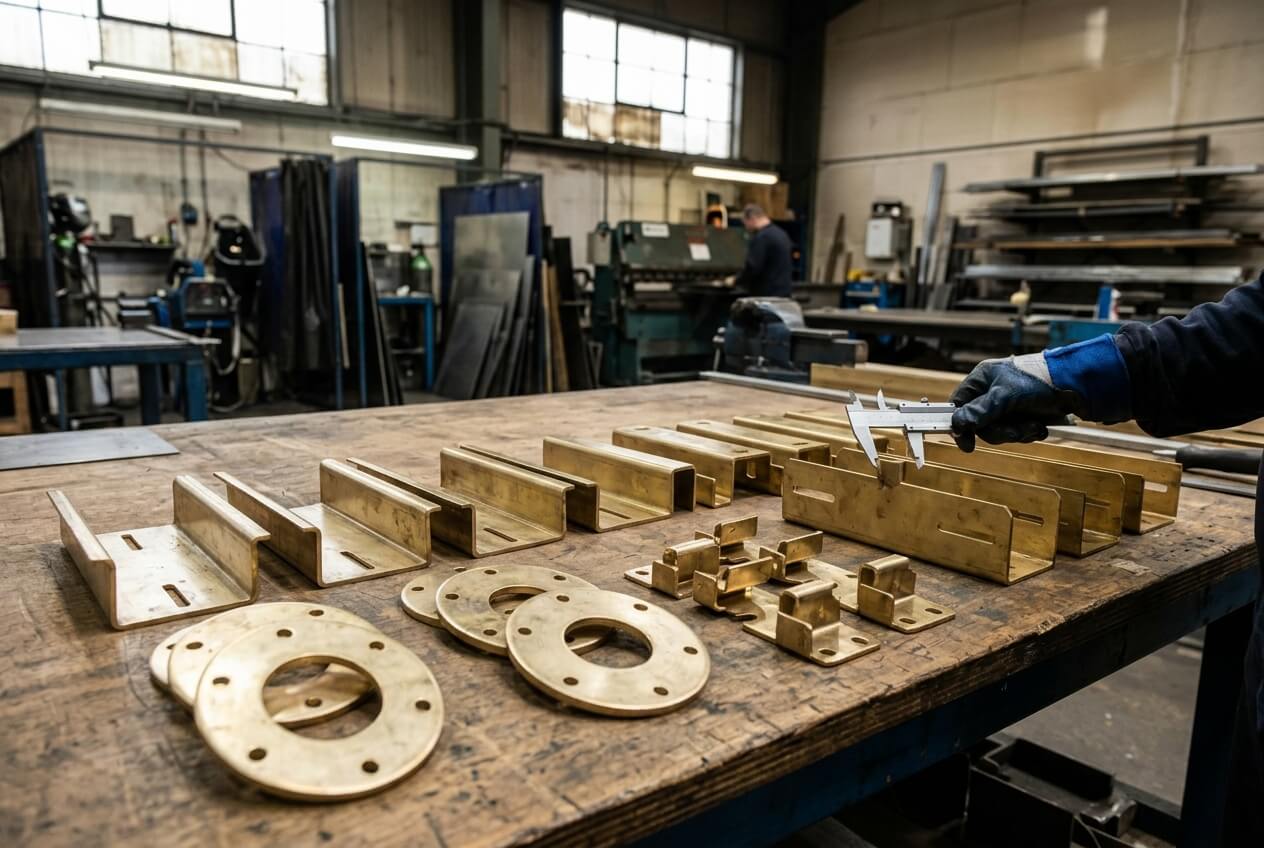
Prototype success can hide process drift. A sample brass part often benefits from hand correction, slower setup, or a more forgiving piece of stock. That makes the sample look ready for production when the actual batch route is not stable yet. Once quantity increases, small differences in bend order, grain direction, or finishing sequence can change the fit.
This matters most when the brass part must mate with another part. A coated frame, a painted cabinet, or a machined subassembly can all expose tiny offset errors. A sample may fit because an operator widened a hole or eased a flange by hand. The batch has no such correction. The buyer only sees the issue after approval, when rework already affects cost and lead time.
Define the mating condition, not just the brass part
If the brass part fits into a larger assembly, the RFQ should describe that assembly condition. State whether the mating part is painted, plated, coated, or bare. Give datum points. Give the critical hole locations and flange interfaces. If the part must fit after finishing, say whether the dimensions apply before or after surface work. That detail often decides which quote is real and which quote is optimistic.
This is where Yishang can help during drawing review and prototype planning. The goal is not a nicer quote. The goal is a quote that matches the assembly condition before the first sample. That reduces surprises when the order moves from proof piece to batch run.
Two sample-to-batch failure patterns appear often
First, the prototype uses a soft setup and the production batch uses a faster route. The bend angle changes, and the assembly hole misses by a small margin. Second, the sample gets extra cleanup after forming, but the batch quote assumes standard finishing only. In both cases, the buyer approved one condition and paid for another.
Those failures are avoidable when the RFQ includes the same details the factory will use in production. Quantity matters because it changes how much setup control the supplier can justify. Tolerances matter because they define the inspection burden. Finish expectations matter because they change the final handling steps.
What to lock into the RFQ before you compare brass supplier quotes
A fair quote starts with a drawing that removes easy assumptions. The buyer should send the brass part geometry, alloy preference if known, quantity, tolerances, finish expectations, and assembly photos when the part fits into a larger build. If the part will run near heat, give the actual service temperature and exposure time. If the part is cosmetic, mark the visible face and the scratch limit.
The key is not to over-document everything. It is to document the points that change process choice. A supplier can work from a clean drawing much faster than from a vague request. When the same information reaches every supplier, the quotes become comparable. When that information is missing, the lowest price may only reflect the most optimistic assumptions.
For buyers comparing custom sheet metal fabrication options, ask for drawing review before you accept the first number. Yishang can review brass sheet parts, metal enclosures, brackets, frames, and welded assemblies against manufacturability and fit risk. That review is most useful when it happens before quoting, not after the first sample fails.
Send the drawing, material requirements, quantity, tolerances, and finish expectations with any prototype notes. If possible, include mating-part photos and the expected operating temperature. That gives the supplier enough detail to quote the real brass part, not a generic version of it.
Frequently Asked Questions
What temp does brass melt for a procurement discussion?
Common brass alloys melt around 900-940 C (1650-1725 F), but the exact range depends on the alloy family. For buying decisions, the service temperature matters more than the headline melt point because it affects softening, distortion, and finish quality.
Why does a brass quote change when I only state the material name?
Because the supplier still has to guess the alloy, temper, surface condition, and joining route. Those choices affect cutting, bending, cleanup, and inspection. Two quotes can both be valid and still describe different work.
How do tolerances affect brass sheet metal fabrication quotes?
Tighter tolerances usually increase setup control and inspection time. They also reduce how much springback and finishing variation the factory can allow. If the drawing does not define critical dimensions clearly, the quote may not include the right control steps.
What should I specify for a brass enclosure with a visible face?
Mark the visible side, the scratch limit, and the acceptable edge condition. If the part needs polishing, masking, or protected packaging, name that in the RFQ. Visible brass surfaces often drive more work than the geometry itself.
Why can a brass prototype fit when the batch does not?
Prototype parts often get hand correction, extra filing, or slower setup. Batch parts do not. Small changes in bend order, temper, or finishing can move the holes or flanges enough to affect assembly.
What should I send before asking Yishang for a brass RFQ?
Send the drawing, material requirements, quantity, tolerances, finish expectations, and any prototype or mating-part notes. Add the expected operating temperature if the part sits near heat. That helps Yishang review manufacturability and quote the part on the right assumptions.