
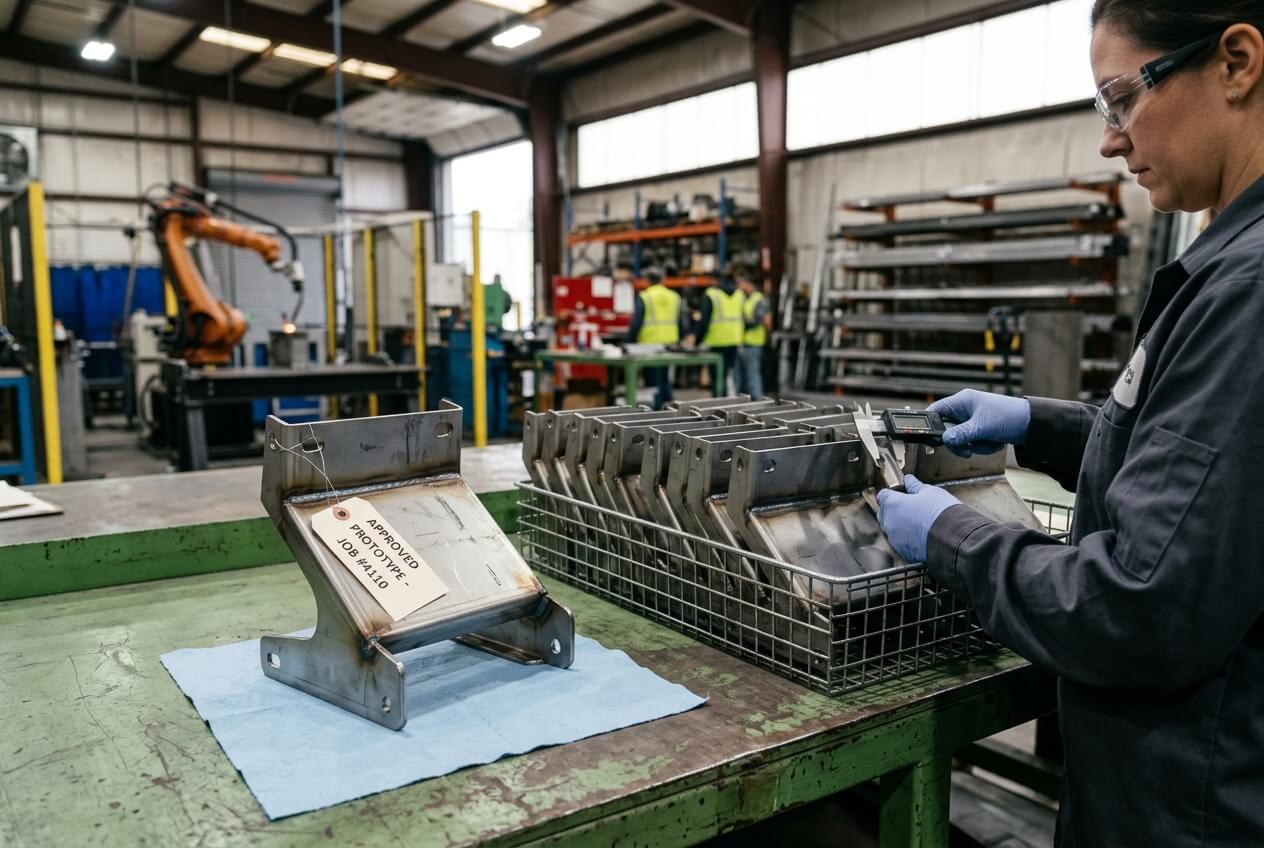
A welded prototype can look ready for approval and still hide the risk that will damage the batch order. The enclosure door closes. The mounting holes line up. The powder coated surface looks acceptable. Purchasing sees a working sample, confirms the price, and releases the order.
Batch production then exposes a different reality. Frames twist after welding. Door gaps move from unit to unit. Ground seams show through powder coating. Internal brackets interfere with final assembly. The problem did not start on the production floor. It started when the prototype passed without documenting the manual fixes that made it pass.
This is the central welding how risk for procurement teams buying custom sheet metal fabrication. A prototype proves that one part can be made. It does not prove that the same result can repeat at 50, 500, or 2,000 pieces. If the approved sample needed extra clamping, straightening, grinding, hole opening, or assembly adjustment, those actions must become production controls or drawing requirements.
Buyers do not need to manage welding technique. They need to control the acceptance risk. The RFQ should define which prototype features must repeat, which welds affect assembly, which surfaces affect appearance, and which corrections cannot remain hidden hand work. Without that clarity, suppliers quote different assumptions, and the batch order inherits the weakest one.
Prototype Approval Becomes Risky When Manual Fixes Stay Undocumented
A passed prototype often carries more information than the drawing. The problem is that much of that information stays in the sample room. A technician may tack the assembly, check the door, pull the frame back into shape, grind a seam, open two holes, and polish a visible corner. The buyer sees the finished part, not the recovery path.
That difference matters in batch production. A supplier can spend two hours correcting one sample and still keep the project moving. The same correction across hundreds of welded assemblies changes cost, lead time, and consistency. Worse, operators may not repeat the same fix each time. One batch may leave the welding area within tolerance, while another batch needs rework after coating or assembly.
The Sample Can Hide the True Process
Consider a wall-mounted electronics enclosure. The prototype door gap looks even after the supplier adjusts the hinge-side panel during sampling. The drawing only states general dimensions and powder coating. When the batch starts, the welding sequence pulls the side panels inward. The doors still fit some units, but others need hinge adjustment or force during assembly.
The buyer may believe the supplier changed the process. In many cases, the supplier simply followed the quoted process. The prototype passed because one unit received extra attention that never became a fixture plan, weld sequence, or inspection checkpoint. Procurement approved the outcome, but production needed the method.
Before batch release, buyers should ask what changed between the drawing, the first sample, and the approved sample. If the supplier moved a bracket, enlarged a hole, changed weld length, added grinding, or corrected frame twist, that detail belongs in the production file. Yishang can review these notes during drawing review when buyers share marked sample photos, assembly comments, and areas that must remain consistent.
RFQ Ambiguity Makes Different Welding Quotes Look Comparable
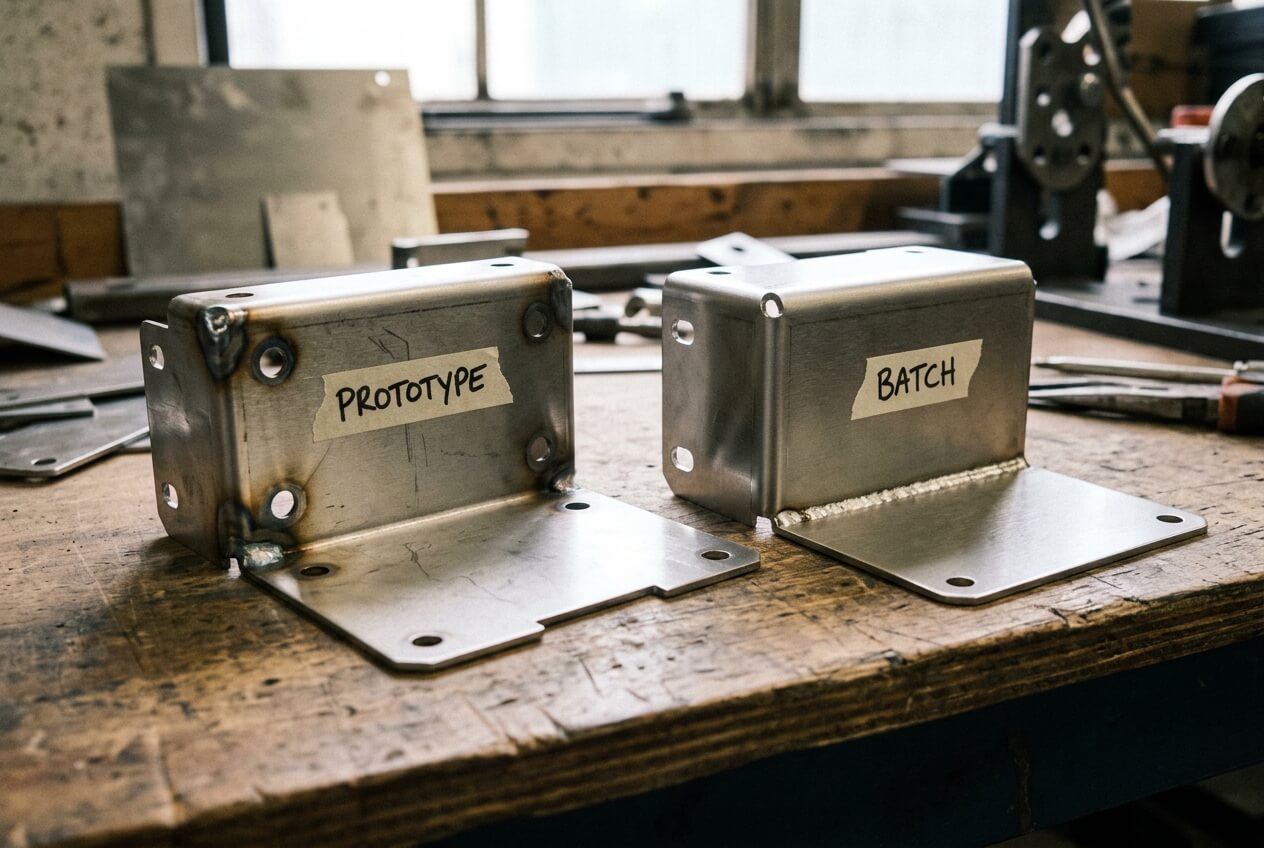
The same prototype risk moves backward into quotation. When the RFQ does not define the repeatability requirement, suppliers fill the gaps with their own assumptions. One factory may quote basic tack welds and general cleanup. Another may include a fixture, controlled weld sequence, cosmetic grinding, and first-article checks. The unit prices look easy to compare, but the quoted scope is not the same.
Weld intent needs more than a line on the drawing. A cabinet frame may show welded corners without stating whether seams must be continuous, intermittent, sealed, ground flush, or left visible. A bracket assembly may need strength around a mounting tab, yet the drawing may not define weld length or inspection method. A powder coated display rack may require clean visible joints, but the RFQ may not identify customer-facing surfaces.
Assumptions Turn Into Cost Drivers
Ambiguity rarely stays harmless. It affects unit price first. Some suppliers add cost for fixture time and finishing risk. Others quote low and assume standard industrial welding. A third supplier may plan to discuss extras after the sample. Once purchasing chooses a quote, those assumptions move into production planning.
Lead time can also change. If the batch needs a fixture after prototype approval, the supplier must design, test, and adjust it before stable production. If cosmetic grinding takes longer than expected, the finishing department becomes the bottleneck. If assembly fit fails during final inspection, rework can delay packing and shipment.
A useful RFQ should separate structural welds, positioning welds, sealed seams, and cosmetic welds. It should mark critical fit points such as hinge alignment, door gaps, mounting hole centers, bracket angles, and frame flatness. The RFQ should also state whether the quote must include a production fixture, first-article inspection, batch sampling report, or assembly fit check.
This does not turn procurement into a welding department. It gives each supplier the same basis for quotation. For custom sheet metal parts, the most valuable RFQ detail often explains what must repeat from the prototype, not only what the final drawing dimension says.
Assembly Fit Failures Often Reveal the Hidden Prototype Correction
Welding distortion does not always appear as a simple failed dimension. A frame can meet several measured points and still twist diagonally. A panel can meet a general tolerance while the hinge line moves. A bracket can pass hole diameter inspection but fail when the mating part arrives.
Heat input, joint layout, material thickness, bend radius, cutouts, weld sequence, and clamping all influence movement. Thin sheet metal moves quickly near flanges and long seams. A skilled welder can compensate during a prototype by changing tack order or applying local correction. Batch production needs a repeatable process, not individual judgment on every unit.
Fit Points Need Priority Over General Dimensions
General tolerances help, but they rarely protect the full assembly. Buyers should identify the dimensions that control use. Which holes locate another component? Which surfaces sit against a wall, floor, or machine base? Which door edges must align visually? Which brackets control installation angle?
A machine guard frame shows the risk clearly. The prototype fits after a technician slots one mating panel during trial assembly. The drawing does not capture that change. During batch production, frame corners pull inward after welding, and the customer cannot install the panels without rework. The defect appears late, after welding and coating have already consumed cost.
A welded battery cabinet can create a similar chain. Internal brackets may pass location checks before coating. After welding distortion and coating thickness combine, the battery tray drags during assembly. The supplier may need to grind coated areas, open holes, or remake brackets. Each fix adds labor and reduces consistency.
Procurement should ask for first-article assembly confirmation when the welded part mates with another component. For welded enclosures, that may include door gap, hinge alignment, latch function, mounting hole position, and internal clearance. For frames, it may include diagonal measurement, flatness on a reference surface, base plate angle, and mating panel fit. These checks connect directly to the hidden prototype corrections that can damage batch consistency.
Finish Expectations Can Expose Welding Assumptions After Coating
Welded-area finish creates another consequence chain. The prototype may pass because one visible seam received extra grinding or polishing. The batch quote may include only normal weld cleanup. After powder coating, the difference becomes obvious. Weld shadow, pinholes, spatter, and uneven grinding can stand out more after coating than before it.
The risk starts when the RFQ uses vague finish language. Terms such as clean, smooth, or good appearance do not define acceptance. A supplier may assume industrial appearance for a hidden bracket. The buyer may expect a customer-facing surface suitable for a retail display or control panel. Both sides may believe the prototype settled the issue, even though the sample received unpriced hand finishing.
Visible Zones Need Different Rules
Buyers should define finish by zone. External cabinet corners, front doors, display rack joints, and user-facing panels may need tighter cosmetic control. Internal support welds may only need strength, spatter removal, and clearance. Treating all welds as cosmetic adds unnecessary cost. Treating all welds as functional creates rejection risk.
For a powder coated display rack, visible welded joints near eye level may need flush grinding before coating. Hidden base supports may not. For a stainless control box, grain direction and heat tint removal may matter on the front face, while internal weld marks may be acceptable if they do not interfere with components. These distinctions should appear in the drawing, marked photos, or inspection notes before suppliers quote.
Finish expectations also affect lead time. Cosmetic grinding, polishing direction, pinhole repair, masking, and coating inspection all consume process time. If procurement discovers these needs after approval, the supplier must either absorb unquoted work or request a price change. A clearer RFQ reduces that conflict. Yishang can review finish zones with welding and bending assumptions when buyers provide drawings, prototype photos, and expected visible surfaces.
Batch Release Should Freeze Repeatable Outcomes, Not Just the Approved Sample
Many batch problems start with broad approval language. Phrases such as produce as sample, follow prototype, or approved for mass production do not define what the supplier must control. For a flat laser cut part, that language may be enough. For a welded assembly, it leaves too much room for variation.
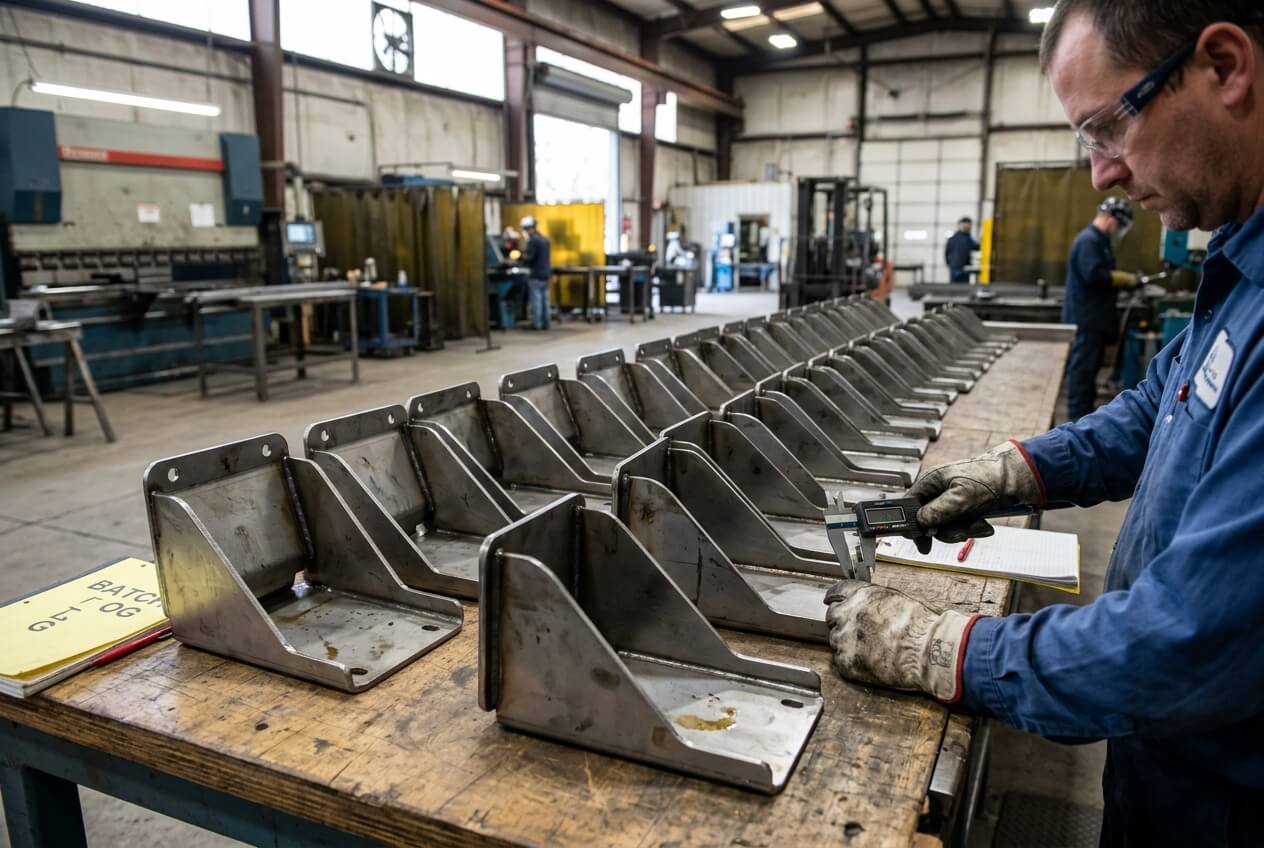
Before releasing the batch, buyers should freeze the acceptance outcomes. The supplier may still optimize weld size, weld location, sequence, fixture design, or bend details after manufacturability review. Procurement should control the features that affect product acceptance: assembly fit, visible weld areas, critical hole positions, squareness, flatness, bracket angles, and coating appearance around seams.
Production Controls Should Match the Failure Mode
The inspection plan should reflect the actual risk. If the product risk is door alignment, check hinge line, latch fit, and gap consistency. If the risk is mounting accuracy, check hole pattern position after welding and coating. If the risk is cosmetic rejection, inspect welded seams after finishing, not only before coating. If the risk is frame twist, use diagonal checks and a reference surface.
Procurement should also decide how much sample feedback must enter the drawing pack. Marked drawings, redlined photos, approved sample notes, and assembly reports give production teams clearer instructions. Supplier communication should focus on repeatability, not blame. Ask which prototype fixes can become process controls, which fixes require design changes, and which expectations affect price or lead time.
This approach also protects quote comparison. A supplier that includes fixture time, first-article checks, and cosmetic weld preparation may look more expensive than one that assumes basic welding. Once the buyer defines repeatable outcomes, the real cost becomes easier to compare. The lowest quote may still win, but it should win against the same production requirement.
For buyers moving from prototype to batch, the strongest welding how question is simple: what made the approved sample acceptable, and how will that result repeat without hidden manual correction? Answer that before the purchase order, and many late disputes disappear from the project.
Preparing a welded sheet metal RFQ or moving an approved prototype into batch production? Send Yishang your drawings, material requirements, quantities, tolerance notes, finish expectations, prototype photos, assembly comments, and any sample corrections made during approval. The team can review welding, bending, finishing, fixture, and inspection assumptions before the quote becomes the production baseline.
Frequently Asked Questions
Why can a welded prototype pass but still fail during batch production?
A prototype may pass because one unit received manual correction through clamping, straightening, grinding, hole adjustment, or assembly fitting. If the buyer and supplier do not document those corrections, production may follow a simpler quoted process that cannot repeat the approved result.
What welding how details should buyers include in an RFQ?
Buyers should define weld intent, critical fit points, visible weld zones, finish expectations, tolerance priorities, material thickness, quantity, and inspection needs. The RFQ should also state whether the quote must include fixtures, first-article inspection, or assembly confirmation.
How do hidden prototype fixes affect welded assembly cost?
Hidden fixes can add fixture work, extra grinding, polishing, rework, inspection time, or longer assembly checks after the quote. If the RFQ does not include those needs, suppliers may price different scopes, and the final batch cost can move after approval.
Which welded assembly features should buyers check before batch release?
Buyers should check the features that control acceptance, such as door gaps, hinge alignment, latch function, hole pattern location, bracket angle, frame squareness, flatness, internal clearance, and visible seam finish after coating or polishing.
How should buyers document prototype corrections for sheet metal parts?
Buyers should mark corrected areas on drawings or photos and record any straightening, opened holes, moved brackets, added grinding, polishing changes, or assembly adjustments. These notes should become part of the production drawing pack or inspection plan.
When should Yishang review welded prototype feedback?
Yishang should review feedback before the batch quote is finalized or before production release. Drawings, material requirements, quantities, tolerances, finish expectations, sample photos, and assembly notes help identify welding and manufacturability assumptions early.