
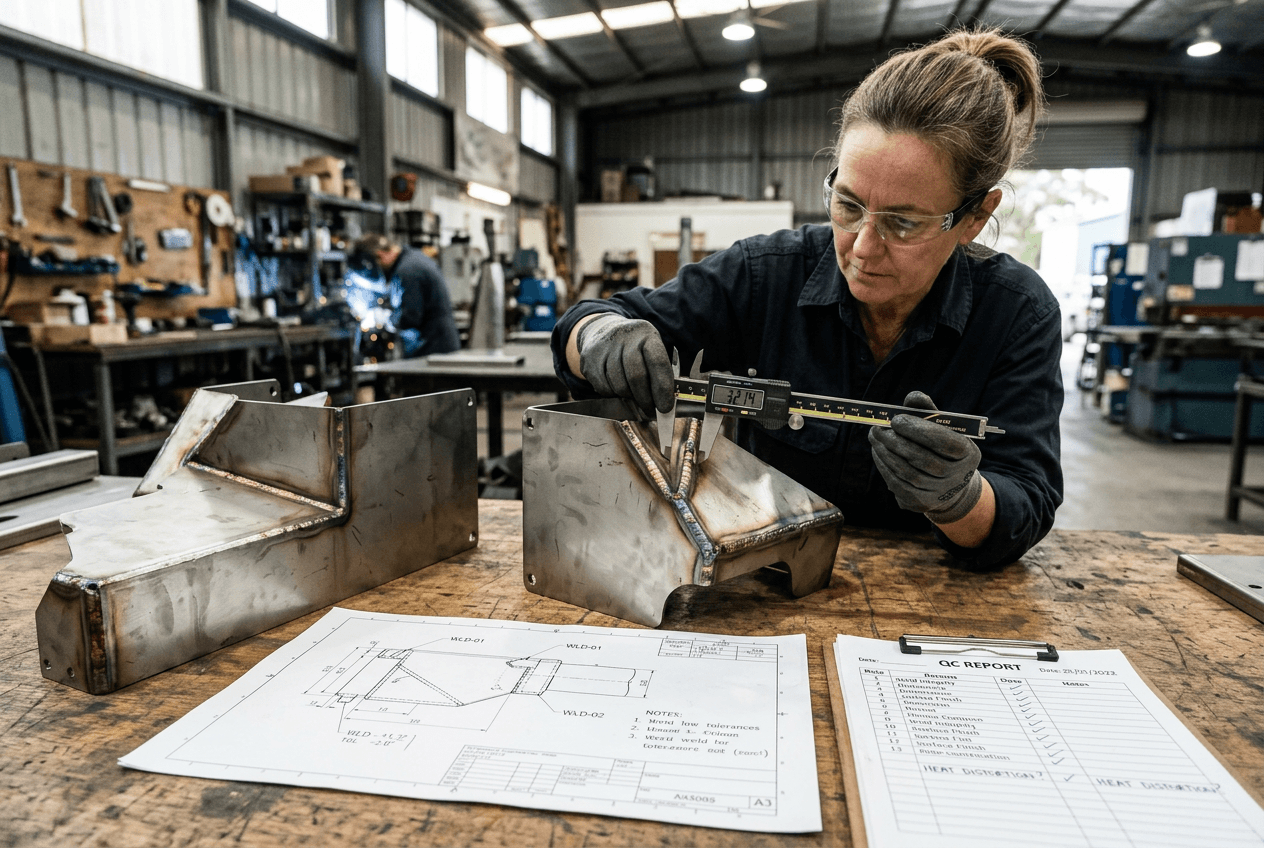
An OEM buyer sends one enclosure drawing to three sheet metal suppliers. The drawing shows laser-cut panels, bent flanges, welded corners, powder coating, and a visible front edge. One supplier quotes TIG welding on the outside seams. Another quotes MIG welding with grinding. A third quote lists only “welded assembly” and gives the lowest unit price.
The buyer may see normal price variation. In production, the same gap can become a dispute about appearance, flatness, hole alignment, and delivery. The problem does not start on the welding bench. It starts when the RFQ lets each supplier guess what the weld must do.
So, what is the TIG welding issue buyers need to control? TIG welding uses a non-consumable tungsten electrode to create a precise arc, often with separate filler wire. It can produce clean welds on stainless steel, aluminum, and thin sheet metal. That definition matters, but procurement risk sits elsewhere. Buyers need to state where TIG welding is required, where another process may work, and what the finished weld must look like after coating, polishing, or assembly.
If the RFQ only says “smooth welds” or “welded corners,” suppliers will not quote the same scope. One may include fixture time, slow TIG welding, careful grinding, and cosmetic inspection. Another may quote a faster weld that meets strength needs but leaves a visible bead. Both can argue they followed the drawing. By then, the buyer has lost a clean basis for price comparison.
RFQ Ambiguity Turns TIG Welding Into a Quote Assumption
The dominant risk is not choosing TIG welding incorrectly. The bigger risk is letting the supplier choose the meaning of TIG welding for each joint. Sheet metal assemblies often combine cosmetic seams, hidden brackets, load-bearing frames, and coating-sensitive surfaces. A single process note rarely explains those differences.
A good RFQ separates weld purpose from weld appearance. The buyer should mark which seams face the customer, which joints carry load, and which welds only close a corner. That distinction changes labor, fixturing, grinding, inspection, and sometimes the whole joint design.
Where the Quote Starts to Drift
Consider a stainless control enclosure with a visible front corner and an internal mounting bracket. The front corner may need TIG welding, careful heat control, directional brushing, and a clean transition into the visible surface. The internal bracket may only need strength and position. If the RFQ treats both welds alike, one supplier may overprice the hidden bracket. Another may underprice the front corner.
The same issue appears on powder-coated cabinets. A supplier may weld an outside corner, clean it, and rely on coating to hide the bead. Another may grind the seam flush before coating. The unit price will differ because the work differs. The buyer cannot compare those quotes until the weld profile and finish expectation become part of the purchasing scope.
Yishang can review drawings for this kind of weld assumption before a buyer compares prices. The useful question is not only whether a supplier can TIG weld. The useful question asks which seams need TIG, which seams do not, and how those choices affect cost, appearance, and repeatability.
Unclear Weld Scope Creates Cost Gaps Before Production Starts
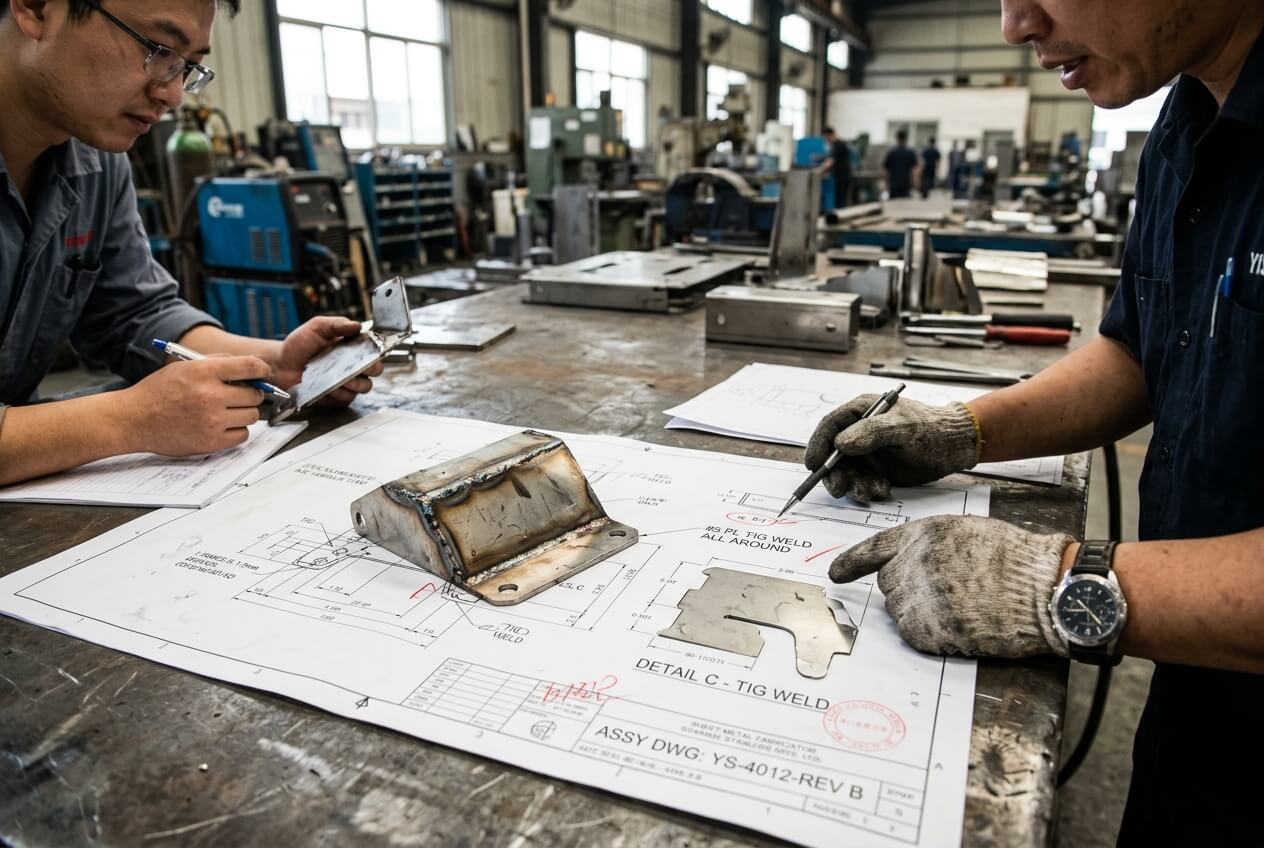
Welding scope includes more than process name. It includes weld length, continuity, access, filler use, bead size, grinding level, and inspection method. A drawing can show a joint location while still leaving those details open. That gap makes sheet metal fabrication quotes look comparable when they are not.
Continuous welds cost more than intermittent welds. Flush grinding costs more than light cleaning. Cosmetic TIG welding on exposed stainless steel costs more than welding hidden steel tabs before powder coating. These are not small purchasing details. They change operator time, fixture design, distortion control, and final inspection.
Example: Equipment Cabinet With Welded Door Frame
A buyer sources a steel equipment cabinet with a welded door frame and powder-coated exterior. The drawing controls outside dimensions but does not define the welded corner finish. Supplier A includes continuous TIG welding and flush grinding on the door frame. Supplier B includes intermittent welds and standard cleanup. Supplier C assumes MIG welding because the part will be coated.
The lowest quote may still pass a basic strength check. It may also leave a visible line under the powder coat or pull the door out of plane. The buyer then faces rework, a delayed pilot run, or a debate about whether “good appearance” means flush and smooth. Clear weld notes would have moved that decision into the RFQ stage.
Buyers should ask suppliers to list welding assumptions inside the quotation. The quote should state whether visible seams receive TIG welding, whether grinding is included, whether welds are continuous or intermittent, and whether inspection occurs after welding and after finishing. That record protects both sides when the prototype arrives.
Cost Drivers That Need Early Language
Several cost drivers hide inside the word “TIG.” Thin material may need lower heat input and slower travel. Long seams may need stitch sequencing or fixture support. Stainless surfaces may need discoloration control and brushing direction. Aluminum parts may need cleaner preparation and tighter operator control. None of these details belong in a vague supplier email after the price has been approved.
Lead time also changes when the weld scope becomes cosmetic. A shop may need more fixture setup, additional grinding stations, or a separate finish inspection step. If the buyer discovers that need after sample rejection, the schedule slips. If the RFQ states the visible surfaces and acceptance criteria, suppliers can quote a realistic production route from the start.
TIG Welding Notes Must Protect Assembly Fit, Not Only Appearance
Many TIG welding disputes start with surface appearance, but assembly fit often creates the larger cost. Welding adds heat. Heat can move holes, bend panels, twist frames, and change how mating parts align. A clean weld bead does not guarantee that the assembly fits the customer’s equipment.
Buyers often provide individual part drawings without the assembly context. That leaves the supplier to guess which dimensions matter after welding. A bracket hole near a welded flange may need a tighter post-weld position than the drawing suggests. A cabinet door may need flatness control after welding and coating, not only before fabrication.
Example: Bracketed Enclosure for Rail-Mounted Electronics
An electronics OEM orders a sheet metal enclosure with welded internal brackets. The brackets hold a rail-mounted component, and the cover must close without rubbing. The drawing lists general tolerances but does not identify the rail interface as critical. During welding, the bracket shifts slightly. The prototype works after manual adjustment, but the first batch creates assembly delays.
The weld was not the only problem. The RFQ failed to connect the TIG welding decision to the tolerance stack. The buyer should have marked the bracket location as critical after welding, supplied the mating rail detail, and asked the supplier how fixtures would hold the bracket during production.
For welded frames, display racks, cabinet doors, and enclosures, procurement should define the functional dimensions that matter after welding. Hole positions, door gaps, cover fit, hinge alignment, and mounting surfaces deserve attention. If those features sit near welds, the supplier must plan welding sequence, clamping, and inspection around them.
Finish can also affect fit. Powder coating adds thickness. Grinding can remove material near a corner. Polishing can soften a visible edge. These details should not turn into a broad textbook discussion in the RFQ. Buyers only need to connect each finish requirement to the features it can change. That keeps supplier communication practical and tied to approval risk.
Prototype Approval Can Hide Batch Welding Problems
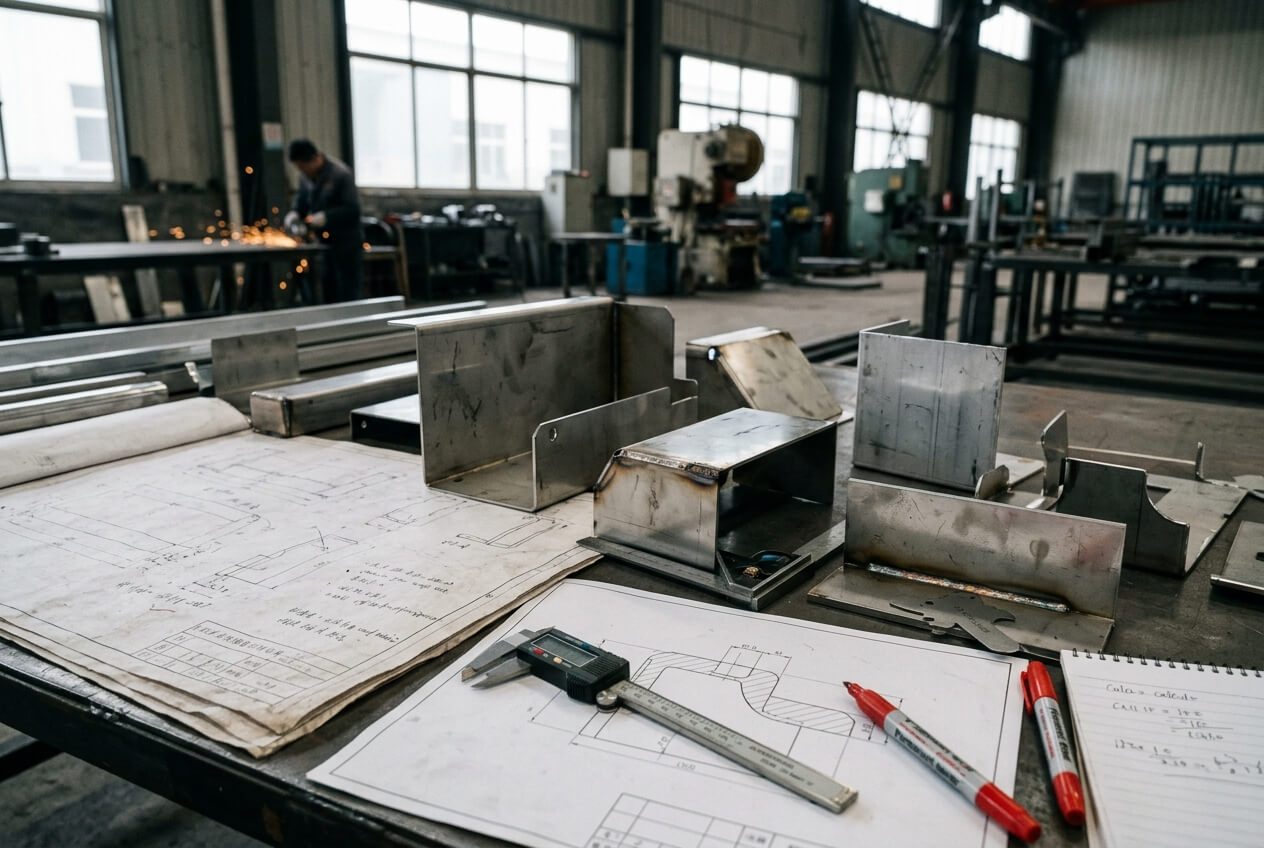
A prototype can make TIG welding look controlled even when the production method remains unstable. One skilled welder can spend extra time on a sample. A technician can adjust a bracket by hand. A finisher can polish one corner until it looks acceptable. Batch production exposes whether the process repeats.
This matters when the quote does not include fixture cost, weld sequence control, or inspection time. The prototype may pass because the supplier rescued it with manual correction. The production lot then shows panel waves, uneven weld cleanup, hole drift, or coating marks near welded seams.
What the Prototype Must Prove
Prototype approval should confirm the production route, not just the appearance of one part. Buyers should ask whether the supplier used the same fixture planned for batch production. They should confirm whether weld sequence, grinding level, and inspection points match the quoted process. A golden sample helps only when it defines repeatable conditions.
A flat cabinet door shows the risk clearly. A reinforcement channel welded behind the panel may create a slight surface wave. The prototype might pass under one lighting condition. In a lot of 300 units, variable heat input and grinding pressure may make the wave visible after powder coating. The buyer then pays through rework, sorting, or delayed shipment.
For cosmetic stainless display parts, repeatability includes polish direction, color consistency near the heat-affected area, and acceptable weld blending. For functional brackets, repeatability includes hole alignment and load path. The RFQ should state which checks occur after welding and which checks occur after finishing.
Yishang’s prototyping support is most useful when buyers send the real acceptance conditions. Drawings alone may not show how the part mounts, which surfaces face the customer, or where coating marks will fail inspection. Photos, mating parts, and sample references reduce interpretation risk before batch release.
Clarify TIG Welding Assumptions Before Comparing Suppliers
Buyers do not need to over-specify every manufacturing step. They need to remove the assumptions that change price and approval risk. For TIG welding, those assumptions usually sit around visible seams, functional welds, heat distortion, finishing, and batch inspection.
A stronger RFQ gives the supplier room to recommend a better process while protecting the buyer’s critical outcomes. It may require TIG welding on exposed stainless corners but allow MIG welding on hidden frame joints. It may require flush grinding on powder-coated exterior seams but allow standard cleanup on internal brackets. It may request supplier feedback on bend reliefs, weld access, and fixture needs before final pricing.
Supplier Responses Worth Comparing
A useful supplier response names the weld methods by area. It explains why one seam needs TIG and why another seam can use a different joining method. It identifies thin panels, long seams, tight corners, or bracket locations that may move during welding. It also states what finishing and inspection the price includes.
A weak response says the supplier can make the part according to the drawing and then gives a unit price. That answer may work for simple cut-and-bend parts. It creates risk for welded assemblies because the drawing may not show every cosmetic and functional expectation.
Before awarding the order, buyers should send drawings, material grade and thickness, quantities, tolerances, finish expectations, visible-surface notes, assembly requirements, and any prototype concerns. For custom sheet metal fabrication, metal enclosures, brackets, frames, and welded assemblies, those inputs help Yishang review where TIG welding adds value and where another method may reduce cost without weakening the part.
The buying decision becomes clearer when every supplier quotes the same weld scope. Price still matters, but the price now reflects defined work. That clarity reduces sample disputes, protects assembly fit, and makes prototype approval a stronger indicator of batch production.
Send your drawings, material requirements, order quantities, tolerances, finish expectations, and assembly notes through Yishang for RFQ review. Include photos or samples when visible welds, coating appearance, flatness, or mating-part fit could affect approval.
Frequently Asked Questions
What is the TIG welding detail buyers should define first?
Buyers should first define which welds are cosmetic and which welds are functional. That decision controls process choice, grinding level, finish inspection, and quote accuracy. A visible enclosure corner may need TIG welding and smooth blending, while a hidden bracket may only need strength and position.
Why can two TIG welding quotes differ so much for the same drawing?
The drawing may leave weld length, continuity, bead appearance, grinding, and post-weld inspection unclear. One supplier may include cosmetic TIG welding with fixture control and flush finishing. Another may quote a faster weld with light cleanup. The prices differ because the assumed work scope differs.
When should buyers allow another welding process instead of TIG welding?
Buyers should allow alternatives when the weld is hidden, coated, or mainly structural and another process can meet strength, fit, and finish requirements. MIG welding, spot welding, laser welding, riveting, or a bend redesign may reduce cost or distortion on selected joints.
How can TIG welding affect assembly fit on sheet metal parts?
TIG welding still adds heat, even when the operator controls the arc well. Heat can move holes, bow panels, twist frames, or shift welded brackets. Buyers should mark critical dimensions that must hold after welding and finishing, especially near mounting points and mating surfaces.
What should a prototype prove before batch production starts?
A prototype should prove the repeatable production method. Buyers should confirm fixture use, weld sequence, grinding level, cosmetic standard, post-weld dimensions, coating result, and mating-part fit. A polished one-off sample does not prove that the same result will repeat across a batch.
What RFQ information helps suppliers quote TIG welding accurately?
Send drawings, material grade and thickness, annual or batch quantities, visible-surface notes, tolerances, finish expectations, assembly requirements, photos, and samples when available. Ask the supplier to state the welding and finishing assumptions inside the quote so each price reflects the same scope.