
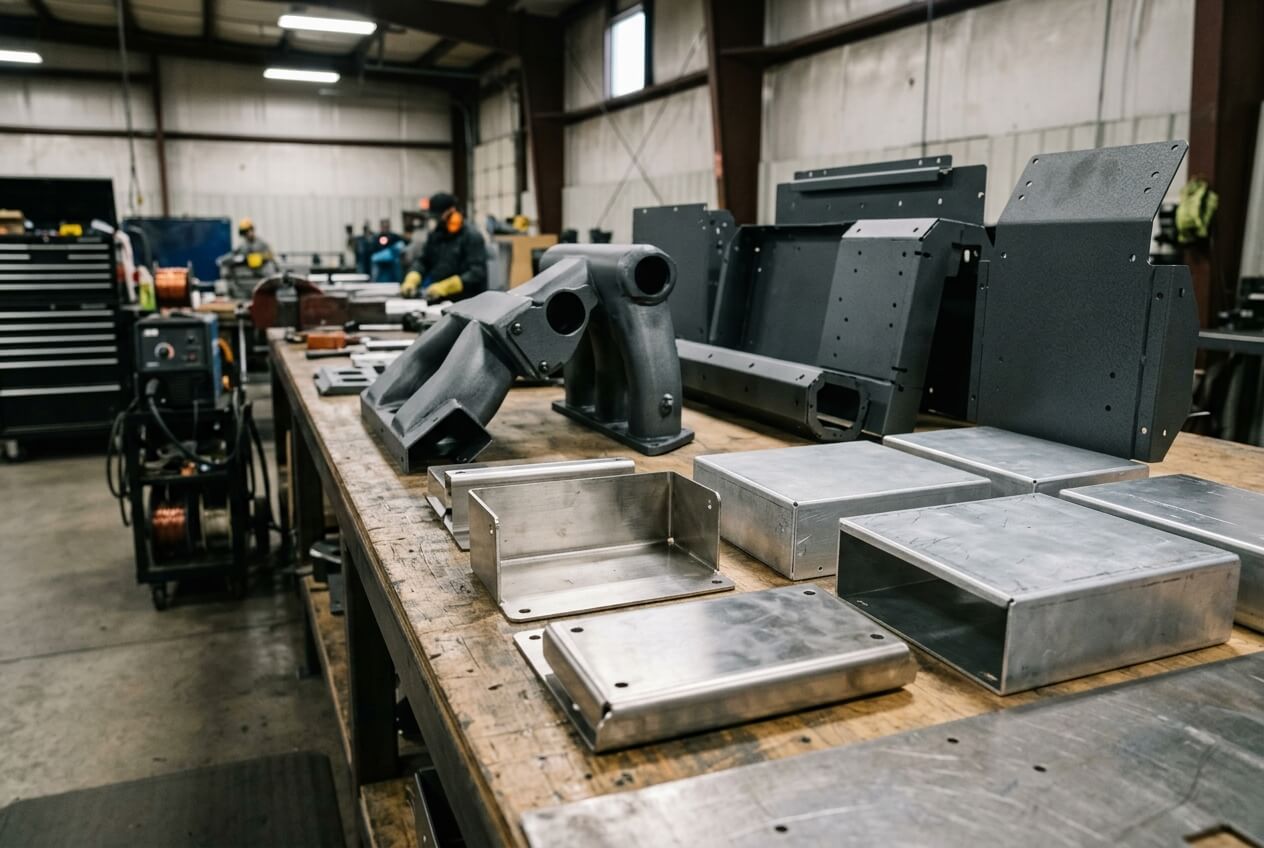
An OEM buyer sends one drawing for an outdoor sheet metal cabinet to three suppliers. The RFQ says, “galvanized, anti-rust, suitable for outdoor use.” One supplier quotes pre-galvanized sheet with powder coating. Another quotes cold-rolled steel, fabrication first, then hot-dip galvanizing. A third assumes zinc-rich primer under paint.
The prices look close, but the suppliers did not quote the same product. Each route changes weld preparation, cut-edge protection, powder adhesion, hole clearance, thread condition, lead time, and final appearance. The buyer may choose the lowest unit price and discover the real gap only after sample approval or batch assembly.
The dominant risk is RFQ ambiguity. Zinc words look simple, yet they hide major process decisions. Even the boiling point zinc reaches, about 907°C, affects procurement risk because welding temperatures exceed it. Zinc near the weld can vaporize, create fume-control needs, damage coating around joints, and require repair before final finishing.
For buyers of custom sheet metal fabrication, the question is not “Is zinc good?” The safer question is: “Which zinc route did each supplier assume, and what production consequences did the quote include?”
Where Zinc RFQ Ambiguity First Distorts the Quote
Most zinc-related sourcing problems start before production. They start when the RFQ uses finish words that do not define the manufacturing route. “Galvanized,” “anti-corrosion,” “zinc coated,” and “outdoor finish” can all describe different process plans. Suppliers then price different assumptions while appearing to answer the same request.
Pre-galvanized sheet often supports efficient cutting, bending, punching, and cabinet fabrication. It can suit indoor or sheltered parts when cut edges and weld zones receive proper treatment. Post-fabrication hot-dip galvanizing follows a different logic. The fabricator cuts, bends, welds, and then galvanizes the completed assembly. This can protect welds and many edges, but it adds coating thickness, drain-hole requirements, zinc runs, thread work, and possible distortion.
Zinc-rich primer or zinc spray creates another pricing path. A supplier may use it to repair welds, protect local cut areas, or build a paint system. That route may work for lower-risk brackets, racks, or indoor frames. It does not automatically equal full galvanizing. Surface preparation, film thickness, curing, and topcoat compatibility decide its real performance.
Example: one rack, three invisible quotes
A retail display rack RFQ states “galvanized and black powder coated.” Supplier A quotes pre-galvanized tube, welds the frame, sprays zinc repair on joints, and powder coats. Supplier B fabricates from black steel, hot-dip galvanizes the welded rack, then quotes powder coating as a secondary option. Supplier C uses cold-rolled steel, zinc-rich primer, and black powder coating.
The buyer sees three prices for one rack. In reality, Supplier A carries weld-repair risk, Supplier B carries texture and fit risk, and Supplier C carries primer-preparation risk. If the RFQ does not freeze the zinc route, the buyer compares assumptions rather than value. The lowest price may simply omit repair time, masking, thread chasing, or post-finish inspection.
A stronger RFQ does not need excessive detail. It needs the process decisions that affect cost and failure. Buyers should state the service environment, required zinc route or approved alternates, visible faces, weld repair expectations, coating over zinc, and whether holes or threads can receive post-finish rework.
Why Welding Makes “Galvanized” a Production Risk, Not Just a Finish Word
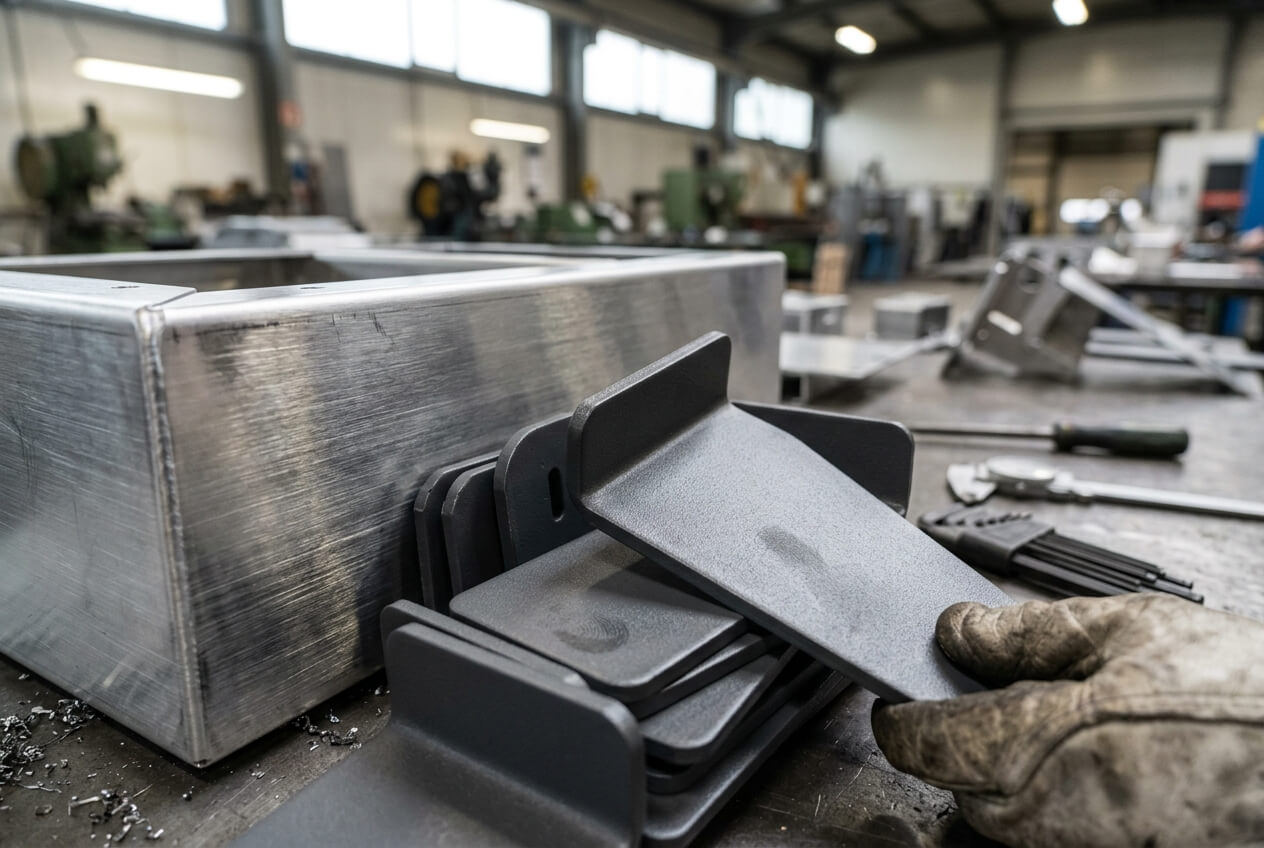
Welding turns zinc ambiguity into a production issue. The boiling point zinc reaches matters because arc welding and other thermal processes exceed 907°C. Zinc near the joint can vaporize. That vapor can affect operator safety controls, weld preparation, weld appearance, and the condition of the surrounding protective layer.
If a supplier quotes pre-galvanized sheet or tube, they must plan what happens at every welded joint. Grinding may remove local coating. Heat can burn zinc beside the bead. The assembly may then need zinc spray, zinc-rich primer, cleaning, or a compatible powder coating system. When the quote ignores those steps, the first samples may look acceptable, but batch parts can show early rust around welds.
Post-fabrication hot-dip galvanizing avoids some weld-zone repair because the assembly receives zinc after welding. Yet that choice creates different risks. Hollow sections need vent and drain holes. Welded corners may trap flux or zinc. Thin frames may twist during dipping. Threaded holes, slotted holes, and hinge plates may need masking or rework.
Example: outdoor equipment frame with hidden weld assumptions
An equipment maker sources a welded base frame for semi-outdoor use. The drawing calls for square tube, welded corners, mounting plates, and slotted holes. The RFQ only says “galvanized finish.” One supplier prices pre-galvanized tube and local repair. Another prices hot-dip galvanizing after welding.
The pre-galvanized route offers lower cost and shorter lead time. However, the welds become the weak point unless the supplier controls grinding, zinc repair, and powder coating coverage. The hot-dip route improves overall protection, but zinc buildup can narrow the slots. Bolts that fit the prototype may bind during batch assembly.
The buyer should clarify the route before comparing quotes. They should also mark weld zones, bolt clearances, drain-hole permissions, and acceptable repair appearance. Those details let suppliers price the same risk. They also reduce later disputes about whether corrosion repair or hole rework belonged in the original quote.
Yishang often reviews welded assemblies by connecting weld location, finish route, and assembly fit before price confirmation. That review helps buyers avoid a quote that treats zinc as a simple coating while production treats it as a process constraint.
How Zinc Assumptions Move Into Holes, Threads, Edges, and Tolerances
Zinc ambiguity rarely stays on the surface. It moves into the features that make sheet metal parts assemble correctly. Cut edges, punched holes, louvers, slots, hinges, grounding points, threaded inserts, and mating brackets all react differently to each zinc route.
Pre-galvanized sheet carries zinc protection on the sheet surface before fabrication. Laser cutting and punching create new exposed edges. These edges may matter little inside a dry cabinet. They matter more on an outdoor enclosure with louvers, cable openings, drain slots, or exposed mounting holes. If the RFQ does not name those edges, the supplier may assume powder coating covers them well enough.
Hot-dip galvanizing after fabrication changes the tolerance stack. Zinc adds thickness around holes, slots, edges, and threads. A clearance hole can shrink. A slotted mounting hole can lose adjustment range. A threaded hole may need chasing. A hinge plate can shift enough to affect door fit. These changes may not violate the raw drawing, because the drawing may not state post-finish dimensions.
Fit problems usually appear after finishing
Many buyers inspect prototypes in the raw or semi-finished state. That creates false confidence. A door may swing correctly before powder coating. A bracket may bolt up before galvanizing. A cover may slide smoothly before coating thickness enters the stack. Once zinc and paint enter the process, those interfaces can tighten.
For metal enclosures, this risk often appears at doors, hinges, locks, PEM hardware, gasket grooves, and grounding studs. For brackets and frames, it appears at slotted holes, mating plates, and clamp points. Weld distortion and coating thickness combine, so the final problem rarely has one cause.
Buyers can reduce this risk by specifying whether key dimensions apply before or after finishing. Drawings should mark critical interfaces and note acceptable post-finish conditions. If threads can be chased, state it. If grounding points need bare metal, mark masking zones. If slots need a final clearance, define it after coating rather than only in the laser-cut profile.
This is where cost drivers become visible. Masking, re-tapping, slot checks, edge touch-up, and post-finish assembly testing add labor. They may also add lead time. A supplier that includes those controls will quote higher than one that assumes standard coating with no rework. The higher quote may carry lower procurement risk.
Why a Clean Prototype Can Still Hide Batch Zinc Failure
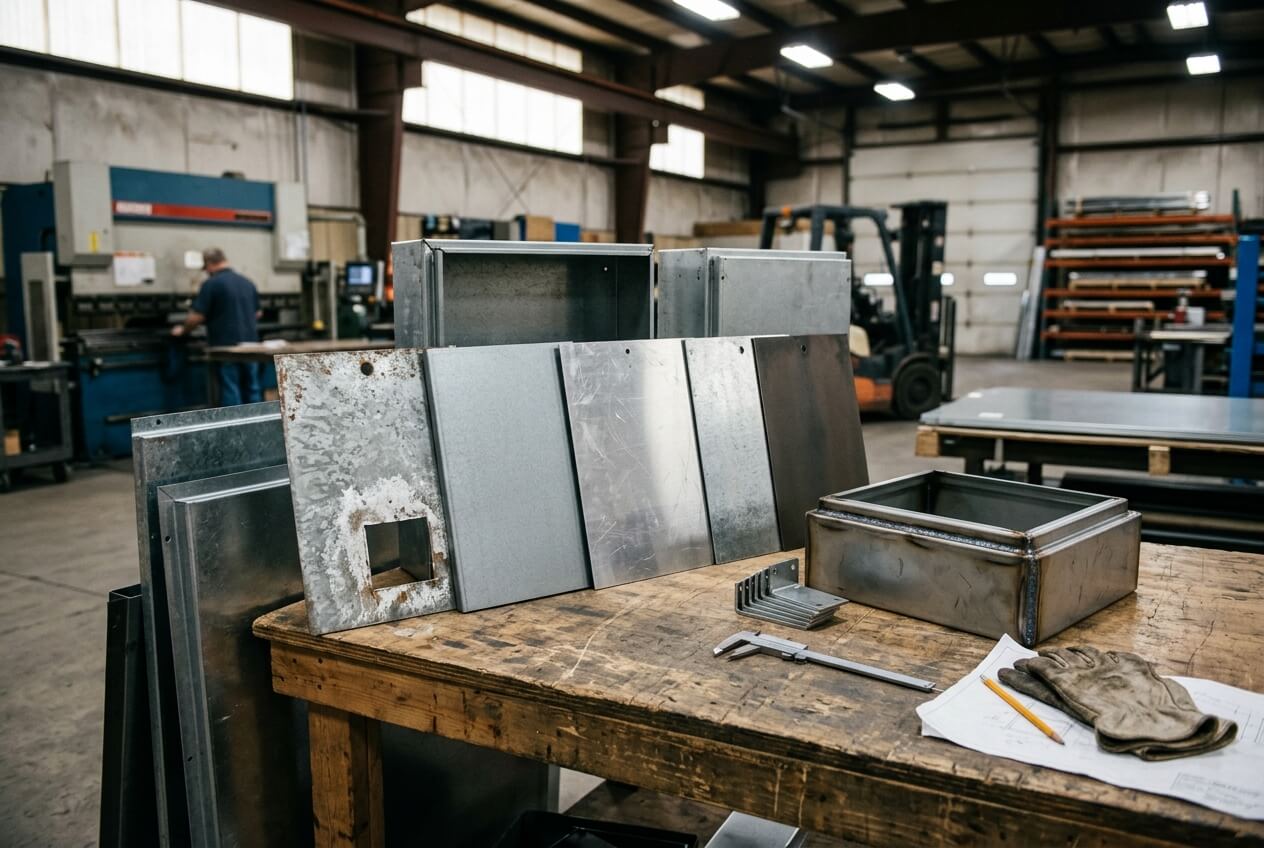
A prototype can pass while the production batch fails. Zinc-related processes depend on surface preparation, coating thickness, weld repair consistency, dipping orientation, powder curing, masking discipline, and inspection method. One careful sample does not prove that the supplier can repeat the same result across hundreds of parts.
Prototype teams often spend extra time on manual repair. They may grind welds more carefully, clean edges more thoroughly, or adjust a hinge by hand. Batch production moves faster. If the RFQ never defined the repair method, operators may make different choices across shifts. Some welds receive enough zinc spray. Others receive thin coverage. Some holes get cleaned. Others keep coating buildup.
Post-fabrication hot-dip galvanizing also varies between prototypes and batches. Dipping angle, drainage, rack position, and part geometry can change zinc buildup. A small prototype frame may stay straight. A production batch with longer welded members may show more twist or waviness. Thin panels and asymmetric assemblies face greater risk.
Example: powder-coated outdoor cabinet batch issue
A buyer approves a powder-coated outdoor cabinet sample. The door gap looks even, the lock engages, and the coating passes a visual check. During batch assembly, several doors rub near the hinge side. Some grounding studs have coating on the contact face. A few cable openings show exposed edges.
The root cause sits in the original RFQ. It asked for “galvanized steel with powder coating” but did not define post-finish door fit, grounding mask points, cut-edge protection, or hinge inspection. The supplier made a good sample, but the batch lacked a shared control plan.
Buyers should approve prototypes with production checks, not only photos. The approval should cover post-finish assembly, bolt fit, hinge movement, lock engagement, thread condition, visible-surface acceptance, and coating repair locations. If salt spray or corrosion testing matters, define the test method, hours, and acceptance areas. A flat coupon does not prove edge or weld performance unless the requirement says so.
Yishang can support this stage by reviewing drawings, prototype feedback, and inspection points before batch fabrication. The goal is not to add paperwork. The goal is to make the quoted zinc route repeatable.
What to Clarify Before Comparing Zinc-Based Supplier Quotes
Procurement teams should not let each supplier choose the zinc route silently. The safer method is to define one required route or ask for alternate quotes with named assumptions. This turns zinc from a hidden variable into a visible commercial and production decision.
Start with the use environment. Indoor dry cabinets, humid utility rooms, sheltered outdoor enclosures, exposed outdoor frames, coastal brackets, and industrial equipment bases do not need the same protection. Then connect the environment to the part geometry. A flat laser-cut panel has different risk than a welded frame. A cosmetic cabinet door has different limits than a hidden support bracket.
Next, clarify the finish sequence. State whether the supplier should use pre-galvanized sheet, electro-galvanized sheet, hot-dip galvanizing after fabrication, zinc-rich primer, zinc spray repair, powder coating over zinc, or an approved alternate. If alternates are allowed, require each supplier to list the route, repair steps, masking, and inspection method.
Drawings should identify visible surfaces and functional interfaces. Mark customer-facing faces where heavy zinc texture, pinholes, weld marks, or repair patches are unacceptable. Mark holes, slots, threads, hinges, sliding surfaces, gasket areas, grounding points, and mating brackets that need post-finish control. These notes prevent suppliers from spending money on hidden areas while missing critical fit points.
Buyers should also ask how the route affects cost and lead time. Hot-dip galvanizing may require outside processing, vent holes, drainage review, masking, and post-galvanizing cleanup. Powder coating over zinc may need pretreatment and outgassing control. Pre-galvanized fabrication may need weld repair and cut-edge treatment. These are not minor details. They define whether the quote includes the work needed for the product to function.
When requesting a quote from Yishang or another sheet metal fabrication partner, send drawings, material requirements, quantities, tolerances, finish expectations, visible-surface notes, hole and thread details, assembly requirements, prototype photos, and corrosion targets. Ask the supplier to confirm the zinc route in writing and list any assumptions that affect welding, bending, coating, inspection, packaging, or batch consistency.
The best quote is not always the lowest zinc price. It is the quote that names the route, includes the necessary controls, and matches the real service environment. That clarity protects budgets, schedules, and field performance.
Planning zinc-protected enclosures, brackets, frames, cabinets, or welded assemblies? Send Yishang your drawings, material requirements, quantities, tolerances, finish expectations, service environment, visible-surface notes, hole and thread details, and assembly requirements. Yishang can review whether the proposed zinc route fits the fabrication process, prototype plan, and batch inspection needs before you commit to a quote. Start at https://zsyishang.com/.
Frequently Asked Questions
Why does the boiling point zinc reaches matter in sheet metal fabrication?
Zinc boils at about 907°C, while welding temperatures exceed that level. Zinc near a weld can vaporize, create fume-control needs, and damage the surrounding coating. Buyers should clarify whether welding happens before or after zinc protection and how the supplier will repair affected areas.
Why can two galvanized sheet metal quotes describe different products?
The word galvanized can mean pre-galvanized sheet, electro-galvanized sheet, hot-dip galvanizing after fabrication, or zinc repair under paint. Each route changes cost, welding work, hole clearance, surface texture, lead time, and inspection. The RFQ should name the route or require suppliers to list their assumptions.
What zinc details should buyers add to an RFQ for outdoor enclosures?
Buyers should define the service environment, zinc route, powder coating expectations, visible faces, cut-edge protection, weld repair method, grounding masks, thread requirements, and post-finish fit checks. These notes help suppliers quote the same process and avoid hidden rework after sampling.
How does hot-dip galvanizing affect holes, slots, and threads?
Hot-dip galvanizing adds coating thickness around edges, holes, slots, and threaded features. Bolts may bind, slots may lose adjustment, and threads may need chasing. Buyers should mark critical interfaces and state whether masking, re-tapping, slot cleanup, or touch-up repair is allowed.
Why can a zinc-coated prototype pass but batch parts fail assembly?
Prototype operators may spend extra time on weld repair, cleaning, masking, and adjustment. Batch production exposes variation in coating thickness, weld distortion, dipping orientation, and powder buildup. Buyers should approve prototypes with post-finish assembly checks, not only appearance photos.
Can zinc-rich primer replace hot-dip galvanizing on welded assemblies?
Sometimes, but only when the service environment and inspection criteria support that choice. Zinc-rich primer depends on surface preparation, film thickness, curing, and topcoat compatibility. Buyers should not accept it as an equal substitute unless the quote states the repair method and performance target.