
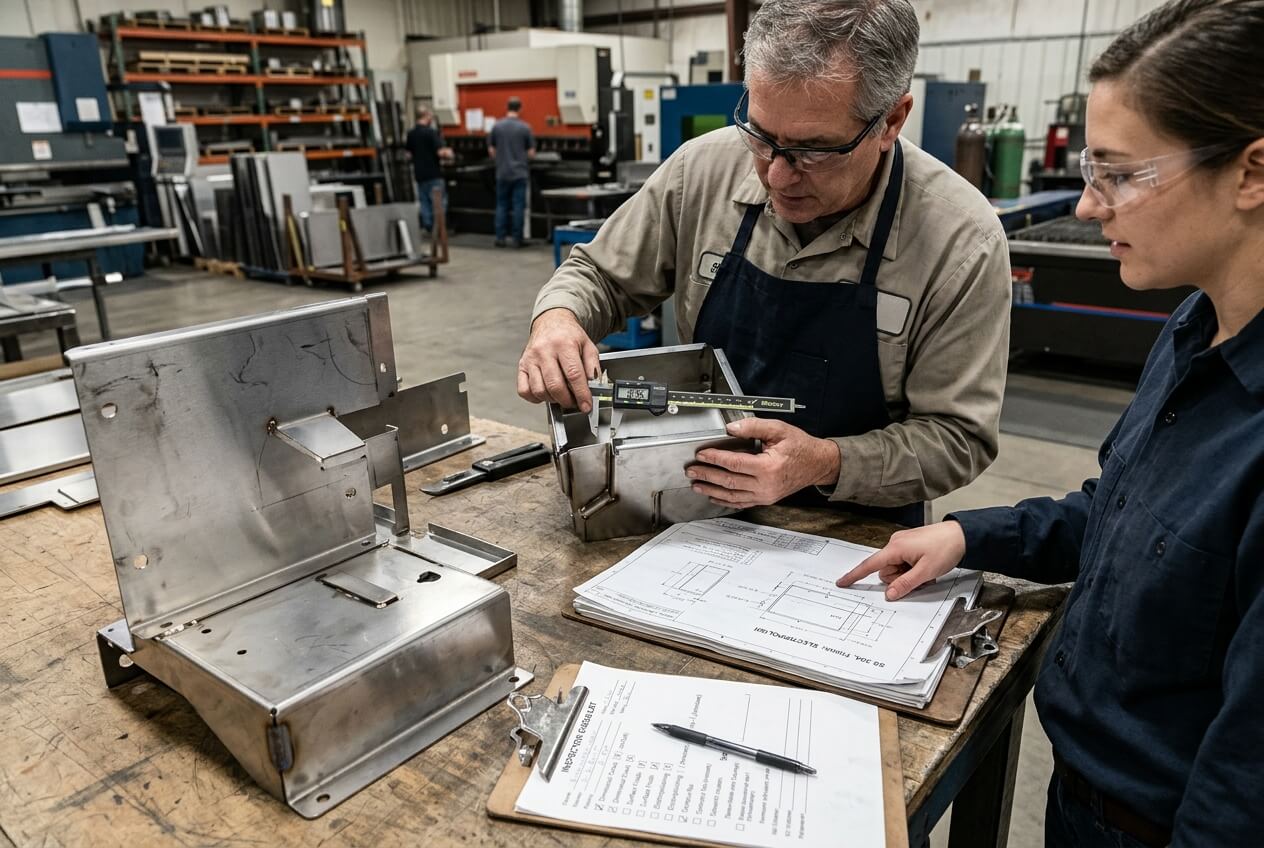
An OEM buyer sends one stainless steel enclosure drawing to three sheet metal suppliers. The drawing shows bends, hole patterns, weld locations, and overall size. The finish note says only “electropolishing.” One supplier includes weld blending, masking, post-finish inspection, and sample approval. Another quotes immersion through an outside finisher. The lowest quote does not mention removal allowance, rack marks, threaded features, or batch controls.
At first, purchasing sees a simple price gap. After assembly starts, the cheap quote becomes expensive. Mounting holes run slightly large. PEM-style hardware needs rework. A front panel does not match the approved sample. Rack marks appear on a visible face. The problem did not begin in the electropolishing bath. It began when the RFQ allowed each supplier to price a different process.
For custom stainless sheet metal parts, the core buying risk is RFQ ambiguity. Buyers should not ask only, “Can you electropolish?” A safer question is, “What assumptions will this supplier make about dimensions, weld preparation, visible surfaces, hardware, inspection, and batch repeatability before quoting?”
Vague electropolishing notes turn quote comparison into assumption comparison
Many electropolishing problems start with a drawing that looks complete. It may define the enclosure size, bend direction, hole positions, and weld symbols. Yet the finish requirement sits in the title block as one short phrase. That phrase leaves major cost and risk items open.
Electropolishing removes a thin layer of metal from exposed stainless steel surfaces. A typical removal range may sit around 20–40 micrometers, depending on the part, electrolyte, current density, exposure time, racking, and target finish. That amount sounds minor. It can still matter near close-fitting tabs, mounting holes, slots, threaded areas, hinge cutouts, and gasket faces.
When a supplier prices the job without asking about those features, the quote may look competitive. The buyer then carries the risk into production. A more complete quote may include masking, fixture planning, weld preparation, or post-finish measurement. Those line items raise the price, but they also expose work that the low quote may have ignored.
A low quote may exclude the work that makes the part usable
Consider a stainless control enclosure with laser-cut ventilation slots and four mounting holes. The RFQ calls for 304 stainless steel and electropolishing. It does not state whether critical hole sizes apply before or after finishing. One supplier checks the holes after laser cutting and before forming. Another inspects the holes after electropolishing because the holes control assembly.
Both suppliers may believe they followed the drawing. Only one quoted the inspection stage that protects final fit. If the buyer compares only unit price, the cheaper quote may win. Later, fasteners sit poorly, and the assembler spends time sorting panels. The missing RFQ detail moved cost from quotation into rework.
Electropolishing also exposes fabrication assumptions
Electropolishing can improve brightness, cleanability, and micro-smoothness. It can also reveal scratches, weld variation, and inconsistent edge preparation. It will not reliably hide poor grinding, deep handling marks, heavy heat tint, or uneven weld blending. If the drawing does not separate fabrication preparation from final finishing, suppliers may include different levels of labor.
A welded stainless cabinet frame shows this risk clearly. One quote may include welding and electropolishing only. Another may include weld grinding, corner blending, pickling where needed, cleaning, sample approval, and post-finish inspection. The second quote costs more because it prices the process chain. The first quote may price only a brightening step.
Buyers reduce this risk when they ask suppliers to identify finish assumptions in the quotation. Yishang can review drawings before quoting to flag where laser cutting, bending, welding, masking, hardware sequence, or inspection may affect an electropolished result.
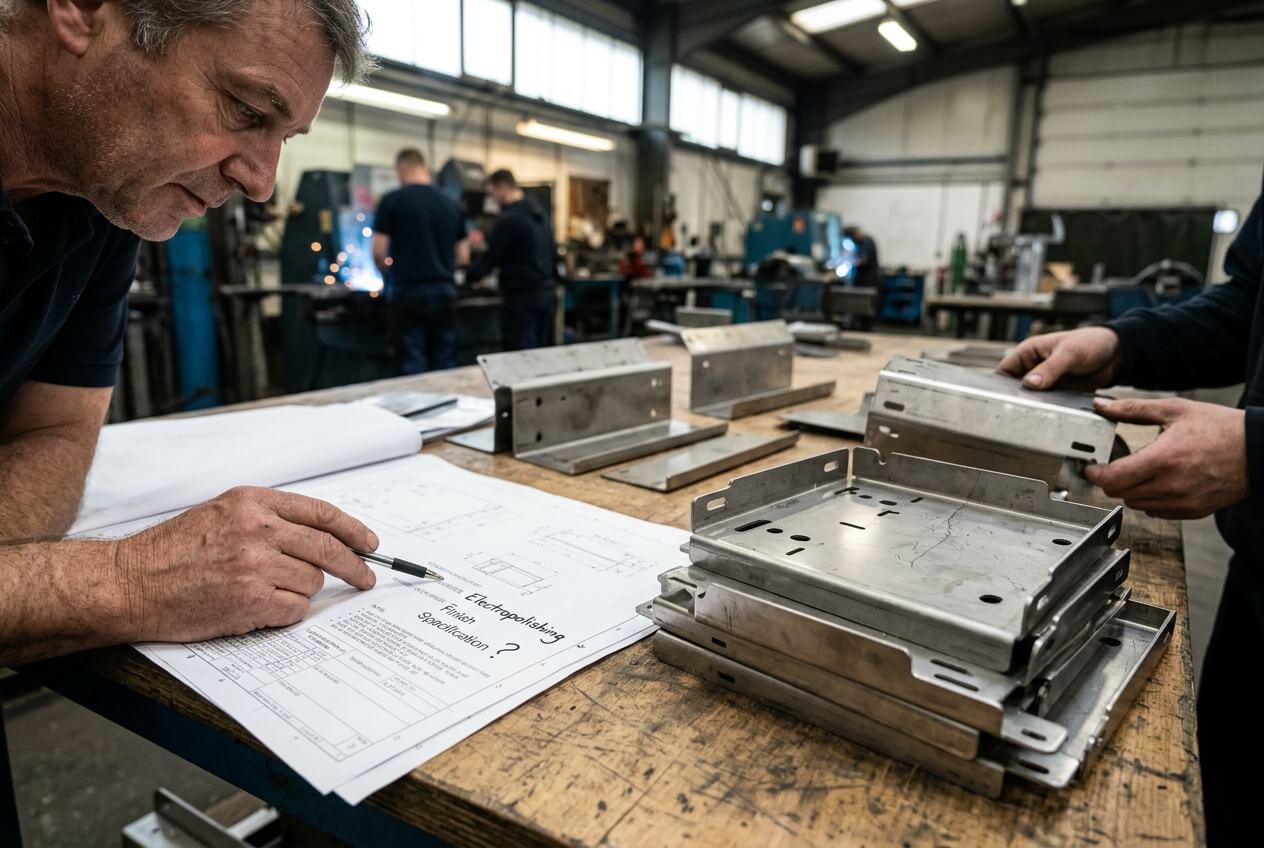
Post-finish dimensions must be named before suppliers price the job
RFQ ambiguity becomes expensive when the electropolished part must assemble with other components. The process removes metal from exposed surfaces, so buyers should not treat it as dimensionally neutral. Some projects can tolerate that change. Others cannot.
The highest-risk features are usually small. Mounting holes, slots, tabs, press-fit zones, hinge cutouts, threaded holes, latch openings, and mating faces can decide whether the part works. Broad exterior dimensions on an enclosure may remain acceptable, while one small slot causes the door to bind or a latch to sit loose.
If the drawing only lists general tolerances, suppliers may inspect at different stages. One may measure the formed part before finishing. Another may measure key features after electropolishing. Those choices change both cost and accountability. The buyer should define which dimensions control final assembly and which dimensions allow normal finish variation.
Threads, inserts, and PEM-style hardware need a sequence
Threaded features deserve early attention. If threads go through electropolishing, they may lose some definition depending on size, material, and exposure. If the supplier installs inserts, studs, or PEM-style hardware before finishing, electrolyte can become trapped. Staining, compatibility issues, or rework may follow.
The RFQ should state whether the supplier must mask hardware zones, chase threads after finishing, install hardware after finishing, or inspect thread fit after finishing. That sequence affects cost and lead time. It also affects who owns the problem if the assembly team later cannot install screws or grounding hardware.
Masking is not a cosmetic add-on when fit depends on it
Some buyers view masking as an optional finish cost. For electropolishing, masking may protect function. Grounding pads, critical bores, weld studs, sealing faces, or conductive contact areas may need special treatment. Rack contact areas also need definition because the process requires electrical contact.
A supplier that includes masking for those areas will not quote like a supplier that immerses every part without protection. The higher quote may reflect risk control, not inefficiency. Clear drawings let suppliers quote the same work. They also help purchasing explain why a low price may not cover the project requirement.
A practical RFQ note might state: “Dimension A and holes B1–B4 apply after electropolishing. Mask grounding pad C. Rack marks allowed only on hidden rear face. Inspect latch slots after finish.” Short notes like these prevent long disputes after parts arrive.
Finish appearance risk starts when visible surfaces are not separated from functional surfaces
Electropolishing does not create the same visual result on every feature. Current density, bath movement, part geometry, edge condition, weld preparation, and rack position influence brightness and texture. Inside corners may respond differently from open faces. Edges may appear brighter than recessed areas. Weld zones may reveal preparation differences.
That variation matters more when the buyer does not define what customers will see. A front panel may need a consistent appearance under showroom lighting. An internal bracket may only need clean stainless surfaces. A rear mounting face may allow rack contact. A gasket face may need controlled flatness more than shine.
If the RFQ says only “electropolished stainless steel,” suppliers must guess which surfaces carry cosmetic risk. Their guesses affect weld blending, handling protection, racking, inspection, packaging, and price. The buyer then compares quotes that may include different appearance standards.
Project example: appliance cabinet doors
An equipment manufacturer sources stainless cabinet doors for a washdown environment. The customer-facing side must look even. The inside face sits behind a gasket and can accept minor handling marks. The first RFQ does not mark cosmetic zones, so the lowest supplier racks several doors from a front edge. The parts meet the general finish note, but visible contact marks trigger rejection.
The consequence chain is simple. The drawing hid the customer-facing surface. The supplier chose a low-cost racking method. Inspection used a general visual standard. The buyer discovered the conflict only after production. A marked drawing would have allowed suppliers to quote racking and inspection correctly.
Project example: welded display frames
A retail fixture buyer orders welded stainless frames. The prototype looks clean in photos, so purchasing releases a batch order. In production, several weld intersections show darker shadows after electropolishing. The finishing process did not create the weld inconsistency. It revealed variable weld preparation before finishing.
The RFQ should have stated the required weld condition before electropolishing. It also should have named the inspection view, acceptable discoloration, and whether the supplier needed a reference sample. Those details would have changed the quote. They also would have reduced debate about whether the defect belonged to welding, polishing, or finishing.
Yishang can support this type of review when buyers share drawings, photos, mating parts, and finish expectations together. The goal is not to over-specify every hidden surface. The goal is to separate surfaces that affect customer acceptance from surfaces that only need normal process quality.
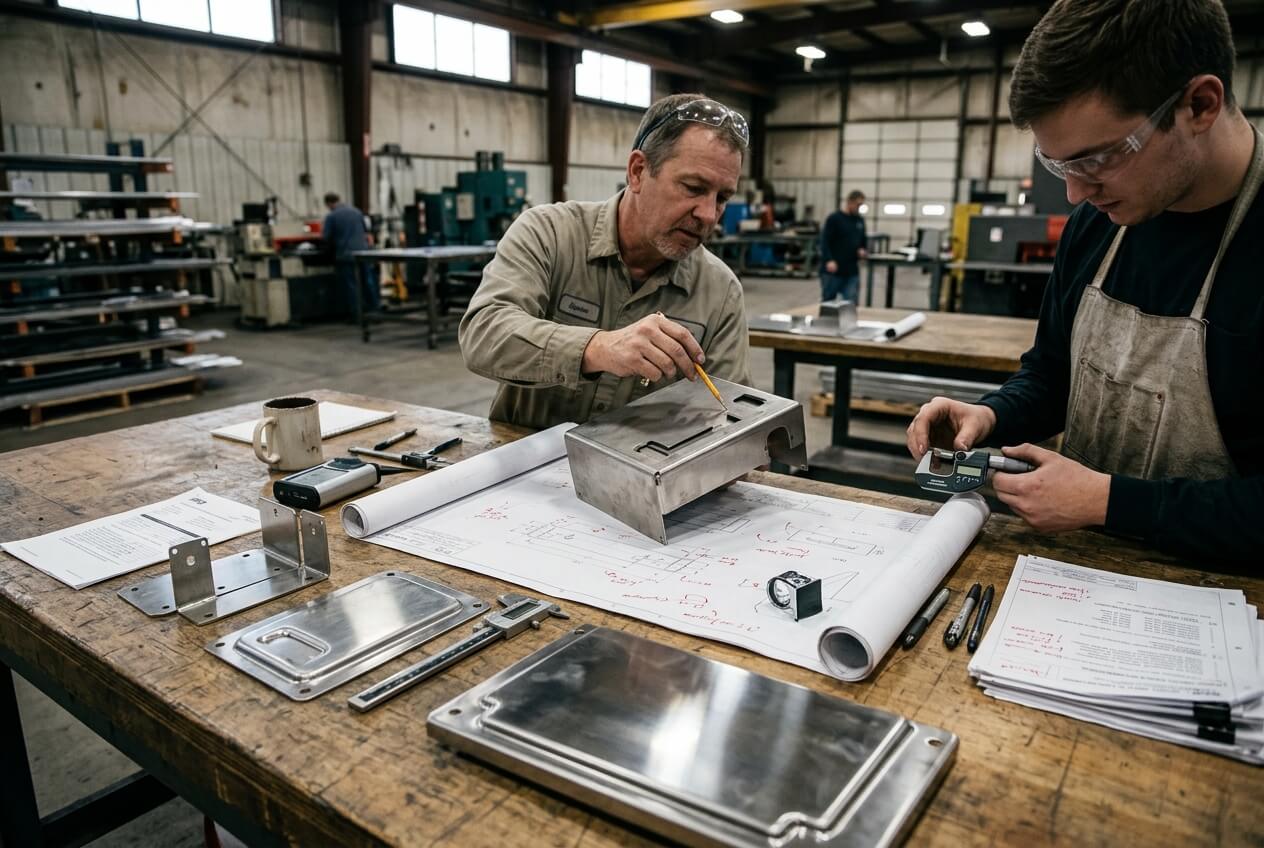
Prototype approval can hide the batch risks created by the first RFQ
A good electropolished prototype proves that one part can meet the target. It does not prove that 200 enclosures, 1,000 brackets, or mixed welded assemblies will match it. Prototype parts often receive extra attention. A technician may deburr more carefully, polish a visible weld longer, or choose the best rack position. Batch production removes those informal advantages unless the supplier records them.
Buyers often approve prototypes with photos and a short email. That approval may not define the process route, inspection stage, rack method, or accepted variation. Later, batch parts show uneven sheen, visible rack marks, slightly different edge brightness, or dimensional drift around cutouts. The supplier may argue that the parts follow the drawing. The buyer may argue that the parts do not match the sample.
Both sides may be partly right because the prototype approval did not say what it controlled.
Sample approval should define more than appearance
When a prototype receives hand polishing before electropolishing, the supplier should state that step. If batch production will use a different rack layout, outside finishing partner, or inspection plan, buyers should review the change before releasing the purchase order. A prototype approval package should identify approved surfaces, critical dimensions, weld expectations, rack-contact zones, and packaging needs.
This becomes important for metal enclosures with hinges, latches, and gaskets. The prototype may assemble correctly because the shop checks it carefully after finishing. In batch production, the supplier may inspect formed dimensions before finishing unless the RFQ says otherwise. The first production lot then becomes the real test, and that test costs more to fail.
Batch repeatability has cost and lead-time consequences
Electropolishing control affects lead time as well as quality. Extra masking, post-finish inspection, reference sample approval, or rework loops can add days. If those activities appear after the purchase order, the schedule slips. If they appear during the RFQ, the buyer can compare realistic prices and delivery dates.
For overseas procurement, documentation matters. Photos help, but they cannot control production alone. Marked drawings, finish zones, tolerance priorities, material grade, inspection points, and agreed samples reduce the number of hidden decisions. They also help the supplier trace problems if brightness, staining, or fit changes appear in the batch.
A strong supplier response should challenge unclear notes before quoting. Questions about post-finish dimensions, weld blending, rack marks, hardware sequence, and prototype-to-batch controls may feel inconvenient. They usually prevent larger delays later.
Clarify electropolishing assumptions before comparing stainless sheet metal quotes
The safest time to control electropolishing risk is before purchasing compares prices. After a purchase order, every missing detail becomes a change request, inspection dispute, or schedule problem. Buyers do not need a long textbook specification for every part. They need enough clarity to force all suppliers to quote the same process.
Start with the drawing. Mark critical dimensions that apply after electropolishing. Identify cosmetic faces, hidden faces, acceptable rack-contact zones, threaded features, inserts, grounding pads, and sealing faces. State weld preparation expectations where appearance or cleanability matters. Add material grade, quantity, prototype needs, batch size, and any target Ra, passivation, corrosion, or visual standard.
Then ask suppliers to confirm their assumptions in writing. Will they inspect holes before or after finishing? Will hardware be installed before or after electropolishing? Will they use the same finishing route for prototype and batch production? Will outsourced finishing partners receive marked drawings and inspection requirements? These answers make quote gaps easier to understand.
Cost drivers become clearer when the RFQ separates required work from optional polish. Masking, weld blending, post-finish measurement, special racking, sample approval, and cosmetic packaging all add cost. They may also prevent scrap, sorting, and rework. A low quote that excludes them may only look cheaper because it postpones the real expense.
If your stainless enclosure, bracket, cabinet panel, frame, or welded assembly needs electropolishing, send more than a model and a one-line note. Send drawings, material requirements, quantities, tolerances, finish expectations, visible surface requirements, hardware details, and assembly notes. Yishang can review those files with fabrication and finishing assumptions together, so you compare quotes against the same electropolishing requirement.
Frequently Asked Questions
Should electropolished sheet metal parts be inspected before or after finishing?
Inspect general fabrication dimensions before finishing when they do not affect assembly after electropolishing. Inspect critical holes, slots, mating faces, latch areas, and gasket features after finishing when final fit matters. State the required inspection stage on the drawing.
Why can two electropolishing quotes differ so much for the same stainless part?
The quotes may include different assumptions. One supplier may include weld blending, masking, rack planning, post-finish inspection, sample approval, and protected packaging. Another may quote only immersion finishing. Ask each supplier to list exclusions and process assumptions before comparing unit prices.
Can electropolishing fix poor weld preparation on cabinets or frames?
No, not reliably. Electropolishing can brighten stainless steel and reduce microscopic high points, but it will not hide deep scratches, uneven grinding, heavy heat tint, or inconsistent weld blending. Define weld preparation before the quote stage when weld appearance matters.
How should buyers handle threaded holes and PEM-style hardware in an electropolishing RFQ?
Mark threads, inserts, studs, and press-fit hardware on the drawing. Ask whether the supplier recommends masking, post-finish chasing, installation after finishing, or compatibility checks. The sequence affects fit, appearance, corrosion risk, cost, and lead time.
Why might an approved prototype not match the electropolished production batch?
A prototype may receive extra deburring, hand polishing, careful racking, or special inspection. Batch production introduces more parts, more handling, and more variation around bends and welds. Record the approved process route, finish zones, inspection points, and rack-contact rules before batch release.
What should buyers send to Yishang for an electropolishing quotation review?
Send 2D drawings, 3D files, stainless material grade, quantities, tolerance priorities, finish expectations, visible surface markings, hardware details, weld requirements, prototype notes, and assembly information. These inputs help Yishang identify electropolishing assumptions before they become quote or production risks.