
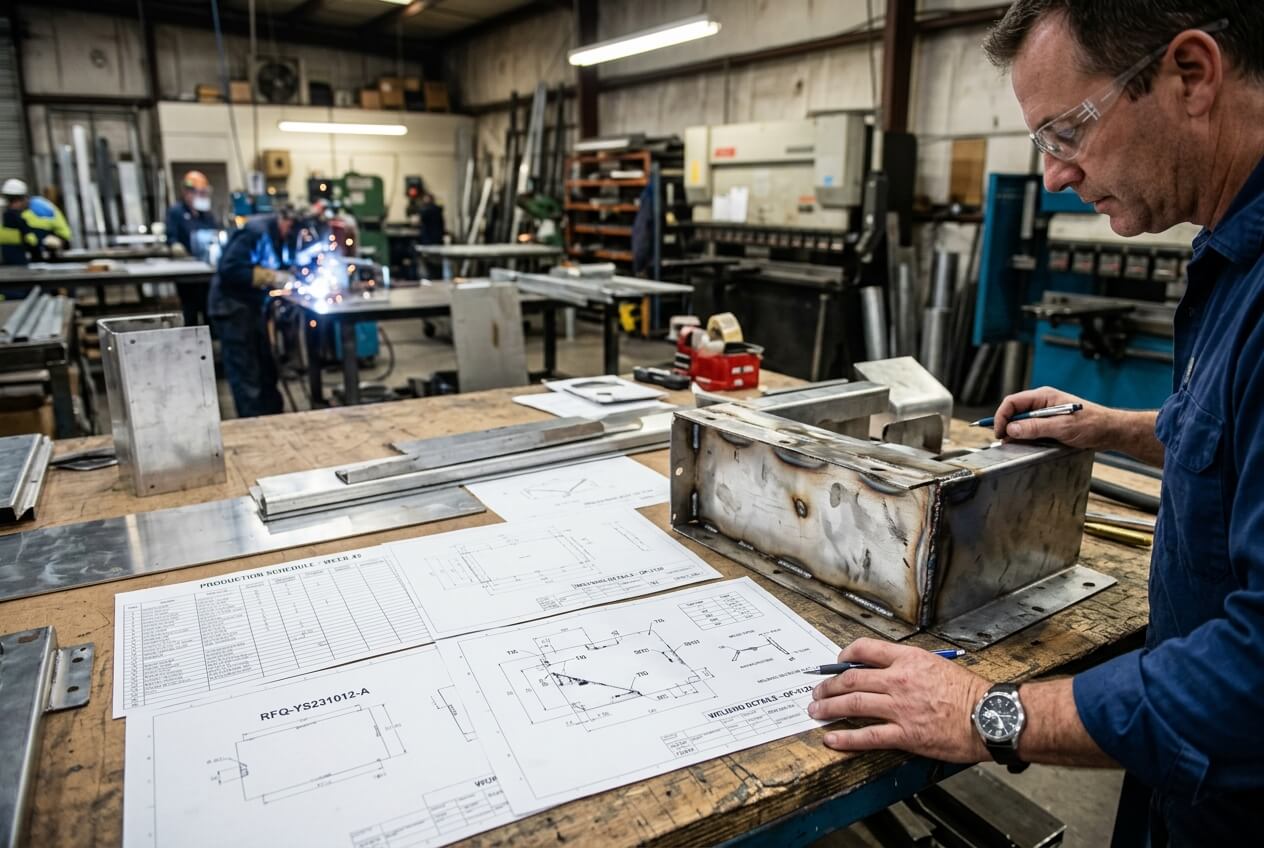
An OEM buyer sends an RFQ for a powder-coated control cabinet. The drawing shows welded corners, internal brackets, a hinged door, and a removable front panel. Three suppliers quote the same part number. One assumes MIG welding with local grinding. Another assumes TIG welding on visible seams. A third plans spot welding on internal overlaps and short stitch welds where access allows.
The buyer sees three prices and three lead times. The real difference sits inside the welding assumption. Each supplier has quoted a different production route, inspection burden, finishing risk, and rework allowance.
This is the main procurement risk when buyers compare different welding types in sheet metal fabrication. The risk is not that MIG, TIG, spot welding, laser welding, or robotic welding is wrong. The risk starts when the RFQ does not define which welds carry load, which welds affect appearance, which dimensions matter after welding, and which surfaces must pass finish inspection.
Once those points stay unclear, a low quote can become expensive later. The project may need drawing clarification, weld trials, fixture changes, extra grinding, powder coating re-approval, dimensional sorting, or partial remake. Buyers can avoid much of that delay by forcing welding assumptions into the quote before they approve the supplier route.
Undefined Weld Scope Makes Supplier Quotes Look Comparable When They Are Not
A drawing note such as “weld all seams” gives suppliers too much room to guess. Under RFQ pressure, each supplier chooses a method based on its equipment, labor model, and risk tolerance. One quotation may include continuous welding on all cabinet corners. Another may include intermittent welds where the supplier believes strength is enough. A third may include cosmetic grinding only on front-facing seams.
Those quotations do not represent the same scope. The unit price may look lower because the supplier excluded fixture time, post-weld straightening, weld bead blending, or finish preparation. The buyer may not notice the difference until the first sample shows distortion or visible seam marks.
Weld function should drive the quotation
Every welded sheet metal assembly contains different weld functions. Some welds carry load. Others locate brackets, seal corners, support hinges, or hold covers during assembly. A structural weld on a frame does not need the same appearance as a visible seam on a retail display rack. A hidden internal bracket may accept a larger bead, while an enclosure corner may need a smooth transition before powder coating.
When the RFQ does not separate these weld functions, suppliers price from assumptions. MIG welding may suit carbon steel frames and heavier brackets because it deposits material quickly. TIG welding may suit visible stainless joints because it gives better control. Spot welding may suit overlapped sheet metal flanges when electrode access exists. Laser welding may reduce heat input on thin parts, but it needs tight fit-up. Robotic welding may improve repeatability, but it adds fixture and programming work.
The buyer does not need to select every weld method alone. However, the RFQ should require each supplier to state the assumed process, weld length, grinding scope, fixture plan, and inspection points. That turns a price comparison into a scope comparison.
The Wrong Welding Assumption Moves Risk Into Bending, Fit-Up, and Final Assembly
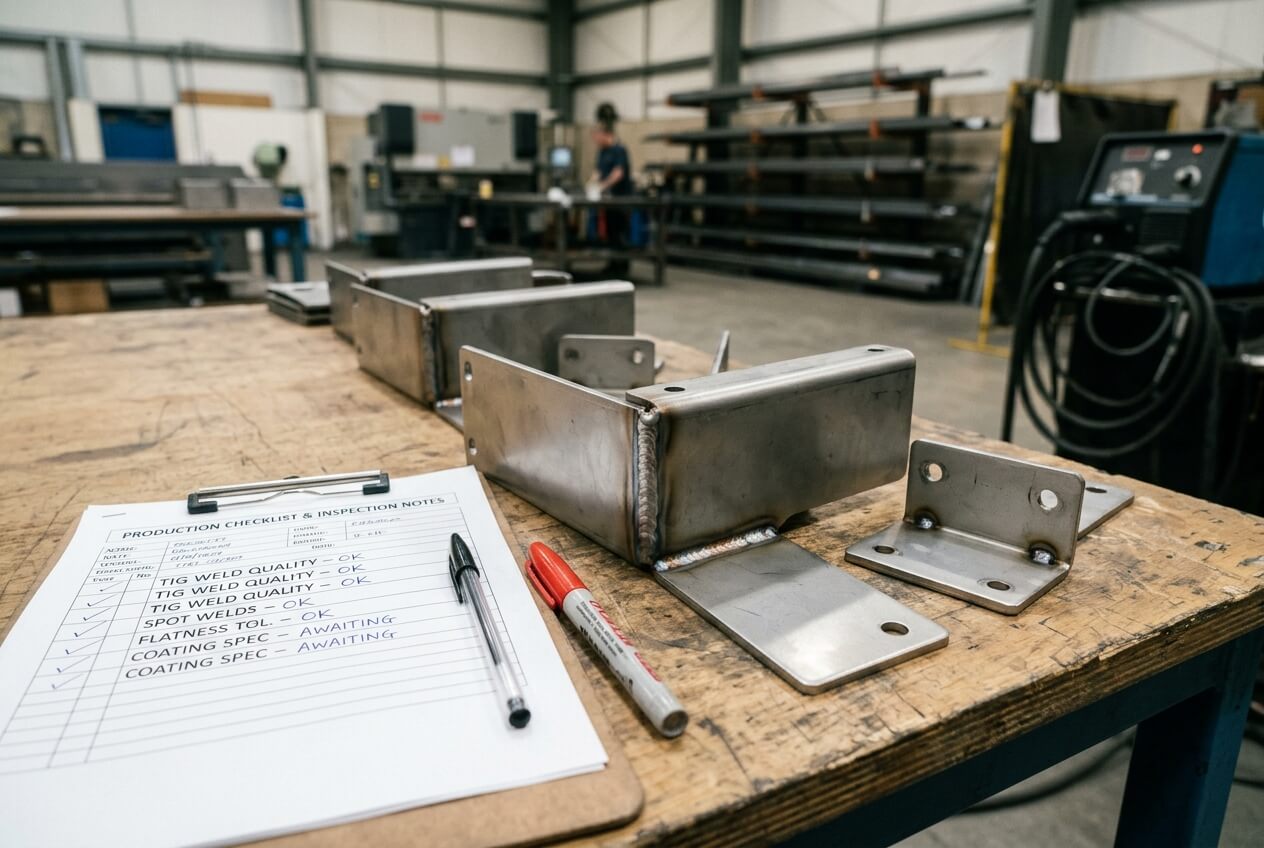
Welding often appears late in the fabrication route, after laser cutting, punching, and bending. In reality, welding can expose earlier drawing and process decisions. Heat pulls panels. Clamps can mark finished faces. Bend flanges can block torch or electrode access. Small cut and bend variations can stack up after the assembly gets welded.
A fast weld on paper may create a slow correction loop on the shop floor. If a cabinet body twists after corner welding, the supplier may need to change the weld sequence, add clamps, remake a fixture, or ask the buyer to relax a flatness requirement. If the part has a coating slot booked, that correction can push the whole batch behind the finishing queue.
Thin panels magnify heat and access problems
Consider a 1.2 mm steel cover with welded mounting tabs. A supplier assumes MIG welding because it is familiar and efficient. The tabs feel strong, but the flat panel warps. The mounting holes still meet the drawing before welding, yet they shift after heat input. The cover then rubs against the mating enclosure during assembly.
The issue started in the RFQ. The buyer specified hole tolerances but did not state that the holes must remain aligned after welding. The drawing also did not mark the front panel as a cosmetic surface. A clearer RFQ would have asked the supplier to confirm the weld method, heat control plan, tab fixture, and post-weld inspection dimensions.
Spot welding or laser welding might reduce distortion in this case, but only if the joint design supports them. Spot welding needs overlap, electrode access, and acceptable spot marks. Laser welding needs stable fit-up and accurate positioning. If the buyer asks suppliers to “choose the best welding type” without showing mating parts, finish expectations, or critical dimensions, the supplier may choose for speed rather than assembly risk.
Fixtures change both cost and consistency
Fixtures often decide whether a welded assembly stays repeatable. A prototype may pass because a skilled welder adjusts every gap by hand. A batch of 300 parts will not behave the same way unless the production route controls location, sequence, and heat input.
Fixture cost can make one quote look higher. Yet the quote without a fixture may hide sorting, rework, or inconsistent assembly fit. For frames, cabinets, and welded brackets, buyers should ask whether the supplier included a fixture, which dimensions the fixture controls, and whether inspection happens after welding. This question matters more than the welding label alone.
Cosmetic and Coating Expectations Turn Welding Choices Into Approval Risk
Many welding disputes do not come from failed strength. They come from appearance after finishing. Powder coating, polishing, brushing, and plating can make weld decisions more visible. A seam that looked acceptable in raw steel may telegraph through a white powder coat. A spot weld mark may become obvious under gloss paint. A ground corner may show uneven blending after coating.
The problem grows when the RFQ states only “powder coat black” or “brushed stainless.” Those notes describe finish type, not weld appearance. Suppliers still need to know which faces customers see, which weld marks can remain, and which areas require smoothing before coating.
Coating rejection often costs more than weld repair
Weld rework before finishing usually takes time. Weld rework after coating can damage schedule control. The batch may need stripping, sanding, recoating, or remake. The coating line may not have immediate capacity. Color approval, masking, packaging, and shipment dates can all move.
Take a batch of powder-coated display racks. The buyer expects smooth seams on all four outer corners because customers see the rack from every side. The supplier quotes MIG welding and grinding only on the front corners. After coating, the side seams show uneven bead lines. The welds may be structurally sound, but the batch fails visual approval.
The buyer could have prevented the dispute by marking A-surfaces, B-surfaces, and hidden weld zones. The RFQ should have stated where bead visibility is acceptable, where grinding must blend the surface, and whether a raw welded sample or pre-coating photo needs approval.
A second example involves a stainless equipment cover with a brushed finish near a TIG welded corner. The supplier produces a strong weld, then polishes the area locally. The grain direction no longer matches the adjacent surface. The part fails visual review even though the weld itself looks clean. Here, the missing information involved finish direction, polishing area, and cosmetic inspection standard.
Welding, grinding, and finishing are connected decisions. Buyers should not approve one without confirming the others.
Prototype Approval Can Hide a Different Batch Welding Route
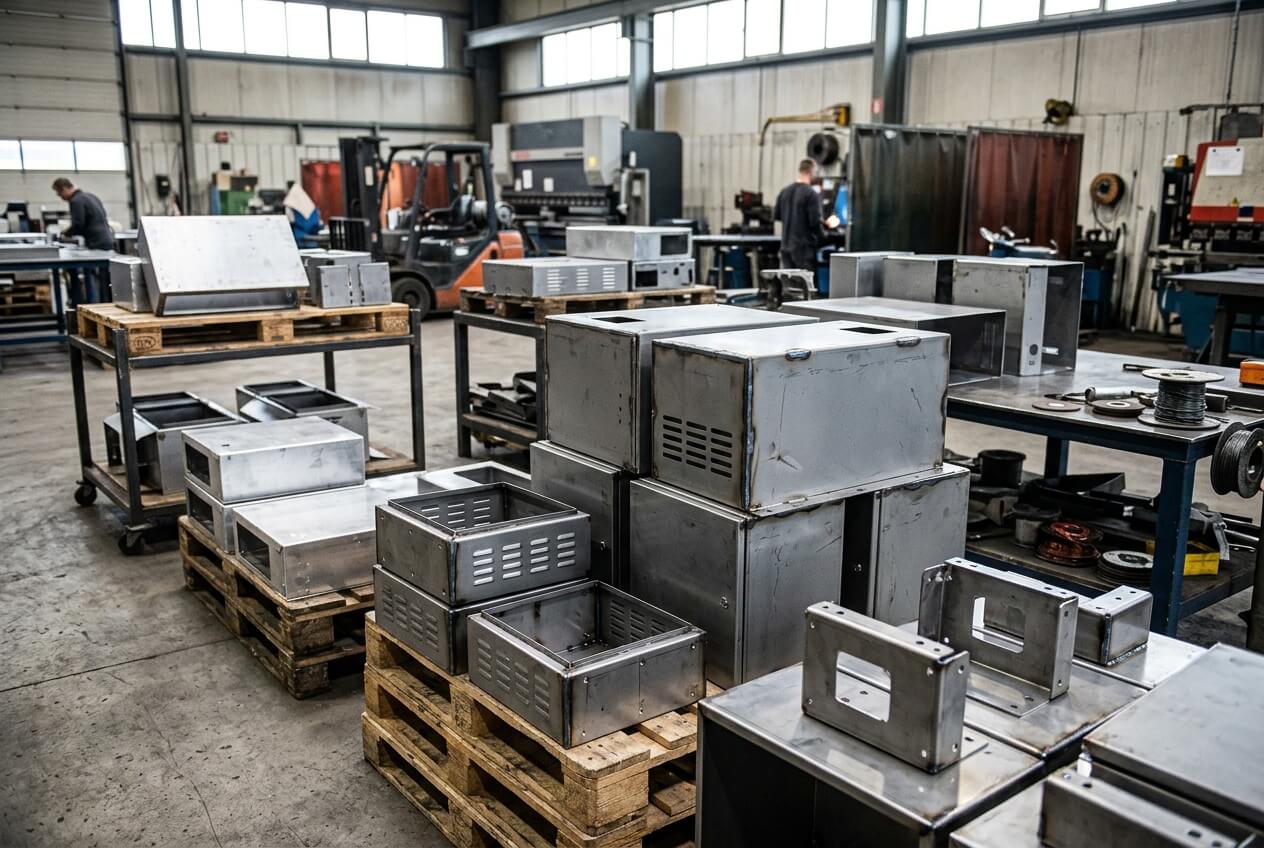
A signed prototype does not always close welding risk. Many prototypes use manual welding, hand fitting, and extra grinding. Batch production may need a fixture, a different weld sequence, robotic welding, or a faster process to meet cost and delivery targets. If the buyer approves only the sample appearance, the production method can still change underneath the approval.
This shift creates a common procurement trap. The prototype looks right because the supplier spent extra time correcting it. The batch quote assumes a leaner process. Once production starts, the first run shows variation in squareness, hole alignment, door fit, or weld appearance.
Batch consistency needs approval of the route, not only the sample
For welded assemblies, buyers should ask how the prototype process transfers into batch production. Will the supplier use the same welding type? Will the weld sequence change? Does the batch require a dedicated fixture? Which dimensions will the supplier inspect after welding? Will the sample approval include cosmetic weld criteria, not only overall dimensions?
Robotic welding shows why this matters. It can improve repeatability for repeated frames, guards, and rack structures. However, it needs programming, fixture validation, and first-article checks. If the prototype used manual TIG welding and the batch uses robotic MIG welding, the buyer should approve the changed route before full production.
Assemblies with mating parts need extra attention. A welded cabinet may need a door gap to stay even after powder coating. A bracket may need holes to match a customer’s motor base. A frame may need diagonal measurements to stay within tolerance after welding. These requirements belong in the RFQ and inspection plan, not in an urgent email after the first batch fails assembly.
Yishang reviews welded assemblies with bending, finishing, and assembly fit in mind when buyers provide drawings and production context. That review helps identify where a prototype result may not represent batch behavior.
What to Clarify Before You Compare Welding Prices
Buyers do not need a textbook description of every welding process. They need enough RFQ detail to prevent suppliers from quoting different realities. A clear RFQ should reduce assumptions in the areas most likely to cause rework, coating rejection, or batch delay.
Start with the drawing package. Mark weld locations and explain their purpose where the symbol alone does not tell the full story. Identify visible faces, hidden faces, and surfaces that must stay free from spatter, clamp marks, grinding scratches, or spot marks. Add mating parts or assembly photos when hole alignment, door fit, hinge clearance, or cover fit matters.
Then connect welding to inspection. State which dimensions must meet tolerance after welding, not only after cutting or bending. For frames, include squareness, diagonal checks, mounting distances, and flatness where relevant. For enclosures, include door gaps, panel fit, threaded insert position, and critical hole centers after welding and coating.
Finish expectations also need early agreement. Specify powder coating color and texture, but also mark cosmetic zones and weld blending requirements. For stainless steel, include grain direction, brushed area, and acceptable polishing transition. If the project needs salt spray performance, outdoor exposure, or cleanable seams, explain that before suppliers choose intermittent or continuous welds.
Quantity and ramp-up plans matter as well. A one-off prototype may not justify a dedicated fixture, but a repeat batch usually needs more process control. Ask suppliers to separate prototype method, batch method, fixture cost, first-article approval, and post-weld inspection. This protects the buyer from approving a sample that cannot scale consistently.
For RFQs involving custom sheet metal fabrication, metal enclosures, brackets, frames, or welded assemblies, send more than a PDF drawing if possible. Include material requirements, thickness, expected quantities, tolerance priorities, finish expectations, mating-part information, and any previous sample concerns. Yishang can review these details during quotation so the welding route matches the real production risk, not only the lowest apparent unit price.
If you are preparing an RFQ, share your drawings, material requirements, quantities, tolerances, finish expectations, and assembly notes through Yishang. Ask for the welding assumptions to be stated before you approve the quote.
Frequently Asked Questions
How do different welding types create quote risk in sheet metal RFQs?
They change fixture needs, labor time, heat input, grinding scope, cosmetic preparation, and inspection points. If suppliers assume different methods without stating them, the buyer compares prices that do not include the same work.
Should buyers specify MIG, TIG, spot welding, laser welding, or robotic welding on the drawing?
Buyers should specify the method when product function or appearance requires it. If not, they should ask suppliers to state the assumed method and explain why it fits the material, thickness, joint access, finish, quantity, and assembly requirements.
Why can a welded prototype pass but the batch still have fit problems?
A prototype may use manual adjustment, slower welding, and extra grinding. Batch production may use a fixture, new sequence, or faster welding process. Buyers should approve the batch route and post-weld inspection plan, not only the prototype appearance.
What welding details matter most for powder-coated enclosures?
Buyers should define visible surfaces, acceptable bead visibility, grinding and blending scope, spatter-free zones, masking needs, door or panel fit, and dimensions that must remain in tolerance after welding and coating.
When does fixture cost become important in welded assemblies?
Fixture cost matters when the assembly must repeat across a batch. Frames, cabinets, and brackets with tight hole alignment, squareness, or mating-part fit often need fixture control. A quote without fixture cost may hide later sorting or rework.
What should buyers send with an RFQ for welded sheet metal parts?
Send drawings, material and thickness requirements, quantities, tolerance priorities, finish expectations, cosmetic surface marks, mating-part details, prototype notes, and any previous quality issues. Ask the supplier to confirm welding method, fixture plan, finish preparation, and inspection points.