
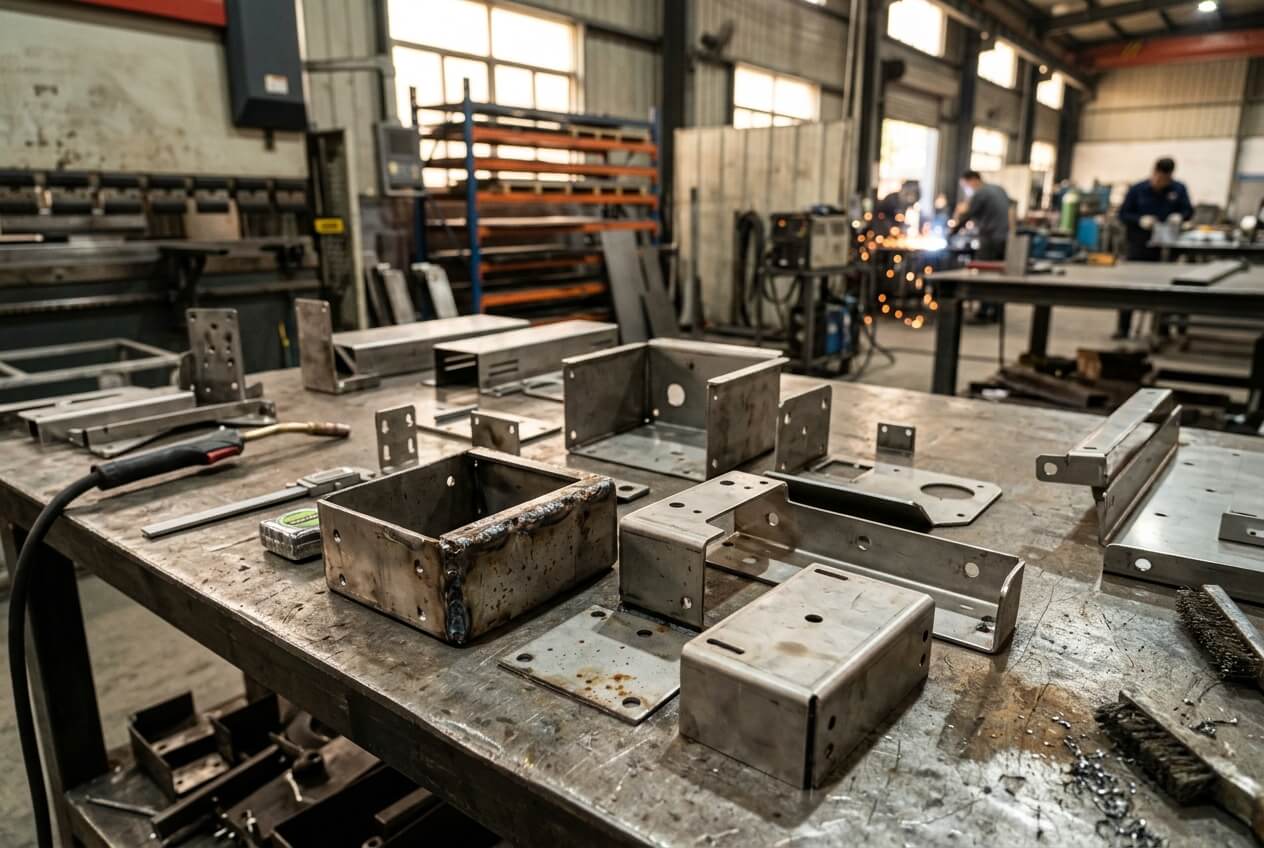
A sheet metal RFQ can look complete and still leave suppliers guessing. One common trigger is the phrase oxygen welding. A buyer may mean oxy-fuel cutting before welding. A welder may read it as a small oxygen addition in a shielding gas. Another supplier may price extra cylinder handling, regulator checks, fire controls, and inspection time.
The procurement risk is not the oxygen itself. The risk is quote ambiguity. When the RFQ does not define the oxygen-related operation, suppliers build different assumptions into the same drawing. The lowest price may exclude work that another supplier included. A prototype may pass under manual control, then fail when batch welding starts. Buyers should remove that ambiguity before they compare prices for metal enclosures, brackets, frames, cabinets, and welded assemblies.
Undefined Oxygen Welding Notes Make Supplier Quotes Look Comparable When They Are Not
The phrase oxygen welding can point to several shop-floor actions. Oxygen may support oxy-fuel cutting, preheating, or a controlled gas mix in a welding process. Each option changes equipment, operator setup, safety controls, edge condition, weld appearance, and inspection time. A supplier cannot price those choices accurately from one loose note.
This problem often starts in the RFQ package. The 2D drawing shows the welded part clearly, but the process note says only “oxygen welding required.” One supplier prices standard welding after laser cutting. Another adds oxy-fuel edge preparation and cleanup. A third assumes oxygen-related gas controls for the weld seams. The unit prices may sit close together, yet the production plans differ.
The cost gap starts before anyone welds
Oxygen-related assumptions affect quoting before fabrication begins. If oxygen supports cutting, the supplier may include edge cleanup, dross removal, and fit-up checks. If oxygen belongs to a shielding gas mix, the supplier may control gas ratio, flow, bead wetting, and oxidation risk. If oxygen supports preheating, the quote may include extra setup time and heat control around bends, holes, or mounting bosses.
A small bracket illustrates the risk. A purchasing team requests 500 mild-steel mounting brackets and writes “oxygen welding” beside two corner seams. One supplier assumes a normal MAG weld with its standard gas. Another prices gas mix control and extra bead cleaning because the bracket will receive powder coating. The buyer sees a higher quote and asks for a discount, but the real difference sits in the missing process definition.
The RFQ should name the operation, not just the gas. State whether oxygen applies to cutting, preheating, or the welding gas mix. Mark the exact seams, cut edges, or zones. Add material grade, thickness, batch quantity, and surface expectations. These details let suppliers price the same scope instead of protecting themselves with different assumptions.
Ambiguous Oxygen Scope Spreads Into Fit-Up, Weld Quality, and Finish Expectations
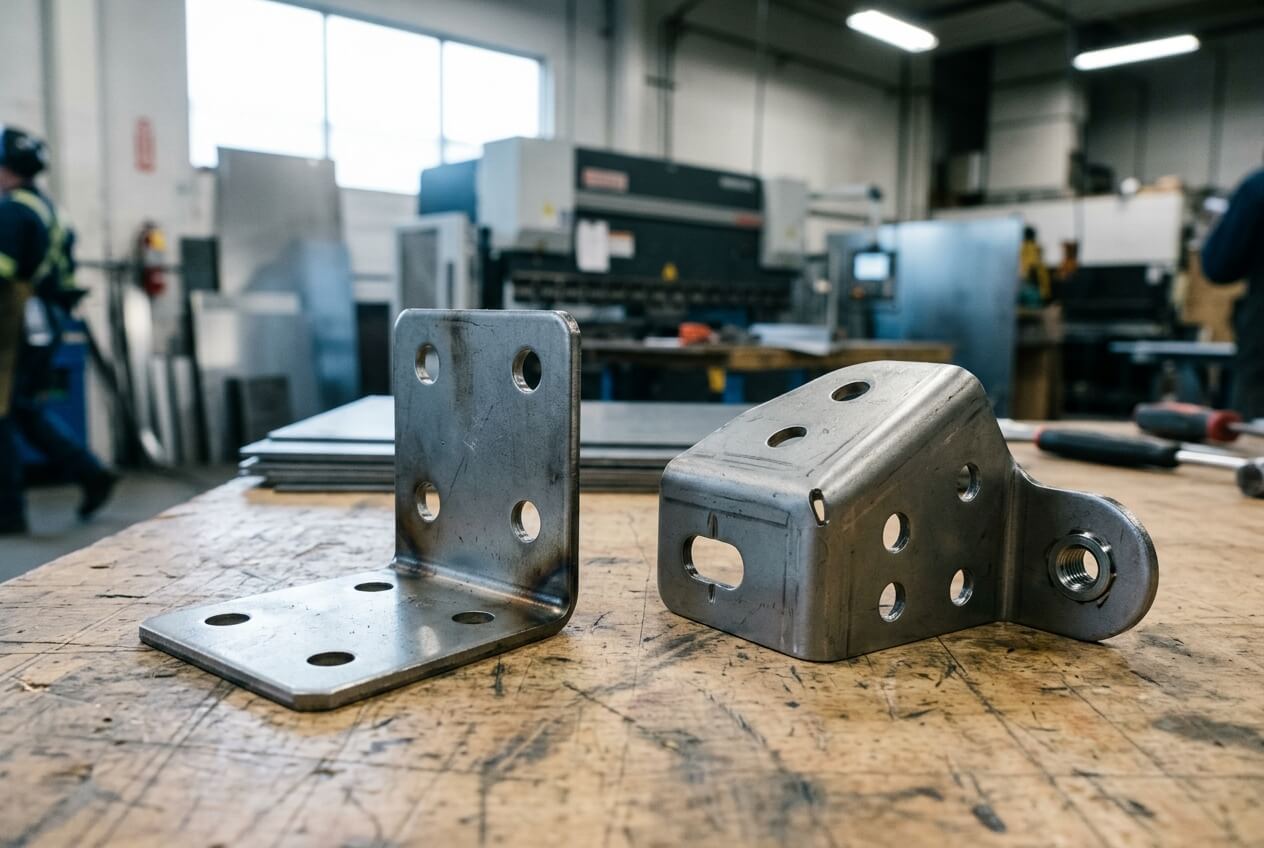
Oxygen-related decisions rarely stay inside the weld bead. They affect edge condition, heat input, distortion, spatter, oxide formation, and coating preparation. When the RFQ does not connect the oxygen note to the drawing and finish requirement, suppliers may choose different acceptance standards.
Carbon steel, stainless steel, and aluminum do not react the same way. A small oxygen addition may help arc stability and wetting in some carbon-steel processes. Pure oxygen does not act as a shielding gas. It can increase oxidation, porosity, and brittle weld risk. Stainless parts and visible cosmetic seams often need tighter control than hidden structural joints.
Visible surfaces need different assumptions than hidden seams
Consider a powder-coated electrical cabinet. The rear inside seams only need strength and basic cleanup. The front door area sits near visible edges, hinge plates, and gasket contact surfaces. If the RFQ uses one oxygen welding note for the whole cabinet, the supplier may apply one weld and cleanup standard everywhere. That can create bead variation, heat tint, or grinding marks in areas the buyer expected to look clean after coating.
The consequence chain is simple. The RFQ leaves the oxygen scope broad. The supplier prices a practical weld finish. The sample arrives with acceptable strength but visible oxidation near a front edge. The buyer requests cleaner seams. The supplier then adds grinding, re-cleaning, or process changes. The quoted unit price no longer reflects the accepted part.
Buyers can avoid this by separating structural acceptance from appearance limits. Mark cosmetic faces, hidden seams, powder-coated surfaces, stainless visible panels, and areas that cannot tolerate heavy grinding. If assembly fit matters, identify holes, hinge areas, brackets, and bend lines near the weld. A fabrication team such as Yishang can review drawings and weld maps to flag where one oxygen-related note may create conflicting finish or fit expectations.
Tolerances also matter here. A weld near a hinge, slot, or mounting surface can distort the part more than the buyer expects. If the oxygen-related process changes heat input or cleanup, it may also change flatness, hole alignment, or gap control. The RFQ should state which dimensions need inspection after welding and finishing, not only before welding.
Gas Handling and Safety Assumptions Can Add Cost After the Purchase Order
Many buyers compare welded sheet metal quotes at the unit-price line. Oxygen-related work can add cost outside that line. Cylinder rental, transport, regulator setup, leak checks, storage separation, ventilation, fire controls, and bottle changeovers all affect the real scope. When the RFQ stays silent, suppliers choose their own boundary.
This matters most when the buyer expects fast samples, work at a specific site, or a batch release with tight timing. Oxygen cylinders need stable storage, protected caps, separation from fuel gases, and trained handling. Regulators and hoses need checks. If the buyer expects sample welding in its own assembly area, that site must support the process safely. If it cannot, the supplier may move the work offsite or delay the sample.
Project example: a frame sample delayed by gas responsibility
A buyer orders a welded display frame and asks the supplier to make a sample near the buyer’s assembly line. The drawing defines tube size, bracket positions, and powder coating. It does not define who supplies oxygen cylinders or who approves the storage area. The supplier arrives ready to weld, but the site blocks the cylinder setup. The sample slips by several days, although the CAD data was accurate.
The delay did not come from the frame design. It came from an unpriced logistics assumption. The buyer expected the supplier to bring a complete safe setup. The supplier expected the buyer to provide approved gas storage and ventilation. Both positions can make sense, but they cannot remain hidden until the sample date.
Batch work adds another layer. A run of 50 cabinets may tolerate manual bottle changes without much effect. A run of 2,000 brackets may need a more stable gas supply plan, extra changeover time, or a different work cell. If the RFQ includes annual volume, batch size, and delivery schedule, suppliers can price these controls early. If it does not, they may add charges after the purchase order or stretch the lead time.
Procurement teams should clarify gas responsibility in practical terms. State who supplies cylinders, regulators, fittings, leak checks, storage space, and safety permits. Confirm whether the supplier must include these items in the unit price or list them separately. That keeps quote comparison fair and reduces late commercial disputes.
A Prototype Approval Does Not Lock the Process Unless the RFQ Locks the Assumptions
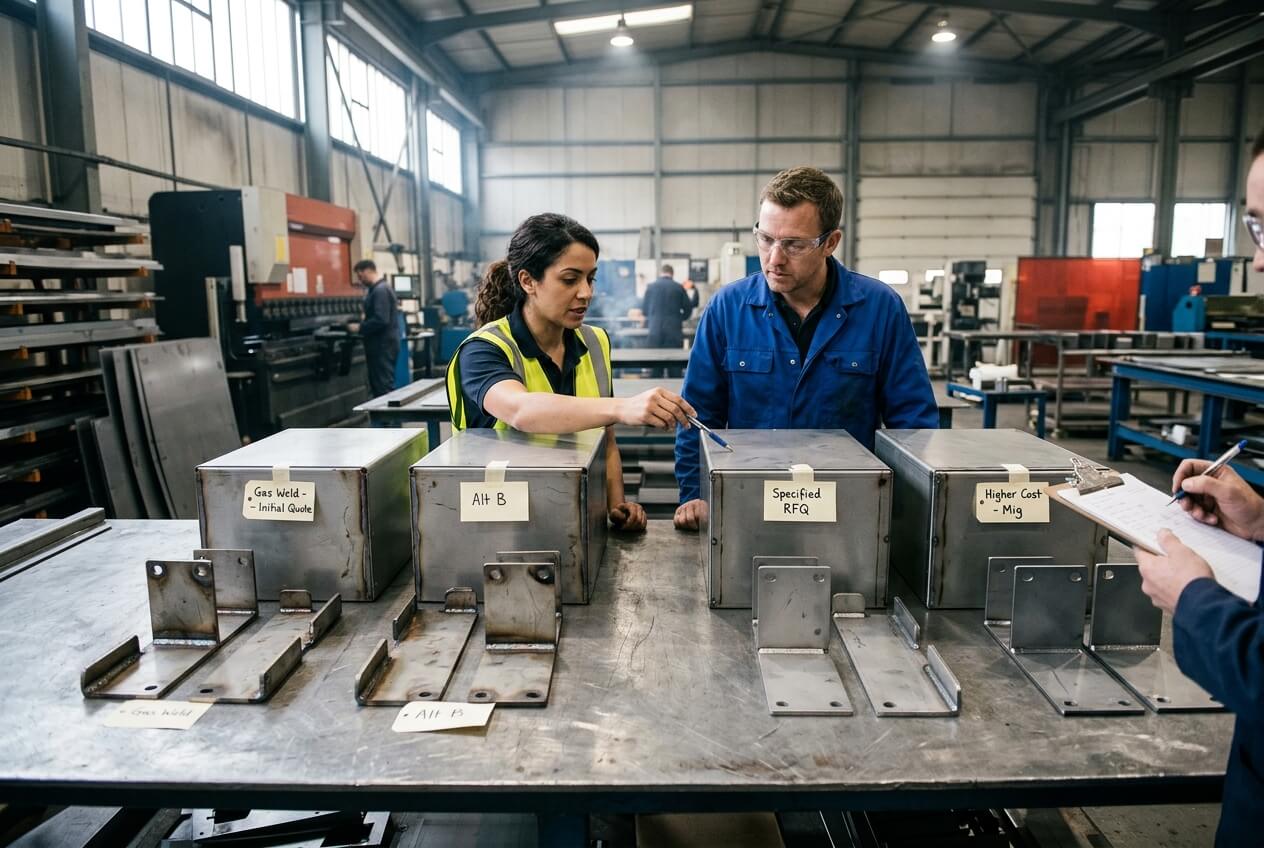
A prototype can hide weak oxygen welding requirements. One experienced welder can adjust fit-up, torch angle, travel speed, cleanup, and inspection by hand. Batch production tests the RFQ harder. Operators change. Fixtures wear. Material lots vary. Bottle changeovers interrupt flow. Small differences can affect bead shape, oxidation, porosity, and distortion.
Prototype approval should therefore freeze more than the sample part. It should confirm which oxygen-related steps matter and which settings can remain under supplier control. Buyers should connect the approved sample to a weld map, finish standard, inspection points, and assembly fit checks. Otherwise, the sample becomes a visual reference without a repeatable production rule.
Project example: cabinet hinges fit on the sample but drift in production
A buyer approves a welded sheet metal cabinet after checking the door swing and powder-coated appearance. The first sample fits because the welder clamps the hinge area carefully and dresses the seam by hand. During batch production, the same area sees more heat variation and faster cleanup. Several doors need rework because hinge holes shift slightly after welding and coating.
The oxygen-related note was not the only cause. The real issue was the missing link between welding process, heat control, tolerance, and final assembly. The RFQ specified hole positions on the flat pattern, but it did not define the inspection stage after welding and finishing. The buyer approved a part, not a controlled production method.
For welded assemblies, this distinction affects cost and lead time. Reworking a sample may take hours. Reworking a batch can consume days and damage the finish. Grinding after coating is usually unacceptable. Re-coating adds handling marks, packaging risk, and schedule pressure. A clear RFQ reduces these risks by stating which dimensions and surfaces must remain controlled after welding.
Before sample approval, buyers should review several items together: weld location, oxygen-related operation, material thickness, visible surface requirement, post-weld cleanup, tolerance after welding, and assembly function. Yishang can support this review when buyers send drawings, samples, photos, and expected batch quantities before the prototype moves into production.
What to Clarify Before You Compare Oxygen Welding Prices
Price comparison should start only after the scope matches. A low quote has little value if it excludes edge cleanup, cylinder controls, cosmetic finishing, or post-weld inspection that the buyer expects. The RFQ does not need excessive technical control. It needs enough detail to stop suppliers from quoting different jobs.
Start with the operation. Write “oxy-fuel cutting,” “preheat with oxygen-fuel torch,” or “oxygen addition in shielding gas” where applicable. Avoid using oxygen welding as a catch-all phrase. Then mark the affected seams, edges, or zones on the drawing. If the operation applies only to selected areas, say so.
Next, connect the process to the part outcome. List material grade and thickness. Identify visible surfaces, hidden welds, powder-coated faces, stainless cosmetic panels, or areas that cannot receive heavy grinding. State whether suppliers may polish, dress, pickle, re-clean, or leave a practical weld finish. Add tolerance requirements that must hold after welding and finishing, especially near hinges, slots, brackets, bends, and mounting holes.
Finally, define the commercial boundary. Include prototype quantity, batch quantity, annual demand, delivery expectation, and responsibility for oxygen cylinders or regulators when relevant. Ask suppliers to state key assumptions in the quote. If two quotes still differ, compare the assumptions before you compare the price.
RFQ reminder: For metal enclosures, brackets, frames, cabinets, and welded sheet metal parts, send drawings, material requirements, quantities, tolerances, finish expectations, weld maps, photos, samples, and assembly notes to Yishang at https://zsyishang.com/. A tighter RFQ helps separate critical oxygen-related requirements from optional controls that may add cost without improving the part.
Frequently Asked Questions
How should an RFQ describe oxygen welding?
State the exact operation. Use terms such as oxy-fuel cutting, preheating, or oxygen addition in a shielding gas. Then mark the affected seams, cut edges, or zones on the drawing. Add material grade, thickness, finish expectations, and any assembly areas that need inspection after welding.
Why can two suppliers quote different prices for the same oxygen welding note?
They may assume different scopes. One supplier may price only standard welding. Another may include gas controls, edge cleanup, cylinder handling, cosmetic dressing, or extra inspection. The buyer should ask each supplier to list assumptions before choosing the lowest unit price.
Can pure oxygen be used as shielding gas in sheet metal welding?
No. Pure oxygen is too reactive for shielding the weld pool. It can increase oxidation, porosity, and brittle weld risk. In some carbon-steel processes, a small controlled oxygen addition may support arc behavior, but it must suit the material and weld requirement.
What oxygen-related details affect powder-coated enclosures?
Buyers should define visible seams, acceptable bead profile, oxidation limits, grinding allowance, and cleaning before coating. Heat distortion near hinges, slots, and gasket areas also matters. If the RFQ ignores these links, the sample may pass but batch parts may need rework.
Why do cylinder and regulator responsibilities belong in the RFQ?
Oxygen handling can require cylinders, regulators, leak checks, safe storage, ventilation, and fire controls. If the RFQ does not state who provides these items, suppliers may quote different boundaries. The missing responsibility can later add cost or delay samples.
What should buyers confirm before approving an oxygen-related welded prototype?
Confirm the weld map, oxygen-related operation, cleanup method, finish standard, tolerance after welding, and assembly fit checks. A prototype approval should lock the acceptance criteria for batch production, not only approve one carefully made sample.