
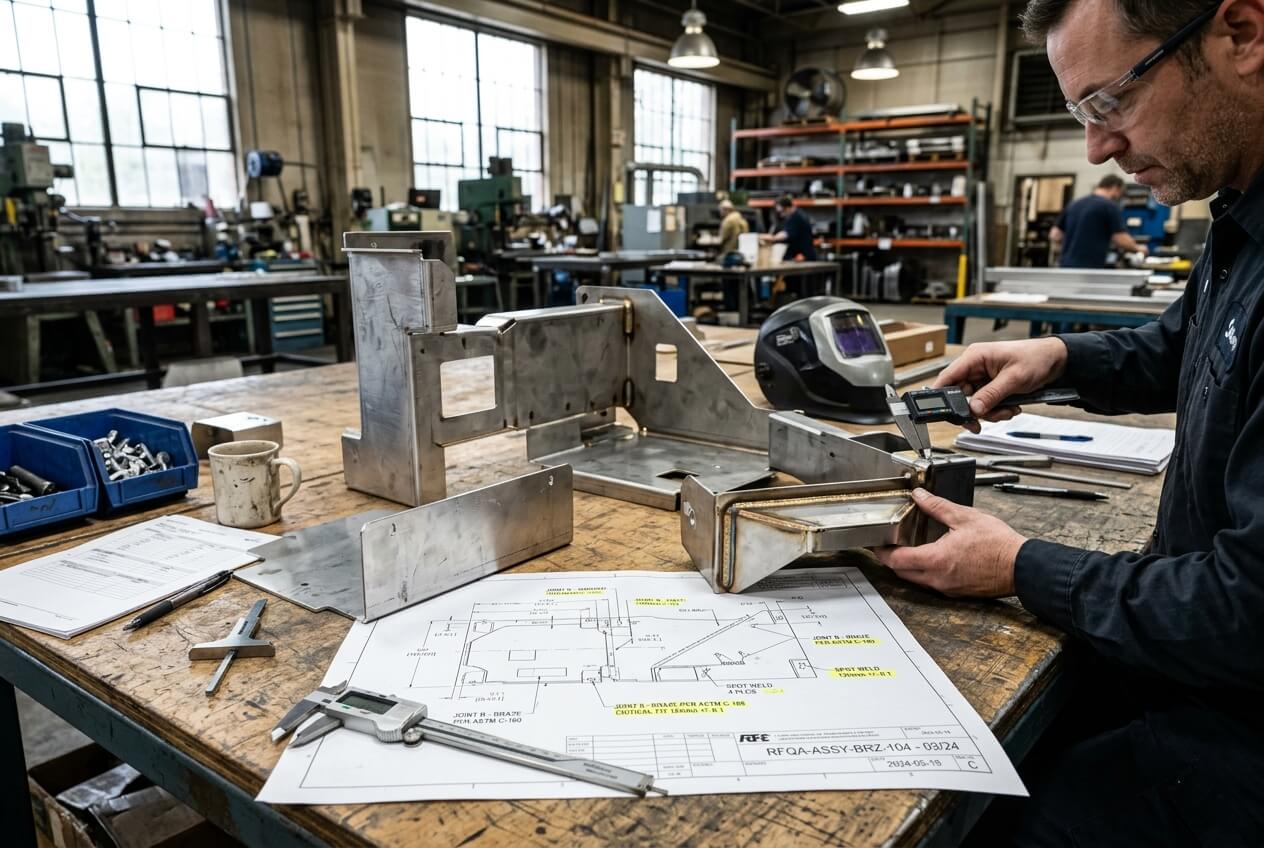
An OEM buyer can send the same sheet metal drawing to three suppliers and still receive three very different brazing welding quotes. The outline, bend lines, and hole locations may match. The quoted price may not. That gap usually starts before anyone opens the shop floor file. It starts when the RFQ leaves joining method, joint function, finish expectation, and inspection scope open to interpretation.
For custom sheet metal fabrication, that ambiguity is expensive. One supplier may assume visible TIG welds with full grinding. Another may price brazing for small joints and low distortion. A third may plan a welded assembly with generous cosmetic limits and minimal batch inspection. On paper, all three answers look comparable. In production, they are not.
The real buyer risk is not choosing the wrong joining method by name. It is comparing quotes that hide different assumptions about heat input, filler metal, fixture needs, cleanup, and repeatability. If the RFQ does not define what each joint must do, the lowest price can simply mean the weakest process control.
Where RFQ Ambiguity Starts to Change the Quote
Most quoting errors begin with drawings that show shape but not intent. A frame, bracket, or enclosure may show seams clearly, yet the RFQ may never say whether the joint is structural, cosmetic, sealing, positioning, or only there to support assembly. Suppliers then fill the gap with their own standard practice. That is where brazing welding assumptions diverge.
Welding often implies stronger fusion and more heat. Brazing usually suggests lower heat at the base metal, but it also depends on tight joint clearance, clean surfaces, and a filler that flows correctly. If the buyer does not specify the preferred route, one supplier may quote a quick weld. Another may include more careful brazing. A third may decide the joint needs redesign before it can be priced responsibly.
That difference affects more than unit price. It affects fixture time, grinding time, consumables, inspection, and the amount of risk the supplier builds into the offer. A cheap quote may exclude the work needed to make the joint look acceptable after powder coating or polishing. A higher quote may be the only one that includes the real finish requirement.
Project example: enclosure corners that looked simple on the drawing
A powder-coated control box with visible front corners can look straightforward in CAD. Yet the quote can split quickly. One supplier may assume standard welds hidden after coating. Another may allow for cosmetic grinding on the visible faces. A third may suggest brazing or a tab redesign to reduce heat marks. If the buyer never marks which faces are visible, the price comparison becomes meaningless.
Yishang often sees this pattern during drawing review for metal enclosures and welded assemblies. The geometry is clear, but the joint purpose is not. Once the team identifies which corners are structural and which are cosmetic, the quote becomes much closer to the actual production scope.
Why Brazing Welding Costs Change Even When the Part Shape Does Not
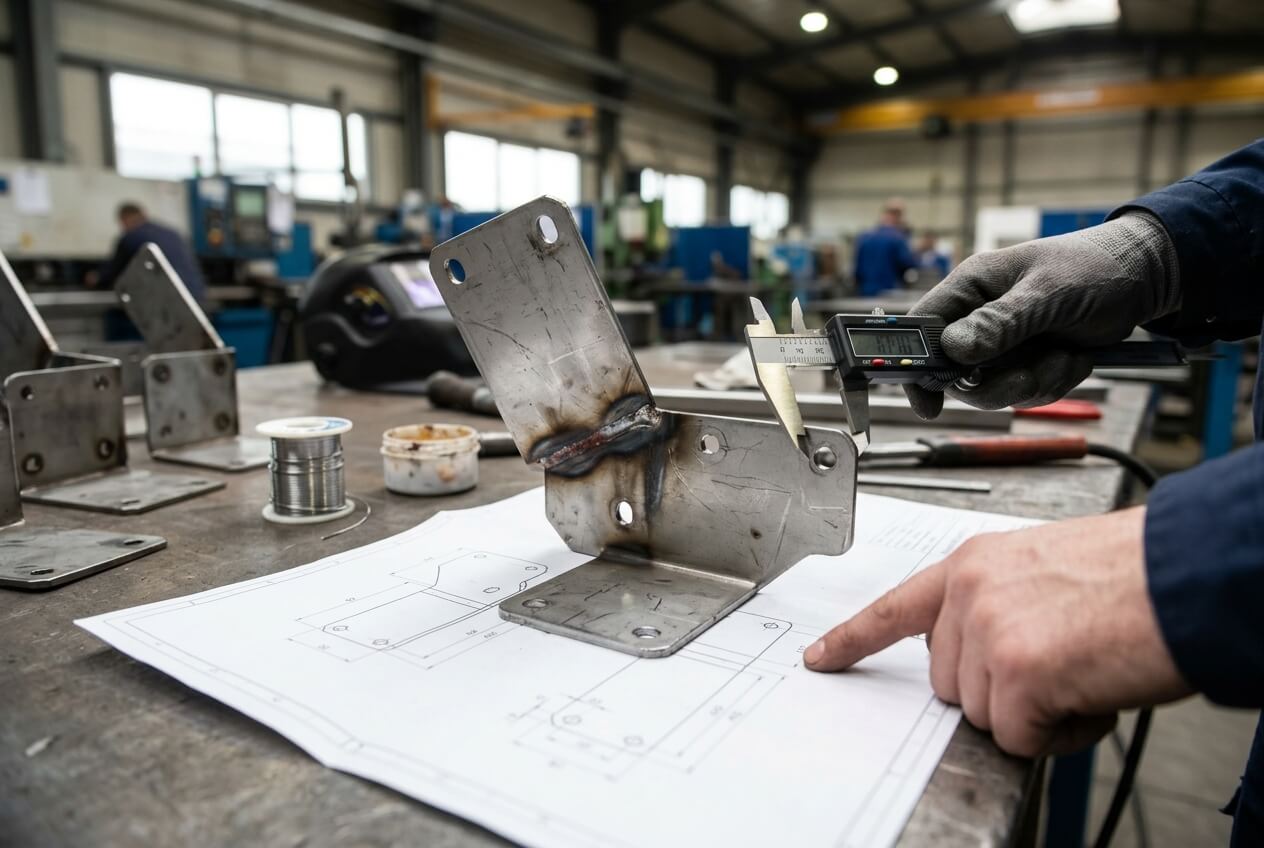
Buyers sometimes expect a small change in joining method to create only a small price change. In sheet metal fabrication, that is rarely true. Joining cost is not only the filler or the arc time. It also includes part access, edge prep, fixturing, rework, cleanup, and the chance of distortion that must be corrected later.
Brazing can reduce base metal distortion in some assemblies. That sounds cheaper, but only if the joint gap is controlled and the surfaces are clean. Thin sheet, zinc-coated parts, copper-to-steel interfaces, or mixed-material assemblies can all add preparation steps. If the joint is not accessible, the supplier may need special fixtures or a different sequence. Those details change the quote faster than the raw process name.
Welding creates a different cost pattern. It can add strength, but it also raises the chance of heat tint, bead cleanup, panel pull, and grinding. On a welded assembly, the time spent restoring appearance can exceed the time spent making the joint. That is why two suppliers can price the same bracket differently even when both use the word “welding.”
Lead time also shifts with the joining plan. A simple prototype may move fast if the shop can hand-fit it. Batch production slows when the same part needs a dedicated fixture, weld sequence control, or more inspection. If the RFQ does not expose those requirements, the schedule you receive may be optimistic rather than realistic.
Project example: a frame quote that changed after the welding sequence was defined
A display rack frame may appear to be a basic welded structure. In practice, the final cost can change once the buyer defines squareness, shelf spacing, and visible corner finish. If the supplier must hold tight fit for shelves and powder-coated surfaces, the job may need a fixture and a controlled weld sequence. Without those requirements, one quote may look far cheaper because it assumes manual correction later.
That is not a bargain. It is an assumption transfer. The buyer pays later in rework, assembly delays, or inconsistent appearance between batches.
How Fit-Up, Tolerance, and Assembly Order Turn a Join Detail Into a Batch Risk
The drawing may pass review, but the batch can still fail at assembly. That usually happens when the RFQ treats joining and tolerance as separate topics. In reality, brazing welding choices affect hole position, flatness, squareness, and mating-part alignment. Thin sheet moves under heat, and even a small shift can stop a door from closing or a bracket from lining up with a mating component.
This risk matters most when the part must fit another part. An enclosure door, a bracket inside a cabinet, or a welded assembly with hinge points can lose accuracy after joining. A prototype may still assemble because a technician adjusts it by hand. Production parts do not always get that attention. If the buyer never identified the critical interfaces, the shop may not know where to protect dimension control.
Joint function should drive the tolerance decision. A non-visible internal tab may tolerate more variation than a front-facing seam. A locating bracket may need tighter control than a decorative cover. If the RFQ gives every feature the same generic tolerance, the supplier may either overprice the job or under-control the critical points.
Surface condition also matters here. Powder coating, plating, and polishing can hide or amplify fit problems. A seam that looks acceptable before finishing may telegraph through a glossy coat. A ground weld that removes too much material can weaken an edge or change a mating gap. That is why the buyer should connect finish expectations to the assembly interface, not treat them as separate line items.
Inspection should follow the risk, not just the drawing. A frame may need squareness checks. A cabinet may need door-gap checks. A bracket may need hole-to-hole location control. If the supplier only checks the overall size, a mislocated welded joint can slip through and create assembly downtime later.
Why Prototype Approval Does Not Guarantee Batch Consistency
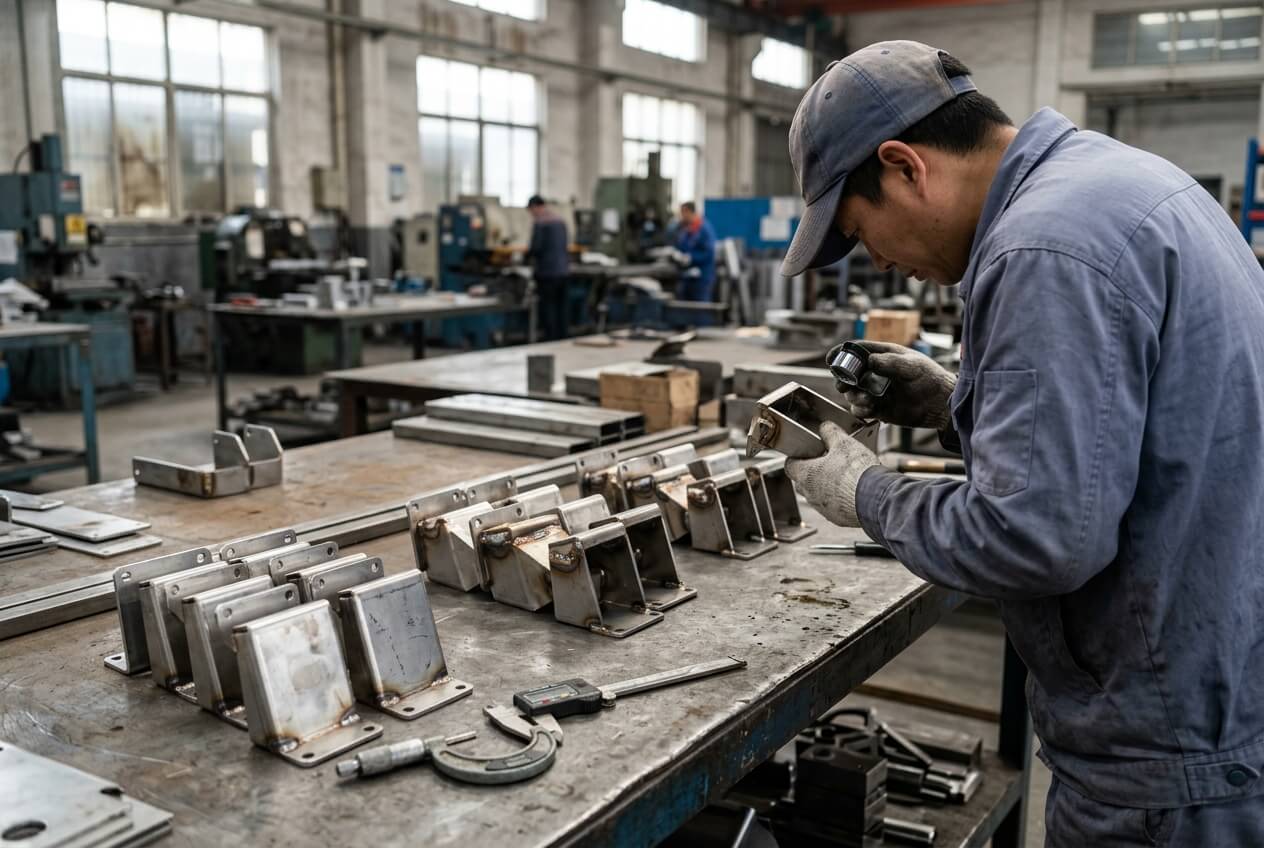
Prototype approval often gives buyers false confidence. A first article can look excellent because the technician takes extra time, adjusts alignment manually, and corrects cosmetic flaws by hand. That level of care may never exist in the batch price. When production starts, the same brazing welding job can show different filler flow, different heat marks, or different fit-up because the shop must repeat the process faster.
This is especially important for sheet metal parts with visible faces or mixed-material joints. A prototype may pass because one operator controls the joint clearance carefully. Batch parts may vary if the fixture does not hold the same gap every time. A brazed joint that looked clean in sampling can become inconsistent when production volume rises. A welded corner that was polished by hand can show visible seams when the rework limit tightens.
The buyer should treat the prototype as proof of feasibility, not proof of repeatability. Before releasing volume, confirm whether the shop will use the same joining method, the same fixture concept, the same weld or braze sequence, and the same cosmetic standard. If those points change, the sample no longer represents production.
Batch consistency also depends on upstream fabrication steps. Laser cutting burrs, bend angle variation, hole position drift, and dirty surfaces all affect joint quality. A brazed connection may need a more controlled gap than the sample suggests. A welded enclosure may need a different bend order so heat does not pull the door frame out of alignment. These are not minor shop details. They are the difference between a stable batch and a recurring rejection issue.
Yishang can review prototype drawings and production notes at this stage to flag joints that may not scale cleanly. That review is most useful when the buyer still has time to adjust the RFQ, the fixture plan, or the finish standard.
What Buyers Should Lock Down Before They Compare Supplier Quotes
The safest RFQ is not the longest one. It is the one that removes the biggest assumptions early. For brazing welding projects, the buyer does not need a full process manual. The buyer needs enough clarity to force comparable quotes. That means the same joining scope, the same finish expectation, and the same inspection basis for every supplier.
Start by identifying the function of every joint. Mark which areas are load-bearing, cosmetic, sealing, grounding, or only for positioning. Then show which surfaces will be visible after assembly and finish. If the part includes a powder-coated enclosure, a polished cover, or a welded assembly with exposed corners, say so directly. Suppliers cannot price cosmetic control they do not know about.
Next, connect the drawing to the mating parts. If a bracket must align with rails, hinges, fans, or internal modules, include the adjacent part drawing or assembly notes. That information tells the supplier whether to price a simple weld or a controlled fit-up process. It also reduces lead-time surprises because the shop can plan the fixture and sequence earlier.
Finally, ask the supplier to state what they assumed. Did they price welding or brazing? Did they include grinding? Did they allow for fixture design? Did they expect batch inspection or only visual check? When those assumptions are visible, procurement can compare real manufacturing scope instead of competing guesses.
This step matters for brackets, frames, cabinets, and welded assemblies of all sizes. A quote that looks low may simply omit the work needed to keep the batch consistent. A quote that looks high may include the exact controls that prevent downstream assembly delays. The best decision is the one that matches the risk profile of the part, not the one that wins on a single number.
If you are sourcing custom sheet metal fabrication, sheet metal parts, metal enclosures, brackets, frames, or welded assemblies, send Yishang the drawings, material requirements, quantities, tolerances, finish expectations, and any prototype photos or mating-part notes. The goal is to review the joining assumptions before quotation so you can compare real scope, expected fit, and batch risk, not hidden differences in brazing welding method, cleanup, and inspection.
Frequently Asked Questions
What prototype approval details should buyers define before requesting a quote?
Buyers should define the functional requirement, drawing notes, critical dimensions, material or process expectations, and any inspection points related to prototype approval. This helps suppliers quote the same manufacturing scope instead of making different assumptions.
How can pilot run affect cost, fit, or lead time?
pilot run can change tooling, forming, welding, finishing, inspection, or rework requirements. If buyers do not clarify it early, two supplier quotes may look comparable while covering different production risks.
Why should fixture control be reviewed before prototype approval?
fixture control may look acceptable on a single sample but become harder to control during batch production. Buyers should confirm whether the prototype reflects the same process, finish, and inspection conditions expected for production.
What inspection points matter most for brazing welding projects?
Important inspection points usually include fit-critical dimensions, holes or mating areas, cosmetic surfaces, finish build-up, welded or formed features, and any dimensions that affect downstream assembly. These points should appear in the RFQ or drawing notes.
How can buyers reduce repeatability risk before batch production?
Buyers can reduce risk by clarifying drawings, locking key material and finish assumptions, defining inspection timing, approving a representative sample, and confirming which dimensions or surfaces require tighter process control.
How can Yishang help review brazing welding requirements?
Yishang can review drawings, RFQ notes, material requirements, tolerance expectations, finish details, samples, and assembly needs to identify unclear assumptions before quoting or batch production.