
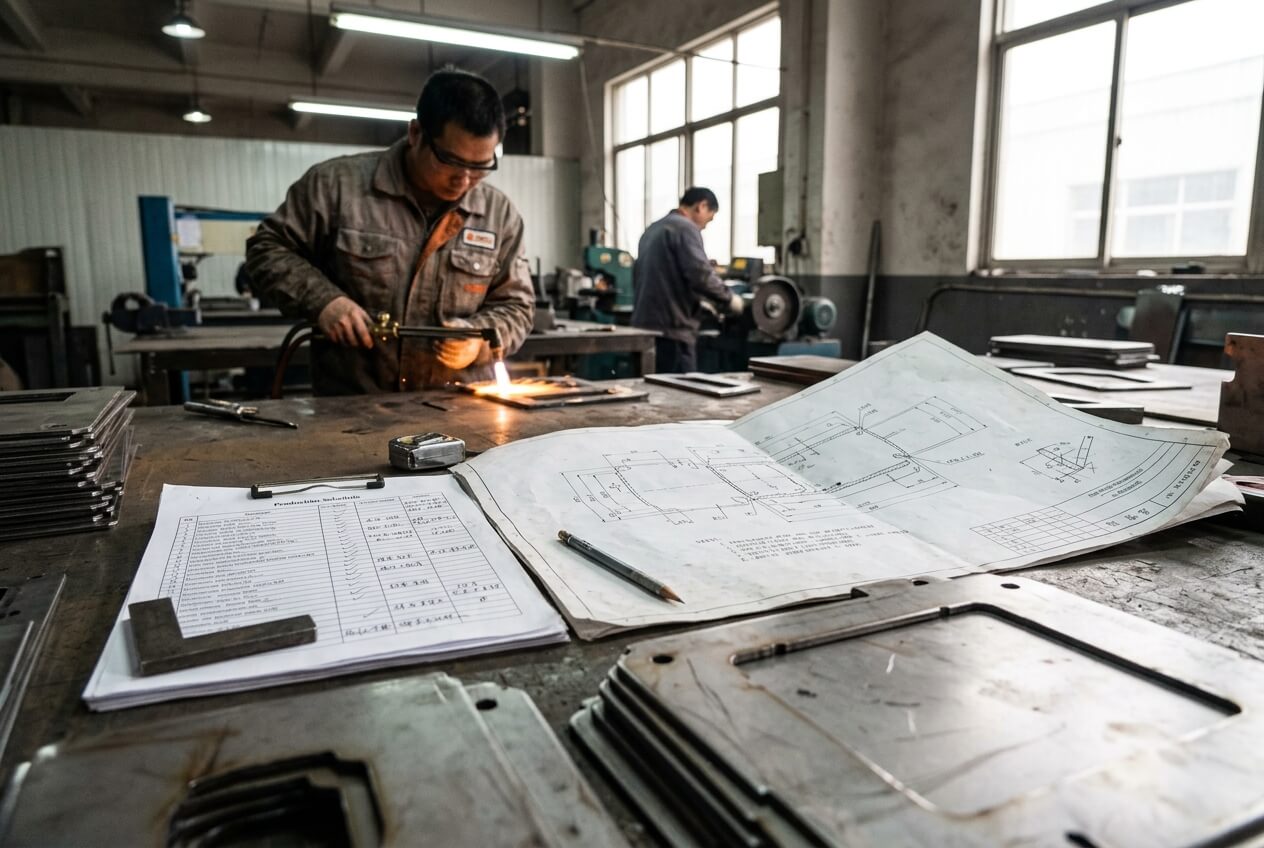
An OEM buyer sends one RFQ for a welded steel equipment frame, powder-coated cabinet panels, and several thick mounting brackets. The drawing package looks complete. It includes DXF files, PDFs, material callouts, and a target delivery date. Three suppliers return prices, but each one has built a different process route.
One supplier plans laser cutting for panels and CNC drilling for critical holes. Another allows oxy acetylene welding cutting on the thicker plates, then adds grinding and straightening time. A third quote comes in lower because it assumes standard flame-cut edges, cut holes, limited dressing, and no separate first-article approval.
The buyer sees a price gap. The real risk sits behind the gap. If the RFQ does not define where oxy-fuel cutting is acceptable, suppliers quote different edge quality, hole processes, welding preparation, coating preparation, and inspection effort. The cheapest quote may only look cheaper because it excludes work the assembly will need later.
This article focuses on one procurement risk: RFQ ambiguity around oxy acetylene welding cutting creates non-comparable quotes and shifts hidden work into production. The cutting method itself is not the problem. The problem starts when buyers treat it as a supplier choice instead of a controlled production assumption.
Where RFQ Ambiguity Starts to Distort Fabrication Quotes
Many sheet metal RFQs define final geometry but do not define manufacturing intent. A drawing may show a 12 mm mounting plate, six holes, a powder-coated finish, and an outside profile. It may not say which holes locate the final assembly, which edges remain visible, or whether flame-cut edges need full oxide removal before coating.
That missing intent changes the quote. One supplier may price the plate as a flame-cut blank with drilled holes. Another may laser cut the profile, then machine key surfaces. A third may flame cut both the contour and holes, then assume the buyer will accept standard edge quality. All three prices may match the same drawing, but they do not represent the same part risk.
The drawing shows shape, not process responsibility
Oxy acetylene welding cutting can suit heavy carbon steel plates, base plates, repair components, equipment feet, and some internal brackets. It becomes risky when the RFQ does not separate non-critical profiles from features that control fit. Outside contours may tolerate flame cutting. Mounting holes, locating slots, cosmetic edges, and weld-prep surfaces may need a different route.
Buyers often discover that difference after the supplier starts production. By then, the supplier has already bought material, reserved capacity, and promised dates. Any change to drilling, grinding, straightening, or inspection now affects lead time. A clarification that would have taken minutes during RFQ can become a production stop.
Low prices often hide secondary operations
Flame cutting may reduce cutting cost on thicker carbon steel. It can also create dross, oxide scale, taper, roughness, and local heat distortion. If the part later needs welding, powder coating, bolted assembly, or visible edge quality, someone must manage those conditions.
A quote that includes edge grinding, hole drilling, fixture welding, and first-article inspection will look higher than a quote that assumes standard cut quality. The higher quote may be more realistic. The lower quote may simply move cost into rework, approval delays, or disputed extras.
For procurement teams, the first task is not to ban oxy-fuel cutting. The task is to make every supplier quote the same assumptions. That means the RFQ must tell suppliers where oxy acetylene welding cutting is allowed, where it is not allowed, and which downstream requirements control the choice.
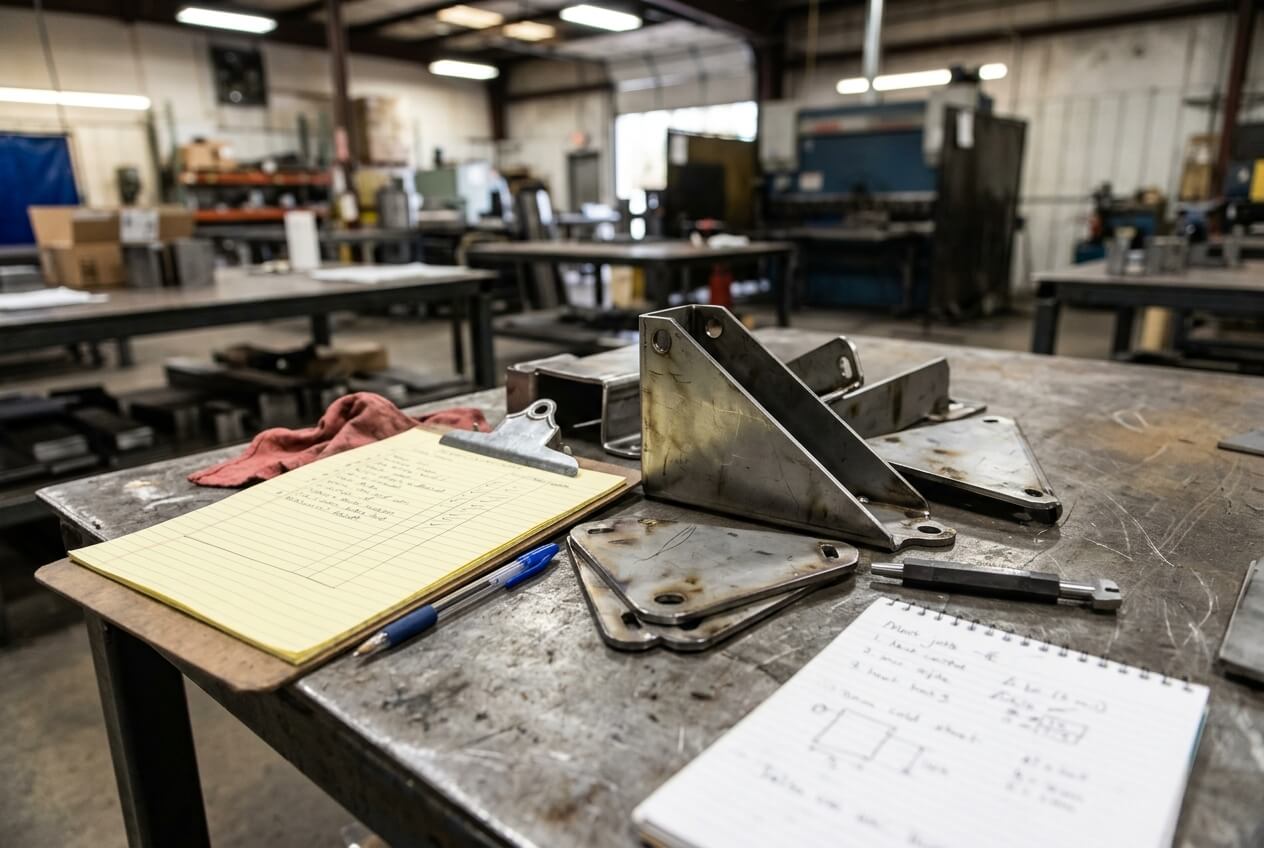
How One Unclear Cutting Assumption Moves Into Welding, Coating, and Assembly Fit
The cutting route affects more than the first operation. It can change how parts fit in welding fixtures, how coating appears on edges, and how fast the final assembly goes together. This chain often surprises buyers because the RFQ lists cutting, welding, and finishing as separate steps.
In production, those steps depend on each other. A rough edge may slow welding fit-up. Heat distortion may pull a frame out of square. Oxide scale may cause poor powder-coating appearance. A flame-cut hole may fail when the assembly team tries to install fasteners or align mating parts.
Example: welded equipment frame with thick base plates
Consider a welded equipment frame that uses 10 mm carbon steel base plates and bent sheet metal covers. The outside edges of the base plates may suit oxy-fuel cutting because users never see them. The mounting holes tell a different story. If those holes locate the machine frame on a customer’s floor, they need controlled position, roundness, and size.
If the RFQ only says “holes as drawing,” one supplier may flame cut them. Another may drill them after cutting. A third may drill and inspect them with a gauge. The finished frame may look similar in photos, but installation risk differs. Misaligned holes can force site workers to enlarge holes, delay commissioning, or reject the frame.
The buyer should mark the locating holes as critical and state the required process or result. For example: “Mounting holes to be drilled after cutting; check position from datum A and B; no flame-cut holes for floor-mounting points.” This note makes supplier pricing more comparable and protects field assembly.
Example: powder-coated cabinet support plate
A cabinet support plate creates a different chain. The plate sits behind a front panel, but one cut edge remains visible when the door opens. The RFQ calls for black powder coating and a smooth appearance. It does not mention flame-cut edge dressing.
The supplier may cut the thick plate with oxy-fuel, remove loose slag, and send it to coating. The coated part then shows rough edges and uneven build-up. The dimension may pass inspection, but the buyer rejects the appearance. The order now needs sanding, recoating, or remaking. The finishing delay started with an unclear cutting assumption.
Buyers can prevent this by marking visible edges and defining the acceptance standard. “Visible edge to be ground smooth before powder coating” gives the supplier a cost and time target. It also prevents a late argument about whether the coated edge is cosmetic or functional.
Why Prototype Approval Does Not Remove the Batch Risk
A prototype can pass while the batch remains exposed. This happens when the supplier manually corrects the sample but no one records the correction. Oxy acetylene welding cutting increases this risk when flame-cut plates need extra grinding, straightening, drilling, or fixture control before they meet the drawing.
A sample order often receives special attention. The fabricator may grind edges longer, clamp parts harder during welding, redrill a tight hole, or touch up coating after inspection. The buyer receives an acceptable bracket or enclosure base and approves it. The batch then starts with the same loose RFQ notes that caused the corrections.
Manual correction does not scale cleanly
Two prototypes can survive manual work. Two hundred parts expose the route. If the supplier must grind every edge until it looks acceptable, the schedule changes. If workers must straighten every welded frame after heat input, inspection time grows. If coating rejects appear because flame-cut edges vary, the batch loses rhythm.
Procurement teams should treat prototype approval as a process review, not only a sample sign-off. Ask the supplier what changed after cutting. Confirm whether holes were cut, drilled, reamed, or adjusted. Check where grinding occurred. Review whether flatness, diagonals, and weld gaps stayed within a repeatable range.
Batch release needs the approved route, not just the approved sample
The approved sample should update the production plan. If the prototype needed drilled holes after flame cutting, the batch quote should include that drilling. If the visible edges needed extra grinding before powder coating, the batch route should include the same edge preparation. If welding fixtures controlled distortion, the batch plan should define fixture use and inspection points.
This step matters most for overseas sourcing. Time zones, language gaps, and internal approval cycles can stretch small questions into week-long delays. A clear prototype review helps both sides freeze the manufacturing route before full material purchase and batch scheduling.
Yishang can review prototype feedback with drawings for custom sheet metal parts, metal enclosures, brackets, frames, and welded assemblies. The useful output is not a sales promise. It is a clearer route: which features need tighter control, which edges need finishing, and which inspection points should appear before batch release.
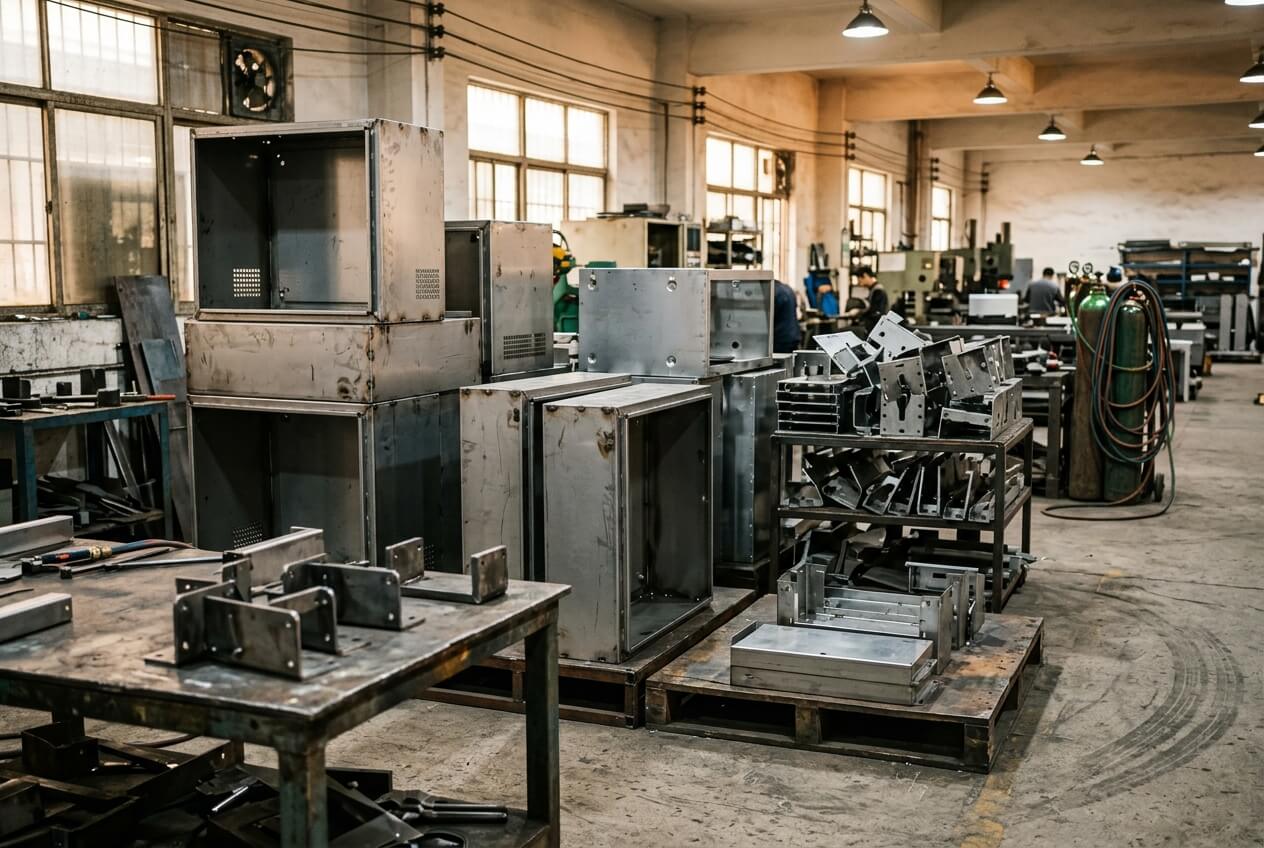
What Buyers Should Clarify Before Comparing Supplier Quotes
Buyers do not need a long RFQ to control this risk. They need a focused RFQ that removes hidden process assumptions. The goal is simple: make suppliers price the same manufacturing responsibility before procurement compares unit cost and lead time.
Start by separating part features by function. Not every edge needs a premium process. Not every hole needs machining. However, the RFQ must identify features that affect assembly fit, appearance, safety, installation, or customer acceptance. Those features should drive the cutting and secondary-operation plan.
Clarify where oxy-fuel cutting is acceptable
State whether oxy acetylene welding cutting is allowed for outside profiles, internal cutouts, holes, tabs, or only rough blanks. For many carbon steel plates, the outside profile can be flame cut, then ground where needed. Critical holes often need drilling or reaming. Thin panels, stainless parts, aluminum parts, or cosmetic enclosure skins usually need a different process.
A practical note may say: “Oxy-fuel cutting allowed on non-visible outer profiles of 10 mm carbon steel plates. Critical mounting holes must be drilled after cutting. Visible edges require grinding before powder coating.” This short instruction gives the supplier a clearer route and a fairer quote basis.
Connect tolerances to the features that matter
General tolerances can help, but they do not replace functional notes. If a welded frame must fit a mating enclosure, mark the hole pattern, diagonal dimensions, and reference faces that control assembly. If a bracket carries a load or locates another component, identify the surfaces and holes that require inspection.
Loose RFQs often create two opposite problems. Some suppliers overprice because they assume every dimension needs tight control. Others underprice because they assume standard shop tolerance. Buyers can reduce both problems by marking critical-to-fit dimensions and allowing normal fabrication tolerance elsewhere.
Define finish expectations before coating starts
Powder coating does not hide poor edge preparation. It often makes roughness easier to see. RFQs should identify visible surfaces, edge smoothness, masking areas, color, gloss, and acceptable coating build-up near slots or holes. When flame-cut edges remain visible, the RFQ should require dross removal, oxide removal, corner break, or grinding as needed.
These notes also affect cost drivers. Grinding, deburring, masking, recoating, and appearance inspection take time. If suppliers include that work from the start, the quote may rise. The buyer avoids a more expensive problem later: finished parts that do not meet customer expectations.
Ask suppliers to expose routing assumptions
A strong RFQ invites useful questions. Ask suppliers to state the planned cutting method, hole process, welding fixture approach, coating preparation, inspection points, and prototype approval gate. This does not force every supplier to use identical equipment. It forces them to reveal the choices that affect price, lead time, and quality risk.
For mixed projects, such as laser-cut panels with flame-cut base plates and welded frames, this routing summary can prevent false quote comparisons. Yishang can support this stage by checking drawings against manufacturability, finishing expectations, assembly needs, and batch quantity before the buyer locks the supplier decision.
How to Keep the Cutting Choice From Controlling the Order Schedule
Oxy acetylene welding cutting should not quietly control the entire order. It should sit inside a clear fabrication plan. When buyers define the function of edges, holes, surfaces, and assemblies early, suppliers can choose a practical route and price it honestly.
The risk chain usually starts small. The RFQ omits a note. The supplier assumes a cheaper cut. The prototype needs correction. The batch repeats the correction at scale. Coating or assembly then exposes the missing requirement. The delivery date slips because the team solves production questions after production has started.
Procurement can break that chain before quote comparison. Review drawings for thick carbon steel plates, welded assemblies, cabinet bases, mounting brackets, and enclosure frames. Mark critical holes, visible edges, flatness requirements, mating surfaces, and coating expectations. Separate prototype approval from batch release. Ask suppliers to confirm whether sample corrections will become part of the batch route.
Supplier communication should stay specific. Avoid broad questions such as “Can you make this?” Ask instead: “Which features will you flame cut? Which holes will you drill? Where will you grind before coating? How will you control frame squareness after welding? What inspection report will we receive before batch production?” These questions turn hidden assumptions into visible commitments.
Next step for your RFQ: If your project includes thick carbon steel plates, welded frames, mounting brackets, metal enclosures, cabinets, or parts where oxy acetylene welding cutting may be considered, send Yishang your drawings, material requirements, quantities, tolerances, finish expectations, assembly notes, and prototype feedback. Ask for a routing review before you compare final quotes or promise a delivery date.
Frequently Asked Questions
When does oxy acetylene welding cutting create procurement risk?
It creates risk when the RFQ does not define where flame cutting is acceptable and where tighter control is required. Suppliers may then quote different edge quality, hole processes, grinding, welding preparation, and inspection levels. The quote comparison becomes misleading.
Should buyers allow flame-cut holes in mounting brackets?
Buyers should not allow flame-cut holes by default when the holes control assembly fit, installation, or alignment. Mark critical holes clearly and specify drilling, punching, reaming, or gauge inspection where needed. This prevents low-cost hole assumptions from causing late assembly problems.
How can flame-cut edges affect powder-coated enclosures or cabinets?
Flame-cut edges may contain oxide scale, dross, roughness, or sharp corners. Powder coating can highlight those conditions instead of hiding them. Mark visible edges and define grinding, deburring, oxide removal, masking, and cosmetic acceptance before parts enter finishing.
Why can an approved prototype still fail to protect batch production?
A prototype may pass because the supplier manually corrected distortion, drilled problem holes, ground rough edges, or touched up coating. If those corrections do not enter the batch route and quote, larger quantities can repeat the original issues and delay shipment.
What RFQ notes make supplier quotes more comparable?
Useful notes include allowed cutting methods, material grade and thickness, critical hole requirements, visible edge standards, flatness needs, welding fit-up surfaces, coating expectations, inspection points, prototype approval, and batch release conditions.
Can oxy-fuel cutting still be a practical choice for custom sheet metal fabrication?
Yes. It can work well for suitable carbon steel plates, hidden profiles, base plates, and some heavy welded assemblies. The buyer should define functional features first, then let the supplier confirm where oxy-fuel cutting helps and where another process is safer.