
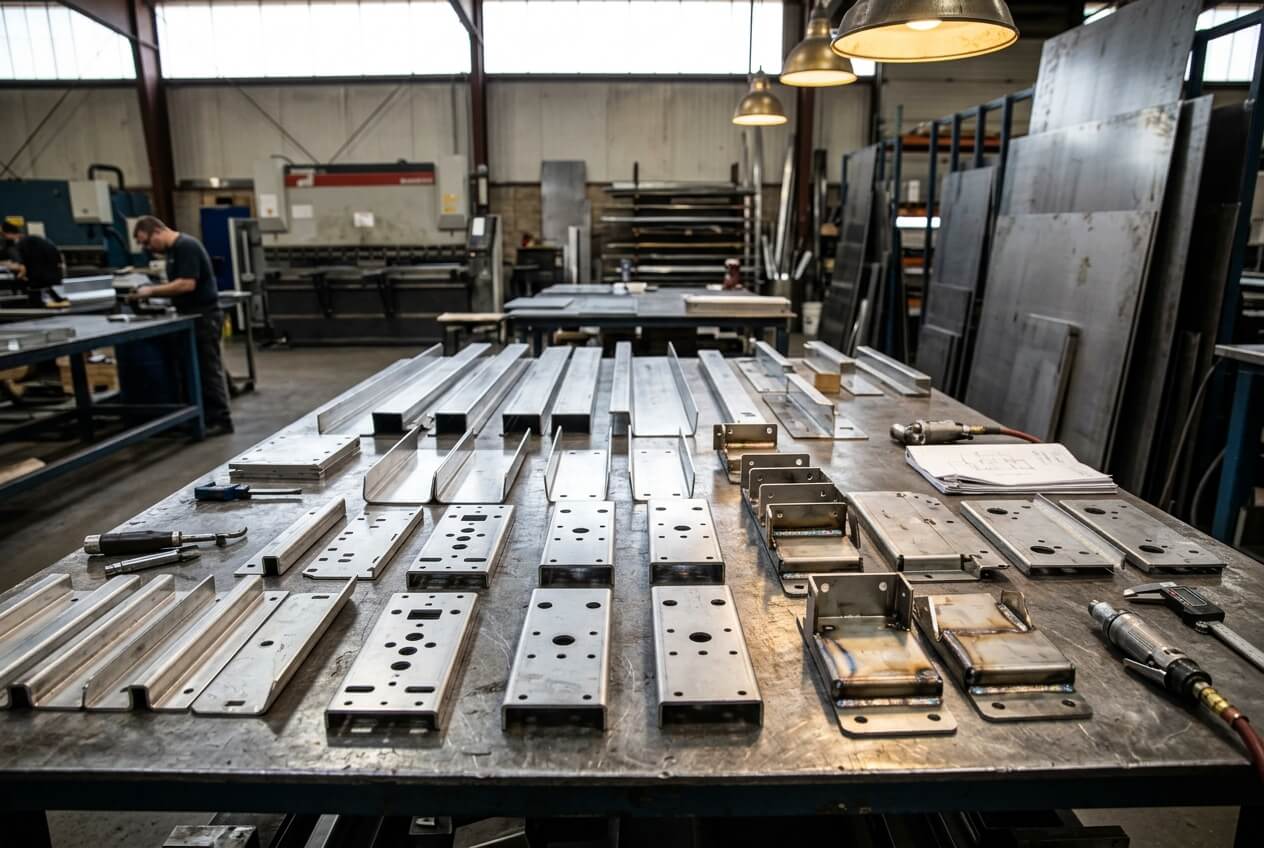
An OEM buyer asks for a powder coated sheet metal enclosure. The drawing shows formed side panels, welded brackets, mounting holes, and a visible front door. One note says annealed steel preferred. It does not say which bend cracked before, which surface must stay flat, or whether hardness affects assembly fit.
The quotes then move in different directions. One supplier prices standard cold rolled sheet. Another sources fully annealed material. A third adds heat treatment after forming and welding. Each quote may look reasonable, but the buyer no longer compares the same manufacturing route.
The annealing metal definition is straightforward. Annealing is a controlled heat treatment that reduces hardness, improves ductility, relieves internal stress, or makes forming more predictable. The procurement risk starts when that definition becomes a vague RFQ shortcut. A broad annealing note can hide the real problem, inflate cost, extend lead time, and create weak batch controls for custom sheet metal parts, metal enclosures, brackets, frames, and welded assemblies.
This article focuses on one risk: RFQ ambiguity around annealing assumptions. Buyers do not need a textbook on heat treatment. They need to know how one unclear material note changes quote comparison, prototype review, and production consistency.
Where an Annealing Note Starts to Distort Supplier Quotes
A supplier cannot price annealing in isolation. The note affects material sourcing, bend planning, welding sequence, cosmetic handling, inspection, and sometimes certification. If the drawing does not explain the reason for annealing, each supplier fills the gap with a different assumption.
One supplier may treat annealing as a material condition and buy softer sheet. Another may keep standard sheet but adjust tooling and bend radius. A third may assume post-fabrication stress relief. These routes carry different cost, lead time, and quality risks. A low quote may omit the condition the buyer expected. A high quote may include protection the part does not need.
The risky feature is rarely the whole part
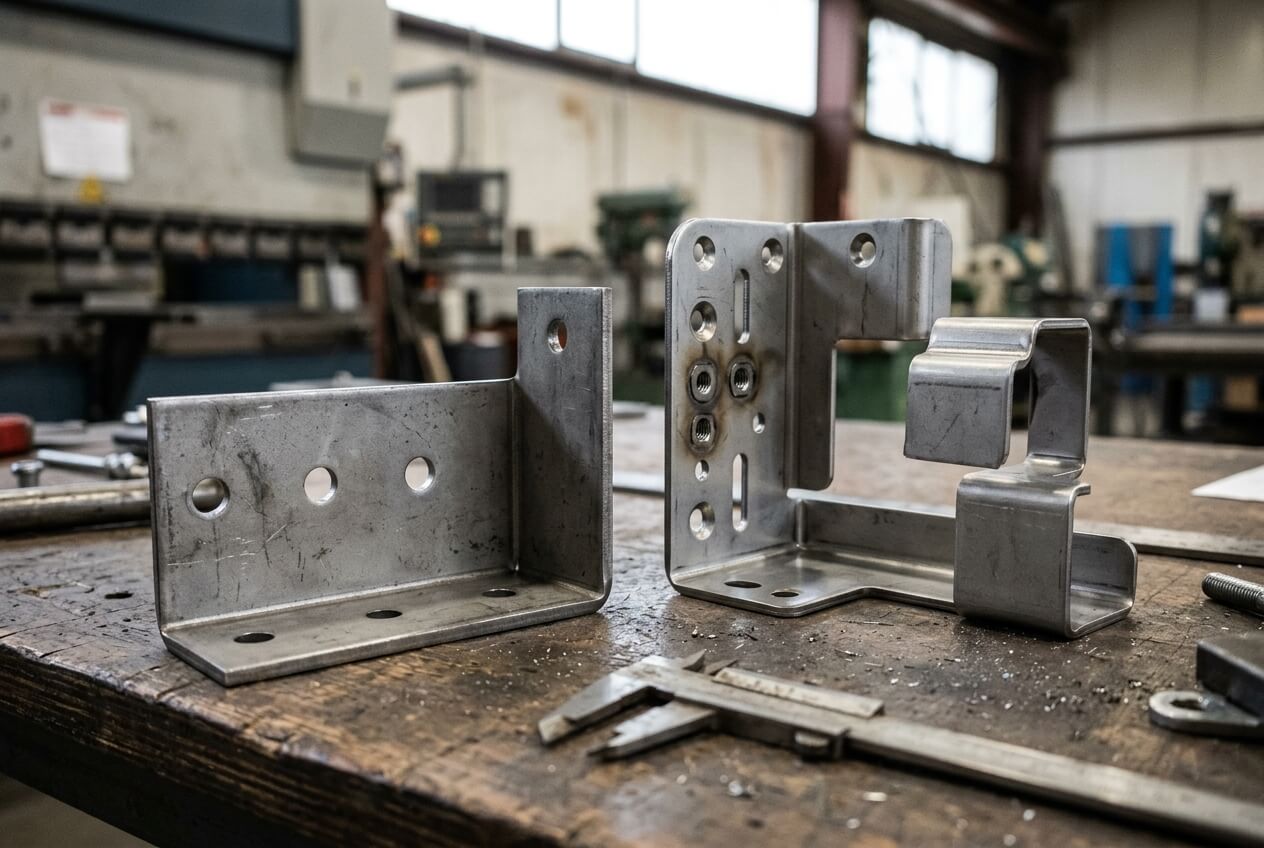
Most annealing questions start at a specific feature. A tight return flange cracks. A stainless cover springs back after bending. A welded cabinet door loses flatness after coating. The rest of the assembly may form normally with standard material and practical bend radii.
Consider a wall-mounted electronics enclosure. The visible door has two close bends near the hinge side, and the buyer worries about springback. The internal mounting brackets use simple ninety-degree bends with generous radii. If the RFQ says only annealed steel required, suppliers may price the full bill of materials as if every part needs the same condition. That protects the quote, but it also hides a design decision that belongs at feature level.
A clearer RFQ marks the hinge-side bends, states the required door gap, and identifies the visible face after powder coating. It also separates internal brackets from cosmetic panels. Now suppliers can decide whether annealed material, a larger inside radius, a changed grain direction, or a prototype bend trial controls the risk best.
Yishang can review this type of drawing package before quote comparison, especially when buyers have both 3D models and 2D drawings but no clear material condition notes. The useful question is not Can you quote annealed metal? The better question is Which feature needs softness, and what failure are we trying to prevent?
Why Vague Soft-Metal Requirements Turn Into Hidden Cost Drivers
Annealed sheet metal can solve real forming problems. It can also become an expensive substitute for missing design information. When the RFQ does not define bend radius, material grade, grain direction, visible surfaces, hardness targets, or fit-up requirements, suppliers add margin for uncertainty.
The cost chain usually starts with a simple phrase. A buyer writes annealed material preferred because a previous sample cracked. The supplier then asks whether annealing applies to every panel, only tight bends, or only cosmetic faces. If the buyer cannot answer, the supplier chooses a safer route. That route may require special material sourcing, minimum order quantities, added hardness checks, longer incoming inspection, or extra handling to avoid marks on softer sheet.
Softness does not replace drawing controls
Soft metal bends more easily, but it does not guarantee a good enclosure, cabinet, frame, or bracket. A very soft panel can dent during handling. It can show waviness across a broad face. It may clamp differently in a welding fixture. Powder coating can then highlight surface distortion that the raw part barely showed.
A formed stainless cover gives a useful example. The buyer specifies annealed stainless because the cover has deep returns on both sides. If the drawing does not define the visible surface, the supplier may focus on crack prevention and miss cosmetic handling risk. The part may pass bend inspection yet fail appearance review after brushing or coating.
A laser cut bracket shows the opposite problem. The buyer requests annealed steel because the bracket includes two bends. The bends use a generous radius, and the bracket sits inside a machine frame. Standard cold rolled sheet may work with normal tooling. In that case, the annealing note adds sourcing cost without reducing a meaningful risk.
Procurement should separate three items before asking for final pricing: the failure mode, the feature location, and the acceptance target. The failure mode may be cracking, springback, poor flatness, hardness variation, or assembly misfit. The location may be one flange, one door skin, or one formed tab. The target may be no visible cracks at the outside bend, a door gap range, a hardness range, or a flatness requirement after finishing.
That structure helps suppliers price the same job. It also protects the buyer during negotiation. Without it, a cheaper quote may simply remove testing, use a different material condition, or assume that cosmetic rework will be acceptable.
How Quote Assumptions Move From Material Choice Into Assembly Fit
Buyers often treat annealing as a material issue. Production treats it as a process issue. The material condition changes how parts bend, spring back, clamp, weld, and sit after finishing. That means an unclear annealing note can move from purchasing into assembly fit without anyone noticing early enough.
Take a powder coated control cabinet. The buyer wants the door to close cleanly against a gasket. The RFQ mentions annealed steel because the door skin has long bends. Supplier A quotes annealed sheet and expects lower springback. Supplier B quotes standard sheet but adjusts the bend program. Supplier C quotes standard sheet and leaves final fitting to assembly.
All three suppliers may produce a door that looks acceptable as a prototype. Batch production exposes the difference. One route controls the hinge-side angle better. Another produces a slight twist after welding the inner stiffener. A third needs hand correction before coating. The purchase order may not resolve the dispute because the drawing never tied annealing to door gap, hinge hole position, or flatness after coating.
Assembly targets make annealing decisions testable
A strong RFQ does not say only that the metal should be soft. It states what the assembled part must do. For an enclosure, that may include door gap range, latch engagement, hinge alignment, powder coated finish expectation, and flatness on the visible panel. For a bracket, it may include angle tolerance, hole position after bending, and fit against a mating frame.
These targets turn supplier communication into a technical comparison. If one supplier recommends annealed material, ask which assembly target it protects. If another recommends a larger bend radius, ask whether outside dimensions, hole positions, and mating parts still fit. If a third recommends post-weld stress relief, ask how it affects lead time, coating preparation, and inspection.
A welded display frame shows the same chain. The buyer may request annealed sheet for formed shelves because earlier shelf lips cracked. Yet the larger rejection risk may come from welding distortion that pulls the frame out of square. Annealed sheet can reduce bend cracking, but it will not control weld sequence, fixture pressure, or final squareness. The RFQ must identify both risks, then avoid using one material note to cover all of them.
When Yishang reviews manufacturability for fabricated assemblies, the useful output should include assumptions. Buyers should know whether the quote depends on annealed sheet, modified bend radii, fixture control, prototype validation, or added inspection. That makes later quote comparison more honest.
Why Prototype Approval Can Hide Weak Annealing Controls
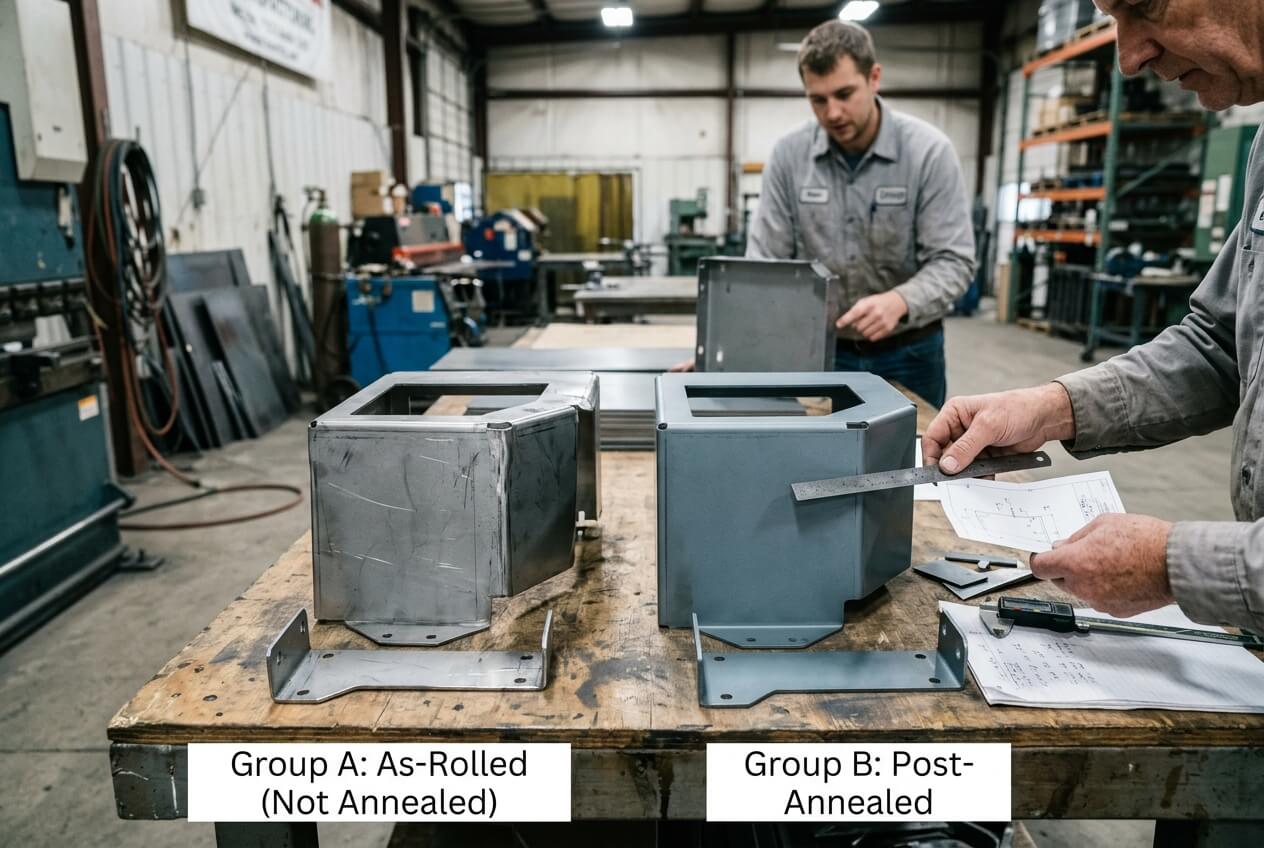
A prototype often receives more attention than batch production. Operators may slow the bend sequence, select better-looking material, adjust angles by hand, or correct a small twist before photos go to the buyer. That does not mean the annealing assumption can support repeat production.
The problem starts when the prototype approval checks only the sample part. The buyer sees no cracking and approves the order. The supplier then moves to batch cutting, bending, welding, coating, and assembly. Small changes in material condition or forming setup can shift bend angles, hole alignment, door gaps, or visible waviness.
Annealed material can reduce cracking risk, but it can also change handling behavior. Softer sheet may mark more easily under clamps. Large panels can deform during transport between processes. Welded assemblies may still move during cooling. If inspection only checks general dimensions, the buyer may discover the issue after coating, when rework costs more and lead time pressure rises.
Prototype lessons need to become production controls
Procurement should not approve only a sample appearance. It should convert prototype findings into drawing or quality controls. If a bend radius prevented cracks, add the radius. If a hardness range gave stable springback, record the range and test method. If the powder coated door closed correctly, define the final door gap and latch condition.
For a batch of metal cabinets, the prototype may show a clean front face and acceptable door movement. During production, coating thickness builds near the return flange, and a slight bend angle variation creates latch interference. The real control may involve bend angle, hinge hole position, coating allowance, and gasket compression. A general annealing note does not give inspectors enough information to catch the issue early.
For a run of formed machine brackets, one prototype may fit because the operator corrected the angle after bending. Batch parts may fail because the drawing lacks an angle tolerance after forming. If annealed material reduces springback, document that result. If tooling compensation solves it, remove the unnecessary material requirement and control the bend setup instead.
Before moving from prototype to batch, buyers should ask suppliers to list the assumptions that made the sample work. That list should cover material condition, thickness, bend radius, grain direction where relevant, welding sequence, finish allowance, and inspection points. It does not need to be long. It needs to be specific enough to prevent a different production route from replacing the approved one.
What to Clarify Before Comparing Annealed Metal Quotes
Quote comparison should happen after the buyer has narrowed the annealing question. Otherwise, the spreadsheet rewards whoever made the cheapest assumption. That creates risk for procurement, engineering, and production because the missing details return as change requests, sample delays, rework, or rejected batches.
Start with the feature that triggered the annealing note. Mark the bend, flange, formed tab, door skin, welded area, or flat panel that worries you. Then describe the consequence you want to avoid. Use practical language: no outside bend cracking, reduced springback at the door return, stable flatness on the visible face, controlled hardness for a spring function, or consistent fit with mating holes.
Next, define what suppliers may change. Some outside dimensions cannot move because the part fits inside a machine. Other internal flanges may accept a larger radius or shorter leg. Hidden brackets may allow tooling marks. Cosmetic faces may require more careful handling after forming and welding. These distinctions let suppliers reduce cost without weakening the part.
Buyers should also ask what each quote includes. Did the supplier assume mill-supplied annealed sheet? Did they include heat treatment after fabrication? Will they test hardness? Does the price include prototype validation before batch production? Are finish expectations included after bending and welding, or only on raw material? These questions expose quote assumptions before purchase orders lock them in.
Annealing, tempering, and normalizing should not appear as interchangeable words. Annealing usually reduces hardness and improves ductility or stress relief. Tempering often adjusts hardness and toughness after hardening. Normalizing improves uniformity in certain steels. If a part needs spring performance after forming, it may require a different sequence than a mild steel enclosure door. Loose heat treatment language creates loose pricing.
Send Yishang the drawings, material requirements, quantities, tolerances, finish expectations, assembly notes, and any prototype photos before final quote comparison. A focused review can identify where annealing is critical, where design changes may remove it, and where inspection should control the result more directly.
Frequently Asked Questions
What annealing metal definition should an OEM buyer use in an RFQ?
Use a definition tied to the part. Annealing is a controlled heat treatment used to reduce hardness, improve ductility, relieve stress, or improve formability. Then state which feature needs that condition and what failure it should prevent.
Why does a vague annealed material note create quote risk?
It lets each supplier assume a different route. One may quote standard sheet, another may source annealed sheet, and another may add post-fabrication heat treatment. The buyer then compares different processes, not just different prices.
When should annealing apply only to selected sheet metal features?
Use feature-level control when only one bend, flange, tab, or cosmetic panel carries the risk. Many hidden brackets, simple covers, and frame components may form well with standard material if the design uses practical radii and tolerances.
Can annealed sheet metal solve enclosure door fit problems?
It can help when springback drives the problem, but it does not control everything. Door fit also depends on bend angle, hinge hole position, flatness, welding distortion, coating thickness, gasket compression, and final assembly inspection.
Why can an approved prototype still lead to batch inconsistency?
A prototype may receive selected material, slower forming, hand correction, or extra fitting. Batch production needs documented controls for material condition, bend radius, tolerances, welding sequence, finish allowance, and inspection targets.
What should buyers send for an annealing-related quote review?
Send drawings, material grade, thickness, quantities, bend locations, tolerance requirements, finish expectations, assembly notes, and prototype feedback. This helps the supplier separate critical annealing needs from avoidable cost assumptions.