
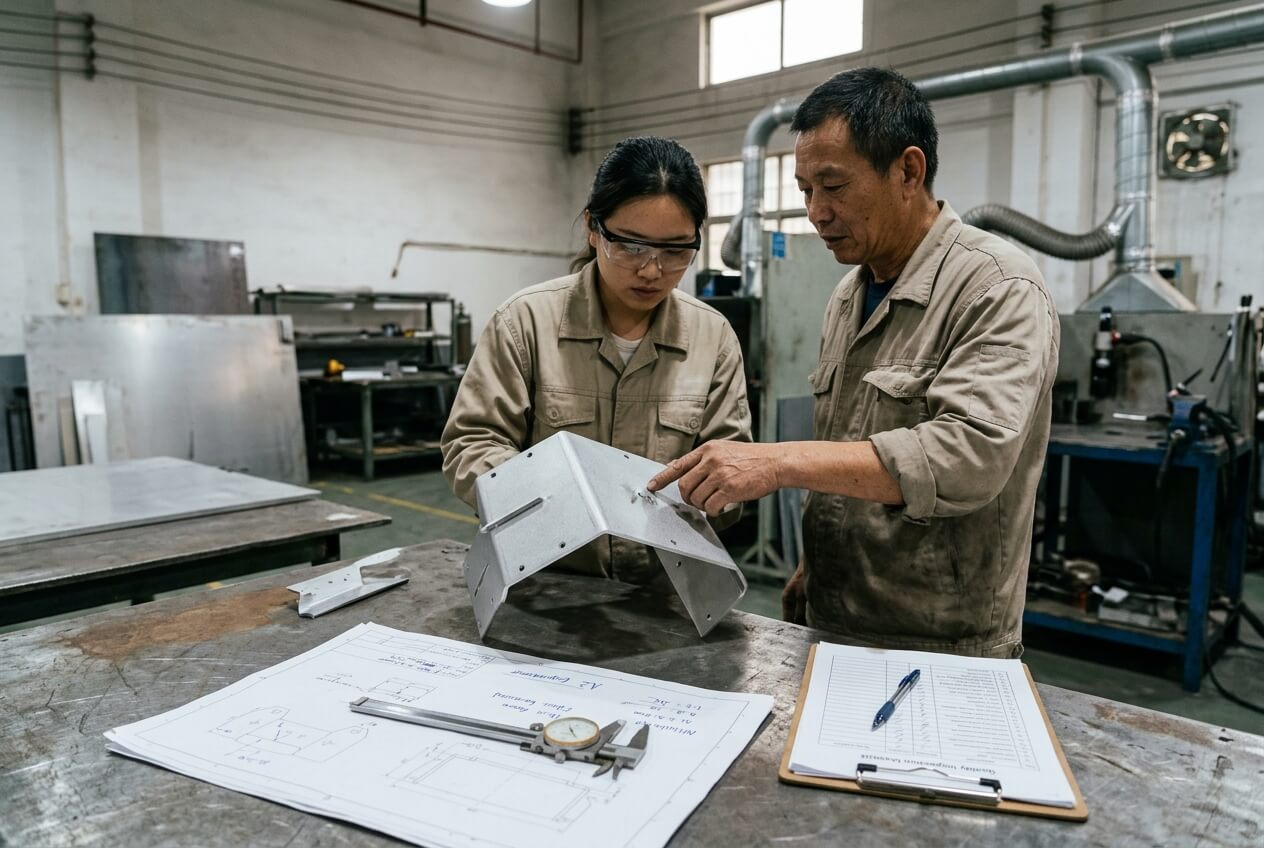
An OEM buyer sends an RFQ for a powder coated aluminium control enclosure. The drawings show laser-cut panels, bent flanges, welded corners, PEM inserts, hinge holes, and several visible outer faces. Three suppliers respond. One quote says shot blasting aluminium before powder coating. One says surface preparation included. The lowest quote leaves the blasting method blank.
The buyer may think the suppliers quoted the same job. They probably did not. Each supplier may have assumed a different abrasive, blasting intensity, masking scope, cleaning step, surface profile, inspection method, and rework allowance. Those hidden assumptions can change adhesion, visible texture, threaded-hole fit, edge coverage, assembly alignment, cost, and delivery risk.
The dominant procurement risk is not the blasting process itself. The risk is RFQ ambiguity. When the RFQ does not define what shot blasting must achieve, suppliers fill the gaps with their own defaults. The unit prices then look comparable, but the manufacturing routes do not match.
For custom sheet metal fabrication, surface preparation sits between cutting, bending, welding, powder coating, and assembly. A weak RFQ note can push a technical decision into production, where correction costs more and takes longer. Buyers do not need to become blasting specialists. They need to make supplier assumptions visible before they compare quotes.
Ambiguous Shot Blasting Notes Make Supplier Quotes Look Comparable When They Are Not
A short drawing note such as shot blast and powder coat black can mean several different things. One supplier may treat blasting as light cleaning before coating. Another may create a defined profile for adhesion. A third may subcontract the work and include only a basic pass through a shared blasting line.
Those choices affect the quote. The supplier that includes masking, deburring, cleaning, adhesion testing, and sample control will usually quote higher. The supplier that assumes open blasting with minimal masking can quote faster and lower. Without clarification, procurement may reward the supplier that left the most risk outside the price.
Where the ambiguity usually enters the RFQ
Drawings often define hole sizes, bends, weld locations, and material thickness clearly. Surface preparation receives one vague note. That imbalance creates trouble because aluminium does not behave like a neutral blank after blasting. Thin panels can show texture changes. Welded areas can look different from flat areas. Threaded inserts, grounding points, and mating faces can lose function if blasting and coating reach the wrong places.
Consider an aluminium electronics enclosure with ventilation slots, PEM fasteners, and a cosmetic front face. If the RFQ only says shot blasting aluminium before powder coating, one supplier may blast the complete part without protecting inserts. Another may mask threaded areas and handle cosmetic faces separately. The first quote may win on price, but the buyer may later receive blocked threads, rougher texture, or inconsistent coating near the front panel.
A better RFQ separates the result from the method. State whether blasting must improve adhesion, remove oxide, clean weld discoloration, create cosmetic uniformity, or support a specified roughness range. Then ask suppliers to explain the route they priced. This small step turns a vague finishing note into a quotation control point.
Undefined Blasting Scope Pushes Cost, Fit, and Finish Disputes Into Production
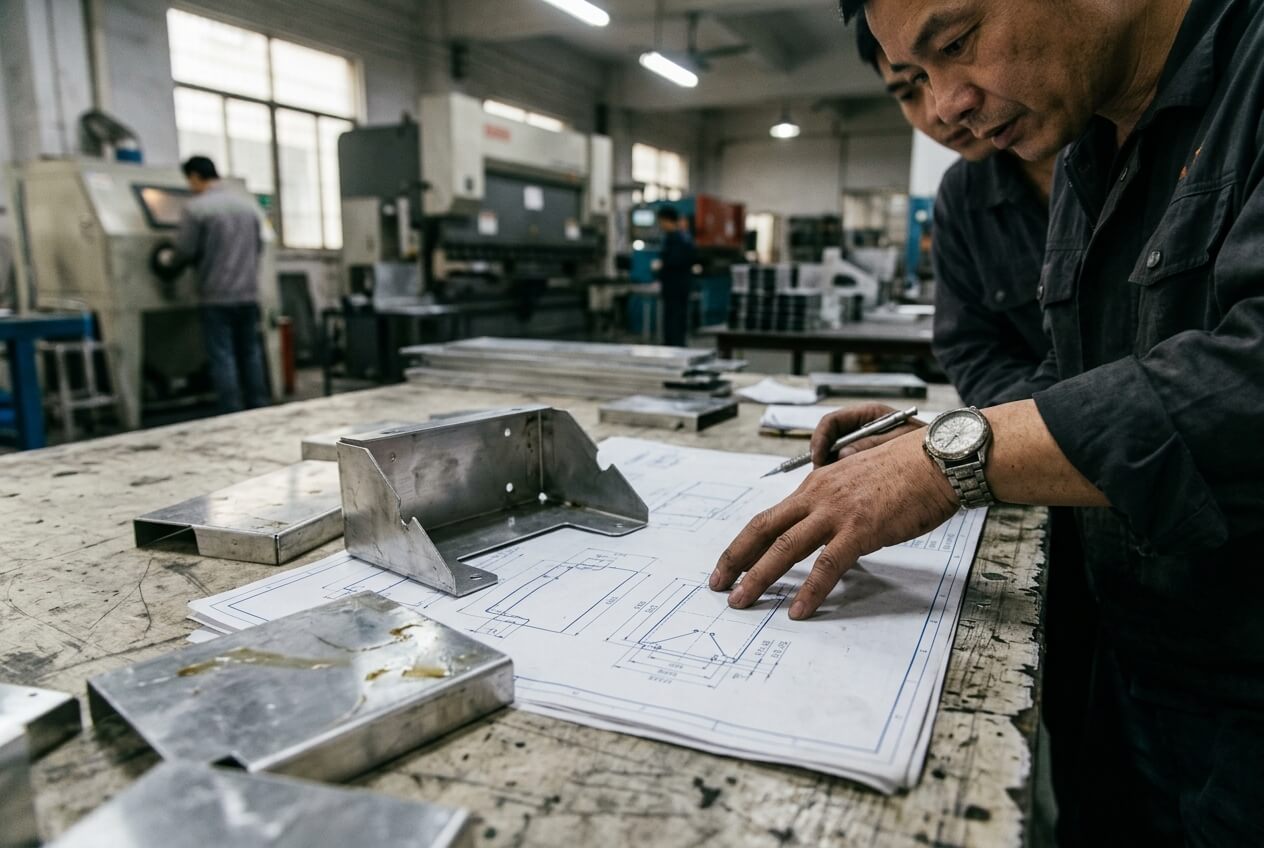
RFQ ambiguity rarely stays inside the quote. It moves downstream. Once production starts, the supplier has already cut, bent, welded, and scheduled finishing based on its own assumptions. If the buyer then rejects the finish, the argument usually starts with one question: what did the quote actually include?
Shot blasting can affect more than surface appearance. It can change how powder coating builds on edges, holes, slots, and weld transitions. It can also expose weak deburring or poor weld blending. If the supplier did not include those steps, rework may require extra grinding, re-blasting, recoating, or remaking parts.
Masking is often the hidden price difference
Masking decisions create many quotation gaps. Threaded inserts, hinge holes, grounding points, label areas, sealing faces, and sliding surfaces may need protection. If the RFQ does not mark them, suppliers may quote different masking scopes. One quote includes caps, plugs, tape, inspection, and removal. Another assumes coating may enter the holes as long as final assembly remains possible.
For an aluminium cabinet door, this difference matters. A hinge hole may look acceptable after coating, but the hinge can bind during assembly. A grounding point may lose electrical contact because powder coating covered the area. A sealing face may become too thick and affect gasket compression. None of these failures starts at final assembly. They start when the RFQ does not identify functional surfaces before quotation.
Cosmetic faces need a separate acceptance route
Visible surfaces need clearer language than hidden brackets. Blasting media, pressure, nozzle distance, and operator technique can leave different textures. Powder coating may hide some marks, but it can also highlight uneven preparation. Weld zones, ground corners, and flat panels may show different texture under the same coating.
A welded aluminium frame gives a common example. The supplier must clean welds and prepare flat faces before powder coating. If it uses one aggressive blasting setup for every surface, the welds may clean well while the visible faces become too rough. If it uses a lighter process, weld discoloration may remain visible after coating. The RFQ should identify which faces require cosmetic consistency and which areas only need coating adhesion.
Buyers can reduce disputes by asking suppliers to confirm what the price includes. Ask about abrasive type, approximate media range, masking points, cleaning before coating, inspection method, and rework assumptions. The goal is not to specify every machine setting. The goal is to prevent each supplier from pricing a different definition of acceptable work.
Abrasive and Process Assumptions Can Make the Approved Sample Misleading
Prototype approval often creates false confidence. A supplier may produce one excellent sample with careful handwork, fresh media, extra cleaning, and slow powder coating. The buyer approves the appearance and fit. Later, batch production uses different loading, worn media, faster handling, or another blasting cabinet. The finished parts no longer match the approved sample.
This problem still traces back to RFQ ambiguity. If the RFQ and approval record only describe the final appearance, the supplier can change the blasting route without violating a clear written requirement. The buyer expected repeatability. The supplier only agreed to make an acceptable sample.
Media choice changes the risk profile
Aluminium oxide, glass bead, stainless steel media, and other abrasives create different results. Aluminium oxide can cut strongly and create a more defined profile. That may help adhesion, but it can over-texture thin cosmetic panels when the supplier uses the wrong grit or dwell time. Glass bead can create a different visual effect and may suit lighter cleaning. Stainless steel media can reduce dust in some systems, but buyers should ask about contamination control and whether the media is dedicated to aluminium work.
Procurement should not compare media by unit cost alone. Real cost includes media consumption, compressed air demand, nozzle wear, dust collection, cleanup, handling time, masking labor, scrap risk, and coating rework. A cheaper abrasive route may cost more if it causes finish rejection or inconsistent adhesion.
For a batch of aluminium mounting brackets inside an electrical cabinet, the buyer may prioritize adhesion, corrosion resistance, and open holes. A slightly varied texture may not matter. For a powder coated control panel, texture and color uniformity matter much more. Both parts may require shot blasting aluminium, but they should not use the same acceptance assumptions.
Prototype records should lock the route, not only the look
Buyers should record more than photos of a good sample. Ask the supplier to document the blasting purpose, media type, masking map, cleaning step, coating thickness range, adhesion requirement, and cosmetic standard. If roughness affects acceptance, define a target range or approved comparison sample.
Also ask whether prototype and batch production will use the same blasting equipment, coating line, operators, and inspection method. If the supplier plans to move from a small sample setup to a larger production line, request a first-article approval from the production route. This avoids the common trap where a handmade prototype becomes the standard for a different manufacturing process.
Yishang can review drawings and prototype expectations together when buyers need fabricated aluminium enclosures, brackets, frames, or welded assemblies. That review helps connect surface preparation with bending, welding, coating, and final assembly before the sample becomes the purchasing baseline.

Drawing Details Must Show Which Surfaces Control Acceptance
Many RFQs fail because they treat the whole part as one surface. Fabricated sheet metal parts rarely work that way. One face may be cosmetic. Another may be hidden. One hole may carry a fastener. Another may only provide ventilation. One welded area may need blending. Another may sit inside the enclosure and only need safe coverage.
Shot blasting and powder coating decisions should follow those priorities. If the drawing does not identify them, the supplier must guess. Guessing creates non-comparable quotes and increases the chance of rejection after finishing.
Functional surfaces need clear before-finish or after-finish rules
Holes, slots, tabs, inserts, hinge locations, and mating faces need special attention. Powder coating adds thickness. Blasting can influence coating build by changing the surface profile. If a drawing dimension applies before finishing, the final part may fit differently after coating. If a dimension must apply after finishing, the supplier may need masking, post-finish reaming, or adjusted cut sizes.
An aluminium access panel shows the chain clearly. The RFQ leaves hinge holes unmarked. The supplier blasts and coats the whole panel. Coating builds inside the holes. During assembly, the hinge screws feel tight and the panel sits slightly out of alignment. The buyer sees an assembly problem, but the source sits in the unfinished drawing note. The RFQ should have stated the critical holes, masking requirement, and whether final dimensions apply after coating.
Grounding areas create another common risk. Powder coating over a grounding point can create electrical contact problems. If the drawing does not mark no-coat zones, the supplier may not include masking. Reworking a coated grounding point can damage the surrounding finish and create a cosmetic mismatch.
Cosmetic standards should use evidence, not adjectives
Words such as smooth, clean, or good finish do not control a quote. Suppliers may interpret them differently. Use marked cosmetic faces, approved sample photos, viewing distance, acceptable texture range, coating color and gloss, and limits for blasting shadows near welds or bends. This does not need to be complex. It only needs to remove guesswork from the areas the customer will judge.
Buyers should also tell suppliers how parts will assemble. A bracket welded to a frame may need coating coverage around the weld, but it may not need a showroom surface. A display frame with removable panels may need consistent texture across separate parts because customers see them together. When suppliers understand the product context, they can price the correct surface preparation scope instead of quoting a generic blasting step.
Before Comparing Prices, Make Every Supplier Price the Same Blasting Risk
Price comparison should begin after the RFQ defines the blasting risk. Otherwise, the lowest quote may only prove that one supplier assumed less. This does not mean buyers must over-specify every detail. It means they should control the points that affect acceptance, assembly, cost, and delivery.
Start by stating the purpose of shot blasting aluminium. Then identify cosmetic faces, functional holes, masked areas, threaded inserts, grounding points, sealing faces, and mating surfaces. Add material grade, thickness, quantity, tolerance requirements, powder coating expectations, and prototype requirements. If the part has welds, state whether weld grinding, blending, and cleaning must happen before blasting.
Ask suppliers to return their assumptions with the quote. Their answer tells you how deeply they reviewed the job. A strong supplier will identify conflicts between blasting, coating thickness, hole fit, visible texture, and assembly. A weak supplier may only repeat the RFQ language and provide a price.
Lead time also depends on these assumptions. Masking, sample approval, adhesion testing, cleaning, and rework allowance all add time. If one supplier includes them and another excludes them, the delivery promises do not mean the same thing. Clarify the process before you negotiate the schedule.
For procurement teams, the best question is not simply, Can you shot blast aluminium? A better question is, What blasting, masking, cleaning, coating, and inspection route have you priced for this drawing? That question exposes hidden differences before they become late-stage disputes.
If your RFQ includes aluminium enclosures, brackets, frames, cabinets, or welded assemblies that require shot blasting before powder coating, send Yishang your drawings, material requirements, quantities, tolerances, finish expectations, cosmetic face notes, and assembly requirements. The review can help confirm whether the fabrication, blasting, coating, and inspection assumptions are clear enough for quotation, prototyping, and batch production.
Frequently Asked Questions
What should an RFQ say about shot blasting aluminium before powder coating?
The RFQ should state the purpose of blasting, the surfaces that matter, masking requirements, coating expectations, inspection method, and any prototype approval rules. It should also ask the supplier to confirm the abrasive type, cleaning steps, and assumptions included in the price.
Why can two suppliers quote very different prices for the same aluminium blasted part?
They may not be quoting the same scope. One supplier may include masking, weld blending, cleaning, adhesion checks, and cosmetic control. Another may assume basic surface preparation only. The price gap often reflects different hidden assumptions, not only different labor rates.
Does the buyer need to specify the exact blasting pressure and media?
Not always. Buyers usually need to define the required result and critical surfaces. However, they should ask suppliers to state the media type, approximate process approach, contamination controls, and whether the same route will apply to prototypes and batch production.
How does shot blasting affect assembly fit after powder coating?
Blasting changes the surface profile, and powder coating adds thickness. Together, they can reduce clearance in holes, slots, hinges, sliding panels, threaded inserts, and mating faces. The drawing should state masked areas and whether critical dimensions apply before or after finishing.
Why can an approved prototype fail to protect batch consistency?
A prototype may receive extra manual care or use a different blasting setup than batch production. If the approval record does not lock the media, masking, cleaning, coating thickness, and inspection route, production can drift while still appearing to follow a vague drawing note.
What should buyers send to Yishang for an aluminium blasting and powder coating quote?
Send drawings, material grade, thickness, quantities, tolerance requirements, finish expectations, cosmetic face notes, masking needs, assembly information, and any prototype or sample requirements. These details help expose quotation assumptions before production starts.