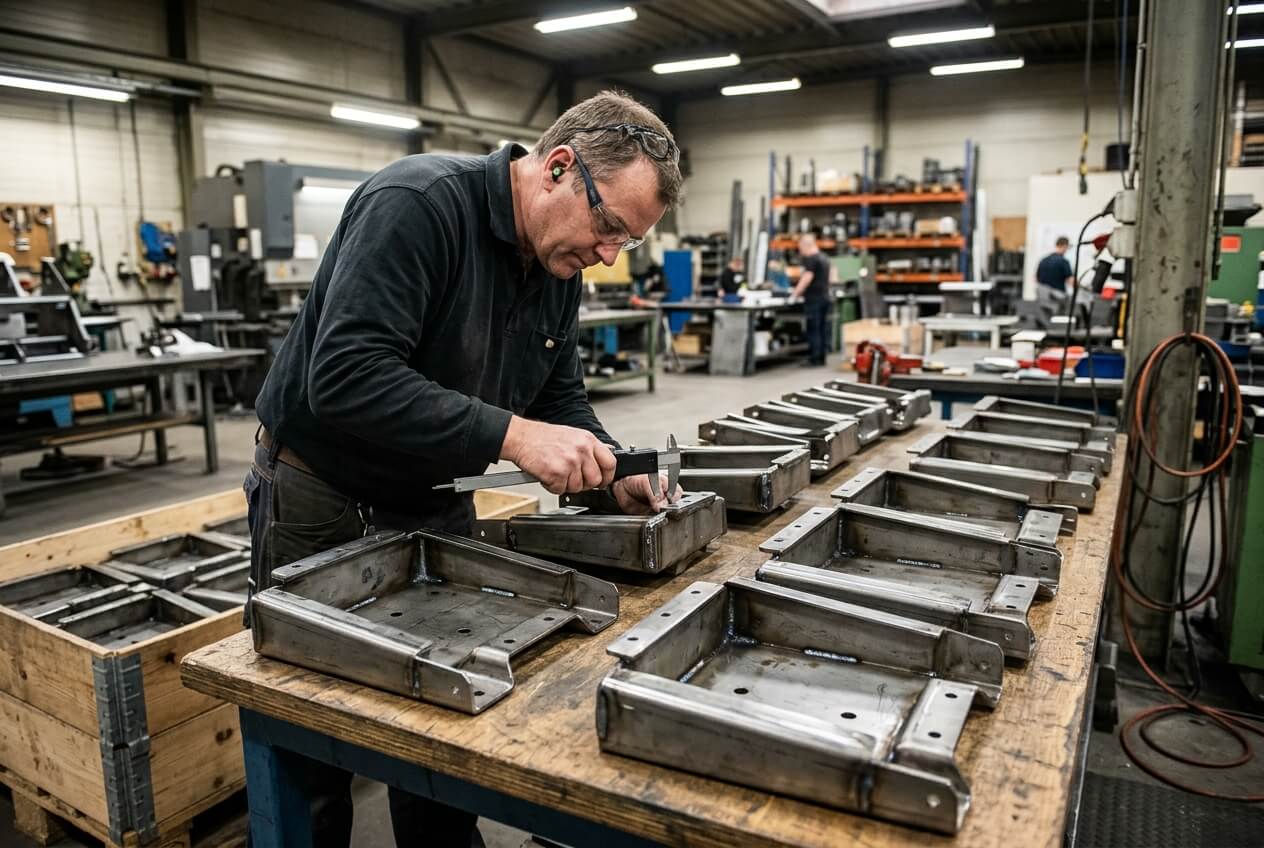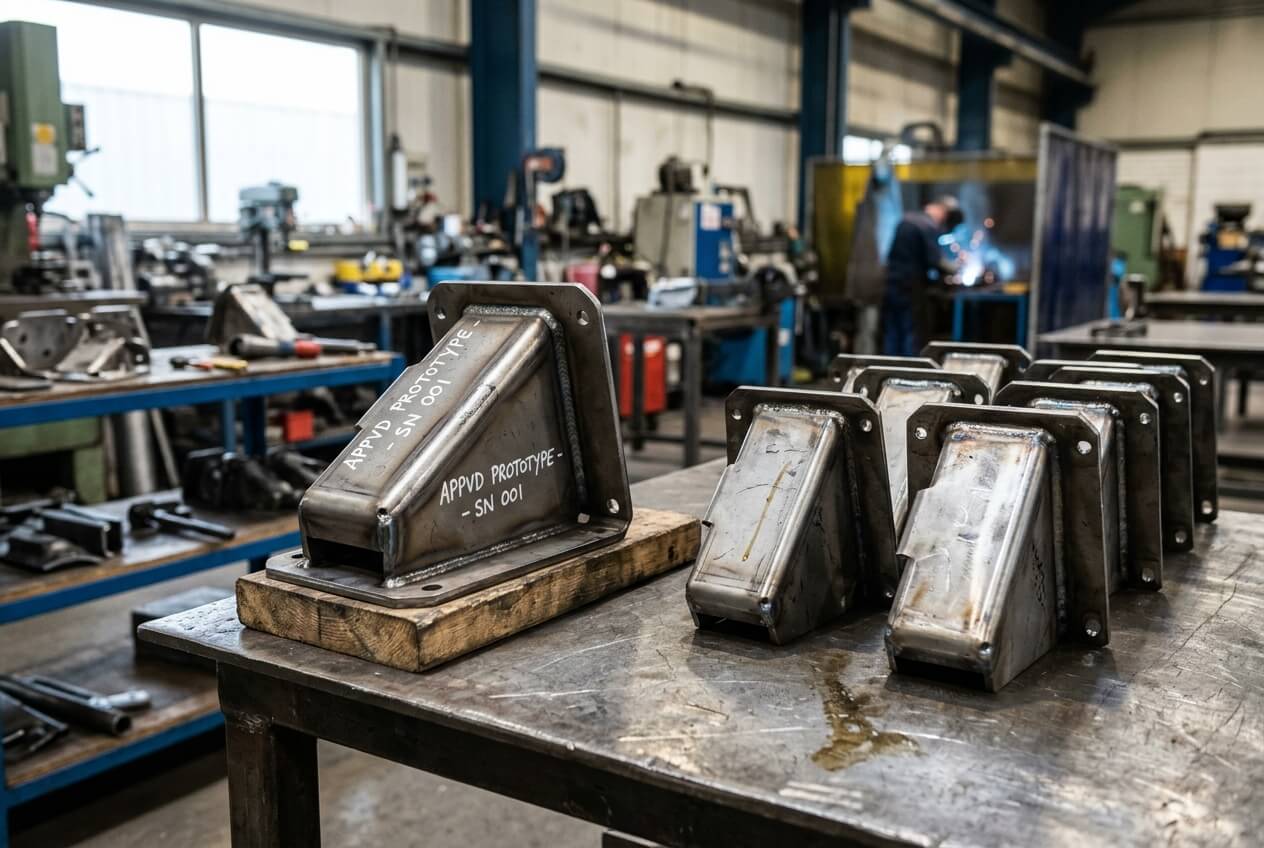
A prototype welded frame can pass inspection and still create a batch problem. The buyer checks the diagonals, bolt holes, door gaps, and powder-coated surfaces. The sample looks acceptable. Then the first production lot arrives with a different pattern. Long seams have pulled the frame out of square. Brackets need rework before assembly. Cosmetic faces show heat distortion that the approved sample did not expose.
This is the core procurement risk with submerged welding: buyers often approve the result, but they do not freeze the production conditions that created it. Submerged arc welding, or SAW, can perform well on long, accessible welds. It uses a continuously fed electrode and granular flux that covers the arc, as explained by
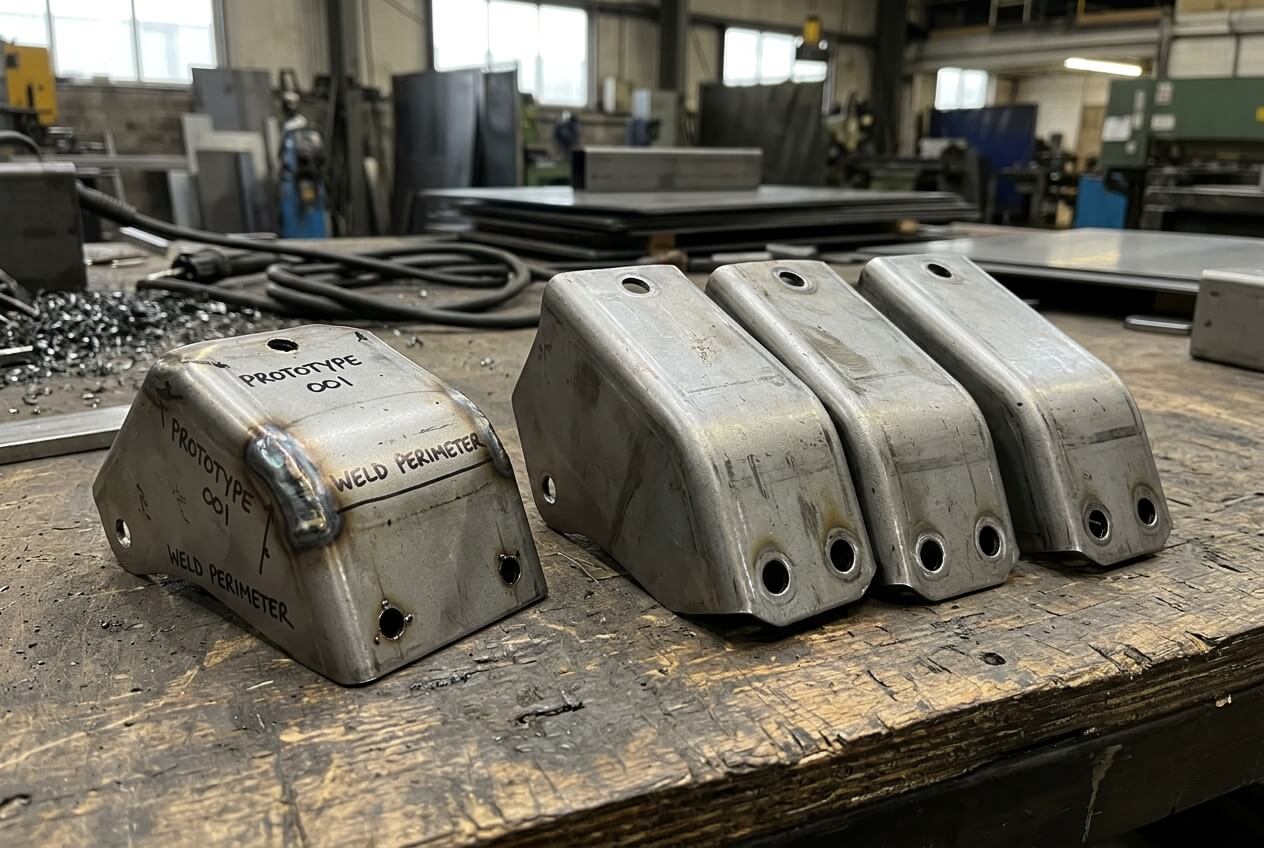
If your project involves submerged welding, send Yishang your drawings, material requirements, quantities, tolerance notes, finish expectations, photos, samples, and assembly needs through custom sheet metal fabrication support. A clearer review before quoting can reduce avoidable clarification rounds, rework, and production uncertainty. The prototype may have used extra clamping, slower welding, manual correction, or a different fixture. Long submerged welds add heat and pull metal during cooling. Buyers should confirm the weld sequence, fixture method, cooling inspection point, and straightening policy before batch release. The RFQ should mark the seams intended for submerged welding, list critical post-weld dimensions, define inspection stages, and state finish expectations. It should also confirm whether the batch will follow the same process route and fixture concept used for the prototype. No. SAW works best on suitable long, accessible welds. Short corner welds, internal brackets, vertical joints, and cosmetic areas may need another process. Buyers should let the drawing and function guide the weld map instead of applying one process to every seam. Define when the supplier must measure the frame: after welding, after cooling, after any straightening, and after finishing if needed. Also ask whether the prototype required correction. This makes the tolerance easier to quote, inspect, and enforce during batch production. Yes. Powder coating can highlight waviness, uneven grinding, poor cleaning, and heat distortion near weld zones. It also adds thickness around holes and mating surfaces. If final appearance or fit matters, approve a finished sample or define post-finish inspection requirements. Use stronger inspection when welds carry load, support equipment, affect safety, or control critical assembly alignment. Depending on the risk, buyers may request weld size checks, dimensional reports, magnetic particle testing, ultrasonic testing, or sample-section review.Ready to Review This RFQ Before Production?
Frequently Asked Questions
Why can a submerged welding prototype pass but the batch parts distort?
What should an RFQ say after a welded prototype is approved?
Should every weld on a sheet metal assembly use submerged welding?
How can buyers reduce disputes about frame diagonal tolerance?
Can powder coating reveal submerged welding problems?
When do submerged arc welds need more than visual inspection?