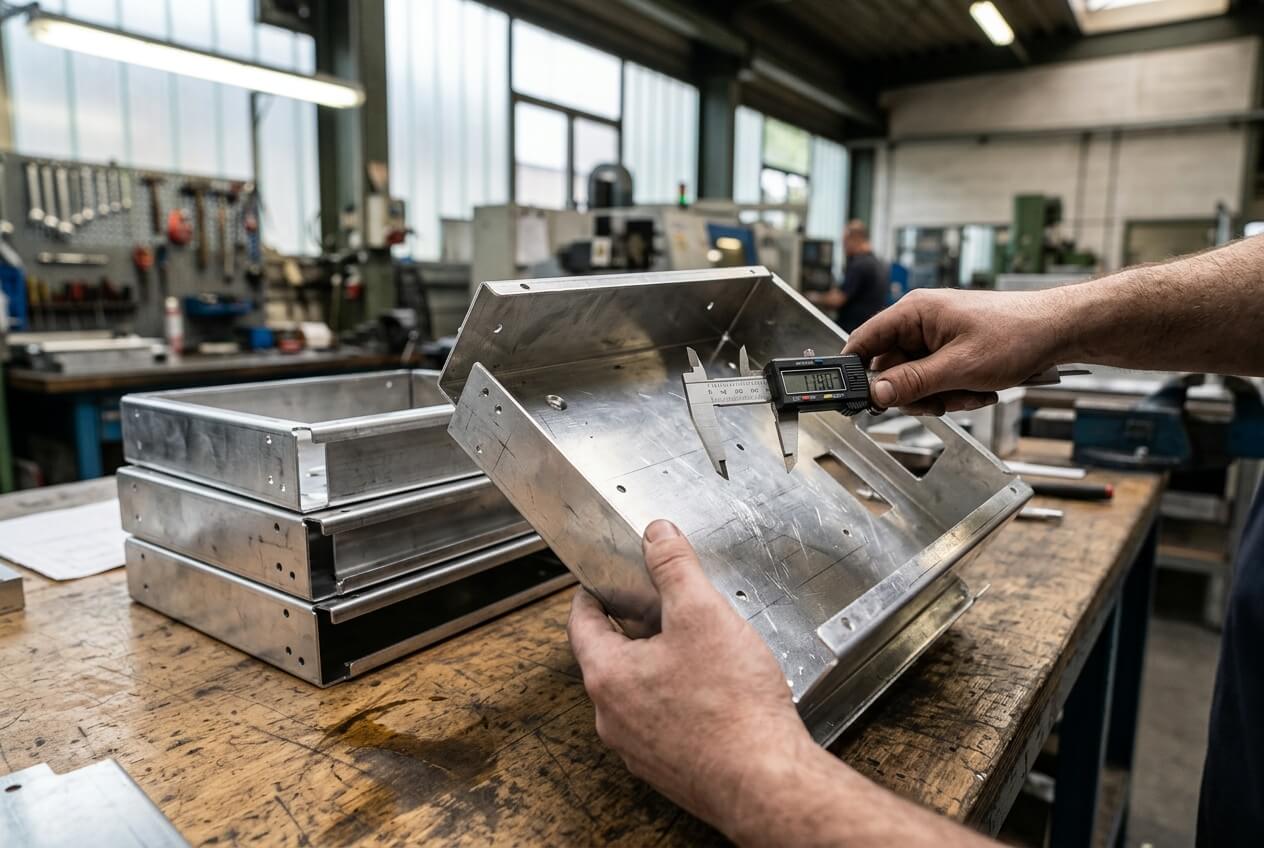
An OEM buyer may ask a simple question first: what is anodized aluminum? In procurement, the better question is more specific: what will the finished part need to do after anodizing, and what must the supplier quote against?
That distinction matters on custom sheet metal fabrication jobs. A black anodized enclosure, a front panel, a welded bracket, or a formed frame can all look straightforward on a drawing. Yet one missing note can change the quote, the inspection plan, and the batch result. The supplier may price pre-finish dimensions. The buyer may expect finished-part fit. The finish may also hide or expose problems that were invisible in the prototype.
The biggest risk is not the anodizing process itself. The real risk is RFQ ambiguity. If the buyer does not define visible surfaces, masking, final-fit features, and acceptance criteria, each supplier fills the gap differently. That creates price spread first and production dispute later.
Yishang often sees this when buyers send drawings that say only “anodized aluminum” or “black finish.” The finish box looks complete, but the procurement risk is still open.
What anodized aluminum means when the buyer will judge the finished part
Anodized aluminum is aluminum with an electrochemically grown oxide layer. The layer can improve appearance, wear resistance, and corrosion behavior. On fabricated sheet metal, though, the finish is not just a surface treatment. It becomes part of the manufacturing sequence. Cutting, bending, welding, deburring, and cleaning all affect how the anodized part will look and fit.
That is why the same phrase can mean very different things in the RFQ. One supplier may think the buyer wants a decorative black finish on the outside face only. Another may assume functional anodizing on every surface. A third may warn that welded areas will not match untreated sheet areas. All three responses can be reasonable, but only one may match the buyer’s real intent.
Finished appearance is not the same as raw material selection
Buyers sometimes treat anodized aluminum as a material choice. It is actually a process choice that affects the finished part. Alloy grade, surface texture, grain direction, bend marks, and weld zones all influence how the anodized surface will appear. A brushed front panel may hide minor variation. A smooth display frame may expose it. If the drawing does not separate cosmetic faces from hidden faces, the supplier must guess where the buyer will inspect.
That guess changes both cost and lead time. Extra polishing, masking, protective film, and tighter cosmetic sorting all add labor. If the supplier includes those steps, the quote rises. If the supplier leaves them out, the first batch may fail approval even if the dimensions are correct.
One part can carry two different standards
A sheet metal enclosure often needs both functional and cosmetic control. A hidden internal flange may only need normal workmanship. The front door may need color consistency, scratch limits, and no visible rack marks. If the RFQ does not separate those zones, the supplier may apply one standard everywhere or the wrong standard where it matters most.
This is the first place where the buyer risk becomes expensive. The quote can look competitive because it covers a simpler inspection plan than the buyer expects. The part can then pass the drawing and still miss the real approval target.
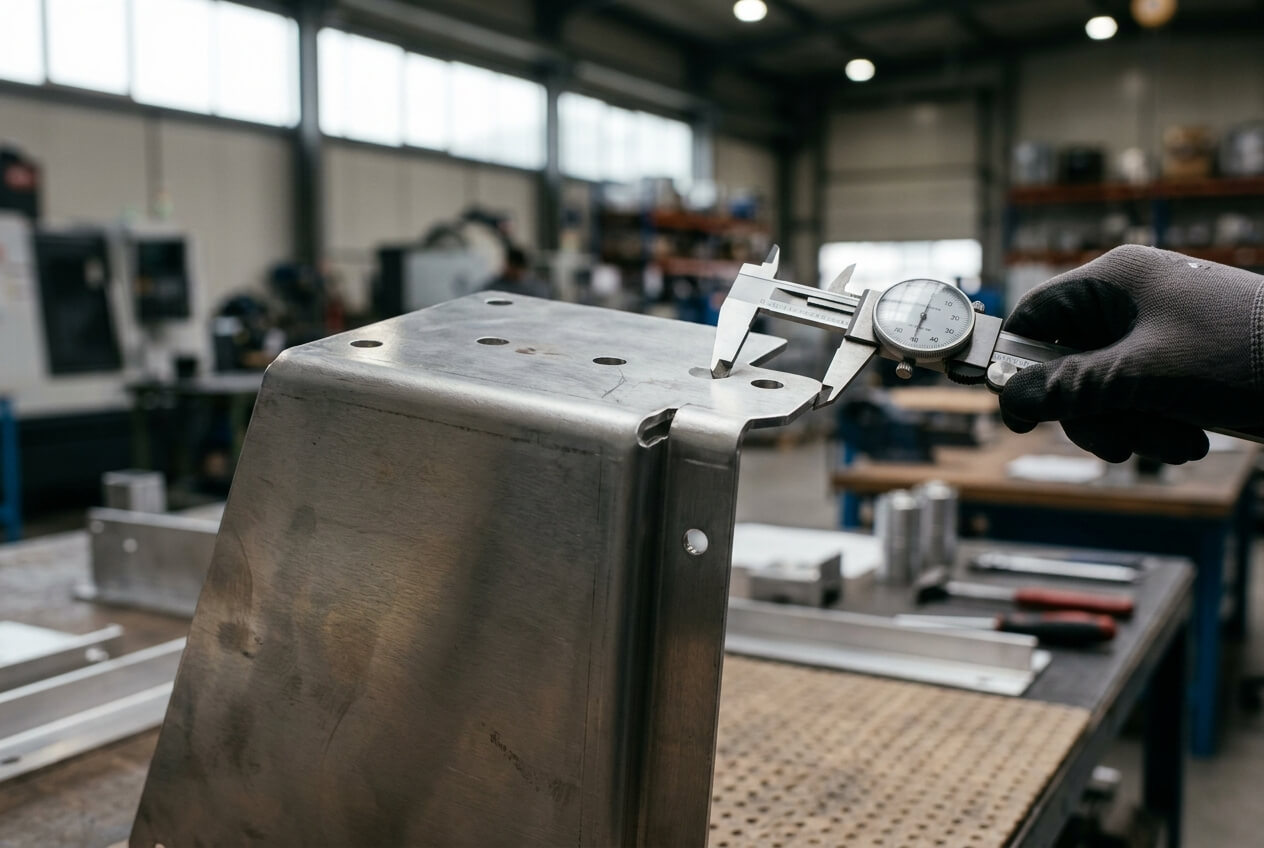
How one missing RFQ detail turns anodizing into three different quotes
Most pricing disputes start before production. They start when the RFQ leaves critical finish details open. In anodized aluminum sheet metal parts, the missing details are often not dramatic. They are small notes about visible faces, hole locations, masking, or color range. Those small gaps create large quote differences because each supplier makes a different assumption about risk.
For example, a buyer may request a black anodized control enclosure with laser-cut vents, countersunk holes, and bent side flanges. One supplier quotes the drawing as-is and assumes standard commercial anodizing. Another adds handling allowance for the front face, masking for threaded holes, and extra sorting for cosmetic panels. A third proposes powder coating because the drawing does not clearly define the acceptable anodized appearance. The unit price spread can look confusing, but the real issue is not price. It is the hidden scope difference.
Visible surface zones drive price more than the word “anodized”
Marking A-surfaces and hidden surfaces is one of the fastest ways to reduce quote noise. A customer-facing front panel needs a different level of handling than an internal support bracket. If the buyer does not identify those zones, the supplier may quote every surface to the same cosmetic standard. That usually increases cost. It can also lengthen lead time because the supplier must add more inspections and more rework risk into the schedule.
Project example: an equipment OEM sends a black anodized aluminum front panel for a lab instrument. The panel has a logo area, a display cutout, and a cable pass-through. The buyer wants the front face to be clean, but the rear side can have minor marks. Without that note, the supplier quotes both sides as cosmetic. The part still works, but the buyer pays for inspection it did not need.
Masking and contact points should never stay implied
Rack contact marks are a normal part of many anodizing processes. If the part has a visible edge, a ground point, a threaded insert, or a tight-fit hole, the buyer should say where marks are not acceptable and where masking is required. Otherwise, the supplier may choose the easiest rack position, not the best one for the finished assembly.
That matters on brackets and frames as well. A visible rack mark on a hidden flange may be fine. The same mark on a display-side edge may trigger rejection. If the RFQ defines the acceptable contact zone, the supplier can price the right fixturing method from the start.
Material, finish, and quantity change the risk profile together
Quantity affects handling. Material affects finish response. The same anodized part in a 20-piece prototype lot and a 2,000-piece batch does not behave the same way in production. Larger runs increase nesting pressure, batch variation, and packing risk. If the buyer wants a cosmetic finish across a larger lot, the supplier may need tighter incoming material control and more careful batch grouping. That should be visible in the RFQ so the quote reflects the real manufacturing burden.
Yishang reviews drawings and finish notes at this stage when buyers need custom sheet metal fabrication, sheet metal parts, or metal enclosures. The goal is not to over-specify. The goal is to remove the assumptions that make quotes hard to compare.
Why anodizing can change fit after bending, welding, and assembly
Anodizing does not only affect appearance. It can also affect fit. The oxide layer is thin, but it still matters on tight slip fits, hinge holes, press-fit points, grounding surfaces, mating channels, and cover interfaces. A part that fits on the flat pattern may not fit once it has been bent, welded, finished, and packed.
This is where many procurement problems start. The buyer checks the prototype in one stage, then assumes the batch will behave the same way. In reality, the finish may interact with process variation. A hole that was acceptable before anodizing may feel tight after finishing. A cover that closed cleanly on a sample may drag against a formed edge on the batch order.
Assembly fit must be defined at the finished-part stage
If a bracket locates a cabinet door, the relevant dimension is not only the cut size. It is the finished position after bending and coating. If a frame carries a sliding cover, the buyer should specify the final clearance needed after anodizing. If grounding is required, masking or post-process contact cleaning should be stated. Otherwise, the supplier may inspect the wrong stage and still deliver a part that fails in assembly.
Project example: a welded aluminum support frame for an outdoor kiosk arrives with the correct weld geometry, but the anodized corners no longer align cleanly with the mating panels. The problem did not start with anodizing alone. It started when the RFQ did not define the final assembly check. The supplier measured the frame to the drawing. The buyer needed the assembled fit.
Welded assemblies need extra finish judgment
Weld heat, grinding marks, and material variation often show more clearly after anodizing. On a welded enclosure or frame, that can create visible patchiness even when the structure is sound. If the buyer expects a uniform cosmetic finish on a welded assembly, the RFQ should ask the supplier to review finish suitability before quoting. In some cases, anodizing is still the right choice. In others, powder coating may give a more forgiving appearance for welded cosmetic parts.
That is a procurement decision, not only a design decision. If the buyer waits until after prototype approval, the project may already carry the wrong process assumptions. Then the supplier must either rework the part or revise the quote.
Tight tolerances increase inspection cost faster than buyers expect
Not every feature needs finished-part measurement. Some do. The buyer should separate critical-to-fit features from normal workmanship. A mounting slot that locates a subassembly deserves tighter control than a hidden internal bend. A logo cutout may need visual approval but not a CMM report. When the RFQ mixes both together, the supplier either over-inspects everything or under-inspects the critical points.
Both outcomes create cost. Over-inspection slows the job and adds labor. Under-inspection pushes risk to the receiving dock. The best RFQ states which dimensions must be checked after finishing and which ones can follow standard fabrication tolerance.
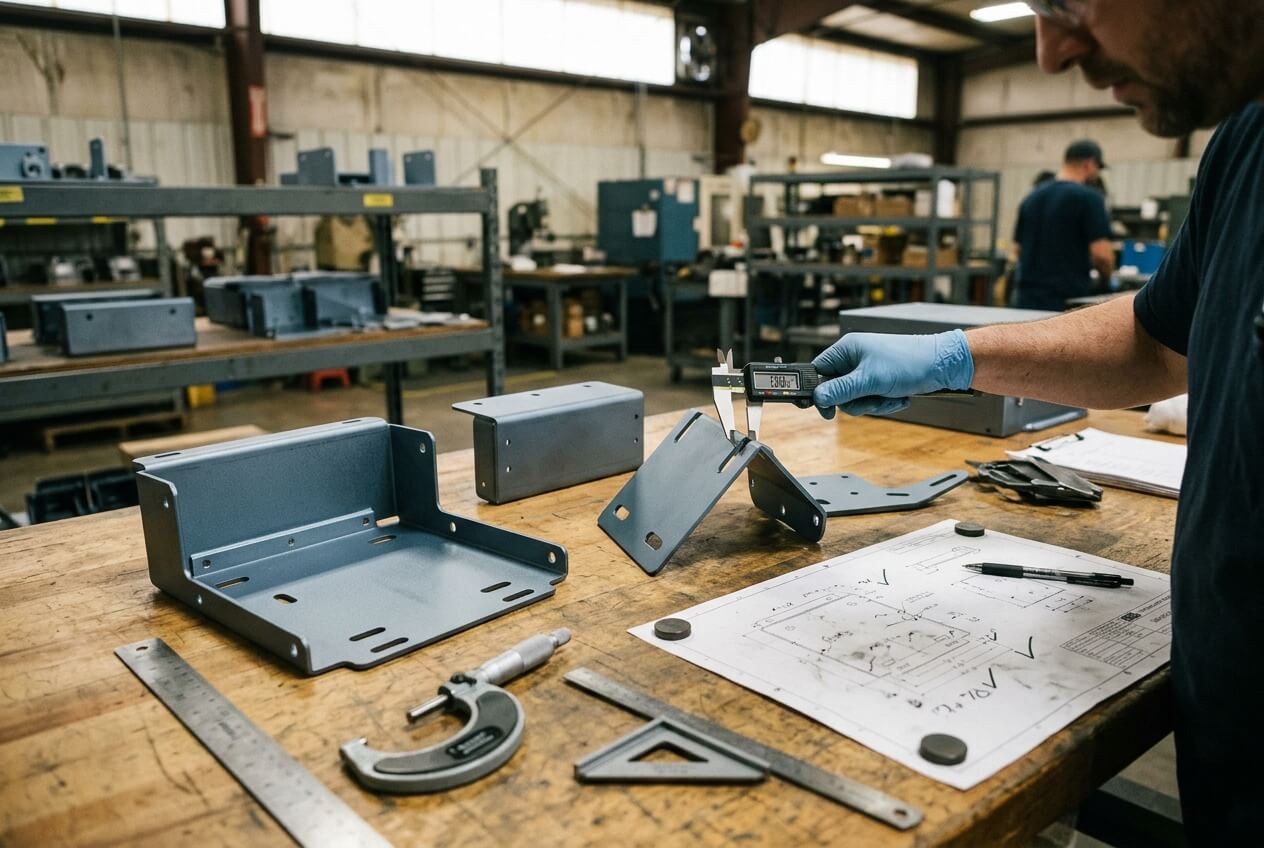
Why prototype approval often fails on batch production
A prototype can be useful, but it can also hide risk. Prototype parts often receive more manual attention than the batch order. The supplier may clean them more carefully, choose better-looking sheet stock, and inspect them one by one. That makes the sample look strong. It does not guarantee batch consistency.
This mismatch is common in anodized aluminum projects. The buyer approves the sample for color, fit, and appearance. Then the batch arrives with small tone shifts, different rack contact points, or more visible handling marks. The part still meets the drawing, but not the customer’s expectation. The problem is that the approval basis was never frozen.
Color range needs a reference, not just a word
Black anodized aluminum can vary with alloy, bath condition, sealing, and surface texture. Under one light source, two panels may look the same. Under another, they may not. If color matters, the buyer should approve a golden sample, a visual range, or a comparison method. If the part sits inside a machine, the buyer should not price it like a premium display panel. If it is a front-facing cover, the supplier needs a tighter cosmetic target from the start.
Lead time is also affected here. Cosmetic sorting, matched lots, and extra packing checks all slow throughput. When the buyer asks for batch consistency but does not define how to judge it, the supplier has to build caution into the schedule.
Packaging can create the final defect
Anodized surfaces resist wear better than raw aluminum, but they are not immune to scratches. Metal-to-metal contact during packing can still leave marks. A clean part can leave the factory and arrive disputed if the RFQ never asked for interleaving, protective film, or carton separation. For export jobs, that gap is expensive because the damage is discovered after shipment, not during in-house inspection.
That is why batch approval should include the transport condition when the surface is part of acceptance. A buyer who approves only the sample bench-top condition is not yet approving the finished delivery condition.
What to freeze before you compare suppliers or release the PO
The buyer does not need to over-engineer the RFQ. The buyer needs to freeze the details that change cost, fit, and acceptance. For anodized aluminum sheet metal parts, the most important step is to connect the drawing to the finished part. That means clarifying where appearance matters, where fit matters, and which stage controls approval.
Before comparing quotes, make sure the RFQ includes material grade, thickness, quantity, tolerances, finish color or texture, visible-surface zones, masking areas, and the inspection basis for the prototype and batch. If the part is a metal enclosure, bracket, frame, or welded assembly, add photos or assembly notes. Those details let the supplier quote the real job instead of the assumed one.
If the drawing already exists, Yishang can review it with the finish notes and point out where anodizing may affect fit, appearance, or batch consistency. That kind of review is most useful before the PO is released, not after the first batch is on the water.
Send Yishang your drawings, material requirements, quantities, tolerances, and finish expectations if you want a quote that reflects the finished part, not just the flat drawing.
Frequently Asked Questions
What is anodized aluminum in sheet metal fabrication?
It is aluminum with an electrochemically grown oxide layer. In sheet metal fabrication, the finish affects appearance, corrosion behavior, masking, and final fit after cutting, bending, welding, and assembly.
Why do anodized aluminum quotes vary so much?
Quotes change when the RFQ leaves visible surfaces, masking, color range, and finished-part inspection open to interpretation. One supplier may quote standard anodizing, while another adds cosmetic handling, sorting, or extra protection.
Can anodizing affect fit on brackets or enclosures?
Yes. The oxide layer can matter on tight slip fits, hinge holes, press-fit locations, grounding points, and mating channels. Buyers should define which dimensions must be checked after finishing, not only before it.
Why does a prototype sometimes pass when the batch fails?
Prototypes often get more manual attention than batch orders. Batch production adds nesting variation, rack-position changes, lot differences, and packing risk. If the approval basis is vague, the batch may differ from the sample in appearance or fit.
Should welded assemblies always use anodizing?
Not always. Anodizing can highlight weld discoloration, grinding marks, and material variation. For some welded cosmetic parts, powder coating may give a more uniform appearance. The best finish should be reviewed before quoting.
What should buyers send with an anodized aluminum RFQ?
Send drawings, material grade, quantity, tolerances, finish color or texture, visible-surface notes, masking areas, assembly photos, and prototype approval comments. Those details help the supplier quote the finished part more accurately.