
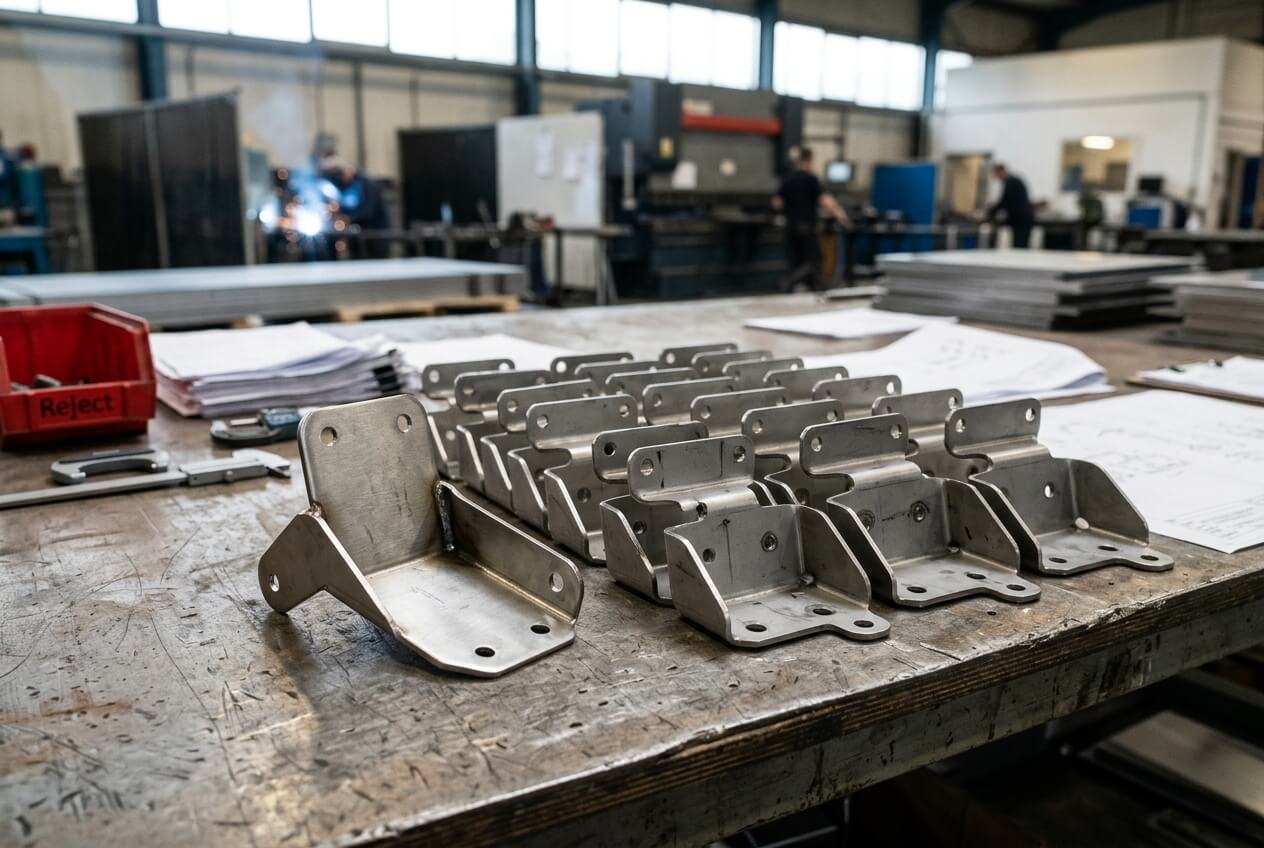
An approved prototype can still hide a weak sheet metal process. The part looks right on the bench, but the first batch exposes hole drift, door interference, coating buildup, and weld distortion. That is why design for manufacturing services matter most before the RFQ closes. They should reduce production risk, not just improve the sample.
For buyers of custom sheet metal fabrication, the biggest risk is not the sample itself. It is the assumption gap between the drawing, the quote, and the real production method. If the RFQ leaves room for interpretation, suppliers may price a hand-fitted part, a loose fixture, or a finish that works only on one prototype. The lot then arrives with extra rework, slower assembly, or hidden tooling cost.
This article focuses on one issue: how RFQ ambiguity turns prototype approval into batch risk for sheet metal parts, metal enclosures, brackets, frames, and welded assemblies.
Where RFQ ambiguity starts to distort a fabrication quote
Many quote problems begin with missing production intent. A buyer sends a drawing, a quantity, and a finish name. The supplier fills in the blanks. If the drawing does not show which faces matter, which dimensions control fit, or how much manual help the prototype needed, the quote can look clean while carrying major assumptions.
That gap often stays hidden until the first lot starts. A supplier who expected loose manual fitting will price low. A supplier who assumes controlled fixturing, first-article inspection, or special weld sequencing will price higher. Both quotes can be reasonable. They are not comparable unless the buyer knows what each one includes.
What a quote can hide when the RFQ is thin
A cabinet quote may leave out door alignment checks, latch clearance verification, or powder coat masking around critical holes. A welded bracket quote may leave out jig design, tack sequence control, or post-weld correction. A frame quote may assume that the team can correct squareness by hand. Those assumptions change the unit price, but they also change the repeatability of the final lot.
Project example: an OEM requested a powder-coated control cabinet with only overall size and sheet thickness. The sample passed because the fabricator adjusted the door by hand. In the batch, the same door gap tightened after coating. The lock rubbed, the hinge line shifted, and the buyer had to sort parts before assembly. The root cause was not coating alone. It was an RFQ that never defined fit-critical features.
For buyers comparing design for manufacturing services, the question is simple. Did the supplier quote the intended production method, or did they quote a convenient prototype path? If that is unclear, the lowest price can become the most expensive order after launch.
Why fit-critical dimensions must be frozen before first article approval
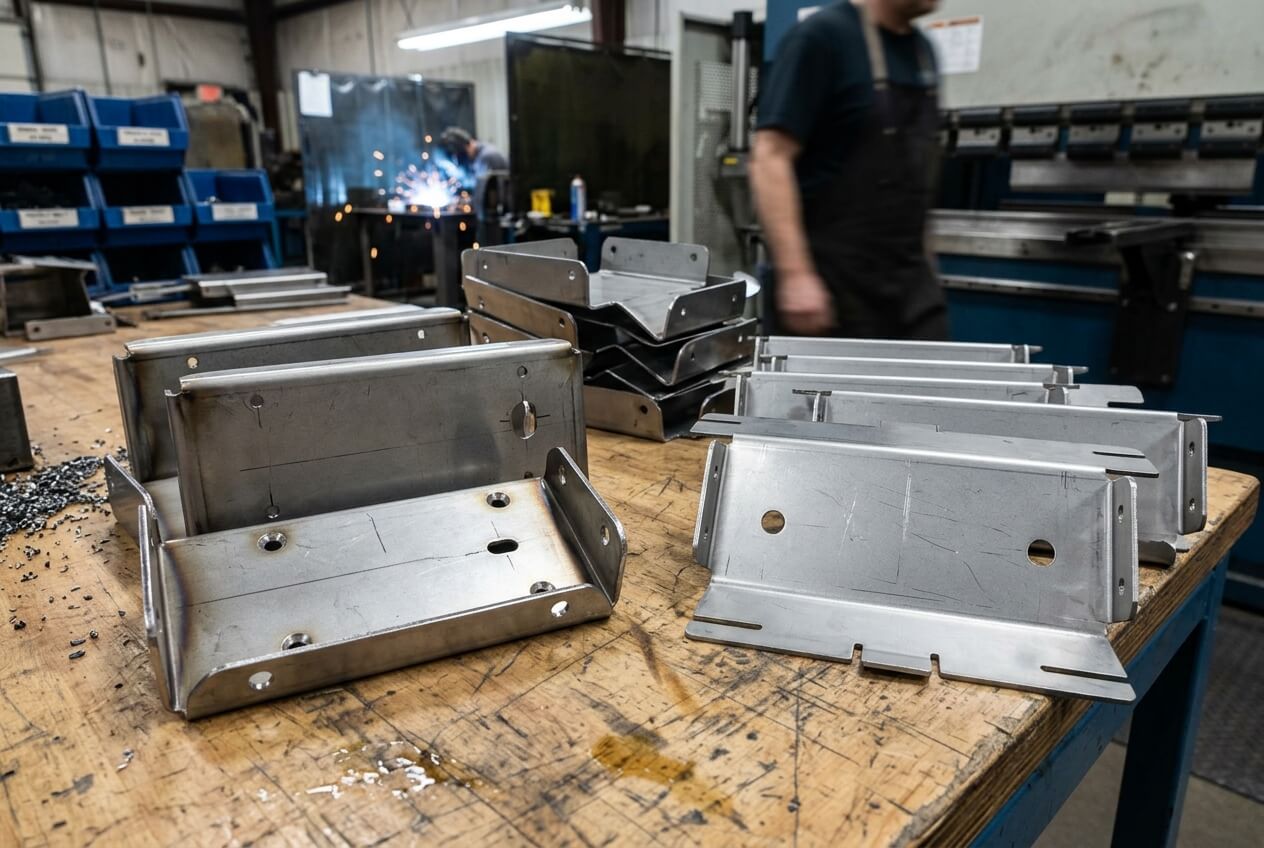
Prototype approval means only one thing: one part met one set of conditions. It does not prove the design is ready for volume. Before batch release, the buyer needs to freeze the dimensions that control assembly fit. That step matters more than polishing every drawing note.
On bent panels, the critical points are usually bend radius, flange length, hole-to-bend distance, and the datum edge used for inspection. On enclosures, they are often door gap, hinge position, latch clearance, and panel flatness. On welded assemblies, they may include diagonal control, squareness after cooling, and the face that must stay flat for mating parts.
Prototype fixes should not become production assumptions
Some samples pass only because a technician nudged the part into place. Others need extra deburring, local pressure, or a hand-fit adjustment after welding. If the team does not record those corrections, the buyer may approve a result that the process cannot repeat. In that case, the drawing and the fixture still disagree, even though the sample looked acceptable.
Project example: a welded machine base was approved after the fabricator adjusted one corner to remove twist. The lot later showed the same twist on several units. The assembly line then struggled with motor mount alignment. The buyer had to rework the frames, even though the first article had passed. The issue started with a manual fix that never became part of the controlled process.
Freezing fit-critical dimensions also improves cost control. When the supplier knows which features must hold after bending or welding, they can decide whether the part needs a dedicated jig, tighter inspection, or a different sequence. Without that decision, the quote often carries an optimistic assumption that breaks down in production.
How finish assumptions change assembly fit after coating or polishing
Finish is not only a cosmetic decision. It can change dimensions, edge condition, masking quality, and mating clearance. Powder coating builds thickness on corners and flanges. Brushing can change appearance from part to part. Polishing can remove material near visible edges. If the buyer treats finish as a late-stage decoration, the assembly may no longer fit after coating.
This risk is easy to miss because the prototype often gets extra attention. The sample may receive careful masking, extra touch-up, and more hand inspection. In batch production, those small efforts become expensive. If the RFQ does not say which surfaces are cosmetic and which surfaces must remain dimensionally clean, the supplier may choose a finish strategy that looks good but interferes with assembly.
Finish should be defined as a fit requirement, not only a visual requirement
A painted enclosure door may close on the sample and bind in volume. A brushed stainless front panel may show a visible grain change when parts come from different setups. A coated bracket may fail to seat because the hole edge took too much build. The problem is not just appearance. It affects functional fit, rework time, and delivery confidence.
When buyers ask for design for manufacturing services, they should also ask how the finish changes the part after processing. A fabricator can review whether powder thickness affects hinge pins, latch engagement, slot clearance, or gasket compression. That review is especially useful for enclosures and welded assemblies where a small coating change can create a large assembly problem.
For example, a metal enclosure for a control system may need clean threads, a stable door gap, and no coating on grounding points. If the buyer does not state those requirements early, the supplier may quote standard coating coverage. The part then needs extra tapping, masking, or touch-up before it can ship. That extra work changes both cost and lead time.
Why prototype approval does not prove batch consistency
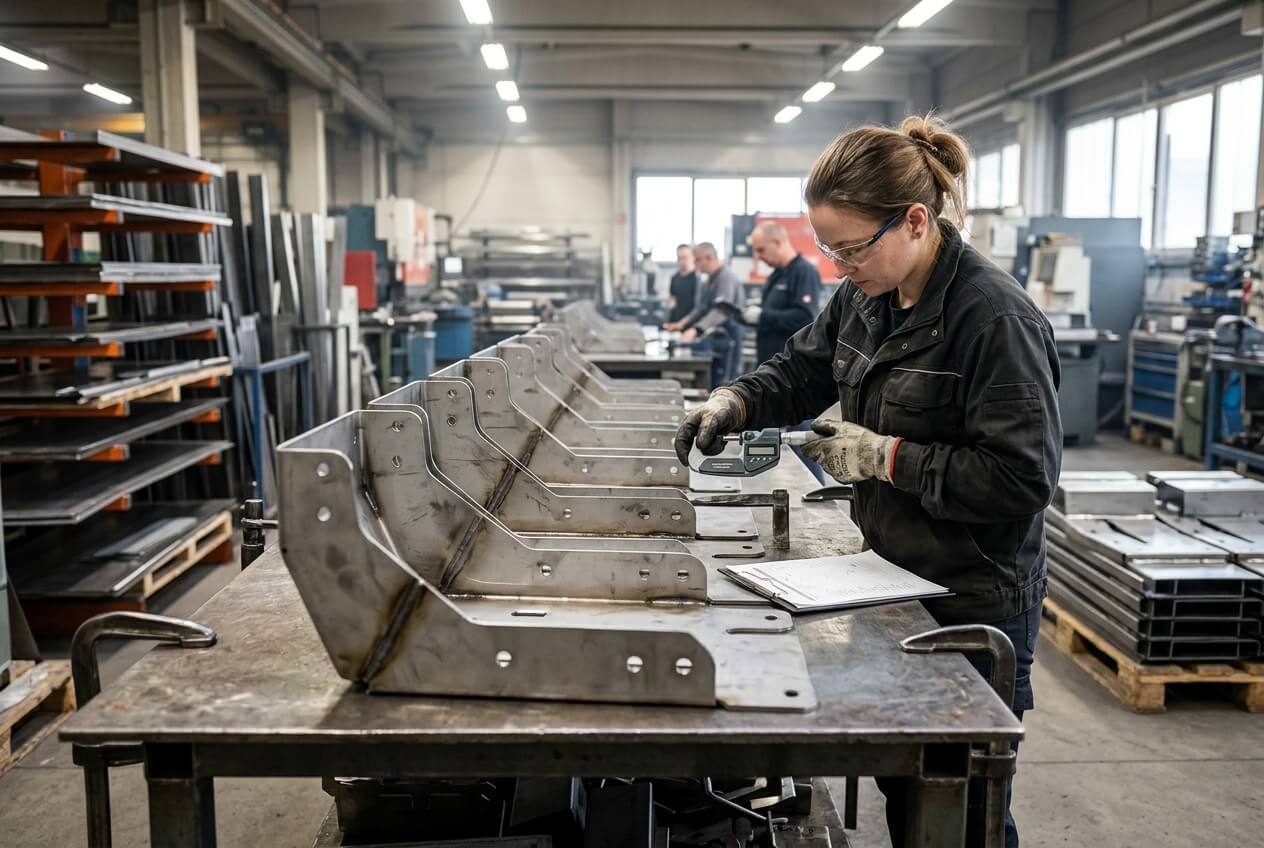
Batch consistency depends on repeatable setup, not on one skilled operator. A prototype can pass with close attention and manual correction. A batch needs a process that survives normal variation. That difference is why the first lot can fail even when the sample looked excellent.
Repeatability usually depends on fixture design, weld sequence, inspection points, and handling discipline. If the fixture controls the outer size but not the diagonal, the part can still drift out of square. If the weld sequence is not fixed, heat can pull a frame or bracket off target. If the inspection plan checks only the final appearance, the team may miss the earlier step that caused the drift.
Batch risk grows when the sample used special attention
Buyers should ask whether the approved sample used the same setup planned for production. If the answer is no, the sample may not reflect real manufacturing cost. A one-off correction can hide the labor required to make the part work. In volume, that labor either returns as rework or disappears as quality loss.
Project example: a welded rack frame passed first article because the operator corrected one side after cool-down. The batch used the same drawing but not the same level of attention. Several frames arrived with slight lean and awkward hole alignment. The buyer had to delay assembly while the supplier rechecked the jig. The defect did not start in the warehouse. It started when the sample was approved without locking the repeatable method.
This is where batch-ready design for manufacturing services are most useful. They connect the approved sample to the method that can make 50, 500, or 5,000 units the same way. If the process cannot do that yet, the buyer should not treat the sample as production proof.
What to clarify before comparing enclosure, bracket, frame, and welded assembly quotes
When buyers compare suppliers, they often focus on unit price. That is too late in the process. A better comparison starts with the assumptions behind each quote. The buyer should ask what the supplier is pricing for material, tolerance control, finish build, inspection, and assembly fit. Those points determine whether the quote supports the real job.
Material and tolerance details still matter, but not as isolated line items. A thin panel may flex during bending. A heavier gauge may need a different tool path or more force. A tighter tolerance may require extra inspection or a dedicated fixture. A simpler finish may reduce handling, but it may not meet the assembly requirement. The buyer should connect each requirement to the part function.
Lead time also follows the same logic. A quote that includes jig work, first-article review, or finish masking will usually need more time than a quick sample run. That is not a problem if the buyer sees it early. It becomes a problem when the first lot reveals that the real process was always longer than the RFQ implied.
Before release, ask the supplier to confirm the drawings, material requirements, quantity target, tolerances, finish expectations, and assembly notes in writing. If the project needs a manufacturability review, Yishang can help assess drawings and sample photos before the order moves forward. That review should focus on the production method, not only the part appearance.
If you are preparing an RFQ for custom sheet metal fabrication, send the drawings, material requirements, quantities, tolerances, and finish expectations together. That gives the supplier a better chance to price the real process instead of guessing at it.
Frequently Asked Questions
Why can a good prototype still create batch risk in sheet metal fabrication?
A prototype can pass because the maker used manual correction, extra fitting, or special attention. Batch production removes those shortcuts. If the process was never frozen, the lot can drift in fit, alignment, or finish quality.
What should buyers confirm in an RFQ before comparing quotes?
Buyers should confirm drawings, material requirements, quantity, tolerances, finish expectations, and assembly notes. They should also ask which features are fit-critical and whether the sample reflects the planned production method.
How do fixture and weld assumptions change the final price?
A quote that includes a dedicated fixture, tryout time, or controlled weld sequence will cost more than one that relies on manual positioning. The cheaper quote may hide labor that reappears later as rework or inconsistency.
Can powder coating or polishing affect assembly fit?
Yes. Coating builds thickness on edges, holes, and mating faces. Polishing can also change surface condition near visible areas. If the buyer does not define clearance and masking needs, the finished part may bind or misalign.
What is the best way to judge whether a sample is production-ready?
Ask whether the sample used the same fixture, the same sequence, and the same inspection points planned for volume. If the answer is no, the sample is only a reference. It does not prove the batch will match it.
How can Yishang support a buyer before the order is placed?
Yishang can review drawings, material requirements, tolerances, quantities, and finish expectations to check manufacturability and assembly fit. That early review helps buyers spot quote assumptions before they turn into batch problems.