
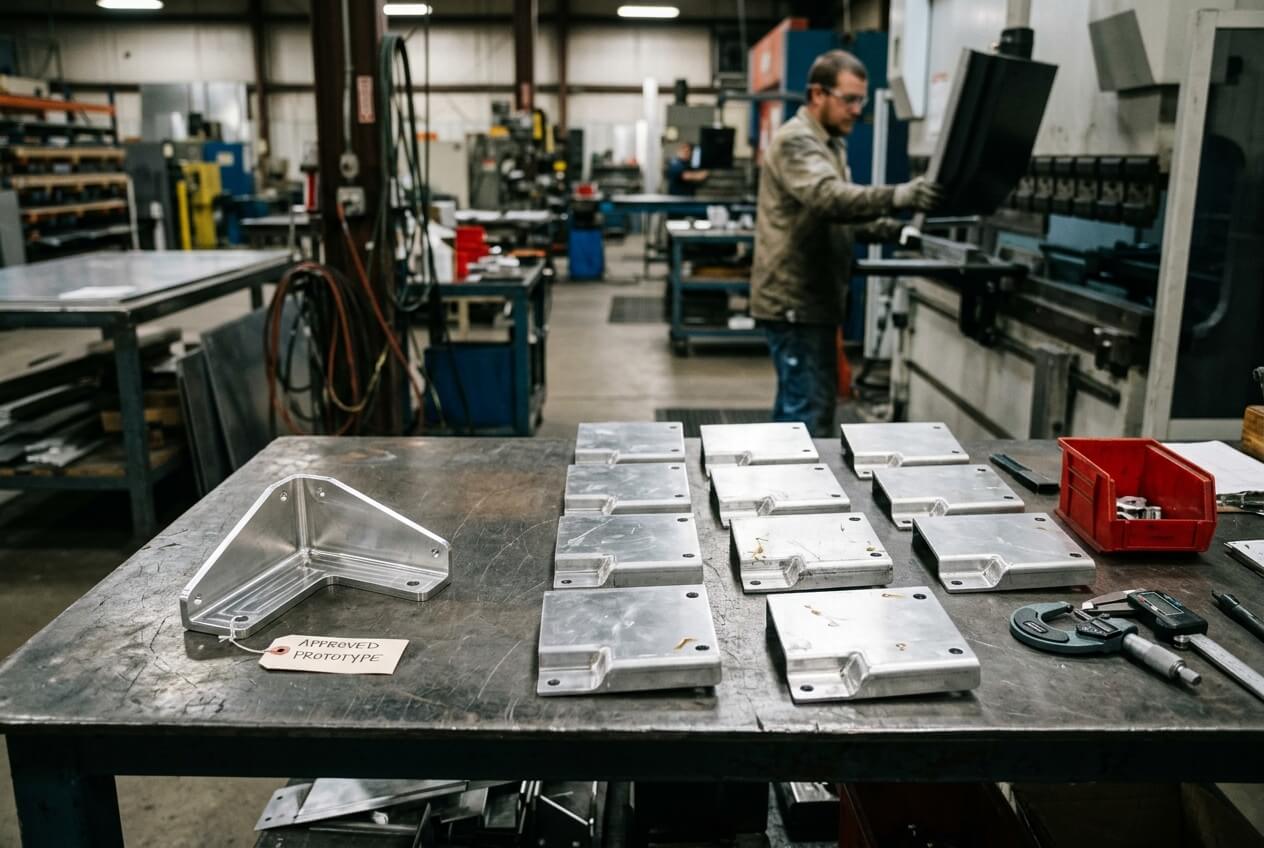
An approved prototype can give a sourcing team false confidence. The aluminum enclosure closes cleanly. The copper cover fits around the electronics. The brushed front panel looks acceptable in a review meeting. Procurement then compares quotes, selects a supplier, and releases the first batch.
The risk appears after production starts. Door gaps vary. Hole positions drift after bending. Cosmetic faces show handling marks. A welded frame that looked square as one sample needs rework across 200 units. The drawing did not change, yet the batch behaves differently from the prototype.
This article focuses on one procurement risk: treating a non-ferrous prototype as proof of repeatable batch production. That mistake affects quotations, tolerances, finish expectations, assembly fit, lead time, and supplier communication. It matters especially for custom sheet metal fabrication using non ferrous materials such as aluminum, copper, brass, and related alloys.
For OEM buyers sourcing metal enclosures, brackets, frames, cabinets, panels, and welded assemblies, prototype approval should not end the technical discussion. It should trigger a more practical question: what exactly made the prototype acceptable, and can the supplier repeat those conditions in production?
Prototype Approval Can Hide Manual Corrections That Never Reach the RFQ
A prototype often proves that one part can be made. It does not automatically prove that the production route can hold the same result. With non ferrous materials, this gap becomes more dangerous because surface condition, springback, bend radius, heat input, and handling methods can change the final part.
During prototype work, a skilled technician may make small corrections. They may adjust a bend angle, polish a visible face, open a hole slightly, or align a hinge during assembly. The buyer sees a working sample. The quotation file, however, may still contain only a basic drawing and a short material note.
That creates a weak purchasing record. When procurement later asks for 100 or 500 units, the production team may follow the drawing exactly. If the drawing does not capture the prototype corrections, the batch can fail even though the supplier believes it followed the approved specification.
The Sample May Prove Effort, Not Repeatability
Consider a wall-mounted aluminum control enclosure. The prototype door sits flush because the hinge flange received a small manual correction after bending. The buyer approves the sample and releases a batch. Production then bends the same flange to the drawing, but several doors sit proud after powder coating.
The issue did not start at final inspection. It started when the corrected hinge geometry never became a tolerance note, bend note, fixture control, or inspection point. A small prototype adjustment became a batch-level assembly problem.
Procurement teams should ask suppliers to identify every prototype correction before order release. If the sample needed hand work, the buyer has two choices. The drawing can change to reflect the corrected condition, or the quotation must include the production control needed to repeat it.
RFQ Ambiguity Turns One Approved Sample Into Unequal Supplier Quotes
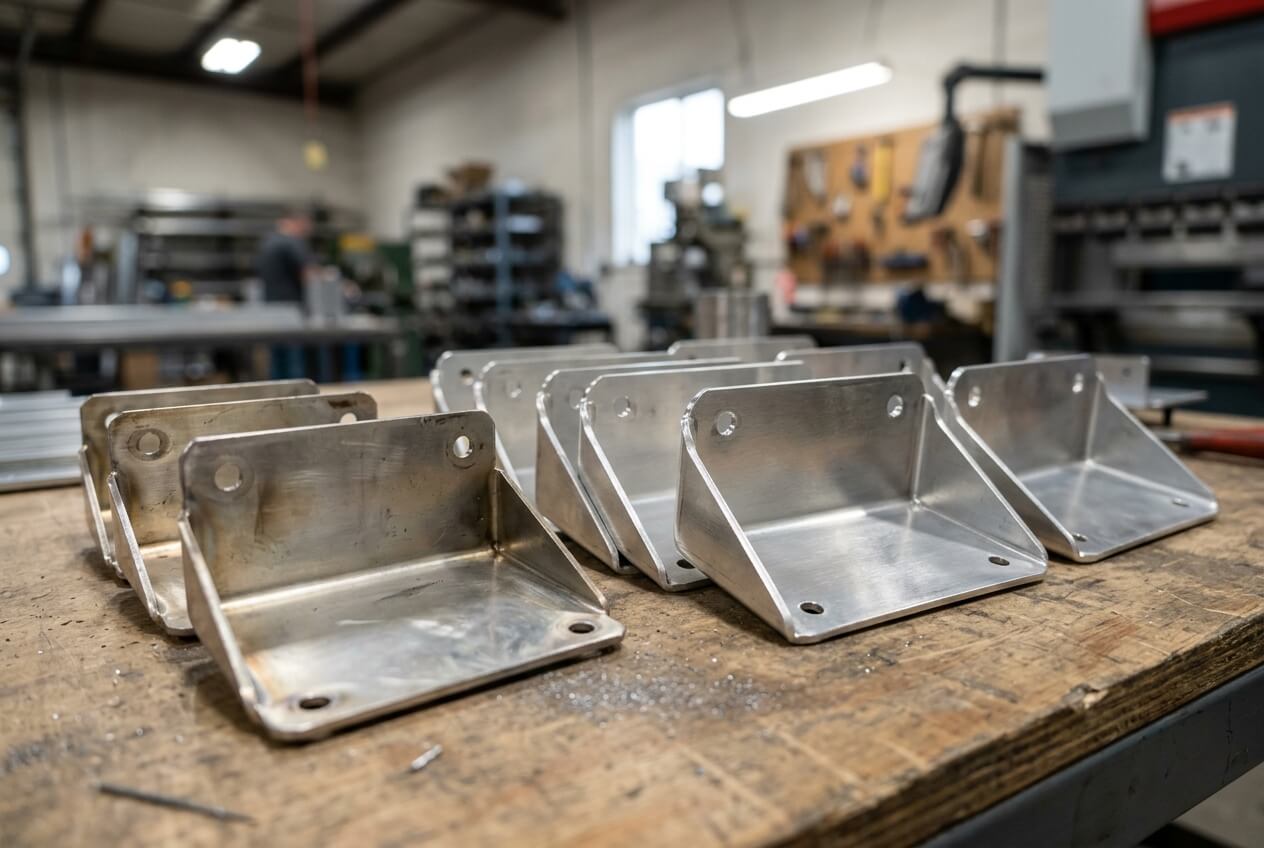
Many RFQs for non-ferrous sheet metal parts look clear at first glance. They include a drawing, quantity, finish color, and target delivery date. Yet they may leave open the exact alloy, temper, sheet thickness tolerance, cosmetic face, bend radius, inspection method, packaging method, or approved sample basis.
Suppliers then fill the gaps. One supplier may quote standard aluminum sheet with commercial tolerance. Another may include protective film, tighter flatness checks, and masking before powder coating. A third may assume cosmetic scratches on hidden faces do not matter. The same drawing can produce three prices that do not represent the same production promise.
This makes quote comparison risky. A lower unit price may simply exclude the controls that kept the prototype acceptable. Procurement may not discover the difference until parts reach assembly or customer inspection.
Where the Assumptions Enter the Price
Non-ferrous metals often cost more than mild steel and react more visibly to process variation. Aluminum marks during handling. Copper changes appearance with oxidation, cleaning, and coating. Brass may show grain direction or surface variation on decorative faces. These details affect labor, scrap risk, inspection time, and packaging.
A short RFQ note such as “2.0 mm aluminum, black powder coat” does not tell the supplier enough. It does not define whether the front face needs scratch protection. It does not explain whether coating thickness affects screw clearance. It also does not show which hole positions control assembly fit.
For a display rack side panel, the drawing may show accurate outside dimensions but omit the cosmetic surface. One supplier quotes normal shop handling. Another includes protective film and individual separation. The lower quote looks attractive until the buyer rejects visible scratches on the exposed face.
A stronger RFQ connects the approved prototype to production assumptions. It names the material grade or acceptable equivalent. It identifies critical dimensions. It defines visible surfaces and finish expectations. It also states whether the prototype approval covers appearance, fit, function, or all three.
Non-Ferrous Behavior Makes Small Drawing Gaps Larger in Batch Production
Non-ferrous sheet metal does not always tolerate vague drawings. Aluminum, copper, and brass can form, weld, polish, and coat differently from carbon steel. When buyers reuse drawings from steel parts, they may overlook bend radius, stiffness, hole-to-bend distance, and distortion risk.
These gaps may not stop a prototype. A technician can compensate for one part. Batch production gives less room for improvisation. If the process relies on judgment instead of defined controls, results can drift across the order.
Tolerances Should Follow Assembly Risk
Buyers do not need to over-tolerance every dimension. That can raise cost and extend lead time without improving function. They do need to identify the dimensions that control assembly fit. These may include hinge hole positions, mating flanges, enclosure diagonals, bracket slot locations, gasket surfaces, or weldment mounting points.
A bent aluminum bracket offers a simple example. The prototype supports the load and aligns with the mating frame. During batch production, the bend angle varies slightly because the drawing leaves the inside radius open. The slot location then shifts relative to the mounting face. Assembly workers enlarge holes, and the buyer loses time on rework.
The better approach starts before quotation. The buyer should mark the bracket face that mates with the frame and define the slot position from that functional datum. The supplier can then quote the bending method, inspection approach, and tolerance level with fewer assumptions.
Finishing Can Change Fit After the Part Looks Complete
Finish expectations also need production-level clarity. Powder coating, brushing, polishing, anodizing-like appearance, passivation-like cleaning, masking, and protective packaging can all affect outcome. A part can pass dimensional inspection before coating and still fail after finish adds thickness, changes surface appearance, or exposes handling marks.
For an aluminum electronics housing, coating thickness around countersunk holes may interfere with screw seating. For a copper shield, surface color may vary after cleaning and packing. For a brushed panel, grain direction may decide whether the batch looks consistent when installed side by side.
Procurement should state which surfaces matter most. A visible front panel needs different handling than an internal flange. If the RFQ does not separate cosmetic and non-cosmetic areas, the supplier may protect the wrong features or quote unnecessary labor across the whole part.
Batch Consistency Depends on Locking the Prototype Conditions Before Release
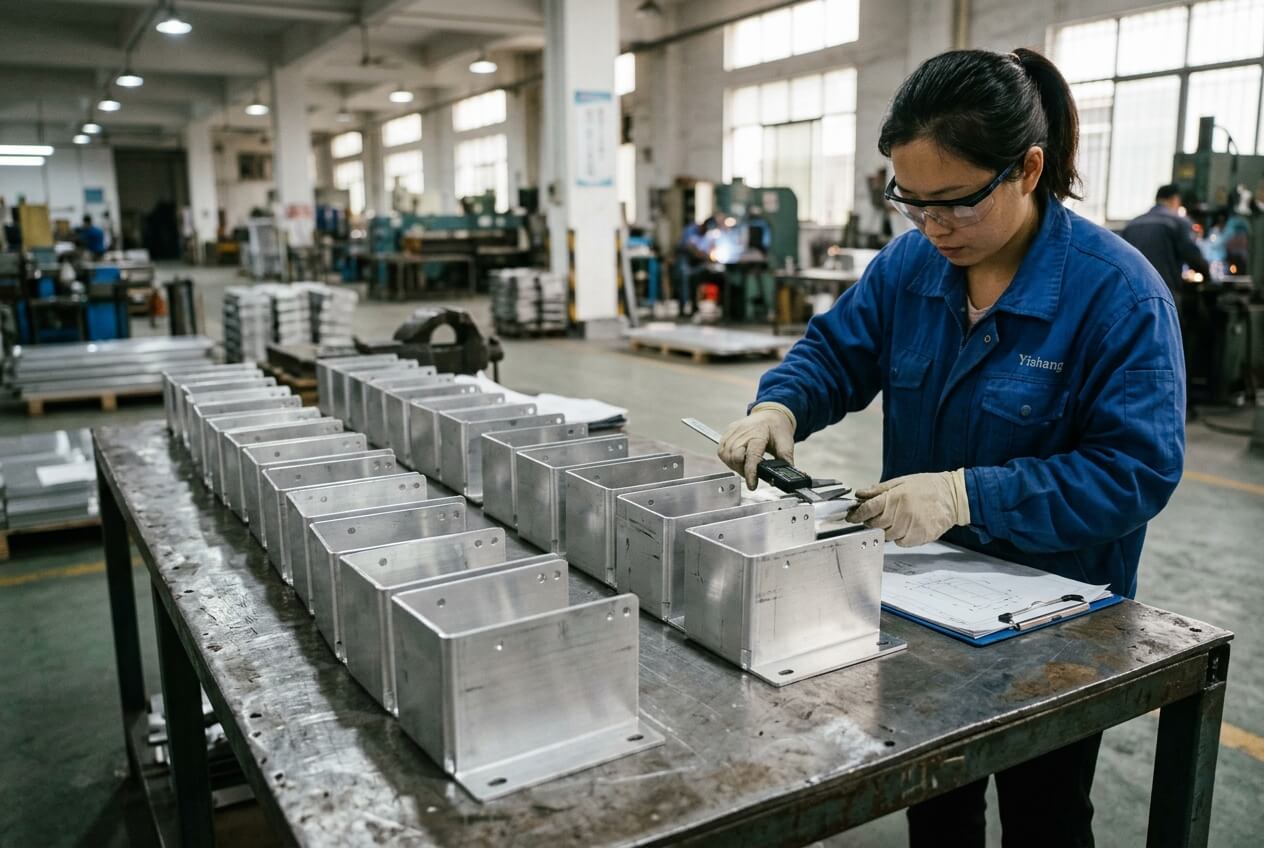
Prototype approval should create a production record. Without that record, buyers rely on memory, photos, and assumptions. Those sources rarely protect a batch when operators, fixtures, material lots, or finishing schedules change.
The record should explain how the prototype was made and what the buyer approved. It should cover material condition, forming method, fixture use, welding sequence, finish process, inspection points, and packaging. This does not create paperwork for its own sake. It protects the few conditions that matter to repeatability.
Fixtures Need Early Commercial Decisions
Welded non-ferrous assemblies make this point clear. An aluminum frame may look square as a prototype because a senior welder controls heat input and corrects distortion. In batch production, that same frame may need a fixture, a defined welding sequence, and inspection of diagonal dimensions.
If the RFQ excludes fixture cost, the quote may look lower. The batch may then require rework, sorting, or delayed shipment. When buyers compare prices, they should ask whether the quote includes the fixture needed to repeat the approved geometry. If the order is small, a simpler fixture may make sense. If the frame controls assembly fit, skipping the fixture may cost more later.
Lead time also connects to this risk. Clarifying fixtures, masking, inspection gauges, or packing requirements after purchase order release can delay production. Suppliers may need extra time to prepare tooling, order the correct material, or test a finish method. Early clarity protects both schedule and cost.
Approval Samples Need a Defined Scope
Buyers should define whether the approved prototype controls dimensions, appearance, function, or packaging. A sample approved only for fit should not become the cosmetic standard unless the buyer says so. A sample approved for surface appearance should include lighting, viewing distance, acceptable marks, and protected faces.
For sheet metal parts with mating components, buyers should also share assembly context. Photos of hinges, fasteners, gaskets, electronics trays, or mating frames can reveal which features deserve inspection priority. Yishang can review this information during manufacturability discussion and help convert prototype lessons into batch control points for custom enclosures, brackets, panels, frames, and welded assemblies.
What Buyers Should Clarify Before Comparing Non-Ferrous Fabrication Quotes
The safest time to reduce batch risk comes before suppliers finalize their quotations. Once procurement chooses a supplier based on incomplete assumptions, every later clarification can change price, lead time, or quality expectations. Strong RFQ preparation does not mean writing an overcomplicated specification. It means removing the assumptions that can make a prototype impossible to repeat economically.
Start with the approved sample. Ask what material grade, temper, thickness tolerance, bend radius, tooling route, welding method, finish process, and packaging method the supplier used. Then decide which of those conditions must repeat in production. If the prototype succeeded because of special handling, treat that handling as a costed requirement or redesign the part to need less of it.
Next, mark the drawing around risk. Identify critical-to-fit dimensions, visible faces, masking areas, weld locations, coating-sensitive holes, flatness zones, and mating datums. Avoid blanket tight tolerances. They raise cost and can distract inspection from the dimensions that actually matter.
Finally, align supplier communication around consequences. Tell the fabricator where the part goes, which surfaces the customer sees, which holes control assembly, and which defects cause line stoppage. This context helps the supplier quote the right controls instead of guessing. It also helps procurement understand why one quote may include more labor than another.
Yishang supports buyers by reviewing drawings, material requirements, quantities, tolerances, finish expectations, prototype notes, and assembly concerns before fabrication. That review helps expose hidden assumptions before they become batch defects, rework, or shipment delays.
Send the Details That Control Prototype-to-Batch Repeatability
If you are sourcing custom sheet metal parts made from aluminum, copper, brass, or other non-ferrous metals, send Yishang your drawings, material requirements, order quantities, tolerance notes, finish expectations, approved prototype photos, and assembly concerns. The team can review RFQ clarity, manufacturability, finishing risk, fixture needs, and inspection priorities before quotation or batch release. Visit Yishang to share your project details and identify which prototype conditions must repeat in production.
Frequently Asked Questions
Why can an approved non-ferrous sheet metal prototype still fail in batch production?
The prototype may include manual bend corrections, extra polishing, hole adjustment, or special handling that never appears on the drawing. Batch production then follows the documented requirements, not the undocumented prototype effort. Buyers should record the conditions that made the sample acceptable before releasing volume orders.
What RFQ details matter most for non ferrous materials?
Buyers should clarify alloy or grade, temper where relevant, sheet thickness tolerance, bend radius, visible surfaces, finish requirements, masking, packaging, and critical-to-fit dimensions. These details reduce quote assumptions and help suppliers price the controls needed for repeatable production.
How should buyers compare quotes for aluminum enclosures or panels?
Compare the assumptions behind each price, not only the unit cost. Check whether each quote includes cosmetic protection, coating controls, critical dimension inspection, fixture needs, packaging, and any prototype correction required for fit. A low quote may exclude work needed to match the approved sample.
When do non-ferrous welded assemblies need fixtures?
Fixtures become important when weld distortion affects squareness, diagonal dimensions, mating surfaces, or mounting hole positions. Aluminum frames, copper components, and brass assemblies can change shape under heat. If the prototype needed manual correction after welding, buyers should discuss fixture control before batch release.
What should buyers define for cosmetic non-ferrous surfaces?
Buyers should identify visible faces, acceptable scratch levels, grain direction, color expectations, inspection distance, lighting conditions, protective film, and packing method. This prevents disputes when a supplier treats a visible brushed panel or polished cover as a standard shop-handled surface.
How can prototype notes reduce fabrication cost and lead time risk?
Prototype notes show which adjustments, finish controls, fixtures, or inspections the batch may need. When buyers share those notes before quotation, suppliers can price the correct process and plan materials, tooling, finishing, and inspection earlier. Late clarification often changes cost or delays delivery.