
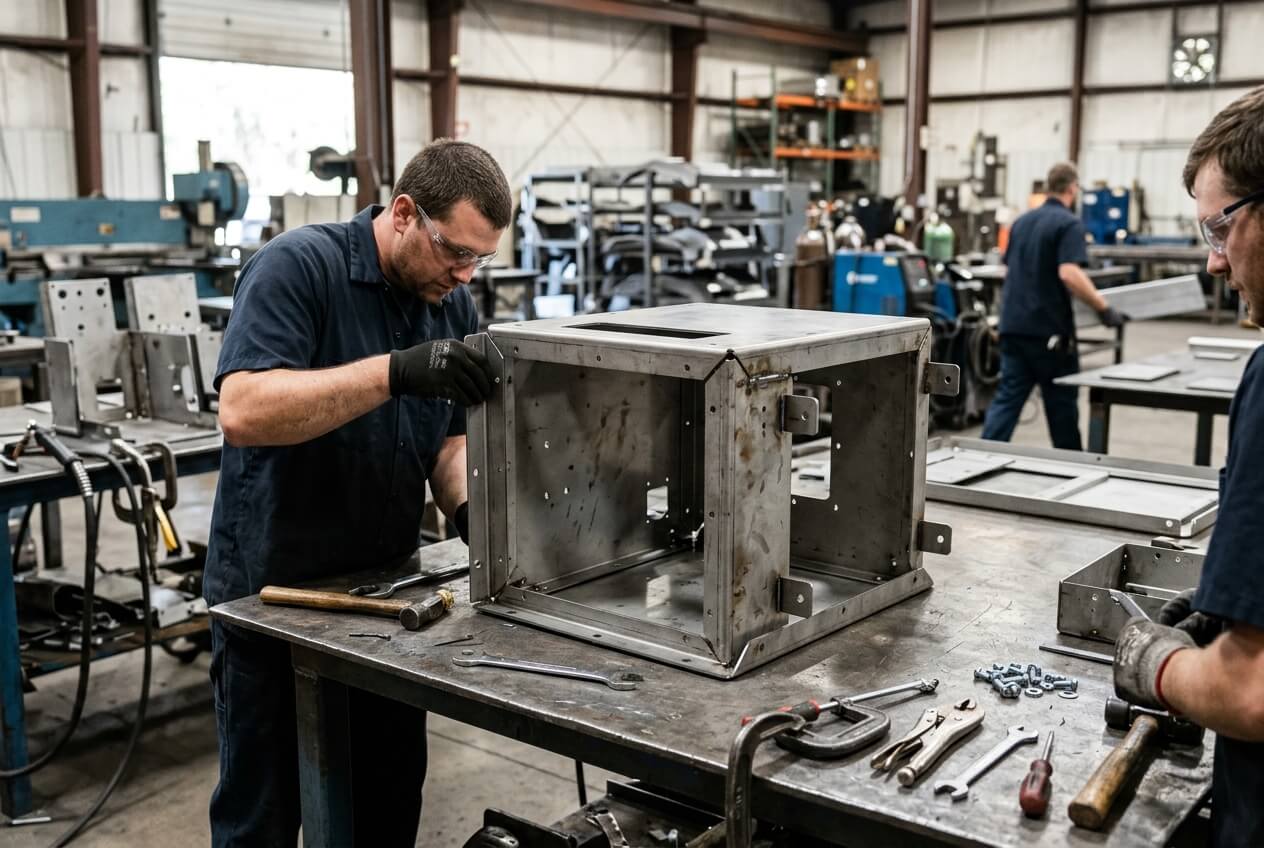
An OEM buyer may receive two quotes for the same sheet metal enclosure and think the price gap reflects supplier efficiency. Often, it reflects different assumptions. One supplier prices the cut, bend, weld, and powder coat work as separate operations. Another includes fixture checks, mating-part trials, coating build allowance, and packaging protection for finished edges.
The dangerous part is not the higher or lower price. The risk sits in the missing RFQ detail. If the buyer does not define how the part must fit through the product life cycle phases, each supplier chooses its own version of acceptable. That choice can create a quote that looks competitive during sourcing, then becomes expensive when brackets miss holes, doors rub after coating, or welded frames need line-side correction.
This article focuses on one procurement risk: RFQ ambiguity around assembly fit. Materials, tolerances, finish, prototypes, cost, lead time, and supplier communication all matter because they influence that same risk. The goal is not to write a longer specification. The goal is to stop hidden quote assumptions from becoming production problems.
Where RFQ ambiguity first hides the real fit requirement
Most fit problems start before fabrication. They begin when an RFQ describes the part shape but not the assembly condition. A drawing may show hole sizes, bend lines, and an outside profile, yet still leave the supplier guessing which features control installation. That gap matters more as the product moves from development into repeated production.
A flat bracket drawing, for example, may look simple. The buyer asks for laser cutting, bending, zinc plating, and a price at 500 pieces. The drawing gives general tolerances but does not identify the holes that locate against the machine frame. One supplier treats those holes as clearance features. Another assumes they control position and adds inspection time. The two quotes no longer describe the same work.
The quote changes when the fit condition changes
Suppliers quote what they can see. If the RFQ does not show the mating part, the final installation, or the surfaces that must remain flush, the supplier may price a lower-control process. That can reduce the unit price, but it also reduces protection against assembly failure. The buyer may only discover the difference after the first batch reaches production.
This problem appears often in metal enclosures, cabinet doors, brackets, frames, and welded assemblies. A supplier can make each component within its own drawing tolerance and still miss the assembly intent. Procurement then faces a hard conversation. The part may not be defective by the drawing, but it still does not fit the product.
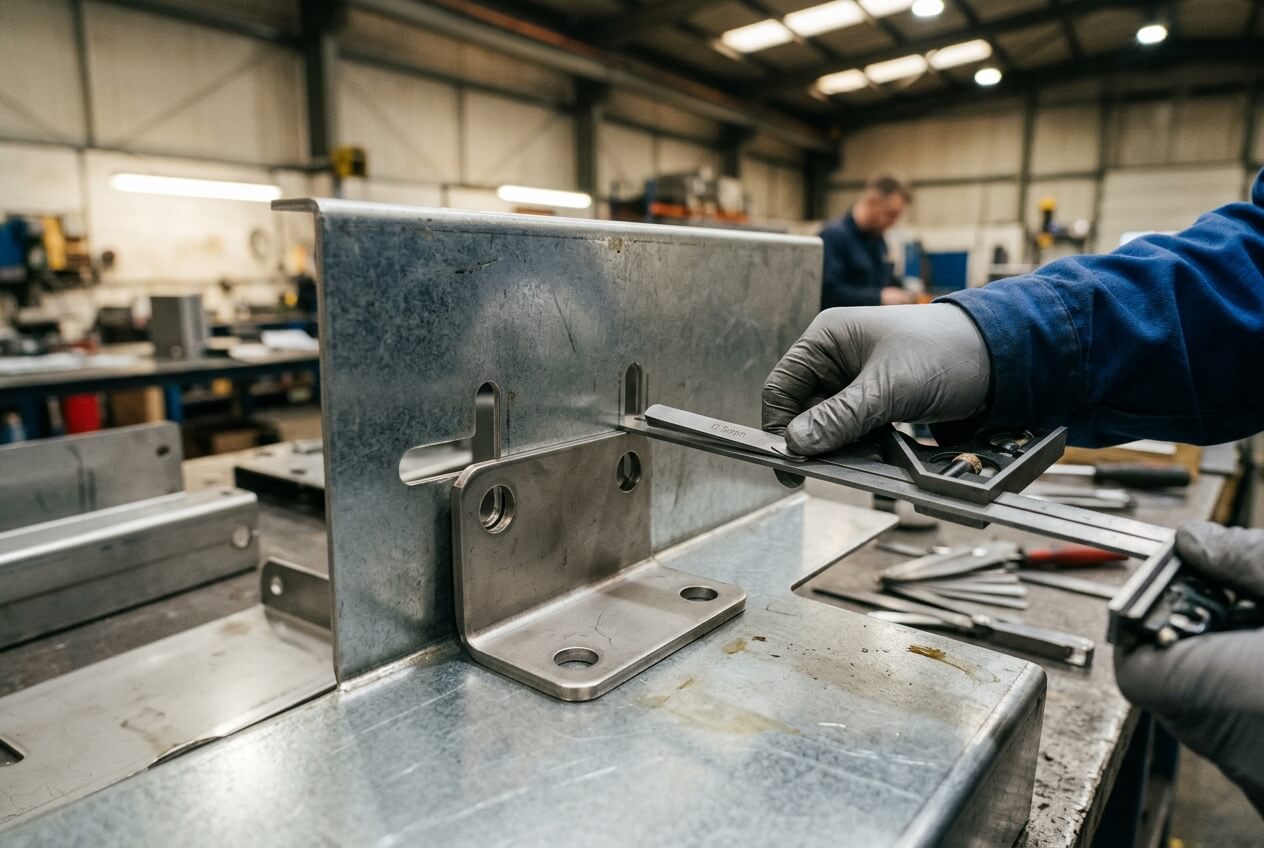
Clear RFQ information should identify the features that matter after fabrication, coating, and installation. Buyers should mark datum references, critical hole groups, hinge lines, latch points, PEM hardware, weld nut locations, and any faces that must align with another component. A photo of the mating assembly can remove more doubt than another general tolerance note.
Why product life cycle phases change the cost of the same missing detail
RFQ ambiguity does not carry the same cost in every phase. During early development, a missing detail may create one poor sample and a quick design revision. During product introduction, the same gap can delay approval and push the buyer into emergency clarification. During growth, it can spread through repeated batches before production catches the pattern.
That is why product life cycle phases matter in sheet metal procurement. The part may not become more complex, but the consequence of uncertainty grows. A vague bend tolerance on a prototype bracket creates a small delay. The same vague tolerance on a released assembly can stop a line, create sorting work, and force a shipment discussion with the end customer.
Development tolerates learning; production punishes guessing
In development, buyers often expect design change. They may accept a prototype that proves the rough geometry. That approach works only if everyone knows the sample has not proven batch assembly fit. A prototype can confirm that a panel can be cut and bent, yet still fail to prove that the door closes after powder coating or that the hinges stay aligned across a production run.
Once the product enters introduction or growth, procurement needs a different RFQ standard. The supplier should know which dimensions remain critical after bending, welding, hardware insertion, finishing, and packing. The RFQ should also state whether the supplier must check parts against a fixture, a mating sample, or an assembly drawing.
Consider a control cabinet door. The prototype fits after a technician adjusts the hinge slots by hand. The RFQ for the first batch does not mention that adjustment. The production order then uses the same drawing, but the supplier builds to the stated hole positions. After powder coating, the latch pulls tight and rub marks appear. The issue started with a missing note, not with the coating team or the installer.
Lead time also changes under this pressure. If the RFQ omits the real fit condition, the buyer may award the fastest quote. Later, extra inspection, rework, or remaking parts consumes more time than a proper front-end review would have taken. Short sourcing cycles can become longer production cycles.
How quote assumptions turn tolerances, finish, and hardware into assembly risk
Buyers often treat tolerance, material, finish, and hardware as separate RFQ lines. In assembly fit risk, they interact. A bend angle, coating thickness, inserted fastener, and weld sequence can all move the same final hole pattern or door gap. If the RFQ leaves one of these items unclear, the supplier has to choose an assumption before quoting.
General tolerances create one common trap. A drawing may show +/-0.2 mm on formed dimensions, but the assembly may only need that control at one hole group. If the RFQ does not distinguish critical features from noncritical ones, the supplier may either overprice the whole part or under-control the one area that matters. Both outcomes hurt the buyer.
Finish assumptions can change fit after approval
Powder coating, plating, anodizing, and paint do more than change appearance. They add thickness, change clearances, and affect sliding or closing parts. A tight enclosure cover may pass before finishing, then bind after coating. A bracket slot may accept a bolt in raw metal, then need force after plating. Cosmetic handling can also limit how much correction the supplier can make after finish.
Material detail carries a similar risk. Stainless steel, cold rolled steel, galvanized sheet, and aluminum do not bend, weld, or spring back in the same way. If the drawing names only a thickness and not the grade or acceptable equivalent, the supplier may quote a material that works for shape but changes repeatability. That difference can show up in bend angle drift, weld distortion, or stiffness during installation.
Hardware scope often creates another hidden split between quotes. PEM nuts, rivet nuts, weld nuts, studs, hinges, and captive fasteners can control the final fit. If the buyer does not state who supplies and installs them, the quote may exclude tooling, insertion checks, thread protection, or post-finish masking. Later, procurement may learn that the low quote covered the metal part, not the ready-to-install assembly.
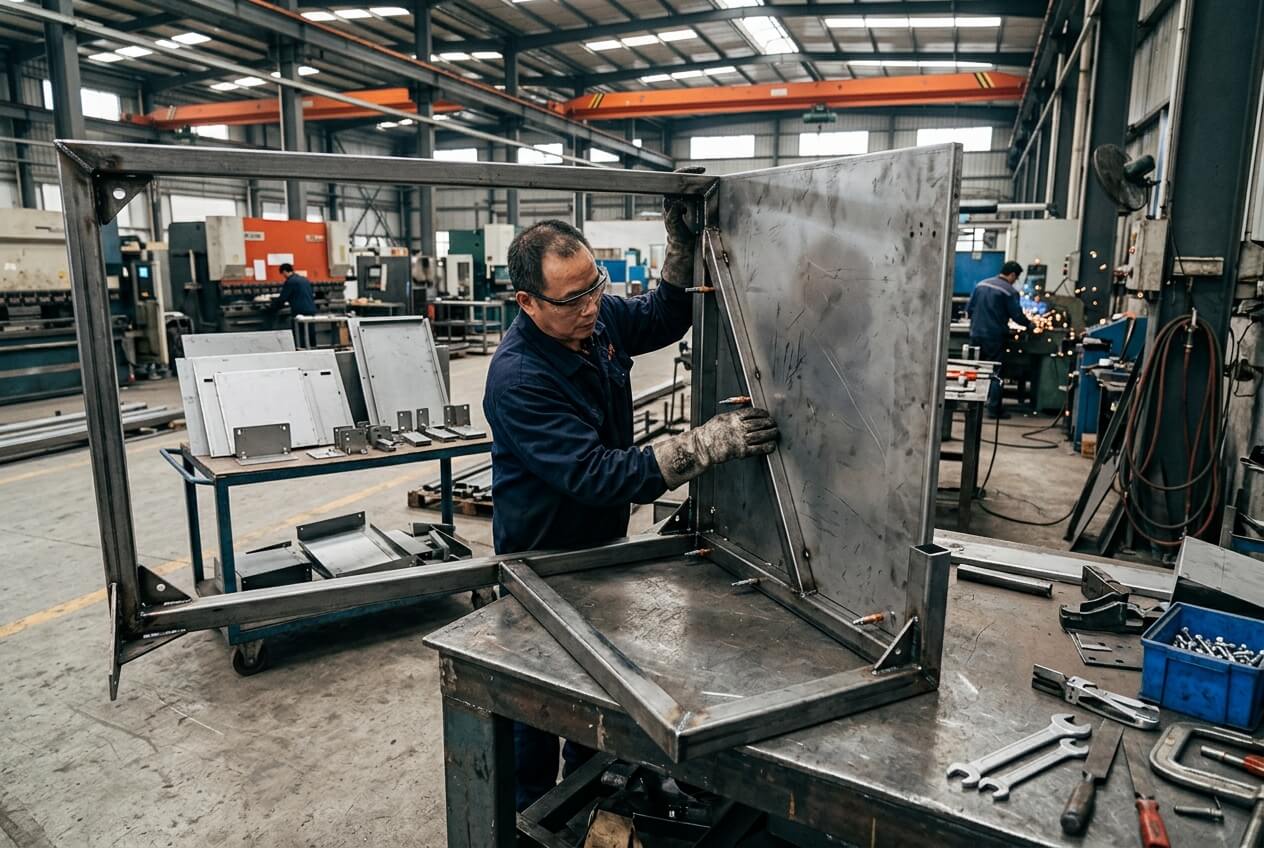
For a welded machine frame, the risk chain can move quickly. The RFQ lists the frame profile and weld symbols but does not identify the mounting pads that locate a drive unit. The supplier quotes standard welding and dimensional inspection. Heat pulls one pad slightly inward. The frame meets several drawing dimensions, yet the drive unit rocks during assembly. Earlier clarification could have required a fixture check at the mounting pads instead of broad inspection after welding.
Yishang can review drawings and RFQ notes at this stage when buyers need a manufacturability check on sheet metal parts, enclosures, brackets, frames, or welded assemblies. The useful output is not a sales promise. It is a clearer quote basis: what the supplier will control, inspect, finish, assemble, and protect before shipment.
Why prototype approval can still leave batch consistency unprotected
Prototype approval often creates false confidence. A sample may pass because one operator spent extra time forming, welding, filing, or adjusting it. That does not prove the process can repeat the same fit across 100, 500, or 2,000 parts. Procurement needs to know whether the prototype proves geometry, assembly fit, or production repeatability.
The difference becomes important during the product life cycle phases. In development, a sample may support design decisions. In introduction, it should confirm the intended build method. In growth, it should become a reference for batch consistency. If the RFQ does not name the purpose of the sample, the supplier may treat approval as permission to run the batch without further fit controls.
A good sample can hide manual correction
Manual correction is not always wrong. Early samples often need adjustment while engineers learn how the part behaves. The problem starts when the buyer approves the corrected sample without recording what changed. If the hinge slot was opened, a weld sequence changed, or a corner was dressed after coating, those details belong in the production release.
A retail display frame shows the issue well. The first sample stands level because the supplier adjusts the foot brackets after welding. The batch RFQ only references the approved sample and the drawing. During production, several frames rock on the floor because the adjustment step was never quoted or controlled. The buyer then pays through sorting, rework, delayed installation, or a revised fixture.
Batch consistency needs a defined inspection method. The supplier may need a go/no-go fixture, a mating component, an approved assembly photo, or a first-article report that focuses on critical fit features. For a metal enclosure, that might mean checking door gap, hinge alignment, latch engagement, and fastener access after coating. For a bracket, it may mean checking the hole pattern after bending, not only before forming.
Supplier communication should stay practical here. Buyers do not need long email chains full of general quality language. They need short answers to specific questions. Which features will you fixture? Which dimensions will you inspect after coating? Will the sample use the same weld sequence as the batch? Which corrections are allowed before shipment? These questions turn prototype approval into a production control point.
What buyers should lock before comparing sheet metal fabrication quotes
Quote comparison only works when suppliers quote the same risk. Buyers do not need to over-specify every feature. They need to lock the details that decide whether the part fits at installation. That makes unit price, tooling cost, inspection time, packaging, and lead time easier to compare.
Start with drawings. Mark the datum scheme and the features that must align with the mating assembly. Separate cosmetic surfaces from hidden surfaces. Identify formed dimensions that matter after bending, not just on the flat pattern. Where a tolerance protects a real fit condition, explain the condition with a note or assembly view.
Next, define the material and finish enough to prevent wrong assumptions. State the material grade or acceptable alternatives, thickness, grain direction if it affects forming, finish type, color or coating standard, coating thickness where clearance matters, and masking requirements. These details do not need to dominate the RFQ, but they must support the assembly requirement.
Then define prototype and batch expectations. Tell suppliers whether you need a visual sample, a fit sample, a first article, or a batch-ready approval. Include target quantities, expected release timing, and any ramp-up plan. If the part belongs to a larger assembly, send photos, mating drawings, hardware details, and any known installation issues from earlier builds.
Cost drivers become clearer when this information arrives before quoting. A supplier can explain whether the price includes fixture checks, trial assembly, hardware insertion, post-finish inspection, special packing, or extra documentation. Without that clarity, the lowest price may only prove that the quote excluded the work that protects fit.
For custom sheet metal fabrication projects, Yishang can support RFQ review, prototyping, finishing, and assembly discussion when buyers need the quote to reflect real fit risk. Send drawings, material requirements, quantities, tolerances, finish expectations, hardware scope, and assembly notes to zsyishang.com. Include prototype photos or mating-part drawings when first-time installation matters.
Frequently Asked Questions
How do product life cycle phases affect sheet metal assembly fit risk?
Product life cycle phases change the cost of unclear RFQ details. In development, ambiguity may only affect a prototype. In introduction and growth, the same ambiguity can affect fixtures, coating clearances, batch repeatability, line installation, and customer delivery. Buyers should increase fit control as the product moves toward repeated production.
What RFQ details matter most when a sheet metal part must fit another assembly?
The RFQ should identify datum references, critical mounting holes, hinge points, latch areas, formed dimensions, hardware scope, finish thickness, and the mating condition. Photos, assembly drawings, and marked-up samples help the supplier understand which features control installation instead of treating every dimension as equal.
Why can two suppliers quote the same bracket at very different prices?
The price may differ because each supplier assumes a different level of control. One may quote basic cutting, bending, and deburring. Another may include fixture inspection, tighter hole location, hardware insertion checks, coating allowance, and trial fit. Buyers should clarify the quote basis before treating the lower price as equivalent.
Does prototype approval prove that batch production will fit correctly?
No. A prototype may include manual adjustment, extra inspection, or a build method that will not repeat in batch production. Buyers should record any correction made during prototype approval and confirm the inspection method, weld sequence, fixture use, coating condition, and allowed rework before batch release.
How should buyers handle powder coating or plating when fit clearance is tight?
Buyers should state whether the finish thickness is included in the clearance, which surfaces need masking, and whether fit inspection happens before or after finishing. Tight doors, slots, hinges, and sliding covers can pass in raw metal but bind after coating or plating adds thickness.
What should buyers send for a stronger sheet metal fabrication quote?
Send 2D drawings, 3D files if available, material requirements, quantities, tolerances, finish expectations, hardware scope, assembly notes, mating-part drawings, and prototype photos. This gives Yishang or any qualified fabrication supplier a clearer basis for quoting the work that protects assembly fit.