
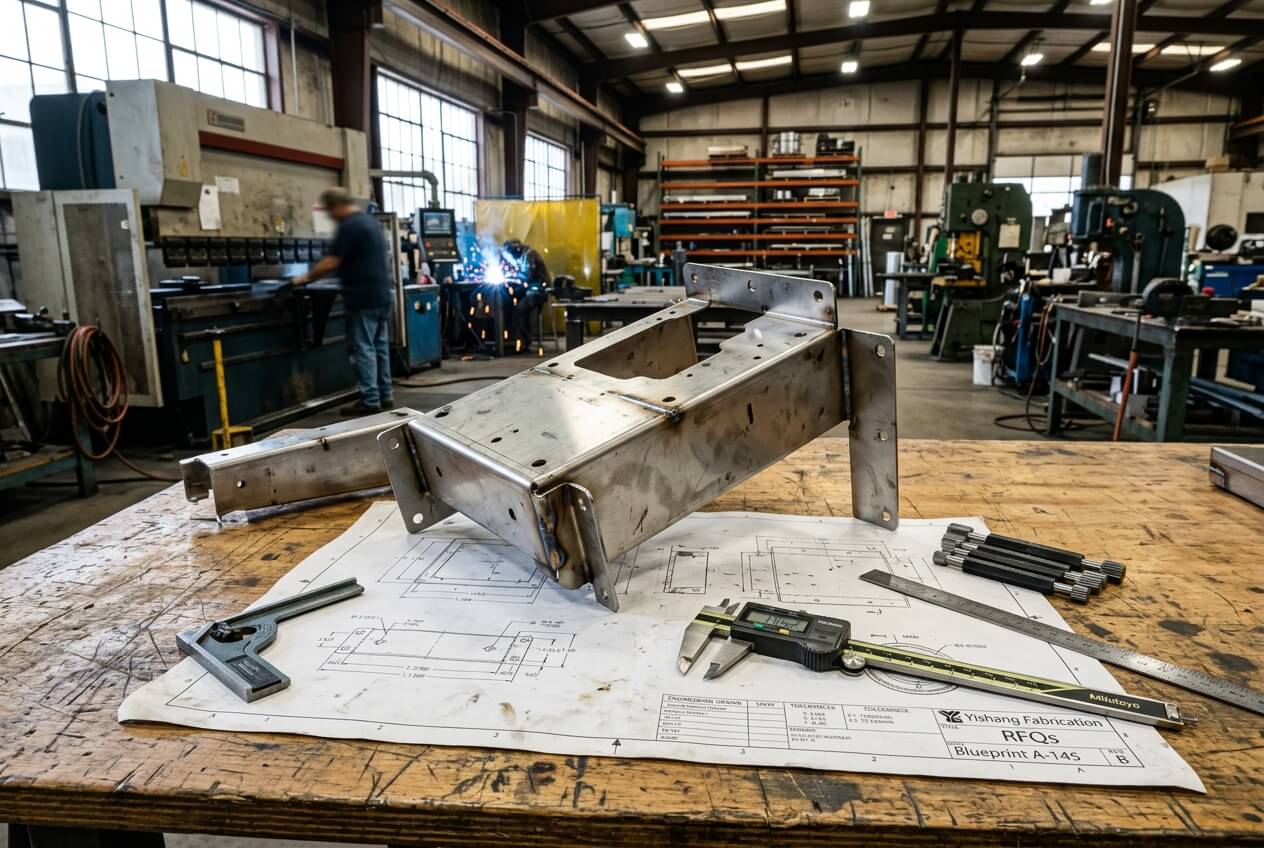
A sheet metal RFQ can fail before anyone cuts steel. The failure usually starts with one missing assumption that looks harmless: an unclear drawing revision, a loose tolerance note, a vague finish line, or a part name that hides the real fabrication route. That first weak point is the lowest boiling point in procurement. Once it appears, suppliers stop pricing the same job.
This problem matters most when buyers compare quotes for custom sheet metal fabrication, metal enclosures, brackets, frames, and welded assemblies. One supplier may include laser cutting, bending, welding, grinding, coating, masking, tapped holes, and first article checks. Another may price only cut-and-bent parts with basic deburring. The buyer sees three unit prices. Production later reveals three different scopes.
The dominant risk is not simply paying too much. The bigger risk is awarding the wrong quote because the RFQ allowed each supplier to make different assumptions. That mistake can create rework, late samples, assembly gaps, cosmetic disputes, and batch inconsistency. A stronger RFQ does not need excessive paperwork. It needs enough detail to force every quote onto the same manufacturing path.
Where RFQ Ambiguity Turns a Low Quote Into a Different Part
Many sourcing problems begin when the buyer believes the drawing speaks for itself. In sheet metal work, drawings often leave room for interpretation. A flat pattern may show cutouts but not bend priority. A cabinet drawing may show a door gap but not coating build. A bracket may show hole positions without a clear datum. Each gap lets the supplier choose a route that changes price and risk.
A low quote may look competitive because it excludes work the buyer assumed was included. Weld cleanup, edge rounding, masking, threaded inserts, press studs, cosmetic handling, and inspection fixtures can all disappear from a quote if the RFQ does not name them. The supplier has not always acted carelessly. Often, the RFQ simply failed to define the part in procurement terms.
The revision problem
Revision control creates one of the fastest quote distortions. A buyer may send a drawing package, then email a newer STEP file, then attach a photo of an old sample. If the quote does not state which file controls pricing, each supplier can build its estimate around a different version. A changed flange, moved hole, or added PEM nut can alter tooling time, fixture needs, and inspection work.
Consider a control cabinet side panel. The older file shows a flat laser-cut panel with ventilation slots. The newer drawing adds two formed edges, four tapped holes, and a visible powder-coated face. If one supplier quotes the older file, its price will likely beat the correct quote. Awarding that price does not save money. It transfers the missing scope into an engineering change after purchase order release.
The part name problem
Part names also hide manufacturing differences. A buyer may call an item a frame, tray, bracket, housing, or cover. Those words do not define the route. A frame can be a formed channel, a welded structure, or a precision assembly that needs straightening after welding. A housing can be a simple enclosure shell or a cosmetic finished part with doors, hinges, grounding points, and masked threads.
Before comparing prices, the buyer should lock the scope behind the name. State whether the quote must include cutting, bending, welding, grinding, hardware insertion, coating, assembly, and inspection. Also state which features control function. When a supplier such as Yishang reviews drawings before quotation, the practical value sits in these questions. The review exposes where a clean-looking drawing still leaves quote scope open.
Why Tolerance and Datum Gaps Damage Assembly Fit Before Production Starts
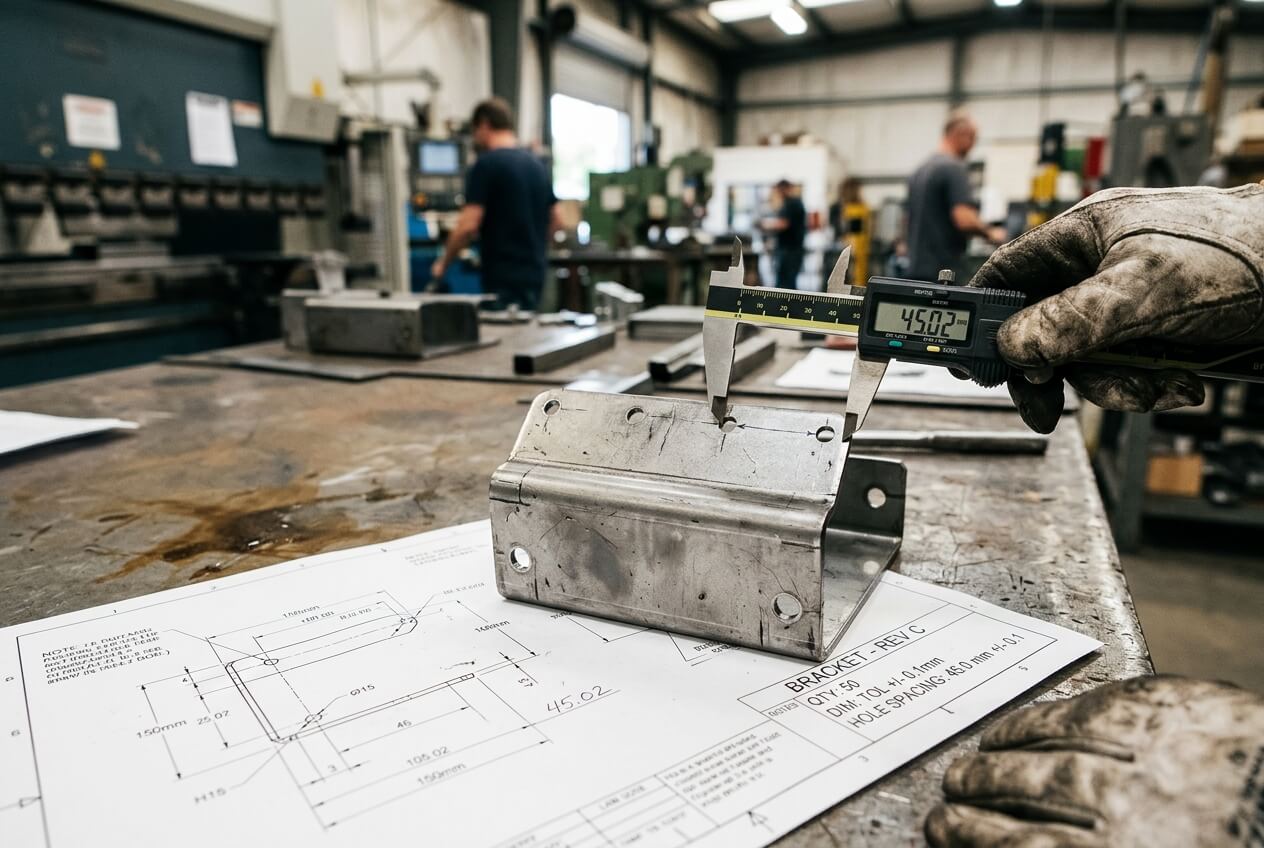
Sheet metal tolerances create procurement risk when buyers treat every dimension as equal. Most parts contain a few features that control assembly fit. Other dimensions only support shape or appearance. If the RFQ does not separate critical dimensions from general dimensions, suppliers may price inspection differently. Worse, they may build around the wrong reference points.
A mounting bracket shows this clearly. The drawing may list four holes and two bends. If the holes must align with an OEM base plate, the hole pattern needs a datum that reflects the assembly. Without that datum, one factory may measure from the cut edge before bending. Another may measure from the formed face after bending. Both may believe they followed the drawing, yet only one bracket fits.
When tighter tolerances increase the wrong cost
Buyers sometimes respond by tightening every tolerance. That choice rarely solves the real problem. Tight tolerances increase inspection time, fixture needs, scrap risk, and lead time. They also push cost into dimensions that may not affect function. The better move is to identify which holes, slots, bends, tabs, and mating faces control assembly, then apply tighter limits only there.
For example, a stainless equipment bracket may need a tight hole pattern because it mounts to a purchased motor plate. The outer profile may allow more variation because it sits inside a guard. If the RFQ applies the same strict tolerance to the whole part, the supplier may quote a more expensive process than the job needs. If the RFQ leaves the hole pattern vague, the supplier may quote cheaply and produce brackets that fail installation.
How datum choices affect the quote
Datum references do more than help inspectors. They tell the factory how to control the part during forming, welding, and checking. A bent enclosure panel may need holes located from the final formed face, not from the flat blank. A welded frame may need motor-mount holes checked after welding, not before welding. These choices affect fixtures, inspection sequence, and rework risk.
The procurement consequence is direct. If the quote includes fixture-based inspection for a critical interface, it may cost more than a quote that checks loose parts only. That higher quote may reflect the real risk. Without clear datum and tolerance notes, buyers can reward the supplier that priced the least control, then discover the missing control during assembly.
How Finish Expectations Change Scope, Handling, and Acceptance
Finish notes often look minor inside an RFQ. In practice, they can change the route as much as a bend or weld. A note such as powder coat black does not define masking, coating thickness, cosmetic acceptance, gloss level, texture, edge coverage, or threaded hole protection. A note such as brushed finish does not define grain direction, scratch limits, or visible face priority.
These gaps make quotes non-comparable. One supplier may include masking for grounding points and tapped holes. Another may plan to coat everything and clean threads afterward only if requested. One may include extra grinding on exterior welds. Another may leave welds as fabricated because the drawing does not say the seam is visible. The buyer may not notice the difference until first article review.
Finish affects fit as well as appearance
Finish decisions do not stay on the surface. Powder coating adds thickness, especially around edges, bends, and corners. That added thickness can tighten door gaps, reduce slot clearance, and make mating panels bind. Plating and passivation can also affect threaded features or contact areas. If the RFQ separates finish from assembly fit, the part can pass coating inspection and still fail when assembled.
A small metal enclosure provides a common example. The prototype door closes cleanly before coating. After powder coating, the hinge side rubs and the latch needs force. The cause may trace back to an RFQ that never stated the required final gap after coating. The supplier priced a coated enclosure, but nobody priced the fit check that mattered.
Cosmetic standards need practical boundaries
Cosmetic expectations also need practical limits. A front panel for industrial equipment may require a clean visible surface. Hidden internal faces may allow small handling marks. If the RFQ treats all faces the same, the quote may include unnecessary handling time. If it names no cosmetic faces, the buyer may receive parts that function but fail customer-facing appearance checks.
Clarify visible faces, masked zones, weld blending, edge condition, and acceptance criteria before quoting. Photos of existing parts help, but they should support the drawing rather than replace it. When finish affects function, state the functional target. Door gap after coating, thread usability after coating, grounding continuity, and visible weld smoothness belong in the RFQ before the supplier prices the job.
Why Prototype Approval Does Not Remove Batch Consistency Risk
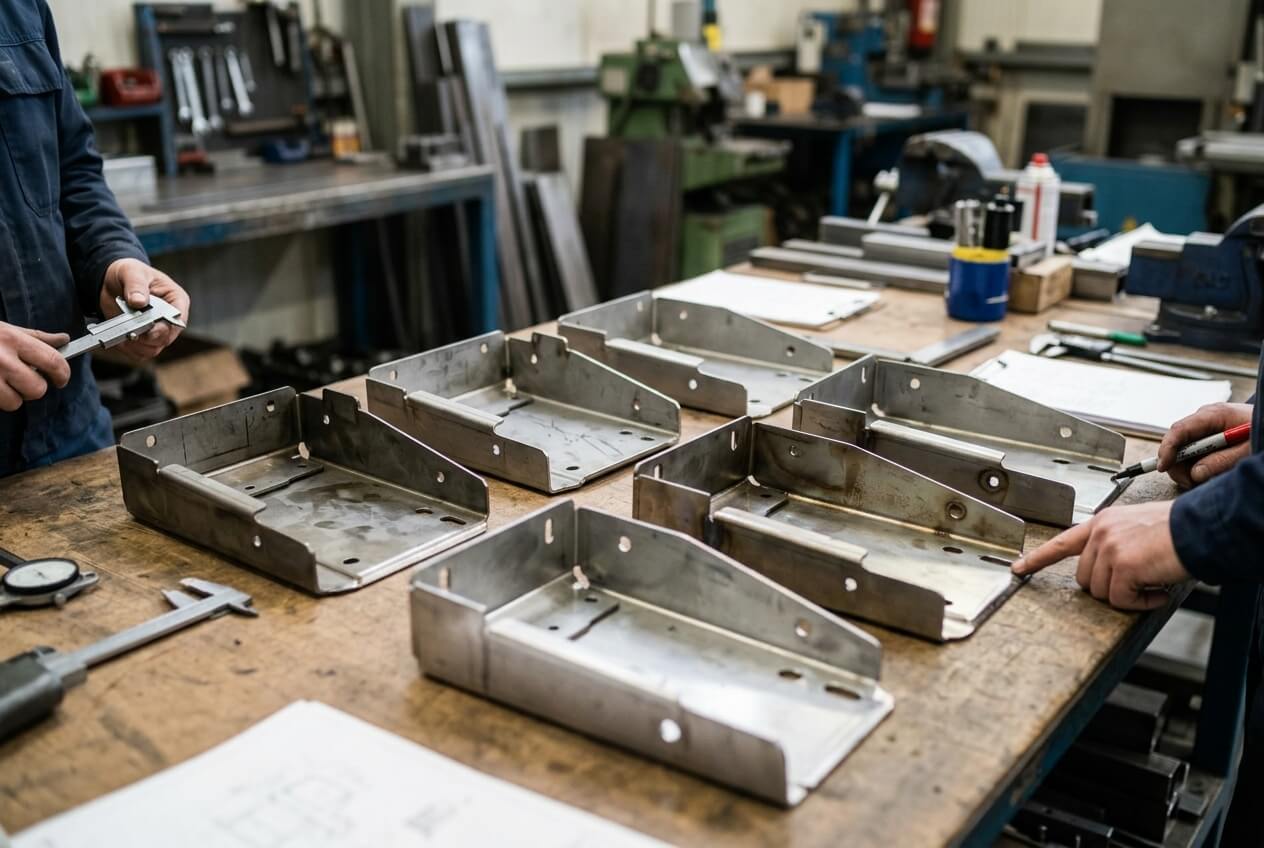
Prototype approval can create false confidence. A sample may fit because an operator hand-adjusted a flange, dressed a weld, or selected the best part for review. Batch production depends on repeatable processes, not one careful sample. If the RFQ never defined which controls must repeat, the first batch can drift away from the approved prototype.
This risk often appears in welded assemblies and formed enclosures. Welding can move holes. Forming can shift edges. Coating can change clearances. Hardware insertion can distort thin sheet. Each process step may remain within its own normal range, while the final assembly still misses the interface. The RFQ must connect prototype approval to the batch route, inspection points, and acceptance method.
Sample route versus production route
A prototype frame may use manual welding and bench alignment. The production batch may need a fixture to hold squareness and hole position. If the quote does not include fixture design or batch inspection, the first sample can pass while the first shipment creates problems. Buyers should ask how the supplier will keep the critical dimensions stable when the quantity increases.
Another example involves a display equipment enclosure. The prototype uses extra hand sanding on the welded corners. The buyer approves the appearance. The batch quote, however, never included the same weld blending time. When the order moves to volume, the corners look rougher. The dispute started when the RFQ failed to turn prototype appearance into a priced production requirement.
First article approval needs the right checks
First article inspection should test the risks that matter. For a bracket, that may mean a go/no-go check against the mating hole pattern. For a cabinet, it may mean door operation after coating. For a welded frame, it may mean squareness and hole location after welding and finishing. A dimension report alone may miss these assembly risks if it measures the wrong points.
Buyers should also ask what changes between prototype and batch production. Material lot, tooling setup, weld sequence, fixture use, coating source, and inspection frequency can all affect consistency. This question keeps the supplier from treating the sample as a one-off demonstration. It also helps the buyer compare quotes based on process control, not just unit price.
What to Clarify Before You Compare Sheet Metal Fabrication Quotes
A strong RFQ forces suppliers to quote the same part, the same scope, and the same risk controls. It does not need to become a textbook. It should identify the assumptions that change cost, lead time, fit, and acceptance. These assumptions create the lowest boiling point in quote comparison because they decide whether the lowest price reflects efficiency or missing work.
Start with the drawing package. Confirm the revision, CAD file, PDF drawing, quantity, material grade, thickness, and finish. Then identify the critical features. Mark the mounting holes, slots, formed faces, weld locations, cosmetic surfaces, grounding points, and masked areas that matter to the final assembly. This gives the supplier enough information to price the route instead of guessing it.
Ask suppliers to state their assumptions
Quote comparison improves when every supplier lists what they included. Ask whether the price includes tooling, fixtures, hardware insertion, welding, grinding, coating, masking, packaging, first article inspection, and batch inspection. Also ask which general tolerance standard they used and which dimensions receive special control. A short assumption table can reveal scope gaps faster than another round of price negotiation.
Lead time also depends on these assumptions. A quote that excludes fixture design or coating approval may show a shorter schedule. That schedule can fail once the missing work appears. If a part needs a fixture, a coating sample, or a functional assembly check, include that work in the quoted timeline. Otherwise, procurement may award a date that production cannot meet.
Compare the route behind the price
Do not treat a detailed quote as automatically more expensive. It may simply include the controls another quote left out. A supplier that names weld distortion risk, coating masking, or critical hole inspection may give procurement a clearer view of the real job. A supplier that replies per drawing may still be capable, but the buyer should confirm what per drawing means.
For overseas OEM work, this step matters because the buyer may not stand beside the press brake, welding bench, or coating line. Drawing review and manufacturability review reduce the chance that ambiguity travels into production. Yishang can support this stage when buyers send complete RFQ data for custom sheet metal parts, enclosures, brackets, frames, and welded assemblies.
Practical CTA: If your sheet metal fabrication quotes look close but the assumptions feel uneven, send Yishang the latest drawings, CAD files, material requirements, quantities, tolerance targets, finish expectations, photos of the mating assembly, and prototype notes through zsyishang.com. A focused RFQ review can expose missing scope before you award the lowest number.
Frequently Asked Questions
What does the lowest boiling point mean in a sheet metal RFQ?
It means the first missing assumption that makes supplier quotes diverge. In sheet metal fabrication, that point may be revision control, bend sequence, tolerance datum, finish coverage, weld cleanup, or inspection method. Once suppliers interpret that item differently, the quotes no longer describe the same part.
Why can the lowest sheet metal quote create higher procurement risk?
The lowest quote may exclude work that another supplier included, such as masking, tapped holes, weld grinding, fixture checks, or post-coating fit inspection. The buyer may save on the purchase order, then pay later through rework, delays, rejected parts, or assembly labor. The risk comes from missing scope, not from a low price alone.
Which drawing details should buyers clarify before quoting brackets or frames?
Buyers should clarify the drawing revision, material and thickness, critical hole patterns, datum references, bend direction, weld locations, finish requirements, and inspection points. For brackets and frames, the most important details usually relate to assembly fit. Mounting holes, squareness, and formed faces need clear control before suppliers price the job.
How can powder coating affect metal enclosure fit?
Powder coating adds thickness at edges, bends, holes, and contact surfaces. That build can tighten door gaps, reduce clearance around tabs, or make hinges and latches bind. Buyers should state final fit expectations after coating, not only the coating color or texture.
Why does prototype approval not guarantee batch consistency?
A prototype may include hand adjustment, extra finishing, or one-off inspection. Batch production depends on repeatable fixtures, tooling, weld sequence, coating control, and inspection frequency. Buyers should ask suppliers how the approved sample route will transfer into production before releasing volume orders.
What should a buyer send for a clearer custom sheet metal fabrication quote?
Send the latest PDF drawings, CAD files, material grade, thickness, quantities, tolerance targets, finish expectations, hardware requirements, photos of mating parts, and prototype feedback. Clear RFQ data helps the supplier price the real fabrication route and reduces quote assumptions before production starts.