
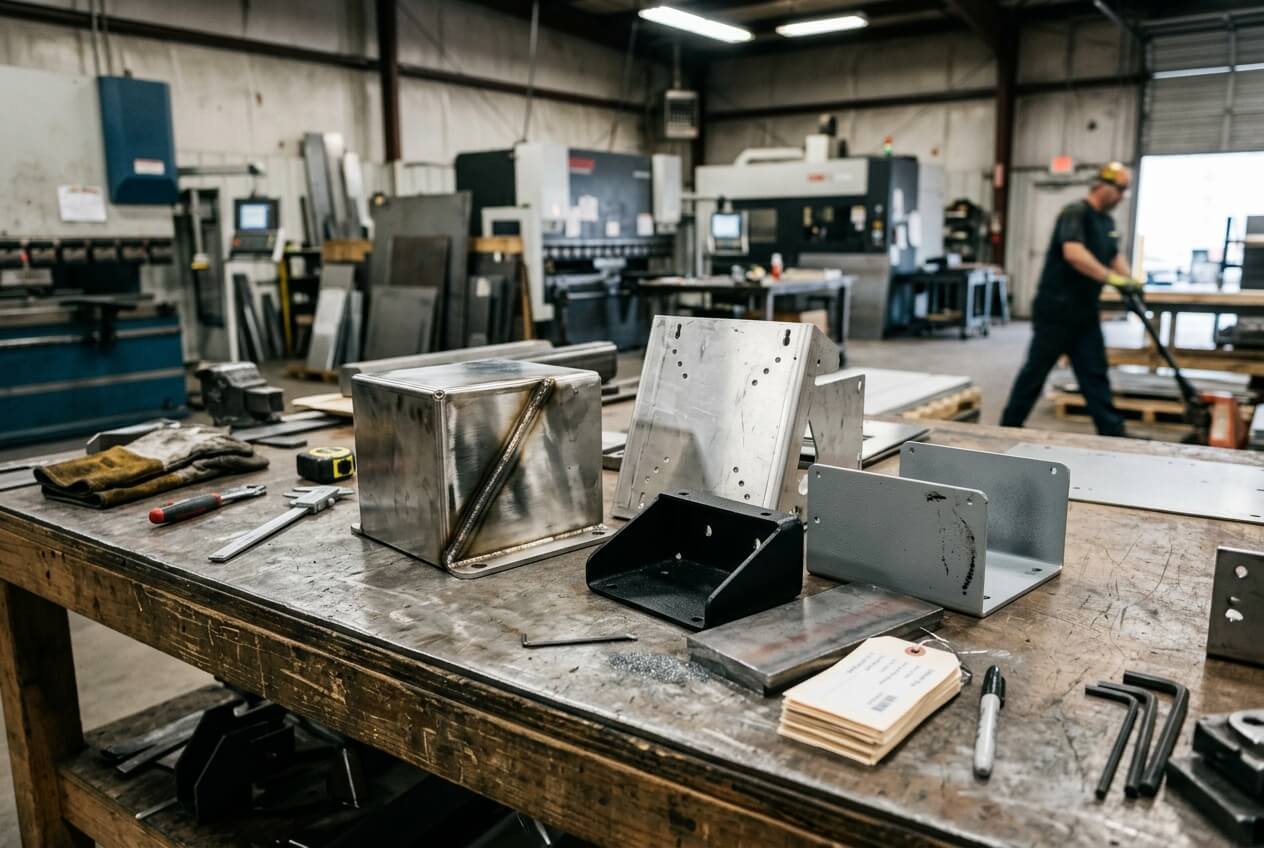
An OEM sends one enclosure drawing to three sheet metal suppliers. The drawing shows the outer size, hinge holes, louver pattern, gasket area, and black powder coating. The RFQ adds one material note: "example metal, 1.5 mm, black finish."
Each supplier now has to complete the missing manufacturing story. One quotes cold rolled steel with standard powder coating. Another assumes galvanized sheet because the enclosure may sit near a humid workshop. A third quotes stainless steel because an email mentioned corrosion resistance. Procurement receives three prices, but those prices do not describe the same part.
This article focuses on one procurement risk: quote assumptions created by an unclear material line. A loose "example metal" note does more than weaken the material specification. It changes forming, welding, finish preparation, inspection, assembly fit, packing, cost, and lead time. Buyers need to expose those assumptions before they compare unit prices.
Where the Example Metal Assumption Starts to Distort the Quote
The risk often starts before procurement sees the drawing. An engineer may use a placeholder material during early design. A prototype shop may build one sample from available sheet. A product manager may care more about shape, color, and mounting points than material grade. Those choices can work during concept development, but they create a weak RFQ when the same file moves into batch sourcing.
A supplier cannot quote only the noun "metal." The factory must decide how the part will cut, bend, weld, deburr, coat, assemble, and pass inspection. If the RFQ leaves that route open, each supplier prices its own assumption. The low quote may exclude weld grinding. The higher quote may include stronger pretreatment, tighter inspection, or more protective packing. Procurement then compares different risk positions as if they were equal.
The drawing may show shape but not use
A drawing can define the enclosure size and hole pattern while still hiding the real duty. Will the housing sit indoors, outdoors, near coolant, or inside a clean retail area? Will operators touch the surface daily? Does the door need a flat gasket face? Does a bracket carry load or only locate a cover? These details decide whether cold rolled steel, galvanized sheet, stainless steel, or aluminum makes sense.
When buyers omit use conditions, suppliers fill the gap with commercial judgment. That judgment may favor price, availability, lower forming risk, or perceived durability. None of those choices is wrong by itself. The problem appears when the buyer expected one route and approved a quote based on another.
Assumptions hide inside small line items
A quote may say "powder coated metal enclosure" and still miss key work. It may exclude special masking, cosmetic weld cleanup, threaded insert installation, gasket inspection, or corrosion testing. It may assume standard bend tolerances where the assembly needs tighter hinge alignment. It may include normal packing although the surface needs film and separators.
Ask each supplier to state the material grade, process route, finish method, tolerance exceptions, included hardware, inspection points, and exclusions. This does not turn the RFQ into a textbook. It makes the quote comparable. It also shows which supplier understood the same part number in the same way.
Why a Loose Material Line Changes More Than Material Cost
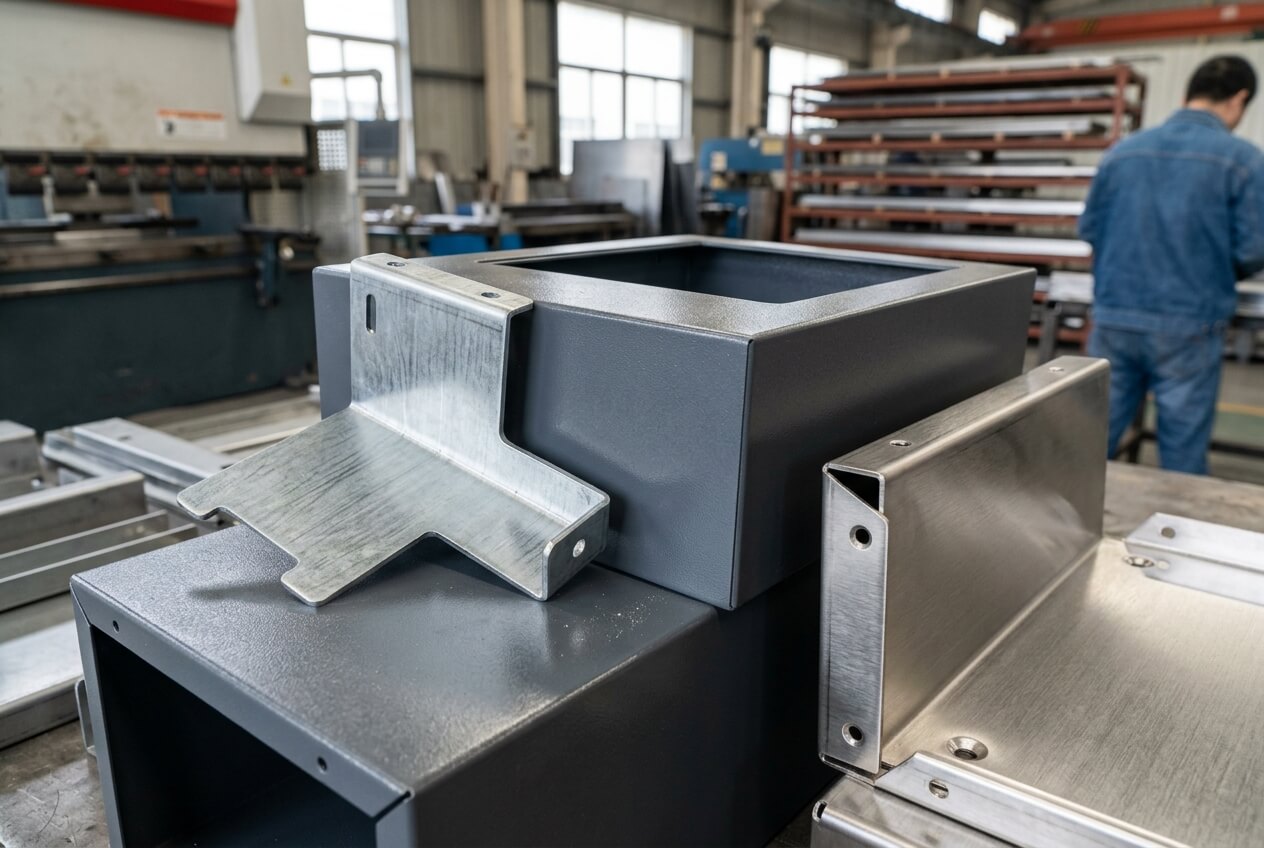
Material substitution looks simple on a spreadsheet. Steel costs one amount, stainless costs more, and aluminum may reduce weight. Fabrication rarely behaves that neatly. Changing the material changes bend force, springback, hole movement, weld labor, finish adhesion, distortion control, and inspection time.
Consider a wall-mounted control cabinet. The buyer asks for a black enclosure and lists "example metal" as the material. One supplier quotes 1.5 mm cold rolled steel with powder coating. The first sample fits. During assembly, the gasket leaks near one corner because the door has slight welding distortion. A second supplier had quoted a thicker door reinforcement and added inspection around the sealing face. Procurement rejected that higher quote because the RFQ never explained that sealing flatness mattered.
Bending decisions can move assembly holes
Low carbon steel, stainless steel, aluminum, and galvanized sheet do not bend the same way. Stainless often springs back more. Some aluminum tempers need a larger bend radius to avoid cracking. Galvanized sheet can show bend marks or coating damage. These differences can move holes near bends, change flange lengths, and affect PEM fastener locations.
A bracket example shows the chain. The RFQ calls for 2.0 mm "metal" with two mounting slots near a bend. Supplier A assumes mild steel and standard tooling. Supplier B assumes stainless and adds forming allowance. Supplier C proposes aluminum but increases the bend radius. All three can make a bracket, but only one may fit the mating frame without slot rework.
Welding and finishing can decide the real price
Weld cleanup often creates the largest hidden quote gap. A welded frame under black powder coating may need only structural welds and limited grinding. A visible retail frame may need smoother joints, reduced spatter, controlled heat marks, and better surface preparation. Stainless steel may need brushing direction control or passivation. Aluminum welding may need tighter fixture control to manage distortion.
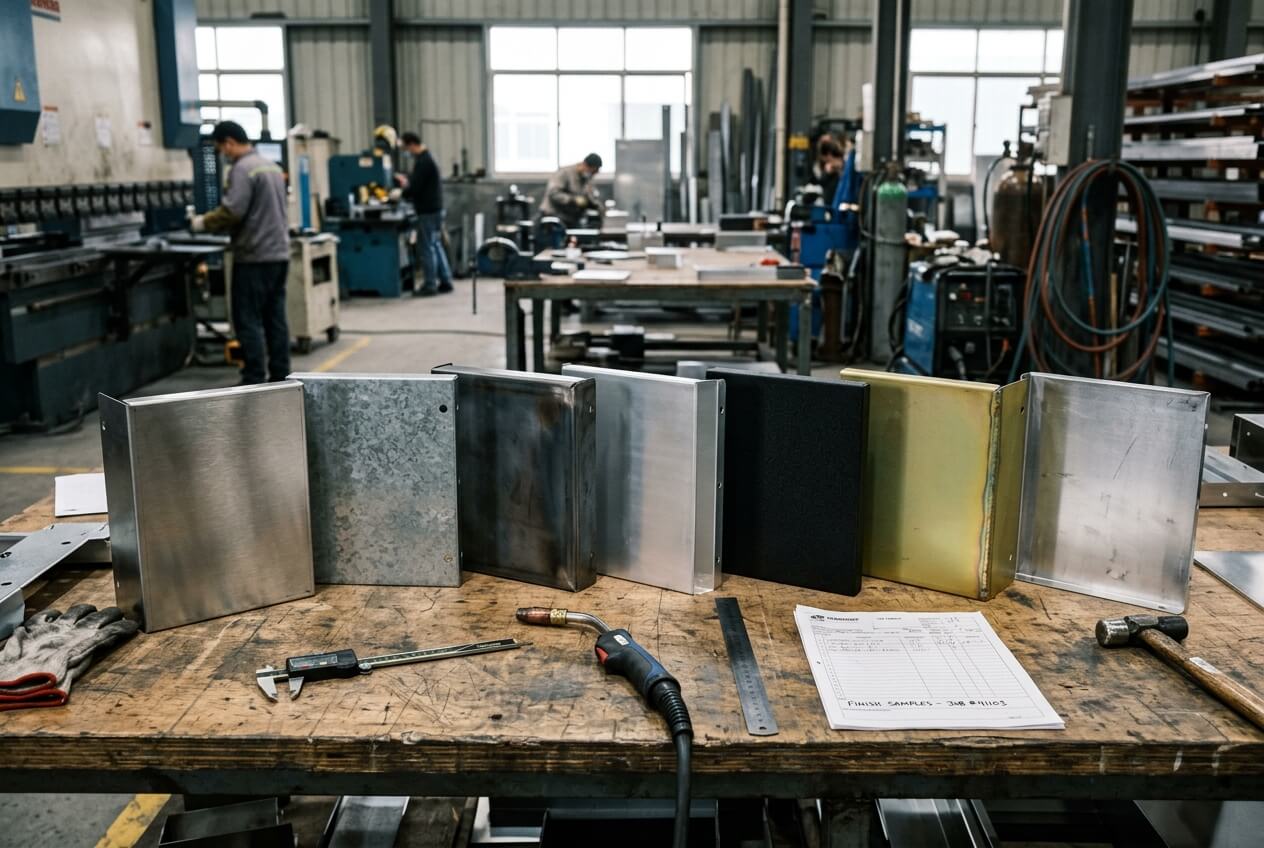
Finish route also changes with material. Powder coating on cold rolled steel may suit indoor equipment. Galvanized sheet may need pretreatment to reduce adhesion risk. Stainless may need a brushed, polished, or bead-blasted surface. Aluminum may require powder coating or anodizing, and color consistency can affect lead time. If the RFQ only says "black finish," suppliers will price different surfaces.
Yishang can review drawings and application notes when buyers need to compare these routes. The useful question is not which metal sounds stronger. The useful question is which material-process-finish route controls the risk the product actually faces.
How Quote Assumptions Turn Into Prototype and Batch Disputes
A prototype can hide a weak RFQ because one sample can receive extra manual attention. A fabricator can straighten a cover, ream a hole, touch up a coating flaw, or grind one visible weld longer than normal. The buyer approves the sample, but the production quote may not include those rescue steps.
Batch production exposes the gap. Now 300 enclosures, 800 brackets, or 150 welded frames must repeat through cutting, bending, welding, finishing, assembly, inspection, and packing. The process must carry the quality, not individual hero work. If the RFQ never recorded the sample adjustments, the production team follows the quoted route.
A cabinet sample may look better than the quoted process
A stainless control cabinet illustrates the issue. The sample door receives careful brushing, protected handling, and extra alignment work. Under showroom lighting, the buyer sees a clean surface and approves the design. In production, doors show small grain-direction changes and hairline handling scratches. The supplier says the quote included standard brushed finish, not panel-by-panel cosmetic matching.
The dispute did not start in polishing. It started when the RFQ failed to define visible faces, brushing direction, scratch limits, protective film, and packaging between panels. The buyer approved the appearance of a sample without freezing the process needed to repeat it.
A welded frame may pass once and fail in volume
A display rack frame creates another common chain. The prototype stands straight after manual correction. The color looks right after powder coating. During batch production, small weld distortion differences make shelves sit unevenly. The low quote assumed standard weld fixtures and normal straightening. The buyer expected the prototype geometry to repeat exactly.
Clarify fixture control, welding sequence, straightness requirements, visible weld treatment, coating thickness, and final assembly inspection before approving the batch. For welded assemblies, the drawing alone rarely communicates all acceptance criteria. Photos of the installation, mating parts, and previous defects help suppliers price the process that the batch needs.
What Buyers Should Clarify Before Comparing Supplier Prices
A stronger RFQ does not need to be long. It needs to separate fixed requirements from open choices. If the customer specification requires SUS304, SPCC, SECC, 5052 aluminum, or another grade, state it. If the buyer will accept alternatives, ask suppliers to label the route and explain the tradeoff.
Procurement should also connect material to the part’s risk. A hidden bracket may need hole accuracy, burr control, and stiffness more than a cosmetic finish. A front cabinet panel may need flatness, coating texture, and scratch protection. A moisture-exposed enclosure may need corrosion resistance, masking, and sealing-face control. A welded frame may need fixture planning more than a small material saving.
Give suppliers the information that changes assumptions
Include the drawing revision, 3D file if available, material grade or accepted alternatives, thickness intent, annual and batch quantities, target lead time, finish expectation, visible surfaces, tolerance-critical areas, bought-out hardware, and assembly notes. Add photos of the use environment, mating parts, old samples, and known failures. These details guide the quote without forcing a supplier to guess.
Ask suppliers to state what they included and excluded. Did they include deburring beyond standard edge break? Did they include weld grinding before powder coating? Did they include threaded inserts, hinges, locks, gaskets, masking, protective film, separators, or export packing? A clean quote should make these answers visible.
Use tolerance notes only where fit depends on them
Tight tolerances can protect assembly fit, but they also raise cost when buyers apply them everywhere. A hole that locates a hinge may need a tighter control than a vent slot. A gasket face may need flatness control, while a hidden flange may accept normal forming variation. Mark the dimensions that drive fit, sealing, or alignment. Let the supplier quote standard tolerances elsewhere.
This approach reduces both overpricing and underpricing. Suppliers can focus inspection on the areas that matter. Buyers can compare quotes based on the same risk controls. Lead time also becomes clearer because the quote reflects tooling, fixture, finishing, and inspection work instead of a broad guess.
Freezing the Manufacturing Route Before the Purchase Order Reduces Risk
The purchase order should not freeze only the unit price. It should freeze the manufacturing route that supports that price. Before release, confirm the material grade, thickness, bend radius assumptions, weld cleanup level, finish system, masking areas, hardware installation, inspection checkpoints, packing method, and approved drawing revision.
This step protects both sides. The buyer avoids surprise substitutions, cosmetic disputes, and assembly delays. The supplier avoids absorbing work that the quote never included. Most conflicts around "example metal" do not come from bad faith. They come from a missing agreement about what the price covers.
For overseas OEM projects, packing deserves early attention. Powder coated cabinets can leave the factory clean and arrive with rubbed corners if panels touch during transport. Brushed stainless parts can scratch without film. Aluminum panels can dent when packing assumes steel-like durability. These issues belong in the quote because they connect directly to finish and material choice.
If your RFQ still uses an "example metal" description, revise it before comparing prices. Send Yishang your drawings, material requirements or accepted alternatives, target quantities, tolerance-critical dimensions, finish expectations, assembly notes, and photos of the application or previous samples. Ask the quote to identify forming assumptions, weld cleanup, surface preparation, inspection points, packing method, exclusions, and any manufacturability concerns before you approve the unit price.
Frequently Asked Questions
What should replace an "example metal" note in a sheet metal RFQ?
Use a material grade when the requirement is fixed. If alternatives are acceptable, list the application, environment, thickness intent, finish target, visible faces, tolerance-critical areas, and assembly needs. Ask suppliers to state the exact material-process-finish route they quoted.
Why can three suppliers quote very different prices from the same drawing?
The drawing may show geometry while the RFQ leaves material, weld cleanup, finish preparation, inspection, hardware, and packing open. Each supplier then prices different assumptions. The lowest quote may exclude work that another supplier included to control production risk.
How does a loose material line affect assembly fit?
Material choice changes bend radius, springback, flange dimensions, hole position, weld distortion, and fastener installation. Those changes can affect hinges, gasket faces, mounting slots, PEM inserts, and mating brackets. Mark the fit-critical dimensions before suppliers quote.
Why can a prototype pass while the batch fails?
A prototype may receive extra grinding, straightening, hole correction, or coating touch-up. Batch production follows the quoted process unless those steps are documented. Before mass production, ask which sample corrections will become standard production controls.
What should buyers ask when comparing powder coated steel and stainless steel?
Ask each supplier to state corrosion exposure assumptions, pretreatment, coating or brushing method, visible surface standard, weld cleanup, masking, scratch protection, packing, and exclusions. Compare the full route, not only the material name or unit price.
Can Yishang quote if the buyer has not finalized the material grade?
Yes. Share drawings, quantities, use conditions, tolerance concerns, finish expectations, assembly notes, and sample photos. Yishang can review manufacturability and quote a defined route, including assumptions and alternatives where the material choice remains open.