
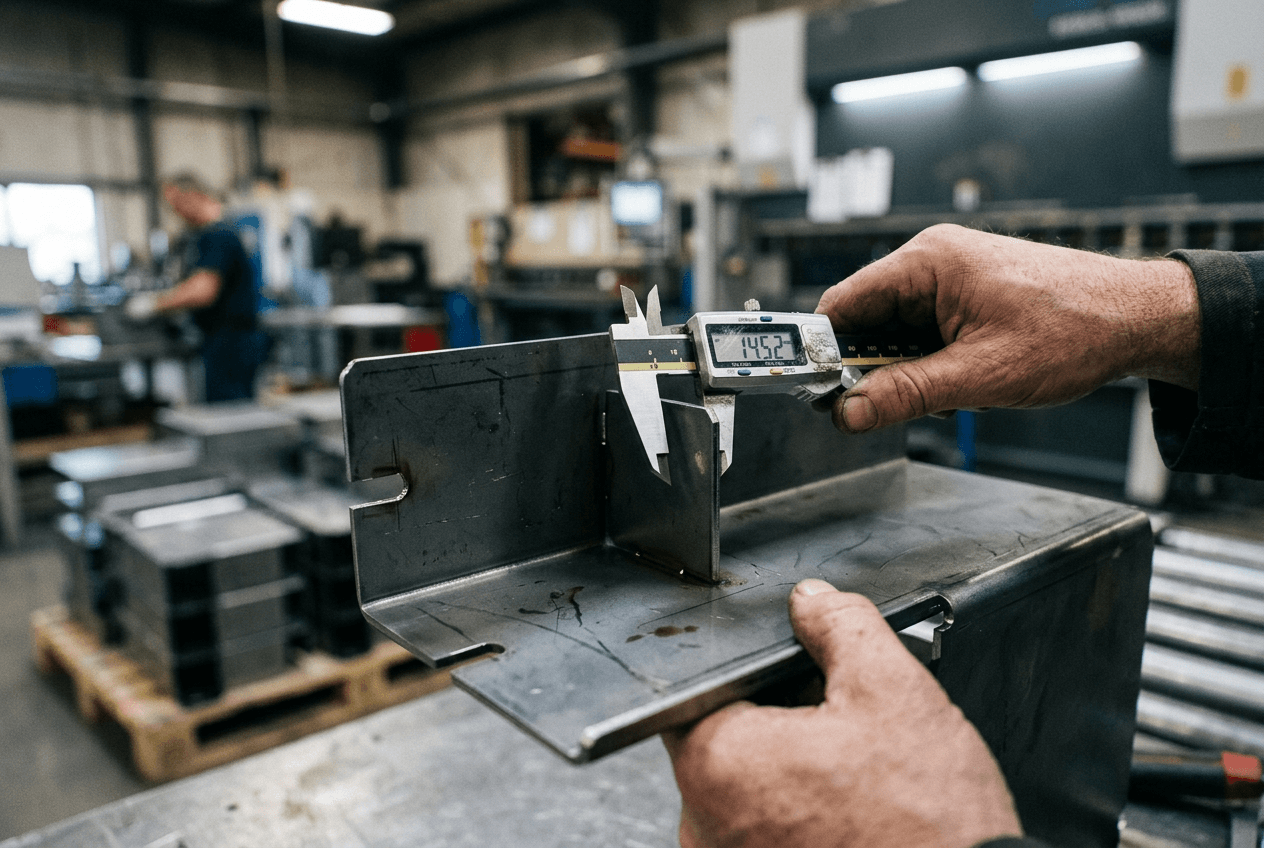
When “What Is Cold Welding” Is Really an RFQ Language Problem
In a sheet metal RFQ, the phrase what is cold welding often signals a bigger problem than metallurgy. The buyer may be worried about unwanted sticking, visible joint marks, poor fit, or a process change that affects assembly. A supplier, however, may read the same note as a special welding concern, a cosmetic issue, or a general quality request. That gap creates risk before the first quote is even written.
The first damage is usually commercial. One shop prices the job with standard inspection. Another adds extra checks, fixture time, or post-process review. The numbers no longer compare cleanly, because each supplier is quoting a different scope. A buyer may think the low bid is efficient, when it really excludes the inspection work that protects assembly fit.
Yishang sees this during drawing review on enclosures, brackets, frames, and welded assemblies. The fastest way to remove confusion is to translate the phrase into acceptance language. Say which face matters, which joint should stay clean, which feature controls fit, and which condition would fail the part. Once the requirement is measurable, the RFQ becomes a procurement document instead of a guess.
That matters because the real risk is not a weak weld description. It is a weak chain of assumptions. If the buyer does not define the problem, the supplier will fill in the blanks with shop defaults. Those defaults may be reasonable, but they are not always the same as the buyer’s use case.
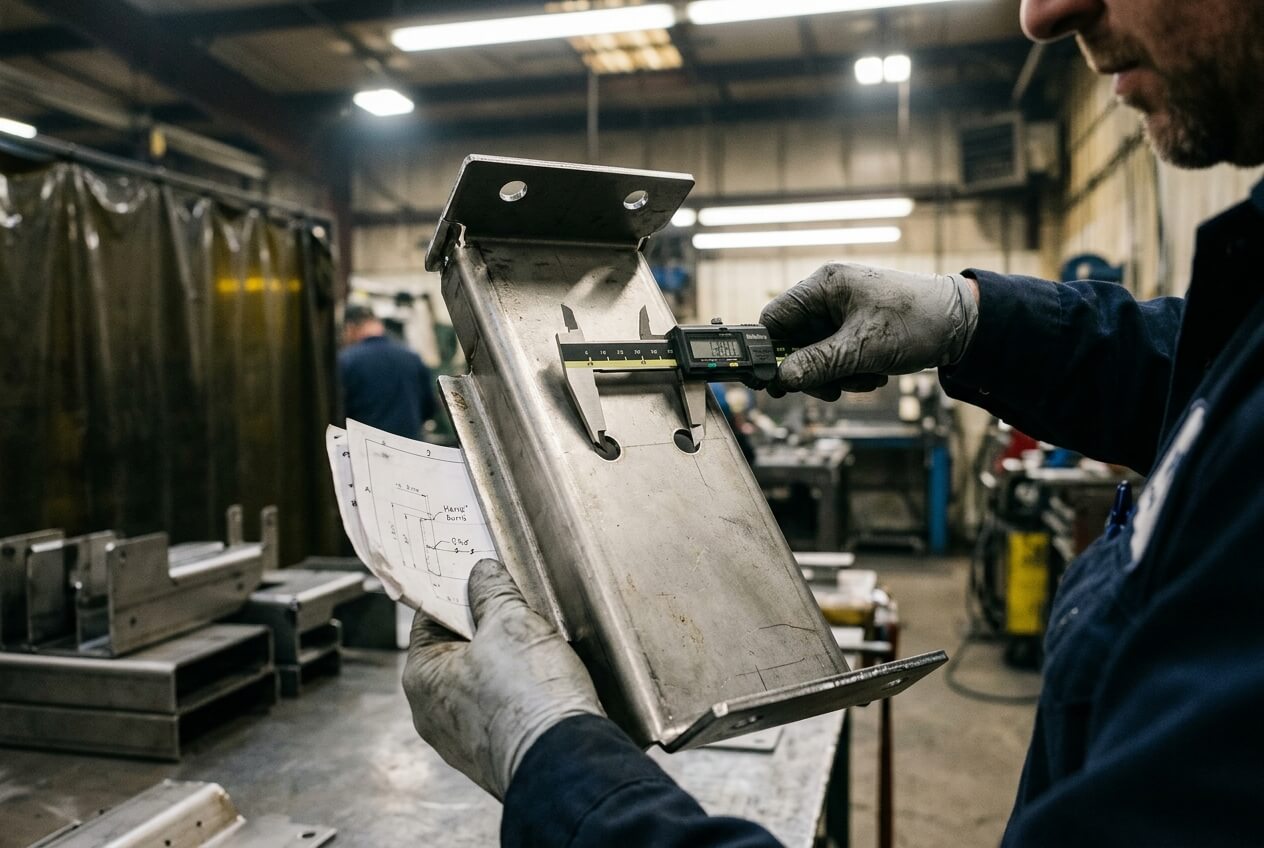
Where Quote Assumptions Start: Drawings That Do Not Separate Functional and Cosmetic Features
Most quote errors start when the drawing treats every feature as equally important. In practice, a custom sheet metal part usually has only a few dimensions that control assembly. Hole center distance may matter. Bend angle may matter. Panel flatness may matter. A hidden edge on the back side may not. If the RFQ does not separate those features, the quote often includes the wrong level of inspection in the wrong place.
A buyer asking for a welded enclosure might care most about door gap, latch alignment, and the location of the hinge side. A buyer ordering a bracket might care most about mounting hole position and the relationship between the flange and the mating surface. If those points are not marked as critical, the supplier has to decide. That decision affects setup time, checking time, and ultimately cost.
Why one missing callout changes pricing
Suppose a display rack side panel needs slots that still accept hooks after coating. If the drawing only shows the slot size before finish, the supplier may quote standard cutting and standard coating. If the buyer later expects the slot to remain open after powder coating, the shop may need masking, extra clearance, or a different acceptance rule. The same drawing can support two very different prices.
The same pattern appears on a small welded housing. The threaded studs may land correctly on the prototype, but the real job needs a positional window that survives bending and welding. If the RFQ does not identify that window, the supplier may quote to a looser standard. Then the buyer discovers the mismatch only after parts arrive and assembly starts. That is how a small omission becomes a rework order, a shipment delay, or a rushed second run.
Lead time also shifts when the drawing is unclear. The shop must stop, ask, wait, and revise. Even a short clarification loop can push material ordering and fixture planning. Buyers who want a clean quote should mark what matters, explain what can float, and keep the drawing package aligned with the real assembly need.
Why the Risk Often Appears After Bending, Welding, or Coating
The part often looks fine in the flat state. Then bending changes the hole-to-edge relationship. Welding pulls the frame out of square. Powder coating adds build at an edge or inside a slot. By the time the part reaches final inspection, the failure is already baked in. The supplier did not necessarily make a bad part. The team simply checked the wrong stage for the wrong risk.
This is why buyers should treat process sequence as part of the RFQ. A laser-cut panel can hold its hole pattern accurately, yet the bend can move the mating geometry. A welded frame can pass a visual weld check, yet the diagonal may drift enough that a panel no longer sits flush. A coated cabinet door can close before finishing and bind after finishing. The consequence chain starts with an incomplete requirement and ends with an assembly problem that no one budgeted for.
A clean part can still fail in assembly
Consider a metal enclosure for an electronics project. The weld bead inside the frame looks acceptable, and the surface finish passes visual review. After powder coating, though, the door gap tightens. The latch needs extra force, and the customer notices the mismatch during installation. Nothing was “wrong” with the weld itself. The failure came from not defining the post-finish fit condition early enough.
Another example is a bent support bracket for a machine base. The bracket may cut and bend within expectation, but the mating holes no longer line up after the weld sequence. If the buyer had identified hole position as the controlling feature, the supplier could have priced the right fixture and inspection points from the start. Instead, the job gets more expensive after production begins, when every correction costs more than the original quote difference.
For that reason, buyers should not ask only whether a part can be made. They should ask which step can move the critical dimension. That question tells the supplier where to measure, where to control distortion, and where to protect the finish. It also keeps the procurement team from comparing quotes that hide different process assumptions.
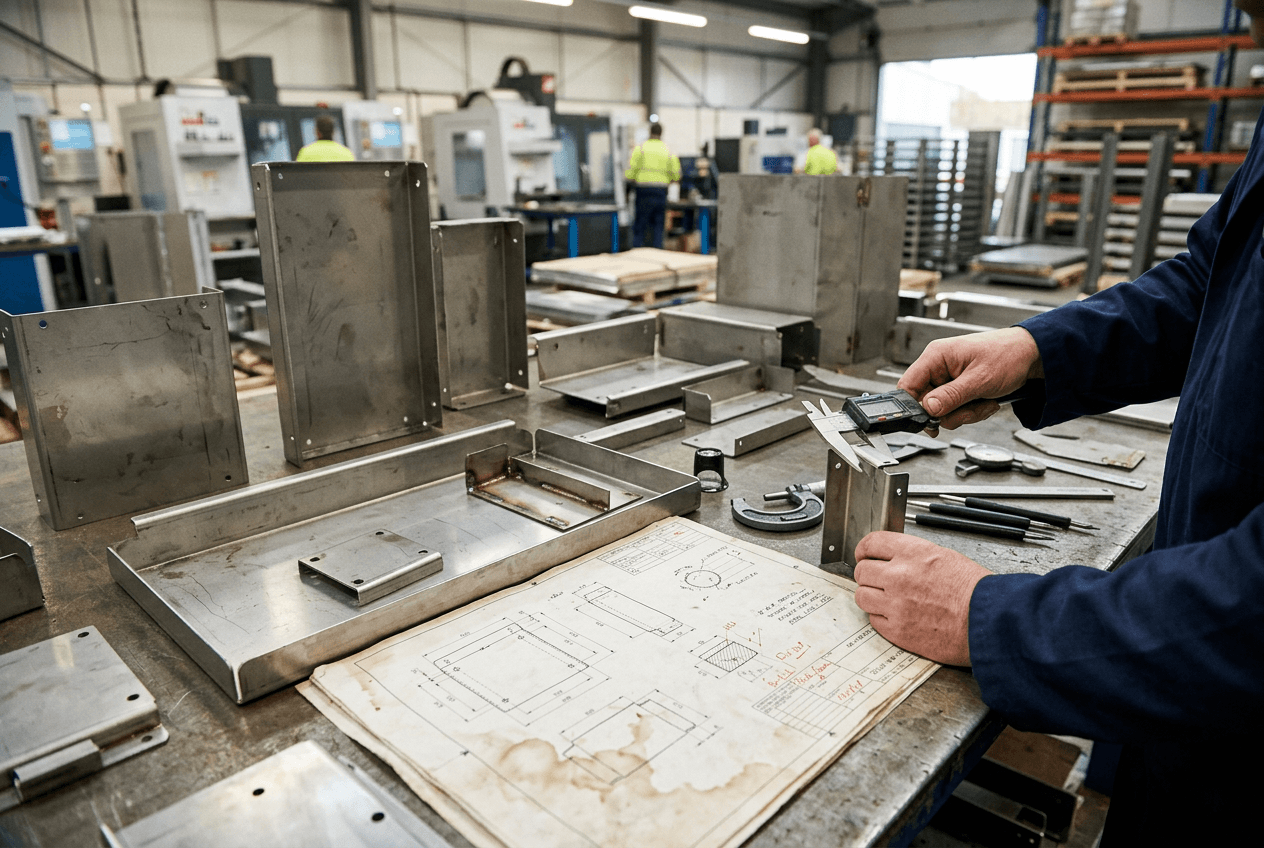
Why One Approved Prototype Does Not Protect Batch Consistency
A prototype proves that one path works. It does not prove that fifty or two hundred parts will follow the same path. Sample work usually gets more attention, slower handling, and fresher fixtures. Batch work adds wear, operator variation, weld sequence changes, and coating buildup. If the buyer only approves the sample and never freezes the controlling features, the batch can drift even when the sample looked perfect.
This is a common risk on custom sheet metal parts that must mate with another purchased component. A prototype bracket may fit the assembly bench well, then a production run shows small shifts after bending and welding. The problem is not the prototype. The problem is that the prototype approval never became a production control plan. Buyers need to know which dimensions must stay locked, which surfaces can accept light marks, and which conditions require a fresh first article.
Yishang reviews this kind of handoff on welded assemblies and enclosure projects when the buyer shares sample feedback with the drawing package. That review is useful only if the production team knows what must stay unchanged. Otherwise, the shop may build to the sample visually while missing the fit behavior that matters in the field.
Lead time and cost both suffer when batch control is weak. If the first lot fails fit checks, the supplier may need sorting, rework, or a second setup. If the issue shows up after coating or shipment, the fix gets slower and more expensive. That is why prototype approval should always connect to a written batch rule.
Buyers can reduce this risk by asking how the production run will mirror the approved sample. Will the same bend sequence be used? Will the same weld sequence be used? Will coating thickness be checked on mating features? Will the first article be retained for comparison? Those questions are not paperwork for its own sake. They protect batch consistency.
What Buyers Should Freeze Before They Compare Quotes
The safest RFQ is not the longest one. It is the one that freezes the features tied to fit, finish, and assembly before suppliers start pricing. Buyers should send the drawing, the material requirement, the quantity, the tolerance expectations, and the finish target together. If the project includes mating parts, photos of the assembly help the shop understand where a narrow gap or a hidden edge could become a problem.
That package should also explain whether the part is a prototype, a pilot run, or a batch order. Each phase carries different risk. A prototype may justify extra attention. A batch order needs repeatability. If the buyer wants both, the RFQ should say so. Otherwise, one supplier may quote a development approach while another quotes production-only assumptions. Those two prices cannot be compared fairly.
Communication matters here, but it should stay practical. Ask the supplier to confirm the controlling dimensions, the finish-sensitive faces, and the inspection method before the quote is final. If the job involves cabinets, frames, brackets, or welded assemblies, make sure the buyer and the fabricator agree on what will be checked at first article and what will be checked during the run. That simple discipline keeps the quote aligned with the real build.
When the package is still unclear, a manufacturing partner such as Yishang can review manufacturability, drawing notes, and prototype feedback before release. That review is most valuable when the buyer already knows the goal: a quote that reflects the same assumptions the factory will use in production.
If you are sourcing custom sheet metal fabrication, sheet metal parts, metal enclosures, brackets, frames, or welded assemblies, send the drawing package, material requirements, quantity, tolerances, and finish expectations before comparing quotes. The earlier the requirements are frozen, the less likely the job will slip into rework, price changes, or assembly delays.
Frequently Asked Questions
What does what is cold welding usually mean in a sheet metal RFQ?
In procurement language, it often means the buyer is worried about unwanted bonding, surface marks, or a process condition that changes fit. It is usually not a request for a special weld method. The buyer should turn the phrase into measurable acceptance points such as cosmetic face, mating surface, and post-process fit.
Which drawing details change the quote the most?
The biggest quote drivers are the dimensions that control assembly. Hole position, bend angle, flatness, flange width, and post-coating fit usually matter more than overall size. If the drawing does not separate functional features from cosmetic ones, suppliers will build different assumptions into the price.
Can a part pass before coating and still fail after finishing?
Yes. Powder coating can add thickness at edges, reduce slot clearance, and change how parts seat together. A cabinet door, bracket, or panel can fit before finishing and bind afterward. Buyers should define the post-finish condition, not only the pre-finish dimension.
Why does prototype approval not guarantee batch consistency?
A prototype is usually built with more attention and less variation. Batch production adds fixture wear, operator differences, weld sequence changes, and coating buildup. If the buyer does not freeze the controlling features, the batch can drift even when the sample was approved.
What should buyers send with an RFQ to reduce assumption risk?
Send the drawing, material requirement, quantity, tolerances, finish expectation, and any photos of the mating assembly. Add notes on which features control fit and which are cosmetic. If there is a prototype, include the sample feedback too. That gives the supplier enough context to quote the same job the buyer actually wants.