
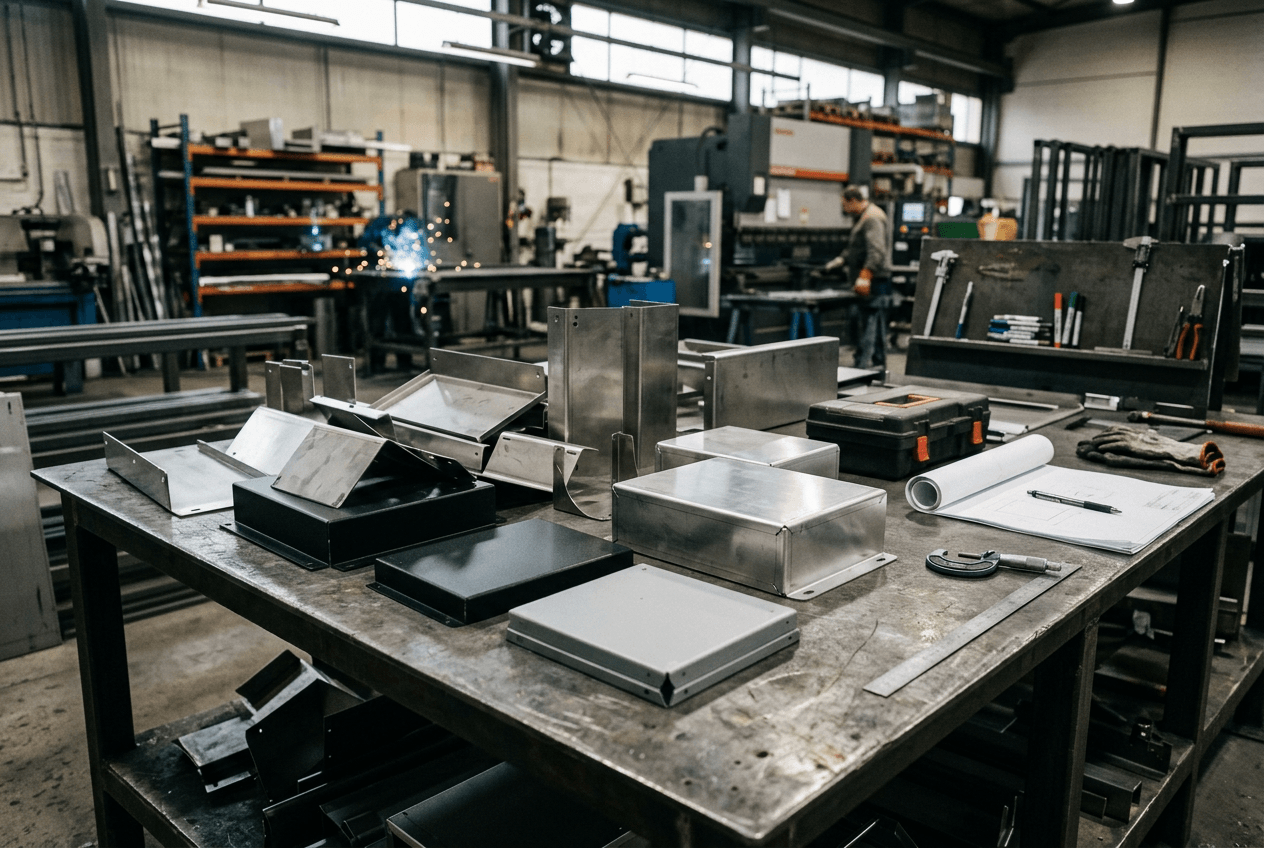
An OEM buyer sends an RFQ for a powder coated control enclosure. The drawing shows bent side panels, welded brackets, hinge holes, and several rows of ventilation slots. Three sheet metal suppliers quote the job. One price looks low. One sits much higher. The third supplier asks questions about material grade, inside bend radius, coating thickness, hole positions after bending, and which features control assembly fit.
That question list may feel like a delay. In reality, it exposes the main procurement risk in bending metal: suppliers often quote different manufacturing assumptions from the same RFQ. The buyer then compares prices that do not represent the same finished part.
This problem rarely starts at the press brake. It starts when drawings, models, finish notes, and tolerance requirements leave too much room for interpretation. A supplier fills the gaps to prepare a price. Later, those assumptions can create cracked bends, shifted holes, door gaps, coating interference, welding distortion, or batch parts that no longer match the approved prototype.
OEM buyers do not need to become bending engineers. They do need to remove quote ambiguity before awarding the order. Clear RFQ details protect price comparison, sample approval, lead time, and assembly fit. They also help a manufacturer such as Yishang review whether the material, bend method, welding plan, finishing route, and inspection points support the same production goal.
Quote Risk Starts When the RFQ Lets Suppliers Invent the Manufacturing Route
A drawing that says “1.5 mm steel, bend and powder coat” looks simple. It also leaves major decisions open. Cold rolled steel, galvanized steel, stainless steel, and aluminum can all fit a basic thickness callout. They do not bend, weld, coat, or spring back in the same way.
When the RFQ omits material grade, bend radius, finished dimensions, cosmetic surfaces, and assembly-critical features, each supplier builds a different quote. One may choose a formable mild steel and a standard press brake radius. Another may assume stainless steel because the enclosure works in a humid plant. A third may include extra setup time because the side panels need tight door gaps after coating.
The quote gap then looks like a pricing issue. In practice, it may reflect different risk levels. The low quote may exclude springback trials, fixture checks, cosmetic protection, or coating clearance checks. The high quote may include them. Without clear RFQ data, the buyer cannot know which price matches the required part.
Example: Control enclosure side panel
Consider a side panel for an electrical control enclosure. The panel has two long flanges, hinge holes, a latch cutout, and a powder coated finish. The drawing defines the outside size but does not state whether the width applies before or after bending. It also does not identify the hinge side as critical.
One supplier unfolds the flat pattern from the outside dimensions. Another uses inside dimensions from the CAD model. Both approaches can seem reasonable. After bending and coating, the hinge holes may move enough to affect door alignment. The door still fits one sample after hand adjustment, but batch assembly slows when operators need to correct every unit.
The buyer could reduce this risk with a few clear notes. Mark the finished width after bending. Identify hinge and latch hole positions as critical. State the acceptable door gap. Confirm coating thickness concerns around moving parts. These details force suppliers to quote the same finished result, not only the same shape.
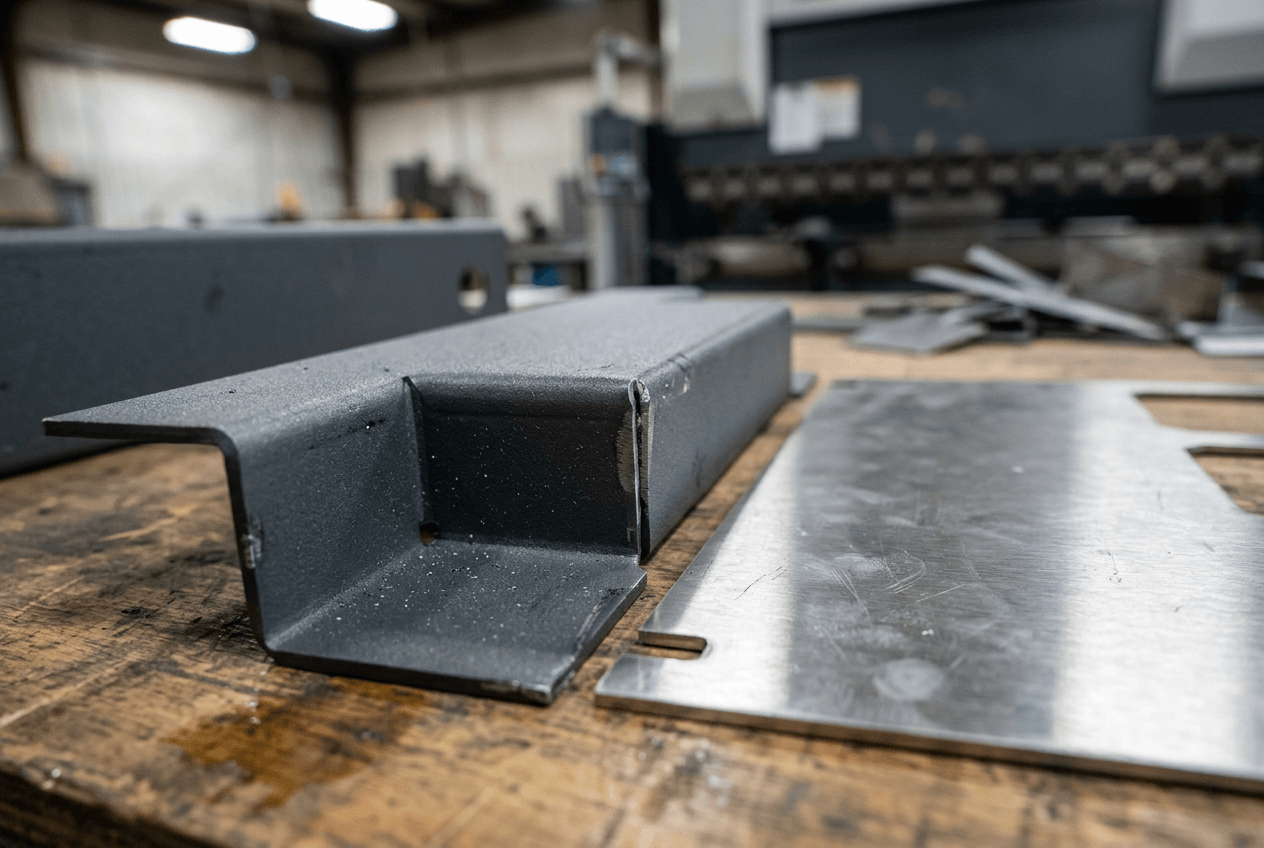
Material, Radius, and Springback Assumptions Can Turn a Low Quote Into Rework
Material choice affects more than sheet price. It changes forming pressure, minimum inside radius, bend direction, cracking risk, surface marking, and springback. If the RFQ treats material as a purchasing item only, the quote may ignore the production behavior that controls fit.
Stainless steel often needs more springback compensation than mild steel. Aluminum grade and temper can change the safe bend radius. Galvanized sheet may require care around coating damage on bent edges. Even within the same thickness, two materials can produce different angles, flange positions, and surface conditions.
A low price may assume a tight radius, common tooling, and normal angle tolerance. That may work for mild steel brackets with generous clearance. It may fail on a stainless enclosure with visible surfaces and mating covers. When the supplier discovers the problem during sampling, the buyer may face engineering changes, longer lead time, or a revised price.
When a material change becomes a drawing change
A bracket may work in mild steel with a small inside radius. Later, the customer requests stainless steel for corrosion resistance. If the buyer keeps the original radius, the bend may crack or spring back beyond the angle tolerance. The supplier then needs a larger radius, a revised flat pattern, or a different bend sequence.
That change can affect hole locations and assembly clearance. A larger inside radius moves material through the bend area. Holes close to the bend line may shift or deform. A bracket that once matched a welded frame may now need slot changes or fixture updates.
Buyers can avoid this chain by stating why the material matters. If the end customer fixes the grade, include the exact grade and standard. If function matters more than grade, tell suppliers the priority: corrosion resistance, strength, weight, cost, appearance, or weldability. This allows a practical material recommendation without losing control of the finished part.
Where bend allowance decisions affect quoted cost
Bending metal requires a flat pattern. The flat pattern depends on inside radius, material thickness, bend angle, K factor, and bend deduction. When drawings and CAD files do not define these items clearly, suppliers choose their own unfolding method.
That choice affects material usage, setup time, first article inspection, and final dimensions. A supplier that spends time verifying the bend allowance may quote higher than one that assumes standard data. The higher price may include real risk control, especially for multi-bend panels, long flanges, or tight assemblies.
Procurement teams should not specify every calculation method unless they control the design data. Instead, they should state which dimensions matter after bending. Mark assembly-critical widths, hole centers, slot clearances, mounting faces, and visible gaps. If the supplier controls the flat pattern, require sample measurement against these finished features.
Unclear Finish and Welding Notes Create Fit Problems After the Part Looks Correct
Many bent parts pass dimensional checks after forming but fail after welding, grinding, coating, or packing. This risk grows when the RFQ separates bending from the full fabrication route. A part does not ship as a bent blank. It ships as a finished enclosure, bracket, cabinet, frame, or welded assembly.
Powder coating shows this problem clearly. Coating thickness can reduce clearance around hinges, tabs, slots, and sliding features. A panel may measure correctly before coating, then bind during assembly. If the RFQ does not mention tight movement areas, the supplier may quote coating as a standard finish only.
Cosmetic surfaces create another quote trap. A press brake tool can leave marks. Welding can add spatter or heat tint. Grinding can change the surface texture. Powder coating can make scratches or uneven grinding more visible under certain light. If the drawing does not identify exposed surfaces, suppliers may orient the sheet or sequence bends for speed instead of appearance.
Example: Welded cabinet frame with bent channels
A buyer sources a welded cabinet frame made from bent sheet metal channels. The frame includes cross members, mounting faces, and powder coated outer surfaces. The RFQ gives overall size and weld symbols but does not define diagonal tolerance or mounting face flatness.
The prototype looks acceptable. During batch welding, heat pulls several frames out of square. Operators can still force covers into position, but assembly takes longer. Some covers show uneven gaps. The buyer sees a quality problem, while the supplier sees missing acceptance criteria.
The earlier RFQ should have linked bending and welding to assembly fit. It should define diagonal checks, mounting face flatness, key hole positions, visible surfaces, and inspection timing. These points help suppliers plan fixtures, weld sequence, grinding limits, and coating protection before they quote the job.
Finish expectations must connect to tolerance decisions
A tight metal dimension may not remain tight after finishing. Powder coating adds thickness. Zinc plating can affect threaded features. Brushing or polishing can change cosmetic consistency. Welding and grinding can also reduce local thickness or alter edges.
Buyers should mark areas where finish affects function. Examples include hinge barrels, sliding rails, PEM fasteners, screw holes, hooks, slots, tabs, and nested flanges. If coating must not enter a hole or thread, show masking requirements. If touch-up limits matter, state them before production.
Yishang can review drawings and finish notes together when buyers source metal enclosures, brackets, frames, or welded assemblies. That review matters because the lowest forming quote may not include the protection needed to deliver the finished part.
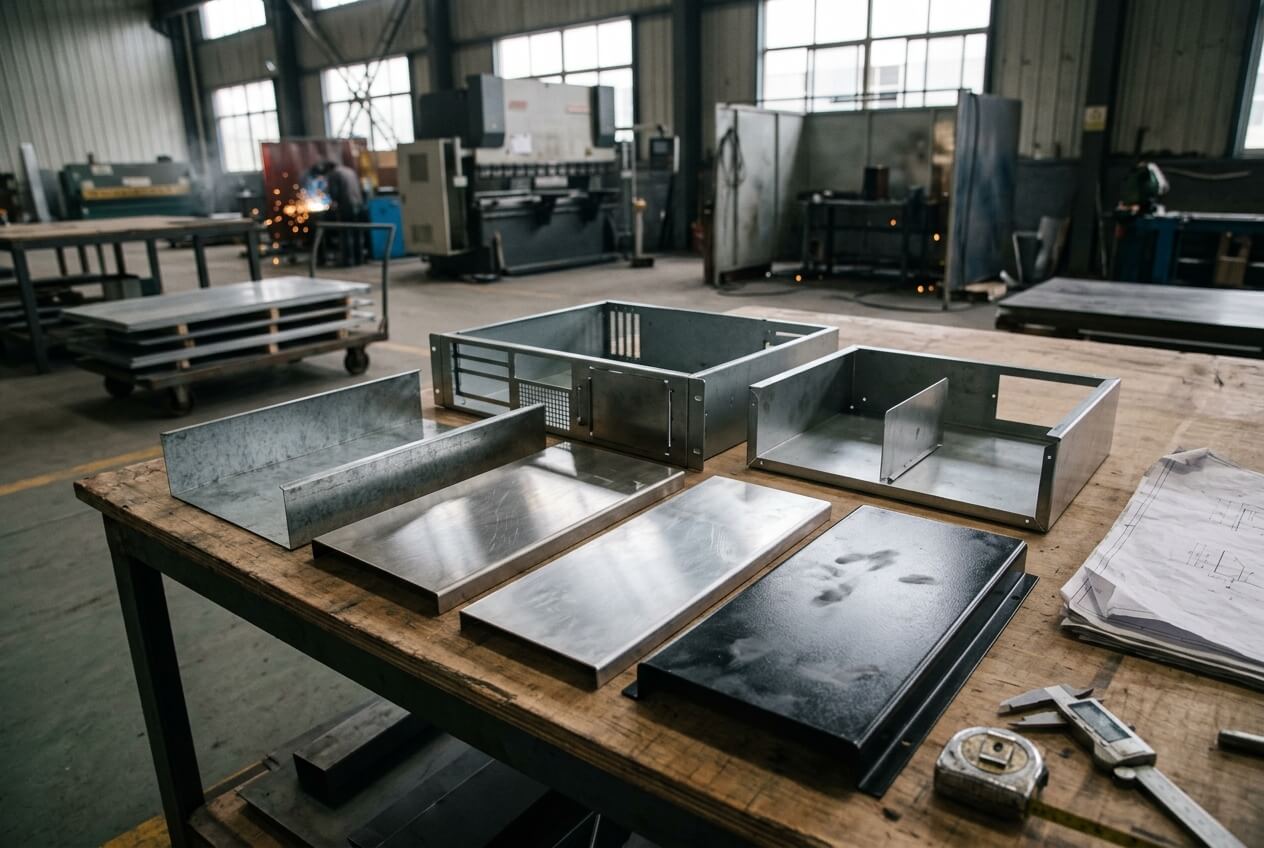
Prototype Approval Fails When It Does Not Freeze the Batch Assumptions
A good prototype does not automatically prove batch consistency. A sample may receive extra hand correction, special setup attention, or slower inspection than production parts. If the buyer approves only the visible sample, the supplier may not know which process assumptions must remain fixed.
This creates a common procurement surprise. The first sample fits. The first batch varies. The buyer then asks why production changed. The supplier may answer that the material lot, bend sequence, tooling radius, welding fixture, or coating thickness stayed within normal practice. Both sides may be right because the RFQ never defined what the sample approval controlled.
Prototype approval should convert design intent into measurable production controls. For bending metal, those controls may include bend angles, flange width, hole position after bending, mounting face flatness, diagonal dimensions, coating clearance, cosmetic side protection, and packaging method.
Separate sample appearance from production acceptance
A prototype can answer several questions. It can prove that the part assembles, that the bend sequence works, and that the finish looks acceptable. It should also reveal which measurements need control during batch production. Buyers should not approve the sample with only a general note such as “OK for production.”
Instead, record what the sample proves. Confirm the material grade and thickness. Note the inside radius or approved equivalent tooling radius. List critical dimensions after bending, after welding, and after coating where needed. Add photos of acceptable cosmetic surfaces and unacceptable marks.
For a bent metal frame, mounting face flatness may matter more than the exact outer edge shape. For a display rack, visual consistency and hole alignment may drive acceptance. For an enclosure, door gap, hinge movement, and latch engagement may matter most. Different parts need different control points.
Batch lead time also depends on frozen assumptions
Lead time problems often come from late clarification. If the buyer changes material after sample approval, the supplier may need new tooling trials or a revised flat pattern. If coating thickness creates clearance issues, the shop may need masking, rework, or design changes. If welding distortion appears in batch, fixture changes can delay shipment.
Clear RFQ and sample approval notes reduce these delays. They help the supplier purchase the right sheet, plan the bend sequence, reserve tooling, design fixtures, choose inspection methods, and protect cosmetic surfaces. They also give procurement a better reason to accept or challenge price differences.
When buyers send updated drawings to Yishang, they should include prototype feedback and batch acceptance points. That information helps the team check whether the quoted process still matches the approved part.
Before Comparing Prices, Make Every Supplier Quote the Same Finished Part
Sharp price differences do not always mean one supplier is expensive. They often mean the RFQ allowed different assumptions. Before asking for a discount, ask what each supplier assumed about material grade, inside radius, bend allowance, springback control, welding distortion, finish thickness, cosmetic protection, inspection timing, and packaging.
This conversation protects procurement from false savings. A lower unit price can become expensive if it causes assembly rework, line stoppages, late shipments, or customer complaints. A higher price may still need challenge, but buyers should first confirm whether it includes controls that the lower quote excludes.
Useful RFQ notes do not need to over-tolerance every feature. They need to identify the features that carry risk. Mark finished dimensions after bending. Show critical holes and slots near bend lines. Define cosmetic sides. State whether the supplier may recommend material or radius changes. Explain the assembly context. Share photos or mating parts when the drawing does not show the full product.
Buyers should also state prototype quantity, batch quantity, annual demand, and inspection priorities. Quantity changes can alter tooling choices and setup economics. A one-off prototype may allow more manual work. A 500-piece batch needs a stable forming and inspection plan. A repeat OEM program needs controlled material, fixtures, finish, and packaging.
For custom sheet metal fabrication projects, send drawings, 3D files if available, material requirements, quantities, tolerances, finish expectations, photos, samples, and assembly notes before final quote approval. To check whether your RFQ gives suppliers enough detail to quote the same finished part, share your package with Yishang for a practical review of bending, welding, finishing, prototyping, and batch fit risks.
Frequently Asked Questions
What is the biggest RFQ risk when buying bent sheet metal parts?
The biggest risk is supplier assumption mismatch. If the RFQ does not define material grade, finished dimensions, critical tolerances, bend radius, finish requirements, and assembly context, suppliers may quote different manufacturing routes. The prices then look comparable, but the finished parts may not match.
Should buyers always specify the inside bend radius?
Specify the inside radius when it affects clearance, appearance, strength, mating parts, or hole locations. If the radius does not control function, allow the supplier to recommend a stable tooling radius. Still require the finished dimensions after bending to meet the agreed tolerance.
Why do holes near bend lines cause production problems?
Holes near bend lines can move, stretch, or deform during forming. This can affect hinges, rails, PEM fasteners, screw holes, and mating brackets. Buyers should mark these holes as critical and confirm whether dimensions apply before bending or after bending.
How can powder coating affect bent metal assembly fit?
Powder coating adds thickness and can reduce clearance around slots, tabs, hinges, sliding parts, and overlapping flanges. A part may measure correctly before coating but bind after finishing. RFQs should identify areas that need masking, clearance checks, or coating thickness control.
Why can an approved prototype still fail in batch production?
A prototype may include manual adjustment or special inspection that does not repeat in batch production. Buyers should freeze the approved material, bend radius, critical dimensions, welding fixture points, finish expectations, and inspection timing before releasing the batch.
What should buyers send for a more reliable bending metal quote?
Send 2D drawings, 3D files if available, material requirements, quantities, critical tolerances, finish expectations, cosmetic surface notes, assembly context, and photos or samples of mating parts. These details help suppliers quote the same finished part instead of guessing around missing information.