
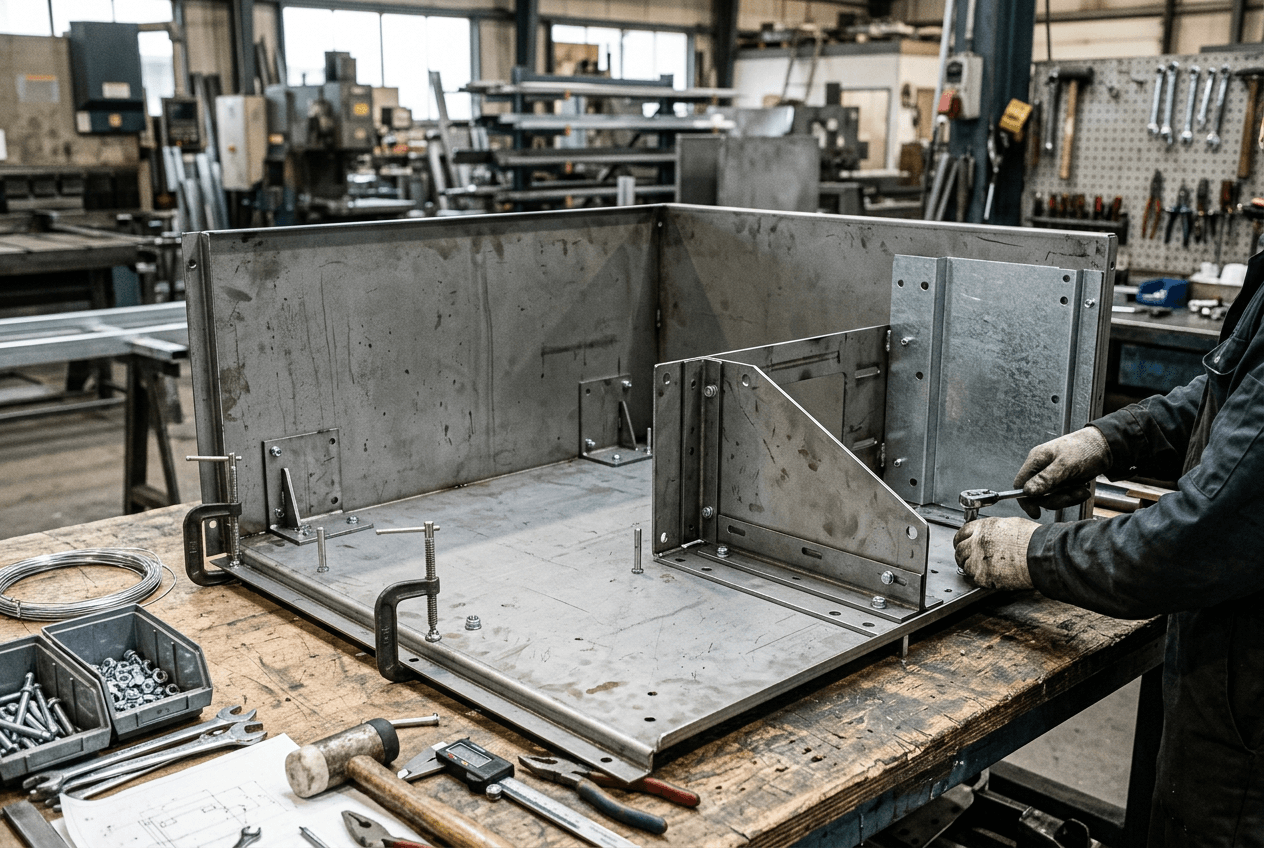
OEM buyers often use different types of iron metal as a loose label. That works in conversation, but not in an RFQ. A supplier may read the same phrase as low-carbon steel sheet, blackened steel, decorative wrought-iron style work, or a welded frame built from formed sections. Each option changes cutting, forming, weld prep, coating, inspection, and fit.
The risk is not just price. The risk is quote drift. One supplier prices a simple bent part. Another prices a welded and finished assembly. Both quotes can look competitive until the part reaches the line and a hinge misses its hole, a bracket binds against a frame, or a coating layer closes up a clearance that looked safe on paper.
That is why sheet metal fabrication buyers should treat material language, tolerances, finish, and assembly notes as one package. If the package is incomplete, the quote compares different jobs. The cheapest number often depends on the widest assumption.
Where a Loose Material Word Turns One RFQ Into Three Different Quotes
When an RFQ only says ‘iron part’, the supplier has to fill in the blanks. One shop may assume laser cutting and bending. Another may add welding, grinding, and powder coating. A third may price heavier gauge steel because the drawing does not say the part is cosmetic. The unit price changes because the scope changes.
This is where buyers lose time. The purchasing team compares numbers that came from different assumptions, then asks why the low quote rises later. The supplier may request a revision, add a tooling note, or flag a design issue after review. That back-and-forth can push lead time before production even starts.
What Has to Be Fixed Before Price Comparison
State the base material, thickness, and acceptable substitution rules. Mark the datum faces and the holes that control location. Say whether the part is a simple formed piece, a welded assembly, or a cosmetic enclosure. If the finish matters, name it clearly. A supplier cannot quote the same job if it does not know whether the part ends at bend stage or continues through welding and coating.
For brackets, enclosures, and frames, the quote must answer a more precise question: what material family, process sequence, and finish state does the part need to reach the mating assembly? If the RFQ does not define those items, different types of iron metal stop being a material discussion and become a commercial risk.
Why the Same Drawing Can Fail After Bending, Welding, and Coating
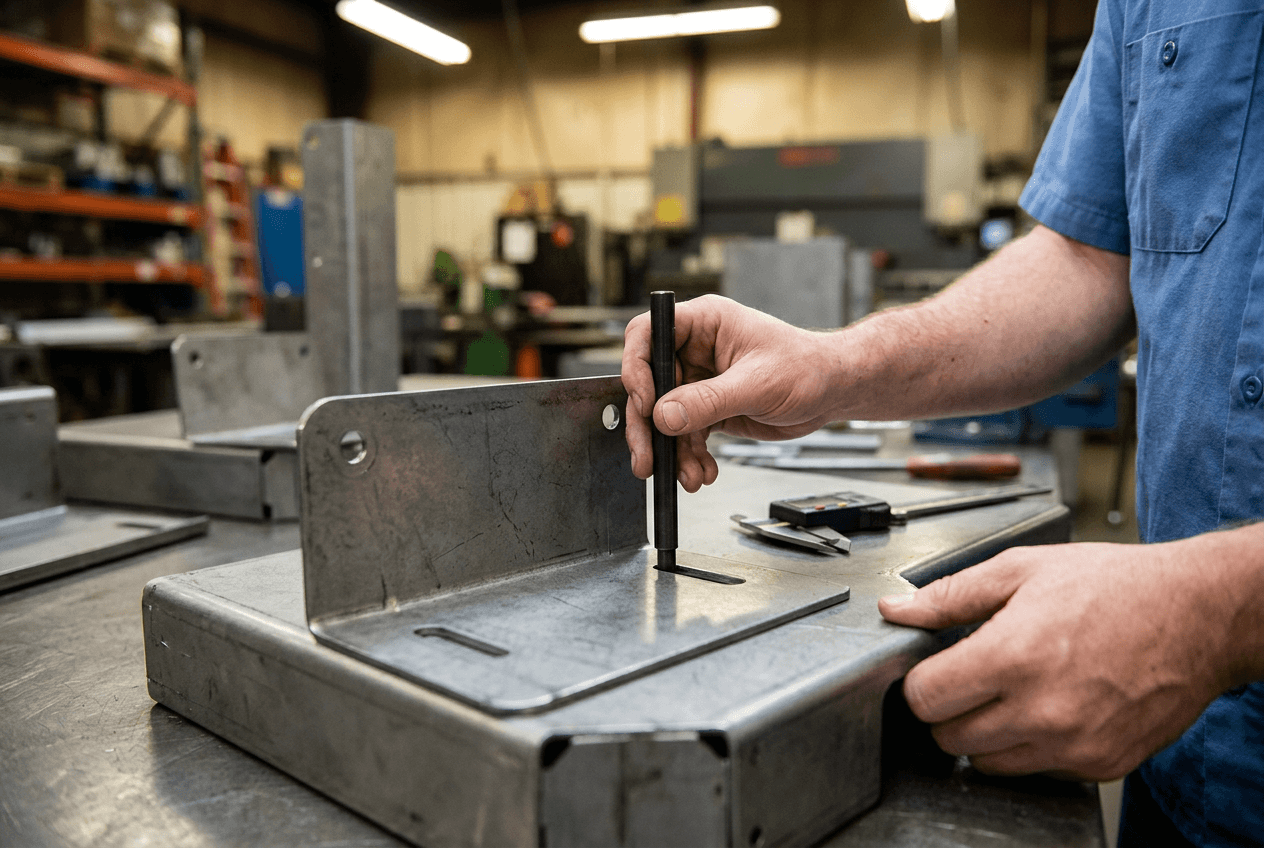
A drawing can look complete and still miss the final fit. The trouble usually appears in the gap between nominal dimensions and real manufacturing behavior. Bend radius changes flange position. Weld heat pulls a corner. Grinding removes material in one place and leaves a raised edge in another. Powder coating adds thickness exactly where a close fit needs room.
A control cabinet side panel is a common example. The drawing may show a clean door reveal and a simple hinge line. On the floor, the reveal closes after coating, and the latch needs extra force. The cause is not one bad operation. The cause is the stack of small changes that built up across cutting, forming, weld pull, and finish build.
How Fit Shifts in Real Production
Fit risk grows when the drawing relies on a perfect theoretical part. In production, the bend tool wears. The operator may sequence welds in a different order. A corner may cool unevenly. The coating line may add more build on a visible edge than on a hidden one. Each change is small, but the final assembly feels all of them.
That is why buyers should tie the tolerance discussion to the actual interface. A hole that only supports a trim piece can allow more variation than a hole that locates a frame. A flange that hides inside an enclosure can tolerate more coating than a flange that sits against a purchased hinge. The supplier needs that logic early, or it will optimize the wrong dimensions.
For welded assemblies, the fit problem often starts before coating and shows up after it. The part may pass on the bench, then fail when it meets a mating panel, rail, or purchased hardware set. The safest RFQ is the one that identifies which dimensions control fit after every process step, not just after cutting.
Why Prototype Approval Does Not Guarantee Batch Consistency
Prototype approval proves one sample fit under one set of conditions. It does not guarantee that the next fifty parts will behave the same way. A prototype may be hand-finished, adjusted on a local fixture, or inspected more closely than the production run. Batch output often sees different fixture wear, different operator sequence, and different pressure on the coating line.
This risk shows up in welded assemblies and enclosure projects more than buyers expect. A prototype rack may stand square because someone nudged it into position. The lot run may not allow that correction. A prototype door may close cleanly before coating, then rub when the finish builds on the hinge edge. The sample passed. The batch still fails the assembly test.
What Changes Between the Sample and the Lot
First article review should separate cosmetic acceptance from functional acceptance. If the report only checks appearance, it can miss a hole shift or a flange angle problem. If the fixture position is not recorded, the next run may use a slightly different setup and produce a different result. Buyers need the production condition, not just the sample part, documented in the approval.
If Yishang reviews a prototype for manufacturability, the key question is not whether one sample looks right. The key question is whether the same process can repeat the same fit on the next lot. That means the buyer should ask which dimensions are fit-critical, which surfaces are cosmetic, and whether coating thickness needs a controlled mask or allowance.
The commercial consequence is easy to miss. A low prototype cost can hide a high batch cost if the process still depends on hand correction. Once the line starts, rework, sorting, and extra inspection quickly erase the savings from the first sample.
When Your Part Must Match Another Supplier’s Assembly, the Risk Becomes Shared
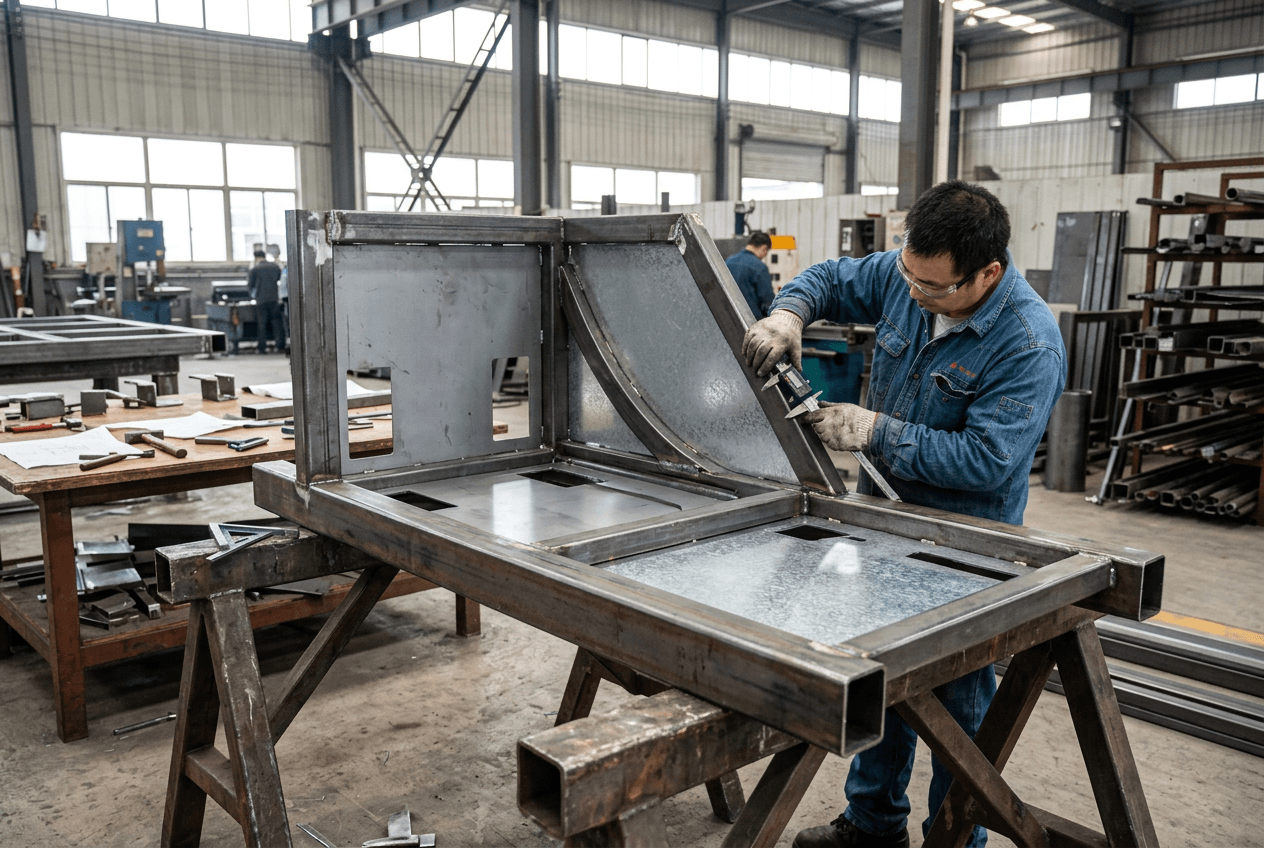
The fit problem becomes sharper when your fabricated part is only one piece of a larger system. A bracket may need to bolt to a machine frame from another supplier. A cabinet panel may have to align with purchased hinges and latches. A welded support may sit inside a finished housing with almost no room for adjustment. In those jobs, the drawing is only part of the contract. The interface is the real contract.
Buyers often assume the supplier will infer the rest. That is where trouble begins. The supplier may not know whether the hole is a clearance hole or a locating hole. It may not know whether coating thickness should be counted in the gap. It may not know whether the assembly can be shimmed on site or must land correctly straight from production.
Consider a machine cover with a formed flange and a latch cutout. If the cutout is based on the cover alone, the latch may bind after coating. The part still looks right in photos, but it misses the real assembly. Now consider a welded bracket for a conveyor frame. If the leg angle drifts by a small amount, the bolt pattern may still measure within tolerance while the bracket refuses to sit flat. The project then shifts from production to adjustment.
A second example is a metal enclosure that has to match an imported internal rail set. The enclosure can be produced correctly and still fail if the rail pitch is referenced from the wrong face. This is why the buyer should describe the mating part, the installation order, and the acceptable gap. Without that context, different types of iron metal may look interchangeable while the assembly proves they are not.
What to Send Before You Compare Quotes on Sheet Metal Parts
The strongest RFQs do not ask the supplier to guess. They give the supplier enough context to quote the same job across different material options, finish states, and fabrication routes. Start with drawings that show the functional datums. Add the material requirement, quantity, tolerance callouts, and finish expectations. If the part sits next to purchased hardware, include the mating part or a clear photo with dimensions.
It also helps to explain what success looks like at assembly. Does the part need a flush fit? Is a visible gap acceptable? Can the installer use shims, or must the part land without correction? Those details control how the supplier prices cutting, forming, welding, inspection, and packing. They also reduce the chance of a late clarification cycle that adds days to the schedule.
For buyers comparing custom sheet metal fabrication quotes, this package matters more than a broad description such as ‘iron enclosure’ or ‘metal bracket’. A supplier can only price stable production when it knows the real route. If you need drawing review, manufacturability feedback, prototype support, or fit-critical quoting, send the package to Yishang with the same level of detail you would use for production release.
At minimum, include drawings, material requirements, quantities, tolerances, and finish expectations. If the project already has a failed sample, add photos and notes that explain where the fit broke down. That gives the supplier a chance to quote the actual risk instead of the guessed version.
Frequently Asked Questions
Why do different types of iron metal create different quote assumptions?
Because the word ‘iron’ can point to different base materials and process routes. One supplier may think in sheet steel, while another thinks in welded or decorative work. That changes cutting, forming, finishing, and inspection scope, so the quotes are not directly comparable.
What should I clarify first if a bracket must fit a welded frame?
Clarify the locating holes, datum face, acceptable gap, and whether the bracket must fit before or after coating. If the frame is already fixed, share photos or dimensions of the mating structure so the supplier can quote the real interface.
Why can powder coating change assembly fit on metal enclosures?
Powder coating adds thickness to edges, holes, and contact faces. That extra build can tighten hinges, latches, door gaps, and bolt locations. A part that fits before coating may need adjusted allowances if the finish sits on a critical surface.
Why did the sample fit but the batch did not?
The sample may have been hand-finished or built under a different setup. Batch production can change because of fixture wear, weld sequence, operator variation, or coating build. The sample approval only proves one condition, not stable repetition.
What should I send for an RFQ review before pricing sheet metal parts?
Send drawings, material requirements, quantities, tolerances, and finish expectations. Add any mating-part photos, prototype notes, and assembly instructions. If the part must fit another supplier’s component, include that interface information as well.