
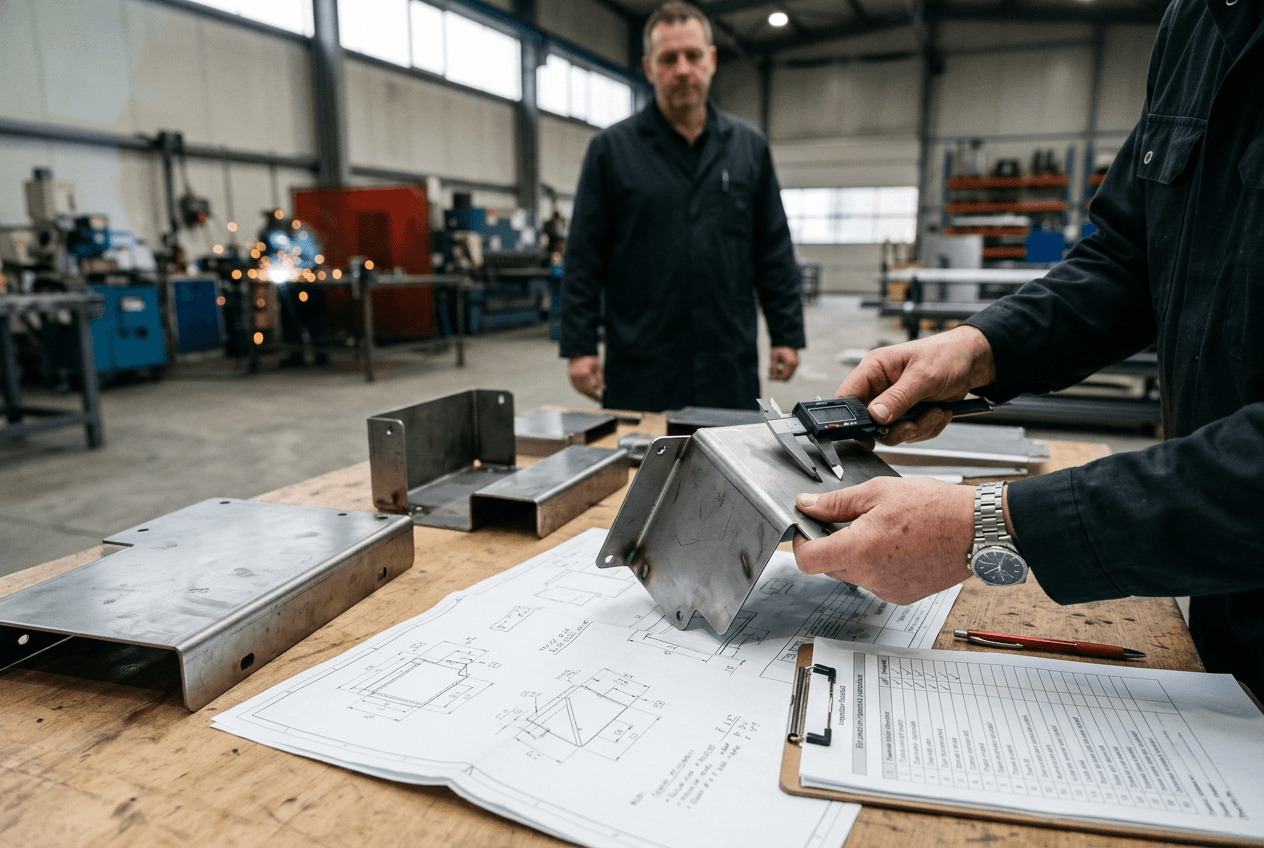
An OEM buyer can write “tempered steel” on a drawing and think the request is clear. In practice, that phrase often splits the job into several different fabrication routes. One supplier may assume pre-tempered stock. Another may think the part will be heat treated after welding. A third may stop and ask for a revised drawing before pricing anything. The real problem is not the word itself. The real problem is the quote risk that starts when the supplier has to guess the material state.
That guess can change more than unit price. It affects cut quality, bend limits, weld sequence, inspection points, finish behavior, and the chance that a prototype still fits in batch production. For buyers sourcing sheet metal parts, brackets, frames, enclosures, or welded assemblies, the question is not only what is tempered steel. The question is how the term shapes the RFQ and where it can break the quote.
This article focuses on one procurement risk: ambiguous tempered-steel calls that force suppliers to build assumptions into the price. When those assumptions are wrong, the cost usually appears later as rework, distortion, fit problems, or a second round of samples.
Why “Tempered Steel” Becomes a Quote Assumption Instead of a Clear Spec
In sheet metal fabrication, tempered steel is not a single production route. It is a condition, and that condition changes what the shop can do with the part. If the RFQ only says tempered steel, the supplier still has to decide whether the part is already tempered, quenched and tempered, partially hardened, or expected to be fabricated first and heat treated later. Each choice changes tooling, forming risk, and inspection effort.
That is where quote distortion begins. A buyer may compare three prices that look similar, yet each supplier priced a different process path. One may have assumed easy forming in soft stock. Another may have priced around a harder material that wears punches faster. A third may have added heat-treatment controls because the drawing hinted at strength requirements but did not define them.
The quote can still look professional. It can still arrive on time. It can even match the drawing title. None of that protects the buyer if the underlying interpretation is wrong. The first issue shows up when the supplier starts asking follow-up questions about hardness, bend radius, weldability, and finish. Those questions do not slow the project down. They reveal where the RFQ is still vague.
For procurement teams, the cost of that vagueness is not limited to the first price. It also affects whether the supplier can stand behind the part after the first sample. If the route was guessed, the supplier may later treat distortion or cracking as a change request instead of a quoting error.
How Heat-Treatment History Changes Cutting, Bending, and Welding Decisions
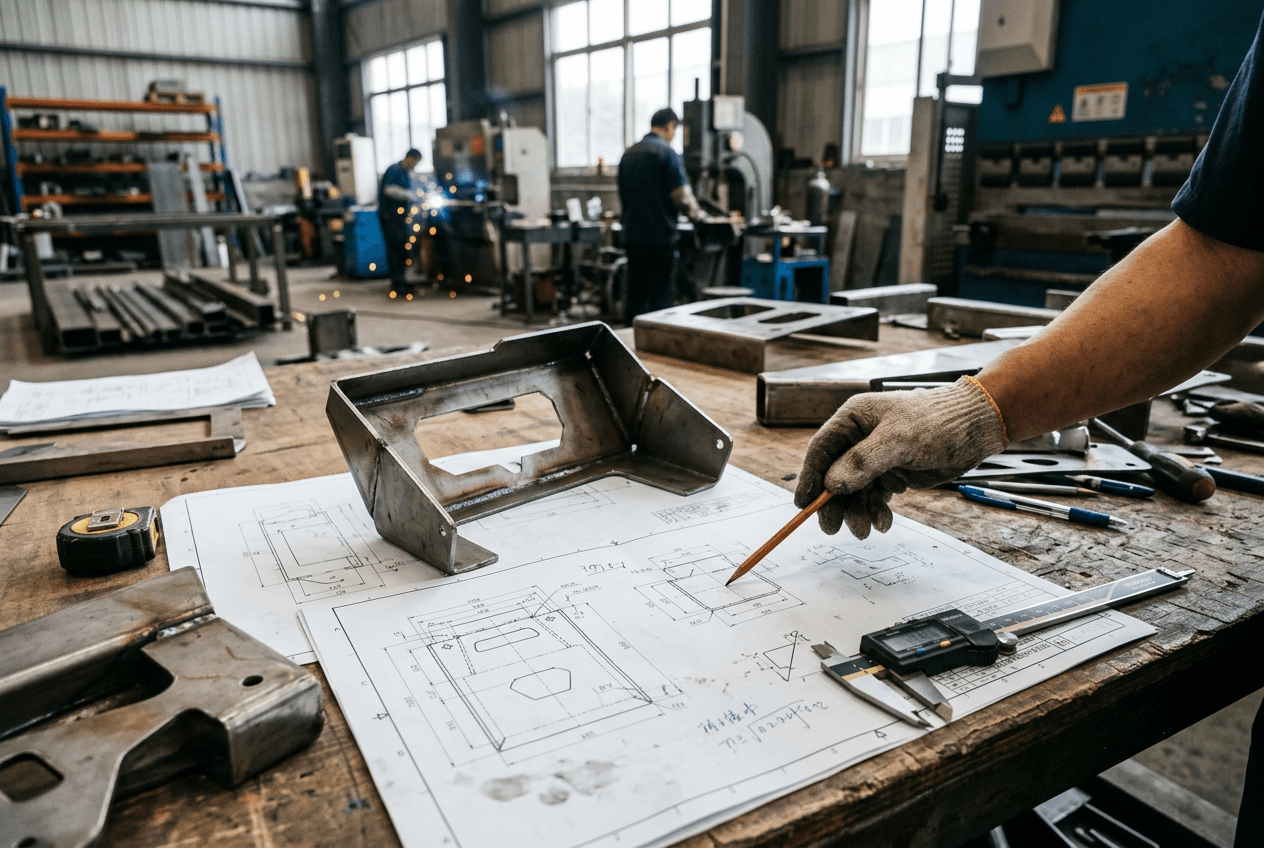
Heat-treatment history matters more than many buyers expect. The same steel chemistry can behave very differently depending on when it was tempered. A part that arrives already tempered may cut cleanly, but it often creates higher tool wear and tighter forming limits. A part that is still soft enough to fabricate may be easier to bend, but it may not meet the finished hardness target unless the shop adds another process step.
That difference matters because fabrication is not a sequence of isolated operations. Cutting affects edge quality. Bending changes springback. Welding adds local heat that can shift hardness and geometry. If the material state is not clear, the supplier may choose a route that solves one step and breaks the next.
Cutting and punch wear
Harder material can shorten tool life and change edge quality at holes, slots, and small internal cutouts. On a simple bracket, that may only raise cost. On a panel with dense hole patterns, it can slow production and increase scrap. If the quote does not account for the real hardness, the price may look attractive and still leave the shop exposed to rework.
Bend radius and springback
Tempered material usually forgives less during forming. The bend may need a larger radius, a different grain direction, or a different bend sequence. If the drawing does not call that out, the supplier may quote a standard forming process and discover the problem only when the first flange cracks or springs back beyond the allowed fit.
Weldability and heat path
Welding creates a separate risk. A welded frame or bracket may need a specific order so the heat does not distort critical dimensions. In some cases, the shop should weld before heat treatment. In others, the design should change so the load path does not depend on a hard welded zone. Buyers should not expect the supplier to guess which option is acceptable.
Project example: A buyer requests a tempered-steel machine bracket with two welded gussets. The first quote looks reasonable, but the sample cracks near the weld toe because the part was already too hard for the weld sequence. The problem was not the weld bead. It was the missing material-state note in the RFQ.
Why Assembly Fit Fails After the Part Looks Correct on Paper
Many tempered-steel issues do not appear in the flat drawing view. They show up when the part has to fit with hinges, latches, mating plates, or a second welded component. At that point, the buyer is no longer checking one part. The buyer is checking an assembly relationship, and tempered material makes that relationship less forgiving.
Hole position is a common example. A hole pattern that seems generous on paper can shift after forming or heat treatment. A 0.5 mm move may sound small, but it can stop a latch from seating, leave a hinge pin in bind, or create a visible gap in an enclosure door. The same is true for flange depth and edge alignment. Small geometry changes can become assembly failures.
This is why buyers should treat critical mating dimensions as quote inputs, not just inspection notes. If the part must mate with a cabinet frame, a back panel, or a welded support, the supplier needs to know which features control fit and which can move slightly without consequence. Otherwise, the shop may meet the dimensional note on the drawing and still miss the function of the assembly.
Project example: An equipment enclosure side panel is specified as tempered steel because the customer wants extra strength. The prototype bends cleanly, but the door gap changes after coating and the hinge line shifts when the batch starts. The panel was not “wrong.” The RFQ never said which surfaces had to stay cosmetic, which edges controlled fit, or how much springback the assembly could absorb.
Finish can also amplify the problem. Powder coating, plating, or any added surface thickness can change how closely a door closes or how a bracket nests against its mating part. That is why finish expectations should sit next to the drawing, not in a separate email chain. Even a small coating build can turn a marginal fit into a production issue.
Why a Good Prototype Can Still Mislead the Batch Order
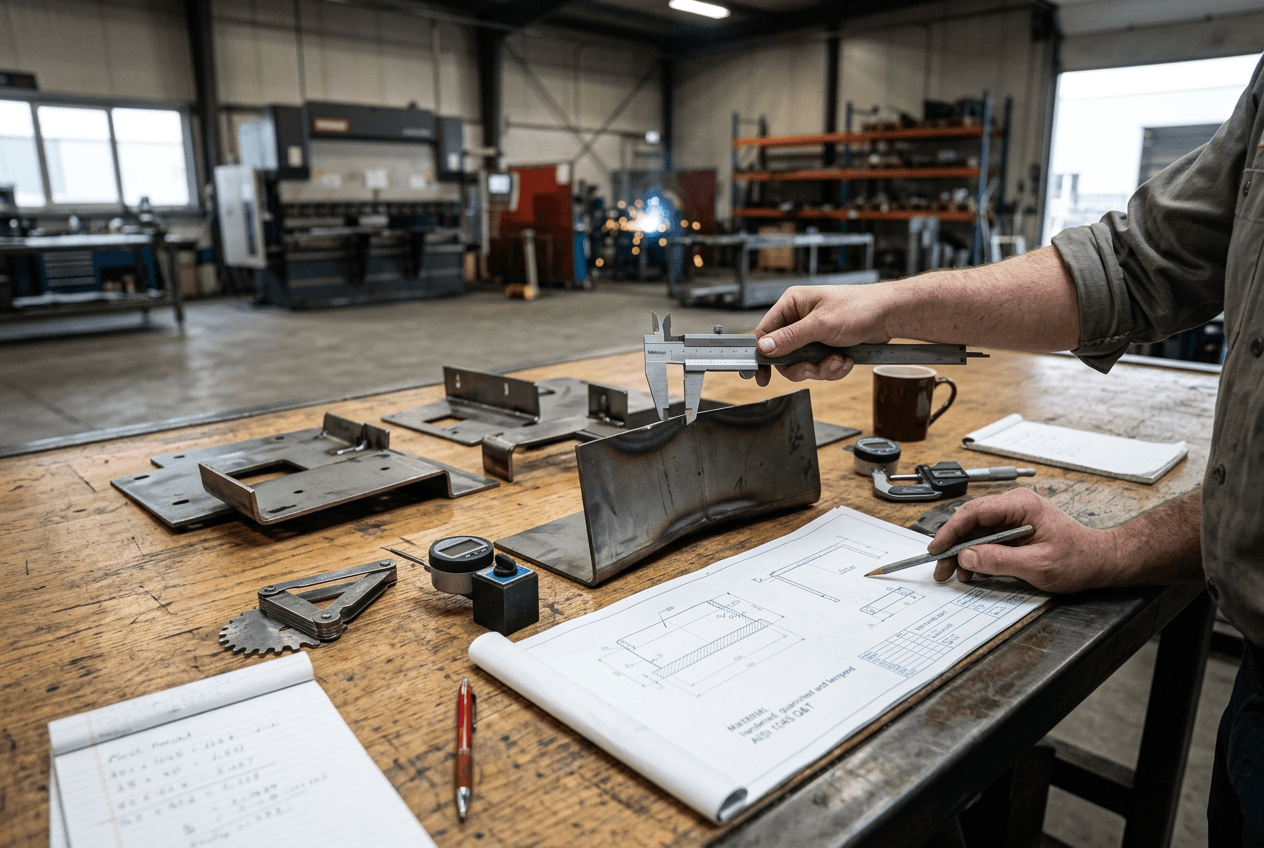
A prototype on tempered steel often looks more stable than the full order. The sample may come from one material lot, one operator, one machine setup, and a careful hand-finishing pass. Batch production removes some of that protection. Different heat lots, faster handling, additional welds, and normal process variation can all change the result.
That gap matters because many buyers approve samples as if they prove the full run. They do not. A part can pass fit-up in the prototype stage and still drift in production if the supplier did not freeze the forming sequence, the hardness range, or the inspection method. If the first sample was over-corrected by hand, the batch may reveal the real behavior of the design.
Distortion is a frequent consequence on welded assemblies. A small frame may stay flat in the prototype because the operator welded slowly and adjusted it manually. A larger batch may not receive the same attention, so the frame twists more, the mounting face moves, and the buyer sees a fit issue only after the first shipment.
Procurement teams should ask what will stay constant between sample and batch. The answer should include material source, heat-treatment state, bend sequence, weld order, and inspection criteria. If those variables are free to drift, a clean approval on the sample does not protect the production order.
When Yishang reviews drawings for a bracket, enclosure, or welded frame, this is usually the point where the conversation gets useful. The question is not whether the sample looks good. The question is whether the sample tells the truth about the production route.
What Buyers Should Freeze Before They Compare Tempered Steel Quotes
Buyers often lose money before the first quote comparison even starts. They send the same words to several suppliers, then compare prices that were built on different assumptions. The lowest number is often the quote that assumed the least risk, not the one that understood the part best.
To avoid that trap, freeze the information that changes the fabrication route. State the actual steel condition, not only the phrase tempered steel. Identify whether the part must be formed, welded, or machined before or after heat treatment. Call out any bend limits, critical hole locations, and mating features that control assembly. If finish thickness can affect fit, include that too. The goal is not paperwork for its own sake. The goal is to make each supplier price the same process.
Quantity also matters. A prototype or short run may allow extra handwork that will not scale. A larger batch may need more stable tooling, more consistent incoming material, and stricter process checks. If the RFQ hides the volume profile, the supplier may quote a one-off approach for a repeated order.
Lead time can be affected as well, but usually as a consequence of the same ambiguity. A shop that has to clarify hardness, bend radius, or heat-treatment timing before it can commit will lose days. A clear drawing with clear material and finish notes gets to a credible quote faster than a vague request that triggers back-and-forth questions.
Practical next step: Send your drawings, material requirements, quantities, tolerances, and finish expectations together in one RFQ package. If you want a manufacturability check before quoting, Yishang can review the drawing set, highlight risk points, and help you separate a true pricing difference from a missing process assumption.
Frequently Asked Questions
What is tempered steel in a sheet metal fabrication RFQ?
In an RFQ, tempered steel usually means the buyer expects a defined heat-treated condition, not just generic steel. The shop still needs to know whether the part arrives tempered, gets formed first, or gets heat treated after fabrication.
Can tempered steel still be bent, punched, or laser cut?
Sometimes yes, but the answer depends on hardness, thickness, bend radius, and the part geometry. A harder condition can increase tool wear, springback, and cracking risk, so the supplier needs the actual material state before pricing the job.
Why does bend radius matter so much on tempered steel parts?
Tempered material tolerates less deformation. If the bend radius is too tight, the corner can crack or the flange can spring back beyond the fit requirement. A supplier needs that detail early because it changes both the forming method and the quote.
Why can a prototype pass while batch production loses fit?
A prototype often comes from one lot, one setup, and extra manual adjustment. Batch production adds more variation in hardness, weld distortion, coating build, and handling. If the process route is not fixed, the approved sample may not reflect the full run.
What should I include before comparing tempered steel quotes?
Include drawings, the steel condition, quantity, tolerances, finish expectations, bend and hole callouts, and any assembly notes for hinges, latches, or mating brackets. Those details help suppliers price the same route instead of different assumptions.
Can Yishang review a drawing before I send it to multiple fabricators?
Yes. For sheet metal parts, metal enclosures, brackets, frames, and welded assemblies, Yishang can review the drawing set and flag manufacturability risks tied to heat treatment, bending, welding, finish, and assembly fit before you finalize the RFQ.