
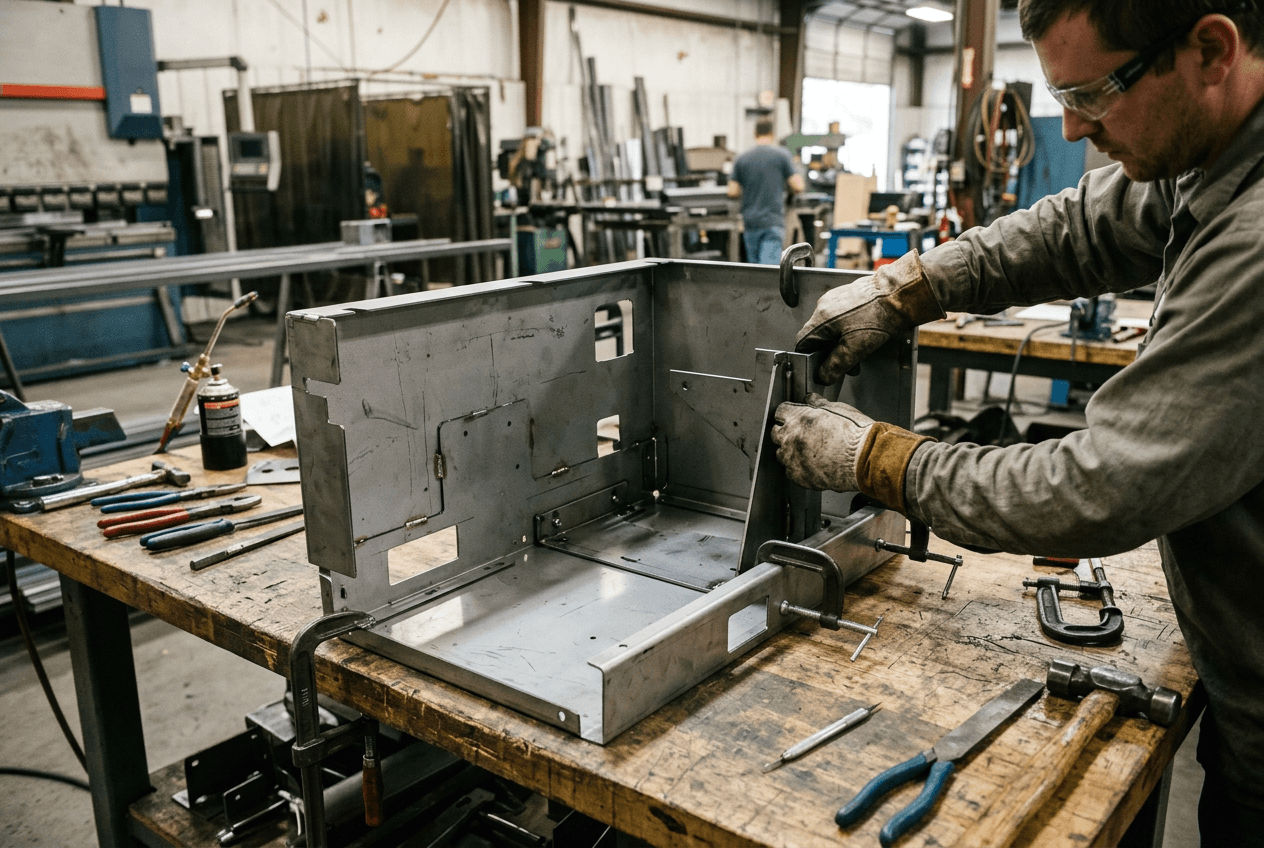
Overseas buyers often compare two quotes for the same cabinet, bracket set, or brazed subassembly and assume the cheaper one is simply more efficient. In practice, the gap often comes from different assumptions about fit-up. Once soldering or brazing enters the process, the part can change shape, opening size, or alignment enough to affect the next assembly step.
That is the procurement risk behind many sheet metal fabrication disputes. The drawing may define the part well, but the RFQ may leave out the mating part, the required joint gap, the expected distortion limit, or the masking areas that matter after coating. The supplier then prices a different job than the buyer expected. The sample may still pass, but only because a technician corrected it by hand.
This article focuses on one problem: fit assumptions that stay hidden until the quote is wrong, the sample is adjusted manually, or the batch no longer matches the approved part. That risk affects enclosures, brackets, frames, and welded assemblies because the join method changes the geometry, not just the appearance.
Why a clean drawing can still produce the wrong fabrication quote
A drawing can be accurate and still fail as an RFQ. The reason is simple: a supplier cannot price what it cannot verify. If the buyer sends only nominal dimensions, the supplier has to guess how tight the joint must be, how much fixture control is needed, and how much post-join correction the part will need.
That guess can distort the quote in either direction. A cautious supplier may include extra fixture work, inspection, and rework allowance. A less cautious supplier may assume loose fit-up and manual adjustment. Both can quote the same part, but only one assumption set fits the real assembly need.
The missing details that change the quote model
In sheet metal fabrication, the joint is rarely the only variable. The supplier also needs to know which faces must stay flat, which holes must stay aligned, and which edges must remain clean for the mating part. If the RFQ does not identify the functional datums, the supplier may build to the wrong control points.
That matters even more when soldering or brazing is part of the process. Heat input can pull corners inward, shift hole position, or reduce opening width. A quote for a small bracket may look low if the supplier assumes hand checking only. The same bracket costs more if it must land on a customer-owned chassis with no filing allowed.
A realistic RFQ should state the part function, the mating part, and the conditions that matter after joining. It should also say whether the supplier must hold the gap in a fixture, whether coating will cover the joint, and whether the final part must fit after finishing.
Example: a cabinet frame that fits on paper but not in assembly
A controls buyer once requested a cabinet frame with soldered corner joints and a front opening for a door seal. The drawing showed the overall frame size, but not the seal compression target or the hinge-side clearance. The first quote looked attractive because the supplier priced it as a basic joined frame.
After sample build, the door rubbed on one side. The frame was within nominal size, but the corner heat caused a small shift in the opening. The buyer had to approve a fixture change and a revised inspection plan. That added cost and delayed the pilot lot. The original quote was not wrong. It was incomplete.
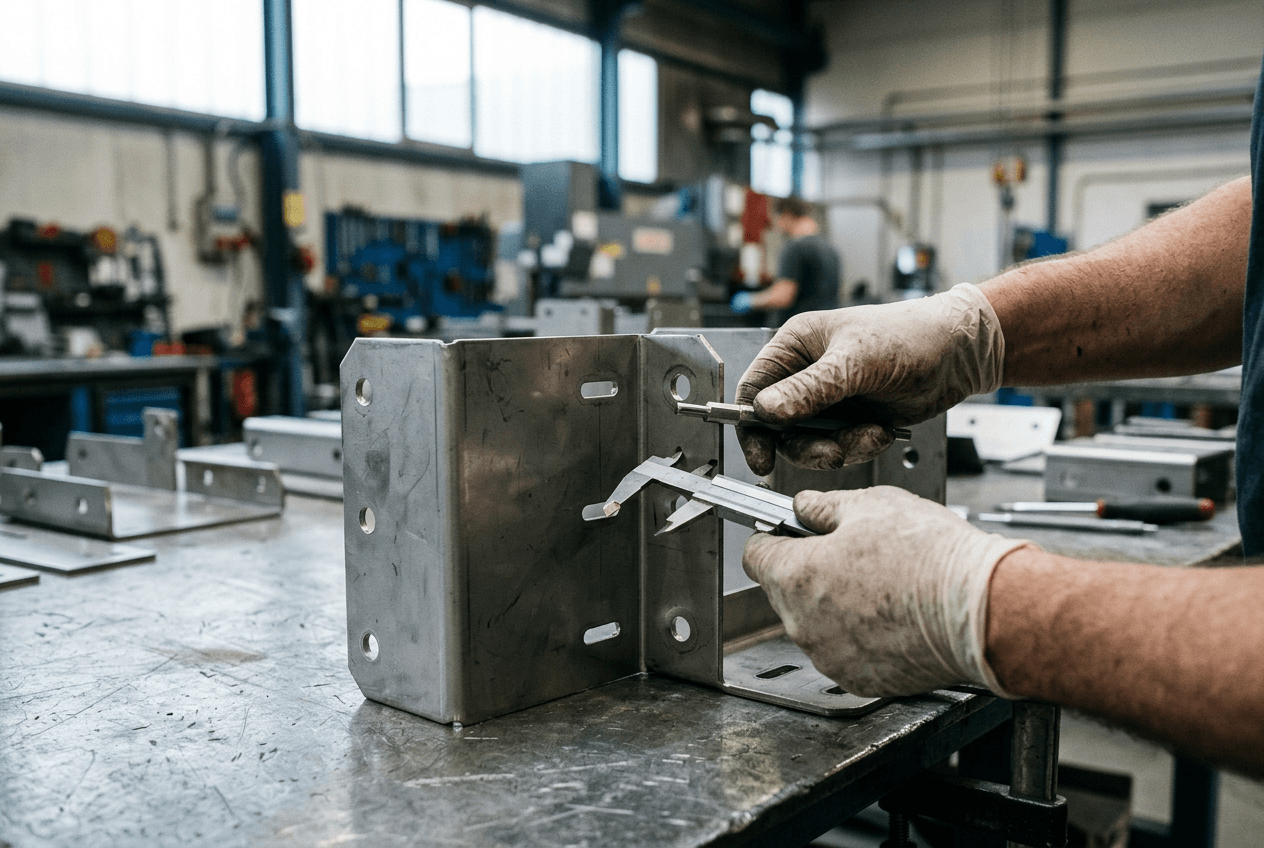
Where soldering or brazing starts to move the fit after joining
The assembly risk usually begins before the part leaves the fixture. As soon as heat enters the part, the metal expands, then contracts as it cools. That movement can alter angle, flatness, and edge alignment. Thin sheet, long seams, and asymmetric joints are the most vulnerable.
Buyers often focus on the visible seam. The real issue is the hidden geometry around it. A joint can look uniform and still shift the mounting holes enough to affect installation. A brazed corner can look clean and still reduce the opening width by a fraction that matters at assembly.
What moves first on a joined sheet metal part
Flat panels usually show the first signs of distortion. Then the opening width changes, followed by the hole-to-hole relationship and the squareness between mating faces. If the part later receives powder coating or another finish, the coating thickness can tighten the tolerance stack even more.
This is why soldering or brazing should never be treated as a finishing detail. It affects the production sequence. The supplier may need a specific joint order, a dedicated fixture, or a different clamping method to keep the part in shape while it cools.
For buyers, the consequence chain is predictable. The drawing remains unchanged, but the part may no longer drop into the mating assembly. The supplier then has to choose between rework, scrap, or a second build. That choice affects cost and lead time, even when the original unit price looked stable.
Example: a bracket set that passes inspection but fails installation
A buyer ordering a small bracket set for industrial equipment specified the bracket profile and material, but not the exact location of the mating slot after brazing. The sample looked acceptable on the bench. During installation, however, the mounting bolt needed force because the slot had shifted slightly after cooling.
The issue was not visible in the seam. It appeared at the final install step. The buyer then needed a clearer datum scheme, a tighter fixture, and a note that the slot position mattered more than the outer edge. That change helped future batches, but the first lot still carried extra handling cost.
Why prototype approval does not guarantee batch consistency
Prototype approval can hide the biggest risk in a soldered or brazed job: manual correction. A skilled operator can tap, press, or re-align a sample into acceptance. Batch production cannot rely on that same level of adjustment unless the quote includes it.
This is where many procurement teams get surprised. They approve a prototype because it fits the mating part. Then the production lot arrives with a different yield because the fixture, operator, or heat pattern changed. The batch still follows the drawing, but it no longer follows the sample.
What changes between sample and production
The first sample often gets more attention. The operator may use extra clamping, extra measuring, or extra hand finishing. The production lot may not receive the same treatment unless the RFQ calls for it. Even small differences in joint gap or heat time can change the final geometry.
Buyers should also watch for differences in the actual mating setup. A sample may be checked against a gauge, not the real enclosure door, hinge, or chassis. That can hide a fit problem until batch assembly starts. If the buyer needs a production-ready part, the sample should be evaluated against the same mating condition that will exist in the field.
Yishang can help buyers review those assumptions before tooling or sample approval locks them in. That review is most useful when the part must stay square after joining and still match another component without force.
What should be frozen before the first article gets approved
The buyer should freeze the controlling datums, the acceptable joint gap, and the exact mating condition. It also helps to state whether small corrections are allowed during sample work but not in production. If the sample needs hand fitting, the RFQ should say whether that step is part of the normal process or only a one-time prototype exception.
That distinction matters for cost. A supplier can quote a prototype with manual intervention. It is much harder to keep the same price if every batch part needs the same intervention. Buyers who clarify this early usually get a more realistic quote and fewer production surprises.
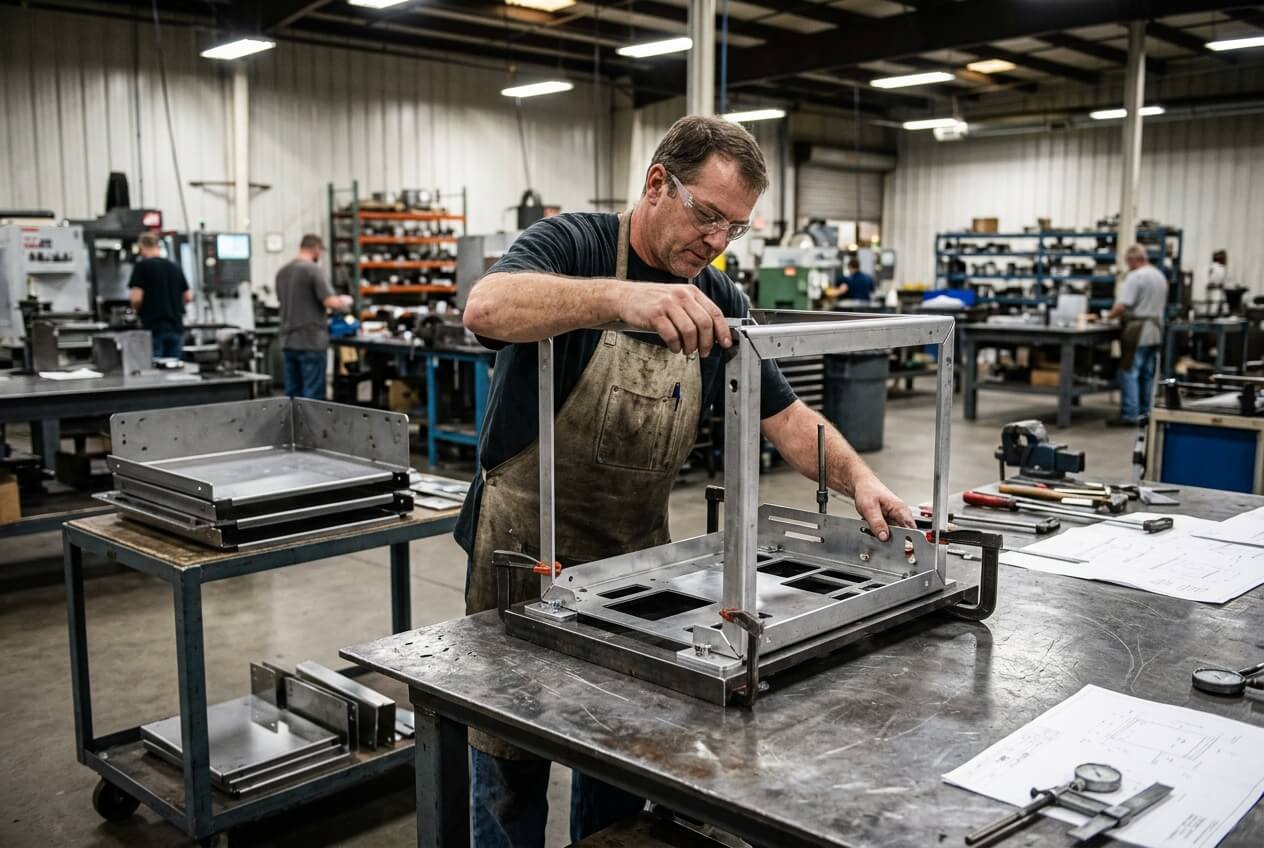
What inspection must prove before you release a brazed or soldered assembly
Inspection should confirm more than seam appearance. A neat seam can still hide a crooked frame or a shifted opening. That is why the inspection plan needs to check functional geometry after joining, not only visual quality at the joint.
If the part is meant to fit a door, gasket, latch, PCB, or machine frame, then the key question is simple: does it still fit after heat, cooling, and finishing? If the answer depends on the operator’s judgment, the buyer probably has not defined the acceptance criteria well enough.
The checks that matter most to assembly fit
Look at hole position, flatness, opening width, and the relationship between mating faces. Ask whether the joint leaves any material that could interfere with the next assembly step. If coating is part of the build, confirm whether the mating surfaces must be masked or whether the coating thickness is already included in the fit target.
For a welded assembly, the same logic applies. The quote should account for the shape the part must hold after joining, not the shape it has in a flat laser-cut state. A drawing that ignores this can lead to passing visual checks and failing installation checks.
Buyers should also ask how the supplier will inspect the first lot versus the production lot. If the sample gets extra layout checks but the batch gets only a quick visual review, the approval does not really protect the program.
What to lock into the RFQ before comparing supplier quotes
A strong RFQ does not need to be long, but it must be specific where fit risk starts. The buyer should make the supplier quote the same job the buyer expects to receive. That means defining the mating part, the critical datums, the allowed distortion, and the finishing condition that affects assembly.
It also means explaining what happens after the joint is made. If the part must still fit a cabinet, bracket set, or frame without force, the RFQ should say so clearly. If the buyer can accept slight manual adjustment on prototypes but not on batches, that difference should be stated before pricing.
Project details that reduce quote surprises
- Send the drawing with the functional dimensions clearly marked.
- State the material, quantity, and finish expectations.
- Identify the mating part or assembly condition that must still fit.
- Define the tolerance areas that matter after soldering or brazing.
- Say whether the supplier must fixture for flatness, angle, or gap control.
- Note whether prototype approval will be followed by a batch run with the same process.
For buyers working with Yishang, this is the point to request a drawing review before comparing prices. A quote built on clear fit-up assumptions is usually more useful than a lower number built on guesses. The goal is not just a low unit price. The goal is a part that still assembles correctly after joining and finishing.
If your enclosure, bracket, frame, or welded assembly depends on soldering or brazing, send the drawings, material requirements, quantities, tolerances, and finish expectations to Yishang for an RFQ and fit-up review before you compare supplier quotes.
Frequently Asked Questions
Why does soldering or brazing change the final fit of a sheet metal part?
Heat expands the metal and cooling pulls it back unevenly. That movement can shift angle, flatness, and opening size. If the part has long seams or thin sections, the change can be enough to affect assembly even when the drawing dimensions look correct.
What should buyers define in the RFQ when fit is critical after joining?
Buyers should define the mating part, the controlling datums, the allowed joint gap, and the fit condition after finishing. It also helps to note whether the supplier must fixture the part for flatness or squareness. Those details prevent pricing based on loose assumptions.
Why can a prototype pass and the production batch still fail?
A prototype often gets extra hand adjustment that batch production does not repeat. If the fixture, heat pattern, or operator handling changes, the final geometry can shift. The approved sample may fit because it was corrected manually, not because the process was fully stable.
What inspection points matter most for a brazed enclosure or bracket set?
Check hole position, flatness, opening width, and the relationship between the joined faces. Also confirm that no filler or distortion blocks the next assembly step. Visual seam quality alone does not prove the part will fit in the real assembly.
How can buyers avoid price gaps between suppliers quoting the same part?
Use the same RFQ assumptions for every supplier. When one quote includes fixture control, finishing limits, and inspection, while another assumes hand fitting, the price difference is not meaningful. Clear drawings and fit notes make the quotes easier to compare.